以旧换新政策

Search documents
618大促如火如荼!家电ETF(159996)涨超1.5%,一键布局家电产业链
Mei Ri Jing Ji Xin Wen· 2025-05-20 06:33
Group 1 - The core viewpoint is that the home appliance market in China is experiencing a significant boost due to the 618 shopping festival and the implementation of the trade-in policy, leading to a continuous increase in consumer demand [1][3] - In April, China's retail sales of consumer goods grew by 5.1% year-on-year, with a notable increase in sales of products related to the trade-in policy [1] - The home appliance ETF (159996) saw a substantial rise of over 1.5%, indicating strong market activity [2] Group 2 - The trade-in policy is expected to drive the purchase of nearly 90 million home appliances from August 2024 to the first quarter of 2025, with expectations for continued policy support to enhance consumer spending [3] - Recent reductions in tariffs between China and the U.S. are likely to alleviate cost pressures for Chinese exporters, while demand in emerging markets remains strong due to low penetration rates of home appliances [4] - Leading home appliance companies are showing strong cash flow and high dividend yields, with the sector's dividend rate nearing 3% as of April 2025, making it an attractive investment opportunity [5]
光大证券晨会速递-20250520
EBSCN· 2025-05-20 01:14
Core Insights - The report highlights that despite the impact of US tariff policies, the economic data for April 2025 shows stability with a slight decline in growth rates, particularly in manufacturing and infrastructure investments, which remain at relatively high levels [2] - Retail sales in April 2025 reached 3.72 trillion yuan, growing by 5.1% year-on-year, with significant growth in gold and jewelry sales at 25.3% due to low base effects and high demand for investment preservation [4] Macro Analysis - The economic performance in April 2025 reflects a stable growth trajectory, with consumer spending on services and the "old-for-new" policy positively influencing sales [2] - Manufacturing and infrastructure investment growth rates have slightly decreased but are still considered high, indicating the effectiveness of previous policies [2] Retail Sector Insights - The total retail sales for the first four months of 2025 amounted to 16.18 trillion yuan, marking a year-on-year increase of 4.7% [4] - Categories such as sports entertainment, home appliances, and cultural office supplies maintained double-digit growth rates, indicating robust consumer demand in these segments [4]

冠捷科技(000727) - 000727冠捷科技投资者关系管理信息20250519
2025-05-19 09:44
Financial Performance - The company's net profit significantly decreased in 2024, with a loss reported in Q1 2025 due to slow global consumer demand recovery, increased trade policy uncertainty, and intensified industry competition [2] - In Q1 2025, the company faced a loss attributed to a decline in product prices and gross margin [2] - The company aims to achieve its annual profit target through cost reduction measures and adjustments in supply chain management [2] Research and Development - In 2024, the company invested approximately CNY 1.315 billion in R&D, focusing on three core areas: display technology innovation, AI integration, and smart manufacturing upgrades [2] - 40% of the R&D budget is allocated to new display technologies (OLED, Mini LED, Micro LED, and electronic paper), while 30% is directed towards AI and intelligent function development [2] Market Impact and Strategy - The company reported that approximately 20% of its revenue in 2024 came from North America, where it faces challenges due to increased tariffs [3] - The company is actively adjusting production capabilities in overseas factories (Mexico, Thailand) to mitigate tariff impacts and optimize supply chain efficiency [3] Product Development and Market Trends - The company is focusing on high-end and large-size display products, benefiting from government policies promoting upgrades and energy-saving subsidies [4] - The company has launched various electronic paper products and plans to increase R&D investment in this area to capture market opportunities [5] Competitive Positioning - The company maintains a strong competitive edge through scale efficiency, production capacity, R&D capabilities, brand strength, and distribution networks [10] - The company is committed to sustainable practices, with three of its six domestic manufacturing bases recognized as "green factories" [10] Future Outlook - The company plans to enhance its presence in emerging markets and high-margin sectors, such as commercial and professional display solutions [10] - The company is exploring strategic partnerships and investment opportunities to strengthen its market position while minimizing reliance on acquisitions [10]

国家统计局贸经司首席统计师袁彦解读4月份消费市场数据
Guo Jia Tong Ji Ju· 2025-05-19 07:23
Group 1 - The consumer market in April continued to show stable growth, driven by consumption-boosting policies and a strong performance in the sales of upgrade and green products [1][6] - From January to April, the total retail sales of consumer goods reached 161,845 billion yuan, with a year-on-year growth of 4.7%, and a real growth of 4.9% after excluding price factors [2] - The retail sales in rural areas outpaced urban areas, with a year-on-year growth of 5.1% for county and township markets, accounting for 39.4% of total retail sales [2] Group 2 - The service retail market showed steady growth, with a year-on-year increase of 5.1% from January to April, outpacing the growth of goods retail by 0.4 percentage points [3] - Travel-related consumption saw significant growth, with various service categories such as transportation and leisure services maintaining rapid growth [3] Group 3 - Sales of upgrade and green products remained strong, with jewelry and cosmetics retail sales growing by 25.3% and 7.2% respectively in April [4] - The sales of household appliances and audio-visual equipment increased by 38.8%, while the retail sales of new energy passenger vehicles reached 905,000 units, growing by 33.9% [4] Group 4 - Online retail sales of physical goods grew by 5.8% from January to April, with a 24.3% share of total retail sales, indicating a steady expansion of online consumption [5] - Physical retail stores also experienced stable growth, with a year-on-year increase of 4.4% in retail sales, supported by innovative business models in membership warehouses and convenience stores [5]
华帝股份(002035):换新周期与国补政策共振 业绩稳健增长
Xin Lang Cai Jing· 2025-05-18 10:34
Core Insights - The company reported a revenue of 6.372 billion yuan for 2024, a year-on-year increase of 2.23%, and a net profit attributable to shareholders of 485 million yuan, up 8.39% year-on-year [1][2] - The fourth quarter of 2024 saw a revenue of 1.796 billion yuan, a slight decrease of 0.30% year-on-year, with a net profit of 81 million yuan, down 7.57% year-on-year [1][2] - In Q1 2025, the company achieved a revenue of 1.260 billion yuan, a decline of 8.80% year-on-year, with a net profit of 106 million yuan, down 14.33% year-on-year [1][2] Revenue Breakdown - The revenue from range hoods was 2.735 billion yuan in 2024, an increase of 6.22% year-on-year, accounting for 42.93% of total revenue [2] - The revenue from stoves was 1.533 billion yuan, up 5.28% year-on-year, representing 24.06% of total revenue [2] - The revenue from water heaters was 1.262 billion yuan, a growth of 10.40% year-on-year, making up 19.81% of total revenue [2] Market Trends - The increase in demand for kitchen appliances in 2024 was driven by the old-for-new policy and national subsidy policies, which positively impacted the market [2] - The overall retail sales of the range hood market reached 36.2 billion yuan in 2024, a year-on-year increase of 14.9%, with a retail volume of 20.83 million units, up 10.5% [2] - The gas stove market saw retail sales of 20.4 billion yuan, a growth of 15.7% year-on-year, with a retail volume of 24.29 million units, up 15.2% [2] Profitability and Costs - The company's gross profit margin for 2024 was 40.71%, a decrease of 0.40 percentage points year-on-year [3] - The gross profit margins for range hoods, stoves, and water heaters were up by 0.35, 0.07, and down by 0.89 percentage points respectively [3] - The company experienced a significant increase in sales expenses due to higher advertising and market service costs, leading to a rise in the sales expense ratio [3] Future Outlook - The company has a diversified brand matrix with three major brands, aiming for continuous growth through product innovation and channel expansion [4] - Projected net profits for 2025, 2026, and 2027 are estimated at 517 million, 563 million, and 613 million yuan respectively, with corresponding price-to-earnings ratios of 10.91, 10.01, and 9.19 [4]

阅峰 | 光大研究热门研报阅读榜 20250511-20250517
光大证券研究· 2025-05-18 09:44
Group 1: Company Analysis - Kunlun Energy, a natural gas terminal business under China National Petroleum Corporation, is expected to achieve net profits of 6.649 billion, 7.124 billion, and 7.598 billion yuan for 2025-2027, with corresponding EPS of 0.77, 0.82, and 0.88 yuan per share, respectively, and is rated "Buy" [2] - Hong Teng Precision reported a revenue of 1.103 billion USD in Q1 2025, a year-on-year increase of 14%, but net profit decreased by 38% to 6.24 million USD due to smartphone ASP decline and exchange rate impacts, leading to a downward revision of net profit forecasts for 2025-2027 [17] - Budweiser APAC's Q1 2025 revenue was 1.461 billion USD, with a year-on-year decline of 7.5% in organic growth and a net profit of 234 million USD, down 18.5% year-on-year, prompting a downward revision of net profit forecasts for 2025-2027 [23] - Beijing Junzheng is expected to see net profits of 508 million, 654 million, and 767 million yuan for 2025-2027, with a current market valuation corresponding to PE ratios of 64, 50, and 43 times, maintaining a "Buy" rating [33] - Semiconductor company SMIC faced production issues in Q1 2025, leading to a downward revision of net profit forecasts for 2025-2027 to 790 million, 990 million, and 1.41 billion USD, while maintaining a "Buy" rating [39] - Q1 2025 results for Qutai Technology showed an increase in net profit forecasts for 2025 and 2026 by 24% and 17% to 602 million and 713 million yuan, respectively, with a new forecast for 2027 at 840 million yuan, maintaining a "Buy" rating [45] Group 2: Industry Insights - In the first four months of 2025, the average transaction price of new homes in 30 core cities increased by 5% year-on-year, while the transaction area rose by 2%, indicating a stabilization in high-energy cities [8] - The "old-for-new" policy has shown improved fiscal multipliers, reaching 2.4 in Q1 2025, up from 2.1 in the previous quarter, with expectations for continued high levels in Q2 due to accelerated applications and additional funding [12]


华帝股份(002035):换新周期与国补政策共振,业绩稳健增长
Changjiang Securities· 2025-05-18 09:41
Investment Rating - The investment rating for the company is "Buy" and is maintained [7]. Core Views - The company is expected to benefit from the replacement cycle and national subsidy policies, leading to steady growth in performance. In 2024, the company achieved a revenue of 6.372 billion yuan, a year-on-year increase of 2.23%, and a net profit attributable to shareholders of 485 million yuan, up 8.39% year-on-year [2][4][10]. Financial Performance Summary - For the full year of 2024, the company reported: - Revenue: 6.372 billion yuan, +2.23% YoY - Net profit attributable to shareholders: 485 million yuan, +8.39% YoY - Net profit excluding non-recurring items: 460 million yuan, +11.66% YoY - In Q4 2024: - Revenue: 1.796 billion yuan, -0.30% YoY - Net profit attributable to shareholders: 81 million yuan, -7.57% YoY - Net profit excluding non-recurring items: 73 million yuan, +9.87% YoY - In Q1 2025: - Revenue: 1.260 billion yuan, -8.80% YoY - Net profit attributable to shareholders: 106 million yuan, -14.33% YoY - Net profit excluding non-recurring items: 104 million yuan, -14.92% YoY [2][4][10]. Product and Market Insights - The company’s revenue growth in 2024 was driven by the kitchen appliance market, particularly benefiting from the old-for-new policy. Specific product revenues included: - Range hoods: 2.735 billion yuan, +6.22% YoY - Cooktops: 1.533 billion yuan, +5.28% YoY - Water heaters: 1.262 billion yuan, +10.40% YoY - The overall retail market for range hoods grew by 14.9% YoY, while the gas stove market saw a 15.7% increase in retail sales [10]. Profitability and Cost Structure - The company’s gross margin for 2024 was 40.71%, a decrease of 0.40 percentage points YoY. The gross margins for specific products were: - Range hoods: +0.35 percentage points - Cooktops: +0.07 percentage points - Water heaters: -0.89 percentage points - The company’s net profit margin for 2024 was 7.61%, an increase of 0.43 percentage points YoY [10]. Future Projections - The company is expected to maintain growth with projected net profits of 517 million yuan, 563 million yuan, and 613 million yuan for 2025, 2026, and 2027 respectively. The corresponding price-to-earnings ratios are projected to be 10.91, 10.01, and 9.19 [10].
商用车行业动态研究:以旧换新密集落地,2025年重卡内需有望景气回升
Guohai Securities· 2025-05-17 12:22
2025 年 05 月 17 日 行业研究 评级:推荐(维持) 研究所: 证券分析师: 戴畅 S0350523120004 daic@ghzq.com.cn 联系人 : 徐鸣爽 S0350124100008 xums@ghzq.com.cn [Table_Title] 以旧换新密集落地,2025 年重卡内需有望景气 回升 ——商用车行业动态研究 最近一年走势 | 行业相对表现 | | | 2025/05/16 | | --- | --- | --- | --- | | 表现 | 1M | 3M | 12M | | 商用车 | 1.5% | -7.5% | 27.0% | | 沪深 300 | 3.1% | -1.3% | 6.8% | 相关报告 《商用车行业深度研究:重卡景气 2025 年有望拐 点向上,重卡公司或迎戴维斯双击(推荐)*商用 车*戴畅》——2025-01-07 《商用车行业动态研究:2024 年重卡批发同比微 降,2025 年有望向上均值回归(推荐)*商用车* 戴畅》——2025-01-05 事件: 2025 年 4 月我国重卡交强险上险量 6.9 万台,同比增长 6%,1-4 月累计 同比增 ...



增值税发票数据显示:吉林省五一假期消费增势良好
Sou Hu Cai Jing· 2025-05-16 11:18
欧亚卖场是长春市知名购物广场,这家卖场推出免费抢1万套1200元家电抵用券活动以及家电购物达额送好礼活动,五一 期间,参与政府补贴的销售额达到1440余万元,占家电商场销售总收入76.7%,家电销售的政府补贴合计187万元。 为确保家电以旧换新政策红利精准落地,长春市朝阳区税务局针对欧亚卖场商家普遍关心的发票开具、政府补贴税务处 理等问题,深入商户开展"一对一"上门辅导,详细讲解折扣发票开具规则和折后收入确认标准,帮助企业在让利消费者 的同时防范涉税风险。 长影世纪城五天累计接待游客3.2万人次,入园人数同比增长37%,长春市餐饮堂食线上订单量同比增长超64%;吉林市 神州红旗汽车销售展厅日均接待超30批次,以旧换新订单占比达37.7%…… 增值税发票数据显示:五一假期,吉林省消费市场呈现强劲复苏态势,在"以旧换新"政策持续发力带动下,家用电器和 音像器材销售收入同比增长203.97%,智能手机等消费电子产品纳入购新补贴范围,通讯器材销售收入同比增长 430.66%。旅游游览和娱乐服务销售收入同比增长63.79%,文艺创作与表演服务销售收入同比分别增长57.48%。 政策精准落地家电以旧换新"热力十足" 作为 ...

中国即热电热水器行业发展环境、市场运行态势及投资潜力分析报告(2025版)
Sou Hu Cai Jing· 2025-05-16 08:49
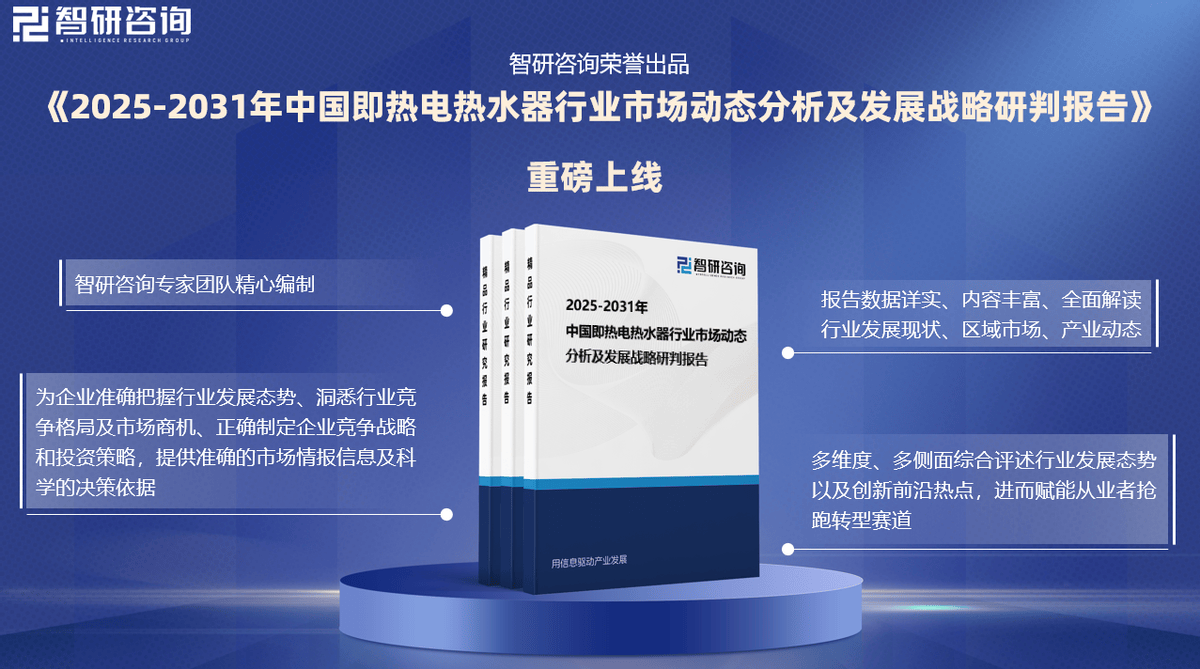
Core Viewpoint - The report titled "2025-2031 China Instant Electric Water Heater Industry Market Dynamics Analysis and Development Strategy Assessment" provides an in-depth analysis of the future market trends and potential of the instant electric water heater industry in China, highlighting its growth opportunities and strategic directions for businesses [1]. Industry Overview - The instant electric water heater industry is defined as a sector utilizing electronic heating components for rapid water heating, catering to modern consumers' needs for convenience and efficiency [3]. - The report covers various aspects of the industry, including production, demand, import and export statistics, and key enterprises, structured into 12 chapters [1]. Market Dynamics - The retail sales of instant electric water heaters experienced a decline from 2019 to 2022 due to economic downturns and a shrinking real estate market, but began to recover in 2023, with retail sales reaching 1.18 billion yuan, a year-on-year increase of 1.29% [4]. - The industry is expected to benefit from the "dual carbon" goals and the implementation of old-for-new policies, which are anticipated to stimulate market demand [4]. Supply Chain Analysis - The upstream supply chain includes critical components such as electronic heating elements, control chips, and safety devices, which directly affect the efficiency and safety of the water heaters [7]. - The midstream involves manufacturing and assembly, where manufacturers select appropriate components based on market demand [7]. - The downstream encompasses sales channels, including both online and offline platforms, with after-sales services playing a crucial role in customer satisfaction [7]. Competitive Landscape - The market is characterized by intense competition, with comprehensive brands dominating online sales due to their resource advantages, while specialized brands lead in offline markets through technical expertise [10]. - Key players in the industry include Zhejiang Supor Co., Ltd., Four Seasons Muge Technology Group Co., Ltd., Guangdong Vanward New Electric Co., Ltd., Haier Group, and Aoteng Electric (Guangzhou) Co., Ltd. [10]. Future Outlook - The report forecasts the industry's development from 2025 to 2031, focusing on investment opportunities, market trends, and potential growth drivers [32]. - It emphasizes the importance of strategic planning for companies to navigate the evolving market landscape and capitalize on emerging opportunities [32].