太空算力

Search documents
太空算力火热,AI+卫星共振!卫星ETF(159206)冲击3连涨,成分股航天宏图涨超10%
Sou Hu Cai Jing· 2025-11-10 02:07
Core Viewpoint - The satellite ETF (159206) has seen significant growth, with a 2.53% increase and notable performance from constituent stocks, indicating a strong interest in the commercial space and satellite communication sectors [3][6]. Fund Performance - The satellite ETF has experienced continuous net inflows over the past week, with a peak single-day net inflow of 72.09 million yuan, totaling 175 million yuan in net inflows, averaging 25.01 million yuan per day [3]. Stock Performance - Key stocks within the satellite ETF include: - Aerospace Hongtu (688066) up 10.81% at 27.79 yuan - Zhenlei Technology (688270) up 8.56% at 67.22 yuan - Aerospace Electronics (600879) up 7.57% at 11.79 yuan - Other notable stocks include Zhongke Xingtou, Guoguang Electric, and China Satellite, all showing positive growth [4]. Industry Developments - On November 2, NVIDIA launched the first H100 GPU into space, establishing the first orbital data center, which utilizes solar energy and reduces carbon emissions by 90%, addressing resource shortages on Earth [5]. - Elon Musk stated that the advent of the Starship opens pathways for large-scale deployment of solar-powered AI satellites, aiming for an annual deployment of 1 terawatt of AI computing power [5]. - By May 2025, China plans to initiate the networking phase of its first space computing satellite constellation, with a goal of launching at least 100 satellites by 2026 and a total of no less than 1,000 satellites by 2030 [5]. Market Outlook - Huaxi Securities believes that the low-cost, resource-rich, and expansive nature of space computing presents a stable long-term profit model for commercial aerospace, transitioning from "ground-based computing" to "space-based computing" [5]. - The satellite ETF focuses on commercial aerospace and satellite communication, particularly favoring satellite manufacturing, which is expected to thrive under the "strong aerospace nation" backdrop [6][7].


卫星导航板块盘初冲高,上海港湾2连板
Xin Lang Cai Jing· 2025-11-10 01:40
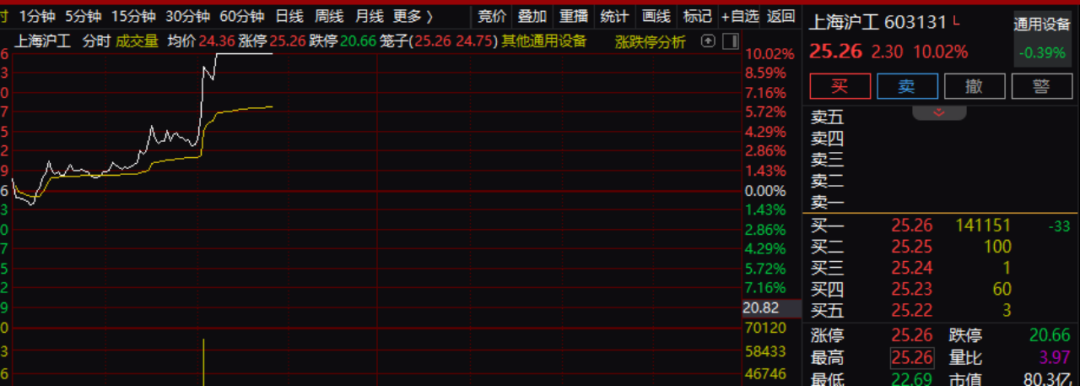
Group 1 - The satellite navigation sector experienced an initial surge, with Shanghai Port Bay achieving two consecutive trading limits, and Aerospace Hongtu rising over 10% [1] - Related ETFs showed positive performance, with the Communication Equipment ETF (159583) increasing by 0.55% and a trading volume of 7.85 million yuan, while the 5G Communication ETF (515050) had a trading volume of 15.10 million yuan [1] - According to Founder Securities, space-based data centers are expected to address AIDC energy bottlenecks due to their low operating costs, high power generation capacity, and rapid deployment speed, making them a key solution in the future [1] Group 2 - Huaxi Securities highlighted that the low-cost, resource-rich, and spacious characteristics of space computing provide a stable long-term profit model for commercial aerospace [1] - The industry is currently transitioning from "sky sensing and ground computing" to "sky computing in the sky," with plans for global coverage of space computing networks as network deployment progresses [1]

太空算力概念盘初走强 上海港湾6天3板
Xin Lang Cai Jing· 2025-11-10 01:40
Core Viewpoint - The space computing sector is gaining momentum, driven by significant initiatives from major tech companies like Google, SpaceX, and Amazon, indicating a growing interest in developing scalable computing systems in space [1] Group 1: Market Activity - The space computing concept saw a strong performance in early trading, with Shanghai Port Bay achieving three consecutive daily limits in six days [1] - Companies such as Sichuan Jinding, Aerospace Hongtu, Zhenlei Technology, Aerospace Electronics, and Zhongke Xingtou experienced notable gains [1] Group 2: Key Developments - Google CEO Sundar Pichai announced the launch of a project called "Suncatcher," aimed at exploring scalable machine learning computing systems in space [1] - Elon Musk stated that SpaceX plans to build data centers in space [1] - Jeff Bezos, the founder of Amazon, expressed that within the next 10 to 20 years, humanity will be able to construct gigawatt-level data centers in space [1]
谷歌启动“太阳捕手”计划,关注太空算力产业进展
Changjiang Securities· 2025-11-10 00:51
Investment Rating - The report maintains a "Positive" investment rating for the industry [7] Core Insights - Google has officially launched the "Project Suncatcher" initiative to explore the deployment of satellites equipped with self-developed TPU AI chips, aiming to create a scalable computing network in space that utilizes solar energy more efficiently than terrestrial sources [2][4] - Energy is identified as a significant bottleneck for AI development, and space computing is seen as a crucial direction for both the US and China, potentially becoming an essential component of future computing resources [2][4] - The report suggests focusing on satellite manufacturers, launch service providers, hardware suppliers capable of withstanding space environments, and space computing operators as key investment opportunities [2][4] Summary by Sections Event Description - On November 4, Google announced the launch of "Project Suncatcher," which aims to deploy satellites with TPU AI chips to build a computing network in space, leveraging solar energy [4] Industry Trends - The demand for computing power is expected to surge, driven by large-scale projects like "Star Gate" and increased capital expenditures from major cloud providers. The International Energy Agency predicts that global data center electricity demand will more than double by 2030, reaching approximately 945 terawatt-hours, with AI being the primary driver of this increase [9] - Space computing is positioned as a potential solution to current energy bottlenecks, as solar energy can significantly reduce cooling energy consumption by 30% compared to ground-based data centers [9] Competitive Landscape - Other companies are also making significant moves in the space computing sector. For instance, Starcloud, in collaboration with NVIDIA, launched the Starcloud-1 satellite, and SpaceX plans to expand its Starlink V3 satellite network to address computing resource shortages in the AI era [9] - In China, Guoxing Aerospace has initiated the "Star Computing" plan, aiming to deploy 2,800 satellites to create a space-based computing network with a total computing power of 100,000 P per second, marking a significant advancement in the country's AI space infrastructure [9]

天地一体化,科技巨头布局太空算力
Xuan Gu Bao· 2025-11-10 00:07
Group 1 - Google CEO Sundar Pichai announced the launch of a project called "Suncatcher" aimed at exploring scalable machine learning computing systems in space [1] - SpaceX, led by Elon Musk, plans to build data centers in space, while Jeff Bezos has indicated that humans will be able to construct gigawatt-level data centers in space within the next 10 to 20 years [1] - The space computing network aims to create a global integrated computing network that extends computing power to remote areas in space and on Earth, facilitating advancements in AI and other cutting-edge technologies [1] Group 2 - Related concept stocks mentioned include Xinjiang Communications Construction and Shunhao Co., Ltd [2]

华尔街见闻早餐FM-Radio | 2025年11月10日
Hua Er Jie Jian Wen· 2025-11-09 22:53
Economic Indicators - China's October CPI increased by 0.2% year-on-year, with core CPI reaching the highest level since March 2024 at 1.2% [14][19] - PPI saw its first month-on-month increase of the year, rising by 0.1% [14] - The increase in core CPI is attributed to rising upstream raw material prices stabilizing consumer goods prices, active fiscal policies boosting demand, and imported inflation effects [14] Semiconductor Industry - The Chinese Ministry of Commerce stated that the source of the current global semiconductor supply chain chaos lies with the Netherlands [15] - China has agreed to discussions with the Dutch economic department regarding the semiconductor issue [15] Cryptocurrency Market - A stablecoin, USDX, has significantly de-pegged, causing a crisis in the DeFi sector, with its price dropping to $0.11 [15] - The overall cryptocurrency market saw a decline of approximately 20% since reaching a peak market cap of nearly $4.4 trillion on October 6, leaving only a 2.5% increase year-to-date [15] U.S. Market Conditions - The U.S. Treasury is set to auction $125 billion in government bonds, which may strain market liquidity [15][27] - The Federal Reserve's potential interest rate decisions are under scrutiny due to the lack of official data, as the release of the CPI report has been postponed [16][27] AI and Technology Sector - Microsoft is experiencing its longest losing streak since 2011, with its stock down over 8% in the past eight days, leading to a market cap loss of over $300 billion [35] - Concerns over AI investments are impacting technology stocks, with significant losses reported among AI-related companies [26][35] Agricultural Technology - The Ministry of Agriculture and Rural Affairs has released guidelines for building a standard system for smart agriculture, aiming for a comprehensive framework by 2030 [37] - The smart agriculture market in China is expected to exceed 100 billion yuan by 2024, driven by policy support and technological advancements [37] Commercial Space Industry - Chinese private space companies are making strides in developing reusable rockets, with successful launches and plans for future missions [39] - The competitive landscape in commercial space is intensifying, with projections that Chinese rockets may surpass SpaceX's capabilities in the coming years [39]

反内卷牛市——A股一周走势研判及事件提醒
Datayes· 2025-11-09 14:39
Core Viewpoint - The article discusses the recent focus on price-increasing industries, highlighting a shift from financial re-inflation to physical re-inflation, with an emphasis on cyclical industries and essential sectors that are experiencing price increases [1][2]. Group 1: Industry Trends - Recent price increases in essential commodities are attributed to a phenomenon termed "physical re-inflation," with significant attention on cyclical industries such as non-ferrous metals, steel, coal, and petrochemicals [1]. - The market is witnessing a surge in cyclical stocks, driven by expectations of a strong economic cycle in the coming year, particularly in infrastructure projects linked to the five-year planning cycle [2]. - The supply-side constraints due to anti-involution policies are influencing price dynamics, with industries facing greater anti-involution measures showing higher price elasticity [2]. Group 2: Economic Indicators - The Consumer Price Index (CPI) for October rose by 0.2% year-on-year, up from a decline of 0.3% the previous month, indicating a shift in consumer prices [5]. - The Producer Price Index (PPI) showed a month-on-month increase of 0.1%, marking the first rise of the year, although it still reflects a year-on-year decline of 2.1% [8][9]. - The service price growth rate increased from 0.6% to 0.8% year-on-year, driven by seasonal demand and ongoing reforms in medical service pricing [6]. Group 3: Sector Performance - The electric power equipment sector has seen significant capital inflows, with net purchases reaching 483.93 billion yuan, indicating strong market interest [30][31]. - The basic chemical and banking sectors also attracted substantial investments, with net inflows of 216.79 billion yuan and 65.96 billion yuan, respectively [30]. - The storage sector is experiencing price hikes, with NAND flash memory prices increasing by up to 50%, impacting the entire supply chain [10]. Group 4: Future Outlook - The article anticipates continued inflationary pressures from rising commodity prices, although the impact on downstream prices may experience a time lag due to anti-involution measures [9]. - The construction of major infrastructure projects, such as the "Yin Da Ji Min" water diversion project, is expected to stimulate economic growth in the Chengdu Plain economic zone [4].



晚报 | 11月10日主题前瞻
Xuan Gu Bao· 2025-11-09 14:19
Carbon Neutrality - The State Council's white paper emphasizes the importance of energy storage in building a new power system, promoting the integration of "new energy + storage" and multi-energy complementarity [1] - By the end of 2024, new energy storage installations are expected to reach 73.76 million kilowatts (168 million kilowatt-hours), which is 20 times that of 2020, accounting for over 40% of global installations [1] Space Computing - Several U.S. space companies are advancing orbital data center plans, utilizing solar energy to address AI energy consumption [2] - SpaceX is expected to increase its share of global orbital launches from 90% to 99% with the frequent launches of Starship [2] - The competition in space computing is intensifying, with China leading in the development of space computing capabilities [3] Ultra High Definition Video - The World Ultra High Definition Video Industry Alliance held a conference in Shenzhen, releasing key technologies and marking a new stage in the industrialization of ultra HD standards in China [4] - The market for ultra HD video is projected to reach 5-6 trillion yuan by 2025, driven by the rapid development of new displays and consumer electronics [4] Proton Therapy - An international standard for medical proton accelerators has been published, highlighting the global collaboration in developing advanced cancer treatment technologies [5] Smart Agriculture - The Ministry of Agriculture and Rural Affairs released guidelines for building a smart agriculture standard system by 2030, aiming to enhance agricultural efficiency and technology [6] E-sports - The KPL annual finals set a Guinness World Record for the highest attendance at an e-sports event, with 62,196 attendees [6] - The e-sports industry is evolving into a significant cultural phenomenon, with increasing integration into the entertainment sector [6] Commercial Space - The successful launch of the Kuaizhou-1A rocket marks a milestone for China's commercial space sector, with significant advancements in reusable rocket technology [7] Macro and Industry News - The State Council issued opinions to accelerate the application of new scenarios in artificial intelligence and promote clean energy in coal and new energy integration [8]
商业航天进入井喷式发展新时代
HUAXI Securities· 2025-11-08 12:15
Investment Rating - The industry rating for the defense and military industry is "Recommended" [1] Core Viewpoints - The commercial aerospace sector in China is entering a new era of explosive growth, with the market size projected to reach approximately 2.3 trillion yuan by 2024, reflecting a compound annual growth rate of about 22% since 2015 [4] - The report highlights that the frequency of commercial launches in China is increasing, with 26 commercial launches completed in 2023, accounting for 38.8% of total launches, and a forecast of 68 launches in 2024, with commercial launches expected to rise to 48.5% [4] - The report identifies three main trends in the current domestic commercial aerospace industry: low-orbit, intelligent, and integrated development, emphasizing the shift from traditional communication to a more intelligent ecosystem [5][6] - The integration of artificial intelligence is reshaping the satellite application industry, moving from a demand-based service model to a real-time response model [7] - The concept of "space computing" is emerging as a significant breakthrough, allowing satellites to process data in orbit, enhancing real-time decision-making capabilities [8][9] Summary by Sections Market Growth - The commercial aerospace market in China is expected to approach 10 trillion yuan by 2030 if it continues to grow at a rate of 25% [4] - The report notes that the commercial aerospace industry is entering a high-speed growth phase from 2026 to 2028, with satellite applications becoming a new type of space information infrastructure supporting the economy and technology [6] Technological Advancements - The report discusses the transition from "ground-based computing" to "space-based computing," highlighting the advantages of deploying data centers in space, such as efficient energy supply and reduced operational costs [8][10] - The development of the "Three-Body Computing Constellation" aims to establish a significant space computing infrastructure, with plans to deploy over 50 satellites by 2025 and reach a total of 1,000 satellites by 2030 [11][12] Investment Opportunities - Key companies benefiting from this growth include: - Putian Technology, involved in the "Three-Body Computing Constellation" project, contributing to satellite communication and ground station construction [14] - Holley Technology, which has seen rapid growth in commercial aerospace orders and has established deep partnerships with major satellite manufacturers [15] - Shanghai Huanxun, a core supplier for satellite communication systems, involved in various low-orbit satellite projects [15] - Zhenray Technology, a supplier of core chips and components for satellite internet, with significant revenue expected from satellite communication [15]
突然,直线涨停!三大利好,重磅驱动!
Zheng Quan Shi Bao Wang· 2025-11-07 04:39
Core Viewpoint - The commercial aerospace sector in China is experiencing a significant surge, driven by recent technological advancements, supportive government policies, and competitive dynamics in the global market [1][4][5]. Group 1: Market Dynamics - The A-share commercial aerospace sector saw a sharp rise, with companies like Shanghai Huguang hitting the daily limit and others like Aerospace Zhizhuang and Shanghai Hanxun also experiencing gains [1][2]. - Analysts attribute this sudden market movement to three main factors: successful tests of reusable rockets, supportive government plans, and international developments in satellite technology [1][4]. Group 2: Technological Advancements - Star River Dynamics successfully completed the ground testing of the Zhishen-1 reusable liquid rocket's first-stage propulsion system, marking a significant milestone towards its maiden flight [4]. - The Zhishen-1 is designed for at least 25 reuses and targets the large satellite launch market, indicating a shift towards more sustainable space operations [4]. Group 3: Government Policies - The 14th Five-Year Plan emphasizes the construction of a "strong aerospace nation," highlighting the importance of commercial aerospace alongside other sectors [1][4]. - Future government reports are expected to further promote the development of commercial aerospace and related industries as new growth engines for the economy [4][5]. Group 4: Global Competition - The global commercial aerospace landscape is intensifying, with the U.S. leading in technological innovation and market presence, while China is rapidly catching up [5][6]. - The competition for satellite orbits and frequency resources is becoming critical, with countries recognizing the strategic value of low Earth orbit and satellite communication systems [6]. Group 5: Market Potential - The global commercial aerospace market is projected to reach $480.3 billion by 2024, accounting for 78% of the global aerospace economy [5]. - China's commercial aerospace market is expected to grow from 324.4 billion yuan in 2017 to 713.3 billion yuan by 2024, reflecting a compound annual growth rate of 11.9% [5].