智能驾驶

Search documents
瑞立科密:公司已积极布局智能驾驶关键执行部件
Zheng Quan Ri Bao Wang· 2026-01-08 10:12
Core Viewpoint - The company, Ruili Kemi (001285), is a leading player in the domestic commercial vehicle electronic braking field and is actively developing key components for intelligent driving [1] Group 1: Product Development - The company has successfully developed and mass-produced line control braking products represented by EBS, as well as EPB (Electronic Parking Brake) and AEBS (Automatic Emergency Braking System) [1] - These products serve as essential hardware foundations for intelligent driving execution layers, providing necessary line control braking capabilities for high-level autonomous driving [1] Group 2: Future Strategy - The company plans to continuously follow industry development trends and align with regional industrial planning directives [1] - There is a commitment to enhancing product technology and market service capabilities in the future [1]
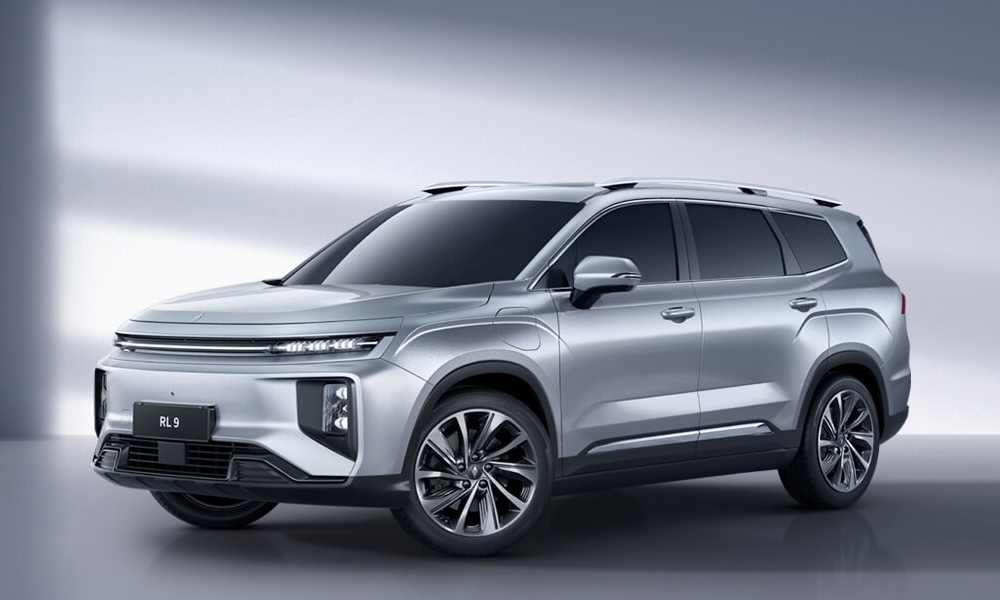
千里科技:千里浩瀚G-ASD方案已搭载于极氪、领克车型
Ju Chao Zi Xun· 2026-01-08 09:38
Core Insights - The company has fully shifted its core business towards intelligence, launching a comprehensive hardware and software integrated intelligent driving solution in partnership with Geely, Maichi, and Lotus [2] - The autonomous driving service (Robotaxi) has been successfully implemented in Chengdu, with the release of the G-ASD advanced driving assistance solution covering levels L2 to L4, now equipped in Zeekr and Lynk & Co models [2] Company Transformation - Founded in 1992 and listed in 2010, the company has undergone significant capital and strategic restructuring to transition from a traditional manufacturer to an intelligent driving technology company [2] - Key developments include the introduction of strategic investors like Manjianghong Fund and Geely in 2020, the establishment of Ruiblu Automotive in 2022, and the enhancement of governance with industry elites joining the company [2] - The company has submitted an application for a Hong Kong stock listing in 2025 to broaden its financing channels while maintaining traditional automotive and motorcycle businesses as stable cash flow foundations [2] Technological Advancements - The company plans to gradually apply the iteration of its intelligent driving system 2.0 and improvements in obstacle scenarios in next year's vehicle deliveries, aiming for L3 level capabilities with expected completion of quasi-L3 access this year [3] - Significant enhancements in technical architecture and model parameters, along with continuous updates in hardware configuration and cloud-based model support, are being made to achieve L3 level [3] - Discussions on technical challenges such as sensor fusion, algorithm changes, and competitive responses from domestic manufacturers were highlighted, emphasizing the impact of model-driven acceptance and data granularity on recognition results [3] Strategic Partnerships - Geely is identified as a key Alpha customer, with plans to deepen collaboration on integrated hardware and software solutions while actively negotiating with other OEMs for strategic partnerships [3] - Despite market pressures on pricing and shipment volumes, the company anticipates rapid growth from major and strategic customers, focusing on the development of integrated solutions to enhance the importance of flagship vehicle cabins [3]


汽车行业2026十大趋势:国央企整车企业迎来发展机遇、具身智能进入量产前夜
Xin Hua Cai Jing· 2026-01-08 07:18
Core Viewpoint - The Chinese automotive industry is at a critical juncture in the transition towards electric and intelligent vehicles, with three distinct industry curves coexisting: traditional fuel vehicles, electric intelligent vehicles, and future industries represented by autonomous driving. The year 2026 is anticipated to be a pivotal turning point for the industry, characterized by structural transformation driven by policy, market growth, technological breakthroughs, and global competition [1]. Group 1: Trends in the Automotive Industry - Trend 1: The "old-for-new" policy is expected to become a normalized tool, addressing the growing gap in vehicle replacement as the annual scrappage rate remains significantly lower than new car sales. This policy is projected to enhance market demand and support steady domestic consumption and industrial production [2]. - Trend 2: New automotive players are driving an upgrade in export structure, with Chinese automotive exports experiencing significant growth, becoming a "second growth curve." These companies are shifting from single vehicle exports to localized production, enhancing China's brand value and technological image in the global market [3]. - Trend 3: A clear differentiation is emerging between "mass-market pure electric" and "high-end range-extended" vehicles, with structural changes in market demand as the penetration rate of new energy vehicles exceeds 50%. The mainstream configuration for high-end SUVs/MPVs remains "large battery long-range range-extended" [4]. Group 2: Market Dynamics and Competitive Landscape - Trend 4: The industry is transitioning to a "late-stage mass market," where consumers prioritize brand reputation, after-sales support, and residual value certainty. Resources are increasingly consolidating around leading technology firms, enhancing conversion efficiency in mainstream price segments [5]. - Trend 5: State-owned enterprises are poised for growth opportunities as regulatory bodies strengthen the assessment of their new energy businesses, driving resources towards electric intelligence. These enterprises hold advantages in manufacturing systems and compliance, particularly in the realm of conditional autonomous driving [6]. - Trend 6: The penetration of new energy commercial vehicles is accelerating, with heavy-duty and light-duty trucks entering a rapid growth phase. The total cost of ownership for heavy trucks is now within a 1.5-2 year recovery period, while urban electric vehicle infrastructure is fully mature [7]. Group 3: Technological Advancements and Future Prospects - Trend 7: High-perception intelligent cockpit configurations are reshaping purchasing decisions, with smart features becoming a core competitive differentiator. The integration of advanced displays and intelligent seating systems is driving a new wave of competition in the market [8]. - Trend 8: Intelligent driving architecture is transitioning to an "end-to-end" model, enhancing the integration of perception and decision-making processes. The "equalization of intelligent driving" is facilitating advanced driving assistance features in lower-priced models [9][10]. - Trend 9: Three major commercial scenarios for autonomous driving are on the verge of mass production, including Robotaxi, mining autonomous vehicles, and unmanned logistics vehicles, with significant cost reductions and operational efficiencies being realized [11]. - Trend 10: Embodied intelligence is approaching mass production, with humanoid robots transitioning to dual-core intelligence. The automotive industry is well-suited for this technology due to the high degree of technical reuse, with several manufacturers planning to launch production in 2025 [12]. Overall, the Chinese automotive industry is expected to exhibit characteristics of multiple technological pathways, market structure differentiation, and accelerated intelligence implementation, supported by policy guidance and technological innovation, leading to high-quality development [13].
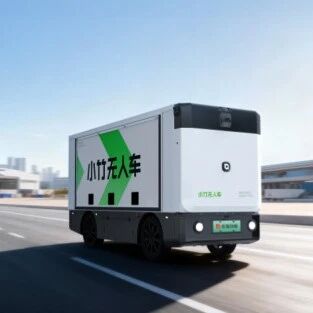
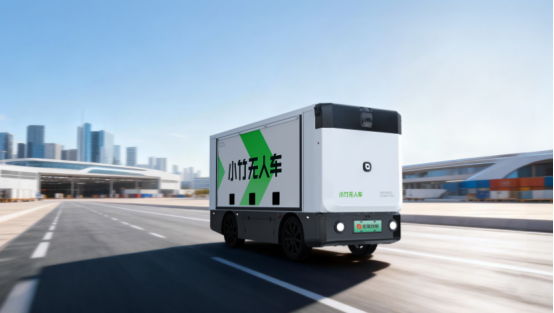
地平线增持「无人物流第一股」佑驾创新,共推L4无人物流业务发展
Xin Lang Cai Jing· 2026-01-08 06:05
Core Viewpoint - Horizon Together Holding Ltd. has purchased a total of 688,200 shares of Youjia Innovation (2431.HK), reflecting long-term confidence in the company's business and future growth potential [3][10] Group 1: Investment Actions - Youjia Innovation has initiated a share repurchase plan of 200 million yuan and extended the lock-up period for major shareholders, signaling strong confidence in long-term development [3][10] - The increase in shares by Horizon Together is based on years of collaboration and recognition of Youjia Innovation's value within the Horizon ecosystem [3][10] Group 2: Business Development - Youjia Innovation's domain control products, developed based on Horizon's processing hardware, have achieved large-scale production and are being utilized by leading domestic and international automotive manufacturers [4][11] - The collaboration between Youjia Innovation and Horizon has expanded into the L4 autonomous logistics vehicle sector, aiming to create advanced autonomous driving products [4][11] Group 3: Market Position and Future Outlook - In the context of the current pressure on the Hong Kong stock market, Horizon's investment serves as a strong endorsement of Youjia Innovation's intrinsic value and growth potential [6][13] - Youjia Innovation is uniquely positioned in the market, being the only company among its peers to have made significant advancements in L2 mass production, smart cockpit, and L4 autonomous driving, which enhances its attractiveness to investors [6][13][14] - The ongoing trends in intelligent driving and the acceleration of L3 deployment suggest that Youjia Innovation is well-prepared for the next wave of performance growth, potentially leading to a revaluation of its market value [7][14]
智驾成果“闪耀”2026 CES,智能驾驶ETF(516520)助力布局汽车智能化转型新浪潮
Xin Lang Cai Jing· 2026-01-08 05:48
Core Insights - The issuance of the first L3-level autonomous driving license in Chongqing marks a significant step towards the commercial use of autonomous vehicles in China, transitioning from research and testing to compliance and commercialization [1][3] - The positive news has led to increased investment in the smart automotive sector, with the smart driving ETF (516520) attracting over 455 million yuan in net inflows since December 2025, significantly surpassing the total net inflow of 101 million yuan for the first eleven months of 2025 [1][3] - The scale of the smart driving ETF has grown from 390 million yuan at the beginning of December 2025 to 903 million yuan by January 7, 2026, representing an increase of over 130% [1][3] Industry Dynamics - The 2026 International Consumer Electronics Show (CES 2026) opened on January 6, showcasing the latest advancements in autonomous driving from various automotive companies, indicating rapid iteration in key areas such as smart cockpits, operating systems, and intelligent driving [1][4] - Artificial intelligence technology is increasingly penetrating the upgrades of intelligent driving assistance systems, in-vehicle interaction, and smart manufacturing, which is expected to drive the evolution of intelligent driving systems from single-function to cross-domain integration [4] - The smart driving ETF (516520) closely tracks the CSI Smart Automotive Theme Index, which includes companies providing terminal perception and platform applications for smart vehicles, reflecting the overall performance of the smart automotive industry [2][4] Sector Composition - The top five sectors represented in the CSI Smart Automotive Theme Index are automotive parts (24%), semiconductors (19.6%), passenger vehicles (14.4%), software development (11.3%), and communication equipment (7.1%), covering multiple segments of the smart automotive supply chain [2][4]
元戎启行:年内交付量超20万台
Ju Chao Zi Xun· 2026-01-08 02:34
Core Insights - Yuanrong Qixing released its 2025 annual report, indicating the mass production of over 15 models utilizing its intelligent driving solutions, including brands like Weipai and Tank 500, with annual delivery exceeding 200,000 units [2] Group 1: Company Overview - Yuanrong Qixing was founded in 2019 by CEO Dr. Zhou Guang, headquartered in Shenzhen, and has established operations in multiple locations globally [2] - The company has completed six rounds of financing, raising over $500 million in total [2] Group 2: Product and Technology - The latest generation of the auxiliary driving system, DeepRoute IO 2.0, incorporates a VLA model with integrated cognitive capabilities, creating an AI driver with "defensive driving" awareness [2] - The company is the first in the country to deploy Robotaxi services using mass-produced vehicles [2] Group 3: Market Performance - The primary locations for the intelligent driving models are concentrated in cities such as Beijing, Chongqing, Baoding, Chengdu, and Tianjin, with an average assisted driving mileage of 22,600 kilometers per vehicle owner [2] - The longest assisted driving mileage recorded for a single user is 137,000 kilometers, with the maximum driving duration reaching 1,383 hours [2] Group 4: Strategic Partnerships - On October 31, Yuanrong Qixing signed an agreement with the Wuxi government to establish a testing and research base, accelerating the implementation of its Robotaxi business [2]
地平线增持佑驾创新 共推L4无人物流业务发展
Zheng Quan Shi Bao Wang· 2026-01-08 02:23
Core Viewpoint - Horizon Together Holding Ltd. has shown long-term confidence in Youjia Innovation by purchasing 688,200 H-shares in the open market, indicating strong support for the company's future growth [1] Group 1: Investment and Market Actions - Youjia Innovation has initiated a share repurchase plan of 200 million yuan, extended the lock-up period for major shareholders, and witnessed multiple rounds of share purchases by Chairman Liu Guoqing, signaling confidence in long-term development [1] - Horizon's decision to increase its stake is based on years of collaboration and recognition of Youjia Innovation's value within the Horizon ecosystem, aiming to accelerate the development of L4 unmanned logistics vehicles [2] Group 2: Technological Advancements and Market Position - Youjia Innovation has achieved large-scale production of domain control products based on Horizon's processing hardware, covering leading domestic and international automotive manufacturers, thus becoming a key player in promoting high-quality industry development [2] - The company is leading in the L2 pre-installation production field while expanding its collaboration into the L4 unmanned logistics sector, showcasing its technological breakthroughs and commercialization achievements at the 2025 Horizon Technology Ecosystem Conference [2] Group 3: Industry Insights and Future Outlook - In the context of the current pressure on the Hong Kong stock market, Horizon's investment serves as a strong endorsement of Youjia Innovation's intrinsic value and growth potential, signaling deep collaboration and long-term progress within the industry [3] - Youjia Innovation's comprehensive capabilities across L2 pre-installation, smart cockpit, and L4 autonomous driving make it a unique player in the market, contributing to its ability to attract further investment from Horizon [4] - The increase in Horizon's stake provides an opportunity for investors to reassess Youjia Innovation, as industry capital often reflects the true quality of a company, with Horizon's continued purchases indicating high recognition of Youjia's performance resilience and growth potential [5]
英伟达Alpamayo对智能驾驶行业影响
2026-01-08 02:07
Summary of Key Points from Conference Call Company and Industry Involved - **Company**: NVIDIA - **Industry**: Intelligent Driving and Autonomous Vehicles Core Insights and Arguments - **Alpaca Model Launch**: NVIDIA has released the open-source Alpaca model aimed at creating an integrated hardware-software ecosystem for autonomous driving, similar to the competition between Android and Apple ecosystems [1][2] - **Performance Improvements**: The Alpaca model enhances trajectory generation through FlowMatting technology, achieving a 12% performance improvement on complex intersections and reducing closed-road boundary crossing rates from 17% to 11%, and near-collision scenarios from 4% to 3% [1][2] - **Real-time Processing**: The model meets automotive-grade requirements with a total processing time of 99 milliseconds under the RTS6,000 architecture, which is within the 100 milliseconds threshold [2] - **Challenges**: High costs associated with data labeling and engineering complexity are significant hurdles for implementation. The model requires extensive manual annotation and optimization efforts [2][5] - **Ecosystem Impact**: Companies that partner with NVIDIA can accelerate their deployment processes but must pay collaboration fees. Domestic self-research manufacturers like NIO, Xpeng, and Li Auto are less affected and can adapt NVIDIA's strategies [1][6] - **Third-party Algorithm Companies**: Companies like Zhuoyu and Qingzhou, which collaborate with Qualcomm, may face market pressure as manufacturers opt for NVIDIA's solutions, potentially squeezing their market space [7] Additional Important Content - **Future Developments**: The Apache Maestro model shows a latency of approximately 125 milliseconds on A100 chips, with real-world testing yielding around 60 milliseconds on SOR Ultra 750 tops chips, indicating a need for further optimization [8][9] - **2026 as a Key Year**: The year 2026 is anticipated to be pivotal for the proliferation of intelligent driving technologies, focusing on engineering optimization and data training loops to enhance widespread application [10][12] - **Competitor Developments**: Waymo's self-developed BMC chip is set to launch with SAIC in Q3 2026, while BYD's self-developed chip is expected to be ready by Q4 2026 [3][14][15] - **OpenMA Ecosystem**: The OpenMA ecosystem is expected to accelerate the deployment of high-end intelligent driving technologies for companies like Mercedes and GM, although domestic manufacturers are slower to expand internationally [19] - **Robotaxi Impact**: The new autonomous driving model from NVIDIA may not achieve the operational efficiency of competitors like Waymo or Tesla in the short term, particularly due to challenges with long-tail scenarios [13] - **Data Collection for L4 Robotaxi**: NVIDIA's data collection for L4 Robotaxi operations relies on self-collected and anonymized data, with a focus on extensive annotation as a critical component [22] This summary encapsulates the essential points discussed in the conference call, highlighting the implications of NVIDIA's advancements in the intelligent driving sector and the competitive landscape.

千里科技20260107
2026-01-08 02:07
Summary of Qianli Technology Conference Call Company Overview - Qianli Technology positions itself as the "Huawei of the AI era," providing integrated smart driving solutions through deep collaborations with top OEM manufacturers like Geely and Mercedes-Benz, forming an open alliance to tackle challenges in traditional automotive R&D and the vulnerabilities of pure software business models [2][3] Management and Shareholder Background - The management team includes key figures such as: - Chairman Ying Qi, co-founder of Megvii, a leader in visual AI - Vice Chairman Bao Yi, former CEO of Morgan Stanley China, now Chairman of Yunbai Capital - Wang Junjun, former president of Huawei Chiplet, overseeing engineering and customer solutions - Shareholders include Geely, the Chongqing government, and strategic investor Mercedes-Benz, providing technical, capital, and policy support [2][4] Strategic Positioning and Business Model - Qianli Technology operates as an AI-native automotive technology platform, not a traditional car manufacturer, employing a dual-drive model that leverages manufacturing capabilities from Lifan and Geely while focusing on smart driving, smart cockpit, and Robot Taxi technologies [3] - The company aims to provide open and win-win technical solutions for global automakers [3] Market Challenges and Responses - The smart driving market faces two main challenges: - Traditional OEMs struggle with R&D due to high costs and lack of AI integration - Pure software companies have fragile business models without hardware synergy - Qianli Technology addresses these challenges by offering comprehensive soft and hard delivery solutions and establishing open alliances with top OEMs for deep integration and data sharing [6] Technological Advancements - Qianli Technology's advancements in chips and algorithms are structured in three layers: - Bottom layer: Chips and algorithms, collaborating with domestic chip manufacturers - Middle layer: Domain control and sensors, balancing self-research and partnerships - Upper layer: Integrated structure of smart driving, smart cockpit, and Robot Taxi [7] Key Clients and Future Plans - Geely is the primary client, with over 60 models expected to adopt Qianli's systems by 2027 - Mercedes-Benz has invested 1.3 billion and will collaborate deeply in smart cockpit and driving technologies - The company plans to continue serving top global OEMs and establish a T0.5 level alliance through strategic cooperation agreements [8] Manufacturing and Financial Performance - The manufacturing segment is robust, with motorcycle net profits exceeding 100 million yuan and automotive sales reaching 106,300 units, a nearly 84% year-on-year increase, demonstrating significant scale effects [9] Technology Sector Progress - The technology sector is entering a harvest phase, with the Qianli smart driving system already launched in Geely's Zeekr models and set for broader rollout in 2026 - The Robot Taxi initiative has been implemented in Chengdu, with plans to expand to 10 cities and 1,000 vehicles within 18 months [10] Product Releases and Innovations - At CES 2026, Qianli unveiled the GASD version 6.7, which enhances urban NOAV functionality with 25 million effective parameters, significantly improving the autonomous driving experience [11] R&D and Team Structure - Qianli Technology has a team of nearly 2,000, with about 1,500 in core R&D, employing an organic integration approach in R&D processes to enhance product adaptability to various driving scenarios [12] Collaboration with Geely - The partnership with Geely utilizes a turnkey delivery model for integrated solutions, with plans to expand into smart cockpit products in collaboration with Mercedes-Benz [13] International Market Expansion - Qianli is actively engaging with overseas clients and plans to leverage the Daimler platform for international market expansion, although specific details remain confidential [14] Robot Taxi Project Development - The Robot Taxi project will be phased, aiming for 1,000 operational vehicles within 18 months, focusing on core urban areas and collaborating with strategic partners [15][16] Future Business Model and Shareholding - The company currently holds a 60% stake in its smart driving subsidiary, with potential plans to increase this share depending on market conditions post-Hong Kong listing [18][20] Considerations for Subsidiary IPO - Qianli will evaluate the profitability and operational status of its subsidiaries before considering any IPO plans [21] Management Team Responsibilities - The management team has clear roles, with the chairman overseeing strategic direction, the CEO managing the entire production process, and the CTO focusing on core technology and research [22]
地平线增持「无人物流第一股」佑驾创新,共推L4无人物流业务发展
IPO早知道· 2026-01-08 01:01
Core Viewpoint - The article emphasizes the long-term growth confidence in Youjia Innovation, highlighted by significant investments and strategic actions from key stakeholders, particularly Horizon Together Holding Ltd, which reflects a strong belief in the company's future prospects and its role in the autonomous driving ecosystem [2][3][6]. Group 1: Investment Actions - Horizon Together Holding Ltd purchased a total of 688,200 shares of Youjia Innovation, indicating a strong belief in the company's business outlook [2]. - Youjia Innovation announced a share repurchase plan of 200 million yuan, extended the lock-up period for major shareholders, and saw multiple rounds of share purchases by Chairman Liu Guoqing, collectively signaling confidence in long-term development [2][6]. Group 2: Business Development and Collaboration - Youjia Innovation has achieved large-scale production of domain control products based on Horizon's processing hardware, covering leading domestic and international automotive manufacturers [3]. - The collaboration between Youjia Innovation and Horizon has expanded into the L4 autonomous logistics sector, aiming to develop advanced autonomous driving products through a dual approach of L2 and L4 technologies [4]. Group 3: Market Position and Future Outlook - Youjia Innovation is positioned as a key player in the intelligent driving sector, with a comprehensive capability across L2 mass production, smart cockpit, and L4 autonomous driving, making it a unique asset in Horizon's investment portfolio [6][8]. - The investment from Horizon serves as a strong endorsement of Youjia Innovation's resilience and growth potential, especially in the context of increasing penetration of intelligent driving technologies and the acceleration of L3 deployment [8].