美联储政策转向

Search documents
21社论丨美元体系不确定性加剧,人民币国际化或迎新机遇
Sou Hu Cai Jing· 2025-08-26 22:52
Group 1 - Federal Reserve Chairman Powell hinted at potential interest rate cuts in the coming months despite ongoing inflation risks, causing short-term market volatility [1] - The U.S. labor market appears deceptively stable, with a slowdown in labor participation and job demand contributing to a "peculiar balance" [1] - Concerns about stagflation arise as the market fears a combination of weak economic growth and high inflation, reminiscent of past economic conditions [2] Group 2 - The potential loss of Federal Reserve independence raises concerns about aggressive rate cuts, influenced by political pressures from the Trump administration [2] - The current economic environment may provide a window of opportunity for China and other emerging markets, as U.S. rate cuts could lower financing costs and enhance economic activity [3] - The uncertainty surrounding the U.S. dollar system may prompt a shift towards the internationalization of the renminbi, as global capital seeks safer assets [3]
美联储专题研究:美联储换届暗流涌动,谁能摘得新任主席桂冠?
Donghai Securities· 2025-08-18 12:37
Group 1: Federal Reserve Background and Structure - Jerome Powell's term as Federal Reserve Chairman will end in May 2026, with President Trump frequently calling for interest rate cuts and criticizing Powell as "too late" this year[4] - The FOMC voting committee consists of 12 members, including 7 Federal Reserve governors with 14-year terms, 1 New York Fed president, and 4 rotating regional Fed presidents[10] - Trump can appoint up to 2 new Federal Reserve governors during his current term, potentially leading to 4 out of 7 governors being appointed by him by 2028[13] Group 2: Potential Candidates for Chairmanship - The top candidates for the Federal Reserve Chair include Christopher Waller, Kevin Hassett, and Kevin Walsh, with Waller having a 34% chance of winning the nomination as of August 18, 2025[30] - Waller advocates for a shift in focus from "controlling inflation" to "preventing economic recession," emphasizing the importance of labor market feedback[30] - Hassett supports a more aggressive interest rate cut path and believes the Fed should prioritize economic stimulation over inflation concerns[34] Group 3: Policy Implications and Risks - If Waller is appointed, the Fed's policy may prioritize labor market conditions, with a potential preventive interest rate cut of 25 basis points[31] - Hassett's appointment could lead to increased scrutiny of the Fed's independence and a shift towards quantitative easing to support fiscal policies[34] - Risks include unexpected policy shifts from Trump and a rapid economic downturn that could prompt Powell to adopt a more dovish stance[37]
美联储内部分歧严重,若鲍威尔要“转鸽”,那“杰克逊霍尔”是最佳时机
华尔街见闻· 2025-08-08 09:49
Core Viewpoint - The article emphasizes the increasing internal divisions within the Federal Reserve and the market's anticipation of clear signals from Chairman Powell at the upcoming Jackson Hole Global Central Bank Conference [1][6]. Group 1: Federal Reserve's Internal Divisions - The Federal Reserve is experiencing a clear split between hawkish and dovish factions, leading to a more ambiguous policy outlook [3][4]. - The dovish camp, represented by figures like New York Fed President Williams, is more concerned about inflation, while the hawkish camp, including Minneapolis Fed President Kashkari, is focused on the risks of economic downturn and labor market slowdown [4][5]. Group 2: Importance of Jackson Hole Conference - The Jackson Hole conference, scheduled for August 21-23, is highlighted as a critical platform for Powell to announce any significant policy shifts, particularly if the Fed's focus shifts from combating inflation to prioritizing full employment [2][7]. - Powell's communication remains dominant despite the internal divisions, as evidenced by a recent 9-2 voting outcome, underscoring his influence over the committee [6].

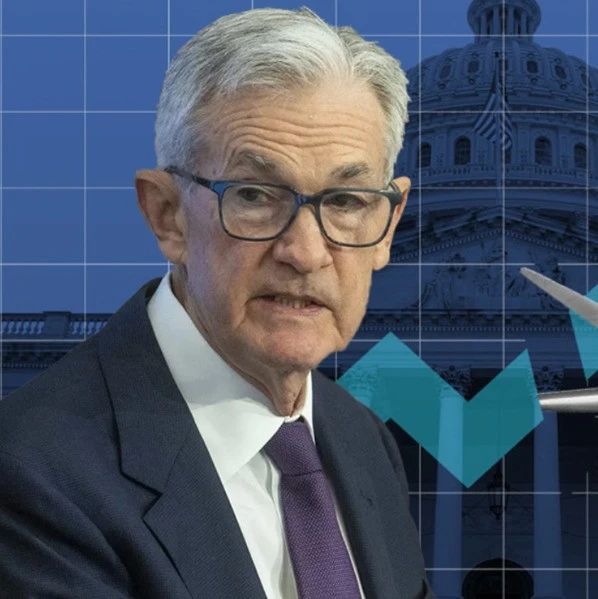
美银:美联储内部分歧严重,若鲍威尔要“转鸽”,那“杰克逊霍尔”是最佳时机
美股IPO· 2025-08-08 05:14
Core Viewpoint - The focus of the Federal Reserve's policy may be shifting from inflation to employment, with the upcoming Jackson Hole meeting being a key opportunity for Chairman Powell to signal this change [1][2][5]. Group 1: Jackson Hole Meeting - The Jackson Hole central bank meeting is scheduled for August 21-23 this year [3]. - Historically, this meeting has been a platform for significant policy announcements by the Fed Chair, including Powell's "Volcker moment" in August 2022, which set the tone for aggressive rate hikes [6]. Group 2: Internal Disagreements within the Fed - There is a clear division within the Federal Reserve, with a dovish camp led by officials like Williams and Hammack, who are more concerned about inflation, and a hawkish camp represented by Kashkari and Daly, who focus on economic downturn risks and labor market slowdowns [4]. - The increasing internal disagreements suggest that market expectations are leaning towards Powell providing clear signals at the Jackson Hole meeting [5][6]. Group 3: Powell's Influence - Despite the internal divisions, Powell's communication remains dominant, as evidenced by a recent 9:2 voting outcome in the committee [6]. - Powell's upcoming speech at the Jackson Hole meeting is expected to be crucial, especially if the Fed's focus indeed shifts towards employment [6].
华尔街神算子:就业数据崩塌将迫使美联储政策转向 或支持更高股市估值
Zhi Tong Cai Jing· 2025-08-06 06:55
Group 1 - Goldman Sachs issued a warning regarding significant downward revisions to U.S. employment data, with a total adjustment of 258,000 jobs for May and June, marking the largest two-month revision since 1968 outside of recession periods [1] - The downward revisions were evenly distributed between the public and private sectors, indicating a broader impact on the labor market [1] - Goldman Sachs anticipates further downward adjustments, predicting a potential reduction of 550,000 to 950,000 jobs in the upcoming non-farm employment benchmark revision, which could lower monthly job growth estimates for 2024-2025 from 145,000 to a range of 65,000-100,000 [1] Group 2 - Tom Lee from Fundstrat highlighted that the magnitude of the employment data revisions indicates a significant deviation from the Federal Reserve's dual mandate of employment and inflation, suggesting a more severe labor market issue than previously recognized [2] - Lee predicts an imminent shift in Federal Reserve policy, which could lead to higher price-to-earnings ratios as lower interest rates enhance investor interest in risk assets [2] - Following the release of disappointing July non-farm employment data, market expectations for two interest rate cuts by the Federal Reserve by the end of December have intensified [2]
从SOFR期权到债市倾斜:交易员疯狂对冲“美联储转向”9月或现50基点激进宽松
智通财经网· 2025-08-06 01:17
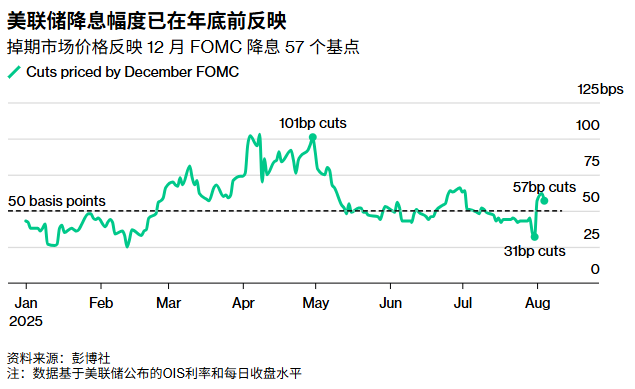
Group 1 - The U.S. economy is showing signs of weakness, providing a basis for the Federal Reserve to respond to Trump's calls for interest rate cuts, with the bond market increasing bets on rate cuts this year [1] - SOFR options indicate that investors are preparing for potential rate cuts in the remaining three meetings, with expectations of a cumulative rate reduction of 75 basis points by 2025, and some even betting on a 50 basis point cut in September [1][22] - Recent economic data, including weaker-than-expected non-farm payrolls and stagnant service sector reports, have reinforced market expectations for the Fed to cut rates to support the economy [1] Group 2 - Morgan Stanley's clients have increased their long positions in U.S. Treasuries to the highest level since April, reflecting a bullish sentiment in the cash market [5] - The Federal Reserve is showing signals of a policy shift, with officials like San Francisco Fed President Daly stating that "the time for rate cuts has come," and some members voting against maintaining rates [5] - As of the week ending August 4, clients raised their long positions in U.S. Treasuries by 5 percentage points, marking the highest level since April 14 [6] Group 3 - SOFR options data shows significant increases in positions for various strike prices, particularly for puts at 95.75, indicating a strong bearish sentiment [8][10] - The demand for hedging against further rate declines has increased following the employment report, with some positions directly betting on a 50 basis point cut in September [10] - The skew in U.S. Treasury options has shifted to a bullish stance, with the expansion of long call skew reaching the highest level since April [14] Group 4 - Hedge funds have significantly increased their net short positions in 10-year Treasury futures, while asset management companies have increased their net long positions in 10-year and longer contracts, indicating a notable divergence in market sentiment [18] - Current market focus is on the September meeting, with some SOFR options trading reflecting investors preparing for potential large rate cuts [22]
凯德北京投资基金管理有限公司:美7月非农仅增7.3万远低预期
Sou Hu Cai Jing· 2025-08-02 09:11
Group 1 - The U.S. Labor Department reported a non-farm payroll increase of 73,000 in July, significantly below the expected 185,000, marking the lowest level since December 2023 [2] - Three major sectors showed notable declines: retail sector layoffs of 12,000 (seasonally adjusted), a reduction of 34,000 temporary jobs indicating corporate contraction, and zero job growth in government sectors reflecting peak fiscal spending [3] - The market reacted sharply with a 15 basis point drop in U.S. Treasury yields, a 2% short-term jump in gold prices, and a mixed performance in the S&P 500 as investors bet on earlier interest rate cuts [4] Group 2 - Despite the employment slowdown, hourly wages increased by 0.4% month-over-month (annualized at 4.8%), creating a paradox of wage inflation against the backdrop of a cooling job market [4] - The report highlights the delayed effects of interest rate hikes and suggests that the policy debate is entering a more complex phase, as the narrative of a "soft landing" faces challenges from the data [4] - The market is advised to prepare for greater volatility as the economic indicators present conflicting signals regarding the labor market and inflation risks [4]

民生证券:鲍威尔展示了既“鹰”又“鸽”的一面
news flash· 2025-07-30 23:33
Core Viewpoint - The July FOMC meeting was a significant attempt by Powell, showcasing both "hawkish" and "dovish" stances, with the potential for rate cuts becoming more accessible based on upcoming economic data [1] Group 1: Monetary Policy Insights - Powell maintained a "hawkish" stance by not committing to rate cuts and resisting pressure [1] - The "dovish" aspect indicates that the threshold for a policy shift has lowered, allowing for potential rate cuts if economic data in the next two months is disappointing [1] - The market currently favors the "hawkish" perspective, as evidenced by a significant rise in the dollar index, which approached 100 [1] Group 2: Future Outlook - A single disappointing non-farm payroll report could reverse market expectations [1] - Objective assessment of the U.S. macroeconomic fundamentals will be crucial for both the Federal Reserve and the market moving forward [1] - The consensus view aligns with the expectation of a rate cut in the September FOMC meeting [1]
黄金亚盘延续反弹微涨,追多或上方承压空单布局
Sou Hu Cai Jing· 2025-07-30 03:36
Group 1 - The core viewpoint of the articles revolves around the fluctuations in gold prices, influenced by multiple factors including the upcoming Federal Reserve interest rate decision, U.S.-China trade negotiations, and global risk sentiment [1][3][4] - Gold prices experienced a rebound, reaching a peak of $3333.93 per ounce before closing at $3326.35, reflecting a 0.36% increase after a drop to $3302, the lowest since July 9 [1] - The Federal Reserve is expected to maintain interest rates in the 4.25%-4.50% range, but there are indications of potential dovish signals in the policy statement due to mixed economic data [3] Group 2 - The U.S.-China trade talks have led to an extension of the tariff truce, with China confirming efforts to push for the suspension of certain tariffs, although the negotiations are expected to be complex and lengthy [4] - Recent trade agreements between the U.S. and the EU, as well as Japan, may influence the Federal Reserve's decisions, potentially reducing external risks and creating space for a dovish shift [4] - The current gold market is at a critical turning point, with strong support at the $3300 level and resistance around $3350, influenced by both global trade tensions and expectations of a shift in Federal Reserve policy [5]

黄金今日行情走势要点分析(2025.7.30)
Sou Hu Cai Jing· 2025-07-30 00:43
Fundamental Analysis - The Federal Reserve is widely expected to maintain interest rates in the range of 4.25%-4.50%, with market focus on whether the policy statement will convey dovish signals [3] - Economic data presents mixed signals: June job openings decreased and hiring numbers fell, indicating a weak labor market, while the July consumer confidence index rose to 97.2, exceeding expectations [4] - The 10-year U.S. Treasury yield fell to 4.330%, the lowest since July 3, reflecting market risk aversion and bets on a shift in Federal Reserve policy [4] - Following the U.S.-EU and U.S.-Japan trade agreements, external risks have decreased, potentially creating space for a dovish shift by the Federal Reserve [5] Technical Analysis - On the daily chart, gold experienced a small upward movement after four consecutive days of decline, indicating a potential slowdown in the downtrend [7] - Key resistance levels for gold are at 3335/3336 and 3345, while support levels are at 3302/3301, 3282, and 3275 [7][9] - The four-hour chart suggests that if gold can hold above the 3302/3301 level, it may confirm an upward structure, with targets set at 3354, 3370, and 3386/3387 [9]