
资管新规

Search documents
【锋行链盟】科创板IPO资管计划设立流程及核心要点
Sou Hu Cai Jing· 2025-10-15 16:13
Group 1 - The establishment of the Sci-Tech Innovation Board IPO asset management plans must adhere to strict regulatory rules involving multiple parties, including issuers, managers, and investors [2][5] - The process for setting up these plans includes demand positioning, scheme design, internal decision-making, external approval, registration, participation in IPO allocations, and subsequent management and exit strategies [4][5] - The primary purposes for establishing asset management plans are strategic allocation, employee stock ownership, and financial investment [5][6] Group 2 - Compliance requirements include ensuring adherence to asset management regulations, strategic allocation rules, and internal decision-making processes [6][7] - Investors must meet suitability criteria, including financial asset thresholds for individuals and net asset requirements for institutions [7] - Lock-up periods are typically set at 12 months for strategic investors and employee stock plans, with specific conditions for extensions and transfers [7] Group 3 - Information disclosure obligations require issuers to provide details about the nature of the asset management plans, holder structures, funding sources, and lock-up arrangements [7] - Tax planning considerations include VAT on transfer income and income tax obligations for investors, with potential tax incentives for certain regions [7] - Risk control measures must be implemented to manage market, compliance, and operational risks associated with the asset management plans [7]


房产理财不香了?赚钱逻辑已改写,新投资环境靠新方法
Sou Hu Cai Jing· 2025-10-11 11:49
Group 1: Real Estate Market - The real estate market has shifted, with not all properties being difficult to sell; properties in core urban areas can sell quickly, while those in third-tier cities struggle [5][6] - Since the second half of 2021, the real estate sector has been in deep adjustment, indicating that buying property is no longer a guaranteed profit strategy [6][8] - The demographic trend shows a slowdown in young population growth, leading to demand concentrating in cities with industry and population inflow, causing price declines in non-core areas [8] Group 2: Investment Products - The yield on investment products has significantly decreased, with previously common 8% returns now mostly around 2%, primarily due to liquidity issues in underlying assets like real estate and local government financing [10] - Regulatory changes have altered the investment landscape, making it essential to evaluate the underlying assets of financial products rather than just their yields [12] Group 3: Monetary Policy and Economic Outlook - Global monetary policies are shifting towards easing, with the U.S. Federal Reserve reducing rates from 5.25%-5.5% to around 4%, and further cuts expected, potentially bringing rates below 3% [14][16] - China's monetary policy is also transitioning to a moderately loose stance, with expectations of rate cuts and a focus on stabilizing economic growth around 5% [17] - Lower borrowing costs from reduced mortgage rates and corporate financing will positively impact capital markets and corporate profitability, supporting long-term stock market growth [19] Group 4: Investment Strategy Recommendations - Households are advised to reassess their asset allocation, as many have a high percentage of wealth tied up in real estate, which poses risks [21] - A suggested asset allocation strategy includes emergency funds, stable investments, and growth-oriented investments to avoid liquidity issues [23] - Success in the new investment environment relies on patience and adapting to policy changes rather than relying on outdated strategies [25]

存款减少超千亿、理财产品增加 上市公司也在“存款搬家”?
2 1 Shi Ji Jing Ji Bao Dao· 2025-09-18 23:44
Core Viewpoint - The trend of "deposit migration" among residents and companies is highlighted, with a significant decrease in resident deposits and an increase in wealth management products due to lower deposit rates and a recovering equity market [1][2]. Group 1: Deposit Trends - In August, new resident deposits decreased by 110 billion yuan, down 600 billion yuan year-on-year, while new non-bank deposits increased by 11.8 billion yuan, up 5.5 billion yuan year-on-year [1]. - The overall scale of listed companies' wealth management has shown a downward trend, with a total subscription amount of 1.10 trillion yuan in the past year, a decrease of 26.17% from the peak of 1.49 trillion yuan in 2022 [2]. Group 2: Wealth Management Preferences - Listed companies are increasingly favoring wealth management products, with a notable shift towards structured deposits and bank wealth management products, which now account for 9.93%, 6.87%, and 2.07% of their investments, respectively [2][4]. - The demand for wealth management among listed companies is driven by the need for stable returns and liquidity, especially as companies mature and experience cash accumulation [3]. Group 3: Market Dynamics - The decline in deposit rates has made bank wealth management products more attractive, with average annualized yields for cash management products at 1.32% and long-term fixed income products at 1.39% [6][7]. - The total investment in structured deposits by listed companies was approximately 681.12 billion yuan, although this has decreased by around 100 billion yuan year-on-year [7]. Group 4: Corporate Financial Strategies - Companies are increasingly focusing on optimizing their capital structure and improving asset return efficiency, necessitating flexible management of idle funds to mitigate liquidity risks [5]. - The recovery in corporate profits is expected to lead to a restoration of the total scale of funds used for wealth management, as net profits for all A-share listed companies rose to 3.21 trillion yuan in the first half of 2025, up 2.23% year-on-year [8]. Group 5: Asset Management Opportunities - Asset management institutions are actively positioning themselves to meet the growing demand for corporate wealth management, with a focus on customized and flexible product offerings [9][10]. - The trend towards institutionalization and professionalization in the listed company wealth management market presents significant opportunities for asset management firms to enhance their competitive capabilities [11].


A股上市公司存款减少超千亿、理财产品增加
21世纪经济报道· 2025-09-18 14:13
Core Viewpoint - The article discusses the trend of "deposit migration" among residents and the shift in investment preferences of listed companies towards higher-yielding financial products due to declining deposit rates and a recovering equity market [1][6]. Group 1: Financial Data and Trends - In August, the central bank reported a significant drop in new resident deposits, totaling 110 billion yuan, down 600 billion yuan year-on-year, while new non-bank deposits increased by 1.18 trillion yuan, up 550 billion yuan year-on-year [1]. - The total subscription amount for listed companies' financial products has decreased to 1.1 trillion yuan over the past year, down 26.17% from the peak of 1.49 trillion yuan in 2022 [1]. - Cash holdings still dominate at over 70%, but their proportion is declining, while the shares of bank wealth management, securities asset management, and trust products are on the rise, with recent proportions of 9.93%, 6.87%, and 2.07% respectively [2]. Group 2: Investment Preferences of Listed Companies - Recent announcements from several listed companies indicate a shift towards wealth management products, with companies like China Resources Sanjiu Pharmaceutical planning to invest up to 10 billion yuan in bank wealth management products [5]. - The investment in wealth management products is primarily from self-owned funds, focusing on structured deposits and bank wealth management, typically with maturities of 6 months to 1 year [6]. - The demand for wealth management products is driven by the need for stable returns and liquidity, especially as companies with stable development seek to optimize their cash management [6]. Group 3: Market Dynamics and Opportunities - The continuous decline in deposit rates has made bank wealth management products more attractive, with average annualized yields for cash management products at 1.32% and fixed-income products showing varying yields [9]. - The investment scale in structured deposits remains the highest among listed companies, totaling approximately 681.12 billion yuan, although it has decreased by around 100 billion yuan year-on-year [10]. - The recovery in corporate profits is expected to lead to an increase in the total scale of funds used for wealth management by listed companies, as profits have begun to rebound in 2023 [12]. Group 4: Institutional Response and Strategy - Asset management institutions are actively positioning themselves in the corporate wealth management market, with several companies regularly promoting their products [12]. - The trend of increasing demand for corporate wealth management presents significant opportunities for banks, securities firms, and trust companies, necessitating a focus on customized, flexible, and transparent product offerings [13]. - The overall market for listed company wealth management is becoming more institutionalized and professional, requiring asset management firms to adapt and enhance their competitive capabilities [13].

存款减少超千亿、理财产品增加,上市公司也在“存款搬家”?
2 1 Shi Ji Jing Ji Bao Dao· 2025-09-18 11:45
Core Insights - The significant decline in new resident deposits and the increase in non-bank deposits in August has sparked discussions about the phenomenon of "deposit migration" in the market [1] - The trend of asset allocation is shifting towards higher-yielding financial products due to declining deposit rates and a recovering equity market [1] - The overall scale of listed companies' financial management has shown a downward trend, with a 26.17% decrease from the peak in 2022 [1][3] Group 1: Financial Management Trends - Listed companies are increasingly investing in financial products, primarily using their own funds, with a focus on structured deposits and bank wealth management products [3] - The demand for corporate financial management is driven by the need for stable returns and liquidity, especially as companies stabilize and experience cash accumulation [3][4] - The proportion of cash holdings remains high at over 70%, but is declining, while the shares of bank wealth management, securities asset management, and trust products are on the rise [1][4] Group 2: Market Dynamics - The decline in deposit rates has heightened the demand for capital preservation and appreciation among companies, leading to a renewed interest in corporate wealth management [4][5] - The implementation of asset management regulations has facilitated the diversification and net value transformation of financial products, offering higher yields and flexibility compared to traditional deposits [4][5] - Companies are increasingly focused on optimizing their capital structure and improving asset return efficiency in response to uncertain operating environments [5] Group 3: Investment Performance - The average annualized yield of cash management products is currently at 1.32%, while fixed-income products have shown varying yields, generally outperforming traditional deposit products [7] - The investment scale in structured deposits remains significant, but has decreased by approximately 100 billion yuan year-on-year [7][8] - As corporate profits begin to recover, the total scale of funds used for financial management by listed companies is expected to improve [8] Group 4: Opportunities for Asset Management Institutions - Asset management institutions are recognizing the growing demand for corporate wealth management and are actively positioning themselves to meet this need [9][10] - Institutions are advised to enhance product customization, flexibility, and transparency to better serve corporate clients [10] - The market for corporate financial management is becoming more institutionalized and professionalized, necessitating asset management institutions to adapt and strengthen their competitive capabilities [10]

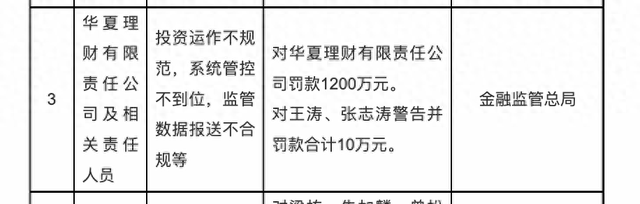
华夏理财遭金融监管总局重罚1200万元,业绩高增长难掩合规缺失
Guan Cha Zhe Wang· 2025-09-17 09:41
Core Viewpoint - Huaxia Wealth Management Co., Ltd. faced a fine of 12 million yuan due to regulatory violations, despite showing significant growth in performance in the first half of 2025 [1][2][3] Company Summary - Huaxia Wealth Management reported total assets of 5.788 billion yuan, a year-on-year increase of 9.06% as of June 30, 2025 [3] - The company achieved operating revenue of 654 million yuan, reflecting a year-on-year growth of 29.5% [3] - Net profit reached 381 million yuan, with a year-on-year increase of 21.73%, ranking among the top in profit growth among 22 wealth management subsidiaries [3] - Established in September 2020, Huaxia Wealth Management is fully owned by Huaxia Bank and has a registered capital of 3 billion yuan [3] Business Development - As of June 30, 2025, Huaxia Wealth Management managed 1,419 wealth management products with a total balance of 993.111 billion yuan, a growth of 19.18% from the previous year [3] - The company issued 733 products in the first half of the year, raising nearly 1.436 trillion yuan, with 98.5% being fixed-income products [3] - The management scale increased by 36.31% since the beginning of the year, making it one of the fastest-growing companies in the sector [3] Regulatory Response - Huaxia Wealth Management accepted the regulatory penalties and stated that it has fully implemented the required corrective measures [3] - The company indicated that the penalties were related to issues identified during a risk management and internal control inspection in 2023, which have since been rectified [3] - This incident follows a recent fine of 87.25 million yuan imposed on Huaxia Bank for multiple violations, indicating a trend of increased regulatory scrutiny in the financial sector [3][4] Industry Overview - The wealth management subsidiary sector showed steady growth and improved profitability in the first half of 2025, with 13 subsidiaries managing over 1 trillion yuan [4] - Among the 22 wealth management subsidiaries that disclosed their performance, 15 reported positive net profit growth, accounting for 68.18% [4] - The heavy penalties on Huaxia Wealth Management signal a clear message from regulators about the need for enhanced compliance and risk management in the industry [4]
债市机构生态之变
HTSC· 2025-09-14 12:22
Core Insights - The competitive and cooperative relationship among bond investors is complex, with public funds being a key element of inter-industry cooperation. Recent regulatory changes may reshape the institutional ecology of the bond market, leading to a slight rise in interest rates due to "efficiency loss" in the market [1][4][29] - The bond market is expected to enter a target range in the short term, with weak financing demand and a potential pause in market activity due to the long holiday effect. The strategy suggests focusing on the short end of the curve while waiting for adjustments [1][11] Phase Analysis of Institutional Cooperation - The evolution of institutional cooperation in the bond market can be divided into three phases: 1. **Phase One (2008-2013)**: Encouragement of policy and channel innovation led to risk accumulation, with banks dominating and non-banks supplementing the market. The bond fund's professional attributes began to emerge [2][12] 2. **Phase Two (2014-2018)**: Increased leverage and risk led to strong regulatory measures that reshaped the ecosystem. The relationship between wealth management and bond funds shifted from cooperation to competition, focusing on compliance and professional capabilities [2][17] 3. **Phase Three (2019-Present)**: The implementation of asset management regulations has deepened cooperation among institutions, with bond funds becoming key players due to their professional research capabilities and flexible financing tools [3][23] Recent Policy Changes - Recent public fund sales regulations may weaken the cost-effectiveness of bond funds and enhance the advantages of wealth management products. The uncertainty surrounding tax policies for public funds is also a growing concern [4][30] - The regulatory environment is expected to lead to structural changes in the bond market, with banks and insurance companies potentially shifting towards more autonomous investment strategies [5][43] Future Competitive Landscape and Product Development - The bond market may see a shift where banks and insurance companies increasingly favor self-directed investments, while the demand for public bond funds from wealth management and insurance asset management may continue to decline [5][46] - Other asset management institutions, such as wealth management and securities firms, are likely to benefit from the changing landscape, enhancing their competitive edge [5][47] - The bond funds are expected to adapt by expanding their product lines, focusing on diverse strategies such as "doing broad," "doing deep," "doing new," and "doing tools" to meet new market demands [5][48][49]
中证协发布,券商各项业务全扫描!
Zhong Guo Ji Jin Bao· 2025-09-01 12:51
Core Insights - The securities industry in China showed significant growth in the first half of 2025, with total operating income reaching 251.036 billion yuan, a year-on-year increase of 23.47%, and net profit of 112.280 billion yuan, up 40.37% [1][2] Revenue Structure - Proprietary trading remains the largest source of income, contributing 39.93% of total revenue, followed by brokerage business at 30.44%, net interest income at 10.45%, investment banking at 6.62%, and asset management at 4.52% [1][2] Business Growth - Brokerage business experienced the highest growth rate, with revenue of 76.413 billion yuan, a 46.02% increase year-on-year, and its revenue share increased by 4.7 percentage points [2] - The average net commission rate for securities trading was 0.215%, continuing a downward trend [2] Asset Management - The total scale of asset management business reached 9.35 trillion yuan, a year-on-year increase of 0.93%, with actively managed products and public funds showing significant growth [3] - The scale of collective asset management reached 2.96 trillion yuan, and public funds reached 1.18 trillion yuan, with a combined growth of 3.74% [3] Equity Financing - The securities industry facilitated equity financing of 735.081 billion yuan, a 4.6-fold increase year-on-year, primarily due to increased fundraising through additional share issuance [5] - A total of 33 companies were served for IPOs, raising 19.7 billion yuan, with the Sci-Tech Innovation Board, Growth Enterprise Market, and Beijing Stock Exchange accounting for 64.71% of the total IPOs [5] Internationalization - The internationalization of securities companies accelerated, with 36 overseas subsidiaries established, and total assets reaching 1.64 trillion Hong Kong dollars, a 20.45% increase [6] - Cross-border business stock reached 948.1 billion yuan, a year-on-year increase of 21.37%, with significant trading volumes in Hong Kong and mainland stock markets [6] Foreign Investment - The industry saw an increase in foreign investment, with 16 foreign-controlled securities firms, total assets of 53.28 billion yuan, and net assets of 29.63 billion yuan, reflecting increases of 10% and 6.96% respectively [7] - Foreign securities firms reported total operating income of 4.36 billion yuan and net profit of 710 million yuan, with year-on-year increases of 19.88% and 5.8 times respectively [7]
存续规模超30万亿元 银行理财需适应多元投资需求
Jing Ji Ri Bao· 2025-08-28 02:26
Core Insights - The People's Bank of China released a survey indicating that the top five preferred investment methods among residents are "bank non-principal guaranteed wealth management," "fund trust products," "stocks," "bonds," and "non-consumption insurance," with respective selection rates of 34.8%, 24.7%, 16.3%, 15.3%, and 9.8% [1] Group 1: Investment Preferences - Bank non-principal guaranteed wealth management products are favored due to their higher potential returns and flexibility in investment strategies, allowing for adjustments based on market conditions [1] - The demand for diverse returns has led to a broad investment scope in bank non-principal guaranteed products, catering to various investor preferences [1] Group 2: Market Trends - As of June 2023, the bank wealth management market's total scale reached 30.67 trillion yuan, reflecting a growth of approximately 0.7 trillion yuan from the end of the previous year, indicating sustained market attractiveness [2] - Fixed income products dominate the market, with a total scale of 29.81 trillion yuan, accounting for 97.20% of all wealth management products [2] Group 3: Product Development - There is a need for banks to develop equity-based wealth management products to meet diverse investment needs and support the equity market's growth [3] - The trend of "fixed income + equity" products is gaining momentum, with increased development and supply of related products [3] Group 4: Regulatory Compliance - Following the implementation of asset management regulations, banks must enhance information disclosure and risk warnings for equity products, ensuring investors are well-informed about product characteristics and risks [4]
存续规模超30万亿元—— 银行理财需适应多元投资需求
Jing Ji Ri Bao· 2025-08-27 22:14
Core Viewpoint - The People's Bank of China released a survey indicating that residents prefer various investment methods, with non-principal guaranteed bank wealth management products being the most favored option, reflecting a shift towards diversified investment strategies [1] Group 1: Investment Preferences - The top five investment methods preferred by residents are non-principal guaranteed bank wealth management (34.8%), fund trust products (24.7%), stocks (16.3%), bonds (15.3%), and non-consumption insurance (9.8%) [1] - Non-principal guaranteed bank wealth management products are favored due to their higher potential returns and flexibility in investment strategies, catering to diverse investor preferences [1] Group 2: Market Trends - As of June 2023, the total scale of the bank wealth management market reached 30.67 trillion yuan, showing an increase of approximately 0.7 trillion yuan from the end of the previous year, indicating sustained growth and attractiveness in the sector [2] - Fixed income products dominate the market, accounting for 97.20% of the total wealth management product scale, while mixed, equity, and derivative products remain relatively small [2] Group 3: Product Development - There is a need for banks to diversify their product offerings by developing equity-based wealth management products to meet varying customer investment needs and support the equity market's growth [3] - The trend of "fixed income + equity" products is gaining momentum, with an emphasis on developing mixed and equity products to enhance investment options [3] Group 4: Regulatory Compliance - Following the implementation of new asset management regulations, banks must improve the information disclosure and risk warnings for equity products, ensuring transparency throughout the product lifecycle [4] - Clear communication of risk characteristics and product details is essential to prevent misleading sales practices and ensure investors have a comprehensive understanding of the risks involved [4]