
IP联名

Search documents
“痛金”让年轻人“上头” 黄金消费刮起“二次元风”
Xiao Fei Ri Bao Wang· 2025-09-21 07:12
Core Viewpoint - The rise of "pain gold" products, which are gold jewelry items linked to popular IPs from the two-dimensional culture, is gaining popularity among young consumers, despite a general decline in gold jewelry consumption [1][2][3] Group 1: Market Trends - "Pain gold" products are becoming standard offerings in gold jewelry stores, featuring various IP-themed items prominently displayed to attract consumers [1] - The pricing strategy for "pain gold" differs from traditional gold jewelry, often adopting a fixed price model, with prices significantly higher than regular gold items, sometimes reaching 2 to 3 times the normal gold price [2] - Despite a 26% year-on-year decline in overall gold jewelry consumption, "pain gold" has seen strong sales, with notable collaborations generating substantial revenue, such as over 1.5 billion yuan for the "Black Myth: Wukong" series [2][3] Group 2: Consumer Behavior - Young consumers are shifting their focus from the investment value of jewelry to emotional value, seeking unique and trendy items that can be showcased on social media [3] - The primary demographic for "pain gold" consists of Generation Z consumers who are drawn to personalized products and are willing to spend on their favorite IPs [3]

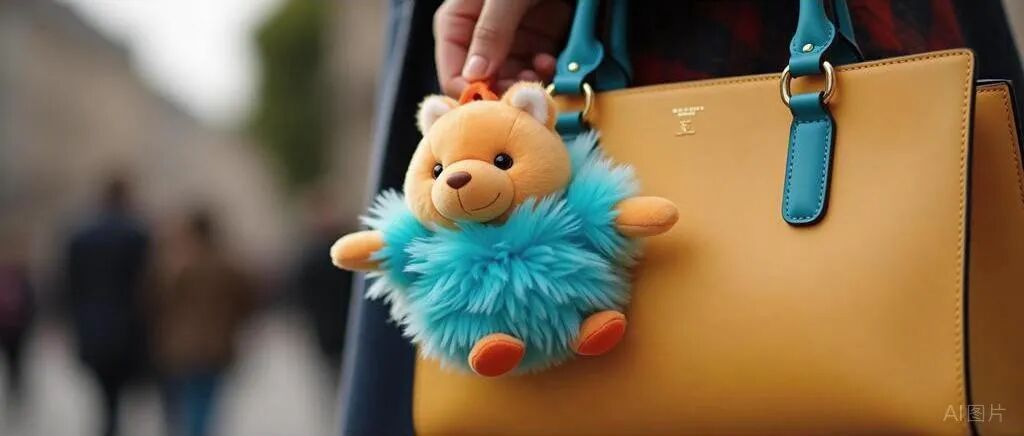
为什么你的包上,要挂一个玩偶?
3 6 Ke· 2025-09-19 07:49
Group 1 - The core viewpoint of the articles highlights the rising trend of "bag charms" among young consumers, which serve as a form of social currency and personal expression, driven by popular IPs [1][2][4] - The popularity of bag charms reflects a shift from practical functionality to emotional value, with 64% of consumers prioritizing spiritual consumption, particularly among younger demographics [2][4] - Brands are increasingly leveraging IP collaborations to create bag charm products, which have become a popular marketing strategy, enhancing brand visibility and consumer engagement [5][6] Group 2 - The emergence of bag charms has led to a community of enthusiasts who share and exchange these items, indicating a deeper emotional connection and social belonging among consumers [2][4] - Experts suggest that traditional advertising methods are becoming less effective, and brands are now focusing on emotional connections through products like bag charms, fostering loyalty and engagement [6] - The integration of digital tools and creative designs in the development of bag charms can enhance their appeal and effectiveness in reaching target audiences [8]

老铺黄金的“平替”,要IPO了
Xin Lang Cai Jing· 2025-09-18 02:36
Group 1: LVMH and Old Poo Gold - Bernard Arnault, CEO of LVMH, visited Old Poo Gold in Shanghai, indicating the brand's appeal to high-end consumers in China [1] - Old Poo Gold's consumer overlap with luxury brands like LV and Cartier is 77.3%, showcasing its strong market position [1] - Gold prices have reached historical highs, exceeding $3,600 and $3,700 per ounce, driven by rising expectations of interest rate cuts by the Federal Reserve [1][10] Group 2: Chao Hong Ji's Market Position - Chao Hong Ji, known as "Little Old Poo Gold," plans a dual listing in Hong Kong and A-shares, benefiting from the rising gold market [2] - The company has seen a stock price increase of over 160% since 2025, with a current market capitalization of approximately 13.2 billion yuan [2] - Chao Hong Ji ranks first in the fashion jewelry market by sales revenue, with a market share of 1.4% [3] Group 3: Product Differentiation and Target Audience - Chao Hong Ji's products emphasize Eastern aesthetics and heritage craftsmanship, appealing to a younger demographic with more affordable pricing [4] - The brand targets consumers under 45, contrasting with Old Poo Gold's focus on high-net-worth individuals [4] - Chao Hong Ji has established brand influence among young consumers through over 400 SKUs and collaborations with popular IPs [4] Group 4: Business Evolution and Revenue Structure - Chao Hong Ji's revenue structure has shifted, with jewelry contributing 93.6% of income in the first half of 2025, reflecting a diversification beyond K-gold [6] - The classic gold jewelry segment has shown a compound annual growth rate of 43.4% from 2022 to 2024, indicating a growing interest in traditional gold products [7] - The company has launched a high-end custom series to enhance its brand image in the premium market [7] Group 5: Expansion and International Strategy - Chao Hong Ji has shifted to a franchise model since 2018, resulting in a rapid increase in store numbers, totaling 1,542 by mid-2025 [9] - The company plans to use funds from its IPO to expand internationally, with a goal of opening 20 self-operated stores overseas by the end of 2028 [12] - Chao Hong Ji has already opened stores in Malaysia, Thailand, and Cambodia as part of its international growth strategy [13]

“痛金”狂欢 水贝市场也入局 专家提醒警惕溢价风险
Zhong Guo Xin Wen Wang· 2025-09-10 06:32
Core Viewpoint - The rising gold prices have led to the popularity of "pain gold," which combines popular IPs from anime and games with gold jewelry, particularly among young consumers [1][2]. Group 1: Market Trends - "Pain gold" prices have exceeded 2000 yuan per gram in several brand gold stores, approximately double the price of standard gold jewelry [1][2]. - Young consumers are willing to pay a premium for "pain gold," driven by emotional value associated with the IPs [2][3]. - The trend has resulted in significant social media engagement, with related topics garnering over ten million views [2]. Group 2: Consumer Behavior - Some consumers are opting to purchase "pain gold" from markets like Shui Bei or online small jewelry stores due to lower prices, with some products priced as low as 873 yuan per gram [3]. - There is a risk of counterfeit products when purchasing "pain gold" outside of brand stores, as these products may lack IP authorization and authenticity [3][4]. Group 3: Investment Considerations - The investment value of "pain gold" is contingent on the longevity of the underlying IP, as many IPs may fade in popularity over time [4][5]. - The resale market for "pain gold" is limited, with many products experiencing significant depreciation and challenges in selling on second-hand platforms [5]. - Consumers are advised to focus on well-established IPs to mitigate risks associated with potential value decline [5].

奥特曼联名激活百亿市场,国内IP为什么越联名越穷?
Hu Xiu· 2025-09-04 05:30
Core Insights - The licensing fee for Ultraman is 250 million, which has the potential to activate a market worth billions, indicating significant growth opportunities in the IP sector [1] - However, the domestic IP landscape is becoming increasingly fragmented, with collaborations yielding diminishing returns, as the combined profits of local IPs do not match those of a single entity like LEGO [1] - The article raises the question of what constitutes a successful collaboration in the current market environment, suggesting that not all partnerships are equally beneficial [1] Industry Analysis - The Ultraman licensing fee of 250 million is a strategic move aimed at tapping into a market that could exceed 100 billion, highlighting the potential for lucrative IP ventures [1] - The trend of increasing collaborations among domestic IPs is leading to a dilution of profitability, as evidenced by the comparison with LEGO, which remains a dominant player with higher profit margins [1] - The article emphasizes the need for a reevaluation of collaboration strategies within the domestic IP market to ensure that partnerships are not only frequent but also financially viable [1]
从书写工具到情绪伙伴 国产文具进阶破圈
Bei Jing Qing Nian Bao· 2025-09-03 00:30
Core Insights - The "back-to-school economy" is thriving, with various learning supplies and electronic products experiencing a sales boom as the new semester approaches [1] - Domestic stationery brands are transforming from mere "writing tools" to "emotional companions" through IP collaborations and technological innovations [1][2] Group 1: Market Trends - The hand account culture has rapidly expanded in China, with the topic on Xiaohongshu reaching nearly 11.2 billion views, indicating a shift in consumer demographics beyond students to include adults [2] - The high-end stationery market, previously dominated by Japanese brands, is now seeing domestic brands infusing emotional value and cultural resonance into their products [2][3] Group 2: Industry Challenges - The stationery manufacturing industry reported a cumulative revenue of 53 billion yuan in the first five months of 2025, with a year-on-year growth of approximately 7%, but profits have declined by over 20%, highlighting profitability pressures [3] - The industry faces challenges such as slowing growth rates and low-price competition, necessitating a focus on capturing the "self-satisfaction consumption" demand from consumers [3] Group 3: Cultural Collaborations - Collaborations with national cultural symbols are injecting new cultural imagination into stationery products, as seen with brands like Deli and Morning Glory partnering with popular films and animations [4][5] - These collaborations not only enhance product appeal but also resonate emotionally with consumers, transforming stationery into emotional companions [4][5] Group 4: Targeting the Youth Market - Domestic stationery brands are increasingly aligning with popular anime IPs to resonate with younger consumers, tapping into their interests and emotional needs [6][8] - The growth of the "二次元" (two-dimensional) economy is evident, with the user base projected to grow from 210 million in 2017 to 526 million by 2025, indicating a significant market opportunity for brands [8] Group 5: Innovation and Sustainability - Domestic stationery brands are innovating beyond traditional uses, incorporating technology and environmental considerations into their products [9][10] - New product designs include retractable pens and eco-friendly items made from recycled materials, showcasing a commitment to sustainability while meeting consumer needs [10]

金价狂飙!老铺独自狂欢,周六福们落寞
21世纪经济报道· 2025-09-02 15:26
Core Viewpoint - The article discusses the contrasting performance of gold jewelry brands amid rising gold prices, highlighting the success of Lao Pu Gold and the struggles of other brands like Chow Tai Fook and Chow Hong Ki [3][8]. Group 1: Gold Price Trends - On September 2, spot gold prices surpassed $3,500 per ounce, reaching a record high of $3,508 per ounce [1]. - The high gold prices have led to a decline in consumer demand, with gold jewelry consumption in China dropping by 26% year-on-year [8]. Group 2: Performance of Lao Pu Gold - Lao Pu Gold has seen significant growth, with a revenue of 12.354 billion yuan in the first half of the year, a 251% increase year-on-year [5]. - The company's gross profit reached 4.705 billion yuan, up 223.4% year-on-year, with a gross margin of approximately 38.1% [5][6]. - Lao Pu Gold's consumer overlap with luxury brands like Louis Vuitton and Hermes is 77.3%, indicating its positioning as a high-end brand [6]. Group 3: Challenges Faced by Other Brands - Chow Tai Fook closed 896 stores in mainland China, while Chow Hong Ki closed 272 stores due to high gold prices and market competition [8][9]. - Chow Hong Ki's online sales grew by 34% year-on-year, accounting for 52% of total revenue, indicating a shift towards e-commerce [9]. - Other brands are adopting strategies like IP collaborations and unique craftsmanship to enhance product pricing and margins [9][10]. Group 4: Market Dynamics - The article notes that the high gold prices and competitive pressures are forcing many gold jewelry brands to adapt or face closure [8][9]. - The trend of "one-price" sales and the incorporation of cultural craftsmanship are becoming more prevalent in the industry, driven by Lao Pu Gold's success [10].


县城中产的 “最爱”,也卖不动了
凤凰网财经· 2025-09-02 12:57
Core Viewpoint - The domestic fashion giant Peacebird, once achieving over 10 billion in annual revenue and operating more than 5,000 stores, is currently facing a decline in performance for three consecutive years, with net profit halved despite cost-cutting strategies [1][4]. Group 1: Financial Performance - In the first half of 2025, Peacebird reported revenue of 2.898 billion, a year-on-year decrease of 7.86%, and a net profit of 77.7116 million, down 54.61% year-on-year [4]. - The main brands under Peacebird, including women's, men's, girls', and children's clothing, all experienced declines in the first half of 2025, with women's clothing revenue dropping to 1.060 billion, a decrease of 10.45% [5]. - The girls' brand, Ledin, has seen a continuous decline of over 20% for three years, with its revenue share dropping from nearly 15% at its peak to 8.10% [6]. Group 2: Operational Challenges - Peacebird has been closing stores to cope with performance pressure, net closing 194 stores in the first half of 2025, including 150 franchise stores [7]. - As of June 2025, the total number of Peacebird stores has decreased to 3,179, nearly a 40% reduction from its peak in 2021 [8]. - The company's inventory issues are evident, with a net inventory value of 1.736 billion at the end of 2024, a year-on-year increase of 15.05%, and inventory turnover days extending to 192 days [10]. Group 3: Market Position and Strategy - Peacebird's rapid expansion strategy, characterized by high-frequency new product launches and collaborations with over 50 popular IPs in 2020, initially led to explosive growth, with revenue reaching 10.921 billion in 2021 [31]. - However, this aggressive strategy has backfired, leading to operational inefficiencies and a significant drop in profitability, with revenue declining over 37% from 2021 to 2024 [38]. - The departure of key executives, including the resignation of the general manager in February 2023, has raised concerns about the company's future direction and stability [41][42].


名创优品:MINISO LAND全球壹号店月销1600万,开业9个月销售额破亿
Xin Lang Ke Ji· 2025-09-01 03:23
Core Insights - MINISO LAND, located on Nanjing East Road in Shanghai, achieved a monthly sales record of 16 million yuan, setting a new global single-store monthly sales record for MINISO [1] - IP products are the main driver of performance, accounting for 83% of sales [1] - The store reached a cumulative sales of over 100 million yuan within 9 months of opening [1] Financial Performance - MINISO's financial report for Q2 2025 shows total revenue of 4.97 billion yuan, representing a year-on-year growth of 23.1% [1] - As of the end of June, MINISO LAND has expanded to 11 stores across major cities including Shanghai, Beijing, Guangzhou, and Chengdu [1] - The average monthly sales per store reach several million yuan [1]
投资者提问:请问公司旗下小芒电商和泡泡玛特有合作吗?可以售卖泡泡玛特的产品...
Xin Lang Cai Jing· 2025-08-29 11:24
Group 1 - The company has established a good partnership with Pop Mart, with successful product interactions showcased at the "Xiaomang 2024 Etiquette" gala [1] - Xiaomang e-commerce platform currently sells products related to Pop Mart [1] - The company maintains an open cooperation attitude in IP collaboration and product development, having developed various unique co-branded products with well-known artists and designers [1] Group 2 - The company plans to continue seeking collaborations with trendy toy brands, designers, and popular artists to develop creative and marketable co-branded products [1] - The focus will be on market trends and user demands to enrich the product matrix on the platform [1]

