
制度型开放

Search documents
与天下同利 为世界注入稳定性正能量 李强出席第八届中国国际进口博览会开幕式并发表主旨演讲
Jie Fang Ri Bao· 2025-11-06 01:46
Core Viewpoint - The China International Import Expo (CIIE) serves as a vital bridge connecting the Chinese economy with the global market, showcasing the vitality of China's large-scale market as participation reaches a historical high this year [1][2]. Group 1: Economic Cooperation and Trade - The CIIE emphasizes the importance of "mutual benefit" in international trade, countering unilateralism and protectionism that disrupt global economic order [2]. - Three key principles for international economic activities were shared: 1. Upholding equality and mutual benefit to solidify common interests [2]. 2. Maintaining moral integrity to ensure international fairness and justice [2]. 3. Promoting governance reform to enhance the international trade rule system [2]. Group 2: China's Economic Development - The recent approval of the "14th Five-Year Plan" by the Communist Party's Fourth Plenary Session injects certainty into China's economic and social development [3]. - China is committed to high-quality development and will contribute significantly to global economic growth [3]. - The country will continue to pursue high-level opening-up and expand institutional openness, particularly in the service sector [3]. Group 3: International Participation - The opening ceremony was attended by representatives from 155 countries, regions, and international organizations, highlighting the global interest in the CIIE [3]. - Foreign leaders expressed that the CIIE plays a crucial role in promoting open cooperation and shared development opportunities with China [5].

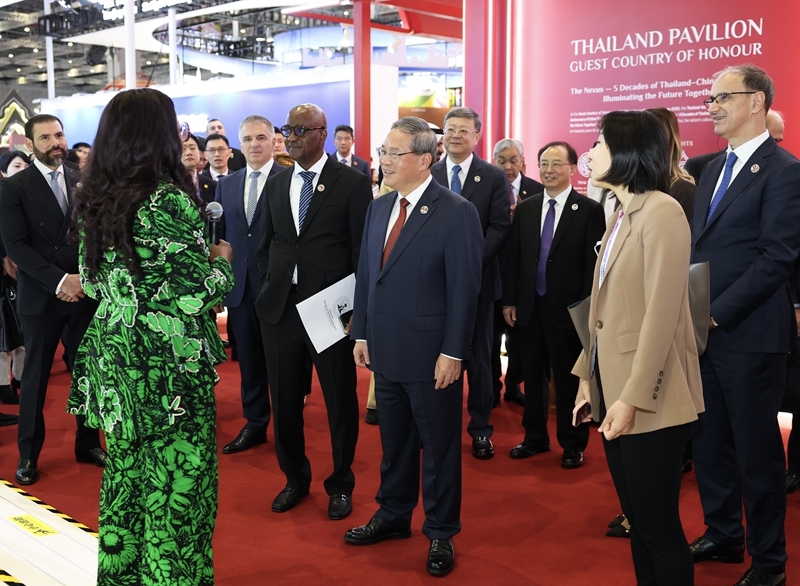
新闻1+1丨从“产品出海” 到 “产业出海” 中国为全球贸易注入信心
Yang Shi Xin Wen Ke Hu Duan· 2025-11-05 23:30
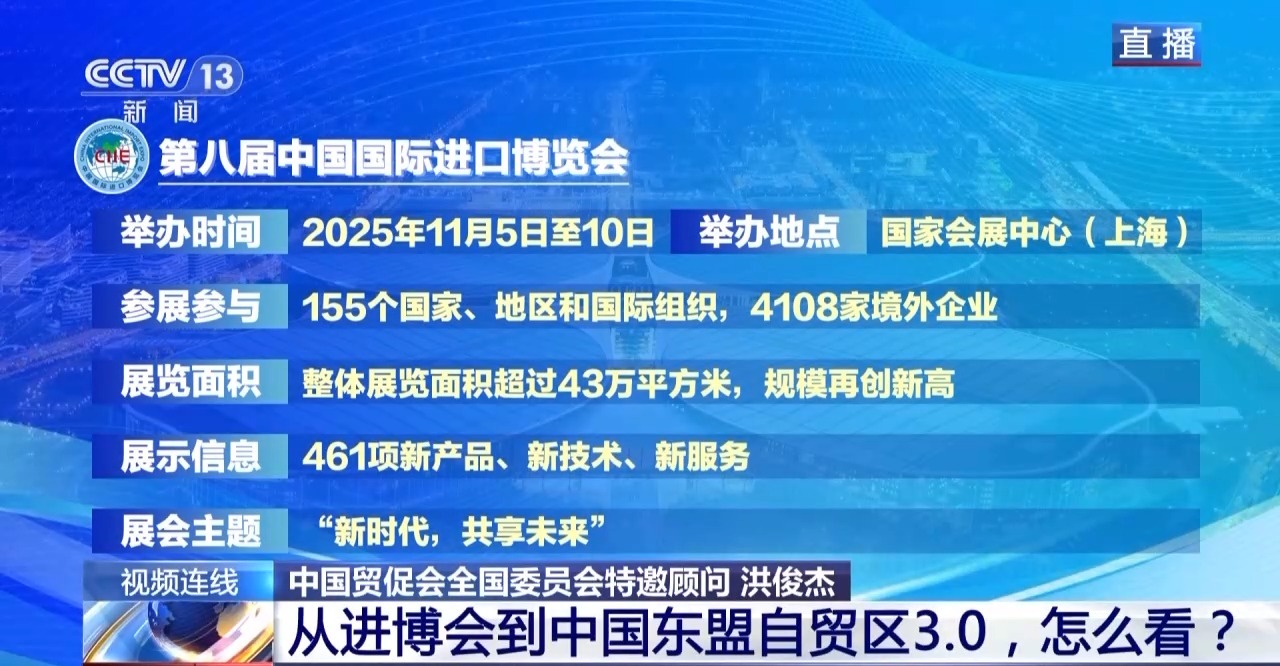
Core Viewpoint - China is actively promoting its openness to the world through initiatives like the upcoming China International Import Expo (CIIE) and the recent signing of the China-ASEAN Free Trade Area 3.0 upgrade protocol, aiming to instill confidence and stability in an uncertain global environment [1]. Group 1: Importance of CIIE - The CIIE is recognized as a significant event in global trade, being the only national-level expo focused on imports, symbolizing China's commitment to expanding its openness and supporting global trade [6]. - International observers increasingly view the CIIE as playing a crucial role in promoting globalization and free trade, especially in light of rising unilateralism and protectionism [5][6]. Group 2: New Trends in International Trade - The evolution of international trade has led to the emergence of new models and business formats, shifting focus from traditional border measures to institutional openness that includes rules, regulations, and management standards [9]. - The CIIE will showcase trends such as digital economy and green economy initiatives, reflecting the growing importance of institutional openness in trade [9]. Group 3: Regional Cooperation and Future Opportunities - The development of international trade necessitates the inclusion of new fields and business formats in negotiations, moving from traditional goods trade to services, digital, and green trade [12]. - China and ASEAN, as key components of the Asian manufacturing landscape, have high complementarity in trade, with 60% of their trade being intermediate goods, indicating strong potential for future collaboration in both trade and industry [15].
“扩大进口”推动制度型开放更进一步
Shang Hai Zheng Quan Bao· 2025-11-05 18:41
Core Viewpoint - The recent trade exhibitions in China, including the 138th Canton Fair and the 8th China International Import Expo, signal China's commitment to expanding openness and cooperation in international trade [1][2]. Group 1: Import Trade Expansion - China aims to actively expand import trade, enhancing the convenience of import processes and fostering innovation in national import trade [1][2]. - The country has maintained its position as the world's second-largest importer, engaging with over 150 countries and regions [1]. - Experts emphasize that expanding imports is crucial for high-level openness and for integrating international advanced elements into China's economy [1][2]. Group 2: Trade Structure Optimization - The shift from processing trade to general trade indicates an ongoing optimization of China's import structure [2]. - There is a call for more participation in the formulation of international trade rules, particularly through increasing imports from developing countries [2]. Group 3: Digital Trade Development - Digital trade is highlighted as a rapidly growing sector, with projections indicating that China's digital service trade will reach $385.76 billion in 2024, reflecting a 5.2% growth [3]. - Establishing efficient and secure mechanisms for cross-border data flow is identified as a key challenge for the development of digital trade [3]. Group 4: Institutional Opening - China is focused on creating a high-level, institutional framework for foreign trade that aligns with international standards [4]. - The implementation of a negative list management model for cross-border service trade represents a significant step in this direction [4]. Group 5: Regulatory Enhancements - There is an emphasis on balancing development and security in the management of cross-border service trade, with plans to enhance regulatory capabilities [5]. - Trade promotion platforms, such as the China International Import Expo, are seen as vital for expanding China's openness and creating opportunities in the global market [5].
从“全球秀场”走向“超级卖场”
Bei Jing Shang Bao· 2025-11-05 15:40
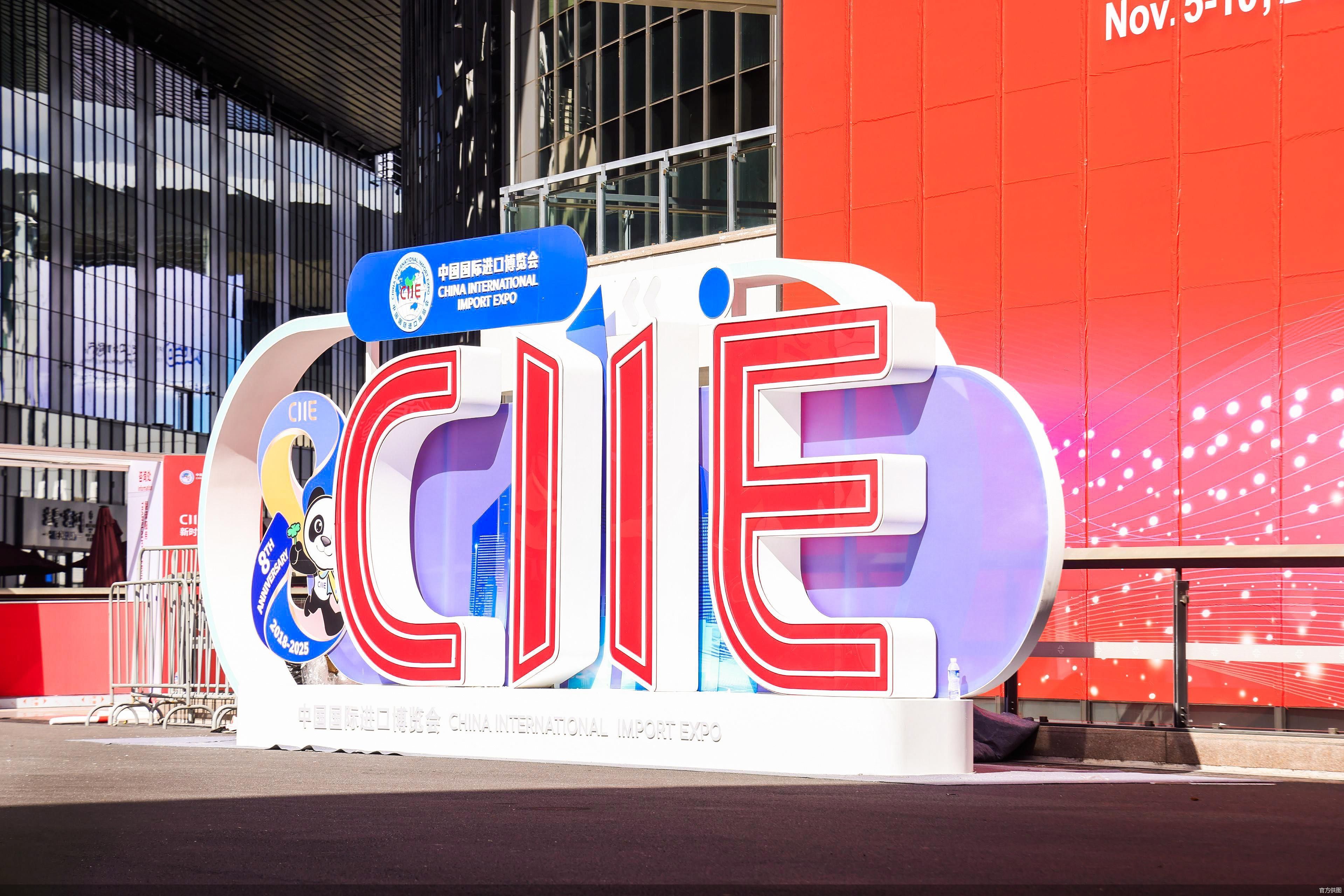
Core Points - The 8th China International Import Expo (CIIE) opened on November 5, 2023, in Shanghai, showcasing China's commitment to high-level opening-up and global cooperation [1][4][6] - This year's expo features a record number of participating companies, highlighting the vitality of China's large-scale market [1][4][6] - The expo serves as a "catalyst" for high-quality development in China and a "firewall" against anti-globalization trends, providing certainty to the global economy [1][10][12] Group 1: Event Overview - The CIIE is themed "Open Cooperation for New Opportunities and Shared Future," emphasizing its role as a bridge between the world economy and China's economy [1][4] - The exhibition area exceeds 367,000 square meters, with over 4,100 participating companies, including 290 Fortune 500 and industry-leading firms [6][10] - The event runs from November 5 to 10, 2023, and includes six major exhibition areas and an innovation incubation zone [6][8] Group 2: Key Themes and Innovations - The expo focuses on innovation, with 461 new products, technologies, and services being showcased, making China a testing ground for global innovation [6][7] - Notable global companies are participating, including those in the medical field, highlighting advancements in chronic and rare disease treatments [7] - The introduction of a "cross-border e-commerce preferred platform" and enhanced digital services aims to create new business models and improve visitor experience [7][10] Group 3: International Participation - A total of 67 countries and international organizations are participating, with six countries serving as guest countries for the first time [8] - Countries like the UAE and Nigeria are showcasing their unique cultural and economic contributions, enhancing international cooperation [8][9] - The event also features bilateral cooperation achievements and celebrations of diplomatic anniversaries with several countries [9] Group 4: Economic Impact - The CIIE is positioned as a significant platform for observing China's high-level opening-up and experiencing its vast market advantages [10] - China has been the world's second-largest import market for 16 consecutive years, with imports expected to exceed $15 trillion during the 14th Five-Year Plan [10] - The expo has generated over $500 billion in intended transaction value over its first seven editions, reinforcing its role in trade facilitation and investment [10][11]
链接全球,浦东迈向“要素-产业-生态”良性循环
2 1 Shi Ji Jing Ji Bao Dao· 2025-11-05 13:58
三十五载春秋,将昔日的阡陌稻田,谱写成一座现代化新城的宏伟交响。在这片热土上,地区生产总值 的数据见证了翻天覆地的变迁:从1990年的60亿元,到2024年的近1.8万亿元,浦东以惊人的速度向上 生长。 这里,是机遇的"强磁场":众多跨国企业在此扎根,共享发展红利;这里,是改革的"试验田":一系列 创新举措在此破土,进而推广全国。当全球普遍认为创新成为可持续增长的源头,上海浦东新区再次成 为关注的焦点。 聚光灯下,浦东正以实践诠释这一全球经济发展的核心逻辑,其已把理论搬进实验室和工厂,用今天的 跑道,为明天的增长热身。2025年11月6日,第八届虹桥国际经济论坛"浦东与世界:共筑开放之路 共 绘产业新图景"分论坛在国家会展中心(上海)举办,该分论坛聚焦全球供应链管理中心建设、"引进 来"与"走出去"双向互动等热点话题,共同探讨浦东在全球经济治理中的角色和发展路径。 上海市决策咨询专家、上海浦东新区张江平台经济研究院院长陈炜分析指出,浦东的发展核心在于创新 驱动促进产业经济可持续发展,以制度性开放培植枢纽功能,带动投资、出口、内需。比如,浦东生物 医药、人工智能产业规模全球领先,且创新成果稳居全国前列。其创新动 ...
北京借进博会平台,举办外资企业交流活动
Xin Jing Bao· 2025-11-05 13:16
Core Viewpoint - The event held during the China International Import Expo emphasizes Beijing's commitment to creating a favorable environment for foreign investment, showcasing the city's openness and policy advantages [1][2]. Group 1: Foreign Investment Environment - Beijing has 35,000 foreign enterprises and 221 foreign R&D centers, which are crucial for the city's high-quality development [1]. - The city is the only one in China that serves as both a national comprehensive demonstration zone for expanding service industry openness and a free trade pilot zone, highlighting its significant policy advantages [1]. - Since the establishment of the "two zones," over 140 groundbreaking policies have been implemented, with more than 70 being national firsts [1]. Group 2: Future Plans and Policies - Beijing plans to deepen the "two zones" construction and introduce a 3.0 plan for expanding service industry openness, aligning with international high-standard trade rules [1]. - The city will fully implement the Beijing Foreign Investment Regulations and the Beijing Business Environment Optimization Regulations to enhance the service guarantee system for foreign investment [1]. Group 3: Feedback from Participating Enterprises - Participating enterprise representatives highly praised the event, noting it demonstrated Beijing's sincerity and strength in expanding openness, which boosts their confidence in investing and deepening operations in the city [2]. - The Beijing Investment Promotion Center and district promotion agencies will maintain close contact with participating enterprises to promote the city's business environment and investment opportunities [2].
“全球贸易重构与世贸组织改革”分论坛在上海举行
Shang Wu Bu Wang Zhan· 2025-11-05 12:15
Core Points - The forum emphasized the need for countries to strengthen communication and cooperation to maintain the multilateral trade system and build a more resilient and sustainable global supply chain [1][2] - China expressed its commitment to participating in WTO reforms and expanding imports of quality products and services, aiming to inject momentum into global economic growth [1] - The WTO's role in global economic governance is deemed irreplaceable, and members are encouraged to collaborate on reforms to enhance the authority and relevance of the multilateral trade system [1][2] Summary by Sections Forum Overview - The forum was hosted by the Ministry of Commerce and organized by Shanghai University of International Business and Economics, with nearly 200 representatives from various sectors attending [3] Key Discussions - Participants discussed the impact of current trade turbulence, opportunities and challenges in global trade restructuring, and the need for WTO reforms [2] - There is a consensus that a rules-based multilateral trade system provides stability and predictability, and enhancing its authority aligns with the common interests of all parties [2] - Expectations were set for China to further expand institutional openness and play a more active role in improving the global governance system and promoting world development [2]
发展更高层次开放型经济 北京将实施服务业扩大开放3.0方案
Yang Shi Xin Wen· 2025-11-05 10:47
Core Insights - Beijing hosted a government and foreign enterprise exchange event in Shanghai, focusing on collaboration and development opportunities in various sectors including pharmaceuticals, financial services, and biopharmaceuticals [1] Group 1: Policy and Economic Development - Beijing is the only city in China with both a national service industry expansion pilot zone and a free trade pilot zone, implementing over 140 breakthrough policies since the establishment of these zones [1] - The city has introduced more than 70 innovative institutional results that are replicable nationwide, aiming to deepen the "two zones" construction and align with international high-standard trade rules [1] Group 2: Tourism and Innovation - In 2024, Beijing anticipates receiving 370 million tourists, generating a total tourism revenue of 672.24 billion yuan, reflecting a growth of 14.9% [1] - The number of unicorn companies in Beijing has ranked third globally for four consecutive years, with R&D expenditure intensity maintained at around 6%, positioning the city among the top global innovation hubs [1] Group 3: Foreign Investment - Currently, Beijing hosts 35,000 foreign enterprises and 221 foreign R&D centers, which play a crucial role in the capital's high-quality development and innovation [2]
区域发展论坛 | 方明洋:三张产业名片推进南召高质量发展
Sou Hu Cai Jing· 2025-11-05 02:45
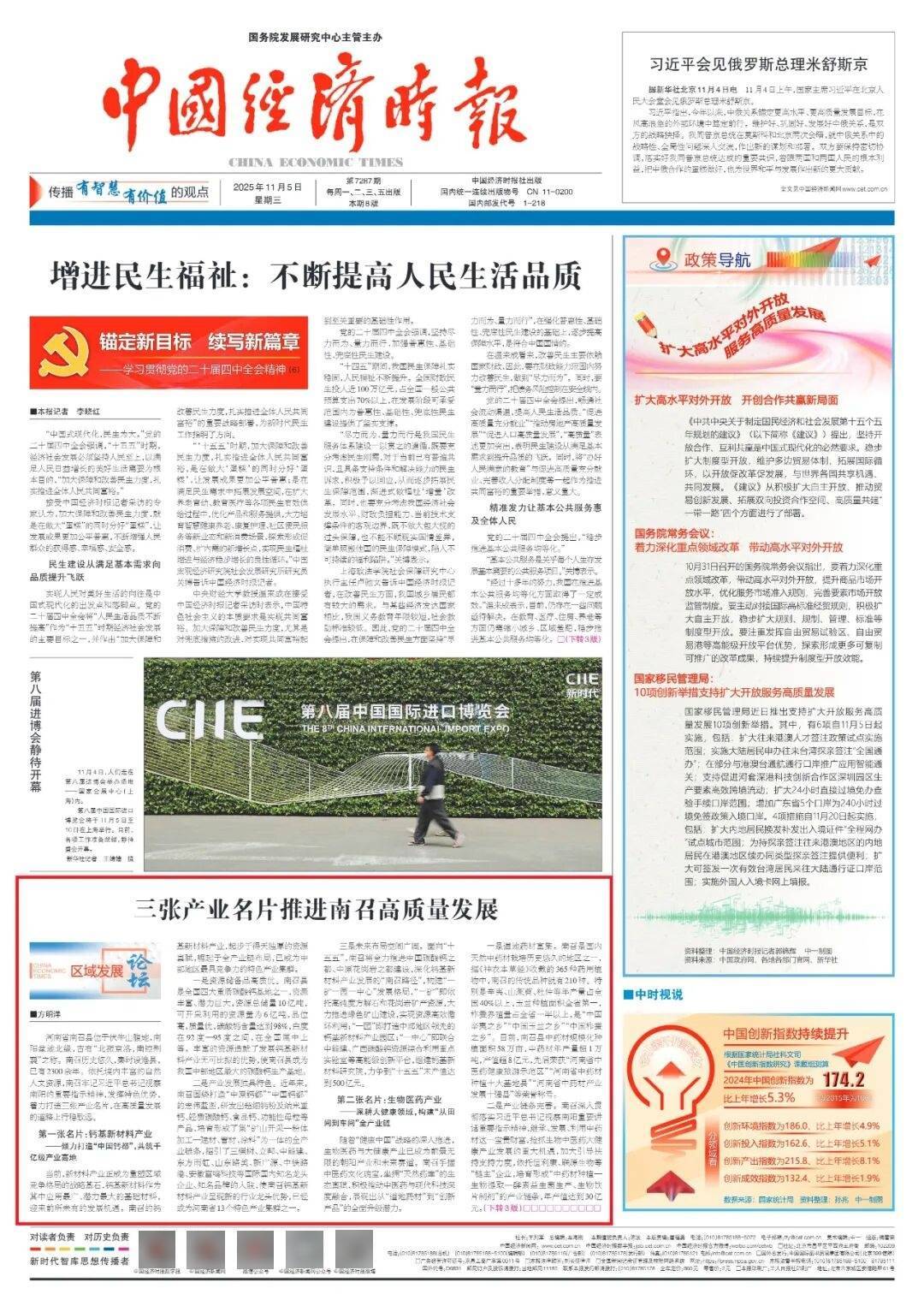
Core Viewpoint - Nanzhao County is leveraging its rich natural and cultural resources to develop three key industries: calcium-based new materials, biomedicine, and cultural tourism, aiming for high-quality economic growth. Group 1: Calcium-Based New Materials Industry - Nanzhao is positioning itself as "China's Calcium Capital," with a goal to build a trillion-level industry base in calcium-based new materials [2][3]. - The county has significant resource reserves, being one of the four major heavy calcium carbonate bases in China, with a total resource reserve of 1 billion tons and an exploitable amount of 600 million tons, featuring a calcium carbonate content of 98% and whiteness between 92% and 95% [2][3]. - The industry has developed a complete value chain from mining to processing, attracting major companies like Three Trees and Nippon Paint, making it a competitive industrial cluster in Central China [3][4]. - Future plans include establishing a calcium-based new materials industrial park and a research institute, targeting a production value of 50 billion yuan by the end of the 14th Five-Year Plan [3][4]. Group 2: Biomedicine Industry - The biomedicine sector is focused on the "Great Health" strategy, integrating traditional Chinese medicine with modern technology, showcasing potential for upgrading from traditional medicinal materials to innovative products [4][5]. - Nanzhao has a rich history in cultivating traditional Chinese medicinal materials, with 210 out of 365 recorded medicinal plants found in the region, and a significant production of key species like magnolia and mountain cornel [4][5]. - The industry has established a complete supply chain from cultivation to bio-extraction, achieving an annual output value of 3 billion yuan, with plans to develop a trillion-level health industry cluster [5][6]. Group 3: Cultural Tourism Industry - Nanzhao is enhancing its cultural tourism sector by leveraging its historical and natural resources, aiming to create a new benchmark for cultural tourism integration in Southwest Henan [6][7]. - The county has a solid foundation for tourism, with numerous historical sites and natural attractions, making it a prime location for investment in the cultural tourism industry [6][7]. - Collaborative efforts with major tourism groups have led to the establishment of several national and provincial tourist attractions, enhancing the region's brand and market appeal [7][8].
迈向“十五五”:中国经济如何实现质量与速度的双重跃升?
Jin Rong Shi Bao· 2025-11-04 04:51
Core Insights - The 20th Central Committee's Fourth Plenary Session has outlined the direction for China's future development, emphasizing "high-quality development" as the core theme for the 15th Five-Year Plan, aiming for "qualitative effective improvement" and "reasonable quantitative growth" [1] Group 1: Transformation Core - The essence of China's economic transformation is a long marathon of market-oriented reforms that challenge and break through existing systemic barriers [2] - The current dilemma in the digital economy reflects a coexistence of arbitrary administrative intervention and a lack of institutional rules, necessitating continuous market-oriented reforms to replace policy arbitrariness with stable and transparent institutional certainty [2] Group 2: Growth Momentum - Sustainable growth must derive from "institutional dividends" rather than "policy dividends," focusing on enhancing fundamental institutional environments like property rights protection and fair competition to stimulate endogenous innovation [3] - The old approach of relying heavily on policy support while neglecting institutional guarantees has hindered innovation, indicating a need for deeper institutional reforms to allow market mechanisms to play a decisive role in resource allocation [3] Group 3: Development Goals - High-quality development is not merely about slowing down growth but involves a unified improvement of efficiency and fairness, requiring the dismantling of administrative dominance over resource allocation [4] - The focus should be on "opportunity fairness" and "result adjustment," ensuring that the benefits of reform and development are equitably shared among all citizens [4] Group 4: Open Wisdom - In the face of global challenges, true autonomy requires strengthening competitiveness through open competition, which involves aligning with international high-standard economic and trade rules to drive domestic institutional reforms [5] - Ensuring the security of industrial and supply chains relies on occupying an irreplaceable position in global division of labor, which necessitates institutional innovation to attract global talent, technology, and capital [6] Group 5: Roadmap for the 15th Five-Year Plan - Achieving "qualitative effective improvement" and "reasonable quantitative growth" requires a systematic support framework, focusing on technological self-reliance and breakthroughs in strategic fields like artificial intelligence and biomanufacturing [6] - Expanding domestic demand and deepening income distribution reforms are essential to stimulate consumer potential, while maintaining a stable macroeconomic policy to ensure economic operation within a reasonable range [6]