经济衰退

Search documents
散户躺平?924行情剧本正在重演!
Sou Hu Cai Jing· 2025-04-21 07:34
看着市场天天横盘,又有GJD护盘,不少股民直接躺平不动了。 可别大意!懂王那边又要搞大动作,市场里藏着的风险和机会,多数人压根没察觉! 今天就带大家深挖这些关键信号,文末还有超实用的股市数据,不看真的亏! 一,懂王的压力 懂王又要搞大事情!从现在起,老美ZJH、存款保险公司、期货交易委员会这些部门想出台新规,都得他拍板。 连一向和他不对付的美联储也被卡脖子,虽然还能管货币正策,但银行监管规则得交白宫审查。 他为啥这么着急?全是经济压力给逼的!CNBC调查显示,55%的人都不满意他的经济政策。科技行业项目停摆、钱也不敢投,供应链乱成一 锅粥。 美联储更是直接下调GDP增速,从2.1%跌到1.7%,经济衰退警报已经拉响。 纽约联储预测,到8月美国经济衰退的可能性超过六成!这边衰退警报拉响,那边财政状况也一团糟。 老美75个大城市里,53个都深陷财正赤字泥潭,联邦正府债务更是在2025财年突破20万亿美元大关,经济压力大到爆表! 老美的专家们急得跳脚!直接发文开炮,痛批关税正策根本没有经济道理,完全是在把经济往衰退的火坑里推。 二,散户要怎么办? 老美经济内忧外患,资金正疯狂往外跑!高盛数据显示,非老美投资者一口气 ...

彭博FICC热门图表2025年第一季度回顾:关税时代的大宗宏观展望
彭博Bloomberg· 2025-04-21 03:39
本文截取自 彭博终端"彭博中国图表手册Q1 2025" 。基于彭博独家数据与分析,该手册以独家 视角洞察并解读宏观经济、股票、固定收益、外汇与商品等重要领域。如需阅读完整版手册,请 扫描下方二维码。 彭博中国图表手册Q1 2025 主题涵盖: 扫描二维码, 即刻获取手册 内容节选 贵金属 黄金ETF持仓量持续上涨 黄金ETF持仓量大幅上升,但是还未达到2020年的历史高点。这波涨幅更多是关税不确定性引发 大幅增持的结果。历史两次黄金牛市,ETF持仓量都在美联储降息后13个月达到顶峰。如果美联 储降息路径不变,黄金ETF持仓量会在今年十月达到顶点。 贵金属 能源 股票市场 外汇市场 来源:彭博终端 扫描文末二维码,您可继续阅读: 能源 国内产量将在2050年满足国内需求,自给率将达到99% 由于国内产量仅占其2024年表观石油消费量的28%,政策致力于通过促进电力和其他形式的能源 自给自足来推动中国减少进口依赖,能源安全可能会在第十五个五年计划(2026-2030)中占据 突出地位。我们预计,到2030年中国的石油产量将满足36%的国内需求,到2050年将达到99%。 中国石油自给率的上升将受到更多国内勘探和生 ...
五一假期炒黄金,领峰贵金属加码$10000赠金,限时收割黄金牛市
Cai Fu Zai Xian· 2025-04-21 02:46
Group 1 - Recent fluctuations in gold prices have been influenced by escalating trade tensions, leading to initial sell-offs and a drop below $3000, followed by a rapid recovery and new highs above $3300 after a temporary suspension of tariffs by Trump [1] - The U.S. consumer confidence index has declined for four consecutive months, contributing to a 3% drop in the dollar index, the lowest since April 2022, which has shifted investor interest towards gold as a safe-haven asset [2] - The Federal Reserve faces challenges due to rising import prices from tariffs, which could lead to persistent inflation, complicating their monetary policy decisions [5] Group 2 - The ongoing trade war and the weakening dollar are providing strong support for gold prices, with expectations for further upward movement as market conditions evolve [5] - Upcoming economic data releases, including consumer confidence and inflation metrics, will be critical for the Federal Reserve's policy direction [6]

金银比罕见破百!银价或迎逆袭良机?
Jin Shi Shu Ju· 2025-04-21 02:35
特朗普后来宣布对大多数国家的新关税暂停90天,但经济增长担忧仍挥之不去。 经济敏感性 Money Metals Exchange的总裁兼首席执行官斯特凡・格里森(Stefan Gleason)表示,值得注意的是, 白银具有"经济敏感性"。 他说,对关税带来的经济后果以及国际贸易下滑的担忧,给白银价格带来了压力。鉴于白银在工业领域 的大量应用,包括太阳能和电子应用等,经济放缓成为了白银价格的"不利因素"。 美国总统特朗普的关税政策不仅震动了全球股市,也动摇了经济前景,还破坏了白银跑赢黄金的机会。 不过,白银可能很快会迎来另一个机会。 就年初截至上月底的涨幅而言,黄金和白银的表现几乎不相上下——当时两者年内涨幅均超过14%。然 而,根据道琼斯市场数据(Dow Jones Market Data)对FactSet数据的分析,现在白银价格较一个月前下 跌了5.4%,而黄金价格已攀升至历史新高,较一个月前上涨了近11%。 BullionVault的研究主管阿德里安・阿什(Adrian Ash)表示:"对于贵金属爱好者来说,黄金和白银走 势的分化既反映了人们对经济衰退担忧的程度,也提供了一个机会。" 这是因为目前白银价格 ...
专访BCA Research首席策略师:美欧关税博弈有升级风险,美经济衰退概率超50%
Sou Hu Cai Jing· 2025-04-20 12:55
21世纪经济报道记者赖镇桃 广州报道 全球市场仍在紧盯关税谈判的最新进展,但美国滥施关税霸凌行为带来的经济风险已经近在眼前。 《21世纪》:具体来说,欧元区经济需要警惕哪些关税触发的风险? Matt Gertken:欧洲应重点关注以下三方面风险,首先是,如果美国方面发布强劲的金融和宏观数据, 可能会使特朗普政府更加有底气采取进一步的关税政策。其次,欧盟经济增长疲软,这将削弱其在贸易 摩擦升级情况下的反制能力。再者,全球经济增长乏力,将影响欧洲的经济基本面,并削弱其吸引全球 资本、相较于美国的投资竞争力。 本周,全球经济分析公司BCA Research首席地缘政治策略师Matt Gertken接受了21世纪经济报道专访。 BCA Research是一家总部位于加拿大的投资研究公司,主要为美国、欧洲、中国、新兴市场的客户提供 资产和宏观经济分析。 在Matt Gertken看来,特朗普政府近期可能会优先与部分贸易伙伴达成协议,从而赢得更大政策空间施 压欧盟和其他地区,不过特朗普最终可能还是会妥协让步,以避免美股继续回调进入熊市区间。 美欧贸易摩擦或将升级 《21世纪》:您怎么评估特朗普政府关税对欧盟经济的冲击? ...
美国经济警报拉响!究竟有哪些隐藏的“经济地雷”?
Wind万得· 2025-04-19 22:18
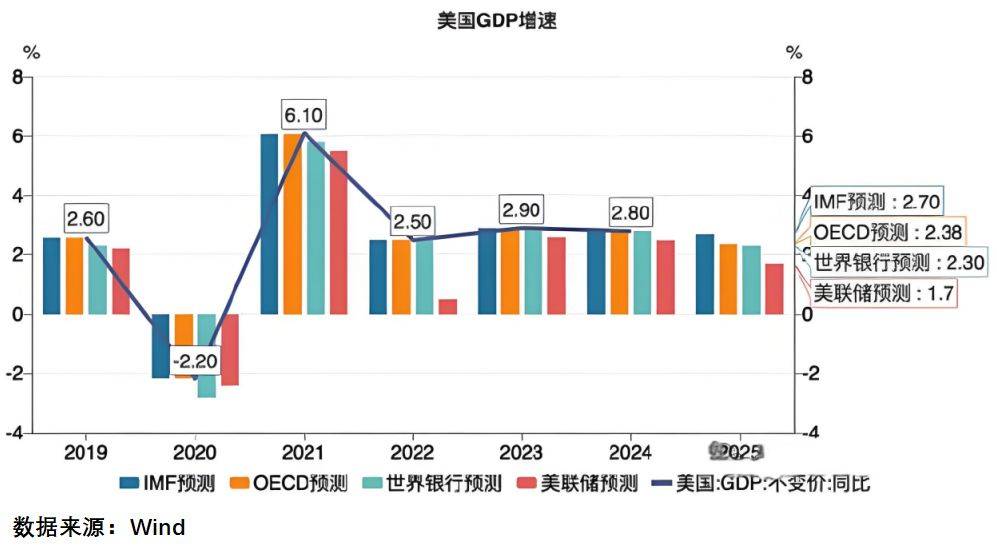
Economic Risks in the US - The probability of an economic recession in the US is projected to reach 50.04% by April 2025, with a peak of 61.79% by August 2025 [3] - The US GDP growth rate for 2024 is forecasted at 2.8%, a slight decrease of 0.1 percentage points from the previous year, but the outlook for 2025 has been downgraded from 2.1% to 1.7%, indicating a significant reduction in growth potential [5] National Debt Concerns - As of April 10, 2025, the total US national debt has reached $36.22 trillion, equating to approximately $106,000 per American citizen [8] - The national debt-to-GDP ratio is expected to hit 124.1% in 2024, with the fiscal deficit accounting for 6.95% of GDP. The fiscal deficit for the first quarter of 2025 has already reached $596.19 billion, a 7.49% increase from the previous year [9] Dollar Stability and Market Confidence - The US dollar is facing challenges as its status as the global reserve currency is under threat, with the dollar index dropping from 104.2263 to 99.6920, a decline of 4.35% [11] - The average real yield on long-term US Treasury bonds reached 2.66%, the highest since April 2009, reflecting market concerns about the long-term stability of the dollar [11] Federal Reserve Challenges - The US tariff policy is complicating the Federal Reserve's independence and its ability to lower interest rates, as rising bond yields and tariffs create conflicting economic pressures [14] - Recent inflation data shows a decrease in the Consumer Price Index (CPI) to 2.4% year-on-year in March 2024, but potential tariff implementations could reverse this trend and increase inflation [14] Trade Deficit and Global Supply Chains - The US trade deficit reached a record $130.65 billion in January 2024, indicating strong external demand and a significant outflow of capital from the US economy [16] - If tariffs are fully implemented, they may lead to higher import prices, creating input inflation that could further squeeze consumer spending [16] Impact on Trade Relations - Canada is seeking to diversify its trade relationships due to the impact of US tariffs, with significant exports to the US being affected [18] - Mexico is also accelerating efforts to establish regional supply chain collaborations and explore trade agreements with South American and Asian countries in response to US tariff policies [20] Conclusion - The underlying economic contradictions in the US revolve around the desire for globalization benefits while ensuring absolute security, raising questions about who will ultimately bear the costs of this economic gamble [23]

海外宏观周报(2025年第14期):美国债汇双杀,关税趋势缓和
民银国际· 2025-04-18 02:05
Group 1: Macro Economic Trends - The 10-year U.S. Treasury yield increased by 47 basis points to 4.48%, marking the largest weekly rise since November 2001[3] - The U.S. dollar index decreased by 3.06% during the week, indicating a significant depreciation of the dollar[3] - The U.S. Consumer Price Index (CPI) for March rose by 2.4% year-on-year, below the expected 2.6%[18] Group 2: Trade and Tariff Developments - The U.S. imposed a 125% tariff on Chinese goods, with a temporary exemption for certain technology products[38] - China retaliated with a 125% tariff on U.S. imports, escalating trade tensions[39] - The trade conflict is expected to shift towards a "talk and fight" approach, potentially stabilizing the market[14] Group 3: Market Reactions - The S&P 500 index rose by 5.70% during the week, reflecting a recovery in equity markets[3] - The price of gold increased by 5.76% to $3,230.50, indicating a flight to safety amid market volatility[3] - The volatility in the market remains high, with risk assets experiencing wide fluctuations[10]
贵金属日评-20250418
Jian Xin Qi Huo· 2025-04-17 23:51
Report Summary 1. Report Industry Investment Rating There is no information about the industry investment rating in the provided report. 2. Core Viewpoints - The mid - line upward trend of gold remains favorable, and investors are advised to maintain a long - position mindset for trading. However, silver is relatively weak due to industrial demand pressure. In the mid - term, before the positive factors are fully realized, the safe - haven demand from the US economy and financial markets will continue to drive the gold price to move strongly, but the volatility of the gold price has also increased. It is recommended that investors mainly go long at low prices with a medium - sized position, and avoid chasing high or shorting [4][6]. 3. Summary by Relevant Catalogs 3.1 Precious Metals Market Conditions and Outlook - **Intraday Market**: Fed Chairman Powell remains on the sidelines regarding the economic slowdown and rising inflation expectations caused by tariff weaponization and rules out the possibility of a bailout. The WTO and UNCTAD have significantly lowered the forecasts for global economic growth and commodity trade in 2025. The safe - haven demand has pushed the London gold price to a new record of $3358 per ounce, and the Shanghai Gold 9999 reached a maximum of 795 yuan per gram. Profit - taking by long positions led to a slight weakening of the gold price after the rally in the Asian session on April 17. Trump's 2.0 new policy has greatly boosted the safe - haven demand for gold. This week, attention should be paid to US tariff policies, China's Q1 economic data, and the interest - rate meetings of the Bank of Canada and the European Central Bank [4]. - **Mid - line Market**: After the bearish impact of the Fed's hawkish interest - rate cut on December 18, 2024, the gold price started a new round of upward trend under multiple factors. On February 24, 2025, London gold set a new record of $2956 per ounce, then had a weak correction in late February. In March, due to factors such as increased US economic recession risk, the Fed's slower pace of balance - sheet reduction, and rising geopolitical risks, London gold rose again and officially broke through the $3000 - per - ounce mark on March 17. Before the positive factors are fully realized, the safe - haven demand will drive the gold price to move strongly, but the high price - to - earnings ratio and long positions also mean increased volatility [6]. 3.2 Precious Metals Market - related Charts There are multiple charts in the report, including Shanghai gold and silver futures indices, London gold and silver spot prices, the basis of Shanghai futures indices against Shanghai Gold T + D, gold and silver ETF holdings, the gold - to - silver ratio, and the correlation between London gold and other assets. All data sources are from Wind and the Research and Development Department of CCB Futures [8][10][16]. 3.3 Main Macroeconomic Events/Data - The Fed Chairman Powell said that the Fed will wait for more economic data before deciding on interest - rate adjustments. He also pointed out that the Fed may face a severe situation where tariffs push up inflation while economic growth and potential employment may weaken, and there is no "Fed put" [17]. - The WTO has significantly lowered the forecast for global commodity trade from steady growth to decline, expecting a 0.2% drop this year, down from the 3.0% growth forecast in October. The UNCTAD said that global economic growth may slow down to 2.3% this year [17]. - The Bank of Canada kept its key policy rate at 2.75% after seven consecutive interest - rate cuts, pausing for the first time. It also said that the uncertainty of US tariffs made it unable to issue a regular economic forecast [17]. - The Trump administration is considering punitive measures to prevent China's DeepSeek from purchasing US technology, and US chip manufacturers such as Intel and AMD are affected by export restrictions, with AMD expecting to bear up to $800 million in costs [18].
美联储不配合降息,市场降息预期下滑
Xin Da Qi Huo· 2025-04-17 09:56
Report Industry Investment Rating - The report gives a short - term rating of "fluctuation intensifies" for copper [1] Core Viewpoints - The Fed's possible non - cooperation with interest rate cuts has reduced market expectations, and copper prices may continue to correct. In the short term, the rebound of Shanghai copper may have temporarily peaked, with weak and volatile trends in the short term, and there is a risk of significant decline due to concerns about economic recession [1][2][3] Summary by Related Catalogs Market Conditions - Shanghai copper closed at 75,260 yuan/ton (- 0.93%), London copper at $9,188.5/ton (+ 0.27%), New York copper at $4.6760/pound (+ 1.44%), Shanghai electrolytic copper premium at 95 yuan/ton, LME (0 - 3) at - $173.5/ton, and futures exchange inventories started to accumulate [1] News Situation - Fed Chairman Powell's speech indicated that Trump's tariff measures put the Fed in a dilemma. Powell may prioritize inflation control, which reduced market interest - rate cut expectations, causing US stocks to fall and the US dollar index to rise. Copper prices may correct [2] Trading Logic - In the short term, the rebound of Shanghai copper may have temporarily peaked, with weak and volatile trends, and beware of significant decline due to trading economic recession. The deepening of negative processing fees increases the possibility of supply cuts, and smelting production may decline in April. The positive effect of the consumption peak season is weakening [3] Strategy Suggestion - Pay attention to the strategy of buying put options [4]
Trump Tariffs: Here's What JPMorgan Investors Need to Know
The Motley Fool· 2025-04-15 13:23
Core Viewpoint - JPMorgan Chase has demonstrated resilience amid stock market volatility, with shares down only 1% year to date, outperforming the S&P 500's 9% decline, supported by a strong balance sheet and global diversification [1] Financial Performance - In the first quarter earnings report, JPMorgan exceeded Wall Street estimates with an 8% year-over-year revenue increase and earnings per share (EPS) of $5.07, reflecting a 14% rise from the previous year [2] - All three business segments of JPMorgan reported revenue growth, with the Commercial & Investment Bank benefiting from a positive economic outlook and increased trading activity [4][5] - Key financial metrics included a 2% year-over-year increase in average loans and deposits, and a 12% rise in book value per share, reaching $119.24 [6] Economic Outlook - The bank's guidance for full-year net interest income is $94.5 billion, a 1% increase from last year, but this is subject to change due to the evolving macroeconomic environment [7] - The Trump administration's trade policy overhaul, including a 10% baseline tariff on most imports, has raised concerns about potential economic disruptions, with JPMorgan's chief economist estimating a 50% probability of recession [8] Market Implications - The uncertainty surrounding tariffs has led to a slowdown in mergers and acquisitions, which could negatively impact JPMorgan's investment banking and commercial lending businesses [10] - A potential recession could particularly affect the consumer banking sector, increasing loan defaults and credit losses, although trading may benefit from market volatility [11] Valuation Considerations - JPMorgan's shares are trading at a premium, with a price-to-earnings (P/E) ratio of 11.6 and a price-to-book (P/B) value of 2.0, suggesting that if conditions worsen, there may be room for the stock to decline further [12][13] Investment Perspective - Despite strong fundamentals and disciplined capital management, the current market conditions do not present a compelling buying opportunity for JPMorgan shares, advocating for a cautious wait-and-see approach [14]