即时零售

Search documents
京东欲重塑本地生活赛道
Xin Lang Cai Jing· 2025-11-18 20:13
Core Insights - JD Group's founder Liu Qiangdong announced the launch of "JD Review" and "JD True List," along with an independent app for "JD Takeout," marking a strategic shift in the local services sector aimed at addressing growth bottlenecks and industry pain points [2][3] Group 1: Independent App Launch - The decision to launch an independent JD Takeout app is intended to resolve the issue of hidden entry points that led to significant traffic loss in the past [3] - The new app will provide core users and frequent users with greater convenience, allowing direct access to services and integrating multiple functions such as "instant retail + reviews + travel + shopping" [3][4] Group 2: Trust and Review System - JD Review and JD True List aim to reshape the consumer trust system, with Liu emphasizing that these services will "never be commercialized" to avoid conflicts of interest [3][4] - The innovative "AI All-Net Review" model will analyze millions of reviews from various platforms to present a comprehensive view of merchants or products [4] Group 3: Ecosystem Integration - The launch of the review function is seen as a way to complete the ecosystem for local life and instant retail, integrating content with the transaction system for efficient conversion [5][6] - JD's third-quarter report showed a 213.7% year-on-year increase in new business revenue, indicating significant investment and growth potential in instant retail and high-frequency services [5] Group 4: User Experience and Engagement - JD Review's interface is designed similarly to content communities like Xiaohongshu, allowing users to share experiences and directly link to JD Takeout for orders [6] - The integration of real consumption scenarios in content generation enhances credibility and matches user needs, potentially increasing order conversion rates [6]


酒店免税数据持续改善,双十一总额增14.2%
GUOTAI HAITONG SECURITIES· 2025-11-18 14:12
Investment Rating - The report assigns an "Accumulate" rating for the industry [4] Core Insights - The report highlights significant improvements in hotel and duty-free data, with a recommendation for stocks such as Shoulv Hotel, Jinjiang Hotel, China Duty Free, and Huazhu [5] - The report emphasizes the shift in major platforms during the Double Eleven shopping festival, focusing on instant retail and AI to enhance consumer experience [2] - The overall e-commerce sales during Double Eleven reached approximately 1,695 billion yuan, marking a year-on-year increase of 14.2% [5] Summary by Relevant Sections Hotel and Duty-Free Sector - The hotel and duty-free sectors have shown substantial improvement, with recommended stocks including Shoulv Hotel, Jinjiang Hotel, China Duty Free, and Huazhu [5] - The report notes that Jinjiang Hotel's stock rose by 13.13% and China Duty Free by 11.76% in the last week [5] Retail Sector - The report indicates that the retail sector is experiencing a transformation, with platforms like Meituan and Taobao enhancing their offerings [5] - Meituan's flash purchase platform reported record high transaction volumes and user spending, with nearly 400 product categories seeing over 100% year-on-year growth [5] E-commerce Performance - The total e-commerce sales during the Double Eleven period reached approximately 1,695 billion yuan, reflecting a 14.2% increase compared to the previous year [5] - The report highlights that comprehensive e-commerce sales totaled 1,619 billion yuan, up 12.3% year-on-year [5] Stock Recommendations - The report recommends stocks with low valuations and high dividends, including Action Education, Sumida, and Chongqing Department Store [5] - It also suggests stocks benefiting from AI advancements, such as Kangnait Optical and Tianli International Holdings [5]



商贸零售行业跟踪周报:2025年双十一数据复盘:综合电商平台稳健增长,即时零售表现亮眼-20251118
Soochow Securities· 2025-11-18 12:00
Investment Rating - The report maintains an "Overweight" rating for the retail industry [1] Core Insights - The 2025 Double Eleven sales period saw a total e-commerce sales of approximately 1,695 billion yuan, representing a year-on-year increase of 14.2%. The comprehensive e-commerce platforms accounted for 1,619.1 billion yuan, with a year-on-year growth of 12.3% [4][9] - Instant retail showed remarkable growth, with sales reaching 67 billion yuan during the Double Eleven period, marking a year-on-year increase of 138% [10][15] - Key product categories such as digital appliances, food and beverages, furniture, and pet products experienced significant growth, with pet sales reaching 9.2 billion yuan, up 59% year-on-year [15][16] Summary by Sections Weekly Industry Viewpoint - The Double Eleven sales period was extended, contributing to steady growth in total e-commerce sales. The sales period for 2025 was from October 7 to November 11, compared to October 14 to November 11 in 2024 [9] - Instant retail emerged as a highlight, with substantial growth compared to traditional e-commerce formats [10] Weekly Market Review - From November 10 to November 16, the Shenwan retail index increased by 4.06%, while the Shanghai Composite Index decreased by 0.18% [17] - Year-to-date performance shows the Shenwan retail index up by 8.43%, compared to a 19.06% increase in the Shanghai Composite Index [17][22] Company Valuation Table - The report includes a detailed valuation table for various companies in the retail sector, with specific metrics such as market capitalization and P/E ratios [24][25]


斯凯奇200余家门店上线 “双11”后运动品牌加速入驻美团闪购
Zheng Quan Shi Bao Wang· 2025-11-18 11:59
Core Insights - The sportswear industry is experiencing a trend of "collective brand layout in instant retail" with brands like Skechers partnering with Meituan Flash Purchase to enhance their instant retail strategies [1][2] - The recent "Double 11" shopping festival showcased significant growth in instant retail, particularly in sportswear and home textiles, indicating a new growth point for the industry [1][2] Group 1: Industry Trends - Sportswear brands are increasingly adopting instant retail as a strategic component of their omnichannel operations, aligning with the high functionality and scene-specific characteristics of their products [2] - The collaboration between Skechers and Meituan Flash Purchase aims to cater to specific consumer needs such as commuting, business travel, and urgent sportswear requirements [2] Group 2: Performance Metrics - During the "Double 11" period, Meituan Flash Purchase reported record highs in transaction volume, number of orders, and average consumer spending, with over 800 brands and 400 categories seeing sales double year-on-year [1] - Skechers has expanded its delivery radius to 25 kilometers and introduced pre-order features during non-business hours to address urgent consumer needs [2] Group 3: Service Enhancements - Skechers' partnership with Meituan Flash Purchase ensures that all stores are brand-owned, providing official after-sales services to enhance customer satisfaction [2] - Meituan Flash Purchase is also working with leading brands to offer free return shipping services, addressing the high demand for returns in the apparel category [2]

食品饮料行业跟踪报告:10月CPI同比转正,板块估值修复可期
Shanghai Aijian Securities· 2025-11-18 09:30
Investment Rating - The industry investment rating is "Outperform the Market" [1][34]. Core Insights - The food and beverage industry is currently experiencing a recovery phase, with October CPI showing a year-on-year increase of 0.2%, indicating a potential for valuation recovery [4][5]. - The overall performance of the food and beverage sector has outperformed the Shanghai Composite Index, with a weekly increase of 2.82% compared to a decrease of 0.18% for the index [5][6]. - The industry is characterized by a significant decline in overall performance for the liquor sector, but there are signs of demand recovery as policy pressures ease and consumption policies are implemented [4][5]. Summary by Sections Liquor Sector - The liquor companies reported a significant decline in third-quarter performance, entering a rapid clearing phase, but demand is expected to show weak recovery due to easing policy pressures [4]. - The top liquor companies are increasing dividend payouts, enhancing their attractiveness for investment [4]. - The e-commerce channel for liquor sales has shown strong growth during the Double Eleven shopping festival, with notable increases in sales for major brands [5]. Consumer Goods - The consumer goods segment is focusing on high-growth areas, with some categories still benefiting from new products and channels, leading to potential valuation premiums for scarce growth targets [4]. - Companies like Wancheng Group and Dongpeng Beverage are highlighted for their strong growth trends [4]. Market Performance - The food and beverage sector's sub-segments have shown varied performance, with pre-processed foods leading gains at +6.93%, while soft drinks lagged at -0.23% [5][10]. - The top-performing stocks in the food and beverage sector include Huanlejia (+43.19%) and Sanyuan Shares (+31.79%) [5][12]. Economic Indicators - October's macroeconomic data supports a trend of marginal improvement in consumer spending, with retail sales growing by 2.9% year-on-year and dining revenue increasing by 3.8% [5]. - The overall consumer goods market is showing positive signs, supported by a stable service sector PMI [5].
密集落子外卖与点评,京东为何加码?
Guan Cha Zhe Wang· 2025-11-18 08:11
Core Insights - JD Group has launched a series of significant initiatives in the local lifestyle sector, including the introduction of an independent JD Takeout app, JD Review, and the "JD True List" [1][3] - The new JD Takeout app aims to provide a comprehensive service platform integrating takeout, instant retail, reviews, travel, and shopping, enhancing user experience and retention [3][4] - JD Review differentiates itself from existing commercial review products by promising not to commercialize and ensuring the authenticity of reviews through a three-dimensional model [4][5] Group 1: JD Takeout App - The JD Takeout app is designed as a comprehensive service platform, allowing users to switch between local lifestyle services and daily shopping within a single application [3] - The app integrates JD Review functionality and connects with the main JD platform, creating a seamless service experience [3][4] - The launch of the app is seen as a strategic move to reshape user perception and establish JD as a primary entry point for local services [3][6] Group 2: JD Review and JD True List - JD Review is positioned as a key entry point for local lifestyle traffic, emphasizing the importance of user decision-making in the consumption process [4][5] - The "JD True List" utilizes an AI model to analyze millions of online reviews, ensuring the authenticity of evaluations [4] - The focus on repeat purchases in JD Review indicates a shift towards building long-term user engagement rather than just attracting one-time traffic [5][6] Group 3: New Product Launches - The new ready-to-drink brand "Seven Fresh Coffee" emphasizes the use of fresh milk and high-quality coffee beans, with plans for rapid expansion in Beijing [8][10] - JD's travel initiative "Treasure City" has launched its second phase in Sanya, offering promotional activities for tourists [8][10] - The collaboration with Wuliangye aims to integrate alcohol delivery with takeout services, enhancing the overall service offering [10] Group 4: Market Positioning - JD's recent moves indicate a strategic shift from being a supplementary player in instant retail to becoming a main competitor in the sector [6][10] - The competitive landscape is evolving, with JD positioning itself against Meituan and Alibaba in the instant retail space, focusing on supply chain efficiency and service delivery [6][10] - The emphasis on local lifestyle services is seen as crucial for JD to capture market share and enhance user loyalty in a slowing growth environment [10]

青岛啤酒2025年第三季度业绩说明会问答实录
Quan Jing Wang· 2025-11-18 05:41
Core Viewpoint - Qingdao Beer is committed to maintaining its diversified development strategy despite the termination of the acquisition of Jimo Huangjiu, and will continue to explore new project opportunities in the future [2] Group 1: Company Strategy and Performance - The company is actively integrating the beverage business acquired from Qingdao Beverage Group, focusing on operational synergy with its beer business [2] - The company has implemented a market value management system to enhance overall market capitalization, including stock buybacks and increased cash dividends [2] - In the first three quarters of 2025, the company achieved a revenue of RMB 29.37 billion and a net profit of RMB 5.27 billion, indicating good growth in various operational metrics [5] Group 2: Market Conditions and Challenges - The beer industry is facing challenges with "difficult profit growth" despite a slow recovery in market demand, prompting the company to optimize product structure and enhance operational management [2] - The company has successfully positioned itself as the top-selling beer brand during the recent Double 11 shopping festival, indicating strong market performance [3] Group 3: Future Outlook - The company is optimistic about its overall performance for 2025, focusing on high-quality development and market expansion [4][5] - The company is actively investing in online channels, particularly in instant retail, to capitalize on emerging sales opportunities [3]
从“量大”到“质强” 中国啤酒行业如何实现破局?
Jing Ji Ri Bao· 2025-11-18 05:38
Core Insights - The Chinese beer industry has evolved significantly over the past century, transitioning from traditional brewing to industrial production, and has been the world's largest producer and consumer of beer since 2002 [1][2][3] - The industry is now facing a period of stock competition, with a need for innovation and quality improvement to maintain international competitiveness [1][4] Historical Development - The first Chinese brewery was established in Harbin in 1900, followed by others in major cities, leading to the emergence of local brands [2] - The beer industry saw rapid growth post-1949, with significant expansion in production and variety, particularly after the implementation of the "beer special project" in 1985 [2][3] - By 1993, China surpassed Germany in beer production, and by 2002, it became the world's largest beer producer with a total output of 24.03 million tons [2][3] Market Dynamics - The industry has entered a phase of stock competition since 2013, with a decline in traditional beer demand due to demographic shifts and changing consumer preferences towards healthier options [3][4] - The proportion of consumers aged 60 and above has increased, while the main consumer group (ages 20-40) has decreased, leading to a natural decline in beer production [3] Competitive Landscape - The market is highly concentrated, with major brands like China Resources, Tsingtao, and Yanjing holding over 70% of the market share [4] - Companies are shifting focus from expansion to high-quality development, adapting to new consumer trends and demands [4][5] Consumer Trends - There is a noticeable shift in consumer preferences towards high-end, refined, and diversified beer products, prompting companies to innovate in flavors and marketing strategies [5][6][9] - The rise of craft beer reflects a growing consumer desire for unique flavors and experiences, with many new entrants in the market [12][13] Pricing and Revenue - The average selling price of beer has become a key driver for revenue growth, with companies targeting the premium market segment [8] - Major brands have reported significant growth in mid-to-high-end product sales, indicating a successful transition towards premiumization [8] Sustainability and Innovation - The industry is increasingly focusing on sustainability, with initiatives aimed at reducing carbon emissions and improving water efficiency [21][22][23] - Companies are investing in advanced technologies and practices to enhance production efficiency and environmental responsibility [25][26] Supply Chain Challenges - The beer industry faces challenges related to raw material supply, particularly barley and hops, which are heavily imported [30][35][36] - Efforts are being made to improve domestic production and quality of these essential ingredients to ensure supply chain security [35][36] Future Outlook - The industry is expected to continue evolving with a focus on innovation, quality, and sustainability, aiming to enhance its global competitiveness [37][38] - There is a strong emphasis on cultural branding and international market penetration to elevate the global presence of Chinese beer brands [38]



大和:降华润啤酒目标价至36港元 重申“买入”评级
Zhi Tong Cai Jing· 2025-11-18 05:22
Core Viewpoint - Daiwa's report indicates that China Resources Beer (00291) is adapting to new retail channels and developing new flavors to cater to the rapidly changing preferences of young Chinese consumers [1] Group 1: Company Strategy - The management of China Resources Beer emphasized the importance of aligning with instant retail and introducing new flavors such as fruit-flavored and tea-flavored beers [1] - The company is expected to maintain a competitive edge over its main rivals due to its strong execution capabilities and flexible strategies [1] Group 2: Financial Outlook - Daiwa has lowered its earnings per share forecast for China Resources Beer by 4% for the years 2025 to 2027, citing potential slowdowns in average selling price and profit margin expansion [1] - The target price for the stock has been adjusted from HKD 38 to HKD 36, based on a projected price-to-earnings ratio of 18 times for the next year [1]
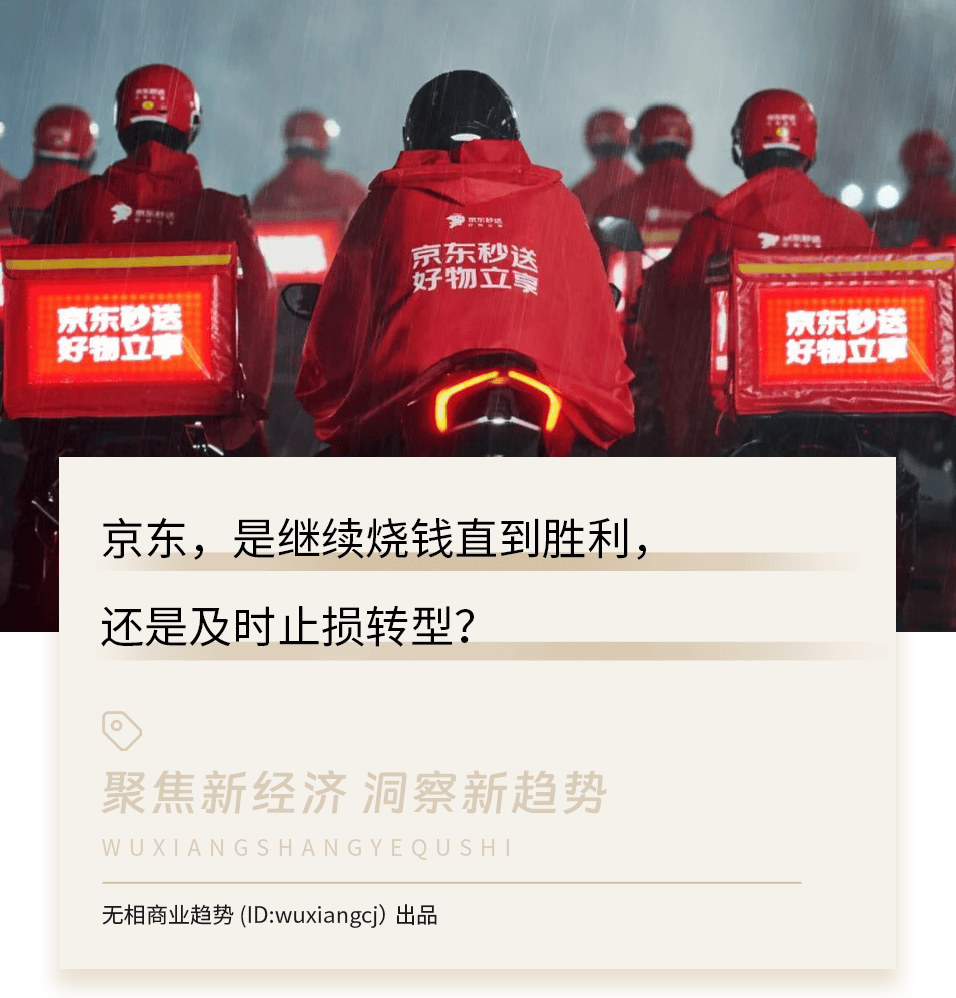
京东外卖困局:300亿血战,为何给阿里做了嫁衣?
Sou Hu Cai Jing· 2025-11-18 02:12
Core Viewpoint - JD.com's stock has dropped nearly 30% since entering the food delivery market, contrasting with a 20% increase in the A-share Shanghai Composite Index, causing discomfort among investors [2] Financial Performance - JD.com reported Q3 revenue of 299.1 billion yuan, a year-on-year increase of 14.9%, but incurred a significant operating loss of 15.736 billion yuan in new businesses, totaling 31.84 billion yuan in losses for the first three quarters, averaging a daily loss of 116 million yuan [4][7] - The company's new business losses have escalated from 1.327 billion yuan in Q1 to 14.777 billion yuan in Q2, and further to 15.736 billion yuan in Q3, indicating over 30 billion yuan burned in just nine months [7] Strategic Initiatives - JD.com is attempting to leverage its food delivery business to enhance platform activity, but this strategy has not yielded the expected results, as evidenced by stagnant daily order volumes at 25 million since mid-year [5][10] - Despite high-profile efforts from CEO Liu Qiangdong, including personally delivering food, the anticipated boost in user engagement has not materialized [5] Competitive Landscape - Alibaba's aggressive strategy, including a 50 billion yuan subsidy for its food delivery service, has significantly impacted JD.com's market position, capturing a large share of the food delivery market [6][12] - JD.com faces challenges in scaling its delivery network, with only 150,000 full-time riders compared to Alibaba's 4 million active riders, which affects delivery speed and operational flexibility [14] User Engagement and Cross-Selling - JD.com has seen a 40% cross-purchase rate among food delivery customers buying other products, suggesting potential for user engagement, but the conversion of this traffic into retail sales has been disappointing, with product revenue growth slowing from 20.7% to 10.5% [8][10] - The lack of growth in food delivery orders, remaining at "over 25 million" since June, indicates a bottleneck in user acquisition [10] Future Directions - In response to the challenges in the food delivery sector, JD.com is exploring new business avenues, such as the travel sector, with a focus on innovative offerings like "unbundled" flight tickets [16] - However, the travel market is highly competitive, and JD.com must navigate complex pricing and supply chain issues while competing against established players like Ctrip and Meituan [18] Market Outlook - Goldman Sachs predicts that JD.com may incur losses of 26 billion yuan in the coming year due to ongoing subsidy wars, raising questions about whether to continue investing heavily or pivot to a different strategy [19]