
去美元化

Search documents
跌停潮突袭金属期市,追高加仓者爆仓风险陡增
第一财经· 2026-02-03 01:31
Core Viewpoint - The domestic commodity futures market experienced a rare wave of limit-downs, primarily driven by a shift in market sentiment from euphoria to panic, with expectations of a return to normalcy in the future [2][8]. Group 1: Market Performance - On February 2, multiple futures contracts, including silver, palladium, platinum, and tin, hit their limit-down prices, with silver futures closing at 24,832 yuan/kg, down 5,087 yuan [6]. - The main gold futures contract fell by 15.73%, closing at 1,008.60 yuan/g, while basic metals and energy sectors also saw significant declines [7]. - The London spot gold price dropped from a historical high of 5,598.75 USD/oz on January 29 to around 4,600 USD/oz by February 2, while silver fell from 121.647 USD/oz to approximately 81 USD/oz [5]. Group 2: Causes of Market Decline - The sharp decline in commodity prices is attributed to three main factors: extreme crowding of long positions, a decrease in risk aversion due to easing geopolitical tensions, and a rebound in the US dollar following the Federal Reserve's decision not to cut interest rates in January [8][11]. - Analysts noted that the recent volatility was primarily driven by external macroeconomic sentiments rather than domestic fundamentals [7][8]. Group 3: Investor Behavior and Risk Management - Many investors who aggressively increased their positions in silver futures around 30,000 yuan/kg faced significant losses and potential liquidation as prices plummeted [10]. - Futures companies have been advising clients to reduce positions or add margin due to the heightened risk of liquidation amid widespread limit-downs [10][11]. - Analysts recommend that investors lower leverage and reduce participation in the market, emphasizing the importance of risk management during extreme market conditions [13][15]. Group 4: Future Market Outlook - Despite the recent downturn, analysts maintain a long-term bullish outlook on gold, citing ongoing geopolitical risks and the impact of "de-dollarization" on global dynamics [16]. - The price of silver may see further corrections, with estimates suggesting it could drop to around 70 USD/oz, translating to approximately 17,000 yuan/kg domestically [16]. - For copper and aluminum, analysts suggest maintaining a cautious approach, with a focus on cash and position management ahead of the upcoming holiday season [17][18].

中信建投期货:2月3日工业品早报
Xin Lang Cai Jing· 2026-02-03 01:27
Group 1: Copper Market Analysis - The main copper futures in Shanghai fell by 1% to 100,820 yuan, while London copper is at the lower end of $13,000 [4][17] - The ISM manufacturing PMI in the US rebounded to 52.6 in January, exceeding market expectations, indicating an expansion in manufacturing sentiment which has stabilized copper prices [5][17] - The increase in copper warehouse receipts on the Shanghai Futures Exchange by 1,676 tons to 158,000 tons, and a decrease in LME copper stocks by 300 tons to 174,000 tons, suggests a mixed supply-demand outlook [5][17] - The current trading range for Shanghai copper futures is expected to be between 99,800 and 102,800 yuan per ton [17] Group 2: Nickel and Stainless Steel Market - The nomination of Waller as the next Federal Reserve Chair has led to expectations of tightened liquidity, causing a pullback in the non-ferrous sector [6][18] - Nickel ore shipments from the Philippines are hindered by weather conditions, while supply from Indonesia is also tight due to rainfall [6][18] - The market for stainless steel continues to face oversupply pressures, with limited terminal demand, although suppliers are showing a strong willingness to maintain prices due to low arrivals and strong cost support [6][18] Group 3: Aluminum Market Insights - Alumina futures prices have rebounded slightly, with spot prices stabilizing; a northwest aluminum plant has tendered for 10,000 tons of alumina at a price of 2,920-2,930 yuan per ton, reflecting a rise of 4-50 yuan from previous transactions [20][21] - The overall supply remains high, with both production cuts and restarts occurring, and the upcoming Spring Festival may lead to further maintenance by some companies [20][21] - The trading range for alumina futures is projected to be between 2,600 and 2,900 yuan per ton, with a strategy of high selling and low buying within this range [21] Group 4: Zinc and Lead Market Overview - Zinc prices opened lower but are expected to recover; the ISM manufacturing data from the US indicates a strong equity market, which may improve macro sentiment [22][23] - The supply side for lead remains tight due to limited primary lead concentrate availability, while recycled lead supply is relatively loose [23] - The trading range for lead futures is anticipated to be between 16,500 and 17,500 yuan per ton, with expectations of a range-bound market due to weak supply and demand dynamics [23] Group 5: Precious Metals Market Dynamics - Precious metals have experienced significant volatility, with gold and silver prices declining but palladium showing signs of recovery [25] - The strong ISM manufacturing PMI has bolstered the US dollar, adding pressure to precious metals, while geopolitical tensions and potential sanctions on Russian platinum may support palladium prices [25] - The recommended trading ranges for precious metals are as follows: gold at 1,050-1,140 yuan per gram, silver at 21,000-24,000 yuan per kilogram, and platinum at 530-590 yuan per gram [25]


ETF盘前资讯|终于反弹!现货黄金重回4800美元!企稳信号初现,杠杆抛售潮或近尾声
Sou Hu Cai Jing· 2026-02-03 01:25
新湖期货认为,黄金价格中长期支撑仍存,指出沃什获提名及由此引发的汇率波动属于短期扰动,中期市场焦点仍将集中于地缘政治风险升温与特朗普政 府政策的高度不确定性;而长期来看,全球债务可持续性恶化与去美元化趋势的深化,是支撑黄金结构性走强的核心变量。目前,上述中长期逻辑并未发 生根本性逆转。 仍有机构在市场恐慌中,坚持长期看多有色金属板块,中信证券指出,在经历2025年的大涨行情后,有色金属价格与股票行情的上涨动能依然充足,供应 扰动、需求局部高景气和囤货行为为金属价格带来强支撑,流动性宽松带来的交易活跃度上升以及地缘冲突带来的避险情绪升温有望放大金属的价格弹 性。看好贵金属、工业金属、电池金属和战略金属板块的配置价值。 今日(2月3日)现货黄金开盘反弹,截至发稿,重回4800美元/盎司,日内涨超3%。分析指出,量化基金去杠杆化、杠杆ETF和趋势跟踪策略头寸调整所 引发的强制抛售潮,其主体部分可能已基本释放。 消息面上,特朗普称正在与伊朗对话。当地时间2月2日,针对伊朗问题,美国总统特朗普表示,美方已向相关地区调动大型军舰,同时与伊朗保持沟 通,"将观察事态如何发展"。 尽管近期黄金价格大幅波动,但美银仍将其看作对 ...
终于反弹!现货黄金重回4800美元!企稳信号初现,杠杆抛售潮或近尾声
Xin Lang Cai Jing· 2026-02-03 01:21
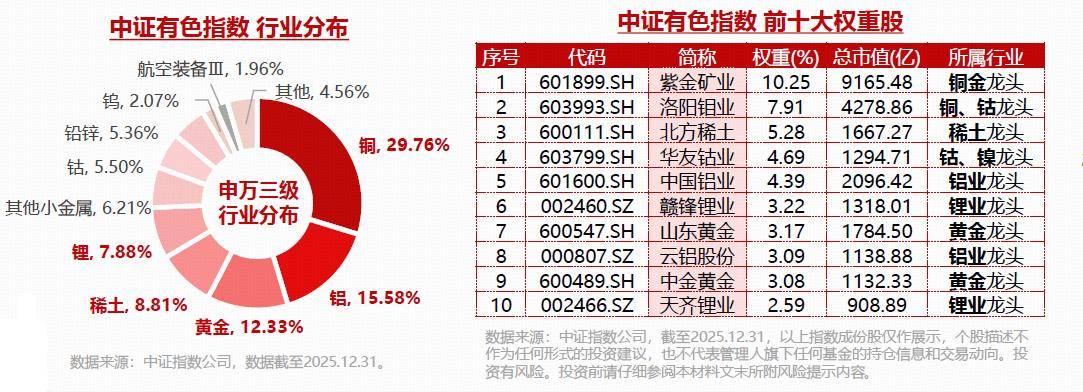
Group 1: Gold Market Insights - Gold prices rebounded to over $4800 per ounce, with a daily increase of more than 3% [1][7] - The forced selling wave caused by quantitative funds deleveraging and adjustments in leveraged ETFs has likely been mostly released [1][7] - Bank of America views gold as a crucial hedge against dollar depreciation, stating that "currency devaluation is the basic scenario" [1][7] - JPMorgan predicts that gold will remain a flexible and diverse hedging tool, with current investor demand exceeding previous expectations, potentially driving prices to $6300 per ounce by the end of 2026 [1][7] - New Lake Futures believes that long-term support for gold prices remains, with geopolitical risks and uncertainty in Trump’s policies being key focus areas [1][7] Group 2: Base Metals Outlook - Citic Securities maintains a long-term bullish outlook on the non-ferrous metals sector, citing strong price support from supply disruptions and high demand in certain areas [2][8] - The liquidity easing and rising trading activity, along with heightened risk aversion due to geopolitical conflicts, are expected to amplify price elasticity for metals [2][8] - Huatai Securities recommends a moderate allocation of 10%-20% in non-ferrous metals within investment portfolios to share in potential gains while diversifying risk [2][8] - The Huabao Non-Ferrous Metals ETF and its linked funds cover a wide range of industries, including precious metals, strategic metals, and industrial metals, providing a comprehensive approach to capturing sector performance [2][8]
广发早知道:汇总版-20260203
Guang Fa Qi Huo· 2026-02-03 00:50
Report Industry Investment Rating No relevant content provided. Core Viewpoints of the Report - The overall commodity market is affected by macro - factors such as the nomination of the new Fed chairman, leading to a weakening of market sentiment. Different industries show different trends, with some facing supply - demand imbalances, and some being affected by seasonal factors and cost - related factors. - For specific industries, there are differences in supply, demand, inventory, and price trends. For example, some industries are in a state of supply - demand double - weakness, while others have a better supply - demand relationship. Summary by Directory Daily Selections - **Ethylene Glycol**: In February, MEG faces significant inventory accumulation pressure, with short - term supply - demand being weak and long - term improving. The price is under pressure above. EG2605 is expected to oscillate between 3700 - 4100. Attention should be paid to the EG5 - 9 positive spread opportunity at low levels, and sell the out - of - the - money call option EG2605 - C - 4200 at high levels [2]. - **Hot Rolled Coil**: It maintains inventory reduction, and the price drops. Pay attention to short - term long opportunities at low prices. The steel price is expected to maintain an oscillating trend, and the long position of the spread between hot - rolled coil and rebar can be held. Consider short - term long opportunities for hot - rolled coil at 3250 [3]. - **Meal Products**: The supply is loose throughout the February market. The market may maintain a downward trend, and attention should be paid to macro - sentiment changes [4]. Macro - finance Stock Index Futures - The risk appetite has significantly decreased, and the A - share market has declined under pressure. Suggest to control portfolio risks and wait for stability, and hold bilateral call option positions [5][7]. Treasury Bond Futures - The risk appetite has declined, and the bond market shows a differentiated trend, with ultra - long bonds being relatively strong. The 10 - year Treasury yield may fluctuate between 1.8% - 1.85%, and the T2603 contract may oscillate between 108 - 108.3. Unilateral strategies suggest interval operations, and curve strategies suggest narrowing the spread between ultra - long bonds and other varieties. Investors are advised to arrange position transfers in advance before the Spring Festival [8][9]. Precious Metals - The market has fallen sharply, and precious metals have erased last month's gains. Gold can be considered to buy at - the - money or slightly out - of - the - money call options after the market stabilizes. Silver prices may fluctuate greatly between 70 - 110 dollars, and it is recommended to wait and see. Platinum and palladium are expected to enter a consolidation stage, and it is recommended to wait and see [10][13]. Container Shipping Index (European Line) - The EC disk oscillates downward. In the medium - to - long - term, the price is in a downward range. It is recommended to be cautiously bearish [14]. Non - ferrous Metals Copper - The expectation of balance - sheet reduction and the pressure on risk appetite have led to a decline in copper prices from high levels. In the short term, the price may return to fundamental pricing, and it is recommended to wait and see, with the main contract paying attention to the support at 97500 - 98500 [15][18]. Alumina - The alumina market is in a wide - range oscillation around the industry cost line, with the main contract reference range of 2600 - 2900 yuan/ton. It is recommended to sell out - of - the - money put options at the lower price limit and short unilaterally at high prices [18][20]. Aluminum - The aluminum price has a high - volatility characteristic in the short term. It is recommended to make long positions after the price stabilizes and the volatility decreases, and pay attention to the support at 23000 - 23500 [21][23]. Aluminum Alloy - The ADC12 price is expected to continue the high - level range oscillation pattern, with the main contract reference range of 21500 - 23500 yuan/ton. It is recommended to use the strategy of going long AD03 and shorting AL03 for arbitrage [24][26]. Zinc - The zinc price has fallen from high levels. The price has support below, and it is recommended to pay attention to the support at 24000. Adopt a short - term wait - and - see strategy and a long - term long - at - low strategy [27][31]. Tin - The tin price has fallen by the limit. In the short term, it is recommended to participate cautiously, and in the long - term, maintain a long - at - low strategy [31][34]. Nickel - The nickel price is expected to first decline with the macro - situation and then oscillate widely, with the main contract reference range of 128000 - 140000. It is recommended to operate within the range [35][37]. Stainless Steel - The stainless - steel price is expected to be weakly adjusted in the short term, with the main contract reference range of 13200 - 14500. Pay attention to macro changes and steel - mill dynamics [38][40]. Lithium Carbonate - The lithium - carbonate price is expected to continue to decline and adjust in the short term. It is recommended to wait and see cautiously, and the risk of going long unilaterally on the left side is relatively large [41][44]. Polysilicon - The polysilicon price is expected to be in a high - level oscillation. It is recommended to wait and see, and pay attention to the post - Spring Festival order recovery and production - capacity regulation [46][47]. Industrial Silicon - The industrial - silicon price is expected to be in a low - level oscillation. Pay attention to the implementation of production cuts [48][49]. Ferrous Metals Steel - The steel price is expected to maintain an oscillating trend. The long position of the spread between hot - rolled coil and rebar can be held. Consider short - term long opportunities for hot - rolled coil at 3250 [50][51]. Iron Ore - The iron - ore price is expected to be weakly oscillating before the Spring Festival. It is recommended to try short positions, but be vigilant against macro and market - sentiment disturbances [52][55]. Coking Coal - The coking - coal price is expected to be in a unilateral oscillation, with the reference range of 1050 - 1250. It is recommended to use the strategy of going long coking coal and shorting coke for arbitrage [56][60]. Coke - The coke price is expected to be in a unilateral oscillation, with the reference range of 1600 - 1800. It is recommended to use the strategy of going long coking coal and shorting coke for arbitrage [61][63]. Ferrosilicon - The ferrosilicon price is expected to oscillate widely. Pay attention to the macro - sentiment disturbance and the February pricing of HBIS [64][66]. Manganese Silicon - The manganese - silicon price is expected to oscillate widely, with the reference range of 5600 - 6000. Pay attention to the macro - sentiment disturbance [67][70]. Agricultural Products Meal Products - The supply is loose throughout the February market. The market may maintain a downward trend, and attention should be paid to macro - sentiment changes [71][72]. Live Pigs - The spot price may be supported in the short term, but the futures market is expected to maintain a bottom - oscillation pattern [73][74]. Corn - The corn price has fallen due to increased supply. The decline space is limited, and attention should be paid to the subsequent grain - selling rhythm and policy - release intensity [75][76]. Sugar - The raw - sugar price is expected to oscillate weakly at a low level. The domestic market is expected to oscillate around the previous high of 5300. It is recommended to wait and see in the short term [77]. Cotton - The cotton price is expected to oscillate widely in the short term. Pay attention to the support at 14500 [79]. Eggs - The egg price is expected to maintain an interval oscillation [81][82]. Oils and Fats - The vegetable - oil sector has fallen generally. Different oils have different trends, and attention should be paid to inventory changes and market - sentiment impacts [83][85]. Jujubes - The jujube price is expected to maintain an oscillating bottom - building trend [87][89]. Apples - The apple price is affected by the inventory situation. Pay attention to the post - festival inventory situation [90][91]. Energy and Chemicals PX - The PX price is expected to be weakly oscillating in the short term. Pay attention to the support at 7000 - 7100, and consider low - long opportunities after the market stabilizes [92][93]. PTA - The PTA price is expected to be weakly oscillating in the short term. Pay attention to the support at 5000 - 5100, and consider low - long opportunities after the market stabilizes. Also, consider the positive spread of TA5 - 9 at low levels [94]. Short - Fiber - The short - fiber price follows the raw - material price. It is recommended to have the same strategy as PTA, and reduce the spread when the processing fee is high [95][96]. Bottle Chips - The bottle - chip price is expected to follow the cost. It is recommended to have the same strategy as PTA, and reduce the spread when the processing fee of the main contract is high. Also, sell the put option PR2604 - P - 5900 at high levels [97][98]. Ethylene Glycol - In February, MEG faces significant inventory accumulation pressure, with short - term supply - demand being weak and long - term improving. The price is under pressure above. EG2605 is expected to oscillate between 3700 - 4100. Attention should be paid to the EG5 - 9 positive spread opportunity at low levels, and sell the out - of - the - money call option EG2605 - C - 4200 at high levels [99][100]. Pure Benzene - The pure - benzene price may follow the oil price and downstream styrene. It is recommended to be cautiously bearish and reduce the EB - BZ spread when it is high [101]. Styrene - The styrene price is under pressure in the short term. It is recommended to be cautiously bearish and reduce the EB - BZ spread when it is high [102][103]. LLDPE - The LLDPE price has fallen, and the trading is weak. It is recommended to stop the previous long positions and wait and see [104][105]. PP - The PP price is in a state of supply - demand double - weakness and oscillates. It is recommended to wait and see [105]. Methanol - The methanol price has fallen significantly. It is recommended to wait and see, and the previous long positions have been stopped [106]. Caustic Soda - The caustic - soda price is expected to be weakly stable. Pay attention to the procurement volume of the main downstream and the price fluctuation of liquid chlorine [107][108]. PVC - The PVC price is expected to be stable in the short term. Pay attention to the post - festival supply pressure and downstream demand [109][110]. Urea - The urea price is expected to be weakly oscillating. Pay attention to the factory's pre - festival order - receiving strategy and the release rhythm of agricultural fertilizer - preparation demand [111][112]. Soda Ash - The soda - ash price is expected to oscillate in the short term, with the reference range of 1150 - 1250. Pay attention to the post - festival production - line changes and downstream glass - industry start - up situation [113][115]. Glass - The glass price is expected to oscillate in the short term, with the reference range of 1000 - 1100. Pay attention to the post - festival production - line and inventory changes and macro - policies [114][116]. Natural Rubber - The natural - rubber price has fallen. It is recommended to wait and see, considering the support from the overseas production - reduction period [116][120]. Synthetic Rubber - The synthetic - rubber price is expected to be in a wide - range oscillation. Pay attention to the support of BR2604 at 12500 [120][122].
直线上涨!现货黄金逼近4800美元关口,现货白银大涨5%
Sou Hu Cai Jing· 2026-02-03 00:24
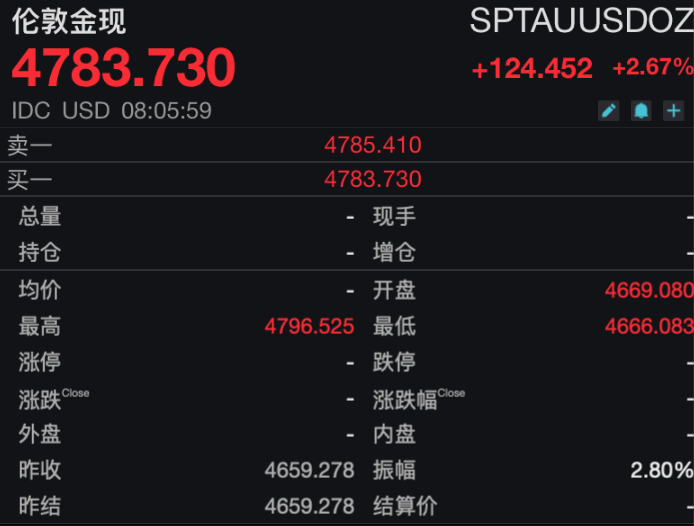
Core Viewpoint - The recent increase in spot gold and silver prices indicates a potential shift in market sentiment, with several institutions maintaining a bullish outlook on gold in the long term [1][4]. Group 1: Price Movements - As of February 3, spot gold rose by 2.57%, nearing $4800, priced at $4783.730 per ounce [1]. - Spot silver increased by 5.04%, reaching $83.115 per ounce [1]. Group 2: Market Analysis - Multiple institutions remain optimistic about the future of gold, citing ongoing monetary system restructuring and increased central bank purchases as key factors [3][4]. - Citic Securities predicts that gold could reach $6000 per ounce by 2026, driven by its monetary attributes and sustained safe-haven demand [4]. - JPMorgan has raised its gold price forecast for the end of 2026 from $5400 to $6300 per ounce, attributing this to persistent demand from central banks and investors [4]. Group 3: Investment Sentiment - The current market dynamics suggest a significant influx of sovereign, institutional, and retail funds into gold, which is viewed as a hedge against inflation and geopolitical risks [4].
【立方早知道】直线上涨!黄金、白银终止三连跌/利好来了!低空经济迎重磅指南/沪市首份年报出炉
Sou Hu Cai Jing· 2026-02-03 00:17
Focus Events - Spot gold and silver prices ended a three-day decline, with London gold rising by 2.24% to $4,763.63 per ounce and London silver increasing by 4.17% to $82.43 per ounce [1] - Chip导科技 released its 2025 annual report, reporting revenue of 394 million yuan, a year-on-year increase of 11.52%, and a net profit attributable to shareholders of 106 million yuan, a year-on-year decrease of 4.91% [1] Industry Dynamics - Multiple institutions remain optimistic about the future of gold, with Guotai Junan predicting that gold prices could reach $6,000 per ounce in 2026 due to ongoing monetary system restructuring and central bank purchases [10] - Morgan Stanley raised its gold price forecast for the end of 2026 from $5,400 to $6,300 per ounce, citing sustained demand from central banks and investors [11] - Yuguang Jin铅 mentioned that fluctuations in silver prices have a complex impact on its profit margins due to the dynamic nature of raw material pricing [18] Policy and Regulation - The State Taxation Administration announced adjustments to VAT tax declaration matters, optimizing the reporting scope for general taxpayers and small-scale taxpayers [8] - The Ministry of Industry and Information Technology issued a mandatory national standard for automotive door handle safety, effective January 1, 2027, to enhance vehicle safety [12] Corporate Actions - Shanghai has initiated a project to acquire second-hand housing for affordable rental housing, focusing on matching housing types with talent needs [15] - Beiyinmei announced that its controlling shareholder's pre-restructuring plan was approved by the creditors' meeting, which may lead to changes in shareholder equity and control [21] - Midea Group reported a total expenditure of 1.998 billion yuan for repurchasing 0.35% of its shares [25]






黄金续跌,投资者如何风控?
3 6 Ke· 2026-02-02 23:49
Core Viewpoint - The precious metals market, particularly gold and silver, has experienced significant volatility, with sharp declines in prices leading to concerns about market stability and investor risk management [2][3][4]. Price Movements - As of February 2, 2026, gold prices fell to $4421.31 per ounce, down over 9% for the day, while silver dropped to $72.21, down over 15% [2]. - Earlier in the day, gold had broken below $4800 per ounce, marking a 3.35% decline, and silver had seen a drop of 6% to $79.57 per ounce [2]. - The day also saw gold reach a new low of $4450 per ounce, the lowest since January 8, 2026, while silver approached levels that erased its gains for the year [2]. Market Analysis - Analysts noted that the sharp decline in precious metals prices indicates a potential market frenzy, with increased positions and leverage leading to widespread sell-offs [3]. - The volatility in precious metals has been accompanied by declines in other commodities, including WTI crude oil, palladium, copper, and platinum, with WTI oil dropping over 6% to $61.69 per barrel [3]. Risk Management by Financial Institutions - Major state-owned banks in China have issued multiple risk warnings regarding precious metals price fluctuations, with the Industrial and Commercial Bank of China (ICBC) issuing four warnings in a week [4]. - ICBC advised investors to adopt a long-term perspective and diversify their investments to manage risks effectively [4]. - Other banks, such as China Construction Bank, have raised the minimum investment amounts for gold accumulation and implemented limit management for gold investment products [4]. Influencing Factors - The precious metals market has been affected by liquidity issues and market expectations surrounding potential policy changes following the nomination of Kevin Warsh as the next Federal Reserve Chair by President Trump [5]. - Analysts believe that while the immediate impact of Warsh's nomination may be short-term, the long-term fundamentals for precious metals remain intact, with a focus on stable monetary policy and low inflation [5]. Long-term Outlook - Despite recent volatility, some analysts maintain a positive long-term outlook for precious metals, particularly gold, due to ongoing geopolitical shifts and concerns over fiscal sustainability [6]. - The World Gold Council reported that global gold demand is expected to exceed 5000 tons for the first time in 2025, with a significant increase in demand value, indicating strong market fundamentals [6].
黄金白银暴跌,历史的重演而已
Sou Hu Cai Jing· 2026-02-02 23:25
Core Viewpoint - The recent significant drop in gold and silver prices is viewed as a historical repetition, with institutions claiming that the fundamental logic for their previous rise remains unchanged, yet cautioning investors [3][5]. Group 1: Market Dynamics - The basic logic driving the rise of gold and silver includes global geopolitical changes, de-dollarization, and concerns over the independence of the Federal Reserve, particularly influenced by former President Trump's actions [3][5]. - Despite the unchanged logic, it does not guarantee continuous price increases; the prices of gold and silver can become excessively high, losing their safe-haven value [3][5]. Group 2: Price Analysis - The recent price surge of gold above $5,000 and silver above $100 is deemed unreasonable, indicating a shift from safe-haven assets to risk assets, which could lead to significant price drops [6][8]. - The dollar index increased by less than 1% following the appointment of the new Federal Reserve Chair, yet gold prices fell nearly 20% and silver nearly 40% in two days, suggesting that the reasons provided by institutions for the drop are inadequate [6][8]. Group 3: Investment Considerations - Historical patterns show that gold and silver are prone to extreme volatility, making them unsuitable for ordinary investors, despite their past performance [8]. - The recent price fluctuations are seen as a reminder of historical trends, where significant drops can occur even after substantial gains, reinforcing the notion that gold is not a reliable investment for the average person [8].
21社论丨金价大幅震荡凸显全球市场多重风险
Sou Hu Cai Jing· 2026-02-02 22:51
值得注意的是,本轮黄金、白银及铜价的快速上涨,主要推动力来自亚洲投资者。然而,由于短期价格 过快上涨且已处于高位,部分投资者的获利了结反而成为本次调整的重要诱因。近日,国内相关金融机 构开始提示黄金交易风险,部分银行也已相应调整相关政策。 全球市场为何如此青睐黄金?这一问题并非新近出现。过去几年,作为黄金的主要购买方,各国央行持 续推进外汇储备多元化,黄金已成为分散美元风险的重要避险资产与国家储备工具。因此,黄金价格背 后的核心驱动实为"去美元化"逻辑——无论是出于对美元资产安全性的担忧,还是基于美国债务问题对 美元信用的忧虑,黄金均被视为具有历史意义的对冲工具。 在各国央行长期、持续增持的支撑下,黄金的安全边际得到强化。与此同时,美国在美元信用、利率政 策及地缘政治等方面日益凸显的不确定性,似乎正推动黄金进入一个历史性的上涨周期。正是基于这一 叙事与判断,市场资金逐渐将原本作为避险资产的黄金(无息资产)重新定位为风险资产。在当前美 股、美债等资产已处于高位、增长空间受限的背景下,在有限的资产选择范围内,黄金与白银被视为最 能捕捉货币贬值、再通胀以及地缘政治冲突情绪的交易标的。 美国因过去长期使用过度宽松的货 ...