
新型城镇化

Search documents
招商银行研究院微信报告汇总(2025年2-3月)
招商银行研究· 2025-04-03 09:56
Core Viewpoint - The article discusses the anticipated changes in industry prosperity by 2025, emphasizing the need for proactive measures in response to economic challenges and the evolving global landscape [1]. Macroeconomic Analysis - The monetary policy report for Q4 2024 indicates a balanced approach to internal and external factors, suggesting adjustments as necessary [3]. - Economic data from early 2025 shows a stable start supported by policy measures, with seasonal price declines noted in February [3]. - The impact of tariffs is still unfolding, with import and export data from January to February 2025 reflecting this uncertainty [3]. Capital Market Insights - The U.S. Federal Reserve may resume easing policies, as indicated by CPI inflation data from early 2025, which shows persistent low inflation [4]. - The overall trend in A-shares is neutral to slightly bullish, with a focus on the long-term value of technology stocks [8]. Industry Commentary - The market reform for new energy grid prices is expected to stabilize revenue expectations, with operational strategies becoming a key competitive factor [11]. - The real estate market shows a weak rebound in new housing, while second-hand housing remains strong in key cities [11]. - The economic transformation driven by AI innovations, such as those from DeepSeek, is highlighted as a significant growth area [11]. - Consumer spending during the Spring Festival indicates a steady recovery, particularly in the film industry [11].



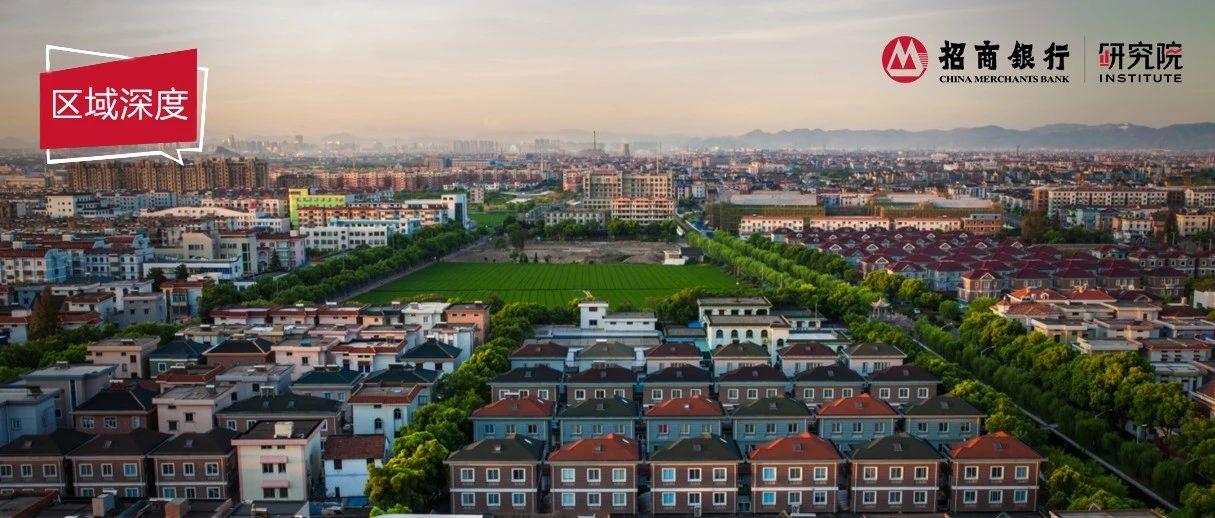
【招银研究|区域深度】新型城镇化系列研究之城乡融合篇——城乡融合的现状、关键举措与未来机遇
招商银行研究· 2025-03-27 09:19
Core Viewpoint - Urban-rural integration is a crucial approach to address the urban-rural gap and achieve common prosperity in China, with a focus on policy evolution and development status [1] Policy Context - The evolution of urban-rural development policies in China has transitioned from "coordinated urban-rural development" to "urban-rural integration," reflecting a strategic adjustment to address deep-rooted issues and institutional barriers [6][7] Development Status - The income disparity between urban and rural residents has been narrowing, with the ratio of per capita disposable income decreasing from 3.1 times in 2007 to 2.3 times in 2024 [11] - Rural residents' Engel coefficient has decreased from 40.5 in 2007 to 32.4 in 2023, indicating improved living standards [14] - Rural infrastructure and social security systems have seen significant improvements, with over 86% of rural areas having access to tap water and 73% to sanitary toilets by 2023 [16] Key Measures - Three key measures to promote urban-rural integration include: 1. Establishing a policy framework for equal exchange and bidirectional flow of urban-rural factors, including reforms in household registration and social security systems [3] 2. Using counties as pilot areas for institutional reforms to protect farmers' property rights [3] 3. Promoting deep integration of industries, enhancing the digitalization and branding of modern agriculture, and activating rural tourism and wellness services [3] Opportunities for Commercial Banks - Urban-rural integration presents new development opportunities for commercial banks, encouraging them to innovate products and services while participating in the entire process of urban-rural integration [3]
建筑装饰行业跟踪周报:政府债券发行加快,关注资金到位对基建实物量影响
Soochow Securities· 2025-03-17 02:24
Investment Rating - The report maintains an "Overweight" rating for the construction and decoration industry [1]. Core Insights - The report highlights that the acceleration of government bond issuance is expected to positively impact infrastructure investment and physical workload [5]. - The overseas contracting business in China is projected to achieve a year-on-year revenue growth of 3.1% in 2024, with new contract amounts increasing by 1.1%, reaching a historical high [9]. - The report suggests that the demand structure shows promising opportunities, particularly in specialized manufacturing, prefabricated buildings, energy conservation, and new energy-related infrastructure sectors [9]. Summary by Sections Industry Dynamics - The report notes that in February, government bond financing increased by CNY 1.7 trillion, a year-on-year increase of 1.1 trillion, benefiting from accelerated issuance of replacement bonds [8]. - The government work report sets a domestic economic growth target of around 5% for 2025, with a proposed deficit rate of 4% [8]. - The report emphasizes that macro policies are expected to remain positive, with infrastructure and real estate sectors likely to see a recovery in demand due to fiscal stimulus and stabilization policies [8]. Overseas Expansion - The report indicates that the Belt and Road Initiative will continue to drive infrastructure cooperation, with overseas engineering demand expected to remain robust [9]. - Companies such as China National Materials, Shanghai Port Construction, and others are recommended for investment in the international engineering sector [9]. Demand Structure - The report identifies high demand in niche areas such as prefabricated construction and energy-efficient infrastructure, suggesting companies like Honglu Steel Structure and Huayang International as potential beneficiaries [9]. - The low-altitude economy is also highlighted, with recommendations for design institutes in construction and infrastructure [9]. Market Performance - The construction and decoration sector saw a weekly increase of 1.6%, outperforming the CSI 300 and Wind All A indices [24]. - Notable stocks that performed well include Dongyi Risheng and Jincheng, while others like Sujiao Ke and Honglu Steel Structure faced declines [25][26].
集中力量抓好一批带动性强的重点事项
Zheng Quan Shi Bao Wang· 2025-03-14 18:12
Group 1 - The core viewpoint emphasizes the need for the government to act as an executor of the Central Committee's decisions, highlighting the importance of being proactive and results-oriented in governance [1][2] - The government has outlined specific tasks for economic and social development, including actions to boost consumption, promote a unified national market, and advance the "Artificial Intelligence +" initiative [2] - There is a focus on enhancing high-level opening up, stabilizing foreign trade and investment, and effectively responding to external shocks [2] Group 2 - The meeting involved key officials from various ministries, including the National Development and Reform Commission and the Ministry of Human Resources and Social Security, indicating a collaborative approach to policy implementation [3][4] - The government aims to deepen reforms and improve the legal and credit environment to stimulate the initiative of various business entities [2] - The emphasis is placed on achieving higher standards in development, particularly in areas such as domestic circulation, green transformation, and improving people's livelihoods [2]
【招银研究|政策】2025年《政府工作报告》解读:迎难而上,奋发有为
招商银行研究· 2025-03-06 11:20
Core Viewpoint - The government work report emphasizes the need for a balanced approach to economic growth, focusing on stability while promoting progress, amidst a complex external environment and internal challenges [2][4][3]. Group 1: Economic Situation Assessment - The report highlights that the economic recovery is solid, driven by macroeconomic policies, but acknowledges increased external pressures from geopolitical tensions and trade challenges [2][3]. - It identifies internal issues such as insufficient effective demand and difficulties faced by some enterprises, alongside new concerns regarding social welfare and local government finances [2]. Group 2: Development Goals - The economic growth target for this year is set at around 5%, consistent with previous years, aiming to balance short-term needs with long-term development goals [5]. - Employment targets remain at 12 million new urban jobs, with a focus on addressing structural employment issues, particularly among youth and migrant workers [6][7]. Group 3: Macroeconomic Policies - Fiscal policy is set to be more proactive, with a total fiscal space expanding to 13.86 trillion yuan, including a record deficit rate of 4.0% [9][10]. - Monetary policy will remain moderately accommodative, with an emphasis on maintaining liquidity and aligning social financing growth with economic growth and inflation targets [12][13]. Group 4: Key Initiatives - Consumer spending is prioritized as a key driver for economic growth, with initiatives to boost consumption through various measures, including a doubling of funds for old-for-new consumer goods programs [15]. - The report emphasizes the importance of technological innovation and industrial upgrades, particularly in emerging sectors like AI and quantum technology, to enhance productivity [16][17]. Group 5: Risk Management - The report outlines a focus on managing risks in real estate, local government debt, and small financial institutions, advocating for a gradual approach to risk resolution [23][26][27]. - Specific measures include controlling new real estate developments and enhancing transparency in local government debt management [24][26]. Group 6: Capital Market Outlook - The report indicates a shift in the A-share market from concept-driven to performance-driven dynamics, with a focus on technology sectors benefiting from policy support [32][34]. - It anticipates stable long-term performance for the A-share market, with an emphasis on enhancing the capital market's stability and value through reforms [33][36].

快评|《政府工作报告》房地产相关九点解读
克而瑞地产研究· 2025-03-05 06:43
Core Viewpoint - The government work report emphasizes the dual focus on risk prevention and market stabilization in the real estate sector, aiming to promote demand and optimize supply while ensuring housing delivery and quality [3][4][5]. Group 1: Risk Prevention and Market Stabilization - The report identifies risk prevention as the primary task for the real estate sector, highlighting the need to manage risks associated with key enterprises and ensure no systemic risks arise [4][5]. - Local governments are encouraged to implement measures to stabilize the real estate market, with over 14 provinces already committing to "stop the decline and stabilize" the market [4][5]. - The report introduces the "Financial 16 Measures" to alleviate liquidity pressures on quality real estate companies, with a focus on ensuring housing delivery [4][5][11]. Group 2: Demand Side Measures - The report advocates for the reduction of restrictive measures tailored to local conditions, aiming to stimulate both rigid and improvement housing demand [6][8]. - Emphasis is placed on accelerating the renovation of urban villages and dilapidated housing, which is expected to enhance purchasing power and improve mortgage expectations [6][8]. - Various cities, including Jiangsu, Anhui, Guangdong, and Fujian, are already implementing urban village and dilapidated housing renovations to support market recovery [6][8]. Group 3: Supply Side Optimization - The report outlines a strategy to optimize new supply and revitalize existing inventory, focusing on controlling new land supply while enhancing urban renewal efforts [8][9]. - Local governments are granted greater autonomy in the acquisition of existing residential properties, with an emphasis on utilizing special bonds for land acquisition and inventory reduction [8][9]. - The government plans to issue 4.4 trillion yuan in special bonds to support investment in construction, land acquisition, and the purchase of existing properties [8][9][24]. Group 4: New Development Model - A new development model for the real estate sector is proposed, focusing on high-quality housing that meets the diverse needs of the population [13][15]. - The model emphasizes the importance of quality in development, with a shift from quantity-driven growth to a focus on sustainable and innovative practices [15][16]. - The report highlights the need for a balanced approach to land supply and housing demand, ensuring that housing quality aligns with the expectations of residents [13][15]. Group 5: Economic and Employment Goals - The government sets a GDP growth target of around 5% and aims to create over 12 million new urban jobs, linking economic stability to housing consumption [19][20]. - Policies are designed to enhance residents' income and employment, which are crucial for boosting housing demand and consumer confidence [19][20]. - The report emphasizes the importance of a coordinated policy approach to ensure effective implementation and positive market expectations [19][20].

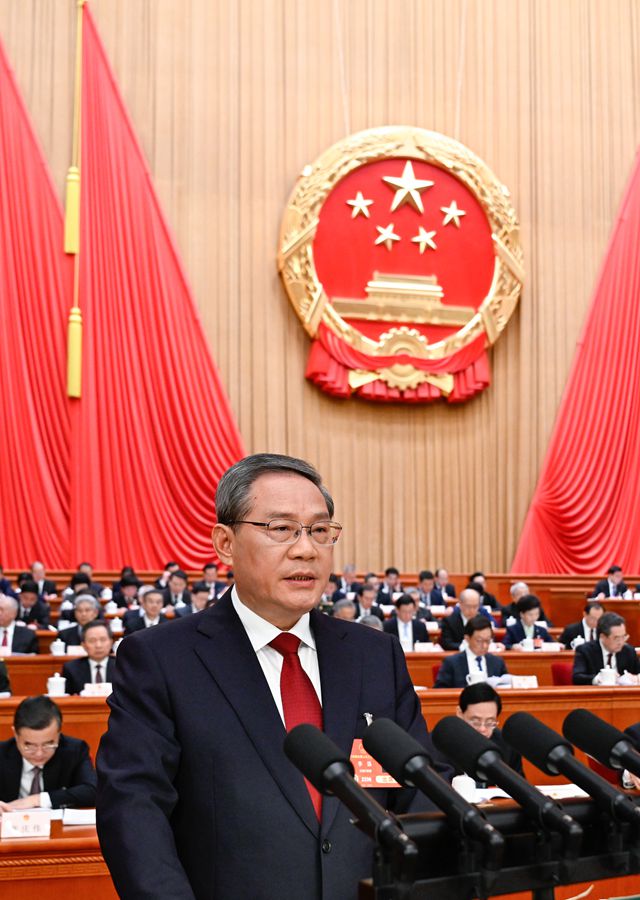
李强作的政府工作报告(摘登)
Zhong Guo Jing Ji Wang· 2025-03-05 03:02
Economic Performance - China's GDP reached 134.9 trillion yuan, growing by 5%, contributing approximately 30% to global economic growth [2] - Urban employment increased by 12.56 million, with an average urban unemployment rate of 5.1% [2] - The per capita disposable income of residents grew by 5.1% in real terms [2] Industrial Development - Grain production exceeded 1.4 trillion jin, with an increase in yield per mu by 10.1 jin [3] - High-tech manufacturing and equipment manufacturing value-added grew by 8.9% and 7.7%, respectively [3] - The annual production of new energy vehicles surpassed 13 million units [3] Innovation and Technology - Significant advancements in integrated circuits, artificial intelligence, and quantum technology were reported [3] - The transaction volume of technology contracts increased by 11.2% [3] - The digital economy's core industry accounted for about 10% of GDP [8] Environmental Protection - PM2.5 average concentration in cities decreased by 2.7%, with the proportion of days with good air quality rising to 87.2% [3][12] - Non-fossil energy generation accounted for nearly 40% of total power generation [12] Government Policies and Reforms - Comprehensive reforms were implemented to enhance the business environment and promote fair competition [7][33] - The government aims to deepen reforms in state-owned enterprises and improve the development environment for the private sector [7][33] Investment and Consumption - The government plans to implement measures to boost consumption and investment, with a focus on enhancing domestic demand [24][25] - Central budget investment is proposed at 735 billion yuan, with an emphasis on key projects [25] International Trade and Investment - The government is committed to stabilizing foreign trade and investment, with policies to support enterprises in expanding markets [34][35] - Efforts to enhance the quality of the Belt and Road Initiative and promote international cooperation are ongoing [35][36]
700字!极简版政府工作报告来了
证券时报· 2025-03-05 02:10
Group 1 - The core viewpoint of the article emphasizes the government's economic goals for 2024 and 2025, focusing on growth, stability, and social development [1][2] - The GDP target for 2024 is set at 134.9 trillion yuan, with a growth rate of 5%, contributing approximately 30% to global economic growth [1] - The expected growth rate for GDP in 2025 is around 5%, with a focus on maintaining a stable urban unemployment rate of about 5.5% and creating over 12 million new urban jobs [1][2] Group 2 - The government plans to implement a more proactive fiscal policy with a deficit rate of around 4%, aiming for a deficit scale of 5.66 trillion yuan and issuing long-term special government bonds of 1.3 trillion yuan [2] - A moderately loose monetary policy will be adopted, including potential interest rate cuts to promote healthy development in the real estate and stock markets [2] - Key tasks for 2025 include boosting consumption, enhancing investment efficiency, and expanding domestic demand comprehensively [2]

两会|专访全国政协委员、上海交大中国发展研究院执行院长陆铭:推进“人财地”改革 助力新型城镇化
Zheng Quan Shi Bao Wang· 2025-03-04 04:36
Group 1 - The core issue of idle homestead land in rural areas is highlighted, with a significant idle rate potentially exceeding the reported 18.1% in 2019, leading to inefficient land use and resource misallocation [1][2] - The current legal framework restricts homestead land ownership to collective members, limiting market demand and hindering the realization of market value for idle land [2][3] - The proposal to activate idle homestead land through rental, equity participation, and cooperation faces challenges, including short-term lease agreements that do not provide stable rights for long-term investments [2][3] Group 2 - Existing homestead policies restrict the potential conversion of land for residential use, creating a mismatch between supply and demand for housing in rural areas [3][4] - Recommendations include promoting pilot reforms for homestead land, allowing for diverse activation methods based on local needs and characteristics [4][5] - The establishment of a unified national trading market for land use rights is suggested, enabling farmers to trade land use rights and allowing for the conversion of idle land back to agricultural use [5][6] Group 3 - The ongoing urbanization and rural revitalization efforts face challenges in the areas of population, land, and fiscal transfer payments, with a need for continued reforms in the household registration system [6][7] - It is essential to facilitate the transfer of construction land use rights across regions to support urbanization and resource reallocation [8] - The proposal emphasizes that fiscal transfer payments should follow population movements to ensure adequate public service provision in areas experiencing population influx [8]

3月研判及金股
Tebon Securities· 2025-03-02 10:23
Macro Analysis - The upcoming National People's Congress (NPC) is expected to maintain an economic growth target of around 5%[11] - Key focuses include boosting consumption, fiscal and monetary policy coordination, and structural reforms to improve the business environment[11] - Five major industry themes for 2025 are identified: AI and AI+, quality consumption, new urbanization, infrastructure overseas, and food security[11] Market Impact - The NPC is anticipated to establish industry trends with policies supporting AI and AI+ as the most significant trends for 2025[16] - Enhancing consumer sentiment and happiness is a core policy concern, with current consumption performance being relatively weak[16] - The transition from old to new economic drivers will take time, with price rather than volume being a key factor influencing major asset changes in 2025[16] Investment Highlights - Jiufeng Energy (605090.SH) shows steady growth in clean energy with LNG domestic sales increasing, and the company’s gross profit per ton is improving[17] - Solid growth in the traditional Chinese medicine sector is noted for Guoshengtang (02273.HK), with a CAGR of 26.2% from 2018 to 2023[21] - Ximai Food (002956.SZ) has seen a steady increase in revenue, with a 5-year CAGR of 13.1% despite profit fluctuations[24] Risk Considerations - Risks include potential underperformance of policy support, slower-than-expected economic recovery, and competition in various sectors[7][12][30]