
AI智能体

Search documents
信息通信业如何突破增长瓶颈
Jing Ji Ri Bao· 2025-06-26 22:09
Core Insights - The information and communication industry is actively seeking new growth paths to inject new momentum into both the digital and real economies [1][2] - The industry has faced a situation where growth in volume does not translate to revenue, with telecom business volume increasing by 8.2% year-on-year, while revenue only grew by 1% [1] - The saturation of the basic communication market and the decline in traditional voice and SMS revenue are significant challenges [1][2] Group 1: Market Dynamics - Emerging sectors such as cloud computing, big data, and the Internet of Things now account for 25% of telecom business revenue, contributing 78% to revenue growth [2] - The acceleration of global digital transformation and the rise of digital economy create vast demand for the information and communication industry [2][3] - New consumer scenarios like digital consumption and smart homes are becoming increasingly important [2] Group 2: Technological Innovation - Technological innovation is identified as the core engine for breaking through market saturation [2][3] - The integration of mobile communication and the internet has led to a shift towards a data-driven era, necessitating the introduction of new technologies and scenarios [2] - Potential new markets such as low-altitude economy and AI applications could provide significant growth opportunities if scaled effectively [2][3] Group 3: Market Expansion - The saturation of traditional consumer markets necessitates the exploration of new directions, including emerging professions and rural markets [3] - Vertical industry applications in sectors like healthcare and education still have considerable room for development [3] - Identifying and capturing new scenarios can unlock additional demand for the information and communication industry [3] Group 4: Ecosystem Optimization - The information and communication industry must break down barriers between companies, industries, and scenarios to optimize the industrial ecosystem [3][4] - Collaboration among hardware manufacturers, internet companies, and operators can enhance user experience and foster new business models [3][4] - The industry is positioned at the forefront of global technological development, emphasizing the need for cooperative innovation [3][4] Group 5: Service Quality Enhancement - As the basic communication market approaches saturation, user demands are shifting towards service quality, focusing on network stability and responsiveness [4] - High-reliability communication is crucial for specific user groups like delivery riders and streamers, making service quality a key factor in user retention [4] - Leveraging AI and big data can help optimize network infrastructure and enhance user experience [4] Group 6: Growth Transformation - The information and communication industry is undergoing a transformation from scale expansion to value creation, driven by demand rather than technology [4] - New growth points are expected to emerge from infrastructure upgrades, technological integration, and ecosystem restructuring [4] - This transformation aims to reshape growth dynamics and competitive landscape within the industry [4]
国脉科技发布国内首款居家养老AI智能体
news flash· 2025-06-26 14:31
Group 1 - The core point of the article is that Guomai Technology (002093) has launched the first AI smart device specifically designed for home-based elderly care in China [1] Group 2 - The introduction of this AI smart device marks a significant innovation in the field of elderly care technology [1] - This development reflects the growing trend and demand for smart solutions in the aging population sector [1] - Guomai Technology aims to enhance the quality of life for elderly individuals through advanced technology [1]

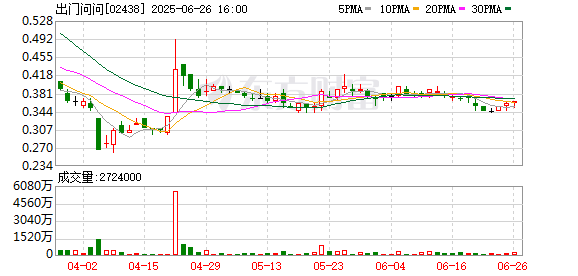
录音笔里的AI暗战:出门问问押注智能体,能否冲破同质化“迷雾”
Hua Xia Shi Bao· 2025-06-26 12:42
Core Insights - PLAUD.AI, a startup from Shenzhen, achieved an annual revenue of $100 million with its magnetic card recording pen, prompting the AI veteran company, Out of the Question, to explore opportunities in the market with its new AI card recording pen, TicNote [2][3] - Out of the Question's strategy emphasizes software development over hardware, aiming to leverage AI capabilities to differentiate its products in a crowded market [3][4] - The company faces significant competition not only from PLAUD.AI but also from various other hardware and software products with similar AI functionalities [5][6] Product Development - TicNote is designed to integrate AI closely, featuring "Shadow AI" for enhanced user experience in various scenarios such as meetings and lectures, and supports over 120 languages [4][6] - The recording pen market is transitioning from simple recording tools to intelligent analysis assistants, with TicNote targeting efficiency pain points in professional and educational settings [4][5] Market Strategy - Out of the Question is not solely focused on the domestic market; it has plans to expand its products internationally, particularly in Europe and the U.S. [6][7] - The company has shifted its focus from traditional hardware to AI software solutions, with AIGC solutions becoming a significant revenue driver, increasing from 1.7% of total revenue in 2021 to 56.8% in 2024 [7][8] Financial Performance - Despite the growth in software revenue, Out of the Question has faced declining hardware sales, with revenues from smart devices dropping from 338 million yuan in 2021 to 152 million yuan in 2024 [7][8] - The overall revenue for Out of the Question has fluctuated, with losses persisting from 2021 to 2024, indicating challenges in maintaining profitability amid strategic shifts [8][9] Industry Trends - The AI industry is experiencing intense competition, with numerous entrants in the AIGC space, making it crucial for companies like Out of the Question to establish a strong niche and differentiate their offerings [8][9] - Experts suggest that companies should focus on precise positioning, differentiated technology, and deep engagement in specific scenarios to survive in the competitive AI landscape [9]

从虚拟到可行:首席财务官如何重新规划人工智能的应用
3 6 Ke· 2025-06-26 08:02
Core Insights - Many AI projects fail to deliver expected results, prompting CFOs to refocus on three core elements: business value, data foundation, and employee engagement [2][3][4] Group 1: Business Value - Companies must clearly define the business value they expect to achieve through AI, focusing on solving quantifiable business challenges rather than pursuing technology for its own sake [5] - Successful companies prioritize practical, actionable business problems, leading to measurable outcomes, such as increasing annual revenue from $1 million to $1.3 million through targeted AI-driven marketing strategies [5] - A focused and pragmatic approach allows companies to accumulate incremental successes, fostering internal momentum for larger initiatives while minimizing high-cost trial-and-error risks [5] Group 2: Data Foundation - The second key dimension for successful AI implementation is data quality and accessibility, as the effectiveness of AI models is highly dependent on the quality of input data [8] - Companies often face challenges in data volume, diversity, and structure, which can hinder AI training [8] - Data collaboration platforms enable organizations to train AI models while ensuring privacy, allowing for the analysis of data without transferring it, thus addressing the critical issue of high-quality training data scarcity [9] Group 3: Employee Engagement - The third dimension, personnel, is crucial for the success of AI projects, as public concerns about job displacement by AI can lead to resistance [12] - Companies must communicate the core message that AI is meant to enhance human capabilities, not replace them, to alleviate fears and build trust among employees [12] - Successful AI initiatives emphasize communication and change management, requiring CFOs and executives to engage stakeholders early and maintain ongoing dialogue to ensure smooth transitions [12][13]

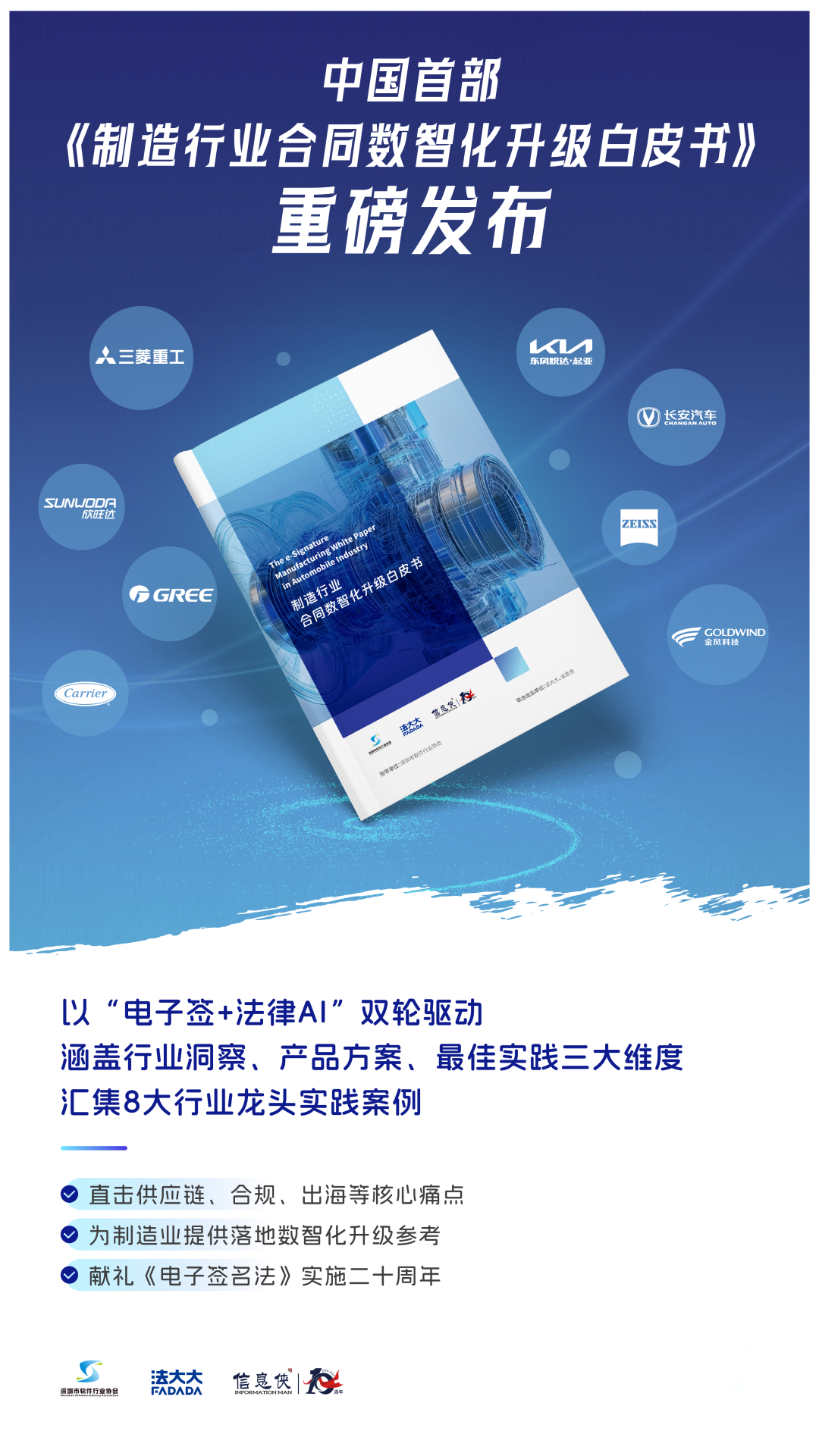
工信部最新定调!法大大发布首部《制造行业合同数智化升级白皮书》
Zhong Guo Chan Ye Jing Ji Xin Xi Wang· 2025-06-26 07:17
Group 1 - The core viewpoint of the article emphasizes the importance of digital transformation in the manufacturing industry, particularly through the adoption of electronic signatures and legal AI to enhance efficiency and compliance [1][19] - The Ministry of Industry and Information Technology has set ambitious goals for the manufacturing sector, aiming to achieve breakthroughs in over 100 key measurement technologies and revise more than 300 industry standards by 2027 [1] - The "Digital + International + Intelligent" integrated platform developed by the company aims to support the entire lifecycle of contract management, leveraging technologies such as AI, cloud computing, and blockchain [12] Group 2 - The white paper highlights the need for a dual-driven model of "Electronic Signature + Legal AI" to address core pain points in supply chain collaboration, compliance risk control, and global expansion [1][19] - Significant growth in high-tech manufacturing sectors is noted, with sales revenue increasing by 12.1% year-on-year in Q1 2025, indicating a shift towards mid-to-high-end manufacturing [6] - The challenges faced by manufacturing enterprises include difficulties in data interoperability between industrial agreements and legal documents, organizational inertia hindering process changes, and varying legal recognition of electronic contracts across jurisdictions [7] Group 3 - The integration of electronic signature technology allows for the automation and online processing of contract signing, reducing the time from days or weeks to mere minutes, thus significantly improving operational efficiency [8] - AI technologies, including natural language processing and machine learning, enhance contract lifecycle management by enabling intelligent review, risk alerts, and dynamic optimization of compliance monitoring [8][9] - The company’s self-developed legal model, iTerms Pro, offers seven core capabilities for contract drafting, review, and compliance management, providing low-cost and scalable legal support for enterprises [14]
云迹科技打造AI智能体新范式:让服务机器人真正“眼里有活,眼里有人”
Zhong Guo Chan Ye Jing Ji Xin Xi Wang· 2025-06-26 05:53
Group 1 - The core viewpoint emphasizes the potential of intelligent agents in service industries, particularly in hotels, where they can perform various tasks and collaborate with humans to enhance operational efficiency [1][2][3] - The Chinese Hotel Association highlights the transition of digital hotel construction from version 1.0 to 2.0, with evidence of a 15% increase in operational efficiency after integrating intelligent systems in a hotel [1][3] - The integration of AI and embodied intelligence is crucial for developing intelligent agents that can understand human social rules and provide tailored services in various scenarios [2][3] Group 2 - The next 5-10 years are seen as a critical window for digital transformation in the hotel industry, with new digital applications emerging alongside AI advancements [3][4] - Intelligent agents are expected to predict customer needs based on past behaviors and current requests, enhancing the overall guest experience in hotels [3][5] - The Ministry of Industry and Information Technology's action plan aims to double the density of robots in manufacturing by 2025, indicating a broader application of service robots across industries [4][5]

更贴近、更专业、更新锐,南方财经28款重点产品亮相
Sou Hu Cai Jing· 2025-06-26 00:08
Group 1 - The Southern Finance Media Group has officially launched a systematic transformation, introducing 28 new products focused on user-centric services and data-driven approaches [1][2] - The transformation emphasizes four key areas: news content, investment information, financial data, and local life, aiming to create a comprehensive product matrix [1] - The company aims to enhance its financial news reporting by integrating deep analysis, video expression, and rapid information dissemination [1][2] Group 2 - Southern Finance will develop a range of theoretical, commentary, and multimedia products to create a dynamic financial commentary matrix and cultivate influential commentary IPs [2] - The company plans to strengthen its "media + investment" model, transforming information into decision-making tools and building a comprehensive investment empowerment system [2][3] - The establishment of a media-led securities rights protection and investment service platform is a key initiative, alongside the development of the "21 Financial Circle" to track policy changes and investment trends [2][3] Group 3 - Southern Finance aims to enhance its data capabilities by building a data-driven economic decision-making hub for governments, enterprises, and investors [2][3] - The company is accelerating the development of its technology lab to create AI-driven financial products, including "Information Pass," "Wealth Management Pass," "City Pass," and "Smart Stock Pass" [2][3] - "Information Pass" will provide real-time news and data solutions for financial institutions, supporting both standardized and customized services [2] Group 4 - "Wealth Management Pass" focuses on the banking wealth management sector, offering a comprehensive service system that includes data, research, marketing, and investment education [3] - "City Pass" integrates think tank resources, data, and government services to provide solutions for data governance and economic monitoring [3] - "Smart Stock Pass" aims to create a digital investment advisory platform that covers the entire investment decision-making process [3] Group 5 - The company will innovate content in areas such as investment, quality consumption, and health, aiming to connect emotionally with users and enhance social sharing [3][4] - "Lingnan Big Doctor" will create a closed-loop ecosystem for health services, providing authoritative and accessible health solutions [3] - "Finance Knowledge" targets the Z generation, using engaging formats to simplify economic concepts and financial literacy [3][4] Group 6 - "IN Investigation" focuses on public policy, social issues, and corporate responsibility, creating a feedback loop through investigative reporting [5] - "Economic Video Live" will feature frontline reporters covering various events, enhancing real-time engagement with audiences [5]
慧与科技(HPE.US)紧抱英伟达(NVDA.US)大腿 在Discover大会重磅发布AI服务器新品
智通财经网· 2025-06-25 02:03
Core Insights - HPE announced significant product updates at its annual HPE Discover event, focusing on enhancing its partnership with NVIDIA for AI computing capabilities [1][2] - The company upgraded its private cloud services and introduced new high-performance servers equipped with NVIDIA's latest GPUs, aiming to strengthen its position in the AI infrastructure market [1][4] Product Announcements - HPE launched the ProLiant Compute Gen12 servers featuring NVIDIA RTX PRO 6000 GPUs and the new HPE Compute XD690 AI server with NVIDIA Blackwell Ultra GPUs [1][4] - Other notable products include the HPE Alletra Storage MP X10000 AI storage system and the HPE OpsRamp Software AI computing platform, which will integrate with NVIDIA's services [2][3] Strategic Partnerships - HPE's CEO Antonio Neri emphasized the importance of infrastructure and data systems in leveraging AI opportunities, highlighting the comprehensive solutions provided in collaboration with NVIDIA [2][3] - The partnership aims to deliver a complete "AI Factory" infrastructure, enabling businesses to maximize data value and accelerate innovation [3][4] Market Position and Competition - HPE, along with competitors like Supermicro and Dell, is intensifying its collaboration with NVIDIA to secure priority access to new AI GPUs amid growing competition in the AI server market [4][5] - The company has transformed from a traditional server provider to a hybrid cloud subscription platform and AI infrastructure provider, leveraging its supercomputing technology and long-standing partnership with NVIDIA [5][6] Financial Performance - HPE's HPC & AI business reported a 25% year-over-year revenue increase in fiscal year 2023, with a record $900 million in sales for optimized servers in Q4 of fiscal year 2024 [5][6] - Analysts project that this business segment could approach $6 billion by fiscal year 2026, driven by the deepening collaboration with NVIDIA [6]


海通证券晨报-20250624
Haitong Securities· 2025-06-24 10:45
Group 1: Pig Farming Industry - The report presents a unique research framework that suggests pig prices may stabilize before declining, reaching a low by the end of the year, with capacity reduction being a current industry theme [2][4] - The analysis indicates that the pig cycle consists of efficiency and breeding cycles, with a 7% year-on-year decline in breeding sows correlating with stable pig prices [3][4] - The report emphasizes that the current phase is characterized by price declines and capacity reduction, with a focus on the impacts of prices, policies, and diseases [4][5] Group 2: Duty-Free Industry - The report highlights a significant narrowing of the sales decline in the duty-free sector, with a strong rebound in average transaction value, indicating signs of data recovery [2][10] - The implementation of the "immediate buy and refund" policy nationwide is expected to enhance the shopping conversion rate for foreign consumers in China [12][20] - The report suggests that the duty-free channel has significant price advantages, allowing it to capture market share effectively, with products like cosmetics being priced at 70-80% of taxable prices [12][22] Group 3: Debt Market - The report anticipates a key strategy shift in the debt market, with expectations of a long-term decline in broad interest rates due to economic data divergence and capital market resilience [6][7] - It discusses the potential for credit bond rates to decrease, enhancing the attractiveness of government bonds [8][9] - The report emphasizes the importance of monitoring liquidity and interest rate trends, suggesting that the debt market may experience a rebound [6][7] Group 4: Solid-State Battery Industry - The report indicates that the solid-state battery industry is entering a phase of accelerated industrialization, supported by government policies and funding [24][25] - It highlights the significant market potential for solid-state batteries in various applications, including electric vehicles and low-altitude aircraft [25][26] - The report notes that leading companies are making progress in developing solid-state battery prototypes, which is expected to attract more players into the market [26][27] Group 5: Construction Industry - The report outlines that broad infrastructure investment increased by 9.2% year-on-year, while real estate investment decreased by 12% [28][30] - It emphasizes the need for continued policy support to stabilize the real estate market and improve market confidence [30][31] - The report recommends several construction companies with high dividend yields as potential investment opportunities [31]
5月我国工程机械出口额同比+8.5%,叉车5月销量同比+11.8%
Great Wall Securities· 2025-06-24 08:15
Investment Rating - The industry rating is "Outperform the market" indicating an expectation for the industry to perform better than the overall market in the next six months [77]. Core Insights - In May 2025, China's engineering machinery export value increased by 8.51% year-on-year, with total trade amounting to USD 5.238 billion, reflecting a growth of 8.1% [1][17]. - The total engineering machinery export value from January to May 2025 reached USD 24.185 billion, up 8.49% year-on-year, with exports specifically growing by 8.98% [20]. - The sales report for May 2025 showed mixed results across various machinery categories, with notable increases in forklift sales by 11.8% and significant declines in tower crane sales by 28.4% [2][23]. Summary by Sections Industry Performance - The engineering machinery sector's export value in May 2025 was USD 5.024 billion, marking an 8.51% increase year-on-year [1][17]. - The total trade value for the first five months of 2025 was USD 24.185 billion, with exports at USD 23.095 billion, reflecting a year-on-year increase of 8.98% [20]. Sales Data - In May 2025, the sales of various machinery products showed diverse trends: - Graders: 649 units sold, down 3.28% year-on-year [2]. - Truck cranes: 1,748 units sold, down 8.1% year-on-year [21]. - Forklifts: 123,472 units sold, up 11.8% year-on-year [23]. - Road rollers: 1,589 units sold, up 17% year-on-year [23]. - Tower cranes: 538 units sold, down 28.4% year-on-year [22]. Key Developments - The first batch of industrial humanoid robots was launched in Liuzhou, marking a significant advancement in high-end robotics manufacturing in Guangxi [3][26]. - National railway fixed asset investment reached CNY 242.1 billion from January to May 2025, reflecting a 5.9% year-on-year increase, contributing to economic growth [4][27].