套息交易

Search documents
日本加息,有什么影响?
雪球· 2025-12-04 08:06
以下文章来源于睿知睿见 ,作者睿知睿见 睿知睿见 . 一个好的投资者,其能量一定的积极的,向上的,乐观的! 别人看着他,就像看着太阳! 他还能用朴实易懂的语言,传递正确的投资理念! ↑点击上面图片 加雪球核心交流群 ↑ 风险提示:本文所提到的观点仅代表个人的意见,所涉及标的不作推荐,据此买卖,风险自负。 作者: 睿知睿见 来源:雪球 最近,日本央行行长放了话,将提高日本利率,从0.5%上升到0.75%。 并且还说,希望在利率升至0.75%后,进一步阐明未来的加息路径。 换句话说,日本这是要 持续的加息了。为什么日本在这个时候加息呢?他们不是声称提振经济吗?加息怎么提振经济? 一、不可能三角 这个世界上有很多不可能三角,正所谓鱼和熊掌不可兼得。今年早些时候,日本就计划要通过扩张财政来提振经济。财政扩张就意味着日本政府要 大规模举债。 我们知道日本政府的债务规模可一点不小!继续扩张债务规模,一定会让市场担心日本政府能不能如期还钱。 也就是说,当债务规模过大时, 主权信用就会受到影响。反映到国债利率上就会持续上升,现在日本长债利率已经是迭创新高了。 这就会使得日本政府未来要偿还的利息越来越多! 日本政府就不想降低国 ...


日债风暴升级,长债收益率集体飙升至数十年新高,市场押注央行12月加息
Sou Hu Cai Jing· 2025-12-04 01:08
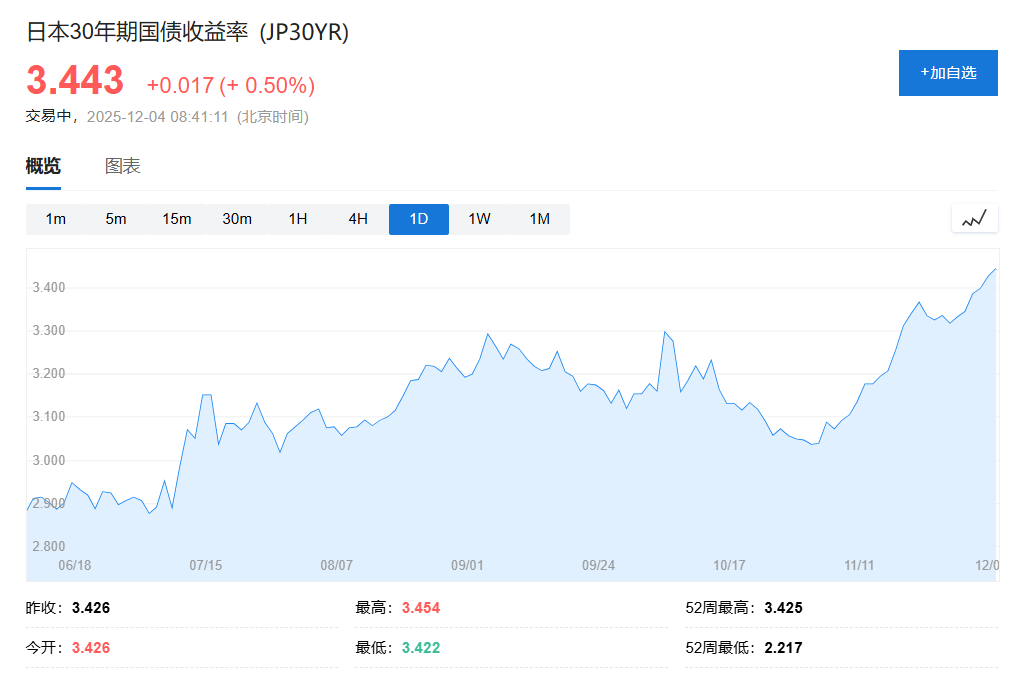
日本债市风暴正愈演愈烈,令全球金融市场陷入紧张氛围。 随着市场对日本央行12月加息的预期急剧升温,日本国债收益率全线飙升至数十年来的高点。今日最新行情显示,日本30年期国债收益率上行 2.5个基点,至3.445%,创下历史新高。 20年期国债收益率上行3个基点至2.94%,为1999年6月以来的最高水平。作为关键基准的10年期国债收益率也上升1.5个基点至1.905%,是2007年 以来首次触及该水平。 市场的紧张情绪即将迎来直接考验。日本财务省计划于今日出售约7000亿日元的30年期国债。瑞穗证券首席策略师Shoki Omori表示,预计此次 拍卖的需求将"略显疲软",这无疑为本已脆弱的市场增添了新的不确定性。 此轮债市剧震的根源,直指市场对日本央行货币政策即将转向的强烈预期。行长植田和男的最新表态,已将12月加息的可能性从十天前的20%推 高至80%。市场担忧,在圣诞假期前流动性枯竭的背景下,任何政策意外都可能被放大,其冲击波或将迅速传导至全球,对美股等风险资产构成 潜在威胁。 鹰派信号引爆加息预期 许多交易员对2022年圣诞节前的市场动荡记忆犹新。当时,日本央行同样在12月会议上意外调整收益率曲线控制( ...
白银一夜狂飙破58美元,涨幅碾压黄金!贵金属牛市逻辑已经变了?
Sou Hu Cai Jing· 2025-12-03 04:26
Price Surge - The spot silver price reached a historic high of $58.8 per ounce, marking a year-to-date increase of over 100%, significantly outpacing gold's approximately 60% rise [1][3] - Gold also saw a notable increase, reaching $4264 per ounce, the highest in six weeks [1][3] - The gold-silver ratio has approached 70, the lowest since August 2021, indicating a strong performance of silver relative to gold [3] Supply Constraints - The primary factor supporting the surge in silver prices is a persistent supply shortage, with global silver inventories at a near 10-year low and experiencing a supply deficit for five consecutive years [5] - Silver stocks in London have decreased from 31,023 tons in June 2022 to 22,126 tons in March 2025, a decline of approximately one-third [5] - The Shanghai Futures Exchange's silver inventory has also reached its lowest level in nearly a decade, exacerbating supply tightness [5] Demand Explosion - In contrast to the supply side, silver demand is experiencing a multifaceted surge, particularly in India, the largest consumer of silver, with an annual consumption of about 4000 tons [7] - Indian silver prices have soared to a historical high of 170,415 rupees per kilogram, reflecting an 85% increase since the beginning of the year [7] - Industrial demand for silver is growing significantly due to factors such as the electrification of vehicles, expansion of the AI industry, and increased demand for photovoltaics [7] Financial Attributes - Silver's financial characteristics are also playing a crucial role in its price surge, influenced by the Federal Reserve's policies [9] - Market expectations for a potential interest rate cut by the Federal Reserve have risen to 85% due to soft U.S. economic data and dovish comments from officials [9] - Concerns over macroeconomic risks from Japan, including potential interest rate hikes, have led to fears of forced unwinding of carry trades, further impacting silver prices [9] Gold Linkage - The strong performance of silver is closely tied to the gold market, with global gold demand reaching 1206 tons in Q1 2025, a 1% year-on-year increase, marking the highest trading volume for Q1 since 2016 [11] - China's gold investment demand surged, with gold bar and coin investments rising to 124 tons, a 48% quarter-on-quarter increase and a 12% year-on-year increase [11] - Central banks continue to purchase gold, with a net increase of 244 tons in official gold reserves in Q1 2025, marking the 16th consecutive year of net gold purchases [11] Logical Transformation - The traditional pricing logic of gold is undergoing a fundamental change, with the correlation between gold prices and real U.S. interest rates weakening since 2022 [13] - The driving force behind rising gold prices is now the unprecedented scale of central bank gold purchases, averaging 1073 tons annually from 2022 to 2024, accounting for 23% of global gold demand [13] - This shift is influenced by geopolitical tensions and concerns over the credibility of the U.S. dollar, repositioning gold as a strategic monetary anchor and a hedge against geopolitical risks [13] Institutional Forecasts - In response to the strong surge in silver prices, several institutions have raised their price forecasts, with UBS predicting silver prices could reach $60 per ounce by 2026, and Solomon Global suggesting it may exceed $100 per ounce [15] - Market participants are showing optimism, as the cost differential between bullish and bearish silver options has surged to the highest level since 2022, indicating strong expectations for price increases [15] - The recent price movements are driven by speculation, attracting more capital into the silver market [15]
日本货币政策转向,套利资金撤退使得加密市场承压
Sou Hu Cai Jing· 2025-12-03 04:20
Group 1: Monetary Policy and Economic Indicators - The Bank of Japan's Governor Ueda Kazuo indicated that the central bank will assess the pros and cons of interest rate hikes in the December policy meeting, marking the clearest signal for a potential rate increase to 0.75% [1] - Japan's core inflation rate reached 3% in October, the highest since July, with the core inflation rate excluding fresh food and energy rising to 3.1%, supporting the case for a rate hike [3] - Japan's GDP contracted at an annualized rate of 1.8% in the third quarter, contrasting with a growth of 1.6% in the previous quarter, indicating a slowdown in economic growth [4] Group 2: Currency and Market Reactions - The recent rise in the yen has led to increased volatility in the currency market, with the USD/JPY exchange rate rising approximately 2.19% as of November, and 9.52% over the past six months [3] - The tightening of Japan's monetary policy is impacting risk assets globally, with Bitcoin experiencing a significant sell-off, dropping 6% to below $85,000, and Ethereum falling nearly 9% [5] - Investors are reassessing yen-based carry trades and arbitrage strategies due to the changing interest rate environment, which is leading to a reduction in liquidity and increased financing costs globally [6][7]

21.3万亿刺激下,金融市场上演卖出日本交易,全球流动性遇险?
Sou Hu Cai Jing· 2025-12-03 04:08
全球市场正密切关注日本,一场由财政政策引发的风暴正在酝酿。你是否也感受到,当下的投资环境愈 发充满挑战? 让我们先将目光聚焦于日本。近期,日本金融市场遭遇罕见的抛售潮,债券和日元同时面临严峻的考 验。这不仅仅是简单的市场波动,更是投资者对日本经济深层风险的集体担忧,足以引发全球投资者的 不安。 这场风暴的导火索,是日本政府史无前例的财政扩张。为了刺激经济,日本官方宣布2025财年将追加高 达21.3万亿日元的财政预算,创下历史新高。然而,这一看似积极的举措,却适得其反,点燃了市场的 恐慌情绪,投资者纷纷抛售日债和日元。 经济数据的疲软,无疑加剧了市场的担忧。数据显示,日本第三季度GDP环比下降0.4%,同比更是大 幅下跌1.8%,为六个季度以来的首次萎缩。这不仅暴露了日本经济的脆弱性,也让人们对财政刺激的 效果产生了质疑。 要知道,日本政府债务占比早已远超国际警戒线。如今,继续依赖借贷来实施大规模财政刺激,无疑让 市场对日本的财政可持续性产生了深深的忧虑。 业内专家一针见血地指出:"日本财政政策的强刺激,叠加疲软的经济数据,导致债券市场抛压巨大。 国债利率飙升将大幅增加政府的借款成本,进一步扩大财政赤字。" ...
加息信号引发日本“股债双杀” 套息交易平仓风暴或卷土重来
2 1 Shi Ji Jing Ji Bao Dao· 2025-12-02 13:42
在日本央行行长植田和男12月1日暗示本月晚些时候可能加息后,日本国债收益率大幅上涨,从美国到 欧洲以及亚洲其他地区的全球主权债券收益率也纷纷走高,全球债券市场迎来抛售潮。 日本央行上一次加息还要追溯到今年1月,当时利率从0.25%上调至0.5%,日本借贷成本达到17年来的 最高水平。植田和男本周意外表示,日本央行将在12月19日结束的政策会议上"权衡利弊",考虑是否提 高政策利率。 这场来自日本的债市波澜也迅速引发了全球债券市场的抛售潮,波及美国、澳大利亚、新西兰、法国、 意大利、希腊市场上的债券交易。美国10年期国债收益率大幅攀升至4.1%附近。 市场正严阵以待,美联储本月大概率降息,而日本央行或加息,2024年8月日元套息交易平仓引发的市 场巨震会否重演? 日本12月会加息吗? 市场原以为日本央行可能在日本新任首相高市早苗的施压下暂缓加息。但随着植田和男意外表示,将在 下次会议深入讨论加息可能性,许多机构开始修正观点。 植田和男认为,随着日本近期与特朗普政府达成贸易协议,日本经济前景已有所改善。随着美国关税影 响的不确定性逐渐消退,日本央行的经济和物价预测目标得以实现的可能性正在增加。这番表态表明, 日本 ...
加息信号引发日本“股债双杀”,套息交易平仓风暴或卷土重来
2 1 Shi Ji Jing Ji Bao Dao· 2025-12-02 13:01
Group 1 - The Bank of Japan's Governor, Kazuo Ueda, hinted at a possible interest rate hike in December, leading to a significant rise in Japanese government bond yields and a global bond market sell-off [1][2] - The last interest rate hike by the Bank of Japan occurred in January, raising rates from 0.25% to 0.5%, marking the highest borrowing costs in 17 years [1] - Market expectations are shifting as many institutions revise their views on the likelihood of a December rate hike following Ueda's unexpected comments [1][3] Group 2 - Ueda believes that Japan's economic outlook has improved, particularly after a trade agreement with the Trump administration, which reduces uncertainty from U.S. tariffs [2] - The current negative real interest rates in Japan mean that even with a rate hike, borrowing costs will remain low, effectively just easing the monetary policy rather than tightening it [2] - Analysts suggest that the Bank of Japan is under pressure to exit its ultra-loose monetary policy, with Ueda's comments seen as a signal to test market reactions [2][3] Group 3 - A December rate hike is considered highly probable, with estimates exceeding 70%, driven by the closing window for policy timing rather than an overheating economy [3] - Japan's core inflation has stabilized above 2% for several months, and wage growth is showing positive momentum, increasing the necessity for a rate hike [3] - The Bank of Japan's potential shift to a more hawkish stance could have significant implications for global markets, as it would be the last major central bank to abandon ultra-loose policies [2][3] Group 4 - The anticipated rate hike has already led to a "double whammy" in the Japanese market, with both stocks and bonds facing downward pressure [4] - If the Bank of Japan raises rates, it will confirm a new structural uptrend in Japanese government bond yields, impacting both short and long-term rates [4][5] - The immediate reaction in the currency market is expected to be a strengthening of the yen, with projections suggesting a potential drop in the USD/JPY exchange rate to the 135-140 range [5] Group 5 - The shift away from ultra-loose monetary policy in Japan could lead to a tightening of global financial conditions, affecting risk assets and potentially leading to a re-evaluation of leveraged positions in various markets [7][8] - The rise in Japanese bond yields may prompt a withdrawal of funds from U.S. investments, increasing the cost of borrowing for consumers and businesses [7] - Concerns are raised about the impact of rising Japanese rates on global debt levels, particularly in high-debt economies, which could lead to a more pronounced risk premium in long-term rates [8] Group 6 - The potential for a "carry trade" unwind due to rising Japanese rates could lead to increased volatility in global markets, particularly affecting emerging markets and high-valuation growth stocks [9] - Unlike previous market shocks, the current environment is characterized by a more prepared market, with less extreme leverage and a gradual approach to rate hikes [9] - The overall expectation is for a moderate deleveraging process rather than a systemic crisis, with a focus on managing risks associated with currency mismatches and leveraged positions [9]
再创历史新高!原因已找到
Sou Hu Cai Jing· 2025-12-02 05:56
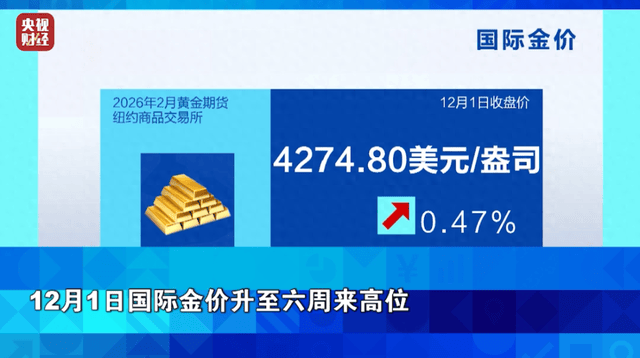
再创收盘历史新高 贵金属方面,市场对美联储本月降息预期升温的同时,也更加看好"鸽派"的白宫国家经济委员会主任哈 西特被提名为下任美联储主席的前景。外界预计,一旦哈西特出任美联储主席,美联储将在明年继续推 进宽松货币政策,国际金价周一上涨,并升至六周来的高位。截至收盘,纽约商品交易所明年2月交割 的黄金期价收于每盎司4274.8美元,涨幅为0.47%。 12月1日白银期价上涨 来源:南国今报 当地时间周一(12月1日),市场对美联储12月降息的预期仍在升温,同时,随着美日利息差收窄,大 量套息交易资金逐步平仓日本海外头寸,加剧全球风险资产价格下跌风险。此外,周一公布的最新数据 显示,美国11月供应管理协会制造业采购经理人指数(PMI)为48.2,低于预期,并连续第9个月陷入萎 缩区间,令市场谨慎看待美国经济基本面,投资者情绪受到打压,美国三大股指周一集体收跌。截至收 盘,道指跌0.90%,标普500指数跌0.53%,纳指跌0.38%。 12月1日国际金价升至六周来高位 此外,白银期价周一延续上周涨势,并再创收盘历史新高。截至收盘,纽约商品交易所明年3月交割的 白银期价收于每盎司59.142美元,涨幅为3.46% ...
央行“轮流砸盘”
华尔街见闻· 2025-12-02 04:21
Core Viewpoint - The speech by Bank of Japan Governor Kazuo Ueda on December 1 has significantly increased the likelihood of an interest rate hike at the upcoming monetary policy meeting on December 18-19, with market expectations shifting dramatically from 20% to 80% for a rate increase [1][3][9]. Group 1: Market Reactions - Following Ueda's remarks, Japanese government bond yields surged to recent highs, and the USD/JPY exchange rate fell due to a narrowing interest rate differential [3]. - Bitcoin, often seen as a barometer for carry trades, quickly retraced gains made over the past ten days, reflecting market anxiety about potential rate hikes [3][12]. Group 2: Diverging Views on Rate Hike - Morgan Stanley has shifted its stance to view a December rate hike as the baseline scenario, citing Ueda's unusual direct mention of the upcoming meeting and improved economic uncertainty in the U.S. [5][9]. - Conversely, Goldman Sachs remains cautious, suggesting that the Bank of Japan may need to wait for more corporate wage data, with a January rate hike being more likely [5][10]. Group 3: Ueda's Optimistic Signals - Ueda's speech highlighted improving conditions for policy normalization, particularly in wage growth, with indications that major labor unions are targeting salary increases of 5% or more [8]. - He expressed optimism about recent economic data, viewing a temporary negative GDP growth in Q3 2025 as a technical adjustment rather than a sign of a downturn [8]. - Ueda noted that inflation trends are evolving, with price increases beginning to resemble patterns seen in the early 1990s, suggesting a potential shift in long-term inflation dynamics [8]. Group 4: Risks of Rate Hike Timing - The market's fear of a December rate hike is compounded by the timing, as liquidity typically decreases around the Christmas holiday, which could amplify market reactions to unexpected policy changes [12]. - Historical parallels are drawn to December 2022, when the Bank of Japan unexpectedly adjusted its yield curve control policy, leading to significant market turmoil [12].



深夜,白银迭创新高
财联社· 2025-12-02 00:44
受多重因素影响,现货白银昨夜今晨持续突破历史新高,同步带动国际金价小幅走高。 截至发稿, 现货白银的历史最高价格已经达到58.8美元/盎司 ,沪银夜盘也收涨超5%。至此, 现货白银年内涨幅已经突破100% ,显著 高于现货黄金的60%。 (来源:TradingView) 与此同时, 现货黄金最高摸到每盎司4264美元,也是10月中旬创历史高位之后的六周新高 。 综合来讲,推升近期白银领头大涨的原因主要有三:供应紧张、投机性逼空,以及宏观局势引发的价值储存需求。 作为背景,今年10月大量白银涌入伦敦,以缓解全球最大白银交易中心历史性的供应紧张局面。但这也给其他全球期货交易中心带来压力, 上期所数据显示,其关联仓库的白银库存近期降至近十年最低水平。另外,白银上个月被列入美国地质调查局的关键矿产名单,关税担忧也 压制了交易商将白银运出美国的念头。 K线图和交易数据也显示,这一轮白银涨势已经显现投机逼空的态势。 法国兴业银行大宗商品策略主管大卫·威尔逊解读称:"上周的走势是由投机推动的,加速的上行动量吸引了越来越多的快钱。现在需要关注 的是金银比已接近70。" 金银比是指每盎司黄金能换多少白银,目前已经触碰2021年 ...