
自动驾驶技术

Search documents
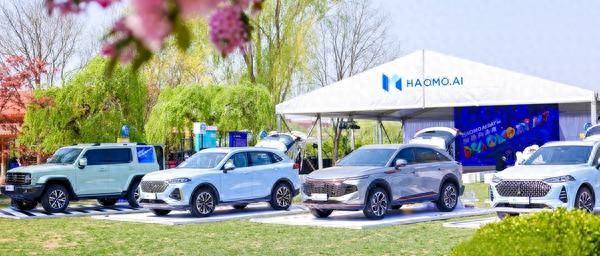
毫末智行猝然停工 智驾公司上岸路在何方
Zhong Guo Qing Nian Bao· 2025-12-11 01:34
Core Viewpoint - The smart driving company, Haomo Zhixing, which was once valued at over $1 billion, has announced a complete work stoppage for all employees due to its current operational status, raising concerns about its viability and future operations [2][3]. Company Overview - Haomo Zhixing was established on November 29, 2019, focusing on autonomous driving technology, including passenger car assistance, logistics delivery vehicles, smart hardware, and the MANA data intelligence system [3]. - The company has received significant investments from major players like Great Wall Motors, Meituan, and Hillhouse Capital, with a total financing scale of approximately 2 billion yuan [3]. - After its A-round financing in 2021, Haomo Zhixing achieved a valuation exceeding $1 billion, entering the unicorn category [3]. Operational Challenges - The company has faced rumors of layoffs since 2023, with reports indicating that the layoff rate in functional departments has reached 30%-50% [3]. - Despite signing cooperation agreements with major manufacturers like Beijing Hyundai, Toyota, and BMW, Haomo Zhixing's products are primarily used in Great Wall Motors' brands, making it vulnerable to being replaced by other suppliers if its driving solutions negatively impact user experience [3][4]. Market Dynamics - The competitive landscape in the autonomous driving sector is intensifying, with Great Wall Motors shifting its focus and investments towards competitors like Yuanrong Qixing, which has been selected as a high-level driving supplier [5]. - The industry is characterized by long cycles and high investments, and Haomo Zhixing, despite its backing from Great Wall, must operate independently and manage its profitability [5]. - The limited installation volume of its main product, the city NOH (highway navigation assistance), has made it difficult to support R&D costs [5]. Industry Trends - The automotive industry is experiencing a downturn, with forecasts indicating a slowdown in domestic passenger car sales growth from 8% in 2025 to -2% in 2026 [6]. - Major automotive companies are reporting lower-than-expected sales, with Great Wall Motors experiencing a 13.09% decline in new energy vehicle sales month-on-month in November [6]. - The demand for smart driving technology is increasing, but third-party suppliers like Haomo Zhixing may struggle to compete against companies that are investing heavily in in-house development [7][8]. Financial Pressures - The cost of materials for NOA solutions has been driven down to levels as low as 4,000 to 7,000 yuan, leading to a cash flow battle among companies in the sector [8]. - Companies that lack strong cost control and profitability may face significant challenges in surviving the current market conditions [8].


美银自动驾驶深度报告:无人网约车规模可达万亿,每英里成本2美元将是引爆点
Hua Er Jie Jian Wen· 2025-12-10 08:26
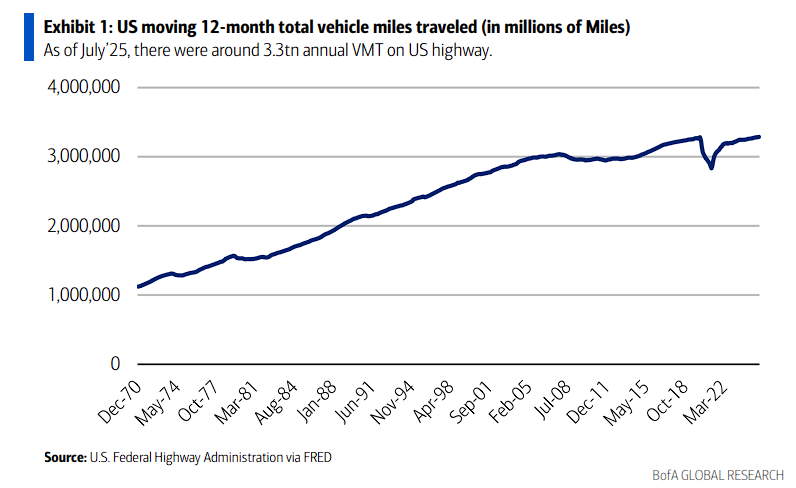
Core Insights - The current ride-hailing services account for only 1% of the annual driving mileage in the U.S., which is approximately 3 trillion miles, highlighting a significant growth opportunity for tech giants like Tesla, Google, and Amazon in the autonomous vehicle market [1][5][18] - If autonomous driving technology can reduce the cost per mile to $1.5-$2.0, the market size could reach $0.9-$1.2 trillion within 15 years, assuming a 20% penetration rate [1][8] - The cost per mile for current ride-hailing services is around $2.5-$3.0, while private car ownership costs range from $0.70 to $1.06, indicating a substantial price gap that limits the adoption of ride-hailing services [1][6][7] Market Potential - The U.S. total driving mileage is projected to be about 3.3 trillion miles by July 2025, with passenger vehicles accounting for approximately 3 trillion miles after excluding large trucks [2] - In 2024, ride-hailing mileage is expected to remain at only 1% of the total, based on assumptions regarding Uber and Lyft's order distribution and average trip length [5][6] Cost Structure and Profitability - The average cost per mile for private car ownership is significantly lower than that of ride-hailing services, which creates a barrier for consumer adoption [6][7] - A critical threshold for the widespread adoption of autonomous ride-hailing is achieving a cost per mile below $2.00 [7][8] - The report analyzes three business models: ownership, leasing, and agency, detailing the break-even points for each model under various cost scenarios [11][13][15][16] Business Model Analysis - In the ownership model, a cost of $1.95 per mile is needed to maintain a 10% profit margin, assuming a vehicle cost of $75,000 [13] - The leasing model requires a pricing of $2.08 per mile to achieve the same profit margin, with a baseline leasing fee of $0.54 per mile [15] - The agency model necessitates a price of $2.15 per mile to sustain profitability, with a payout to vehicle owners of $1.5 per mile [16] Competitive Landscape - Uber currently holds a market share of 70%-80% in the U.S. ride-hailing market, with projections indicating that even if its share drops to 50%, its order volume could still grow to $589 billion by 2040 [18][21] - The entry of well-funded competitors like Waymo, Tesla, and Zoox poses a risk of market share erosion for Uber [18][27] - The report highlights the potential for a price war among major players, as they may leverage aggressive pricing strategies to capture market share [27] Future Outlook - The report suggests that despite competitive pressures, the ride-hailing industry benefits from significant network effects, which may limit the number of viable competitors and support sustainable profit margins [25] - Early data from California indicates that the presence of autonomous vehicles may expand the overall market rather than cannibalize existing services, as seen with Waymo's growth [26]

理想汽车称L3非伪命题,三年内推L4级自动驾驶车型
Xin Lang Ke Ji· 2025-12-09 13:47
Core Viewpoint - Li Auto believes that L3 level supervised intelligent driving is a necessary transitional phase towards L4 level fully autonomous driving, and it is not a "pseudo proposition" [1] Group 1: Autonomous Driving Technology - Li Auto plans to launch its first L4 level autonomous driving vehicle within three years, before 2029 [1] - The upcoming L4 vehicle will eliminate traditional components such as steering wheels and pedals, transforming the car into a "living or working space" [1] - The realization of L4 is expected to be a pivotal moment for the automotive industry, comparable to the "iPhone 4 moment" [1]

理想的实践与回归
3 6 Ke· 2025-12-09 12:10
Core Insights - The article discusses the strategic shifts of Chinese automotive companies, particularly focusing on Li Auto and its CEO Li Xiang's approach to transitioning towards AI and high-end market positioning [1][4][5]. Group 1: Strategic Shifts - Li Xiang implemented a "Learn from Huawei" strategy in 2023, emphasizing the transition from efficiency to scale as the core focus of the company [1]. - The automotive industry has seen a shift where companies like Tesla and Li Auto are moving towards AI-centric models, with Tesla's focus on AI and Robotaxi indicating a broader industry trend [2][3]. - Li Auto aims to become a leading AI company by 2030, with Li Xiang dedicating significant attention to AI development while establishing a robust operational foundation [4][5]. Group 2: Market Positioning and Challenges - Li Auto's MEGA model was launched with a target price above 500,000, marking the company's entry into the high-end market, but faced challenges in achieving expected sales due to market competition [7][8]. - The competitive landscape has intensified, with other companies like NIO and XPeng focusing on cost reduction and value offerings, making it difficult for Li Auto to maintain its high-end positioning [9][11]. - Li Xiang's decision to revert to a founder-led management model reflects a strategic pivot to regain control and enhance operational efficiency amidst market pressures [12][15]. Group 3: Employee Welfare and Corporate Culture - Li Auto's strategy includes improving employee compensation, with a goal for factory workers' salaries to exceed German levels within three years, emphasizing the importance of employee welfare in establishing a high-end brand [7][8]. - The company's approach to management focuses on empowering professionals within the team, allowing for greater flexibility and responsiveness to market changes [13][14].

多省市抢抓这一热门赛道!为何成为未来五年布局重点?
Zhong Guo Qi Che Bao Wang· 2025-12-09 07:19
"发展自动驾驶"、"布局飞行汽车"、"推动汽车智能化、电动化"……近日,多省市纷纷出炉"十五五"规划建议,尽管各自立足不同的实际情况, 但其中的共同点之一,是均把汽车产业作为未来五年的发展重点,作出布局。 纷纷盯上汽车行业 布局汽车产业,重视汽车消费,成为各地未来五年共同追求的目标。 有关专家表示,全球汽车产业正经历着百年未有之大变局,而汽车智能化、电动化无疑是这场变革的核心驱动力。2025年,我国新能源乘用车零售的市 场渗透率达到59.3%,较去年同期提升7个百分点。这一数据不仅彰显了我国在新能源汽车领域的蓬勃发展态势,更意味着我国在新能源汽车位居世界领 先,而各地将汽车产业尤其是新能源汽车视为未来五年实现"换道超车"的关键抓手,正是因为新能源汽车产业既是朝阳产业,也是发展新质生产力的重要着 力点。 同时,各省市"十五五"规划建议中频繁出现的"固态电池"、"车网互动(V2G)"、"自动驾驶"等前沿技术方向,无一不指向汽车电动化与智能化融合的 未来赛道。固态电池被视为下一代电动汽车电池的理想选择,具有高能量密度、高安全性和长寿命等优势,一旦实现大规模商业化应用,将彻底改变电动汽 车的性能与市场格局。车网互动( ...

英国发布自动驾驶汽车监管框架意见征询
Zhong Guo Xin Wen Wang· 2025-12-04 13:17
英国发布自动驾驶汽车监管框架意见征询 在车辆上路前相关规范方面,意见征询将明确车辆型式认证标准,确保车辆投入市场前符合技术安全要 求;设立自动驾驶车辆上路授权流程,明确系统启动时法律责任向授权主体的转移规则;界定"车内负 责人"的职责边界,即自动驾驶功能关闭时为驾驶员,启动后转为负责人且无需对车辆行驶行为负责; 同时规范控制权交接要求、无驾驶员车辆的运营商许可标准,以及适配自动驾驶的保险机制——保险公 司需通过车辆时间戳数据判定事故责任。 编辑:张嘉怡 中新网伦敦12月4日电 (欧阳开宇 刘施岑)英国运输部4日向议会提交书面声明,宣布启动一项关于自动 驾驶汽车监管框架的意见征询,旨在落实《自动驾驶汽车法案》,为自动驾驶技术发展筑牢安全基础, 同时推动相关产业经济增长。 广告等商务合作,请点击这里 本文为转载内容,授权事宜请联系原著作权人 中新经纬版权所有,未经书面授权,任何单位及个人不得转载、摘编或以其它方式使用。 关注中新经纬微信公众号(微信搜索"中新经纬"或"jwview"),看更多精彩财经资讯。 车辆上路后监管环节则包括持续监测车辆是否符合自动驾驶测试要求、合规执行授权与运营许可规定; 设立民事与监管制 ...
九识智能 以自主创新为笔 书写智能物流发展新篇章
Ren Min Wang· 2025-12-04 01:19
Core Insights - Jiushi Intelligent is focusing on autonomous driving technology to reshape the logistics industry and promote high-quality development in China's smart manufacturing sector [1][2] Group 1: Technological Innovation - Jiushi Intelligent emphasizes full-stack self-research in unmanned logistics vehicle technology, aiming to provide scalable, low-cost transportation services without safety personnel [1][2] - The company has developed three major technology platforms: intelligentization, vehicle, and electrification, ensuring high reliability and adaptability in complex urban logistics scenarios [2] - The RoboVan Z5 series, with a cargo volume of over 5 cubic meters, has been launched and is continuously optimized in real operational scenarios [2] Group 2: Market Application - Jiushi Intelligent's unmanned logistics vehicle solutions have been applied in over 300 cities across various sectors, including express delivery, supermarkets, agricultural products, and pharmaceuticals [3] - The company has over 10,000 L4-level unmanned vehicles in operation, with customer procurement expanding from pilot applications to dozens of units, indicating market recognition [3] - Jiushi Intelligent was selected as a candidate for the largest global unmanned freight product procurement project by China Post, showcasing its comprehensive strength and reliability [3] Group 3: Social and Environmental Impact - The company’s technology is breaking traditional logistics barriers, benefiting remote areas such as Daliang Mountain in Sichuan and Inner Mongolia [3] - Jiushi Intelligent's unmanned logistics vehicles have accumulated over 60 million kilometers in operational mileage, contributing to sustainable development in the logistics industry [3] Group 4: Global Expansion - Jiushi Intelligent is accelerating its technology deployment globally, having obtained a license for unmanned logistics vehicles in Singapore and participating in the revision of automatic driving standards [5] - The company has formed a joint venture with Emirates Post Group to focus on L4-level unmanned logistics vehicle services in the Middle East [5] - Jiushi Intelligent has performed well in global technology competitions and is collaborating with DHL and Dubai South to advance overseas unmanned logistics vehicle pilot projects [5]
Alphabet:像伯克希尔·哈撒韦一样买入并持有
美股研究社· 2025-12-03 11:42
Core Viewpoint - Google reported strong third-quarter earnings, significantly exceeding market consensus expectations, supported by advancements in artificial intelligence and hardware [1][12]. Group 1: Google's Third Quarter Performance - Google launched the new Gemini 3 model, receiving positive reviews from analysts and is now available in approximately 120 countries [1]. - The Gemini 3 model is trained on Google's proprietary AI chips, known as Tensor Processing Units (TPUs), which are seen as strong competitors to NVIDIA's GPUs in AI applications [1]. - The company's return on capital employed (ROCE) remains strong, with positive capital expenditure (CAPEX) growth guidance provided [8]. Group 2: Berkshire Hathaway's Investment - Berkshire Hathaway disclosed a new significant position in Google, purchasing 17,846,142 shares at a price of $243, making it the tenth largest holding in their portfolio, valued at $4.33 billion [5]. - In contrast to the new investment in Google, Berkshire reduced its holdings in Apple by 14.92% (approximately $10 billion) and in Bank of America by 6.15% (approximately $3.3 billion) [5]. Group 3: Valuation and Growth Potential - Despite a nearly 30% increase in Google's stock price since Berkshire's disclosure, Google remains one of the most reasonably valued companies among the "Magnificent Seven" tech giants, with a forward P/E ratio of about 30 [7]. - Analysts predict a long-term annualized return on investment (ROI) of approximately 11.6%, based on Google's scalable business model and projected growth rates [9].


美股异动丨文远知行盘前涨近4%,获“木头姐”旗下ARK建仓,近两日买入逾66万股
Ge Long Hui· 2025-12-03 09:27
Core Viewpoint - The stock of WeRide (WRD.US) has seen a pre-market increase of nearly 4%, reaching $9.01, while its H-shares rose over 4.8% to HKD 23.12, driven by significant investments from ARK Investment Management and a positive rating from Bank of America [1] Group 1: Investment Activity - Cathie Wood's ARK Investment Management purchased 417,000 shares of WeRide on December 1, followed by an additional 250,000 shares on December 2, totaling over 660,000 shares in two days, indicating strong confidence in the company [1] - Bank of America initiated coverage on WeRide with a "Buy" rating, setting target prices of $12 for U.S. shares and HKD 31 for H-shares [1] Group 2: Business Growth and Strategy - WeRide has established a broad overseas Robotaxi business, creating a significant first-mover advantage and a solid network of partnerships [1] - The profitability of WeRide's domestic Robotaxi operations is expected to improve with better economies of scale [1] - The expansion of WeRide's fleet under the WeRide One universal technology platform, including Robobus, Robovan, and Robosweeper, supports future business growth trends [1]

文远知行:"木头姐"41.7万股重仓看好,美银首次覆盖看涨超45%
Ge Long Hui· 2025-12-02 05:36
Core Insights - Cathie Wood's ARK Invest has acquired 417,000 shares of WeRide (NASDAQ: WRD), indicating confidence in the company's long-term prospects [1] - Bank of America has initiated coverage on WeRide with a "Buy" rating and a target price of $12 for US stocks and HK$31 for Hong Kong stocks, suggesting potential upside of approximately 45.6% and 50% respectively [1] - WeRide is focused on autonomous driving technology, developing a full-stack technology platform ranging from Level 2 to Level 4, with products including Robotaxi, Robobus, Robovan, Robosweeper, and Level 2 driver assistance solutions [1] Financial Performance - In Q3 2025, WeRide reported revenue of 171 million yuan, a year-on-year increase of 144.3% [2] - The core business, Robotaxi, saw a remarkable revenue increase of 761% year-on-year, with a gross margin of 32.9%, leading the industry [2] - WeRide has deployed over 1,600 autonomous vehicles globally, including nearly 750 Robotaxis, and recently obtained the first city-level pure unmanned commercial operation license outside the US in Abu Dhabi [2]