
行业反内卷

Search documents
行业反内卷:机会还是风险?
Sou Hu Cai Jing· 2025-08-16 11:11
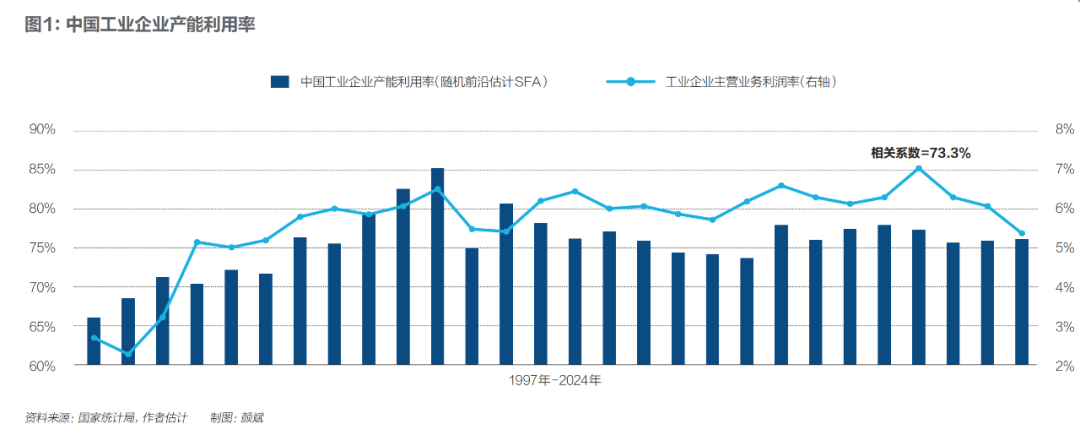
Core Viewpoint - The current "anti-involution" movement in various industries aims for quality improvement and high-quality development rather than merely reducing capacity [1][14]. Group 1: Economic and Employment Impact - "Anti-involution" has a short-term impact on the economy and employment, but with appropriate employment policies and new effective supply, the short-term pressure can be managed [19]. - The industrial capacity utilization rate in China has dropped to 74.0%, indicating significant overcapacity issues [4][5]. Group 2: Industry-Specific Analysis - Key industries facing overcapacity include steel, coal, automotive, battery, photovoltaic, cement, and petrochemicals, with utilization rates in these sectors ranking among the lowest [6]. - The automotive industry is experiencing a reduction in price war pressures, with profit margins stabilizing, indicating a shift from price competition to value competition [15]. - The photovoltaic industry is currently facing severe overcapacity, but recent policies are pushing for the exit of outdated capacities, leading to a rebound in prices for silicon materials and wafers [16]. Group 3: Policy and Structural Changes - The "anti-involution" policy emphasizes legal and market-driven approaches, contrasting with the previous round of capacity reduction that was primarily administratively driven [12]. - The new policies include measures such as the revised Anti-Unfair Competition Law and the establishment of fair competition review systems to prevent price dumping [12]. - The focus of the current "anti-involution" is on both traditional and emerging industries, aiming to alleviate price wars and promote innovation and green transformation [8][10]. Group 4: Historical Context and Future Outlook - Historical data shows that industrial capacity utilization in China has decreased from a peak of 85.2% in 2007 to the current 74.0%, highlighting the need for structural reforms to address overcapacity [5]. - The anticipated impact of a 5% capacity reduction in key sectors like steel and coal is projected to decrease GDP growth by approximately 0.22 percentage points, indicating a manageable but notable effect on the economy [8].

吉利汽车(00175):扣非净利大增超预期,看好下半年销量,行业反内卷受惠标的
BOCOM International· 2025-08-15 08:19
Investment Rating - The report assigns a "Buy" rating to Geely Automobile (175 HK) with a target price of HKD 24.21, indicating a potential upside of 27.8% from the current closing price of HKD 18.95 [1][9]. Core Insights - The report highlights a significant increase in non-GAAP net profit, exceeding market expectations, and expresses optimism regarding sales performance in the second half of the year, benefiting from industry trends against excessive competition [2][7]. - Geely's revenue for the first half of 2025 reached RMB 150.3 billion, a year-on-year increase of 27%, while the net profit attributable to shareholders was RMB 9.29 billion, a year-on-year decrease of 14%. However, the non-GAAP net profit grew by 102% year-on-year to RMB 6.66 billion, surpassing market forecasts [7][11]. - The report anticipates Geely's sales target for the year to be raised from 2.7 million to 3 million units, supported by the launch of approximately five new key electric and hybrid models in the second half of the year [7][11]. Financial Overview - Revenue projections for Geely are as follows: RMB 179.2 billion in 2023, RMB 240.2 billion in 2024, RMB 335.1 billion in 2025, RMB 395.8 billion in 2026, and RMB 439.1 billion in 2027, with year-on-year growth rates of 21.1%, 34.0%, 39.5%, 18.1%, and 10.9% respectively [3][11]. - The net profit forecast shows an increase from RMB 5.3 billion in 2023 to RMB 21.1 billion in 2027, with a notable jump to RMB 16.6 billion in 2024, followed by a slight decrease in 2025 [3][11]. - The report indicates a projected earnings per share (EPS) of RMB 0.53 in 2023, rising to RMB 2.10 by 2027, with a peak EPS of RMB 1.65 in 2024 [3][11]. Market Performance - Geely's stock has shown a year-to-date increase of 27.87%, with a 52-week high of HKD 20.35 and a low of HKD 7.70 [6][11]. - The average daily trading volume is reported at 102.16 million shares, reflecting strong market interest [6][11].

电力设备及新能源行业动态点评:政策推动七月车市平稳增长,行业整治内卷成果初现
Great Wall Securities· 2025-08-13 08:01
Investment Rating - The industry investment rating is "Outperform the Market" [5][14]. Core Viewpoints - The report highlights that the new energy vehicle market in China shows strong resilience, with July production and sales of new energy passenger vehicles reaching 1.147 million and 987,000 units, representing year-on-year growth of 22.3% and 12.0% respectively [2][4]. - The penetration rate of new energy vehicles in the domestic retail market increased to 54.0% in July, up 2.7 percentage points from the same period last year, indicating a positive trend driven by policies such as scrapping and replacing old vehicles and tax exemptions [2][4]. - Exports of new energy vehicles have surged, with July exports reaching 213,000 units, a significant year-on-year increase of 120.4%, making it a key driver of overall automotive export growth [3][4]. Summary by Sections Market Performance - In July, the overall automotive market typically experiences a seasonal slowdown, but the new energy vehicle sector demonstrated robust growth, with cumulative production and sales from January to July reaching 7.59 million and 6.455 million units, respectively, reflecting year-on-year increases of 35.7% and 29.5% [2][4]. Export Growth - The report notes that July saw record-high exports for both passenger and new energy vehicles, with total passenger vehicle exports reaching 475,000 units, a 25.0% increase year-on-year. Notably, new energy vehicle exports accounted for 44.7% of total passenger vehicle exports [3][4]. Policy Impact - The government's policies aimed at curbing irrational price wars and promoting sustainable growth have shown effectiveness, with a reduction in the number of price-cutting models from 23 last July to 17 this July, and a lower average price reduction of 11.1% for new energy vehicles [4].
电池产业链反内卷新动作,新能车ETF(515700)开盘上涨
Xin Lang Cai Jing· 2025-08-13 01:51
Group 1 - The core viewpoint of the news is that key players in the dry-process lithium battery separator industry have reached multiple agreements to combat "involution" competition and promote healthy industry development [1] - A closed-door meeting was held in Shenzhen, attended by representatives from eight major companies, including Xingyuan Material, ZTE New Materials, and others, to discuss production, sales, and future investment plans for 2024 and the first half of 2025 [1] - The eight companies reached several important agreements: price self-discipline, scientific capacity release, suspension of capacity expansion, strengthening industry chain cooperation, and encouraging social supervision [1] Group 2 - The New Energy Vehicle ETF opened higher following the news, which closely tracks the CSI New Energy Vehicle Industry Index [1] - The CSI New Energy Vehicle Industry Index includes 50 listed companies involved in various sectors of the new energy vehicle industry, reflecting the overall performance of leading companies in this sector [1] - As of July 31, 2025, the top ten weighted stocks in the CSI New Energy Vehicle Industry Index account for 55.33% of the index, including companies like CATL, BYD, and others [2]


三部门印发《个人消费贷款财政贴息政策实施方案》;中国恒大被取消上市地位……盘前重要消息还有这些
证券时报· 2025-08-12 23:51
Group 1 - The Ministry of Finance, the People's Bank of China, and the Financial Regulatory Bureau issued a personal consumption loan interest subsidy policy, effective from September 1, 2025, to August 31, 2026, covering loans used for consumption in various sectors [2] - The subsidy policy includes loans under 50,000 yuan and loans for key areas such as home appliances, automotive, education, and healthcare, with a cap of 50,000 yuan for subsidies on larger loans [2] - The policy may be extended or expanded based on its effectiveness after the expiration date [2] Group 2 - Nine departments, including the Ministry of Finance and the People's Bank of China, released a loan interest subsidy policy for service industry operators, applicable to loans for sectors like catering, healthcare, and tourism [3] - Loans must be signed between March 16, 2025, and December 31, 2025, and funds must be used to improve consumption infrastructure and service capabilities [3] - The policy may also be extended or expanded based on its effectiveness after the expiration date [3] Group 3 - A meeting was held by the Financial Regulatory Bureau, the People's Bank of China, and the China Securities Regulatory Commission to enhance consumer and investor protection in the financial sector [4] - The meeting emphasized a problem-oriented approach to address consumer complaints and improve the financial consumer environment [4] - The focus will be on financial education and risk prevention to enhance public financial literacy [4] Group 4 - A closed-door meeting of key dry-process lithium battery separator manufacturers was held to address "involution" competition and promote healthy industry development [5] - Eight companies reached agreements on price discipline, capacity management, and strengthening industry cooperation [5] - The companies aim to pause expansion and encourage social oversight [5] Group 5 - The Ministry of Finance and the State Taxation Administration clarified VAT policies for express delivery services, stating that income from these services will be taxed as "collection and delivery services" [6] - Taxpayers with network platform road freight transport qualifications can deduct certain expenses from their VAT [6] Group 6 - A total of 534 drugs passed the preliminary formal review for the 2025 National Medical Insurance Drug List, with the number of applications exceeding that of 2024 [7] - The new adjustment includes a commercial insurance innovative drug list, with 121 drugs passing the formal review [7] Group 7 - Companies such as Guizhou Moutai and Golden Dragon Fish reported significant profit increases, with Guizhou Moutai's net profit reaching 45.403 billion yuan, up 8.89% year-on-year, and Golden Dragon Fish's net profit increasing by 60.07% to 1.756 billion yuan [9] - Several companies are undergoing strategic changes, including share buybacks and mergers, indicating active market movements [9]
深挖宁德时代锂矿资源,宜春矿区停产后还有哪些家底能“补位”?
Sou Hu Cai Jing· 2025-08-12 12:55
Core Viewpoint - The suspension of lithium mining operations by CATL in Yichun has led to a cooling effect in the capital market, with lithium stocks experiencing a decline after a previous surge [3][4]. Industry Summary - On August 11, CATL confirmed the suspension of its Yichun project due to the expiration of its mining license on August 9, and is currently applying for an extension [4]. - Following the news, A-share lithium stocks initially surged but began to retreat the next day, indicating market volatility [5]. - The China Nonferrous Metals Industry Association's lithium division has called for an end to disorderly competition and market monopolization, urging companies to rationally plan new capacity [5]. - In July, Yichun city mandated eight lithium mining companies to complete resource verification by the end of September, addressing issues of regulatory circumvention [5][6]. - The new Mineral Resources Law, effective July 1, categorizes lithium as a strategic mineral, tightening approval processes and emphasizing protective mining practices [6]. Company Summary - CATL's Yichun Times New Energy Mining Co. is among the eight companies notified regarding resource verification [7]. - CATL has diversified its resource acquisition strategies, including self-built, joint ventures, and partnerships in lithium, nickel, cobalt, and phosphate mining [10]. - The company also engages in recycling to obtain critical materials from used batteries [11]. Market Impact - The suspension of operations at the Jiangxiawo lithium mine, a major producer in Yichun, raises concerns about CATL's battery production capacity and its potential shift towards overseas lithium resources [12]. - Analysts predict that the suspension will lead to a significant increase in lithium prices, with estimates suggesting a reduction of 8% in domestic lithium supply, equating to 8,300 tons per month [13]. - Citic Securities notes that the total suspension of certain Yichun lithium mines could result in a global lithium supply shortage, as these mines account for 12.5% of global supply [13]. - Galaxy Securities anticipates that the suspension will impact domestic carbonate lithium production by nearly 12%, improving the oversupply situation in the lithium salt industry [14].
LFP材料如何反内卷?
数说新能源· 2025-08-12 04:03
Group 1 - The first second council meeting of the Lithium Iron Phosphate Materials Branch will be held on August 22 in Shenzhen, focusing on industry internal competition and backward capacity elimination plans, as well as low-carbon transformation paths for the entire industry chain [1] - Current profitability for first and second-tier companies ranges from a loss of 2500 to a profit of 1000 yuan per ton. Measures to counter internal competition include capacity reduction and limiting processing fees [2] - The industry has an annual effective capacity of 5.32 million tons, with an average capacity utilization rate of around 67% in July. If backward and low-end capacity of over 80000 tons is eliminated, the overall industry capacity utilization rate could rise to over 80%, potentially leading to price increases [2] Group 2 - Current processing fees for the fourth generation are 17,000 to 18,000 yuan per ton, while the third generation and below range from 14,000 to 17,000 yuan per ton. An average increase of around 2000 yuan could help second-tier companies return to profitability [2] - The article mentions BYD's expansion into Southeast Asia and CATL's growth in the energy storage market, which is outpacing the growth in the power market [7]

2025年7月通胀数据点评:PPI同比触底
CMS· 2025-08-09 15:37
Group 1: CPI Analysis - In July 2025, the CPI increased by 0.4% month-on-month and remained flat year-on-year at 0.0% due to significant pressure from food prices[2] - Core CPI, excluding food and energy, rose to 0.8%, the highest in 17 months, indicating effective domestic demand policies[2] - Vegetable prices saw a significant decline due to high base effects from the previous year, while pork prices continued to drop due to weak terminal demand[2] Group 2: PPI Analysis - In July 2025, the PPI decreased by 3.6% year-on-year and by 0.2% month-on-month, marking a continued decline in the mining and raw material processing industries[2] - The coal mining and oil extraction sectors were the largest contributors to the PPI decline, with mining industries showing a year-on-year drop of 14.0%[2] - The report anticipates a slight recovery in PPI in August, projecting a year-on-year rate around -3%, influenced by high base effects from the previous year[2] Group 3: Future Outlook - The report suggests that while CPI may rise above 0 in August, energy prices remain a significant constraint on overall inflation recovery[2] - The ongoing weak demand in the mid and downstream sectors is expected to limit the positive impact of anti-involution policies on PPI[2] - The effectiveness of domestic policies in stimulating demand will be crucial for any significant recovery in PPI throughout the year[2]
畜牧ETF(159867)上涨近1%,机构称行业“反内卷”利好明年猪价
Xin Lang Cai Jing· 2025-08-08 03:08
Group 1 - The livestock industry is experiencing positive momentum driven by government policies aimed at controlling production capacity and stabilizing pork prices, indicating a commitment to high-quality development in the pig market [1][2] - The decline in the weight of pigs being sold may help reduce inventory and stabilize short-term pork prices, while the impact of a decrease in breeding sows may not be felt until the second half of next year [1] - If both the reduction in breeding sows and the decrease in weight are sustained, pork supply will significantly decrease next year, potentially leading to a gradual increase in pork price levels in the second half of the year [1] Group 2 - The China Livestock Breeding Index (930707) has shown an increase of 0.67%, with notable gains in constituent stocks such as Jinxinnong (up 2.49%) and Haili Biological (up 2.26%) [1] - The top ten weighted stocks in the China Livestock Breeding Index account for 64.83% of the index, including major companies like Muyuan Foods and Wens Foodstuffs [2]
西南期货早间评论-20250728
Xi Nan Qi Huo· 2025-07-28 03:33
Report Industry Investment Ratings There is no information provided regarding the report's industry investment ratings in the given content. Core Views of the Report - The report provides a comprehensive analysis of various futures products, including their market performance, influencing factors, and investment strategies. It assesses the market conditions based on factors such as macro - economic data, supply - demand dynamics, and policy expectations [5][9][11]. - Different futures products have different investment outlooks. For example, some are expected to have long - term bullish trends, while others may experience short - term fluctuations or require cautious investment [7][10][13]. Summary by Related Catalogs Treasury Bonds - **Market Performance**: On the previous trading day, most treasury bond futures closed lower. The 30 - year and 10 - year main contracts hit new lows since early April [5]. - **Influencing Factors**: Current macro - data is stable, but the macro - economic recovery momentum needs strengthening. Monetary policy is expected to remain loose. The treasury bond yield is at a relatively low level, and there is uncertainty in the Sino - US trade agreement [6]. - **Investment Strategy**: It is expected that there will be no trend - based market, and investors should remain cautious [7]. Stock Index Futures - **Market Performance**: On the previous trading day, stock index futures showed mixed results. The CSI 300 and SSE 50 futures main contracts declined, while the CSI 500 and CSI 1000 futures main contracts had small changes [8]. - **Influencing Factors**: The domestic economy is stable, but the recovery momentum is weak, and the market lacks confidence in corporate earnings. However, domestic asset valuations are low, and the Chinese economy has sufficient resilience [9]. - **Investment Strategy**: The long - term performance of Chinese equity assets is optimistic, and investors can consider going long on stock index futures [10]. Precious Metals - **Market Performance**: On the previous trading day, the gold main contract closed with a decline, and the silver main contract had a small increase [11]. - **Influencing Factors**: The global trade and financial environment is complex, and the "de - globalization" and "de - dollarization" trends are beneficial to the allocation and hedging value of gold. Central bank gold - buying and potential Fed rate cuts also support gold prices [11][12]. - **Investment Strategy**: The long - term bullish trend of precious metals is expected to continue, and investors can consider going long on gold futures [13]. Steel Products (Rebar and Hot - Rolled Coil) - **Market Performance**: On the previous trading day, rebar and hot - rolled coil futures fluctuated at high levels [14]. - **Influencing Factors**: Policy expectations dominate the market, and the actual supply - demand pattern is secondary. The expectation of steel supply contraction is strengthening [14]. - **Investment Strategy**: The futures may turn to a short - term oscillation. Investors can pay attention to opportunities to go long on dips and manage their positions carefully [14]. Iron Ore - **Market Performance**: On the previous trading day, iron ore futures declined slightly [15]. - **Influencing Factors**: Policy expectations have boosted the market, but the supply - demand pattern has weakened marginally. Iron ore imports have increased, and port inventories are stable [15]. - **Investment Strategy**: The futures may turn to a short - term oscillation. Investors can pay attention to low - level buying opportunities and manage their positions carefully [15]. Coking Coal and Coke - **Market Performance**: On the previous trading day, coking coal and coke futures tumbled, with some contracts hitting the daily limit [16]. - **Influencing Factors**: The direct cause was the exchange's position - limit measures, and the deep - seated reason was the over - accumulated gains. Supply - contraction policies are becoming a reality [16]. - **Investment Strategy**: The futures may experience sharp fluctuations in the short term. Investors can temporarily stay on the sidelines [16]. Ferroalloys - **Market Performance**: On the previous trading day, manganese silicon and silicon iron main contracts rose significantly [18]. - **Influencing Factors**: Short - term bullish sentiment and supply - contraction expectations dominate. However, demand is weak, and there is a supply surplus in the short term [18][19]. - **Investment Strategy**: Investors can pay attention to opportunities to exit long positions when the market continues to rise and consider long - position opportunities in the low - support range if there is a decline [19]. Crude Oil - **Market Performance**: On the previous trading day, INE crude oil oscillated upward [20]. - **Influencing Factors**: Geopolitical risks remain high, and OPEC meetings are a market focus. Fund managers have reduced their net long positions, and the number of oil and gas rigs has decreased [20][21]. - **Investment Strategy**: Investors can pay attention to long - position opportunities in the main crude oil contract [22]. Fuel Oil - **Market Performance**: On the previous trading day, fuel oil oscillated upward but was blocked by the 20 - day moving average [23]. - **Influencing Factors**: The Asian fuel oil market has sufficient supply, but the signing of US trade agreements is beneficial to the shipping market [23]. - **Investment Strategy**: Investors can pay attention to long - position opportunities in the main fuel oil contract [24]. Synthetic Rubber - **Market Performance**: On the previous trading day, the synthetic rubber main contract rose and then pulled back at night [25]. - **Influencing Factors**: Raw material prices have declined, and the supply - demand situation is short - term loose [26]. - **Investment Strategy**: Wait for the market to stabilize and then participate in the rebound [27]. Natural Rubber - **Market Performance**: On the previous trading day, natural rubber main contracts rose and then pulled back at night [28]. - **Influencing Factors**: Supply has increased, demand is mixed, and inventories have slightly decreased [28]. - **Investment Strategy**: The market is expected to be strongly oscillating, and investors can pay attention to medium - term long - position opportunities [29]. PVC - **Market Performance**: On the previous trading day, the PVC main contract rose [30]. - **Influencing Factors**: The supply - demand imbalance persists, but the downward space is limited. Policies have promoted the market [30]. - **Investment Strategy**: The market is expected to be strongly oscillating [32]. Urea - **Market Performance**: On the previous trading day, the urea main contract rose [33]. - **Influencing Factors**: Supply remains high, and demand is limited. Policy and demand implementation are awaited [33]. - **Investment Strategy**: Short - term oscillation, and a bullish view in the medium term [34]. p - Xylene (PX) - **Market Performance**: On the previous trading day, the PX2509 main contract rose [35]. - **Influencing Factors**: Supply - demand is in a tight balance, and the cost support from crude oil is insufficient. New PTA device demand provides some support [35]. - **Investment Strategy**: The market may oscillate and adjust. Investors should participate cautiously and pay attention to cost factors and macro - policies [36]. PTA - **Market Performance**: On the previous trading day, the PTA2509 main contract rose [37]. - **Influencing Factors**: Supply - demand changes are small, and the cost support from crude oil is slightly insufficient. The market is pushed up by the "anti - involution" logic [37]. - **Investment Strategy**: The market may oscillate. Investors can participate in the range and control risks [37]. Ethylene Glycol - **Market Performance**: On the previous trading day, the ethylene glycol main contract rose [38]. - **Influencing Factors**: Supply pressure increases due to more restarts of coal - based plants, but inventory reduction provides some support [38]. - **Investment Strategy**: The market may continue to rise in the short term due to macro - factors. Investors should be cautious about the upside space and participate in the range [38]. Short - Fiber - **Market Performance**: On the previous trading day, the short - fiber 2509 main contract rose [39]. - **Influencing Factors**: Supply has decreased, demand is weak, and inventory is accumulating. The "anti - involution" policy may provide some driving force [39]. - **Investment Strategy**: The market may oscillate with the cost. Investors should control risks and pay attention to cost changes and macro - policies [39]. Bottle Chips - **Market Performance**: On the previous trading day, the bottle chips 2509 main contract rose [40]. - **Influencing Factors**: Raw material prices are oscillating, device maintenance has increased, and inventory has decreased [40]. - **Investment Strategy**: The market is expected to oscillate with the cost. Investors should control risks [40]. Soda Ash - **Market Performance**: On the previous trading day, the main 2509 contract of soda ash closed with a significant increase [41]. - **Influencing Factors**: The market is stimulated by policy expectations. Supply is at a high level, and inventory has decreased slightly. There is a new capacity release expectation at the end of 2025 [41]. - **Investment Strategy**: The market is expected to be stable and oscillating. Investors should be rational [41]. Glass - **Market Performance**: On the previous trading day, the main 2509 contract of glass closed with a large increase [42]. - **Influencing Factors**: Macro - sentiment and enterprise price increases have boosted the market. Inventory reduction has accelerated, and there is an expectation of old - capacity elimination [42][43]. - **Investment Strategy**: Pay attention to spot trading and inventory reduction in different regions. In the long - term, focus on the implementation of old - capacity elimination [43]. Caustic Soda - **Market Performance**: On the previous trading day, the main 2509 contract of caustic soda closed lower [44]. - **Influencing Factors**: Supply is relatively sufficient, and demand has some improvement. The market is affected by macro - sentiment, but the supply - demand contradiction is not significant [44][46]. - **Investment Strategy**: The market is driven by macro - sentiment. Investors should control risks [46]. Pulp - **Market Performance**: On the previous trading day, the main 2509 contract of pulp closed with an increase [47]. - **Influencing Factors**: Supply tends to expand, demand is weak, and inventory is high. The market is in a structural adjustment stage [48][49]. - **Investment Strategy**: The market is expected to oscillate. Investors should pay attention to inventory, policy, and downstream procurement sentiment [49]. Lithium Carbonate - **Market Performance**: On the previous trading day, the lithium carbonate main contract rose significantly [50]. - **Influencing Factors**: Supply concerns have increased, but the supply - demand pattern remains unchanged. Consumption has improved slightly, but there is high - price aversion [50]. - **Investment Strategy**: The price is expected to be high and oscillating. Pay attention to the progress of the mining end [50]. Copper - **Market Performance**: On the previous trading day, Shanghai copper oscillated downward [52]. - **Influencing Factors**: The US tariff implementation date is approaching, and copper concentrate shortage persists. There is an expectation of Chinese policy strengthening [53]. - **Investment Strategy**: Temporarily stay on the sidelines for the Shanghai copper main contract [54]. Tin - **Market Performance**: On the previous trading day, Shanghai tin oscillated [55]. - **Influencing Factors**: The mining end is tight, but there is an expectation of tin - mine复产 in the fourth quarter. Supply is still in short supply, and consumption is weak [55]. - **Investment Strategy**: The price is expected to be strongly oscillating [55]. Nickel - **Market Performance**: On the previous trading day, Shanghai nickel declined [56]. - **Influencing Factors**: The mining end price has weakened, stainless - steel consumption is weak, and the first - grade nickel is in surplus [56][57]. - **Investment Strategy**: The price is expected to oscillate [57]. Soybean Oil and Soybean Meal - **Market Performance**: On the previous trading day, the soybean meal main contract declined, and the soybean oil main contract rose [58]. - **Influencing Factors**: There is a high expectation of US soybean harvest, and domestic supply is relatively loose. Demand for soybean meal may increase slightly, and demand for soybean oil may be suppressed [58][59]. - **Investment Strategy**: Consider long - position opportunities in the support range for soybean meal after adjustment; consider call - option opportunities in the support range for soybean oil after a pullback [59]. Palm Oil - **Market Performance**: Malaysian palm oil declined. In China, palm oil inventory is high [60]. - **Influencing Factors**: Demand is weak, and there is an expectation of production increase [60]. - **Investment Strategy**: Consider long - position opportunities after a pullback [61]. Rapeseed Meal and Rapeseed Oil - **Market Performance**: Canadian rapeseed has been in a low - level oscillation [62]. - **Influencing Factors**: Domestic imports of rapeseed and related products have changed. There is a conflict between bio - fuel benefits and good crop conditions [62]. - **Investment Strategy**: Consider long - position opportunities for rapeseed - related products [63]. Cotton - **Market Performance**: Domestic cotton futures oscillated at a high level, and overseas cotton declined [64]. - **Influencing Factors**: Global supply - demand is expected to be loose, and domestic production is expected to increase. Downstream inventory is accumulating [65][66]. - **Investment Strategy**: Consider short - selling far - month contracts in batches at high prices [67]. Sugar - **Market Performance**: Domestic sugar futures were strongly oscillating, and overseas raw sugar declined [68]. - **Influencing Factors**: Brazilian production is lower than expected, while Indian and Thai production is expected to be high. Domestic inventory is low, and imports are high [68][69]. - **Investment Strategy**: The market is expected to be oscillating. It is recommended to wait and see [69][70]. Apples - **Market Performance**: Domestic apple futures were strongly oscillating [71]. - **Influencing Factors**: The expectation of apple production reduction has been falsified, and production is expected to increase slightly [72]. - **Investment Strategy**: Consider short - selling opportunities at high prices [73]. Live Pigs - **Market Performance**: The national average price of live pigs remained flat [74]. - **Influencing Factors**: Supply is sufficient, and demand is weak. Summer is a consumption off - season [74][76]. - **Investment Strategy**: Hold previous short positions [76]. Eggs - **Market Performance**: The average price of eggs in the main production and sales areas remained flat [77]. - **Influencing Factors**: Egg production is increasing, and it is a consumption off - season. The supply pressure may ease in October [77][78]. - **Investment Strategy**: Consider a 9 - 10 reverse spread [78]. Corn and Corn Starch - **Market Performance**: Corn and corn - starch main contracts declined [79]. - **Influencing Factors**: US and Brazilian corn production is expected to be high. Domestic supply - demand is approaching balance, and consumption is recovering [79][80][81]. - **Investment Strategy**: Consider virtual - value call - option opportunities for the near - month corn contract in the low - level range. Corn starch follows the corn market [81]. Logs - **Market Performance**: On the previous trading day, the main 2509 contract of logs rose slightly [82]. - **Influencing Factors**: Supply has increased, inventory has slightly increased, and spot prices have slightly decreased [82][83]. - **Investment Strategy**: The market has returned to the spot reality [83].