
AI算力

Search documents
锂电九点半(每日早新闻)
起点锂电· 2026-03-25 01:48
Core Viewpoint - The article highlights the upcoming 2026 (Second) Cylindrical Battery Technology Forum and the release of the Top 20 Cylindrical Battery Rankings, emphasizing advancements in all-tab technology and the leadership of large cylindrical batteries in the market [1][4]. Domestic Listed Companies Core Dynamics - Naconor (920522) signed a procurement contract worth 341 million yuan for roller press cutting integrated machines with a leading domestic customer [1]. - XWANDA (300207) received formal approval from the Thai government to invest 10.7 billion yuan in an integrated production line for power and energy storage batteries, accelerating its overseas expansion [2]. - Guoxuan High-Tech (002074) received 500 million yuan from the first phase of short-term financing bonds, aimed at developing power battery and energy storage lithium battery businesses [5]. - Star Source Materials (300568) plans to issue technology innovation bonds for up to 15 years to expand financing channels for its lithium battery separator business [5]. - Hunan Youneng (301358) has implemented a flexible inventory management model to ensure profitability stability, linking the price of lithium iron phosphate cathode products to lithium carbonate prices [5]. Lithium Battery Market Trends and Order Dynamics - The domestic lithium battery production in March reached 219 GWh, a month-on-month increase of 16.5% and a year-on-year increase of 45%, while global production was 232 GWh, up 19% month-on-month [6]. - The prices of lithium carbonate and core lithium battery materials are experiencing significant fluctuations, with lithium carbonate prices rebounding over 160% from the 2025 low [7][8]. - Overseas energy storage orders are increasing, with Ruipu Lanjun signing a supply agreement for an 8.3 GWh energy storage system in Italy, aiming for completion within two years [9]. Industry Policies and Standards Dynamics - The National Energy Administration issued the 2026 Energy Industry Standard Project Guide, focusing on new energy storage and power battery recycling as key project directions [12]. - The implementation of the capacity electricity price policy is expected to significantly enhance the profitability of independent energy storage and lithium battery storage projects [13]. - The U.S. International Trade Commission decided not to impose additional tariffs on Chinese lithium battery materials, stabilizing export expectations for the domestic lithium battery industry [14]. Institutional Forecasts on Industry Dynamics - SPIR forecasts a 25% year-on-year growth in global lithium battery demand in 2026, with energy storage battery shipments expected to grow by 50%, becoming a core growth engine [16].

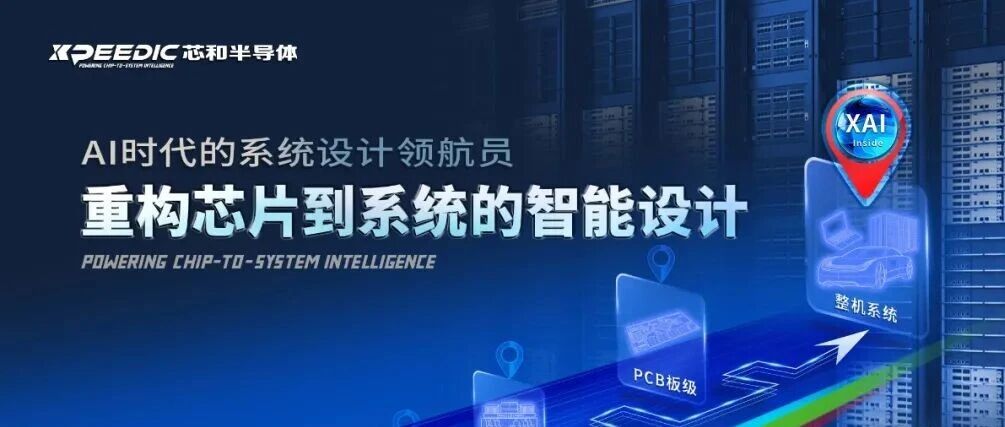
AI算力逼疯芯片设计!国产EDA龙头芯和彻底彻底升维系统级
是说芯语· 2026-03-25 01:05
Core Viewpoint - The semiconductor industry is undergoing a significant transformation, with companies like Chip and Semiconductor redefining their roles from traditional EDA tool providers to comprehensive system design leaders, addressing the challenges posed by the AI era's demand for increased computational power [1][3]. Group 1: Industry Transformation - The traditional reliance on Moore's Law for semiconductor performance is becoming obsolete as AI models require exponentially more computational power, necessitating a shift from single-chip performance to system-level integration [3][5]. - The industry is moving towards a focus on system-level design, where factors such as advanced packaging, heterogeneous integration, and overall system architecture must be considered to avoid critical design failures [3][5]. Group 2: Chip and Semiconductor's Strategic Shift - Chip and Semiconductor's brand upgrade marks a transition from being a mere EDA tool provider to a system design navigator, expanding its services to cover advanced packaging, AI servers, and autonomous driving, thus tapping into a growing market driven by AI hardware proliferation [5][6]. - The company aims to enhance design accuracy and reduce costs by utilizing its unique multi-physical field coupling simulation engine, which allows for risk assessment in a virtual environment, thereby minimizing costly errors during production [6][7]. Group 3: Domestic EDA Landscape - The domestic EDA market has seen significant growth, with the number of companies increasing from a handful to over 120, and the domestic market share rising from 5% in 2019 to approximately 25% currently, with expectations to exceed 40% by 2026 [9][11]. - Despite the growth, many domestic EDA firms have focused on traditional chip design tools, leaving a gap in system-level EDA solutions, which Chip and Semiconductor aims to fill, positioning itself against established foreign competitors [9][11]. Group 4: Future Outlook - The transition to a system design navigator is not only a milestone for Chip and Semiconductor but also signals a broader shift in the domestic EDA industry from a follower to a leader in the post-Moore's Law era [11][12]. - By leveraging its STCO methodology and comprehensive system-level EDA platform, Chip and Semiconductor is poised to assist domestic chip and AI hardware companies in mitigating design risks and reducing R&D costs, thereby enhancing their competitiveness in the global AI computing landscape [12].
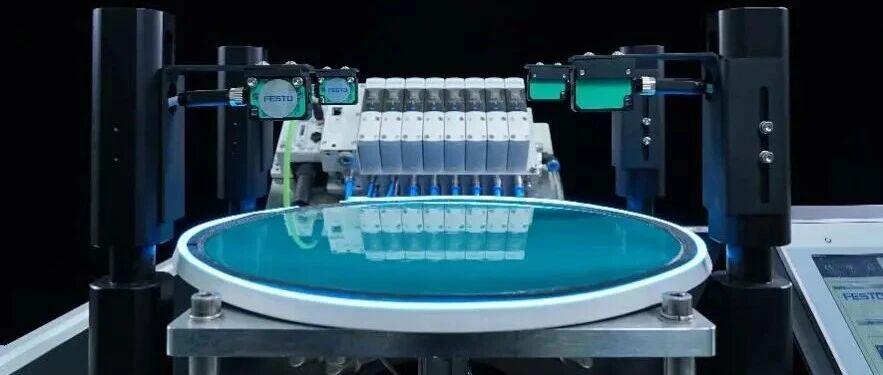
谁在决定良率?揭秘AI芯片狂飙背后的“隐形控制力”
半导体行业观察· 2026-03-25 00:40
Core Viewpoint - The article emphasizes the critical importance of precision control in semiconductor manufacturing, particularly in the context of AI-driven advancements and the increasing complexity of manufacturing processes [2][4][18]. Group 1: Importance of Control Systems - The evolution of semiconductor manufacturing has shifted from optimizing single process nodes to managing a highly coupled dynamic system that requires extreme precision, stability, and cleanliness [2][4]. - Festo, a key player in automation, highlights that the core components driving equipment functionality are essential for achieving process innovations, underscoring the importance of control systems in the AI era [3][4]. Group 2: Festo's Technological Solutions - Festo presented four core technological solutions at the SEMICON China 2026 conference, showcasing how control capabilities translate into manufacturing value across various processes [6][18]. - The pneumatic system has evolved to achieve micron-level precision, crucial for maintaining stability and yield in advanced semiconductor processes [7][8]. - Festo's non-contact wafer warping solution addresses the challenges posed by warped wafers, ensuring stable handling and improved bonding yields [10]. - The Transfer Valve control solution enhances cleanliness by reducing vibration and particle generation during valve operations, significantly improving overall process cleanliness [13][14]. - Festo's liquid control solution utilizes piezo technology to achieve precise liquid dispensing and recovery, ensuring zero droplet and zero contamination during critical processes [16][18]. Group 3: Localization Strategy - Festo has invested in a comprehensive localization strategy in China, employing over 400 technical personnel to support product design, customization, and on-site validation, ensuring rapid response to local OEM demands [20]. - The establishment of a semiconductor innovation center in Shanghai aims to create an independent quality and delivery system, facilitating a transformation in China's semiconductor equipment capabilities [20]. Conclusion - The article concludes that in the age of AI computing, the ability to maintain precise control over manufacturing processes is essential for achieving breakthroughs in semiconductor technology, with Festo's solutions playing a pivotal role in this evolution [21].
双城联动,热领未来!2026热管理博览会上海、深圳双展火热进行中!
DT新材料· 2026-03-24 16:05
Core Insights - The article emphasizes that thermal management technology is crucial for breakthroughs in computing power, energy efficiency, and product reliability, especially in advanced fields like AI, smart vehicles, and semiconductors [2] - The "洞见热管理2026" series aims to create a comprehensive platform for industry, academia, research, and application to address thermal control challenges and establish new thermal balance standards [2] Event Overview - The 2026 Future Industry New Materials Expo (FINE2026) will take place from June 10-12 in Shanghai, featuring an exhibition area of 50,000 square meters and over 300 strategic and cutting-edge technology reports, expecting to attract more than 100,000 professional visitors [3] - The event will include specialized exhibitions on thermal management liquid cooling plates and AI chip and power device thermal management, focusing on engineering challenges in high heat flux density scenarios [6] Shanghai Station Highlights - The Shanghai station will focus on the Yangtze River Delta integration industrial cluster, emphasizing sectors such as data centers, new energy vehicles, semiconductors, energy storage systems, and large power facilities [8] - Key topics will include battery thermal management under high-power fast charging, automotive-grade power module cooling, and industrial-grade heat exchange solutions aimed at carbon neutrality [8] Shenzhen Station Highlights - The seventh Thermal Management Industry Conference and Expo (iTherM2026) will be held in Shenzhen in December 2026, focusing on the flexibility of technology and rapid market response [9] - The Shenzhen station will address the thermal challenges of miniaturized and integrated electronic devices and chips, providing a platform for the transformation of research results from the lab to the market [9][11] Previous Event Recap - The 2025 Shenzhen Thermal Management Expo (iTherM2025) showcased numerous new materials, processes, and system-level cooling solutions, attracting significant engagement from engineers and professionals [12] - The event facilitated project-based discussions between exhibitors and companies like BYD, focusing on specific application needs and engineering implementation [14] Industry Collaboration - The 2025 expo successfully transitioned from "display" to "connection," highlighting the importance of industry collaboration and the rapid generation of cooperation intentions [16] - High-level forums during the event covered various topics, including thermal science, radiation cooling, thermal interface materials, and battery thermal management, showcasing cutting-edge achievements [16]

仕佳光子(688313):光通信上游“卖水者”
Shenwan Hongyuan Securities· 2026-03-24 15:38
Investment Rating - The report initiates coverage with a "Buy" rating for the company, citing strong growth potential in the optical communication sector driven by increasing demand for high-speed data centers and AI applications [9][10]. Core Insights - The company is a leading manufacturer of optical chips and devices in China, focusing on both passive and active components. Its product range includes AWG chips, DFB lasers, and various optical fibers and cables, positioning it well within the high-growth optical communication market [7][20]. - The company has demonstrated a V-shaped recovery in its financial performance, with significant revenue growth driven by the demand for AWG and MPO products, achieving a revenue of 1.075 billion yuan in 2024, a 42.4% increase year-on-year [9][36]. - The report highlights the potential underestimation of the company's growth in AWG and MPO technologies, particularly as the market shifts towards 1.6T optical modules, where the company is a key supplier [9][12]. Summary by Sections 1. Company Overview - The company has established a comprehensive product matrix covering passive and active optical components, including PLC splitters, AWG chips, and various types of optical cables, catering to the data communication, telecommunications, and sensing markets [20][22]. - The ownership structure is stable, with significant control by the actual controller and state-owned capital, enhancing governance and resource allocation [30][33]. 2. Market Dynamics - The optical communication industry is experiencing robust growth, driven by the increasing demand for high bandwidth and low latency in data centers and telecommunications, with a projected CAGR of 17% for the optical communication chip market from 2025 to 2030 [62][68]. - The company is positioned to benefit from the ongoing shift towards domestic production and technological advancements in the optical communication sector, particularly in the context of U.S.-China trade tensions [68]. 3. Financial Performance and Projections - The company is expected to achieve revenues of 2.129 billion yuan in 2025, 3.031 billion yuan in 2026, and 4.087 billion yuan in 2027, with corresponding net profits of 342 million yuan, 626 million yuan, and 902 million yuan, indicating strong growth momentum [8][10]. - The gross margin is projected to stabilize around 34% in the coming years, reflecting improved operational efficiency and product mix [11][44]. 4. Strategic Positioning - The company is recognized as a critical supplier in the optical communication supply chain, providing essential components for high-speed optical modules, which are increasingly vital for AI infrastructure [26][48]. - The strategic acquisition of core assets, such as the planned purchase of MT connectors, aims to enhance vertical integration and secure supply chain stability, further strengthening the company's market position [12][20].

帝科股份(300842):重视研发投入,存储增量明显
Changjiang Securities· 2026-03-24 12:46
Investment Rating - The investment rating for the company is "Buy" and is maintained [6]. Core Views - The company reported a revenue of 18.046 billion yuan for 2025, representing a year-on-year growth of 17.56%. However, the net profit attributable to shareholders was a loss of 276 million yuan. In Q4 2025, the revenue reached 5.322 billion yuan, showing a year-on-year increase of 38.55% and a quarter-on-quarter increase of 21.42%. The net profit for Q4 was a loss of 306 million yuan, while the non-recurring net profit was 37 million yuan, reflecting a year-on-year growth of 16.76% but a quarter-on-quarter decrease of 3.41% [4][11]. Financial Performance - In 2025, the company sold 1,829.16 tons of slurry, a decrease of 10.23% year-on-year, primarily due to weak production schedules for photovoltaic cell components. The N-type TOPCon slurry accounted for 95.72% of the total sales, maintaining a leading position in the industry. The company's losses were mainly attributed to non-recurring gains and losses, with an impact of -440 million yuan on the net profit, largely due to fluctuations in silver powder prices [11]. - The company emphasized research and development, investing 601 million yuan in 2025, which is a 24.68% increase compared to the previous year [11]. Future Outlook - The company plans to enhance its product offerings in high-copper slurry and has collaborated with leading customers to pioneer industrialization practices. It aims to improve the efficiency of TOPCon battery production through innovative metallization solutions [11]. - In the storage chip sector, the company has developed an integrated capability system for product application design, wafer sorting, packaging, and testing, which enhances testing efficiency and product yield, thereby maximizing manufacturing value and improving gross margins [11]. - The company is also focusing on high-reliability metallization and interconnection materials for space photovoltaic applications, adapting to various technological routes [11].
通信行业跟踪报告:GTC及OFC2026聚焦AI算力、Token、Agent以及超大规模AI数据中心的互连需求
Wanlian Securities· 2026-03-24 11:09
Investment Rating - The industry is rated as "Outperform" with an expected relative increase of over 10% compared to the market index in the next six months [27]. Core Insights - The GTC and OFC 2026 conferences focused on the AI computing industry chain, highlighting the rapid growth of AI ecosystem and the importance of optical communication as a core component in AI computing infrastructure [1][9]. - NVIDIA's CEO Jensen Huang projected a demand of at least $1 trillion by 2027, emphasizing the significance of AI software and the emergence of Agents [2][21]. - The establishment of multiple Multi-Source Agreements (MSAs) during OFC 2026 indicates a growing need for interconnect solutions in large-scale AI data centers [1][22]. - The report suggests continued monitoring of the growth in shipments of high-speed optical modules, rising prices of optical fibers, and innovations in interconnect technologies [1][10]. Summary by Sections Industry Weekly View - The communication industry outperformed the market indices, with a 2.10% increase, surpassing the Shanghai Composite Index by 4.29 percentage points [11][14]. Market Dynamics - AI: NVIDIA's GTC 2026 highlighted the transition to an AI infrastructure company, with a focus on "Token factory economics" and the explosive growth of AI Agents [2][17]. - Optical Communication: The OFC 2026 saw the formation of several MSAs aimed at addressing the interconnect needs of large-scale AI data centers [22]. - Liquid Cooling: NVIDIA showcased a full liquid cooling architecture, marking it as a standard for AI computing, with significant market growth anticipated [23]. - Power and Computing Synergy: Google announced plans for a data center in Michigan, aiming to provide 2.7GW of clean energy, enhancing the reliability of the local power system [25]. - Optical Cables: Microsoft and MediaTek successfully validated a new active optical cable using Micro LED technology, expected to commercialize by the end of 2027 [25]. Industry Valuation - The current PE-TTM for the communication industry is 28.14, above the historical average of 22.00 for 2023-2025 [15].

电子行业专题报告:GTC2026,NVIDIA发布技术创新
Shanghai Aijian Securities· 2026-03-24 10:40
Investment Rating - The report rates the electronic industry as "Outperform" compared to the market [1]. Core Insights - NVIDIA's GTC 2026 introduced the Vera Rubin full-stack AI computing platform and the next-generation Feynman architecture, indicating a significant technological evolution in AI computing [2][5]. - The Vera Rubin platform features a new Vera CPU and Groq 3 LPU, creating a collaborative computing system that enhances AI inference performance and reduces latency [15][21]. - The report highlights potential growth opportunities in SRAM, new liquid cooling technologies, and CPO optical modules as a result of NVIDIA's advancements [37]. Summary by Sections NVIDIA's Technological Advancements - NVIDIA has transitioned from Tesla and Fermi architectures to the Vera Rubin and Feynman architectures, marking a significant leap in GPU technology from graphics acceleration to general-purpose parallel computing [6][8]. - The Vera Rubin platform integrates a new Vera CPU optimized for AI inference and a Groq 3 LPU designed for low-latency processing, significantly improving performance metrics [19][21]. Liquid Cooling Technology - The Vera Rubin platform employs a 100% liquid cooling architecture, which enhances cooling efficiency and reduces operational costs compared to traditional air and liquid cooling methods [26][27]. - This new cooling technology is expected to replace conventional cooling solutions in data centers, improving deployment efficiency and reducing energy consumption [26]. CPO Optical Technology - NVIDIA launched the Spectrum-X Ethernet switch, the first CPO (Co-Packaged Optics) technology, which integrates optical modules directly into chip packaging, enhancing data center network bandwidth and efficiency [28]. - The CPO technology is anticipated to drive demand for copper and optical components in the industry [28]. Potential Beneficiaries - The report identifies several companies that may benefit from these advancements, including: - Beijing Junzheng, which focuses on SRAM and has a leading market share in automotive-grade SRAM [38]. - Gaolan Co., a specialist in thermal management solutions, which is expected to see growth due to increasing demand for liquid cooling systems [46]. - Chuanrun Co., which is enhancing its liquid cooling solutions for data centers and has shown a recovery in revenue growth [50]. - Changguang Huaxin, which is advancing in high-power semiconductor laser chips and optical communication technologies [53]. - Yuanjie Technology, which specializes in high-speed optical chips and has shown significant revenue growth [61].
油价-黄金与科技
2026-03-24 01:27
Summary of Key Points from Conference Call Records Industry Overview - The records discuss the impact of geopolitical tensions, particularly the situation in Iran, on various asset classes including oil, gold, and technology sectors, particularly focusing on NVIDIA's developments in AI infrastructure. Core Insights and Arguments Oil Market Dynamics - If the situation in Iran leads to sustained oil prices above $100 per barrel, the Federal Reserve will be unable to lower interest rates before 2026 [1] - The oil supply gap has reached 20 million barrels per day, comparable to the demand gap during 2020; continued supply disruptions could ignite upward price risks [1][2] - A sustained high oil price could negatively impact global GDP by approximately 1%, leading to a potential 10% decline in copper prices, with a bottom anchored at $10,000 [1][2][3] Gold and Equity Markets - The current market pricing for gold reflects a slight rate hike expectation, similar to the logic in the U.S. Treasury market; gold is seen as having some value at current levels if geopolitical tensions do not persist into late 2026 [4][5] - U.S. equities have not fully priced in the pessimistic expectations of no rate cuts, suggesting a potential 10% downside risk if these expectations are realized [4][5] - The anticipated earnings impact from high oil prices has not been adequately reflected in equity valuations, leading to a downward revision of target levels for major indices [4] Technology Sector Insights - NVIDIA's GTC 2026 conference highlighted a shift towards system-level interconnectivity in AI infrastructure, with the introduction of the Rubin platform and LPU specialization driving growth in high-end PCB value [1][18][19] - The demand for AI computing power is expected to increase dramatically, with projections indicating a tenfold increase in required inference power over the next three years [19] Market Sentiment and Investment Strategies - The market is currently experiencing volatility due to geopolitical risks, with differing asset classes responding variably to these tensions [2][3] - Investment strategies suggested include focusing on defensive assets like U.S. Treasuries and gold if the conflict does not extend into 2026, while equities may face significant risks if the situation worsens [3][4] Commodity Market Trends - The agricultural sector is expected to see price increases driven by rising oil prices, which have a strong correlation with grain prices [16] - The livestock sector, particularly pig farming, is under pressure due to rising feed costs, leading to accelerated capacity reductions [17] Geopolitical and Economic Risks - The ongoing conflict in the Middle East poses risks to oil-dependent economies, potentially leading to asset sell-offs in U.S. equities and bonds if fiscal pressures mount [8][9] - The overall commodity market is transitioning from a surplus to a shortage, indicating a potential supercycle in commodities [15] Additional Important Insights - The flow of Middle Eastern capital into Hong Kong has not been as significant as anticipated, with overall market demand remaining weak [6][7] - The dynamics of the dollar's strength during geopolitical tensions differ from past events, indicating a complex market response [6] - The agricultural market is experiencing a shift in investment focus, with low fund allocations in the agricultural sector suggesting potential for significant price movements [16][17] This summary encapsulates the key points from the conference call records, highlighting the interconnectedness of geopolitical events, market dynamics, and investment strategies across various sectors.
连接器-十五五-四大景气方向展望
2026-03-24 01:27AI Processing
Q&A 在 AI 算力、新能源汽车、商业航天和军贸这四大领域,连接器行业的核心发展 趋势和市场机遇是怎样的? 连接器"十五五"四大景气方向展望 20260323 摘要 英伟达 GB200NVL72 机柜内配 5,000+条铜缆,铜互联价值量占比达 4%-10%,ACC/AEC 技术路线主导 7 米内传输。 高速连接器成"十五"核心增长点,224G 传输需求驱动芯片与主板 Socket 方案及测试需求放量。 智能驾驶推动车载连接器由高压向高速演进,L2 级以上单车价值量从不 足 200 元跃升至 1,000 元以上。 商业航天 2025 年占比将达 84%,中航光电与航天电器分别在火箭与卫 星互联领域占据领先地位。 防空反导系统采购优先级升至"必选项",带动国内连接器企业 2026Q1 航天领域订单超预期增长。 连接器作为基础器件,其增长需要多元化的下游应用驱动。当前,连接器行业 正迎来算力、新能源汽车、商业航天及军贸四大领域的共振发展机遇。 在算力 领域,AI 集群规模的指数级增长、带宽需求的激增以及对功耗和延迟的严格约 束,共同推动了连接需求的剧增。在机柜内部 7 米以内的传输场景中,铜互联 方案因其在工程 ...