
服务消费

Search documents
可预约免费参观 服贸会今天迎来首个公众开放日
Yang Shi Xin Wen· 2025-09-13 05:48
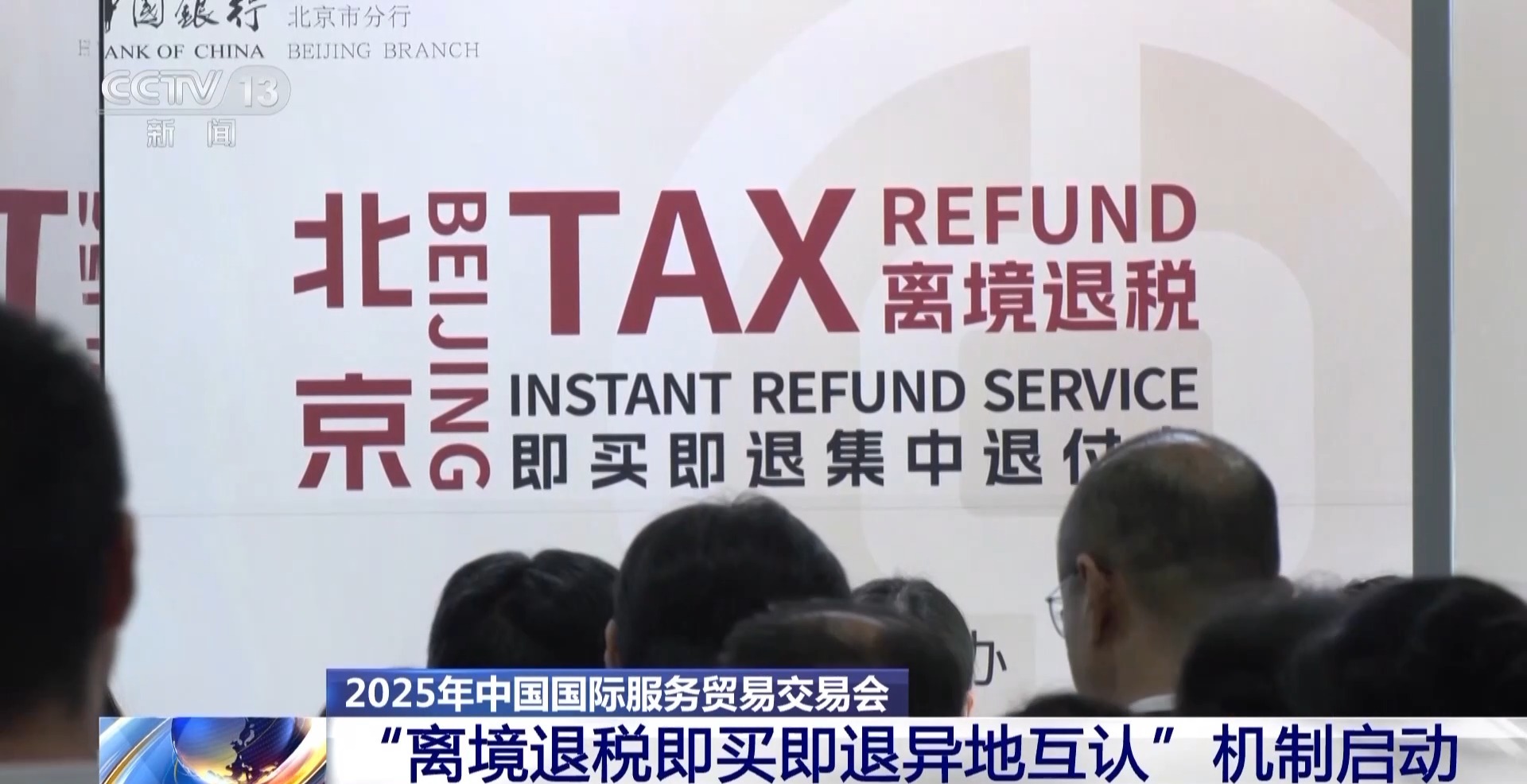
Group 1 - The 2025 Service Trade Fair is being held at Shougang Park in Beijing, with the first public open day starting today [2] - The fair features a total of 28 forums and promotional activities across various exhibition areas today [4] - A total of 60 service demonstration cases were released, covering nine major fields, attracting nearly 200 guests from 33 countries and international organizations [14] Group 2 - The "Immediate Refund for Departure Tax" mechanism was launched, allowing foreign travelers to process refunds at different ports, enhancing convenience for international visitors [5][7] - As of now, the number of departure tax stores nationwide has exceeded 10,000, with a 248% year-on-year increase in the number of people enjoying tax refunds and a 98% increase in tax refund sales in the first eight months of this year [11] - The Ministry of Commerce plans to work with relevant departments to improve the international consumption environment, supporting more cities in enhancing consumer convenience and experience [13] Group 3 - The event also saw the first release of five standardized service trade demonstration cases, showcasing innovative developments in service trade standardization [16] - There was an increase in networking opportunities post-release, facilitating discussions between international guests and case company representatives to promote economic and trade cooperation [18] - The CEO of Bahrain Taha Group expressed interest in collaborating on impressive green development cases presented at the fair [20]

全国人大常委会预算工委何成军:“十五五”消费需求扩张将来自商品和服务消费
Sou Hu Cai Jing· 2025-09-13 03:56
Group 1 - The contribution rate of final consumption expenditure to GDP in China has room for growth compared to developed countries, indicating future growth potential [1] - Consumption demand expansion during the 14th Five-Year Plan period will stem from the upgrading of goods consumption and rapid growth in service consumption [1] - High-quality goods supply will lead consumption demand, with technological innovation creating new consumption scenarios and new consumption hotspots emerging from sectors like low-altitude economy [1] Group 2 - Service consumption is expected to exceed 50% of total consumption expenditure in the next five years, with a projected growth space of nearly 20 trillion yuan by 2030 [1] - Current economic challenges include insufficient effective demand, with issues such as residents' unwillingness, inability, and lack of confidence in consumption [1] - The need for a systematic approach to expand domestic demand, integrating consumption, investment distribution, and circulation [2] Group 3 - Effective investment expansion faces challenges such as slowing investment growth and the need for improved investment efficiency [2] - The real estate market's deep adjustment and reduced land transfer income for local governments are constraining investment capabilities in infrastructure [2] - Short-term goals for expanding domestic demand should focus on addressing effective demand shortages and stabilizing economic growth [2] Group 4 - The low-altitude economy is seen as a new growth area, requiring enhanced infrastructure while ensuring effective investment [3] - Increasing residents' disposable income and enhancing their consumption share in total demand are crucial for boosting consumption [3] - A focus on improving fiscal spending on education, healthcare, and elderly care is necessary to alleviate residents' concerns and encourage consumption [3] Group 5 - Creating a favorable consumption environment requires technological and industrial innovation to enhance product quality and create new demand [4] - The service sector should be prioritized for consumption expansion, with efforts to reduce market entry barriers and optimize market regulation [4] - Promoting a unified national market and addressing disorderly competition will help create a conducive environment for expanding consumption demand [4]
第二十六届中国美食节聚焦培育服务消费增长点
Xin Hua Wang· 2025-09-12 10:08
Core Points - The 26th China Food Festival opened in Qingdao, Shandong, as part of the Ministry of Commerce's 2025 "Chinese Cuisine Gathering" initiative, focusing on stimulating service consumption growth [1][2] - The event aims to activate the potential of the catering industry, which is crucial for promoting consumption, benefiting people's livelihoods, and stabilizing employment [1] - The festival will host various activities, including the 2025 China Catering Industry High-Quality Development Conference and the 5th China Takeaway Festival, to discuss industry upgrades, internationalization, and digital transformation [1] - A report titled "2025 Annual Report on the Catering Industry" will be released during the forum, along with the first batch of green restaurants cultivated according to national standards [1] - The festival will feature a special session for renowned chefs to showcase innovative dishes, highlighting the integration of modern consumption concepts with the catering industry [1] - The event will also include a new ingredients and dishes matchmaking meeting and a catering supply chain cooperation negotiation meeting to facilitate efficient collaboration [1] Industry Insights - The festival integrates seasonal elements and national aesthetic trends, showcasing well-known time-honored brands and cultural creative suppliers, promoting local and intangible cultural heritage cuisines nationwide [2]
闲鱼神奇服务亮相服贸会:年度服务消费卖家超1900万,十大服务消费场景订单翻倍
Huan Qiu Wang· 2025-09-12 10:05
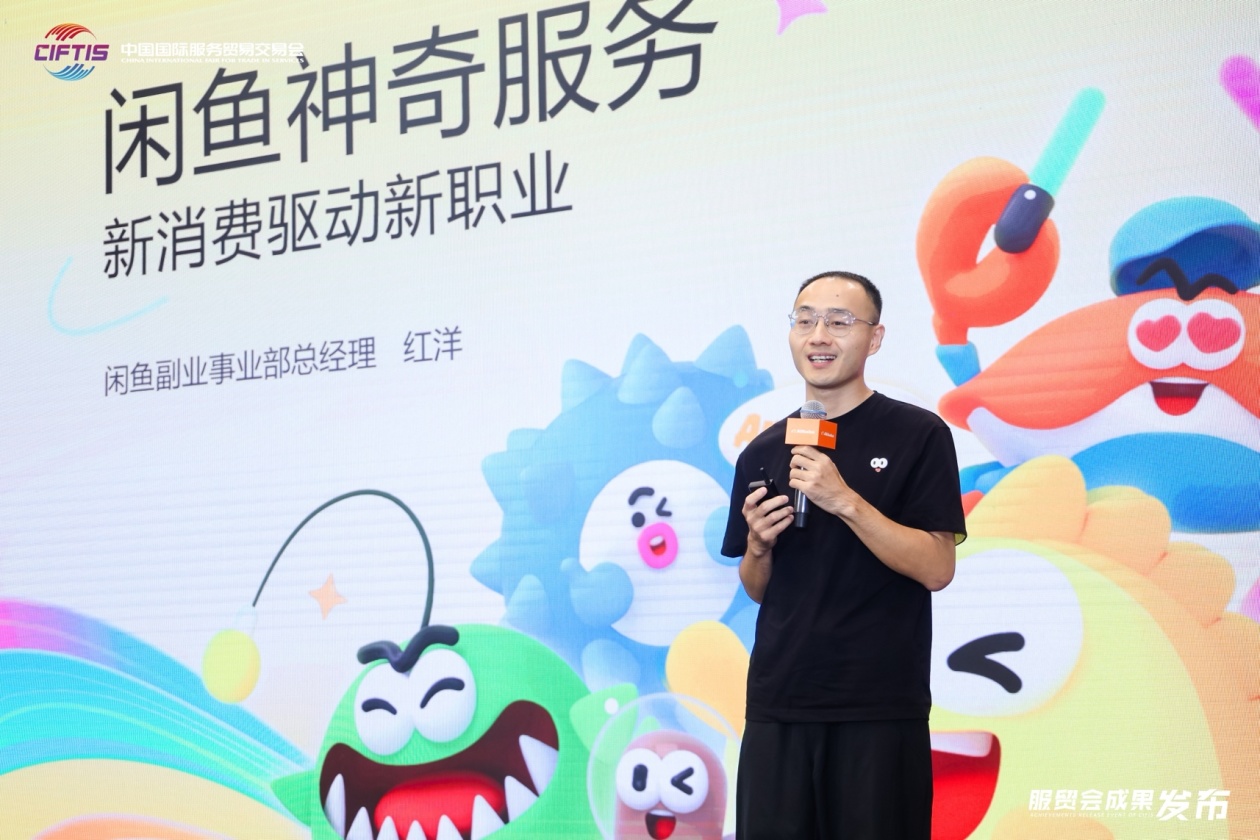
Core Insights - The 2025 China International Service Trade Fair recently opened in Beijing, highlighting the growth of service consumption on platforms like Xianyu, which has seen a significant increase in annual purchasing users and service order growth [1][3]. Group 1: User Growth and Demographics - Xianyu's annual purchasing users have reached 38 million, representing a year-on-year growth of 67.8%, with users born after 2000 accounting for 40.1% of this demographic [1]. - The top ten service consumption scenarios have experienced a 96% year-on-year increase in order volume, indicating Xianyu's emergence as a new hub for service consumption [1]. Group 2: New Service Offerings and User Engagement - Xianyu has evolved from a platform for idle goods trading to a solution for young people's life needs, with innovative uses such as finding pet detectives and job interview coaching [3]. - The launch of the "Magical Side Business" channel in July 2024 allows users to create resumes on Xianyu, facilitating low-cost entrepreneurship and enabling consumers to discover unexpected services [3]. Group 3: Professional Services and Trust Mechanisms - The platform has certified over a hundred types of professional services, including traditional roles like lawyers and fitness coaches, as well as new roles like "pet companions" and "doll customizers" [3]. - Xianyu aims to establish a trust mechanism to connect consumers with reliable service providers, including an official certification system and improved service delivery standards [4]. Group 4: Future Developments and Market Positioning - A new upgraded version of Xianyu's service offerings will be launched by the end of September, featuring a diverse range of services and a selection of 10,000 certified professional service providers [4]. - The platform's commitment to visibility for reliable service providers aims to empower young individuals to create value through their skills, contributing to the overall growth of the service consumption market [5].
闲鱼神奇服务成为年轻人消费新风向 1900万卖家涌入闲鱼助推服务消费蓬勃增长
Yang Guang Wang· 2025-09-12 09:45
Core Insights - The 2025 China International Service Trade Fair opened in Beijing, highlighting the growth of service consumption on the Xianyu platform, with annual purchasing users reaching 38 million, a year-on-year increase of 67.8%, and 40.1% of users being post-00s [1] - Xianyu is evolving from a second-hand trading platform to a hub for young people to meet various life needs, with innovative uses such as finding pet detectives and job interview coaching [3] - The launch of the "Magical Side Business" channel in July 2024 allows users to create resumes on Xianyu, facilitating low-cost entrepreneurship and connecting consumers with unexpected services [3] - The platform has seen over 19 million sellers engaging in side businesses, with 60.3% being post-95s and 41% being post-00s [3] - The emergence of new service consumption trends is reshaping young people's career paths, with over a hundred certified job types available on the platform, including traditional roles and new professions like "pet companions" and "doll customizers" [3] Service Seller Dynamics - Service sellers on Xianyu are likened to traditional artisans, characterized by patience, passion, confidence, and solid professional skills, aiming to build their reputation through quality service delivery [4] - The platform emphasizes establishing a trust mechanism to connect real people, enhancing consumer confidence in selecting reliable service providers through an official certification system [4] - Xianyu aims to improve service delivery quality for providers, helping them accumulate reputation and simplify operational processes to attract more customers [4] Upcoming Features and Initiatives - A new upgraded version of Xianyu's magical services will be launched at the end of September, featuring diverse service scenarios and an initial selection of 10,000 certified professional service sellers [5] - The platform will introduce customized Xianyu accounts for side business sellers to showcase real service cases and user feedback, aiding in building trust and reputation [5] - A new seller support program will provide targeted customer matching assistance for new service providers for 30 to 60 days [5] - Xianyu aims to be a window into the evolving sentiments and habits of users, focusing on visibility for reliable service providers and empowering young people to create value through their skills [5]
服贸会人流如织 首钢园迎来观展热潮
Xin Jing Bao· 2025-09-12 06:52
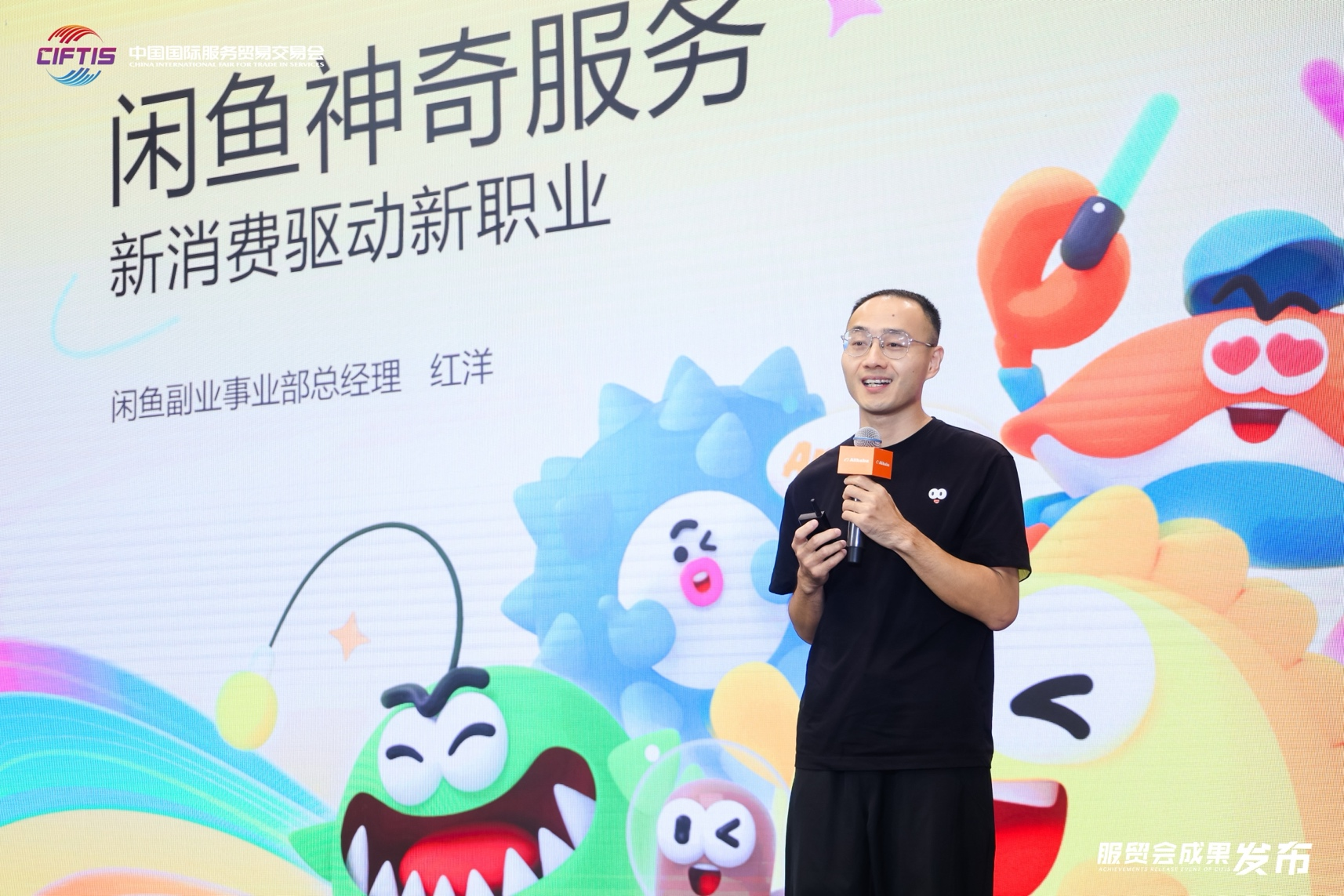
9月12日,首钢园内人气渐浓,参会人员络绎不绝。今年服贸会举办40余项丰富多彩的配套活动,打造 服务消费新业态,举办艺术表演、消费市集、体育赛事、交流酒会等文商旅体融合的多元化活动,促进 服务消费、服务贸易和服务投资融合发展。 ...
人工智能拓展服务消费新场景
Jing Ji Ri Bao· 2025-09-12 00:09
Core Insights - The Chinese government has issued an opinion on the implementation of "Artificial Intelligence+" actions, focusing on enhancing service consumption quality and expanding new service consumption scenarios [1][2] - The service sector's contribution to China's GDP is significant, with a projected value-added share of 56.7% in 2024 and a contribution rate of 56.2% to economic growth [1] - AI is seen as a key solution to address challenges in service consumption, such as uneven quality, unmet personalized demands, and varying service experiences [1][2] Group 1: AI Empowerment in Service Consumption - AI enhances service consumption through natural language processing, computer vision, and deep learning, enabling highly personalized and precise interactive services [1][2] - New service categories have emerged due to AI, such as AI-guided tours and VR experiences in cultural tourism, creating new growth points in cultural experience consumption [2] - AI optimizes supply chains, predicts consumer trends, and enables dynamic pricing, significantly reducing service costs and making quality services more accessible [2] Group 2: Challenges and Solutions - The reliance on high-quality data for AI training is a challenge, with prevalent data silos hindering legal and compliant data sharing across platforms [2][3] - Issues such as information bubbles, algorithmic bias, and privacy concerns continue to restrict the healthy development of service consumption [2] - To overcome these challenges, collaboration among government, enterprises, and society is essential to expand "Artificial Intelligence+" service consumption scenarios [2] Group 3: Legal and Technical Framework - Establishing a robust legal framework for AI product and service development is crucial, including enforcing laws on cybersecurity, data protection, and personal information [3] - There is a need for breakthroughs in AI technologies to address complex contexts and ensure safe and controllable applications in key service areas like healthcare and education [3] Group 4: Digital Literacy and Public Awareness - Mainstream media should play a role in promoting AI knowledge and enhancing public awareness through educational programs and public service announcements [4] - Public cultural institutions should provide digital skills training for vulnerable groups, while schools should incorporate digital literacy courses to improve understanding of data ethics and cybersecurity [4]
蓉品出川!聚焦数字文创、数字贸易、服务消费,成都在服贸会签下多个项目
Sou Hu Cai Jing· 2025-09-11 14:34
Group 1 - The 2025 China International Service Trade Fair (CIFTIS) opened on September 10 in Beijing, with a focus on helping enterprises expand their market opportunities through a coordinated service trade industry matchmaking event hosted by the Chengdu Municipal Bureau of Commerce [1] - The matchmaking event, themed "Rong Products Go Global, Trade Across the Seas," concentrated on areas such as digital cultural creation, digital trade, and service consumption, resulting in multiple key project signings, including the development of Citywalk intelligent digital humans and foreign language services [3][4] - Chengdu's service trade activities during the fair have shifted from city promotion to addressing enterprises' resource matching needs, featuring a dedicated area for service trade sub-sector matchmaking in digital trade, cultural tourism, and business services [4] Group 2 - Chengdu's service trade scale reached a historic high by the end of last year, with a year-on-year growth of 12% in total service import and export value, indicating strong momentum in the city's service trade development [7] - Companies are increasingly interested in collaboration opportunities in Chengdu, particularly in the rapidly growing new energy sector, including electric vehicles and photovoltaic energy storage [7] - Chengdu has attracted attention from companies in the digital entertainment sector, with interests in esports, animated films, and related events, highlighting existing collaborations and the provision of hardware, technical support, and data processing services [7]

服务消费成为扩大消费重要“引擎” 新业态、新场景激发消费新动能
Yang Shi Wang· 2025-09-11 07:46
Group 1 - The service trade fair is a significant platform for the opening, innovation, and cooperation of service trade, and it plays an important role in expanding service consumption [1] - During the "14th Five-Year Plan" period, China's consumption market remains the second largest globally, with an average annual growth of 5.5% in social retail sales of consumer goods over the past four years, expected to exceed 50 trillion yuan this year [1] - Service consumption is growing faster than goods consumption, becoming a key driver for expanding consumption, with an average annual growth of 9.6% in residents' service consumption expenditure from 2020 to 2024 [1] Group 2 - Looking ahead to the "15th Five-Year Plan," a series of policies aimed at releasing service consumption potential will continue, including opening up to foreign quality services and reducing restrictive measures domestically [5] - Anhui Province, as the guest province of this year's service trade fair, is exploring diverse new business formats and constructing new scenarios to stimulate consumption enthusiasm [6] - A former grain storage facility in Anhui has been transformed into a cultural and commercial complex, integrating dining, retail, sports, entertainment, and cultural creativity [6][8] Group 3 - The renovated concrete silo in Anhui serves as a unique space for cultural exhibitions and commercial consumption, enhancing the cultural value of physical goods through service experiences [8] - The incorporation of AI technology in sports, such as a digital serving machine that analyzes players' movements, showcases the innovative approaches being adopted in the service sector [10] - International visitors, like German tourist Paula, express appreciation for the friendly service in China, indicating a positive perception of the service industry [12] Group 4 - The dual drive of technological strength and cultural soft power is highlighted as a distinctive feature of Anhui's service trade development during the fair [14]

不断释放内需潜力、整治无需竞争,发改委透露下半年工作重点
Xin Lang Cai Jing· 2025-09-11 02:34
Group 1 - The report emphasizes the importance of expanding domestic demand in the context of increasing external uncertainties [2] - It highlights the implementation of consumption-boosting actions and the removal of restrictive measures to stimulate market vitality [2] - The report identifies service consumption as a key area for growth, noting its significance in stabilizing growth, employment, and livelihoods [2] Group 2 - The report calls for optimizing mechanisms to expand investment, focusing on high-quality implementation of major national strategies and key projects [3] - It mentions the establishment of new policy financial tools to encourage private sector participation in major projects, particularly in the nuclear power sector [3] - The report outlines the introduction of a universal childcare subsidy policy, providing 3,600 yuan per year for families with children under three years old, benefiting over 28 million families [4] Group 3 - Recent central government actions target "involution" in key industries, aiming to regulate low-price competition and promote product quality [5] - The report stresses the need for a unified national market and the regulation of chaotic competition in various sectors, including emerging industries like new energy vehicles and lithium batteries [6] - It suggests differentiated strategies for traditional and emerging industries to manage capacity and support innovation, while avoiding heavy-handed administrative interventions [6]