全球化

Search documents
“一些欧洲投资者参访宁德时代等工厂后,认为西方清洁能源几乎没有投资价值”
Xin Lang Cai Jing· 2025-10-09 14:55
Core Insights - Investors are reassessing the balance between "safety" and "growth" amid market volatility and policy uncertainty, with gold's safe-haven appeal being reinforced and AI reshaping valuation frameworks [3][4] - Rich Nuzum from Franklin Templeton emphasizes a long-term bullish outlook on China, suggesting that Western clean energy investments are losing value compared to potential collaborations with Chinese firms [3][12] Group 1: Economic Impact of U.S. Government Shutdown - A prolonged U.S. government shutdown could lead to significant economic stagnation, with impacts felt after two weeks and severe consequences after six weeks [3][8] - The inability of businesses and individuals to obtain government approvals during a shutdown could create a self-reinforcing cycle of reduced spending and economic activity [3][9] Group 2: Investment Strategies and Asset Allocation - Gold is viewed as an effective hedge against inflation and government debt monetization, although its historical real returns are close to zero [6] - Bitcoin is not considered a reliable hedge against inflation due to its high correlation with stock markets and regulatory risks, making gold a superior long-term investment [7] Group 3: AI and Digitalization Trends - There is increased confidence in AI and digitalization's ability to enhance productivity and drive strong earnings growth, with investors now more optimistic than earlier in the year [11] - The understanding of AI's impact on energy demand, particularly electricity, has become clearer, leading to a more favorable investment outlook [11] Group 4: Emerging Markets and Global Cooperation - The recent visits of European investors to Chinese renewable energy firms indicate a shift towards collaboration rather than competition in the clean energy sector [12] - Nuzum advocates for the revival of U.S.-China cooperation in venture capital and research, highlighting the benefits of improved international relations for global development [4][12]


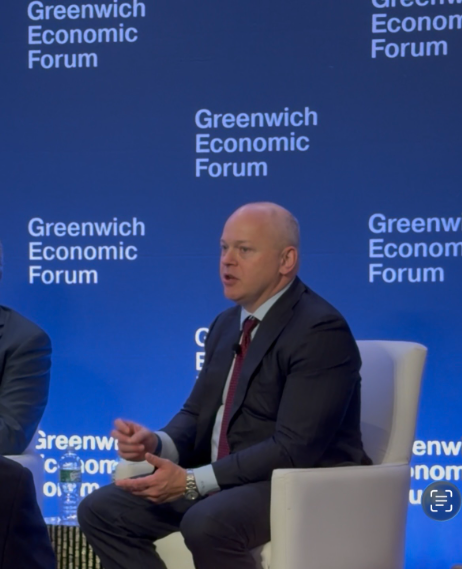
对话富兰克林邓普顿 OCIO主管:AI热潮仍在演进,长期看好中国和新兴市场
Xin Lang Cai Jing· 2025-10-09 14:03
Group 1 - Investors are reassessing the balance between "safety" and "growth" amid market volatility and policy uncertainty, with gold's safe-haven logic being reinforced and AI reshaping valuation systems [3][4] - Rich Nuzum from Franklin Templeton emphasizes a long-term bullish outlook on China, noting that Western clean energy investments are losing value compared to potential collaborations with Chinese companies [3][12] - The potential impact of a U.S. government shutdown is highlighted, with Nuzum stating that a shutdown lasting over two weeks could affect the economy, and over six weeks could lead to severe consequences [3][8][9] Group 2 - Nuzum advocates for the revival of U.S.-China cooperation in venture capital and research, arguing that the weakening of these ties over the past five years has been detrimental [4][12] - The discussion on gold as a hedge asset reveals that while it is used by clients, its actual returns are close to zero, and it serves as a tool against inflation and government debt monetization risks [6][10] - Nuzum expresses a strong belief in emerging markets, particularly China, stating that AI and digitalization are lowering barriers to entry and that global indices should reflect China's significant economic weight [12]
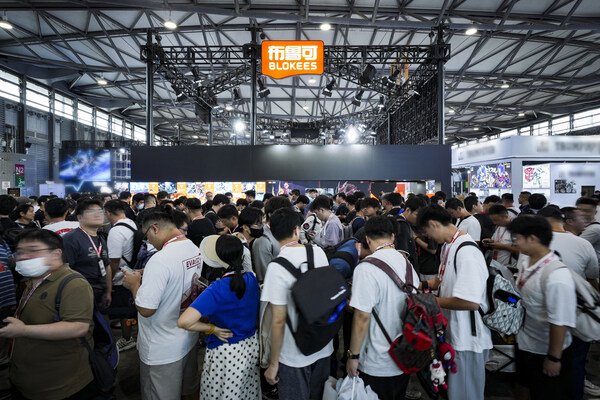
布鲁可亮相WF2025,开创拼搭玩具全新品类积木车
Zhong Guo Jin Rong Xin Xi Wang· 2025-10-09 11:16
Core Insights - The Wonder Festival 2025 (WF2025) held in Shanghai showcased the launch of a new product category "Building Cars" by the Chinese building block brand Blokus, reinforcing its leading position in the building toy industry in China [1][3] Product Strategy - Blokus has developed a clear and diverse product matrix under its "All People, Globalization, All Price Ranges" strategy, targeting different demographics with various product lines, including C series for students and general IP fans, E series for adult IP enthusiasts, and a flagship series for serious collectors [3][5] - The new "Building Cars" category features products in a 1:64 scale, emphasizing high quality and playability, with innovations in play methods, themes, and materials [5][6] Innovation Highlights - The "Building Cars" products allow for easy assembly and customization, catering to both children and adult collectors, promoting interactive play and personal expression [5][6] - Blokus has partnered with a professional materials research institution to develop a new high-density material, SOLIDEX™, enhancing the tactile experience and detail of the products [5][6] New Product Launches - At WF2025, Blokus introduced three new products in the "Building Cars" category: Transformers C01, Batman E01, and an original car model, which attracted significant attention from attendees [3][5] - The company also launched three new series in the "Building People" category: "Nature Collection," "Miracle Q Version," and "Encounter Version," catering to various player interests [6][8] Community Engagement - The BFC (Building For Community) creative competition has become a significant platform for showcasing global creators' works, with nearly 90,000 submissions received over the past three seasons [13][15] - Blokus has expanded its global presence by showcasing BFC works at major toy exhibitions worldwide, promoting the brand and its community culture [15]
2025年Q3回顾:1.5亿、1.2亿美元… 巨额融资背后,教育科技正迎来AI平台时代
3 6 Ke· 2025-10-09 08:59
Core Insights - The third quarter of 2025 saw significant financing events in the global edtech sector, indicating a return of market confidence and outlining the industry's development trajectory [1] - Capital is prioritizing platform companies that deeply integrate artificial intelligence into their core products and have global operational ambitions, while innovative models addressing key pain points in vertical niches are also gaining market favor [1] Group 1: Major Financing Trends - Several financing rounds exceeding $100 million have set the tone for the industry, highlighting a capital preference for platform companies with scale effects and ecosystem-building capabilities [2] - Lingokids raised $120 million, solidifying its position as a leading interactive application for children aged 2-8, marking a strategic shift from a "single IP application" to a "multi-IP platform" [3] - Eruditus, supported by SoftBank, completed a $150 million refinancing, demonstrating that later-stage companies with stable cash flows and strong partner networks can still attract significant support [4] - MyEdSpace secured €12.8 million in A-round financing, aiming to expand into the U.S. market with a hybrid model combining top teachers, scalable technology, and social media [5] Group 2: AI Integration and Innovation - AI applications are becoming diverse and deeply integrated, serving as the core driving force behind this round of financing [6] - Startups focusing on AI-driven personalized tutoring, such as Arivihan and Edumentors, have also attracted considerable funding, showcasing the demand for automated and highly interactive AI tutors [7] - Companies like Paddy and The Invigilator are leveraging AI to empower educators and institutions, addressing issues like teacher workload and academic integrity [8] Group 3: Global Expansion and Vertical Innovation - Companies are increasingly adopting globalization as a core strategy, with examples like MyEdSpace entering the U.S. market and Evulpo expanding into seven countries [9] - Vertical innovation is also prominent, with companies like Honor Education and Seekho utilizing AI and short video formats to enhance learning outcomes and engagement [10] Group 4: Capital Market Dynamics - The financing landscape reflects a more rational and focused attitude in the capital market, with funds concentrating on leading companies with validated business models [11] - Investors are increasingly prioritizing measurable metrics such as user engagement and financial health, indicating a shift towards sustainable growth and profitability [11] - The competitive landscape in the edtech sector is evolving towards a comprehensive contest of "AI core × globalization capability × vertical depth," with companies excelling in these areas poised to reshape global education [11]
高盛交易员:人工智能-成与不成”的争论将在多个季度内无法定论
Goldman Sachs· 2025-10-09 02:00
Investment Rating - The report does not explicitly provide an investment rating for the industry Core Insights - The ongoing debate regarding the success of AI will not reach a conclusion for many quarters, indicating a long-term investment horizon is necessary [18] - The current market environment is characterized by low interest rates, strong consumer support, full employment, and significant capital expenditure in AI, which are driving investments into various asset classes [4][5] - The technology sector is leading the market rally, with tech-related stocks comprising 56% of the US stock market, while defensive stocks have dropped to a record low of 16% [11][12] - There is a notable increase in call option volumes, indicating strong speculative interest in the market, with total call option volumes averaging 40 million contracts per day [8][9] - The report highlights the significant capital expenditure expected in AI, with projections of $2.8 trillion in hyper-scaler capex and $5.5 trillion in global capex by 2029, reflecting a 56% compound annual growth rate [17][19] Summary by Sections 1. Consumer State - The report discusses the current state of the consumer, indicating resilience in consumer spending despite economic uncertainties [43] 2. EPS Expectations - There are expectations for earnings per share (EPS) growth as companies adapt to the evolving market landscape [44] 3. Hyper-Scalers - A preference for hyper-scaler companies is noted as the market approaches Q3 earnings, reflecting confidence in their growth potential [46] 4. IPO Pipeline - The report mentions a revival in the IPO pipeline, suggesting renewed interest in public offerings [48] 5. Hyper Themes - The performance of high-octane themes such as drones, quantum computing, and crypto-leveraged investments has been impressive this year [50] 6. Shorts vs Quality - The report highlights a trend where the market is downgrading quality assets while speculative short positions are increasing, coinciding with the loosest financial conditions in years [52] 7. Jobs vs AI - There is a divergence between hiring trends and stock market performance, indicating a complex relationship between employment and AI advancements [54] 8. Returns - The report discusses the overall returns in the market, emphasizing the importance of understanding the underlying factors driving these returns [57] 9. CTA Flows Projections - Projections regarding commodity trading advisor flows are provided, serving as a reminder of potential market volatility [60]
美力科技(300611):公司首次覆盖报告:深耕高壁垒弹簧赛道,国产替代与智能化双轮驱动成长
KAIYUAN SECURITIES· 2025-10-08 04:46
Investment Rating - The report assigns a "Buy" rating for the company, marking its first coverage [2][9]. Core Insights - The company is a leading player in the Chinese spring industry, focusing on high-barrier markets and leveraging both domestic substitution and smart technology as dual growth drivers [5][6]. - The company has established deep partnerships with major domestic electric vehicle manufacturers such as Geely, BYD, and Li Auto, as well as stable relationships with international Tier 1 suppliers like WABCO and ZF [5][6]. - The company is expected to see significant profit recovery, with projected net profits of 190 million, 270 million, and 320 million yuan for 2025, 2026, and 2027 respectively, corresponding to EPS of 0.92, 1.27, and 1.51 yuan [5][7]. Summary by Sections 1. Company Overview - The company has a strong history of growth and expansion, becoming the first listed company in the Chinese spring industry in 2017 [17]. - It has undergone multiple acquisitions to enhance its industrial layout, including significant acquisitions in 2021 and 2024 to expand its product lines and global competitiveness [17][18]. 2. Industry Dynamics - The spring industry has high barriers to entry due to technological, financial, and customer-related challenges, with foreign companies still dominating the high-end market [32][33]. - The rise of domestic electric vehicle manufacturers is driving demand for suspension systems, with the market for springs expected to reach 431.24 billion yuan by 2030 [35][41]. 3. Customer Base and Technology - The company has established strong customer relationships with leading domestic and international automotive manufacturers, creating a robust customer barrier [44]. - It has accumulated significant technological expertise, holding 111 patents and continuously investing in R&D, with a 32% increase in R&D spending in 2024 [47][50]. 4. Growth Drivers - The company is investing 660 million yuan in smart suspension systems, anticipating significant market growth in this area, with the air suspension market projected to exceed 80 billion yuan by 2030 [55][54]. - The humanoid robot market is also seen as a new growth avenue, with the global robotics market expected to surpass 100 billion USD by 2035 [56][59]. 5. Financial Projections - The company is expected to achieve rapid revenue growth, with projected revenues increasing from 1.37 billion yuan in 2023 to 3.14 billion yuan by 2027, reflecting a compound annual growth rate of 24.2% [7][30]. - Profit margins are also expected to improve, with gross margins projected to reach 24.8% by 2027 [7][30].

全球化反噬:美国工人失业、降薪,全球化失控背后的血泪与反思!
Sou Hu Cai Jing· 2025-10-07 06:17
Core Insights - The book "The Worst Bet in the World: How Globalization Went Off the Rails (and How to Get Back on Track)" by David Lynch highlights that American workers are merely pawns in the globalization gamble, with their fates disconnected from the outcomes of this global economic strategy [1][22] Group 1: Historical Context of Globalization - Initially, globalization was viewed as an ideal utopia where capital could flow freely across borders, benefiting developing countries and creating new markets [3] - The economic turmoil in countries like Indonesia and Russia, along with the unemployment of American workers, illustrates the negative consequences of globalization [3] - The 1990s saw President Clinton promoting globalization as an "unstoppable force," despite widespread awareness that it would harm domestic workers [5] Group 2: Impact on Workers - Economists like Dani Rodrik warned that globalization primarily benefits capital and high-skilled labor, while low-skilled workers face job losses due to competition from cheaper labor [5] - Clinton's "Trade Adjustment Assistance" program aimed to support displaced workers but was poorly executed, with less than 10% of eligible workers benefiting [5][14] - The signing of NAFTA did not significantly reduce factory numbers, but workers affected by low-cost labor from Mexico suffered greatly, leading to increased anti-globalization sentiments [10] Group 3: Political Reactions and Shifts - Protests against globalization peaked during the 1999 WTO meeting in Seattle, reflecting workers' frustrations with being sacrificed for corporate interests [10][13] - Obama's push for the Trans-Pacific Partnership (TPP) faced backlash due to its perceived favoritism towards corporations over labor rights [16] - Trump's election and subsequent withdrawal from TPP signified a shift towards prioritizing American workers, although the effectiveness of such measures remains questionable [16] Group 4: Current Challenges and Future Considerations - The COVID-19 pandemic exposed vulnerabilities in global supply chains, prompting a reevaluation of reliance on international production models [18] - Lynch calls for a reconsideration of globalization, urging that the needs of small-town residents dependent on factories should not be dismissed as "ignorant protectionism" [19] - While Lynch suggests increasing corporate tax rates and rebuilding social safety nets, he acknowledges the lack of concrete policy solutions to address the ongoing challenges of globalization [21]

吉利汽车:拟23亿港元回购
Zheng Quan Shi Bao· 2025-10-06 23:29
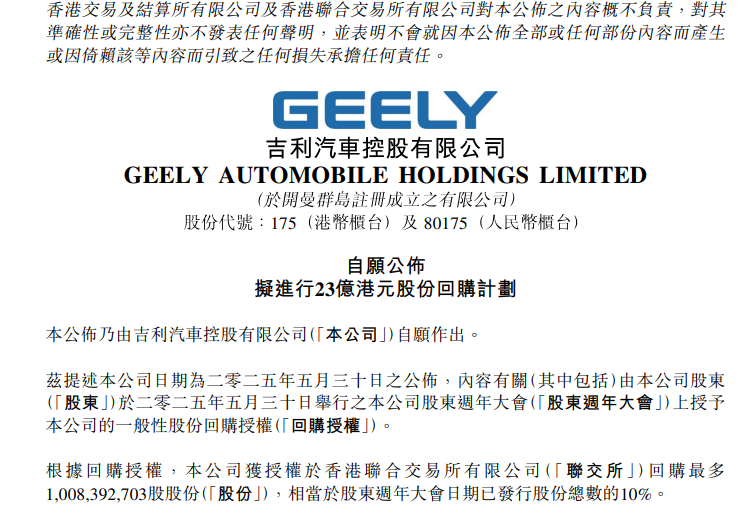
Core Viewpoint - Geely Automobile announced a share repurchase plan of HKD 2.3 billion, aiming to enhance shareholder value and demonstrate confidence in its business outlook [1][3]. Group 1: Share Repurchase Plan - The board of Geely believes that the share repurchase plan aligns with the best interests of the company and its shareholders, especially in the current uncertain market environment [3]. - The plan will be executed through an automated mechanism in the open market and is subject to certain conditions, including compliance with the Hong Kong Stock Exchange regulations [3]. - The company plans to repurchase up to 1.008 billion shares, representing 10% of the total shares issued as of the date of the 2025 annual general meeting [3]. Group 2: Sales Performance - In September, Geely's monthly sales reached 273,125 units, marking a year-on-year increase of 35% and a month-on-month increase of 9%, with overseas exports accounting for 40,665 units [3]. - The sales of new energy vehicles (NEVs) reached 165,201 units in September, reflecting a year-on-year growth of 81% and a month-on-month increase of 12%, achieving a historical high [3]. - The total sales for 2025, including all brands, are projected to reach 2,170,189 units, representing a year-on-year increase of 46% [4]. Group 3: Market Outlook - Analysts from Guohai Securities view the company's fuel vehicle base as resilient, with expectations for growth driven by electrification, globalization, and premiumization [4]. - According to Kaiyuan Securities, the performance of new vehicles in the second half of 2025 is expected to exceed expectations, with the company's platform-based manufacturing cost advantages translating into the ability to continuously create popular models [4].

吉利汽车:拟23亿港元回购!
Zheng Quan Shi Bao· 2025-10-06 13:49
Group 1 - The company announced a share buyback plan of HKD 2.3 billion, which will be executed through an automated mechanism in the open market [2] - The board believes that the buyback plan aligns with the overall best interests of the company and its shareholders, showcasing confidence in the business outlook amid market uncertainties [5] - The plan is subject to certain conditions, including obtaining a waiver from the Hong Kong Stock Exchange regarding compliance with specific listing rules [5] Group 2 - In September, the company achieved a monthly sales volume of 273,125 units, representing a year-on-year increase of 35% and a month-on-month increase of 9%, with overseas exports accounting for 40,665 units [6] - The sales of new energy vehicles reached 165,201 units in September, marking an 81% year-on-year increase and a 12% month-on-month increase, setting a historical record [6] - The company’s total sales for 2025, including all brands, reached 2,170,189 units, reflecting a 46% year-on-year growth [6]
2025叉车行业市场空间、发展趋势及行业龙头杭又集团销量、布局分析报告
Sou Hu Cai Jing· 2025-10-06 07:14
Core Viewpoint - The forklift industry is undergoing significant globalization and intelligent transformation, with Hangcha Group leading the market through diversified strategies and global expansion [1][2]. Group 1: Market Overview - The global forklift market reached a sales volume of 2.14 million units in 2023, with a compound annual growth rate (CAGR) of 8% from 2013 to 2023. Asia and Europe account for 47% and 30% of the market, respectively [1][2]. - China is the largest consumer of forklifts, with a sales volume of 36% of the global total in 2023, and a CAGR of 12.2% from 2013 to 2023. In 2024, China's total forklift sales are projected to reach 1.29 million units, with exports increasing to 480,000 units, representing a 37% export share [1][2]. Group 2: Competitive Landscape - The global forklift industry is highly concentrated, with the top three companies holding a 55% market share in 2023. Hangcha Group and Anhui Heli dominate the Chinese market, with Hangcha's global sales market share at 11% and approximately 22% in China for 2024 [2][3]. - Hangcha Group's international revenue is expected to reach 42% of total revenue in 2024, with a gross margin of 54% from international sales, significantly higher than the domestic gross margin of 19% [2][3]. Group 3: Industry Trends - Automation is a key trend in the forklift industry, with global sales of unmanned forklifts reaching 30,700 units in 2023, reflecting a CAGR of 52% from 2019 to 2023. In China, unmanned forklift sales are projected to reach 25,000 units in 2024, with a CAGR of 55% from 2019 to 2024 [3][4]. - The electric forklift market is also expanding, with the total cost of ownership for electric forklifts significantly lower than that of internal combustion models. From 2017 to 2024, sales of lithium battery forklifts in China increased from 8,700 units to 448,800 units, with a CAGR of 76% [3][4]. Group 4: Smart Logistics Systems - The global market for smart logistics solutions is expected to reach 471.1 billion yuan in 2024, with China's market projected to reach 101.3 billion yuan. The sector is characterized by automation and efficiency improvements, reducing labor costs and losses [4][5]. - Hangcha Group is actively developing its smart logistics systems, achieving over 1,000 successful project implementations and securing contracts exceeding 1 billion yuan in 2024 [4][5]. Group 5: Company Performance - Hangcha Group has demonstrated steady growth, with a revenue CAGR of 13% and a net profit CAGR of 26% from 2019 to 2024. In Q1 2025, the company reported revenue of 4.5 billion yuan, a year-on-year increase of 8%, and a net profit of 440 million yuan, up 15% year-on-year [6][7]. - The company is focusing on technological innovation and resource integration, including the acquisition of Zhejiang Guozi Robotics to enhance its competitive edge in the smart logistics sector [5][6].