
降本增效

Search documents
关税冲击、业务重组、盈利普降,跨国零部件巨头直面艰难换挡期
Zhong Guo Qi Che Bao Wang· 2025-12-15 02:02
Core Viewpoint - The automotive parts industry is facing significant challenges due to declining demand from traditional European automakers, necessitating a shift towards electrification and smart technology. Geopolitical and trade policy disruptions are also impacting supply chains, leading to a focus on cost reduction and strategic acquisitions among suppliers [2][11]. Financial Performance - Several multinational automotive parts manufacturers reported losses in Q3, with some companies experiencing significant profit pressure. Schaeffler reported a revenue of €5.826 billion, a 1.3% increase year-on-year, but a net loss of €287 million, resulting in a total net loss of €244 million for the first three quarters [3]. - Aptiv's Q3 revenue reached $5.2 billion, a 7% increase, but it incurred a net loss of $355 million, including a $648 million non-cash goodwill impairment charge [4]. - ZF Friedrichshafen's revenue for the first three quarters was €28.9 billion, an 8.1% decline, with an adjusted EBIT margin of 3.7% [4]. - Faurecia's Q3 revenue was €6.357 billion, down 3.7%, but the company is focusing on cost optimization and asset divestiture to stabilize its financial structure [4]. - Lear Corporation reported Q3 revenue of $5.68 billion, a 2% increase, but net profit fell to $108 million from $136 million year-on-year [5]. Strategic Adjustments - Companies are increasingly pursuing strategic acquisitions to fill technological gaps and divesting non-core assets to optimize their business structures. Schaeffler announced the sale of its turbocharger business in China to Chengdu Xiling Power Technology [6]. - ZF Friedrichshafen is evaluating the feasibility of spinning off its electric drive technology division, which has faced job cuts and restructuring [6]. - Continental AG completed the spin-off of its automotive division and listed it under the name Aumovio, while also undergoing a separation of its rubber division [7]. - Faurecia is initiating a divestiture process for its interior business, aiming to reduce debt through a second €1 billion divestiture plan [8]. Focus on the Chinese Market - The Chinese market is becoming a focal point for many multinational automotive parts giants. Valeo reported Q3 revenue of €5 billion, a 3.5% increase, with significant contributions from China [9]. - Magna announced a collaboration with GAC Group for vehicle assembly, marking a significant boost for its previously sluggish contract manufacturing business [10]. - Overall, the industry sees China as a critical growth engine, with companies like Aptiv and Faurecia planning further investments and strategic partnerships in the region [9][10]. Industry Outlook - The automotive parts industry is navigating a challenging transition period characterized by the dual pressures of declining traditional business and ongoing investments in electrification. Cost reduction, business optimization, and strategic acquisitions are seen as key to overcoming these challenges, with the Chinese market offering substantial growth potential [11].


明源云20251212
2025-12-15 01:55
Summary of the Conference Call for Mingyuan Cloud Company Overview - **Company**: Mingyuan Cloud - **Industry**: Real Estate Technology and AI Solutions Key Points Financial Performance - **Revenue Forecast**: Expected decline of 10%-15% in total revenue for 2025 due to adverse conditions in the real estate market [2][4] - **Adjusted Net Profit Margin**: Anticipated to return to positive territory for the full year 2025 through cost reduction and efficiency improvements [2][4] - **Cash Flow**: Targeting positive cash flow for 2025, with current indicators suggesting this goal is achievable despite some impacts from foreign exchange losses and one-time expenses [2][8] AI Product Development - **AI in Marketing**: Significant progress in AI products, particularly in real estate marketing, with a signed amount of 50 million yuan in AI-enhanced digital marketing expected to reach 60 million yuan by December 2025 [2][5] - **AI Management Products**: Introduction of various AI management solutions, including procurement, cost management, and leasing management, with signed amounts nearing 10 million yuan [5][6] International Market Expansion - **Geographic Focus**: Expansion efforts concentrated in Southeast Asia, Japan, and Hong Kong, with a signed amount of 15 million yuan in the first half of 2025 and a full-year target of 50 million yuan [2][7] - **Strategic Shift**: Due to strategic adjustments, the focus has shifted towards standardized SaaS and IoT products, which may hinder the achievement of the 50 million yuan target for the year [7] Customer Engagement and Pricing - **Customer Acquisition**: In the first half of 2025, 1,000 new projects were signed with an average contract value of 32,000 yuan, an increase from 28,000 yuan in 2024, driven primarily by new customers purchasing more modules [2][11] - **Marketing Activities**: Offline events, such as real estate digital marketing salons and summits, have significantly boosted new customer purchases [11] Stock Buyback Strategy - **Buyback Plan**: The company is executing a stock buyback plan with a target of at least 200 million HKD over six months, having already repurchased nearly 100 million HKD, with daily repurchase amounts between 1 million and 1.5 million shares [3][12] - **Market Conditions**: The buyback is seen as a response to downward pressure in the Hong Kong computer sector and the delayed recovery in real estate [12] Future Outlook - **Growth Expectations**: The company is optimistic about improving operational quality and identifying new growth points, with plans to potentially increase personnel for market expansion in regions like the Middle East and Australia [12][13] Risks and Challenges - **Market Environment**: The overall real estate market remains under pressure, with sales and new construction rates declining in the latter half of 2025 [4][10] - **Revenue Adjustments**: The revenue target for 2025 may need to be revised downward due to challenges in achieving the initial goals [11] This summary encapsulates the critical insights from the conference call, highlighting the company's financial outlook, product developments, market strategies, and future expectations.
坤泰股份20251212
2025-12-15 01:55
Summary of KunTai Co., Ltd. Conference Call Company Overview - KunTai Co., Ltd. is a leading domestic producer of BCF fibers, with global production bases in Yantai, the USA, and Mexico, and plans to establish a new base in Morocco by 2026. The company supplies products to major automotive brands such as BMW, Audi, and NIO [2][3] Core Insights and Arguments - The profit growth in the first three quarters of the year is primarily driven by the overseas production bases in Mexico and Morocco, while domestic capacity utilization remains stable. However, net profit has declined due to overseas expansion projects not meeting the specified SOP timeline, with expectations for gradual ramp-up in the second half of 2026 [2][4] - To mitigate tariff impacts, KunTai has established a subsidiary in Mexico and closed its higher-cost subsidiary in the USA. The company is collaborating with global parts brands to establish a production base in North America, having secured projects like Robot Taxi, although market conditions in North America need to be monitored [2][6] - In the domestic market, KunTai focuses on partnerships with high-quality clients, enhancing gross margins through cost reduction and efficiency improvements. The gross margin has increased in Q3, and the company aims to avoid domestic market saturation by expanding into European and American markets [2][7] Market Potential - The automotive soft interior materials market has significant potential, with tufted carpets priced around 30 RMB per square meter and needle-punched carpets at about 15 RMB per square meter. The average cost of soft interior materials per vehicle ranges from 200 to 400 RMB, indicating a vast market capacity [2][8] Performance Guidance - The company anticipates stable revenue and profit growth from the end of 2025 through 2026, driven by the ramp-up of overseas expansion projects and the commissioning of the new Moroccan production base. Optimizing the client structure is expected to further enhance gross margins [2][9] Strategic Outlook - KunTai is currently experiencing pressure with unsatisfactory profit performance, expected to continue until the second half of 2026 when large-scale production in North America begins. The company has invested significantly in this market and anticipates a gradual recovery as demand increases. The construction of the Moroccan factory is also underway to cater to European clients, particularly the French interior group, Taif, which has committed to securing half of the production capacity [2][10][11] Response to Client Demands - KunTai aims to meet the core demands of overseas clients, including North American EV brands and the French Taif Group, by providing scalable supply of automotive carpets and soft interior materials. The current market in North America and Europe consists mainly of small workshops, which cannot meet the volume requirements of large interior and exterior groups, thus increasing the complexity of supplier coordination [2][12]
惠而浦拟7461.9万买格兰仕洗衣机资产 降本增效前三季归母净利大增496.88%
Chang Jiang Shang Bao· 2025-12-14 23:49
Core Viewpoint - Whirlpool plans to acquire washing machine-related assets from its controlling shareholder, Galanz Home Appliance, for 74.6193 million yuan to resolve industry competition issues [1][2][3] Group 1: Acquisition Details - The acquisition includes fixed assets, patents, proprietary technologies, and products related to the washing machine business [2][3] - Galanz will grant Whirlpool exclusive global licensing rights for the washing machine trademarks, ensuring brand consolidation and legal protection for market resource integration [2] - After the transaction, Galanz and its actual controller will cease production and sales of washing machines, eliminating substantial industry competition with Whirlpool [3] Group 2: Financial Performance - For the first three quarters of 2025, Whirlpool reported a net profit attributable to shareholders of 317 million yuan, a year-on-year increase of 496.88% [1][4] - The company achieved an operating income of 3.297 billion yuan, reflecting a 30.61% year-on-year growth, driven by strong overseas market demand and increased export orders [4][5] - Whirlpool's net cash flow from operating activities reached 660 million yuan, a 390.74% increase year-on-year, with cash reserves of 1.699 billion yuan [3] Group 3: Cost Management and R&D - Whirlpool has focused on cost reduction and efficiency improvement, with operating expenses decreasing significantly from 448 million yuan in 2023 to 206 million yuan in the first three quarters of 2025 [6] - The company has consistently invested over 100 million yuan in R&D annually from 2017 to 2024, with a slight decrease in R&D expenses to 120 million yuan in the first three quarters of 2025 [6] - Whirlpool's gross margin and net margin have shown steady improvement, with gross margins increasing from 13.40% in 2022 to 17.24% in the first three quarters of 2025 [6]

4年净增588亿,费用却大幅下降,海尔智家是如何做到的?
Cai Jing Wang· 2025-12-14 11:53
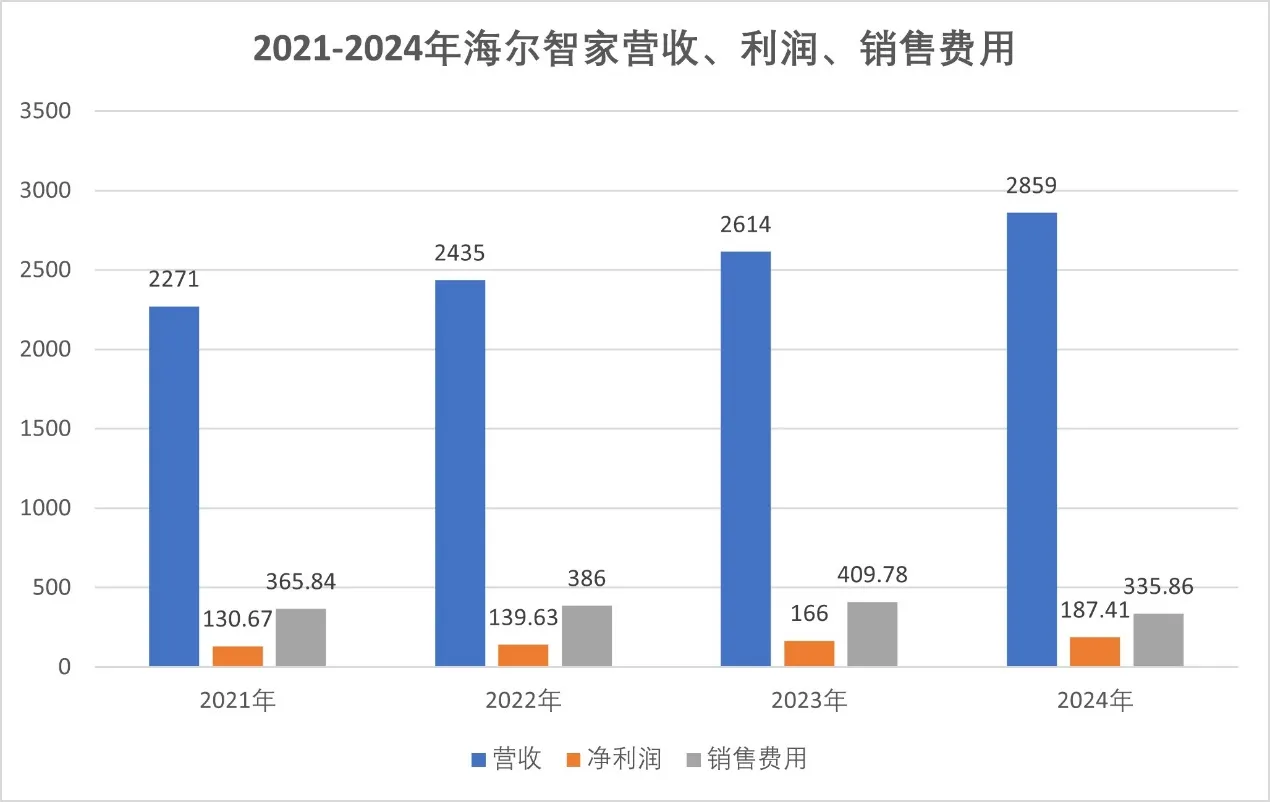
Core Insights - The home appliance industry is currently in a stock competition phase, where companies typically engage in price wars and marketing battles to gain market share. However, Haier Smart Home has demonstrated a different approach, achieving significant revenue and profit growth while reducing sales expenses [1][4]. Group 1: Financial Performance - Haier Smart Home's revenue increased from 227.1 billion yuan in 2021 to 285.9 billion yuan in 2024, a growth of 58.8 billion yuan [1][3]. - The company's profit rose from 13.067 billion yuan in 2021 to 18.741 billion yuan in 2024, an increase of approximately 5.7 billion yuan [1][3]. - Sales expense ratio decreased from 16.1% in 2021 to 11.7% in 2024, a reduction of 4.4 percentage points [3][4]. - Absolute sales expenses fell from 36.5 billion yuan in 2021 to 33.5 billion yuan in 2024, a decrease of 3 billion yuan [3][4]. Group 2: Cost Reduction Strategies - Haier Smart Home achieved cost reduction through comprehensive digital transformation across all processes, including R&D, manufacturing, supply chain, marketing, logistics, and service [4][5]. - The company improved logistics efficiency by increasing direct delivery from company to user, with 74% of orders from county specialty stores being directly delivered to users by the end of September [4][5]. - Global brand and channel expansion has reached a harvest period, leading to reduced costs in overseas sales as the brand matrix is now well-established [4][5]. Group 3: Product Strategy and Innovation - The company focuses on high-end brands and product suites, which enhance pricing power while lowering costs. For instance, the Casarte brand saw an 18% revenue growth in the first three quarters, leading in the high-end appliance market [5][6]. - The sales proportion of Casarte suite products increased to 36%, up 7% year-on-year, while Haier brand suite products rose to 15%, up 11% year-on-year [5][6]. - R&D investment has consistently increased from 8.364 billion yuan in 2021 to 10.74 billion yuan in 2024, indicating a significant annual growth rate [5][6].

超117万人被裁!
Ge Long Hui A P P· 2025-12-14 08:33
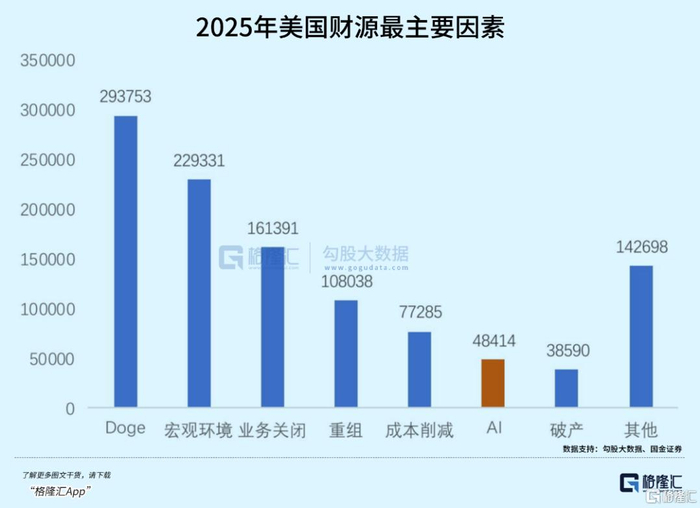
Group 1 - The core issue is the significant increase in layoffs across various sectors, with a total of 1,170,821 employees laid off in the U.S. as of November, marking a 54% increase from the previous year, approaching the levels seen during the 2008-2009 financial crisis [1] - The primary reason for the layoffs is attributed to the impact of the DOGE department led by Elon Musk, which has resulted in 293,753 federal employees and contractors losing their jobs, alongside 20,976 in private and non-profit sectors, an eightfold increase compared to 2024 [4] - The macroeconomic environment, characterized by high costs and tariffs, is also a significant factor contributing to the layoffs [6] Group 2 - The low-interest rate environment has led to a debt hangover, with many companies facing the need to refinance at higher rates, resulting in doubled interest expenses and halved net profits for struggling "zombie companies" [7][8] - The retail sector is the hardest hit, with a notable decline in consumer confidence, as evidenced by the Michigan Consumer Sentiment Index dropping to 51, a more than 20% decrease from the previous year [15] - The service industry has also seen significant layoffs, with 69,089 jobs cut throughout the year, a 64% increase, affecting a wide range of roles from restaurant staff to logistics coordinators [17] Group 3 - The technology sector has been particularly affected, contributing 35% of the layoffs, with a historical high of 28% of layoffs being middle management positions, as AI tools reduce the need for these roles [29][30] - Companies are increasingly using layoffs as a management tool to meet Wall Street's new performance metrics, leading to a culture where reducing headcount is seen as a standard practice rather than a response to crises [31] - The trend of layoffs in the tech industry is expected to continue, with predictions of a peak in cost-cutting benefits in 2026, as operational costs are projected to decrease significantly [37] Group 4 - The layoffs are not only affecting lower-level positions but are also targeting high-salary roles, particularly in finance and technology, indicating a shift in the labor market dynamics [27][28] - The reduction in middle management is leading to immediate operational efficiencies, with companies reporting significant cost savings and improved performance metrics following layoffs [35] - However, the long-term implications of these layoffs may hinder innovation, as a significant portion of laid-off employees hold critical technical expertise, potentially extending product development cycles [41][51]
找到人工客服的最好方法,除了发疯还有什么?
36氪· 2025-12-13 13:30
Core Viewpoint - The article discusses the deteriorating customer service experience in the tech industry, likening it to a challenging game where users must navigate through various obstacles to reach a human customer service representative [5][11][56] Group 1: Customer Service Experience - The current customer service landscape is characterized by a lack of accessible human representatives, with users often having to bypass AI systems that are ineffective in resolving issues [14][15][19] - Many platforms have adopted a strategy of hiding competent customer service behind layers of automated responses and low-level representatives, making it difficult for users to get help [30][32][56] - The article highlights that the experience of reaching a capable customer service agent has become akin to finding a "hidden level" in a game, reserved for only the most persistent users [31][32] Group 2: Industry Trends - The customer service industry has become highly standardized and competitive, with companies focusing on cost-cutting measures such as outsourcing and reducing in-house staff [34][36][46] - Companies are increasingly relying on AI and outsourced customer service, which can lead to a decline in service quality due to budget constraints and the complexity of customer issues [45][49][50] - The shift from in-house to outsourced customer service has resulted in a significant reduction in operational costs, but it has also contributed to a decline in customer satisfaction [46][56] Group 3: Future Outlook - The article suggests that while AI is expected to play a larger role in customer service, its current capabilities are still limited, particularly in understanding human emotions and complex queries [50][58] - There is a call for a more balanced approach where AI handles routine inquiries, allowing human agents to focus on more complex issues, which is currently not the case [58][60] - The hope is expressed for a future where customer service does not feel like a game requiring special knowledge to navigate successfully [68]

从“人力依赖”到“AI驱动”的跨越,揭秘智享AI直播三代是如何实现一人管理多直播间
Sou Hu Cai Jing· 2025-12-13 10:17
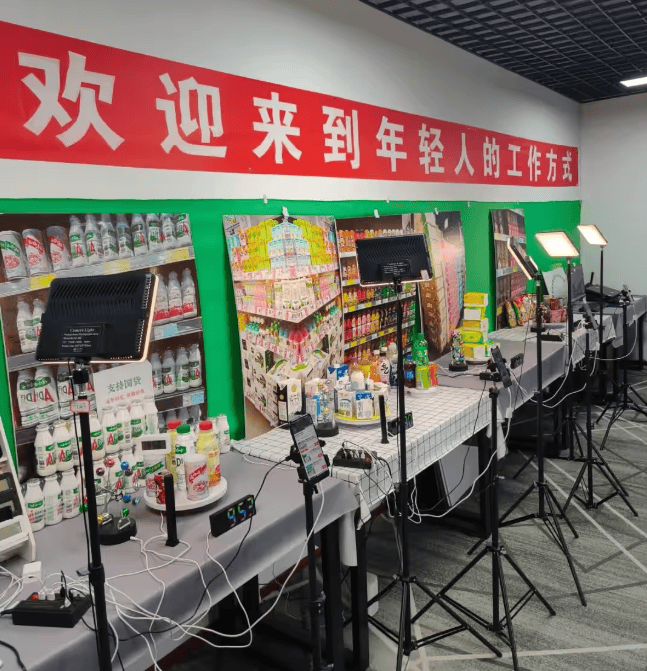
在直播电商竞争白热化的当下,商家们正面临一个残酷的现实:真人主播的高成本已成为制约发展的"紧箍咒"。头部主播单场坑位费动辄数十万,中小主播 底薪加提成的模式也让商家月均人力成本超5万元。更棘手的是,真人主播受限于生理极限,每日仅能运营6—8小时,难以覆盖全球不同时区的用户活跃时 段。在此背景下,智享AI直播三代以"AI驱动"的创新模式,实现了"一人管理多直播间"的跨越,为商家开辟了一条降本增效的新赛道。 传统直播的"人力困局" 传统直播模式高度依赖真人主播、场控和运营团队,人力成本高昂且效率受限。以杭州某女装店为例,在引入智享AI直播三代前,其直播团队由3人组成, 包括1名主播、1名场控和1名运营,月均人力成本超过5万元。即便如此,直播间仍无法实现24小时不间断运营,且难以同时覆盖多个平台。当团队尝试在抖 音、快手、视频号同步开播时,因需分别搭建直播间、调整设备参数并切换账号应对问题,1个人最多勉强管理2个平台,效率极低,人工操作时间长达每天 8小时。 智享AI直播三代的技术突破 智享AI直播三代通过三大核心技术突破,彻底打破了传统直播的"人力困局",实现了"一人管理多直播间"的高效运营。 1. 智能内容生成 ...
找到人工客服的最好方法,除了发疯还有什么?
虎嗅APP· 2025-12-13 03:08
Core Viewpoint - The article discusses the deteriorating customer service experience in the internet industry, likening it to a challenging game where users struggle to reach human customer service representatives. The piece highlights the increasing reliance on AI and outsourced customer service, which often leads to unsatisfactory interactions for users [5][8][27]. Group 1: Customer Service Challenges - Finding human customer service on internet platforms has become increasingly difficult, requiring users to navigate through multiple layers of AI and scripted responses [12][16]. - AI customer service often fails to understand user queries, leading to frustration and the need for users to resort to unconventional methods to reach human agents [12][14]. - The experience of reaching a competent human customer service representative has become rare, with companies treating skilled agents as scarce resources hidden behind complex systems [25][26]. Group 2: Cost-Cutting and Industry Trends - The customer service industry is highly competitive and standardized, with companies focusing on cost reduction by outsourcing and utilizing AI [28][30]. - Companies typically retain sensitive operations in-house while outsourcing routine tasks to third-party service providers, which can lead to a decline in service quality [31][32]. - The trend of moving customer service operations from first-tier cities to lower-tier cities has resulted in cost savings but may also impact service quality due to varying employee skill levels [36][37]. Group 3: The Future of Customer Service - The article suggests that while AI is becoming more prevalent in customer service, it currently lacks the emotional intelligence needed to handle complex customer interactions effectively [39][40]. - The shift from a customer-centric approach to a cost-centric model has led to a significant decline in service quality, with companies prioritizing immediate financial savings over long-term customer satisfaction [43][44]. - There is a call for a more straightforward and efficient customer service process that does not frustrate users, emphasizing the need for genuine assistance rather than scripted responses [52][53].

北京巴士传媒股份有限公司关于2025年半年度暨第三季度业绩说明会召开情况的公告
Shang Hai Zheng Quan Bao· 2025-12-12 19:36
Group 1 - The company held a performance briefing for the first half and third quarter of 2025 on December 12, 2025, from 15:00 to 16:00 [1][2] - The meeting included participation from the chairman, independent directors, vice general manager, and chief accountant, who interacted with investors and addressed common concerns [2] Group 2 - The company's main business segments include advertising media, automotive services, and new energy, all of which are steadily expanding in scale and market share [3] - The controlling shareholder has maintained a positive attitude towards the company's development, providing solid support for its operations [3] - The company is the only publicly listed entity of the controlling shareholder's bus group, playing a crucial role in the group's diversified layout and collaborative development [3] Group 3 - The company completed a cash dividend distribution of 0.01 yuan per share (including tax) on August 26, 2025, totaling 8,064,000 yuan based on a total share capital of 806,400,000 shares [4] - The company plans to actively participate in the integration and development of the Beijing-Tianjin-Hebei region, aligning with its strategic development and operational realities [5] Group 4 - The company acknowledged the challenges of low stock prices and poor performance over the past decade, emphasizing that stock price fluctuations are influenced by multiple factors, including macroeconomic conditions and industry developments [6][7] - The company is committed to optimizing its business structure and enhancing operational quality and profitability to provide better returns to shareholders [6][7] Group 5 - The new energy segment focuses on charging services, with plans to diversify its offerings and improve asset utilization efficiency [6] - The company is currently not pursuing advertising collaborations with taxi services due to policy restrictions but will monitor industry opportunities [6] Group 6 - The company has no current plans for capital increases, restructuring, or asset injections, maintaining a focus on steady operations and core business [8] - The automatic charging robots installed at the Ma Guanying bus station were developed by a partner and not in-house, with no plans for acquiring robotics companies at this time [8]
