地缘政治风险

Search documents
陈茂波:世界经济论坛与会者对香港经济发展前景持积极态度
智通财经网· 2026-01-25 22:49
陈茂波表示,他与香港其他代表,包括公营机构、金融及创新科技等界别人士,积极向各国政商领袖介 绍香港最新发展情况和独特优势。相关领袖对香港稳中向好的前景表现出浓厚兴趣。与会者普遍认为, 香港作为国家与世界之间的"超级联系人"和"超级增值人",将在国家发展进程中受益,并开拓出新的机 遇。 陈茂波指出,必须对地缘政治风险保持高度警惕,增强忧患意识。同时,应把握国家扩大高水平双向开 放、推进高质量发展所带来的新机遇,充分发挥香港"内联外通"的独特优势,为香港开拓更广阔发展空 间,并为促进国际对话与合作作出贡献。 智通财经APP获悉,香港特区政府财政司司长陈茂波25日发表网志表示,在瑞士达沃斯出席世界经济论 坛2026年年会的各界人士,普遍对香港的经济发展与前景持积极态度。 ...
原油月报:短期交易地缘局势动荡,油价或震荡偏强-20260125
Ping An Securities· 2026-01-25 12:39
1. Report Industry Investment Rating - The industry investment rating is "Stronger than the Market" (maintained) [1] 2. Core Views of the Report Short - term - Short - term geopolitical risks are rising, and oil prices may show a volatile and upward - biased trend. In January 2026, oil prices showed a volatile and upward - biased trend. Tensions between the US and Venezuela, and turmoil in the Middle East have made geopolitical risks the main factor supporting oil prices again. Multiple geopolitical events have occurred, such as the US military attack on Venezuela on January 3, Trump's meeting with oil company executives on January 9, and threats to Iran [2]. Medium - term - The medium - term fundamentals may further widen, and the central direction of oil prices is still downward. OPEC+ has not completed its restorative production increase plan, American countries continue to increase production, and Venezuelan oil may gradually restore its production to the pre - sanction level. The pressure of supply surplus is difficult to relieve. It is expected that the global crude oil inventory will continue to accumulate in 2026, and the central price of Brent oil is expected to be around $56 per barrel [6][8] 3. Summary According to Relevant Catalogs 1.1 OPEC - In December 2025, OPEC 12 - country crude oil production was 28,564 thousand barrels per day, a month - on - month increase of 105 thousand barrels per day. OPEC+ (excluding countries without quota restrictions) production was 37,438 thousand barrels per day, a decrease of 198 thousand barrels per day compared with the previous month. OPEC+ plans to suspend the production increase plan from January to March 2026, and the supply of Venezuelan, Iranian, and Russian oil may be disturbed by geopolitical factors [14] 1.2 OPEC - In December 2025, Non - OPEC DoC crude oil production was 14,267 thousand barrels per day, a month - on - month decrease of 343 thousand barrels per day. Kazakhstan's production decreased by 237 thousand barrels per day, and Russia's production decreased by 73 thousand barrels per day. It is estimated that the year - on - year increase in crude oil supply from Non - DoC countries in 2025, 2026, and 2027 will be 930,000 barrels per day, 600,000 barrels per day, and 590,000 barrels per day respectively [22] 1.3 - In December 2025, the global total number of drilling rigs was 1,854, a month - on - month decrease of 30. The total number of drilling rigs in Canada decreased by 19, and that in the US decreased by 3. In December 2025, the number of new wells drilled in the seven major shale oil producing areas in the US increased by 10 month - on - month, the number of newly completed wells decreased by 7, and the number of inventory wells decreased by 29 [27] 1.4 OPEC - OPEC predicts that the global oil demand in 2026 will be 106.5 million barrels per day, a year - on - year increase of 1.38 million barrels per day. The oil demand in China will be 17.1 million barrels per day, a year - on - year increase of 200,000 barrels per day. In 2027, the global oil demand is expected to be 107.9 million barrels per day, a year - on - year increase of 1.34 million barrels per day, and China's oil demand will be 17.3 million barrels per day, a year - on - year increase of 200,000 barrels per day [28] 2.1 EIA - According to the EIA's January 2026 report, the supply - demand gap of global crude oil and related liquid fuels from 2025 to 2027 will be +2.59 million, +2.83 million, and +2.09 million barrels per day respectively. It is expected that the global crude oil will continue to accumulate inventory from 2026 to 2027. The average price of Brent oil is expected to drop to $56 per barrel in 2026, a 19% decrease from 2025, and to $54 per barrel in 2027 [31] 2.2 EIA - In January 2026, the global crude oil production was 79.43 million barrels per day, a month - on - month decrease of 1.0926 million barrels per day and a year - on - year increase of 2.7363 million barrels per day. It is expected that the global oil production will increase by 1.37 million barrels per day and 530,000 barrels per day year - on - year in 2026 and 2027 respectively. After the OPEC+ production increase plan is completed in 2026, the increase in 2027 may slow down significantly, and the production of the US may decrease year - on - year in 2027, while the increase from new projects in South America will dominate [37] 2.3 EIA - In January 2026, the global oil demand was 102.38 million barrels per day, a month - on - month decrease of 2.8818 million barrels per day and a year - on - year increase of 997,600 barrels per day. It is predicted that the global oil demand will be 104.82 million barrels per day in 2026, a year - on - year increase of 1.13 million barrels per day, and 106.09 million barrels per day in 2027, a year - on - year increase of 1.27 million barrels per day. China and India are the main sources of global oil consumption growth [40] 3.1 IEA - The IEA predicts that the global oil supply will still be in surplus in 2026. The export of Iranian and Venezuelan oil has great uncertainties. In 2025, the global oil supply increased by 3 million barrels per day year - on - year, and it is expected to increase by 2.5 million barrels per day in 2026. In November 2025, the global oil inventory increased sharply, and the export of Iranian and Venezuelan oil decreased [41] 3.2 IEA - The IEA predicts that the year - on - year increase in global oil demand in 2025 and 2026 will be about 850,000 barrels per day and 930,000 barrels per day respectively. The year - on - year increase in global oil consumption in 2026 may be mainly provided by liquefied petroleum gas and naphtha, and China's naphtha demand may continue to show a large increase [47] 5.1 Investment Suggestions - In the short term, oil prices may show a volatile and upward - biased trend, and the support for Brent oil prices at $60 per barrel is strong. In the medium term, the supply surplus pressure is difficult to relieve, and the central price of Brent oil is expected to be around $56 per barrel. It is recommended to pay attention to domestic oil companies that continue to focus on domestic oil and gas resource exploration, have clear goals for increasing reserves and production, and have great potential for overseas market development, such as PetroChina, Sinopec, CNOOC, Offshore Oil Engineering, CNOOC Energy Technology & Services, Zhongman Petroleum, and Intercontinental Oil & Gas [60]
从保护主义到贸易壁垒 空客CEO呼吁“自力更生”
Xin Lang Cai Jing· 2026-01-25 12:06
格隆汇1月25日|空客集团首席执行官Guillaume Faury近日向员工发出警告,称由于去年受到美国保护 主义及全球贸易紧张局势带来的"重大"物流和财务损失,公司必须准备好应对令人不安的新地缘政治风 险。Faury在路透社获取的一封内部信函中表示:"2026年伊始,以前所未有的多重危机和动荡的地缘政 治局势为特征。我们应当本着团结和自力更生的精神继续前行。"他指出:"我们所处的工业环境困难重 重,大国之间的对抗更是加剧了这一局面。"福里在信中并未具体指明地缘政治事件,但这封信函是在 上周分发的,当时华盛顿与其盟友在格陵兰岛问题及北约角色上正处于分歧不断的背景之下。空客是欧 洲主要的防务供应商。他表示,多重贸易压力已经"在物流和财务上造成了重大的次生损害"。 ...

地缘政治风险增加,黄金大涨再创新高
Dong Zheng Qi Huo· 2026-01-25 11:12
周度报告-黄金 地缘政治风险增加,黄金大涨再创新高 | [走Ta势bl评e_级Ra:nk] | 黄金:震荡 | | | | | --- | --- | --- | --- | --- | | 报告日期: | 2026 1 | 年 | 月 | 25 日 | 伦敦金大涨 8.5%至 4987 美元/盎司。10 年期美债收益率升至 4.22%, 通胀预期 2.31%,实际利率微升至 1.91%,美元指数跌 1.8%至 97.6, 标普 500 指数跌 0.35%,人民币小幅升值,沪金折价收窄。 [★Ta市bl场e_综Su述mm:ary] 贵 金 属 贵金属集体大涨再创历史新高,美欧局势紧张推动资金流入避险 资产,特朗普威胁对欧洲八国加征关税以施压收购格陵兰岛,丹 麦养老金表示要退出美债市场,美国出现股债汇三杀的情况,市 场对美元的不信任成都进一步加剧,加拿大总理卡尼在达沃斯的 讲话则表明地缘政治局势将持续,国际秩序的转换将继续扰动市 场。虽然特朗普后续态度软化,表示不会武力收购格陵兰岛,并 且取消了关税威胁,但也不会对格陵兰岛支付费用,这种明抢豪 夺的操作加大了市场的去美元化交易,地缘政治进展成为市场主 导因素。经 ...
教你看懂金银疯涨!黄金逼近5000,白银破百,都是去美元化的信号
Sou Hu Cai Jing· 2026-01-25 10:42
2026年1月初至今,现货黄金已累计涨超10%,现货白银涨幅达40%。我们再度见证了历史。 黄金白银屡创新高深层原因 黄金白银价格近期持续大涨的主要原因在于,地缘政治风险激增叠加美联储降息预期强化。 去美元化浪潮持续,现有的货币体系正在崩塌,新的货币体系尚未建立,在这种混乱的进程中,以黄 金、白银为首的资源可能正在成为新货币体系中的"锚"。 黄金、白银在较长时间内仍存在强大的上涨动能。 当地时间1月23日,截至收盘,伦敦现货黄金上涨0.92%,报4981.309美元/盎司;COMEX黄金期货上涨 1.42%,报4983.1美元/盎司。 伦敦现货白银上涨7.48%,报103.341美元/盎司;COMEX白银期货上涨7.15%,报103.260美元/盎司。 黄金白银价格近期持续大涨的主要原因在于,地缘政治风险激增叠加美联储降息预期强化。 地缘冲突引爆避险需求 1月3日爆发的委内瑞拉事件。美国对委内瑞拉发动军事行动,抓捕该国总统马杜罗,引发全球对美洲政 局动荡的担忧。 作为全球重要产油国,委内瑞拉石油出口大幅下降,日出口量从95万桶骤降至50万桶,加剧能源供应风 险,资金涌入黄金、白银避险。 1月中旬格陵兰岛争端升 ...


地缘风险升温,美元短期走弱
Dong Zheng Qi Huo· 2026-01-25 08:11
1. Report Industry Investment Rating - The rating for the US dollar is "oscillating" [5] 2. Core View of the Report - Geopolitical risks are rising, which is the dominant factor in the market. The US dollar is under short - term downward pressure, and asset prices are biased towards safe - haven assets [2][34][35] 3. Summary by Directory 3.1 Global Market Overview This Week - Market risk appetite has cooled. Most stock markets have fallen, and most bond yields have rebounded. The US Treasury yield has risen to 4.22%. The US dollar index has dropped 1.8% to 97.6. Most non - US currencies have appreciated. Gold prices have soared 8.5% to $4987 per ounce. The VIX index has rebounded to 16. The spot commodity index has closed up, and Brent crude oil has risen 0.7% to $68 per barrel [1][9] 3.2 Market Trading Logic and Asset Performance 3.2.1 Stock Market - Most global stock markets have fallen. The S&P 500 has dropped 0.35%, while the Shanghai Composite Index has risen 0.84%. Geopolitical risks have led to a decline in US stocks, and the subsequent easing of tensions has only slightly alleviated market sentiment. Geopolitical factors remain a major market influence. The Japanese central bank has maintained its policy rate but raised economic and inflation expectations. The Chinese stock market has shown high - level oscillations [10][11][13] 3.2.2 Bond Market - Most global bond yields have rebounded, with the 10 - year US Treasury yield rising to 4.22%. Developed - country bond yields face upward risks. The 10 - year Chinese Treasury yield has slightly declined to 1.828%, and the Sino - US interest rate spread inversion has widened to 239bp. The domestic bond market has continued its oscillating trend [14][18][21] 3.2.3 Foreign Exchange Market - The US dollar index has dropped 1.8% to 97.6, and most non - US currencies have appreciated. Offshore RMB has risen 0.26%, the euro has risen 1.94%, the pound has risen 1.93%, the yen has risen 1.53%, the Swiss franc has risen 2.88%, the Australian and New Zealand dollars have risen over 3%, and the Canadian dollar, real, rand, ringgit, peso, etc. have risen over 1% [24][26] 3.2.4 Commodity Market - Spot gold has soared 8.5% to $4987 per ounce, and silver has broken through the $100 per ounce mark. Brent crude oil has risen 0.7% to $68 per barrel. The commodity spot index has closed up [27][28] 3.3 Hot - Spot Tracking - Geopolitical risks have significantly increased, and the US dollar has weakened. Trump's actions and attitudes have led to continued geopolitical instability, and the market's de - dollarization trading has intensified in the short term [29][34] 3.4 Next Week's Important Event Reminders - Monday: US November durable goods orders - Tuesday: China's January - February industrial enterprise profits - Wednesday: Bank of Japan interest rate meeting minutes, Bank of Canada interest rate meeting - Thursday: Federal Reserve interest rate meeting, US December core PCE - Friday: Eurozone Q4 GDP, US December PPI [36]
有色金属周报:黄金屡创新高,继续看多锡、钨价格-20260125
SINOLINK SECURITIES· 2026-01-25 07:54
Group 1: Copper - The LME copper price increased by 0.25% to $12,840.0 per ton, while the Shanghai copper price rose by 0.57% to ¥101,300 per ton [1] - Copper concentrate processing fees fell to -$49.79 per ton, and national copper inventory increased by 2.9% week-on-week, with a year-on-year increase of 203,000 tons [1][13] - The operating rate of copper cable enterprises increased by 2.72 percentage points to 58.71%, with a year-on-year increase of 15.87% [1][13] Group 2: Aluminum - The LME aluminum price rose by 0.29% to $3,137.5 per ton, and the Shanghai aluminum price increased by 1.53% to ¥24,300 per ton [2][14] - The operating rate of domestic aluminum processing enterprises fell by 6.3 percentage points to 51.1% due to the upcoming Spring Festival [2][14] - Electrolytic aluminum ingot inventory decreased by 6,000 tons to 743,000 tons [2][14] Group 3: Gold - COMEX gold price increased by 6.88% to $4,938.4 per ounce, with SPDR gold holdings rising by 4.86 tons to 1,079.66 tons [3][15] - Geopolitical risks have led to a strong fluctuation in the gold market [3][15] - The 10-year TIPS yield decreased by 0.07 percentage points to 1.95% [3][15] Group 4: Rare Earths - The price of praseodymium and neodymium oxide decreased by 0.25% to ¥672,700 per ton [4][36] - December exports of rare earth permanent magnets increased by 7% year-on-year, indicating a recovery in exports [4][36] - The rare earth sector is expected to see upward price momentum due to supply constraints and favorable export conditions [4][36] Group 5: Tungsten - Tungsten prices increased by 5.54% this week, supported by tight supply conditions [4][38] - The establishment of a $2.5 billion "strategic resilience reserve" in the U.S. may elevate tungsten's priority [4][38] - The price of ammonium paratungstate rose by 6.06% to ¥790,500 per ton [4][38] Group 6: Tin - Tin prices increased by 2.19% to ¥423,700 per ton, with inventory rising by 1.79% to 9,720 tons [4][38] - Supply from Indonesia and Myanmar remains below expectations, supporting an upward price trend [4][38] - The demand outlook is positive due to recovery in semiconductor and photovoltaic sectors [4][38] Group 7: Lithium - The average price of lithium carbonate rose by 0.8% to ¥159,500 per ton, while lithium hydroxide increased by 2.0% to ¥156,900 per ton [4][63] - Lithium production decreased slightly, with total output at 22,200 tons, down by 40 tons [4][63] - The market is experiencing strong demand, with signs of pre-holiday stocking [4][63] Group 8: Cobalt - Cobalt prices decreased by 3.7% to ¥437,000 per ton, while cobalt intermediate prices increased by 1.5% to $25.75 per pound [5][65] - Supply tightness is expected to persist, with domestic prices showing upward momentum [5][65] - The market structure remains tight due to limited liquidity and long transportation cycles [5][65]



石油化工行业研究:伊朗成能源市场风暴眼
SINOLINK SECURITIES· 2026-01-25 07:50
Investment Rating - The report indicates a positive outlook for the petrochemical sector, with the oil and petrochemical index outperforming the Shanghai Composite Index by 6.87% this week [10]. Core Insights - The report highlights that geopolitical risks are the primary drivers of oil price fluctuations, with current prices reflecting a rebound due to tensions involving Iran and production delays in Kazakhstan [15][16]. - The report notes that while supply fundamentals remain weak, geopolitical factors are currently dominating market sentiment, suggesting that unless there is a miscalculation regarding Iran, price increases driven by geopolitical conflicts may not be sustainable [15]. Market Overview - The oil and petrochemical sector indices showed significant weekly gains, with the petrochemical index rising by 8.16% and the refining and chemical index increasing by 7.58% [10]. - As of January 23, WTI crude oil was priced at $61.07 per barrel, up by $1.63, while Brent crude was at $68.73, up by $0.95 [16]. - The EIA reported a weekly increase in commercial crude oil inventories by 3.602 million barrels, with gasoline inventories also rising [16]. Oil Sector Analysis - The report indicates that U.S. crude oil production is at 13.732 million barrels per day, with a slight decrease in net imports [16]. - The active oil rig count in the U.S. increased by one to 411 rigs as of January 23 [16]. Refining Sector Insights - The average operating rate of domestic refineries increased to 78.78%, while independent refineries in Shandong saw a slight decrease in operating rates [16]. - The average refining margin for major refineries was reported at 761.48 yuan per ton, reflecting a slight decrease from the previous period [14]. Petrochemical Sector Insights - The PX-Naphtha spread has decreased to $330 per ton, while PTA processing fees have increased to 402 yuan per ton [15]. - The report notes that polyester production margins are showing signs of recovery, with POY150D average profit levels rising significantly [15]. Olefins Market Overview - The average price of ethylene decreased to 5,788 yuan per ton, while propylene prices in Shandong increased to 6,175 yuan per ton [15].





下周外盘看点丨 美联储决议震撼来袭,黄金白银疯狂能走多远
Di Yi Cai Jing· 2026-01-25 05:26
Group 1: Federal Reserve and Economic Outlook - The Federal Reserve is expected to maintain the federal funds rate target range at 3.50%-3.75% during the upcoming decision, with investors focusing on dissenting votes and statements to gauge future rate cuts [3] - Recent economic data indicates that the U.S. economy is performing better than expected, although concerns about a weak labor market persist, and inflation continues to gradually decline from high levels [3] - The market has fully priced in a 25 basis point rate cut by the Federal Reserve in July, with a significant likelihood of another cut by the end of the year [3] Group 2: Earnings Season and Key Companies - The earnings season is gaining momentum, with major tech companies such as Apple, Microsoft, Meta, and Tesla set to report their performance [4] - Other companies of interest during the earnings season include Texas Instruments, SanDisk, UPS, Boeing, Starbucks, and American Express [4] Group 3: Commodity Market Trends - International oil prices have rebounded due to geopolitical factors, with WTI crude oil rising by 2.92% to $61.07 per barrel and Brent crude oil increasing by 2.73% to $65.88 per barrel [6] - Gold futures for January delivery rose by 8.45% to $4976.20 per ounce, while silver futures increased by 14.57% to $100.92 per ounce, driven by investor demand for safe-haven assets amid geopolitical turmoil [6] - The demand for hard assets has increased due to a weaker U.S. dollar, declining real yields, and heightened policy uncertainty, further supporting silver prices [6]

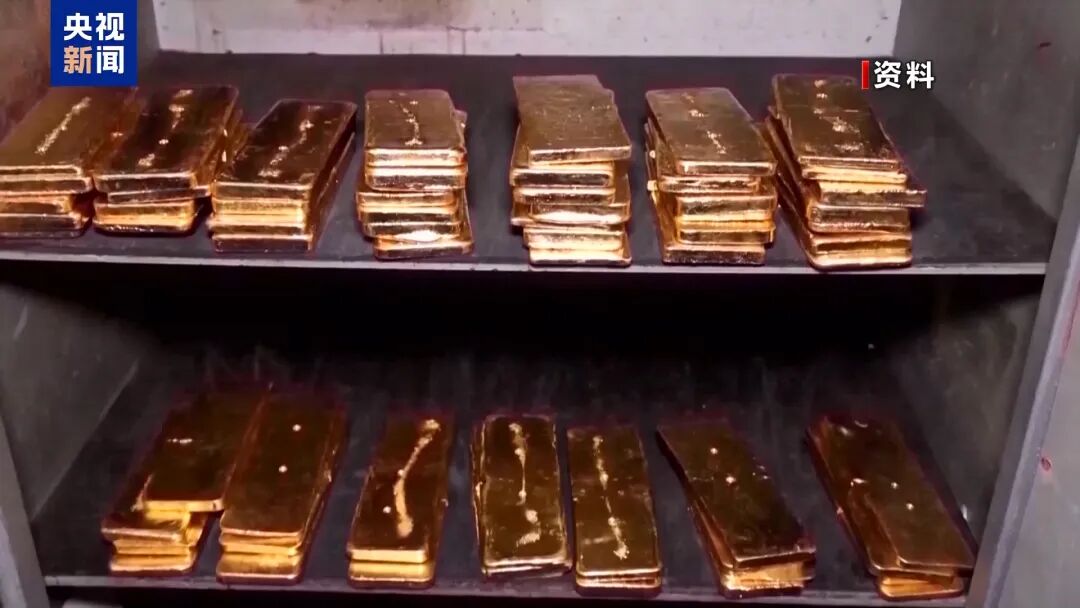
时隔半年,德国议员再提撤回存放在美国的1236吨黄金:期间金价累涨50%,总价值约1980亿美元
Mei Ri Jing Ji Xin Wen· 2026-01-25 02:01
每经编辑|金冥羽 向江林 德国绿党的发言人Katharina Beck也提出了类似的主张。她表示,黄金储备是"重要的稳定与信任锚",绝不能沦为地缘政治博弈的筹码。在特朗普继续担 任美国总统的情况下,若想最大限度排除这种风险,"最安全的方式,恐怕就是从现在起将黄金储存在德国境内"。 但德国央行行长约阿希姆·纳格尔则明确反对将黄金储备撤出美国。他的立场也得到了德国联邦议院执政党阵营的支持。他们声称,在当前形势下,高调 公开地猜测或讨论撤回黄金储备的问题,并无助益。且纽约作为存放地点依然具有合理性,因为"德国、欧洲与美国在金融政策层面高度相互关联"。 德国自战后经济腾飞时期起,便将部分黄金储备存放在海外。2013年至2017年间,德国曾从纽约和巴黎运回部分黄金。目前,约一半的黄金储备存放在国 内,其余仍存于纽约和伦敦。 有财经媒体报道指出,德国从2013年起已逐步将部分存在海外的黄金挪回本土,从公开资料来看,截至2017年年底已挪回674吨黄金,其中300吨从纽约挪 出,374吨自法国首都巴黎挪出。 值得一提的是,去年6月份,也有多位德国议员支持将更多黄金转移到欧洲或德国,敦促政策制定者重新审视依赖美联储作为其黄金 ...