内需主导

Search documents
中加基金固收周报|市场继续以科技为核心震荡
Xin Lang Cai Jing· 2025-12-22 07:48
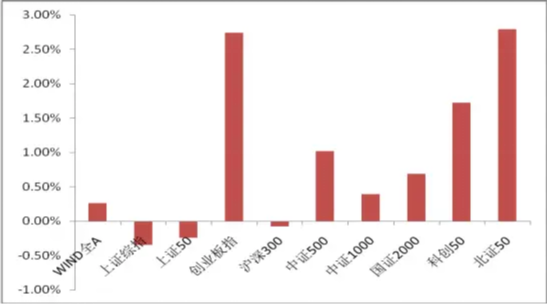
Market Overview - A-shares showed mixed performance last week with a slight increase in trading volume [1][10][25] Macroeconomic Data Analysis - The December Politburo and Central Economic Work Conferences emphasized the importance of domestic demand, maintaining a conservative policy tone [5][20] - Domestic economic conditions are viewed positively, while international challenges remain [5][20] - The focus on expanding domestic demand has increased, with previous aggressive macro policy language being replaced by a more cautious approach [5][20] - The policy direction emphasizes balancing development and security, with a call for rational and structured future policies [5][20] - Fiscal policy remains proactive while monetary policy is moderately accommodative [5][20] Export Performance - November exports increased by 5.9% year-on-year and 8.2% month-on-month, exceeding market expectations [7][22] - Exports to Europe rose by 14.8%, while exports to the U.S. saw a year-on-year decline of 28.6% [7][22] - Exports to Africa and ASEAN grew by 27.6% and 8.2%, respectively, indicating improved trade relations [7][22] - Key export categories showing growth include automobiles and integrated circuits, while home appliances and textiles experienced negative growth [7][22] Stock Market Strategy Outlook - The market experienced a rebound last week, with improved financing data and increased trading volume [10][25] - Short-term expectations indicate a continued focus on technology sectors, driven by ongoing catalysts despite skepticism in the U.S. market regarding AI [11][26] - Mid-term views favor technology growth as a priority, with the current economic fundamentals remaining stable [11][26] - Long-term perspectives highlight the established framework of U.S.-China competition, with potential strategic opportunities for China amid uncertainties in the U.S. economy [12][27] Industry Perspectives - Defensive dividend sectors are recommended for maintaining allocation, with increased insurance capital entering the market [14][28] - Focus on technology sectors remains strong, particularly in AI and related fields, despite ongoing skepticism in the U.S. market [15][29] - Opportunities in domestic demand and high-growth sectors are noted, with a need for strong catalysts to initiate market movements [15][29]

多地掀起冰雪经济热,提振消费还有多大潜力?对话刘兴华
Nan Fang Du Shi Bao· 2025-12-20 02:30
Group 1: Ice and Snow Economy - The 27th Harbin Ice and Snow World opened on December 17, marking the start of the Harbin ice and snow tourism season, with Harbin ranking first in winter travel destinations on the Tongcheng travel platform [2] - The ice and snow tourism trend is expanding beyond Northeast China, driven by cultural tourism, which stimulates consumption and industry, leveraging the "cold resources" of the ice and snow economy [2] - The State Council aims for the total scale of the ice and snow economy to reach 1.2 trillion yuan by 2027 and 1.5 trillion yuan by 2030 [2] Group 2: Domestic Demand and Consumption - The Central Economic Work Conference emphasized "domestic demand as the main driver" for the economy, highlighting the importance of building a strong domestic market and boosting consumption [4][6] - Establishing a domestic demand-driven economic structure means relying more on domestic factors for economic growth and creating a consumption-led economic model [6] - The potential for consumption growth is significant, with a current urbanization rate of 67%, indicating room for investment and consumption growth as urbanization increases [9] Group 3: Investment Expansion - Investment is crucial for both current demand and future supply, with significant investment space remaining in China [12] - The government aims to enhance effective investment by focusing on new infrastructure and high-tech industries while addressing traditional infrastructure gaps [12] - A unified national market is essential for promoting both consumption and investment, facilitating a more integrated economic environment [12] Group 4: Innovation and Technology - The establishment of three major international technology innovation centers in Beijing, Shanghai, and the Guangdong-Hong Kong-Macao Greater Bay Area is aimed at enhancing China's innovation capabilities [14][15] - These regions are recognized as the most dynamic and innovative in China, contributing over 40% of the national GDP [15] - The goal is to create a robust ecosystem for original innovation and to position these areas as strategic hubs for building a strong technological and talent-driven nation [15]

怎样理解促进形成更多由内需主导、 消费拉动、内生增长的经济发展模式
Xin Lang Cai Jing· 2025-12-19 19:25
转自:内蒙古日报 第一,健全投融资体制机制,着力扩大有效投资。深化投资审批制度改革,进一步明确中央和地方投资 方向和重点。优化政府投资结构,高质量推进国家重大战略实施和重点领域安全能力项目建设。发挥政 府资金引导带动作用,撬动社会资本参与新型基础设施、新型城镇化等重大工程和补短板领域建设。完 善民营企业参与重大项目长效机制,激发民间投资活力、提高民间投资比重,增强市场主导的有效投资 增长动力。着力促进教育、医疗、养老、托育等服务领域投资增长。破除市场准入壁垒,维护公平竞争 秩序,稳定企业预期,增强投资信心。 第二,坚持惠民生和促消费紧密结合,更好发挥消费拉动作用。加快完善"能消费"、"敢消费"、"愿消 费"的政策环境,完善扩大消费长效机制。促进高质量充分就业,完善收入分配制度,实施城乡居民增 收计划,增强居民消费能力。稳步推进基本公共服务均等化,完善教育、托育、养老、住房、医疗保障 体系,消除消费后顾之忧。深入实施提振消费专项行动,扩大优质消费品和服务供给,培育服务消费新 增长点,推动商品消费扩容升级,拓展入境消费。完善促进消费制度机制,强化消费者权益保护,创造 良好消费环境。 第三,加快提升创新能力,更大激 ...
强化内需主导,中央经济工作会议给深圳带来哪些启示?
Nan Fang Du Shi Bao· 2025-12-19 12:35
清除壁垒促"能消费"向"愿消费"转变 在面临全球化逆流与各类要素成本上升的背景下,深圳如何通过内需驱动寻找新的增长极?中国人民大 学深圳研究院研究员陈嫣嫣认为,于消费而言,这不仅是需求侧的"买",其本质更是供给侧的"造",是 制造业如何实现供需精准适配的结构性命题。 "现在消费需求非常碎片化、个性化,传统的规模化生产很难满足。"她建议深圳利用数字技术优势,打 造从"消费端需求"到"生产端仿真",再到"物理端执行"的数据闭环。"通过精准预测和匹配需求,不仅 能解决产能过剩问题,还能提升深圳先进制造业基地的核心竞争力,打通消费和制造的任督二脉。" 陈嫣嫣举例表示,针对深圳"一老一小"照护资源紧缺的民生痛点,可加速推动具身智能机器人的场景化 落地,将产业链优势转化为服务优势。"当前已有企业加速布局陪伴与护理机器人赛道,推动技术从实 验室走向家庭与养老机构的真实场景。"陈嫣嫣强调,产业发展需实现从"物理边界"向"服务边界"的跨 越,将高端的具身智能设备转化为标准化的服务产品,"通过租赁代买、服务购买等商业模式创新,把 昂贵的机器人变成普通家庭'租得起、用得上'的高品质服务,从而从消费端精准破解养老育幼难题。" 郑天骋 ...

2026年中国经济为何强调"内需主导"?三大转变透露什么信号?
Sou Hu Cai Jing· 2025-12-19 09:02
Group 1 - The core point of the article highlights the apparent contradiction between China's record foreign trade surplus and the emphasis on domestic demand as a priority for economic transformation by 2026 [1][3][6] Group 2 - In the first eleven months, China's total import and export volume reached 41.21 trillion yuan, with a notable 18.9% decline in exports to the U.S., amounting to a gap of 89.76 billion USD, which was offset by increased exports to ASEAN and Europe [3] - The contribution rate of final consumption expenditure to economic growth reached 53.5%, an increase of 9 percentage points from the previous year, driven by targeted central policies [4] - The new housing policy aimed at converting existing housing into affordable housing is expected to stimulate both the real estate market and consumer spending among low- to middle-income groups [5] Group 3 - The three strategic shifts identified are from reliance on foreign trade to a focus on domestic demand, from goods consumption to service consumption, and from incremental development to stock operation, all pointing towards high-quality development [6]

坚持内需主导:这些中外消费企业突破内卷,加大在华投资
Di Yi Cai Jing· 2025-12-19 08:04
日前,第一财经记者多方采访中外企业,各大企业在明年围绕坚持内需主导提出了最新发展计划。 蒙牛集团党委副书记、高级执行总裁李鹏程对第一财经记者表示,中央经济工作会议既实事求是、正视 当前困难,又对未来发展亮明了信心,提出了针对性的规划和举措,释放了积极的信号,也让我们对未 来的发展更有底气和信心。"中央经济工作会议提出,明年要持续扩大内需、优化供给,做优增量、盘 活存量,因地制宜发展新质生产力。作为乳业'国家队',蒙牛积极应对周期挑战,反求诸己、向内而 生,全面打造乳业新质生产力,打造新产品、提供新场景、拓展新赛道,突破行业'内卷式'竞争,不断 满足消费者的营养健康需求。" 李鹏程认为,我国乳业市场广、韧性强、潜能大,长期向好的支撑条件和基本趋势没有变。面向未来, 将推进"一体两翼"战略,在夯实核心产业的基础上,通过科技创新引领新质生产力发展,以全产业链的 高质量发展,助力中国式现代化建设。 中央经济工作会议将"坚持内需主导,建设强大国内市场"作为重点任务,中外企业积极响应并提出了相 关发展计划。 近期,中央经济工作会议在部署新一年经济工作时,将"坚持内需主导,建设强大国内市场"作为重点任 务。学习贯彻中央经济 ...

2025年12月政治局会议学习体会:内需主导,提质增效
Haitong Securities International· 2025-12-19 07:36
Group 1: Economic Policy Focus - The meeting emphasized "domestic demand as the main driver" for economic growth, aligning with the "14th Five-Year Plan" to promote an economy led by domestic demand and consumption[6] - The macro policy remains "more proactive and effective," with a focus on enhancing policy effectiveness and maintaining a "moderately loose" monetary policy[8] - The narrow fiscal deficit rate for 2026 is expected to be around 4%, with new local special bonds projected to be issued at approximately 4.6 trillion yuan[8] Group 2: Social Welfare and Consumer Support - The meeting highlighted the importance of "people's livelihood," aiming to resolve issues such as overdue payments to enterprises and wages for migrant workers[9] - Policies to stimulate consumption, such as birth subsidies and trade-in programs, are expected to continue to support social expectations[11] - The government aims to create three trillion-level consumption sectors and ten hundred-billion-level consumption hotspots by 2027[11] Group 3: Risk Management and Structural Adjustments - Despite a temporary easing of external risks, the focus on social welfare remains high, indicating a commitment to stability and consumer confidence[9] - The total issuance of debt related to debt resolution has reached approximately 3.7 trillion yuan as of December 8, 2025, to ensure steady progress in debt resolution and overdue payment clearance[12] - The policy framework aims to unify the effectiveness and strength of measures, focusing on "quality improvement and efficiency enhancement" in economic governance[8]
抓机遇促发展确保明年“开门红”
Xin Lang Cai Jing· 2025-12-19 07:25
Group 1 - The meeting emphasized the need to implement the spirit of the 20th Central Committee's Fourth Plenary Session and the Central Economic Work Conference, aiming for a strong finish to the year and the 14th Five-Year Plan [1] - The focus for 2026 includes enhancing domestic demand, promoting consumption, expanding effective investment, and stabilizing foreign trade and investment [2] - There is a commitment to fostering new growth drivers through innovation, upgrading industries, and implementing high-level reforms to boost development momentum [2] Group 2 - The meeting highlighted the importance of improving people's livelihoods and urban renewal projects, ensuring that initiatives are tangible and beneficial to the public [2] - The city leadership is tasked with carefully planning the 15th Five-Year Plan and executing year-end tasks effectively [2] - Various district leaders presented their strategies for the year-end push and shared their thoughts on the 2026 work plan [1]
宣昌能出席二十国集团财政和央行副手会
Jin Rong Shi Bao· 2025-12-19 01:27
Core Viewpoint - The G20 meeting in Washington D.C. focused on enhancing the role of financial channels and macro policy coordination to promote global economic growth, with China emphasizing its support for multilateralism and the need for domestic policy adjustments in deficit countries [1][2]. Group 1: G20 Meeting Highlights - The G20 meeting took place on December 15-16, with discussions on the 2026 financial channel work arrangements and key topics [1]. - Chinese Vice Governor of the People's Bank of China, Xuan Changneng, represented China and highlighted the importance of multilateralism and macro policy coordination [1]. Group 2: China's Position and Proposals - China supports modernizing regulations to improve the business environment while maintaining essential financial regulatory standards like Basel III [1]. - The country is actively implementing the G20 Cross-Border Payment Roadmap to enhance cross-border payment efficiency and reduce transaction costs, adhering to international anti-money laundering standards [1]. - China plans to deepen reforms and expand high-level opening-up, focusing on domestic demand and building a strong domestic market to unleash service consumption potential [1]. Group 3: Monetary Policy and Economic Outlook - The People's Bank of China will continue to implement a moderately accommodative monetary policy to create a favorable monetary and financial environment for stable economic growth and high-quality development [1].
21社论丨增量政策协同发力,实现“十五五”良好开局
21世纪经济报道· 2025-12-19 00:37
Core Viewpoint - The Chinese government plans to implement incremental policies in 2026 to boost economic growth, focusing on the integration of existing and new policies to achieve qualitative and quantitative improvements in the economy [1][2]. Group 1: Economic Growth Strategies - The primary task for 2026 is to maintain domestic demand as the main driver of growth, with consumption being the top priority. Current policies like the trade-in program for consumer goods have led to rapid sales growth, and the penetration rate of the new energy vehicle market is nearing 60% [1]. - The government aims to expand the scope of consumption policies from durable goods to more potential service sectors such as culture, tourism, and health [2]. Group 2: Investment and Infrastructure - Significant increases in investment are expected in 2026, particularly in new urbanization, technological innovation, and major livelihood projects. The central budget investment scale is projected to rise from 7.3 trillion yuan in 2025 to provide strong capital support for major projects [2][3]. - The introduction of new policy-based financial tools, with an expected increase of several hundred billion yuan in 2026, will continue to support key projects [3]. Group 3: Industrial Upgrading and New Growth Drivers - The government plans to enhance traditional industries through technological upgrades and green transformations, potentially unlocking an additional market space of approximately 10 trillion yuan [3][4]. - Development of emerging industries such as new energy, new materials, and aerospace is expected to create substantial market opportunities, with projections indicating the potential for tens of thousands of billions in new market scale [4]. Group 4: Policy Coordination and Structural Reforms - The implementation of macroeconomic policies will emphasize systemic and coordinated approaches, focusing on optimizing fiscal spending and maintaining a reasonable level of debt while ensuring effective use of government bond funds [4]. - Structural reforms will continue to deepen, particularly in establishing a unified national market, which includes standardizing market access and competition regulations [4].