网联化

Search documents
我国新能源汽车市场延续快速增长态势
Zhong Guo Chan Ye Jing Ji Xin Xi Wang· 2025-08-18 03:23
Core Viewpoint - The Chinese automotive market is experiencing a steady growth trend, particularly in the new energy vehicle (NEV) sector, with significant year-on-year increases in production and sales, despite a seasonal decline in July [1][2][3]. Production and Sales Data - In July, China's automotive production and sales reached 2.591 million and 2.593 million units, respectively, representing a month-on-month decline of 7.3% and 10.7%, but a year-on-year increase of 13.3% and 14.7% [1][2]. - From January to July, production and sales totaled 18.235 million and 18.269 million units, with year-on-year growth of 12.7% and 12%, showing an acceleration compared to the first half of the year [1][2]. New Energy Vehicle Market - The NEV market continues to show robust growth, with July production and sales reaching 1.243 million and 1.262 million units, marking a year-on-year increase of 26.3% and 27.4% [3]. - NEVs accounted for 45% of total new vehicle sales from January to July, indicating a significant shift in the automotive industry towards electrification [3]. Policy and Market Environment - The government is actively supporting the automotive market through policies such as the "trade-in" program, which is contributing to stable market conditions and growth [2]. - The National Development and Reform Commission announced the allocation of 690 billion yuan for consumer support programs, with plans for further funding to stimulate the market [2]. Innovation and Competition - The automotive industry is undergoing a transformation with a focus on innovation, particularly in smart and connected vehicles, as companies invest in advanced technologies like autonomous driving and intelligent cockpit features [6][7]. - A wave of new vehicle launches is expected to invigorate the market, with various models catering to different consumer needs [6][7]. Charging Infrastructure - The government is enhancing charging infrastructure to alleviate consumer concerns about range anxiety, with plans to establish over 100,000 high-power charging stations by the end of 2027 [4][5].


和而泰上半年营收54.46亿元,同比增长19.21%
Ju Chao Zi Xun· 2025-08-15 03:12
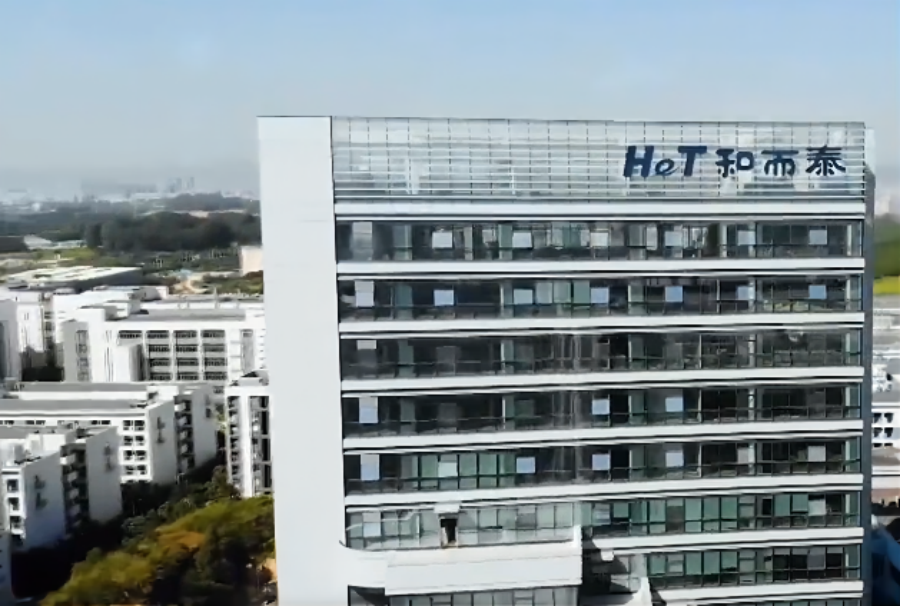
Financial Performance - In the first half of 2025, the company's revenue reached 5,446,058,322.9 yuan, representing a year-on-year growth of 19.21% [2][3] - The net profit attributable to shareholders was 353,689,763.03 yuan, an increase of 78.65% compared to the same period last year [2][3] - The net profit after deducting non-recurring gains and losses was 346,661,245.93 yuan, showing a growth of 97.24% year-on-year [2][3] - The net cash flow from operating activities was 147,249,898.89 yuan, a significant increase of 224.15% [3] - Basic and diluted earnings per share were both 0.3823 yuan, reflecting a growth of 79.91% [3] - The weighted average return on equity was 7.28%, up from 4.38% in the previous year [3] - As of the end of the reporting period, total assets amounted to 12,286,864,117.33 yuan, a growth of 2.64% year-on-year [2][3] - The net assets attributable to shareholders were 5,017,901,958.33 yuan, increasing by 7.17% compared to the end of the previous year [2][3] Business Overview - The company specializes in intelligent controller solutions, with main business areas including home appliances, power tools, industrial automation, automotive electronics, smart products, and AI service platforms [2] - The automotive electronics segment is a key strategic area for the company, which has maintained rapid growth in recent years [4] - The company has increased R&D investment in automotive electronics, focusing on product innovation and foundational technology research [4] - The automotive electronics business has achieved multiple international certifications, including ASPICE CL3, CMMI CL3, ISO26262 Asil-D, ISO21434, and IATF16949 [4] - The company has established a specialized team for business, R&D, and management operations, forming a core talent support system [4] Market Trends and Future Strategy - The acceleration of electrification, intelligence, connectivity, and sharing in the automotive industry is driving market demand and product line development [5] - The company is innovating and defining its offerings based on market needs, focusing on smart cockpit and thermal management areas [5] - Current mass-produced products include core components such as touch controls, electric controls, and energy management systems [5] - The company aims to seize opportunities in industry technology upgrades while expanding into new markets like in-car multimedia and vehicle networking [5] - The company is committed to participating in cutting-edge technology incubation and research to strengthen its innovative leadership in the automotive electronics value chain [5]


中机认检(301508.SZ):已具备部分船用发动机、竖向掘进机等产品的检测能力
Ge Long Hui A P P· 2025-08-14 09:01
Core Viewpoint - The company, Zhongji Renkeng (301508.SZ), is a national third-party certification and inspection service provider for vehicles and machinery, focusing on various inspection and certification services [1] Group 1: Business Overview - The main business includes inspection and testing services for complete vehicles, military equipment, engineering machinery, special equipment, civil aviation ground equipment, and components [1] - The company is developing a "3+1+3" business strategy layout in strategic emerging industries, emphasizing electrification, connectivity, and intelligence in the equipment manufacturing sector [1] Group 2: Technical Development - The company has developed inspection capabilities for certain products such as marine engines and vertical excavation machines, which are natural extensions of traditional machinery equipment testing [1] - Future plans include increasing R&D investment to enhance market competitiveness and industry influence through technological innovation and capability improvement [1]
观车 · 论势 || 汽车产量“第一省”选择向内发力
Zhong Guo Qi Che Bao Wang· 2025-08-06 01:30
Core Viewpoint - The establishment of the Anhui Province New Energy and Intelligent Connected Vehicle Industry Development Association marks a significant step towards high-quality development in the automotive industry, particularly in the context of the province's recent achievements in automotive production and sales [3][4]. Group 1: Industry Growth and Achievements - In the first half of 2023, Anhui Province's automotive and new energy vehicle production ranked first in the country, with the automotive industry chain's revenue surpassing 1 trillion yuan for the first time [3]. - The revenue is projected to exceed 1.5 trillion yuan in 2024, maintaining a growth rate of over 20% for two consecutive years [3]. - The number of new energy vehicles in Anhui has surged from 27,000 to 1.076 million over the past four years, with a penetration rate reaching 41% [3]. Group 2: Association's Role and Objectives - The association was founded by seven local companies, including Chery Automobile and NIO, and aims to engage in research, production, development, application, and service activities related to new energy and intelligent connected vehicles [3][4]. - The association is expected to act as a bridge between the government, industry, and enterprises, promoting collaboration and maintaining the industry ecosystem [3][4]. Group 3: Challenges and Industry Dynamics - Despite the growth, the automotive industry faces challenges such as overcapacity, with the national automotive manufacturing capacity utilization rate dropping to 71.3% in the second quarter of this year [4][5]. - The association's establishment is seen as a strategic move to enhance resource allocation efficiency and address the issue of fragmented competition among local automotive companies [5][6]. - The automotive industry's revenue now accounts for over 15% of Anhui's GDP, but the research and development intensity is only 60% of that in Guangdong, indicating a need for improvement in innovation and self-sufficiency in key components [6].

汽车行业周报(25年第27周):行业进入中报业绩期,建议关注2025世界机器人大会-20250805
Guoxin Securities· 2025-08-05 07:00
Investment Rating - The automotive industry is rated as "Outperform the Market" [1][5][4] Core Viewpoints - The industry is entering the mid-year performance period, with a focus on the 2025 World Robot Conference. The July car market is expected to grow primarily due to the "trade-in and scrapping" policies, with an estimated retail market of 1.85 million narrow passenger cars, a year-on-year increase of 7.6% [1][3] - The long-term outlook emphasizes the rise of domestic brands and opportunities in incremental components driven by electric and intelligent trends. In the short term, the strong new product cycle of Huawei and the first year of the Xiaomi automotive industry chain are highlighted [3][12] - The report suggests that under the geopolitical backdrop, the automotive sector as a domestic consumption product is likely to see increased stimulus policies, favoring passenger cars and domestically replaced components [3][12] Monthly Production and Sales Data - In July, the narrow passenger car retail market is projected to be around 1.85 million units, with a year-on-year growth of 7.6% and a month-on-month decline of 11.2%. New energy vehicle retail is expected to be approximately 1.01 million units, with a penetration rate of 54.6% [1][22] - Weekly data indicates that from July 1 to 27, the national passenger car retail reached 1.445 million units, a year-on-year increase of 9% but a month-on-month decline of 19% [1][2] Weekly Market Performance - For the week of July 28 to August 1, the CS automotive index fell by 2.26%, with the CS passenger car index down by 2.73%. The CS electric vehicle sector saw a decline of 5.01% [2][3] - The CS automotive sector outperformed the CSI 300 index by 0.08 percentage points but underperformed the Shanghai Composite Index by 0.88 percentage points, with a year-to-date increase of 10.97% [2][3] Key Company Earnings Forecast and Investment Ratings - Key companies such as Leap Motor, Geely, and JAC are rated as "Outperform the Market" with varying earnings per share (EPS) forecasts for 2025 and 2026 [4][5] - Leap Motor is expected to have an EPS of -0.05 in 2025, while Geely is projected to have an EPS of 1.36 [4][5] Investment Recommendations - The report recommends focusing on the rise of domestic brands and opportunities in incremental components, particularly in electric and intelligent sectors. Specific recommendations include: - Vehicle manufacturers: Leap Motor, JAC, Geely - Intelligent technology: Kobot, Huayang Group, Junsheng Electronics - Robotics: Top Group, Sanhua Intelligent Control, Shuanghuan Transmission - Domestic replacements: Xingyu Co., Fuyao Glass, Jifeng Co., New Spring Co., Horizon Robotics [3][12][24]




2025汽车新质生产力发展论坛盛大召开
Zhong Guo Qi Che Bao Wang· 2025-08-01 11:09
Core Viewpoint - The 2025 Automotive New Quality Productivity Development Forum highlighted the transformation of the automotive industry through new quality productivity, emphasizing the importance of electric, connected, and intelligent vehicles in China's strategic development [2][4]. Group 1: Industry Transformation - The global trends of electrification, connectivity, and intelligence in the automotive sector are seen as inevitable, with China leveraging opportunities through initiatives like "Made in China 2025" to advance its new energy vehicle (NEV) industry [4]. - Despite significant achievements in the NEV sector, China faces increasing international competition and internal disarray, necessitating breakthroughs in core technologies such as solid-state batteries and autonomous systems [5][7]. Group 2: ESG and Sustainable Development - ESG (Environmental, Social, Governance) principles are becoming critical for the sustainable development of the automotive industry, with high ESG ratings leading to better market performance and capital access [7]. - The automotive sector must address challenges related to carbon emissions data, supply chain management, and competition to enhance sustainability and innovation [7][9]. Group 3: Strategic Foundations - China's rise in the NEV sector is attributed to strategic advantages, including institutional support, long-term planning, and advanced infrastructure [9]. - The industry has shifted from a "follower" to a "leader" position, but must navigate challenges such as trade barriers and the need for quality improvements in technology [9][26]. Group 4: Innovation and Collaboration - Companies are focusing on innovation and cross-industry collaboration to build a high-end intelligent electric vehicle ecosystem, with safety and user experience as top priorities [12][14]. - The integration of AI and next-generation power architectures is essential for future advancements in the automotive sector [13][20]. Group 5: Global Market Positioning - Chinese automotive brands are encouraged to enhance their global competitiveness through differentiated branding and technology innovation, aiming for significant market penetration in international markets [19][25]. - The automotive industry is urged to adopt an open and collaborative approach to overcome technological barriers and achieve high-quality development [26].

汽车创新链:链接上下游,链动中外“朋友圈”
Zhong Guo Qi Che Bao Wang· 2025-07-22 01:37
Group 1: Event Overview - The third China International Supply Chain Promotion Expo (Chain Expo) opened on July 16, showcasing over 30 enterprises and institutions focusing on key technologies and products in the automotive supply chain, particularly in electrification, intelligence, and connectivity [2] Group 2: Intelligent Automotive Innovations - AI themes were prevalent throughout the event, with companies like Hezhima showcasing their intelligent chip products, indicating a deeper understanding of automotive intelligence among supply chain players compared to previous years [3] - Xiaopeng Motors emphasized its goal to become a global AI automotive company, featuring flying cars and land carriers at its booth, attracting attention from international exhibitors [3] - Tesla highlighted its ecosystem approach, presenting robots, vehicles, and super factories, reinforcing its identity as an AI and robotics company [3][4] Group 3: Collaboration in the Automotive Industry - The automotive supply chain is increasingly focused on collaboration, with Qualcomm's global vice president noting that open cooperation in the global supply chain supports business development [4] - Companies like Hunan Shibit Robot showcased advanced technologies such as the PaintPro system for real-time 3D vehicle condition monitoring, demonstrating innovation in production processes [4] Group 4: Electrification Focus - The core components of electrification—batteries, electric control, and motors—were prominently featured, with companies like DFD New Energy showcasing their third-generation large cylindrical batteries [5] - Bosch presented localized innovations in energy power, motion control, and driving assistance systems tailored for the Chinese market [5][6] Group 5: Upstream Supply Chain Development - The event saw increased participation from upstream players in the automotive supply chain, with companies like Bettery and Wacker Chemie unveiling new technologies and products [7] - Bettery introduced a pioneering negative electrode material solution addressing industry challenges, while Wacker showcased several new materials for automotive applications [7] Group 6: Diverse Fuel and Connectivity Innovations - Geely Motors highlighted its exploration of multi-fuel technologies, including methanol vehicles and hydrogen power systems, attracting significant interest [8] - The Liyang Intelligent Connected Vehicle Pilot Zone demonstrated advancements in smart connectivity, including a testing ground for autonomous vehicles [8] - The event illustrated a vibrant automotive industry in China, with a wide range of participants and innovations across the entire supply chain [8]

重卡产业创新发展已非单打独斗 北奔重汽带了个好头
Zhong Guo Qi Che Bao Wang· 2025-07-21 07:31
Group 1 - The heavy truck industry is undergoing a deep reconstruction driven by the "dual carbon" goals and global energy transition, with significant technological innovations being accelerated [5][7] - In 2024, China's new energy heavy truck sales are projected to reach approximately 82,000 units, with a market penetration rate of 13.6%, which is expected to rise to 19.7% in the first quarter of 2025, and surpass 20% in April [5] - The industry consensus is that the diversification of heavy truck power systems, including pure electric, hydrogen fuel cells, plug-in hybrid, range-extended hybrid, and methanol technologies, is essential for future development [5] Group 2 - The conference organized by Beiben Heavy Truck Group aims to promote innovation and collaboration across the entire industry chain, emphasizing the integration of production, education, and research [7] - Beiben Heavy Truck is focusing on four major directions: "new energy, intelligence, connectivity, and differentiation," to build a comprehensive product technology system throughout the product lifecycle [8] - The company is accelerating the iteration of its pure electric platform and advancing the commercialization of autonomous driving technology, while deepening strategic cooperation with research institutions [8][13] Group 3 - Beiben Heavy Truck has integrated the entire ecosystem of the new energy heavy truck industry, achieving production qualifications across various technologies including pure electric, hydrogen, methanol, and hybrid vehicles [13] - The company has developed intelligent heavy trucks, with its heavy-duty tractors and mining wide-body vehicles reaching L4 level autonomous driving, and aims to achieve L5 level by 2025 [13] - Beiben is committed to becoming a provider of green logistics solutions in the heavy truck industry, focusing on high-end, electric, intelligent, and connected development [14][16]

聚焦前沿技术,2025重卡创新发展与产业融合大会圆满收官
第一商用车网· 2025-07-21 06:57
Core Viewpoint - The conference aimed to accelerate technological innovation and industry collaboration in the heavy truck sector, focusing on the development trends of electrification, intelligence, and connectivity [1][3]. Group 1: Conference Overview - The "2025 Heavy Truck Innovation Development International Academic and Industry Integration Conference" was held in Baotou, Inner Mongolia, emphasizing the theme "With Intelligence as Wings, Steady and Far-reaching" [1]. - The event gathered experts from key research institutions, top universities, and leading industry companies to share research findings and discuss core technology trends [1][5]. - The conference showcased North Benz's new technologies and products, highlighting its competitive edge in the heavy truck market [5]. Group 2: Industry Trends and Directions - The heavy truck industry in China is undergoing a transformation, with rapid advancements in electric, hydrogen, hybrid, intelligent networking, and assisted driving technologies [8]. - North Benz has integrated the entire ecosystem of the new energy heavy truck industry, achieving production qualifications across various new energy vehicle types [8][10]. - The focus is on four major directions: new energy, intelligence, connectivity, and differentiation, aiming for a comprehensive evolution towards "green, safe, intelligent, and efficient" products [3][10]. Group 3: Expert Insights and Discussions - Industry experts discussed future development trends, including the application potential of intelligent heavy trucks in automated ports, smart mines, and unmanned transport [13][15]. - Recommendations for heavy truck manufacturers included focusing on electrification, intelligence, and expanding into international markets [15]. - The conference facilitated in-depth dialogues on technology integration, industry collaboration, talent gathering, and international cooperation [5][17].
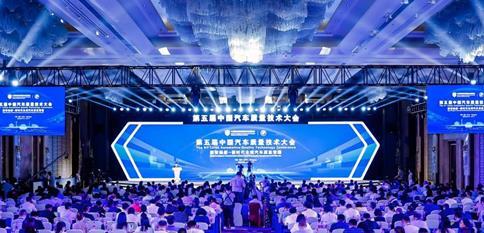
数智焕新驱动汽车质量管理 第五届中国汽车质量技术大会举办
Zhong Guo Jing Ji Wang· 2025-07-18 08:45
Core Insights - The fifth China Automotive Quality Technology Conference was held in Shenyang, focusing on the theme of "Digital Intelligence Renewal - New Era Global Automotive Quality Management" [2] - The conference gathered automotive quality technology experts and executives from leading companies to discuss new challenges and opportunities in automotive quality and safety management in the context of the digital age [2] Group 1: Industry Trends and Challenges - The automotive industry is accelerating its transition towards electrification, intelligence, and connectivity, necessitating a commitment to independent innovation and increased R&D investment to overcome key technological challenges [4] - In 2024, China has implemented 320 automotive recalls involving 16.5174 million vehicles, with 139 recalls related to new energy vehicles affecting 6.0204 million vehicles, primarily due to issues with driver assistance systems, steering assist failure, and battery thermal runaway [6] - The complexity of automotive products and the rapid iteration of intelligent connected technologies are expanding the scope of quality and safety management, requiring higher standards for functional safety, data security, and reliability [8] Group 2: Government and Regulatory Actions - The National Market Supervision Administration is revising the "Defective Automotive Product Recall Management Regulations" to optimize recall procedures and enhance mechanisms for accident reporting and defect analysis [6] - The administration emphasizes the importance of inspection and testing as a critical link in ensuring quality safety and enhancing industry competitiveness, particularly in the context of new risks associated with data and network security [8] Group 3: Regional Development and Industry Support - Liaoning Province has identified the automotive and parts industry cluster as one of its 12 advantageous industry clusters, achieving a revenue scale of 368.68 billion yuan and producing 829,000 vehicles, including 133,000 new energy vehicles [10] - The province is implementing an "Artificial Intelligence +" initiative to inject new energy into automotive quality management and enhance the industry's technological capabilities [10] Group 4: Corporate Commitment to Quality - BMW Brilliance's CEO emphasized the uncompromising commitment to quality, ensuring that every component and system meets the highest standards [12] - The conference featured significant technical presentations from industry experts, focusing on digital transformation, AI, and intelligent connected vehicles, showcasing innovative insights and practical industry applications [13] Group 5: Conference Participation and Support - The conference was attended by nearly 600 representatives from various sectors, including major automotive manufacturers, technology service institutions, suppliers, and academic institutions, highlighting the collaborative effort across the industry [15]