美国财政赤字

Search documents
美债暂稳难掩赤字隐忧 市场屏息静待非农定调降息路径
智通财经网· 2025-06-05 12:22
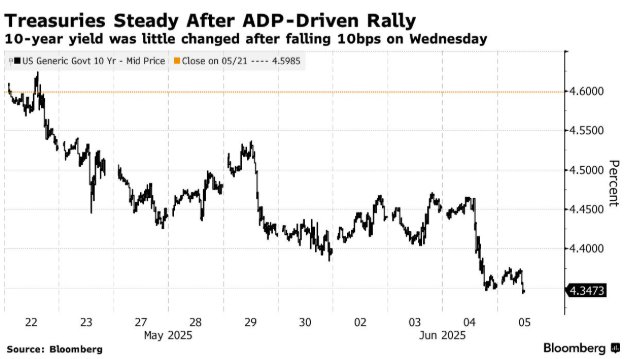
智通财经APP注意到,美债涨势趋稳,投资者在周五非农就业报告公布前保持谨慎,并小幅下调对美联 储降息的押注。 周四两年期美债收益率一度上涨2个基点至3.89%,缓解了前一日因美国经济数据逊于预期引发的暴 跌。交易员仍充分定价美联储今年将降息两次(每次25个基点),但减少了对第三次降息的押注。 投资者正等待美国非农就业数据以研判货币政策前景。 本周早些时候的数据显示,美国私营部门就业增速已放缓至两年来最低水平,但部分分析师认为这不足 以支撑美债持续上涨。 杰富瑞国际首席欧洲策略师莫希特·库马尔表示,"美国的财政问题将阻碍任何实质性反弹。" 尽管经济数据走弱,他仍预计10年期收益率将在4.25%至4.75%区间波动,"若10年期收益率向4.25%回 落,我们将借此机会重建空头头寸。" 在日本30年期国债拍卖结果好于许多投资者担忧后,美国长期国债小幅上涨。不过,由于投资者仍担忧 美国不断扩大的财政赤字,美债涨幅落后于欧洲债券。 周四美国30年期国债收益率下降2个基点至4.86%,但自5月初以来仍累计上涨逾20个基点。此前穆迪评 级剥夺了美国最后一个AAA级信用评级,且美国众议院通过了一项延续特朗普减税政策的数万亿美 ...

美国“股债汇”定价模式失灵?
Xin Hua Cai Jing· 2025-06-04 13:38
新华财经上海6月4日电(葛佳明)近期,大类资产市场走势出现了一系列与传统定价机制相悖的状况。 黄金与美债传统收益率的负相关关系失效,美债收益率持续走强,美元则走弱,而美股却在美债收益率 不断上升的状况下持续上行。 美国"股债汇"定价模式转变背后,可以窥见美国的短期通胀问题与长期债务风险,投资者对于美国信用 的担忧,进而令美元承压,而对美股来说,投资者可能更关注市场中的流动性状况,定价的"锚点"正脱 离传统利率水平。 美元、美债走势大幅背离 从历史上看,美债收益率与美元走势通常呈现出同向波动的情况。当美国经济运行良好时,企业盈利攀 升,推动股市等风险资产吸引力上升,使得美债需求下降,美债收益率攀升。在上述情况下,美元也会 同步受益于美国经济的强劲状况,国际资本进一步涌入,增加美元的需求。 但自今年4月以来,因美国关税政策反复,美国10年期国债收益率已从4.16%升至4.42%,而美元指数则 下跌超5%。美元汇率与美债收益率之间的关联性降至近三年最低水平。 一方面,2025财年(2024年10月到2025年4月)以来,美国财政赤字规模整体超预期,而关税以及美国 总统特朗普的减税法案则会对未来的赤字路径产生影响,预 ...
国内油价微涨,加满一箱油将多花2.5元
Hua Xia Shi Bao· 2025-06-04 02:11
汽油涨价65元/吨 国家发改委在公告中指出,根据近期国际市场油价变化情况,按照现行成品油价格形成机制,自2025年 6月3日24时起,国内汽、柴油价格每吨分别上涨65元和60元。 据金联创测算,截至6月3日第十个工作日,参考原油品种均价为63.16美元/桶,变化率为2.11%。具体 来看,89号汽油上调0.05元/升,92号汽油0.05元/升,95号汽油0.06元/升,0号柴油0.05元/升。 本轮是2025年第十一次调价,也迎来了2025年的第四次上调。本次调价过后,国内汽、柴油价格每吨较 去年底分别下跌655元/吨和630元/吨,零售油价较年初价格跌幅较大,油价仍处于较低水平,下一次调 华夏时报(www.chinatimes.net.cn)记者 何一华 李未来 北京报道 6月3日下午,国家发改委发布了新一轮油价调整公告,自2025年6月3日24时起,国内汽、柴油价格每吨 分别上涨65元和60元。 金联创成品油分析师马建彩告诉《华夏时报》记者,本轮计价周期内国际市场消息面利好利空因素博 弈,原油价格走势窄幅回落后再度上涨。受国际油价区间波动影响,本轮变化率正向开端后持续小幅收 窄运行,零售价调价最终兑现小幅 ...

美债30年期收益率破5%创17年新高 华尔街机构集体抛售长债
Sou Hu Cai Jing· 2025-06-03 02:00
Group 1 - The U.S. bond market is experiencing an unprecedented crisis of confidence, with the 30-year Treasury yield surpassing 5%, nearing the highest level since the 2007 financial crisis [1] - Concerns about the long-term fiscal situation of the U.S. are deepening, as the total federal debt has exceeded $36 trillion, with a debt-to-GDP ratio over 124%, significantly above international warning levels [1] - Interest payments on the debt are projected to exceed $1 trillion in the fiscal year 2024, becoming the third-largest government expenditure, surpassing defense spending [1] Group 2 - Major Wall Street investment firms are shifting to risk-averse strategies, systematically avoiding 30-year U.S. Treasury bonds and reallocating funds to mid-term bonds (5 to 10 years) [3] - These mid-term bonds offer relatively attractive returns while effectively reducing interest rate risk exposure, as firms like Pacific Investment Management Company adopt similar defensive strategies [3] - This collective adjustment in investment portfolios has yielded positive risk control outcomes this year, with investors seeking higher risk compensation for long-term lending to the U.S. government in the current fiscal environment [3] Group 3 - The U.S. Treasury yield curve is exhibiting a rare steepening trend, with the 30-year yield rising significantly while short-term yields (2-year, 5-year) are declining [4] - The difference between the 30-year and 5-year yields has surpassed 100 basis points for the first time since 2021, indicating substantial selling pressure on long-term bonds [4] - Recent bond auctions from major economies, including the U.S. and Japan, have faced weak demand, raising concerns about the future demand for long-term government bonds [4]

21评论丨美债风险仍存,解药在美联储吗?
Sou Hu Cai Jing· 2025-05-30 17:10
Group 1 - The meeting between President Trump and Federal Reserve Chairman Jerome Powell marks Trump's first face-to-face discussion with Powell since returning to the White House, where Trump urged for interest rate cuts [1] - The U.S. Treasury market showed slight improvement following Trump's comments, with 10-year and 30-year Treasury yields decreasing by 15 and 16 basis points respectively from their recent highs [1] - Concerns about U.S. debt remain, with the projected fiscal deficit for 2024 reaching $1,832.38 billion, the highest in three years, and nearly double the 2019 deficit [2] Group 2 - The "Beautiful America Act," a significant fiscal spending bill, has raised market concerns regarding U.S. fiscal issues, particularly after the departure of Elon Musk from the government efficiency department [3] - The Act is expected to increase the fiscal deficit by $3.06 trillion over the next decade while also raising the debt ceiling by $4 trillion [3] - The auction of long-term U.S. Treasuries remains weak, with the recent 20-year Treasury auction showing lower demand compared to historical averages [4] Group 3 - Treasury Secretary Yellen's recent measures to relax bank regulations may conflict with current investor preferences for long-term Treasuries, as banks are encouraged to increase their holdings [5] - The potential reduction of the Supplementary Leverage Ratio (SLR) could enhance banks' credit capacity and lower long-term financing costs, but investor sentiment may still favor short-duration Treasuries due to recent market conditions [6]
很难做到两者兼得,可能导致美国“破产”,“大而美”法案遭马斯克“最强烈指责”
Huan Qiu Shi Bao· 2025-05-29 22:47
"' 狼 ' 已经逼近家门口 " "大而美"法案难解美国政府债台高筑的困局,导致市场对此并不买账。市场上,美债抛售压力挥之难去,收益率居高难下。 【环球时报报道 记者 倪浩】"我认为一项法案可以规模庞大,也可以很美,但我觉得它很难两者兼得。"美国哥伦比亚广播公司(CBS)28日引述 美国亿万富翁马斯克在接受专访时的话报道称,他对此前在众议院通过并得到特朗普支持的"大而美"税收与支出法案(下称"大而美"法案)感 到"很失望",称其破坏了"政府效率部"(DOGE)团队的工作。该言论引发媒体对马斯克与特朗普的关系,以及美国债务问题的广泛关注。当 前"大而美"法案仍在"难产"中,法案本身的错综复杂和美国内部的严重分歧,进一步增加了法案落地的难度,也使得美国债务上限问题久拖不 决,美债持续震荡。 美国众议院上周以一票优势惊险通过"大而美"法案,接下来该法案提交参议院进行投票。英国《金融时报》报道称,尽管"大而美"法案削减了一 些财政开支,但仍遭到"赤字鹰派"(通常强硬主张通过一系列措施减少财政赤字——编者注)强烈批评。据估计,该法案将在未来十年内增加美 国国债负担逾3.3万亿美元。而马斯克长期以来一直声称,如果赤字不减 ...
独家洞察 | 特朗普“美丽大法案”引发财政赤字担忧
慧甚FactSet· 2025-05-28 08:10
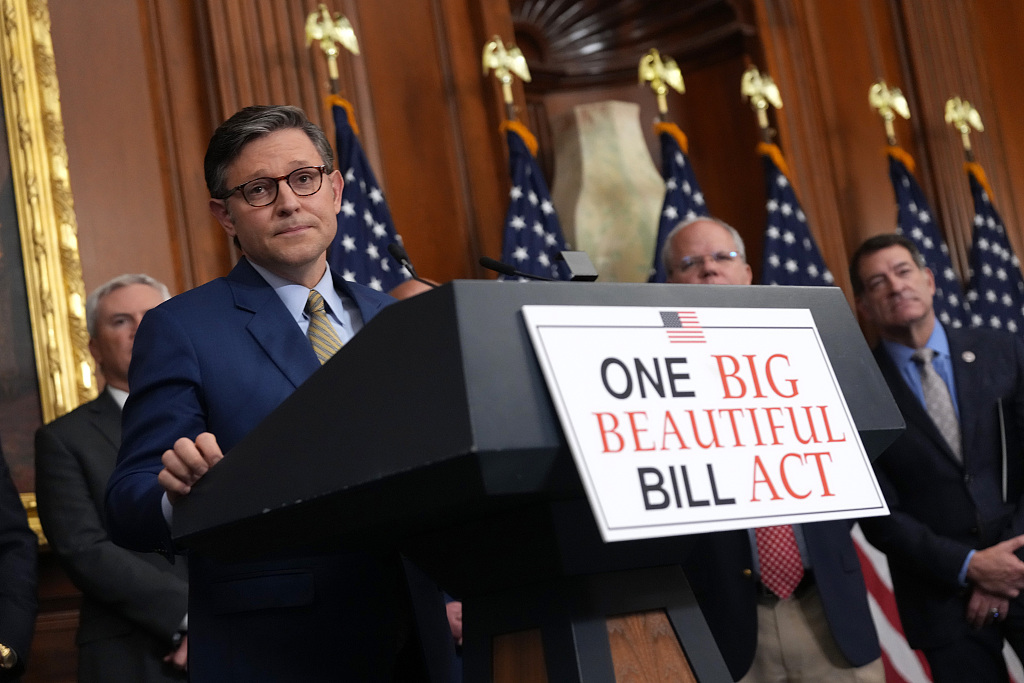
Core Viewpoint - The "Beautiful Bill" tax reform, led by President Trump, aims to fulfill campaign promises related to tax cuts, defense spending, and immigration control, but raises concerns about increasing the federal deficit significantly [1][3]. Group 1: Tax Reform Details - The bill extends corporate and individual tax cuts from 2017 and introduces new tax reductions for tips, overtime, and auto loans [1]. - It plans to increase defense spending while cutting green energy incentives and raising the eligibility threshold for low-income medical assistance and food aid to control federal spending [1]. Group 2: Deficit Concerns - The Congressional Budget Office (CBO) predicts that the federal deficit will total $21.1 trillion from 2025 to 2034, with the "Beautiful Bill" expected to add an additional $2.3 trillion, increasing the deficit by over 10% in the next decade [3]. - Moody's has downgraded the U.S. sovereign credit rating, warning that the tax reform could lead to an additional $4 trillion structural deficit over the next ten years [3]. Group 3: Legislative Uncertainty - The bill will be reviewed by the Senate, where its passage remains uncertain due to criticism from some Republican senators regarding the timing of tax cuts and spending measures [3][4]. - The Senate is expected to vote on the bill in June, with a modified version potentially being passed by July 4, but significant uncertainties remain regarding its final form and impact [4]. Group 4: Long-term Implications - The "Beautiful Bill" is likely to maintain high levels of fiscal deficit, with government debt as a percentage of GDP projected to rise from around 100% to 125% by 2034 [5]. - Increased government debt pressure and tariff disruptions may weaken the attractiveness of U.S. Treasury bonds, affecting demand from overseas investors who hold 30% of U.S. debt [5].

热点思考 | 美债“风暴”将至?——关税“压力测试”系列之九(申万宏观·赵伟团队)
申万宏源研究· 2025-05-27 01:17
Group 1 - The core driver of the recent volatility in the US Treasury market is the US tax reduction bill and the weak demand for Japanese bonds, leading to significant increases in Treasury yields in May [2][3][7] - The 10-year Treasury yield rose by 37 basis points since April 30, with the term premium contributing 28 basis points to this increase, indicating heightened concerns over fiscal sustainability and inflation [10][69] - The term premium for US Treasuries reached a new high of 0.9% by May 22, reflecting disturbances in fiscal, inflation, monetary, and trading factors [10][69] Group 2 - The "Beautiful America Act" aims to extend tax cuts from the Tax Cuts and Jobs Act (TCJA), with an expected increase in the deficit rate by approximately 1.8 percentage points by 2026, despite limited marginal economic contributions [3][29][40] - The Act's passage faces uncertainty in the Senate, where the Republican majority is slim, and potential amendments could require further voting in the House [3][29] - The Act includes significant tax cuts, with 80% of the measures extending existing cuts and 20% introducing new cuts, but the overall economic impact is expected to be limited, similar to the effects of tax extensions in 2010 and 2012 [33][40][41] Group 3 - The relationship between the US fiscal deficit and Treasury yields remains stable, with a 1 percentage point increase in the deficit correlating to a rise of approximately 78 basis points in the 10-year Treasury yield [4][47] - Short-term pressures on the Treasury market have eased, with positive net inflows into bond funds in May, indicating a temporary reduction in systemic pressure [49][50] - Long-term, Treasury yields are expected to remain elevated due to potential unanticipated deficit expansions and ongoing trade policy uncertainties [60][70]

热点思考 | 美债“风暴”将至?——关税“压力测试”系列之九(申万宏观·赵伟团队)
赵伟宏观探索· 2025-05-26 15:43
Group 1 - The core driver of the recent volatility in the US Treasury market is the US tax reduction bill and the weak demand for Japanese bonds, leading to significant increases in Treasury yields in May [2][7][69] - The 10-year Treasury yield rose by 37 basis points since April 30, with the term premium contributing 28 basis points to this increase, indicating heightened concerns over fiscal sustainability and inflation [10][69] - The term premium for US Treasuries reached a new high of 0.9% by May 22, reflecting disturbances in fiscal, inflation, monetary, and trading factors [10][69] Group 2 - The "Beautiful America Act" has passed the House of Representatives, but its future in the Senate is uncertain due to the slim Republican majority, with potential modifications expected [3][29][70] - The Act is projected to significantly increase the US fiscal deficit, with estimates suggesting a 1.8 percentage point increase in the deficit rate by 2026, despite potential tariff revenues of approximately $2.5 trillion over ten years [3][40][70] - The Act primarily extends existing tax cuts, with about 80% of the measures being extensions of the Tax Cuts and Jobs Act (TCJA), which may have limited incremental economic impact [3][34][70] Group 3 - The relationship between the US fiscal deficit and Treasury yields remains stable, with a 1 percentage point increase in the deficit correlating to an approximate 78 basis point rise in the 10-year Treasury yield [4][47][70] - Short-term pressures on the Treasury market have eased, with positive net inflows into bond funds observed in May, indicating a temporary reduction in systemic pressure [49][70] - Long-term, Treasury yields are expected to remain elevated, influenced by potential unanticipated deficit expansions and ongoing trade policy uncertainties [60][70]

热点思考 | 美债“风暴”将至?——关税“压力测试”系列之九(申万宏观·赵伟团队)
申万宏源宏观· 2025-05-25 15:00
Group 1 - The core driver of the recent volatility in the US Treasury market is the US tax reduction bill and the weak demand for Japanese bonds, leading to significant increases in Treasury yields in May [2][3][7] - The 10-year Treasury yield rose by 37 basis points since April 30, with the term premium contributing 28 basis points to this increase, indicating heightened concerns over fiscal sustainability and inflation [10][69] - The term premium for US Treasuries reached a new high of 0.9% by May 22, reflecting disturbances in fiscal, inflation, monetary, and trading factors [10][69] Group 2 - The "Beautiful America Act" aims to extend tax cuts from the Tax Cuts and Jobs Act (TCJA), with an expected increase in the deficit rate by approximately 1.8 percentage points by 2026, despite the limited marginal economic contribution [3][29][40] - The Act's passage faces uncertainty in the Senate, where the Republican majority is slim, and potential modifications could require further voting in the House [3][29] - The Act is projected to significantly increase the US fiscal deficit, with an estimated deficit increase of around $3.3 trillion over ten years, which cannot be offset by the anticipated $2.5 trillion in new tariffs [3][40] Group 3 - The relationship between the US fiscal deficit and Treasury yields remains stable, with a 1 percentage point increase in the deficit correlating to a rise of approximately 78 basis points in the 10-year Treasury yield [4][47] - Short-term pressures on the Treasury market have eased, with positive net inflows into bond funds in May, indicating a temporary reduction in systemic pressure [49][50] - Long-term, Treasury yields are expected to remain elevated, influenced by potential unanticipated deficit expansions and ongoing trade policy uncertainties [60][70]