行业自律

Search documents
营销广告抖“小字许愿池”机灵终将被反噬
Nan Fang Du Shi Bao· 2025-10-08 16:00
Core Viewpoint - The recent controversy surrounding the marketing practices in the mobile phone industry highlights the gap between advertising claims and actual product performance, leading to public discussions on ethical advertising practices [1][2][3] Group 1: Marketing Practices - The use of large, attention-grabbing slogans alongside small disclaimers creates a misleading impression of product capabilities, which is a common practice across various industries, including electronics, appliances, and automotive [1][2] - This phenomenon has been termed "big words boast, small words disclaim," revealing a significant disconnect between marketing language and factual information, prompting public scrutiny of advertising ethics [1][2] Group 2: Consumer Perception - Psychological studies indicate that consumers tend to focus on prominent headlines while ignoring smaller print, allowing companies to exploit this cognitive bias to mislead consumers, despite being technically compliant with regulations [2][3] - The emergence of a "small print wish pool" has led to a competitive environment where companies feel pressured to engage in similar misleading practices, resulting in a detrimental cycle for the industry [2] Group 3: Regulatory and Industry Response - Current advertising laws focus on literal compliance but lack detailed requirements regarding font size and presentation, suggesting a need for regulatory updates to ensure key information is prominently displayed [3] - There is a call for industry self-regulation and consumer awareness to combat misleading advertising, with public backlash against deceptive practices potentially serving as a catalyst for change in marketing strategies [3]
弘元绿能的自律迷局,二三线企业低价求生,电站 IRR 焦虑难消
Sou Hu Cai Jing· 2025-10-04 04:32
Industry Overview - The photovoltaic industry is currently facing strict anti-involution regulations, leading to significant disparities in how different players are faring [1] - Major component manufacturers are subject to detailed compliance checks for every order, requiring approval before any sales discussions can occur [3] - The approval authority has tightened this year, with penalties for low-price sales affecting not only the individuals involved but also their companies [5] Pricing Dynamics - Major manufacturers are maintaining stable pricing, with recent project bids showing prices between 0.723-0.76 yuan/W, which are above the market benchmark of 0.701 yuan/W [6][8] - Distributors are largely compliant, with a notable absence of prices below 0.7 yuan/W in the market, as many are stockpiling in anticipation of price increases after the holiday [8] - Some procurement entities have set tax-inclusive price caps, disqualifying bids below 0.7 yuan/W [10] Company-Specific Issues - Hongyuan Green Energy has publicly supported anti-involution policies but is rumored to have been removed from the industry self-discipline list, leading to a lack of trust in its products [13][15] - The company submitted a bid of 0.655 yuan/W for a project, which was below the updated cost line of 0.69 yuan/W, raising concerns about compliance with pricing standards [15] - Following internal discussions, Hongyuan was reportedly removed from the self-discipline list and has not participated in recent meetings, leading to a significant drop in its stock price [15] Challenges for Smaller Players - Second and third-tier manufacturers are struggling to survive, often resorting to low pricing around 0.66 yuan/W due to cash flow issues and customer retention fears [16] - State-owned enterprises prioritize comprehensive support over low prices, making it difficult for smaller manufacturers to compete effectively [18] - Investment concerns are rising as the internal rate of return (IRR) for projects has decreased, leading to hesitance among procurement parties regarding price increases [20] Conclusion - While industry self-discipline has stabilized prices in the short term, it has not addressed long-term issues related to profit distribution and the sustainability of smaller manufacturers [20]


技术革新驱动光伏行业迈向新生态
Zhong Guo Dian Li Bao· 2025-10-03 04:06
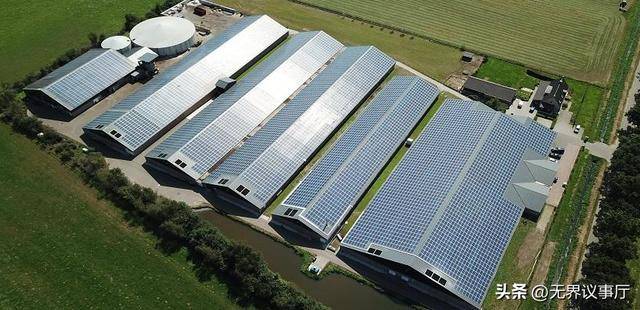
Core Viewpoint - The 2025 Photovoltaic Industry Technology Innovation Conference highlighted the need for technological breakthroughs and industry self-discipline as key drivers for the sustainable development of China's photovoltaic industry, which is transitioning from scale expansion to technology-driven growth [1][2]. Group 1: Industry Trends - China's photovoltaic industry has shifted from being a latecomer to a global leader, emphasizing the importance of independent innovation and original technology for maintaining its competitive edge [2]. - The industry is experiencing a transformation where various battery technologies, including TOPCon, HJT, BC, and perovskite, are developing concurrently, indicating a diverse technological landscape [2][3]. - The focus on technological differentiation is replacing the previous emphasis on scale, with companies possessing core technologies able to maintain profitability even during industry downturns [3]. Group 2: Technological Innovations - Heterojunction technology (HJT) is witnessing significant cost reductions, making it competitive with TOPCon technology due to innovations like silver-coated copper technology and steel plate printing [2]. - Perovskite technology is recognized for its high photoelectric conversion efficiency and diverse application scenarios, positioning it as a commercially viable technology with strong potential for supporting global green energy development [2]. Group 3: Industrial Application and Standards - The conference addressed the importance of industrial application for new technologies, emphasizing that successful commercialization requires reliable long-term performance and a robust quality verification system [4]. - Current monitoring and certification systems are criticized for their homogeneity and outdated standards, necessitating the development of a more comprehensive empirical certification system to keep pace with technological advancements [4]. Group 4: Global Competitiveness - China's photovoltaic industry, which holds over 80% of the global market, must establish a precise measurement and certification system to ensure fair trade practices and reduce risks in international markets [5]. - Experts advocate for a shift in focus from scale dividends to value dividends, promoting technological progress and lifecycle emissions management to empower the industry [5]. Group 5: Future Outlook - The photovoltaic industry is urged to restore healthy profitability and move away from internal competition, with a dual focus on technological breakthroughs and industry self-discipline as pathways to sustainable development [5]. - Signs of recovery in stock prices indicate that companies committed to "technological innovation, cost control, and long-termism" are likely to gain a competitive advantage in the new cycle [5].
大促在即家电业“反内卷”,协会再发倡议杜绝无序低价竞争
2 1 Shi Ji Jing Ji Bao Dao· 2025-09-29 10:57
Core Viewpoint - The China Household Electrical Appliances Association has issued an initiative to strengthen self-discipline and fair competition in the home appliance industry, aiming to create a fair market environment and eliminate chaotic practices such as disorderly low-price competition and false advertising [1][2]. Summary by Relevant Sections Industry Self-Discipline - The initiative focuses on issues such as excessive low-price competition, commercial defamation, false advertising, and employee rights protection [2]. - It emphasizes principles of fair competition, mutual respect, collaborative sharing, and high-quality development to promote healthy industry growth [2]. - The association has previously issued self-discipline agreements, with the first one dating back to 2011, indicating a long-standing concern for fair competition [2][3]. Market Environment and Trends - The home appliance industry is experiencing intensified competition due to market saturation, particularly in major appliances and kitchen appliances [5]. - According to AVC data, the retail sales of all home appliance categories (excluding 3C) are projected to reach 907.1 billion in 2024, a 6.4% increase year-on-year, marking a new record since 2019 [5]. - The implementation of policies such as "old-for-new" has boosted sales but has also led to increased market anxiety among smaller enterprises, prompting some to engage in excessive low-price competition [5][6]. Sales Pressure and Competition - Recent data indicates a significant decline in the home appliance market since September, with online retail sales dropping by 16.0% year-on-year during a specific monitoring period [6]. - The association's initiative comes at a critical time, as companies are likely to intensify competition during major sales events like National Day and Double Eleven [6]. - The need for the industry to avoid improper competitive behaviors under sales pressure is emphasized to prevent further deterioration of the market environment [6]. Policy Recommendations - Suggestions include optimizing subsidy policies to link them with product quality and enhancing market supervision to address frequent quality issues [7]. - Establishing a blacklist for brands involved in fraudulent activities related to subsidies is also recommended to maintain market integrity [7].
有色金属日报-20250925
Guo Tou Qi Huo· 2025-09-25 11:04
Report Industry Investment Ratings - Copper: ★☆☆ (One star, indicating a bullish bias but limited operability on the trading floor) [1] - Aluminum: ☆☆☆ (Three empty stars, not specified in the given star - rating description) [1] - Zinc: ☆☆☆ (Three empty stars, not specified in the given star - rating description) [1] - Nickel and Stainless Steel: ☆☆ (Two empty stars, not specified in the given star - rating description) [1] - Industrial Silicon: ★★★ (Three stars, representing a clearer bullish or bearish trend and a relatively appropriate investment opportunity) [1] - Polysilicon: ★★★ (Three stars, representing a clearer bullish or bearish trend and a relatively appropriate investment opportunity) [1] - Tin: ★★★ (Three stars, representing a clearer bullish or bearish trend and a relatively appropriate investment opportunity) [1] - Lithium Carbonate: ★★★ (Three stars, representing a clearer bullish or bearish trend and a relatively appropriate investment opportunity) [1] Core Views - The overall performance of the non - ferrous metals market shows different trends, with some metals being affected by supply - demand relationships, cost factors, and external events [1][2][5]. - Some metals are expected to continue their current trends, while others are facing uncertainties and may enter a period of adjustment or consolidation. Summary by Metal Copper - On Thursday, Shanghai copper significantly increased its positions and continued its upward trend, actively digesting the force majeure of the Grasberg copper mine and domestic smelters' "anti - involution" statements [1]. - Global mine - end supply is tightening, and the environment for processing fee negotiations is difficult. The spot copper price has risen to 82,505 yuan, with a premium of 30 yuan in Shanghai and a refined - scrap price difference exceeding 4,500 yuan [1]. - LME copper is expected to reach $10,500, and the Shanghai copper index may break through the previous high this year and continue to rise to 84,000 yuan [1]. Aluminum - Shanghai aluminum fluctuated strongly, with the East China spot at par. The apparent demand in September was lower than expected, and the aluminum ingot social inventory decreased by 21,000 tons compared to Monday, with pre - National Day destocking less than in previous years [2]. - Shanghai aluminum is expected to fluctuate between 20,500 - 21,000 yuan. Cast aluminum alloy follows the fluctuations of Shanghai aluminum, with the Baotai spot price increasing by 100 yuan to 20,400 yuan [2]. - The operating capacity of alumina is approaching 98 million tons, hitting a new high, and the industry inventory is continuously rising. Supply is significantly in excess, and prices are falling. The current price still allows for profit in the production capacity of Shanxi and Henan, making it difficult to trigger production cuts, and alumina is weakly running towards the June low of 2,800 yuan [2]. Zinc - Driven by the sharp rise in copper prices, the non - ferrous metal sector was generally strong, and Shanghai zinc rebounded to recover the previous day's decline. LME zinc rebounded after returning to the 40 - day moving average due to low overseas inventories [2]. - Fundamentally, the domestic market is weak while the overseas market is strong, and the Shanghai - London ratio is expected to fluctuate at a low level. Domestic consumption during the peak season is weak, and due to tariff impacts, galvanized sheet exports weakened in August. Affected by the super typhoon "Saola", consumption in the Pearl River Delta region shrank temporarily, and the expectation of zinc ingot inventory accumulation strengthened [2]. - Shanghai zinc is expected to consolidate around the 22,000 - yuan mark [2]. Nickel and Stainless Steel - Shanghai nickel fluctuated, and market trading was dull. The sharp rise in external copper prices drove up nickel prices, but the improvement in its own fundamentals was limited [5]. - The upward trend of stainless steel spot prices is difficult to sustain, but the pre - National Day stocking demand is gradually emerging. Stainless steel mills are still in a state of cost inversion, and cost - side support is emerging [5]. - Nickel inventory increased by 430 tons to 41,500 tons, nickel - iron inventory decreased by 600 tons to 28,700 tons, and stainless steel inventory decreased by 5,000 tons to 897,000 tons. Shanghai nickel has exhausted its bullish themes, and nickel prices are weakly running and about to start a downward trend [5]. Tin - Shanghai tin closed up, and the spot tin price increased by 2,300 yuan to 273,700 yuan. Short - term attention should be paid to the performance of LME tin at $34,500 at night, and LME tin inventory rose to 2,740 tons. Wait for the social inventory data tomorrow and take a short - term wait - and - see approach [6]. Lithium Carbonate - Lithium prices are in a short - term strong - side oscillation, and market trading is active. The total market inventory decreased by 1,000 tons to 137,500 tons, smelter inventory decreased by 1,800 tons to 34,000 tons, and downstream inventory increased by 1,200 tons to 59,500 tons [6]. - The low - price support for lithium prices is emerging, but the selling actions in the industrial chain are basically completed. After the interest rate cut and the ebb of the "anti - involution" trend, the price is expected to be under pressure [6]. Industrial Silicon - The industrial silicon futures closed slightly up at 9,055 yuan/ton. The average price of SMM East China oxygen - containing 553 silicon remained unchanged at 9,500 yuan/ton [6]. - The operating rate in Xinjiang continued to increase slightly, while Sichuan and Yunnan maintained their high operating rates during the wet season. However, the incremental release of demand from polysilicon and organic silicon was insufficient, and the social inventory of industrial silicon increased week - on - week [6]. - Driven by market sentiment and the expected increase in costs, the futures price is short - term strong, but the support for continuous rise is insufficient, and it will mainly continue to oscillate [6]. Polysilicon - The polysilicon futures closed slightly up. On the spot side, the quoted price range of N - type re - feeding materials was basically stable at 50,100 - 55,000 yuan/ton (SMM) [6]. - In September, the polysilicon industry's production plan was about 130,000 tons (SMM), with limited month - on - month change. In October, due to industry self - discipline, the production plans of silicon wafers and polysilicon are expected to be synchronously reduced, and polysilicon still faces a slight inventory accumulation pressure [6]. - On the policy side, the capacity clearance continues to be gradually promoted, and the futures price is temporarily oscillating at the lower end of the range [6].
光伏周价格 | 政策预期支撑下,光伏产业链价格高位持稳
TrendForce集邦· 2025-09-25 04:33
Core Viewpoint - The article discusses the current state of the photovoltaic industry, focusing on the stability of prices in the polysilicon, wafer, cell, and module segments, driven by supply-demand dynamics and policy expectations [4][6][10][14]. Polysilicon - The polysilicon market is facing high inventory levels exceeding 400,000 tons, with a slight accumulation trend. However, major producers are signaling production cuts post-holiday to manage supply [4]. - Demand is weak as downstream companies prioritize consuming existing inventory due to previous stockpiling, leading to subdued market purchases [5]. - Despite a relaxed supply-demand balance, polysilicon prices remain stable, supported by strong policy expectations and limited supply-side discipline [6]. Wafers - The wafer segment shows a healthy supply-demand balance with inventory levels around 16 GW. The supply structure is tight for 183N and 210N wafers, while inventory for 210RN has eased due to proactive production adjustments [7]. - Downstream demand for wafers is robust, effectively consuming the output from the wafer segment [8]. - Price expectations for wafers are bullish due to rising costs from upstream polysilicon, strong demand from cells, and anticipated supply reductions [9]. Cells - The cell segment exhibits a favorable supply-demand landscape with inventory levels maintained at a healthy 3-5 days. Supply adjustments are targeted rather than broad, with some manufacturers reducing production of the underperforming 210RN cells [10]. - Demand is differentiated, with 183N cells driven by overseas markets like Turkey and India, while 210N cells are primarily supported by domestic demand [11]. - Cell prices are expected to remain high due to healthy inventory levels, strong demand for mainstream products, and rational supply-side adjustments [12]. Modules - The module market is currently influenced by both cost pressures and policy factors, leading to strong price support and increased market differentiation among manufacturers [14]. - Rising upstream costs have pushed module prices to a critical point of 0.7 RMB/W, causing a price inversion between new and old orders, which impacts manufacturer profitability [14]. - The industry's self-discipline actions, including production and sales limits, are expected to significantly influence supply in the fourth quarter, providing strong support for module prices [14].
大全能源(688303):财务稳健资金储备充裕,战略性减产缓解市场供给压力
Shanxi Securities· 2025-09-23 01:56
Investment Rating - The report maintains a "Buy-B" rating for the company, indicating a positive outlook for its stock performance in the coming months [4][7]. Core Views - The company has implemented a strategic production reduction to alleviate market supply pressure, which is supported by a strong financial position with ample cash reserves [5][7]. - The company reported a significant decline in revenue and net profit for the first half of 2025, with a revenue of 1.47 billion yuan, down 67.9% year-on-year, and a net profit loss of 1.15 billion yuan [4][5]. - The company is expected to produce between 270,000 to 300,000 tons of polysilicon in Q3 2025, with an annual production forecast of 1.1 to 1.3 million tons [5]. Financial Performance Summary - For the first half of 2025, the company achieved a revenue of 1.47 billion yuan, a decrease of 67.9% year-on-year, and a net profit loss of 1.15 billion yuan [4]. - In Q2 2025, the company recorded a revenue of 560 million yuan, down 64.9% year-on-year and 38.0% quarter-on-quarter, with a net profit loss of 590 million yuan [4][5]. - The company’s polysilicon production in Q2 2025 was 26,000 tons, a decrease of 60.0% year-on-year, while sales volume was 18,000 tons, down 57.9% year-on-year [5]. - The company’s cash reserves as of June 30, 2025, totaled 12.09 billion yuan, with no interest-bearing debt, indicating a robust financial position [5]. Future Projections - The company’s earnings per share (EPS) are projected to be -0.44 yuan in 2025, 0.50 yuan in 2026, and 0.95 yuan in 2027, reflecting a recovery trend [7]. - The price-to-earnings (P/E) ratios are expected to be -67.3 in 2025, 59.2 in 2026, and 30.9 in 2027, indicating a potential improvement in valuation as earnings recover [7].

《特殊商品》日报-20250922
Guang Fa Qi Huo· 2025-09-22 02:27
Report on the Rubber Industry 1. Investment Rating No investment rating provided in the report. 2. Core View The report anticipates that rubber prices will oscillate weakly in the short term, with the 01 contract trading in the range of 15,000 - 16,500. The supply side is affected by the rainy season and typhoons in the producing areas, and the expected increase in raw material output in the future suppresses the raw material prices. The cost support has weakened, and the pre - holiday inventory replenishment of downstream tire factories is basically completed, so the natural rubber inventory is unlikely to see a significant reduction. On the demand side, although some enterprises are short of goods, the overall sales performance is below expectations, and some enterprises may control production flexibly. As the holiday approaches, the risk - aversion sentiment of funds increases, and the macro - sentiment of commodities weakens [1]. 3. Summary by Directory Spot Price and Basis - The price of Yunnan state - owned standard rubber (SCRWF) in Shanghai decreased by 100 yuan to 14,700 yuan, a decline of 0.68%. The basis of whole - milk rubber decreased by 65 to - 835. - The price of Thai - standard mixed rubber decreased by 250 yuan to 14,750 yuan, a decline of 1.67%. The non - standard price difference decreased by 215 to - 785, a decline of 37.72%. - The FOB intermediate price of cup rubber in the international market decreased by 0.60 Thai baht per kilogram to 51.05 Thai baht per kilogram, a decline of 1.16%. The FOB intermediate price of glue in the international market increased by 0.10 to 56.30, an increase of 0.18% [1]. Monthly Spread - The 9 - 1 spread decreased by 15 to 15, a decline of 50.00%. The 1 - 5 spread decreased by 10 to 5, a decline of 66.67%. The 5 - 9 spread increased by 25 to - 20, an increase of 55.56% [1]. Production and Consumption Data - In July, Thailand's production was 421,600 tons, an increase of 6,700 tons or 1.61% compared with the previous month. Indonesia's production was 197,500 tons, an increase of 21,300 tons or 12.09%. India's production was 45,000 tons, a decrease of 1,000 tons or 2.17%. China's production was 101,300 tons, a decrease of 1,300 tons [1]. - The weekly operating rate of semi - steel tires for automobiles was 73.66%, an increase of 0.20 percentage points. The weekly operating rate of all - steel tires for automobiles was 65.66%, an increase of 0.07 percentage points. In August, domestic tire production was 10.2954 million tons, an increase of 859,000 tons or 9.10%. The export volume of new pneumatic rubber tires was 63.01 million pieces, a decrease of 3.64 million pieces or 5.46% [1]. Inventory Change - The bonded area inventory decreased by 10,020 tons to 592,275 tons, a decline of 1.66%. The factory - warehouse futures inventory of natural rubber on the Shanghai Futures Exchange decreased by 1,411 tons to 44,553 tons, a decline of 3.07% [1]. Report on the Glass and Soda Ash Industry 1. Investment Rating No investment rating provided in the report. 2. Core View - **Soda Ash**: The fundamental problem of over - supply still exists. Although the manufacturers' inventory has decreased recently, the inventory has actually been transferred to the middle and lower reaches, and the trade inventory continues to rise. The weekly production remains high, and the over - supply still exists compared with the current rigid demand. In the medium term, there is no expectation of a significant increase in downstream production capacity, so the demand for soda ash will continue the previous rigid - demand pattern. If there is no actual production capacity withdrawal or load reduction, the inventory will be further pressured. It is recommended to short on rallies [3]. - **Glass**: The spot market has good transactions, and the inventory has decreased this week. However, the inventory of some middle - stream enterprises in some regions remains high. The deep - processing orders have improved seasonally but are still weak, and the operating rate of low - emissivity (Low - E) glass is continuously low. In the long - term, the real - estate cycle is at the bottom, and the completion volume is shrinking. The industry needs to clear production capacity to solve the over - supply problem. It is necessary to track the implementation of regional policies and the inventory - replenishment performance of the middle and lower reaches during the "Golden September and Silver October" [3]. 3. Summary by Directory Price and Spread - **Glass**: The price of glass 2505 increased by 15 yuan to 1343 yuan, an increase of 1.13%. The price of glass 2509 increased by 18 yuan to 1405 yuan, an increase of 1.30%. The 05 basis decreased by 15 to - 193, a decline of 8.43%. - **Soda Ash**: The price of soda ash 2505 increased by 7 yuan to 1407 yuan, an increase of 0.50%. The price of soda ash 2509 increased by 12 yuan to 1454 yuan, an increase of 0.86%. The 05 basis decreased by 7 to - 107, a decline of 7.00% [3]. Supply - The soda ash mining rate decreased by 2.02 percentage points to 85.53%. The weekly production of soda ash decreased by 15,000 tons to 745,700 tons, a decline of 2.02%. The daily melting volume of float glass decreased by 1,000 tons to 159,500 tons, a decline of 0.47%. The daily melting volume of photovoltaic glass remained unchanged at 89,290 tons [3]. Inventory - The glass inventory decreased by 675,000 tons to 60.908 million tons, a decline of 1.10%. The soda ash factory - warehouse inventory decreased by 42,000 tons to 1.7556 million tons, a decline of 2.33%. The soda ash delivery - warehouse inventory increased by 59,000 tons to 614,900 tons, an increase of 10.69% [3]. Real - Estate Data - The year - on - year growth rate of new construction area was - 0.09%, an increase of 0.09 percentage points compared with the previous month. The year - on - year growth rate of construction area was 0.05%, a decrease of 2.43 percentage points. The year - on - year growth rate of completion area was - 0.22%, a decrease of 0.03 percentage points. The year - on - year growth rate of sales area was - 6.55%, a decrease of 6.50 percentage points [3]. Report on the Log Industry 1. Investment Rating No investment rating provided in the report. 2. Core View As the "Golden September and Silver October" traditional peak season approaches, it is necessary to observe whether the shipment volume improves significantly. The current average daily shipment volume is still below 70,000 cubic meters. The price below 800 yuan per cubic meter has a high "receiving value". In the current pattern of "weak reality and strong expectation", it is recommended to go long on dips [4]. 3. Summary by Directory Futures and Spot Prices - The price of log 2511 increased by 3.5 yuan to 805 yuan per cubic meter, an increase of 0.44%. The price of log 2601 increased by 2 yuan to 818.5 yuan per cubic meter, an increase of 0.24%. The price of log 2603 increased by 1 yuan to 825 yuan per cubic meter, an increase of 0.12%. The price of log 2605 remained unchanged at 828 yuan per cubic meter [4]. - The 11 - 01 spread decreased by 15 to - 15. The 11 - 03 spread increased by 2.5 to - 20. The 11 - contract basis decreased by 3.5 to - 55. The 01 - contract basis decreased by 66.5 to - 68.5 [4]. Import Cost and Shipping - The import theoretical cost was 796.96 yuan, an increase of 0.37 yuan, an increase of 0%. - The number of ships departing from New Zealand to China, Japan, and South Korea decreased by 3 to 44, a decline of 6.38% [4]. Inventory and Demand - The total inventory of coniferous logs in China increased by 80,000 cubic meters to 3.02 million cubic meters, an increase of 2.72%. - The average daily shipment volume of logs increased by 0.17 million cubic meters to 6.29 million cubic meters, an increase of 3% [4]. Report on the Industrial Silicon Industry 1. Investment Rating No investment rating provided in the report. 2. Core View From a fundamental perspective, from September to October, as the supply of industrial silicon increases, the balance will gradually become looser. The expectation of large - scale production cuts in Sichuan and Yunnan silicon enterprises during the flat - and - low - water period is at the end of October, so the expected surplus in October is more obvious and will narrow again in November. At the same time, the increase in production costs in the southwest during the flat - and - low - water period raises the average industry cost, giving positive sentiment to the market. It is expected that the industrial silicon price will continue to lack upward driving force in the short term and may turn to oscillation, with the main price fluctuation range between 8,000 - 9,500 yuan per ton. It is necessary to pay attention to the production - cut rhythm of silicon - material enterprises and Sichuan and Yunnan industrial silicon enterprises in the fourth quarter [5]. 3. Summary by Directory Spot Price and Basis - The price of East China oxygen - passing SI5530 industrial silicon remained unchanged at 8,350 yuan. The basis decreased by 400 to 45, a decline of 89.89%. - The price of East China SI4210 industrial silicon remained unchanged at 9,600 yuan. The basis decreased by 97 to - 202, a decline of 380.95%. - The price of Xinjiang 99 - silicon remained unchanged at 8,800 yuan. The basis decreased by 400 to 295, a decline of 57.55% [5]. Monthly Spread - The 2510 - 2511 spread decreased by 35 to - 50, a decline of 233.33%. The 2511 - 2512 spread decreased by 5 to - 390, a decline of 1.30%. The 2512 - 2601 spread increased by 5 to 5. The 2601 - 2602 spread increased by 30 to 10, an increase of 150.00% [5]. Fundamental Data - **Production**: The national industrial silicon production was 385,700 tons, an increase of 47,400 tons or 14.01%. Xinjiang's production was 169,700 tons, an increase of 19,400 tons or 12.91%. Yunnan's production was 58,100 tons, an increase of 17,000 tons or 41.19%. Sichuan's production was 53,700 tons, an increase of 5,200 tons or 10.72% [5]. - **Operating Rate**: The national operating rate was 55.87%, an increase of 3.26 percentage points or 6.20%. Xinjiang's operating rate was 60.61%, an increase of 8.02 percentage points or 15.25%. Yunnan's operating rate was 47.39%, an increase of 14.50 percentage points or 44.09%. Sichuan's operating rate was 44.29%, an increase of 7.33 percentage points or 19.83% [5]. - **Downstream Production**: The production of organic silicon DMC was 223,100 tons, an increase of 23,300 tons or 11.66%. The production of polysilicon was 131,700 tons, an increase of 24,900 tons or 23.31%. The production of recycled aluminum alloy was 615,000 tons, a decrease of 10,000 tons or - 1.60%. The export volume of industrial silicon was 74,000 tons, an increase of 5,700 tons or 8.32% [5]. Inventory Change - The factory - warehouse inventory in Xinjiang decreased by 0.13 tons to 12.04 tons, a decline of 1.07%. The factory - warehouse inventory in Yunnan increased by 0.16 tons to 3.10 tons, an increase of 5.45%. The factory - warehouse inventory in Sichuan increased by 0.01 tons to 2.29 tons, an increase of 0.44%. The social inventory increased by 0.40 tons to 54.30 tons, an increase of 0.74% [5]. Report on the Polysilicon Industry 1. Investment Rating No investment rating provided in the report. 2. Core View This week, the industry self - discipline meeting was held again to discuss the self - discipline process. Some leading enterprises have production - cut plans in the future. The increase in downstream prices, the meeting, and the low inventory of some enterprises (the inventory distribution among enterprises is uneven) provide support for the price increase of polysilicon enterprises. Currently, low - price resources in the polysilicon market are scarce and are being snapped up, while high - price resources still face some resistance from downstream. It is expected that the polysilicon market will continue to oscillate in the short term [6]. 3. Summary by Directory Spot Price and Basis - The average price of N - type re -投料 increased by 50 yuan to 52,650 yuan, an increase of 0.10%. The average price of N - type granular silicon remained unchanged at 49,500 yuan. The basis of N - type material increased by 555 yuan to - 50, an increase of 91.74% [6]. Futures Price and Monthly Spread - The price of the main contract decreased by 505 yuan to 52,700 yuan, a decline of 0.95%. The spread between the current month and the first - continuous contract increased by 130 to 120, an increase of 1300.00%. The spread between the first - continuous and the second - continuous contract decreased by 50 to - 2590, a decline of 1.97% [6]. Fundamental Data - **Weekly Data**: The production of silicon wafers was 13.92 GW, an increase of 0.04 GW or 0.29%. The production of polysilicon was 3.10 kilotons, a decrease of 0.02 kilotons or - 0.64%. - **Monthly Data**: The production of polysilicon was 131.7 kilotons, an increase of 24.9 kilotons or 23.31%. The import volume of polysilicon was 0.11 kilotons, an increase of 0.03 kilotons or 40.30%. The export volume of polysilicon was 0.22 kilotons, an increase of 0.01 kilotons or 5.96%. The net export volume of polysilicon was 0.11 kilotons, a decrease of 0.02 kilotons or - 14.92% [6]. Inventory Change - The inventory of polysilicon decreased by 1.5 kilotons to 20.4 kilotons, a decline of 6.85%. The inventory of silicon wafers increased by 0.32 GW to 16.87 GW, an increase of 1.93%. The number of polysilicon warehouse receipts increased by 20 to 7900 hands, an increase of 0.25% [6].
光伏周价格 | 多晶硅控产持续挺价,下游跟涨动能已显不足
TrendForce集邦· 2025-09-18 09:04
Core Viewpoint - The article discusses the current trends in the photovoltaic industry, highlighting price stability in the face of rising costs and the impact of supply and demand dynamics on various segments of the market [4][10][14]. Group 1: Polysilicon - Polysilicon prices are expected to remain strong due to production control signals and a significant inventory of 400,000 tons, with companies showing a strong willingness to maintain prices [4][6]. - The downstream market is experiencing low transaction volumes due to high inventory levels in the crystal pulling segment, leading to a lack of purchasing motivation among downstream enterprises [5]. - The price of polysilicon has reached 55 RMB per kilogram, with expectations for further increases in the future [6]. Group 2: Silicon Wafers - Silicon wafer inventory is currently around 16 GW, with some leading companies planning significant production cuts as the holiday approaches, while most maintain high operating rates [8]. - Demand is structurally differentiated, with 183N and 210N sizes in a state of supply-demand balance, while 210R shows weaker demand and stable prices [9]. - Overall, prices for silicon wafers and downstream battery cells are nearing the limits of market acceptance, making further price increases unlikely in the short term [10]. Group 3: Photovoltaic Cells - The inventory levels for battery cells remain healthy, with specialized manufacturers maintaining around 5 days of stock [10]. - Strong demand persists in the overseas market for 183N, and 210N orders remain robust, driven by pre-holiday stocking activities [11]. - Battery cell prices are expected to remain high due to strong demand and cost pressures, but there is a risk of price corrections post-holiday as stocking demand subsides [12]. Group 4: Photovoltaic Modules - Current module prices are stable, but rising upstream costs are squeezing margins, leading to production cuts among some leading manufacturers due to insufficient orders [14]. - The industry is facing stricter production and sales limits as part of a self-regulatory effort to stabilize prices across the supply chain [15].
跑路?跳楼?金价飙涨下,水贝已成“疯狂黄金赌场”,谁在刀尖上跳舞?
Sou Hu Cai Jing· 2025-09-17 18:16
Core Viewpoint - The recent news regarding the "runaway" of multiple gold material merchants in Shenzhen has caused significant panic among industry players and consumers, with claims of over 260 kilograms of gold being lost and more than 200 million yuan involved [1][3]. Group 1: Incident Overview - Reports indicate that over ten gold material merchants have suddenly disappeared, leading to substantial financial losses for more than 100 wholesale merchants [1]. - The Shenzhen Gold and Jewelry Industry Association has responded, stating that the rumors are exaggerated, with about 60%-70% of the merchants still operating normally [3]. Group 2: Market Context - Shenzhen's Shui Bei market is the largest gold and jewelry wholesale market in China, accounting for 70% of the national jewelry processing industry, with annual revenues reaching 120 billion yuan [5]. - The market has a history of volatility, with past incidents of financial failures linked to fluctuations in gold prices, particularly during high price periods [5]. Group 3: Speculative Practices - Various speculative practices are prevalent in the Shui Bei market, including short selling and leveraging, which can lead to significant financial risks for merchants [5]. - Merchants often engage in pre-sale models that allow them to control large amounts of gold with minimal capital, increasing the risk of financial collapse if market conditions shift unfavorably [5]. Group 4: Investor Behavior - The surge in gold prices has attracted many investors, leading to a shift from cautious investment to speculative gambling, with individuals risking substantial personal assets [7]. - The allure of quick profits has transformed gold investment into a high-stakes gamble, resulting in significant financial losses for many participants [7]. Group 5: Regulatory and Industry Recommendations - To address the issues highlighted by the Shui Bei incident, recommendations include strengthening regulatory oversight, enhancing industry self-discipline, improving investor education, and leveraging technology for market monitoring [10][11]. - The establishment of a comprehensive governance system is suggested to mitigate speculative risks and promote sustainable development in the gold industry [10][11].