自主可控

Search documents
风回科技,自主可控成主线!电子ETF放量新高,金融科技ETF涨近2%!港股科技双雄热度不减,513770溢价8连涨
Xin Lang Ji Jin· 2025-09-16 11:59
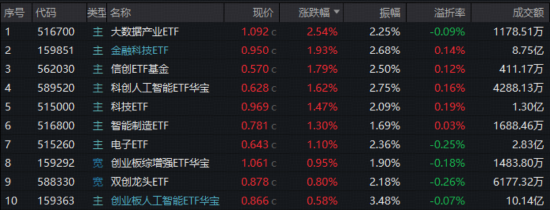
Market Overview - A-shares showed a slight recovery with the Shanghai Composite Index up 0.04%, avoiding a three-day decline, while the ChiNext Index rose 0.68% [1] - Over 3,600 stocks increased in value, indicating a significant improvement in short-term market sentiment, with total trading volume reaching 2.37 trillion yuan [1] - Technology stocks rebounded strongly, with sectors like big data and trusted computing performing well, as evidenced by the respective ETFs rising 2.54% and 1.79% [1] ETF Performance - The electronic ETF (515260), which has a high semiconductor content, reached a new high with a 2.36% increase during trading, showing strong buying interest with a trading volume of 283 million yuan, the highest in over four years [1][11] - The financial technology ETF (159851) surged nearly 2%, with a net subscription of 114 million units, reflecting strong market response [2][10] - The big data industry ETF (516700) and the trusted computing ETF (562030) also saw gains of 2.54% and 1.79%, respectively, indicating robust sector performance [3] Sector Analysis - The financial technology sector experienced a sudden surge, attributed to a high trading environment and the anticipated acceleration of net profits for internet brokerages [9] - AI is becoming a core driver for financial IT growth, with applications in smart investment advisory and big data risk control gaining traction [9] - The semiconductor and electronic sectors are benefiting from increased domestic demand and government support, with companies like Longxin Technology and Zhongke Shuguang seeing significant stock price increases [15][13] Hong Kong Market Dynamics - The Hong Kong technology index continued to rise, with the Hang Seng Tech Index up 0.56%, marking a six-month high [4] - The Hong Kong Internet ETF (513770) achieved an eight-day consecutive rise, reflecting strong investor interest and a premium trading rate of 0.58% [18][22] - Alibaba announced a plan to issue $3.2 billion in zero-coupon convertible bonds, primarily to enhance cloud infrastructure, while Tencent also initiated a bond issuance plan [20][21] Investment Outlook - Analysts suggest that the current market environment is conducive for sustained inflows from both domestic and foreign investors, with potential for a solid and lasting market driven by fundamental improvements [6] - The financial technology sector is viewed as having significant investment value due to its low valuation and the ongoing digital transformation of brokerages [10] - The electronic sector is expected to continue its upward trajectory, supported by strong demand for AI and semiconductor technologies [15][16]

自主可控预期强化!芯片ETF(159995)涨1.21%,龙芯中科涨14.29%
Sou Hu Cai Jing· 2025-09-16 03:06
Group 1 - The A-share market experienced a collective decline on September 16, with the Shanghai Composite Index dropping by 0.17% during intraday trading [1] - The chip technology sector continued to strengthen, with the Chip ETF (159995) rising by 1.21% as of 10:17 AM, and notable increases in constituent stocks such as Longxin Technology (up 14.29%) and Haiguang Information (up 5.90%) [1] - According to招商证券, the evolution of the global trade landscape has elevated the importance of self-sufficiency in the semiconductor industry as a key strategic focus for China's industrial development, supported by ongoing government policy initiatives [1] Group 2 - The AI innovation cycle, combined with the backdrop of tariffs, has reinforced expectations for self-sufficiency, leading to a sustained recovery in the semiconductor sector, which is now entering a new upward cycle [1] - The Chip ETF (159995) tracks the National Chip Index, comprising 30 leading companies in the A-share chip industry across various segments including materials, equipment, design, manufacturing, packaging, and testing [1] - Notable companies within the ETF include SMIC, Cambricon, Changdian Technology, and Northern Huachuang [1]






行情急先锋!为何创业板总是能领涨?(附20CM创业板ETF代码)
Sou Hu Cai Jing· 2025-09-16 01:05
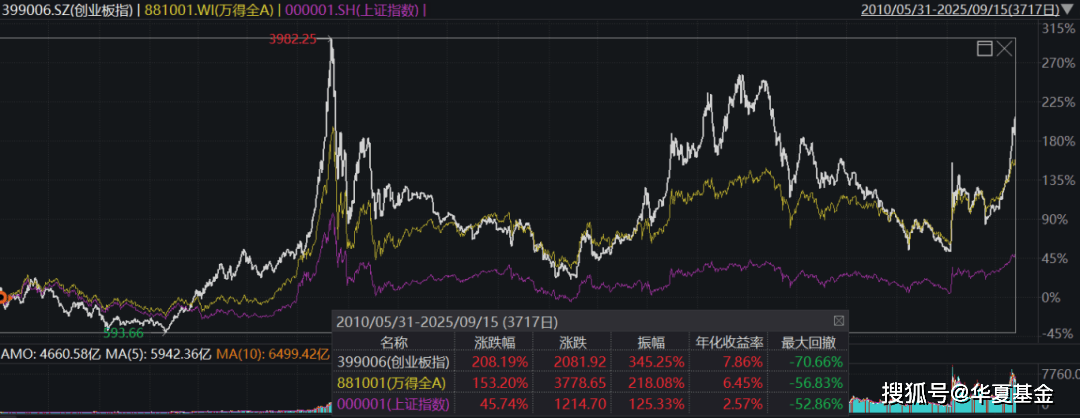
Group 1 - The core viewpoint of the news is that the ChiNext Index has recently reached a three-and-a-half-year high, driven by significant gains in constituent stocks like CATL, which rose over 14% [1] - The ChiNext Index has shown strong performance, with a nearly 70% increase since its low in early April, significantly outperforming major broad-based indices [1] - Historically, the ChiNext Index has consistently led market rallies, demonstrating strong upward elasticity during rebound phases since its inception in 2010 [2][3] Group 2 - From 2013 to 2015, the ChiNext Index surged from 585 points to a peak of 4037 points, marking a 590% increase, far exceeding the performance of the main board index during the same period [3] - In 2024, the average annual return of the ChiNext Index was 11.44%, significantly higher than the 4.08% and 3.91% returns of the CSI 300 and CSI 500 indices, respectively [5] - As of September 12, 2025, the ChiNext Index's price-to-earnings ratio (PE-TTM) was 42.32, indicating it is cheaper than over 53% of the time in the past decade, providing a favorable investment margin [5] Group 3 - The ChiNext Index's high growth potential is attributed to the continuous optimization and updating of its constituent stocks, which align with China's economic transformation and focus on emerging industries [6] - Key sectors within the ChiNext Index include power equipment (29.4%), electronics (14.3%), and biomedicine (11.6%), reflecting its concentration on strategic emerging industries [11] - The index has benefited from high research and development investments, with a projected R&D expenditure of approximately 88 billion yuan in 2024, a 10% increase from the previous year [16] Group 4 - The ChiNext has served as a "testing ground" for capital market reforms, continuously attracting investment through policy incentives related to technology innovation and digital economy [17] - The index has not missed any market rally this year, driven by sectors such as AI, innovative pharmaceuticals, and renewable energy equipment benefiting from policy recovery [15] - The ChiNext Index has evolved from a total market value of 340 billion yuan at its inception to a core index with a total market value of 8.2 trillion yuan as of September 12, 2025 [10]


8月份经济数据解读:“反内卷”效果逐步显现,需求仍有待提振
Caixin Securities· 2025-09-15 10:02
1. Report Industry Investment Rating No industry investment rating is provided in the report. 2. Core Views of the Report - The economy shows signs of improved quality and prominent structural highlights, but internal momentum needs consolidation and demand requires further boosting. The full - year economic growth rate is expected to be high in the first half and low in the second half, with the 5% annual target achievable [4]. - In the equity market, the foundation for a slow - bull market remains. The index is expected to oscillate strongly, and investors are advised to actively participate and focus on high - growth sectors. In the bond market, the upward movement is limited, and there is insufficient momentum for a trending long - position. In the commodity market, the differentiation intensifies, with the expected performance being precious metals > industrial metals > energy products [4]. 3. Summary by Relevant Catalogs 3.1 8 - month Economic Overview - **Positive aspects**: The service industry is highly prosperous, with the August service business activity index reaching 50.5%. New and old kinetic energy is accelerating transformation, and the "Two New" policies have strong supporting effects. The "Anti - involution" policy shows results, with the PPI ending its 8 - month decline. The capital activation degree increases, and the profit decline of industrial enterprises above designated size narrows [4][5]. - **Challenges**: Economic data awaits trend improvement, with the manufacturing PMI below the boom - bust line for 5 consecutive months. Internal growth momentum needs consolidation, overseas demand is uncertain, real estate drags on the economy, and the profit structure of industrial enterprises above designated size may further differentiate [4][6]. 3.2 8 - month Economic Sub - data Interpretation - **Manufacturing PMI**: It remains in a low - level oscillation, with the production index driving the slight rebound. High - tech and equipment manufacturing PMIs show an upward trend [7]. - **Fixed - asset investment**: The growth rate continues to decline, mainly due to real estate drag. However, high - tech investment remains prosperous [9]. - **Consumption**: The growth rate slightly drops, but the "National Subsidy" and service - consumption policies are expected to support future consumption [10]. - **Exports**: The short - term growth slows down, and the future trend is uncertain due to factors such as high - base effects, policy changes, and overseas economic conditions [11][13]. - **Real estate**: Sales continue to be weak, with both sales area and investment decline expanding. Second - hand housing prices have not stopped falling [14]. - **Production**: It maintains a high level of prosperity, with the added value of industries above designated size growing steadily. Manufacturing is the core support [15]. - **Prices**: The "Anti - involution" policy affects PPI. CPI is weak, mainly dragged down by food prices. PPI ends its decline, but the recovery of PPI depends on demand - side policies [18][19]. - **Liquidity**: The total social financing slightly exceeds expectations, but the structure needs improvement, especially the slow recovery of medium - and long - term credit demand [22]. - **Profit**: The profit decline of industrial enterprises above designated size narrows, and future profit growth depends on multiple factors [23]. 3.3 Future Economic Outlook - **Overseas**: The US economy shows signs of weakness, which may affect China's exports. The Fed's potential interest - rate cuts will impact global liquidity [24]. - **Domestic policy**: A certain policy space will be reserved, and policies focus on long - term structural issues [25]. - **Economy**: The full - year economic growth rate is expected to be high in the first half and low in the second half. Investment may continue to explore the bottom, consumption has certain support, and exports remain uncertain [25]. 3.4 Investment Recommendations - **Equity market**: The foundation for a slow - bull market exists. Investors are advised to focus on high - growth sectors such as self - controllability, energy storage and new energy, service consumption, and sectors benefiting from Fed rate cuts [27]. - **Bond market**: The upward movement is limited, and it is recommended to allocate when the 10 - year Treasury yield approaches 1.8% [30]. - **Commodity market**: The differentiation intensifies, and it is recommended to focus on precious metals [31].
复旦微回应
半导体芯闻· 2025-09-15 09:59
Core Viewpoint - Fudan Microelectronics emphasizes its commitment to independent innovation and stable operations in response to being added to the U.S. BIS Entity List, highlighting its strategic reserves and diversified product offerings [2][3]. Group 1: Strategic Reserves - The company has strengthened its strategic reserves for core product lines, with inventory increasing from approximately 600 million yuan at the end of 2020 to about 3.1 billion yuan by mid-2025, enhancing supply chain stability and risk resistance [3]. Group 2: Industry Collaboration - Fudan Microelectronics maintains an open cooperation mindset, enhancing supply chain diversification since 2022 and deepening collaboration with domestic and international partners, which has improved supply chain resilience and production capacity [4]. Group 3: Frontier Innovation - The company has established a research and development platform for FPAI heterogeneous fusion architecture chips, covering a full range of computing power chips from 4 TOPS to 128 TOPS, with the first 32 TOPS product progressing well, supporting stable operations and long-term value growth [5].

36氪合伙人、副总裁李政:中国产业的未来在哪?| 2025年36氪产业未来大会
3 6 Ke· 2025-09-15 06:54
Core Insights - The 2025 36Kr Industry Future Conference was held in Xiamen, China, focusing on national strategies and industry development in key sectors such as AI, low-altitude economy, advanced manufacturing, new energy, and consumer goods [1] - The conference emphasized the collaboration between government, capital, and industry to address challenges in industrial development [1] Investment Trends - The investment market shows a positive trend with significant growth in both fundraising quantity and scale, achieving double-digit growth [3] - In the first eight months, the number of investment projects increased by 20% year-on-year, while fundraising quantity grew by 1.6% [3] - The platform reported a 10% increase in financing news and new project financing, indicating heightened activity in fundraising and investment [3] Capital Structure - There is a noticeable shift towards state-owned capital, with over 68% of the disclosed fundraising scale of over 800 billion yuan coming from state-owned sources [4] - Non-state capital accounts for less than one-third of the total fundraising [4] - The role of industrial capital, including state-backed and large enterprise capital, is becoming increasingly significant in the investment landscape [4] Investment Focus - Investment directions are increasingly centered on "self-controllable" and "technology-driven" initiatives, with a focus on hard technology [4] - Key metrics for investment discussions have shifted from business models to technical parameters, patent status, and team backgrounds [4] Hot Investment Sectors - AI is transitioning from conceptual discussions to practical applications, with capital flowing towards companies that demonstrate real-world value [5] - Embodied intelligence, represented by robotics, is gaining traction, with significant investment in core components and development firms [5] - The low-altitude economy is rapidly developing, with many companies obtaining airworthiness certificates, indicating potential for future growth [5] - New energy and new materials are viewed as foundational for future technological innovations, despite a decrease in media attention [6] - The biopharmaceutical sector is experiencing a revolution in research efficiency through AI integration, significantly reducing drug development timelines [6] Industry Dynamics - The narrative in the industry is shifting from business models to a focus on technical granularity, emphasizing long-term technological value [7] - The competitive landscape is evolving from a "jungle law" approach to one of "ecological collaboration," where companies must engage with national teams and industry partners [7] - The mindset of industry participants is becoming more rational and pragmatic, moving away from high-frequency financing and inflated valuations towards sustainable growth models [7]

化工行业周报20250914:国际油价小幅上涨,尿素、三氯蔗糖价格下跌-20250915
Bank of China Securities· 2025-09-15 06:35
Investment Rating - The report rates the chemical industry as "Outperforming the Market" [2] Core Views - The report highlights the impact of "anti-involution" on supply in related sub-industries, the increasing importance of self-sufficiency in electronic materials companies, undervalued industry leaders, and stable dividend policies in energy companies [2][10] - It suggests that the oil price is expected to remain at a medium to high level, with continued high prosperity in the oil and gas extraction sector, and emphasizes the importance of policy support for demand recovery in 2025 [10] Summary by Sections Industry Dynamics - As of September 14, the TTM price-to-earnings ratio for the SW basic chemical sector is 25.62, at the 99.50 percentile historically, while the price-to-book ratio is 2.24, at the 80.12 percentile [10] - The SW oil and petrochemical sector has a TTM price-to-earnings ratio of 11.84, at the 84.48 percentile historically, and a price-to-book ratio of 1.17, at the 53.35 percentile [10] Investment Recommendations - The report recommends focusing on the following areas: 1. The impact of "anti-involution" on supply in related sub-industries 2. The critical importance of self-sufficiency in electronic materials companies 3. Undervalued industry leaders 4. Energy companies with stable dividend policies [2][10] - Long-term investment themes include the sustained high prosperity of the oil and gas extraction sector and the rapid development of downstream industries, particularly in new materials [10] Key Stocks to Watch - Recommended stocks include China Petroleum, China National Offshore Oil Corporation, China Petrochemical Corporation, and several technology and chemical companies such as Anji Technology, Yake Technology, and Jiangfeng Electronics [2][10] Price Trends - In the week of September 8-14, 36 chemical products saw price increases, 36 saw decreases, and 28 remained stable. The average price of 41% of tracked products increased month-on-month, while 47% decreased [9][32] - The report notes specific price movements, such as a decrease in urea prices by 1.69% compared to the previous week and a significant drop in trichlorosucrose prices by 8.11% [9][32]





科创综指ETF天弘(589860)、芯片ETF天弘(159310)盘中飘红,商务部对美模拟芯片发起反倾销调查
2 1 Shi Ji Jing Ji Bao Dao· 2025-09-15 02:25
Group 1 - Major stock indices collectively rose, with the ChiNext Index increasing by over 2% and the STAR Market Composite Index rising by 0.44%. Notable performers included SIRUI, which surged over 15%, and NAXIN Microelectronics, which rose over 13% [1] - The CSI Chip Industry Index also saw a 0.44% increase, with Shanghai Beiling hitting the daily limit, and Shengbang Co. rising over 19% [1] - The Tianhong STAR Market ETF (589860) increased by 0.47%, while the Tianhong Chip ETF (159310) rose by 0.72%, indicating positive market sentiment towards technology and chip sectors [1] Group 2 - The Ministry of Commerce announced an anti-dumping investigation into imported analog chips from the United States, effective September 13, 2025, following a formal request from the Jiangsu Semiconductor Industry Association [2] - The Tianhong STAR Market ETF closely tracks the STAR Market Composite Index, covering approximately 97% of the market capitalization, with top holdings including leading tech firms like Cambricon and SMIC [2] - The Tianhong Chip ETF tracks the CSI Chip Industry Index, with major holdings in industry leaders such as SMIC and Northern Huachuang, reflecting a strong focus on key players in the semiconductor sector [2] Group 3 - From a global liquidity perspective, the market anticipates further interest rate cuts by the Federal Reserve, which could support the A-share market amid a weakening dollar index [3] - The A-share market is expected to continue a trend of oscillating upward, with AI identified as a key market driver, supported by strong overseas demand for computing power [3] - The current market dynamics are influenced by industry trends, with a focus on sectors that may experience a rebound, highlighting the importance of monitoring short-term volatility [3]
英伟达推出Rubin CPX,AI-PCB持续升级 | 投研报告
Zhong Guo Neng Yuan Wang· 2025-09-15 02:23
Core Viewpoint - NVIDIA has launched the Rubin CPX, a new GPU designed for large-scale contextual reasoning, which significantly enhances processing capabilities in AI applications [1][2] Group 1: Product Launch and Features - The Rubin CPX GPU is integrated into the NVIDIA MGX rack system, which includes 144 Rubin CPX GPUs, 144 Rubin GPUs, and 36 Vera CPUs, providing 8 EFLOPS of NVFP4 computing power [1][2] - The system features 100TB of high-speed memory and 1.7PB/s memory bandwidth, offering three times the attention mechanism processing capability compared to the NVIDIA GB300 NVL72 system [1][2] Group 2: Market Implications and Predictions - The value of PCBs supporting the CPX is expected to increase, alongside new PCB demand from the CX9 network card, leading to significant growth in the VR NVL144 CPX PCB value [2] - NVIDIA is advancing orthogonal backplane development and may adopt M9+Q materials, which could potentially double the PCB value in a single rack [2] - The technology for ASIC chip PCBs is evolving from high-layer to HDI, with future advancements expected from M8 to M9, continuously enhancing value [2] Group 3: Industry Trends and Demand - Micron has announced a price increase of 20%-30% for storage products, affecting all DDR4, DDR5, LPDDR4, and LPDDR5 products, with a halt in pricing expected for one week [2] - The U.S. Department of Commerce has added 23 Chinese entities, including 13 integrated circuit companies, to its entity list, which may create opportunities for domestic alternatives in analog chips [2] - The surge in downstream inference demand is driving strong growth in ASIC demand, with NVIDIA's technology upgrades boosting both PCB value and volume [2] Group 4: Sector Outlook - The demand for AI PCBs remains robust, with domestic PCB manufacturers likely to benefit from slow overseas expansion [4] - The overall outlook for various sectors is positive, with consumer electronics, PCB, semiconductor chips, and related industries showing stable to accelerating growth [4]

财信证券宏观策略周报(9.15-9.19):慢牛基础仍然存在,关注自主可控方向
Sou Hu Cai Jing· 2025-09-15 00:38
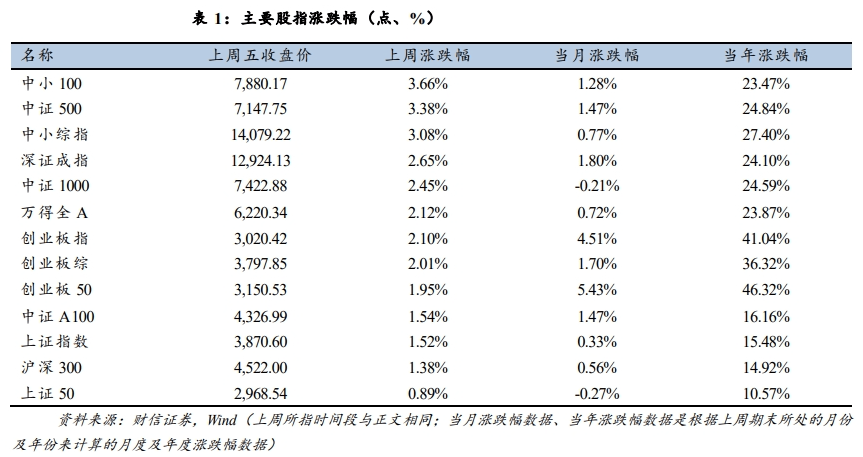
Core Viewpoint - The market is expected to face multiple domestic and international events next week, which may influence direction selection. Key events include the release of August high-frequency economic data, US-China talks in Spain, and the Federal Reserve's September meeting. The overall market sentiment remains cautious, with a potential for continued oscillation in the market index [1][4]. Economic Data and Trends - August saw a decrease in new RMB deposits by 600 billion yuan year-on-year, while non-bank financial institutions' deposits increased by 550 billion yuan. The trend of residents' savings entering the market continues, albeit at a slower pace compared to July [2]. - The demand for AI computing power remains robust, with Oracle reporting an unfulfilled revenue obligation of $455 billion, a year-on-year increase of 359% [2][9]. - The US job market shows signs of cooling, with a significant downward revision of 910,000 in the preliminary benchmark for non-farm employment for 2025, indicating a weaker employment landscape [2][10]. Market Strategy and Investment Opportunities - The current market strategy suggests focusing on high-growth sectors for low-entry opportunities, including: 1. Self-sufficiency sectors such as information technology and chips [11]. 2. Energy storage and new energy sectors, which may become the next market growth drivers [11]. 3. Service consumption sectors, with a gradual layout in tourism, dining, and entertainment as the National Day holiday approaches [11]. 4. Sectors benefiting from potential Federal Reserve interest rate cuts, such as innovative pharmaceuticals and precious metals [11][12]. Market Valuation - As of September 14, 2025, the TTM price-to-earnings ratio for the entire A-share market is 22.25, at the 91.96 percentile historically, indicating a low point in A-share performance. The price-to-book ratio stands at 1.81, at the 54.71 percentile historically, suggesting strong valuation appeal [5]. - In August, the total social financing (TSF) increased by 25,693 billion yuan, exceeding expectations, but the structure still requires improvement, particularly in long-term credit demand from households and enterprises [5]. Price Index Trends - In August, the Consumer Price Index (CPI) decreased by 0.4% year-on-year, primarily due to falling food prices, while the Producer Price Index (PPI) showed signs of stabilization, with a year-on-year decline of 2.9%, narrowing from previous months [6]. - Export growth slowed in August, with a year-on-year increase of 4.4%, reflecting uncertainties in future export trends due to high base effects and new tax regulations [7][8]. Summary of Market Performance - The A-share market indices showed positive performance last week, with the Shanghai Composite Index rising by 1.52% and the Shenzhen Component Index increasing by 2.65%. However, trading volume decreased by 10.62% compared to the previous week, indicating a cautious market sentiment [13].