关税战

Search documents
谈判刚落地,美国对华祭出3大杀招,美论坛:中国已输掉关税战
Sou Hu Cai Jing· 2025-05-16 14:13
Group 1 - The core viewpoint of the article highlights the recent high-level economic talks between China and the U.S. in Geneva, which were followed by significant threats from the U.S. towards China, raising questions about the sincerity of U.S. intentions [1][11][12] - The talks lasted for two days and were seen as crucial for stabilizing U.S.-China relations, with both sides reaching some consensus and agreeing to establish a regular communication mechanism [7][10][12] - Despite the diplomatic engagement, the U.S. quickly issued three major threats against China, including potential increases in tariffs, stricter export controls on technology, and warnings regarding the use of U.S. AI chips in China [14][14][14] Group 2 - The article discusses the perception in the U.S. that China has lost the trade war, with many Americans expressing confidence in a U.S. victory, despite the underlying economic challenges faced by the U.S. [2][16][24] - International reactions to the U.S. tariff increases have been largely negative, with the EU warning that such unilateral measures could harm the global economy and calling for continued negotiations [18][21] - The article notes that the U.S. domestic response to the tariffs has been mixed, with concerns about rising inflation and local government pushback against the tariffs, indicating a potential backlash against the administration's policies [21][22][23]

和中国谈完没捞着,特朗普挥刀向欧盟,美国的亏空必须有人填补上
Sou Hu Cai Jing· 2025-05-16 14:13
刚和中国谈完,自认踢到钢板的美国总统特朗普,急需一只软柿子。 千挑万选,全球两百多个国家和地区,凭什么最后是"祖上最阔"的欧盟被抓来祭旗开刀?特朗普这次打 算如何"收割"欧洲? 瑞士日内瓦当地时间5月12日,经过两天谈判桌角力,万众期待的中美贸易磋商落下帷幕,《中美联合 声明》终于问世。从具体内容上看,此番谈判的成果可以分为以下两个部分: 站在中方的角度看,我们不仅从头到尾践行了"谈,大门敞开。打,奉陪到底"的原则,而且完成了一 次"以战止战"的壮举。不论怎么讲,这都是一场足以载入史册的胜利。 但话又说回来,中美《共同声明》的发布绝不代表中美关税战就此结束。是,115%的关税降幅确实史 无前例。但过去一个月我们同美国在关税上大开大合的交锋,对中美贸易的负面影响仍旧存在不少。 因为《联合声明》中提及的关税互减是有90天期限的。而且即便抛开时效性不谈,中国输美商品仍旧需 要面临的高额关税壁垒: 众所周知,关税大棒这一招,早在特朗普的第一任期,就被他乐此不疲地用来施压中国。截至2020年特 朗普被选下去为止,中国输美商品的平均关税,大概在20%左右。 其一,双方在关税额度上对等让步。具体来说就是,中美双方90天内互 ...
黑色金属数据日报-20250516
Guo Mao Qi Huo· 2025-05-16 10:39
Group 1: Basic Information - The report is a daily report on ferrous metals data, published by Guomao Futures on May 16, 2025 [1] Group 2: Futures Market Far - month Contracts (May 15) - RB2601: Closing price 3150 yuan/ton, up 21 yuan (0.67%) [2] - HC2601: Closing price 3272 yuan/ton, up 16 yuan (0.49%) [2] - I2601: Closing price 698 yuan/ton, up 7 yuan (1.01%) [2] - J2601: Closing price 1498.5 yuan/ton, up 3 yuan (0.20%) [2] - JM2601: Closing price 899 yuan/ton, up 6.5 yuan (0.73%) [2] Near - month Contracts (May 15) - RB2510: Closing price 3118 yuan/ton, up 12 yuan (0.39%) [2] - HC2510: Closing price 3260 yuan/ton, up 15 yuan (0.46%) [2] - I2509: Closing price 736.5 yuan/ton, up 8.5 yuan (1.17%) [2] - J2509: Closing price 1472 yuan/ton, up 6.5 yuan (0.44%) [2] - JM2509: Closing price 883 yuan/ton, up 3 yuan (0.34%) [2] Cross - month Spreads (May 15) - RB2510 - 2601: - 32 yuan/ton, down 4 yuan [2] - HC2510 - 2601: - 12 yuan/ton, up 4 yuan [2] - I2509 - 2601: 38.5 yuan/ton, up 1 yuan [2] - J2509 - 2601: - 26.5 yuan/ton, down 0.5 yuan [2] - JM2509 - 2601: - 16 yuan/ton, up 0.5 yuan [2] Spreads/Ratios/Profits (May 15) - Coil - rebar spread: 142 yuan/ton, up 2 yuan [2] - Rebar - ore ratio: 4.23, down 0.01 [2] - Coal - coke ratio: 1.67, up 0.01 [2] - Rebar disk profit: - 109.03 yuan/ton, down 3.18 yuan [2] - Coking disk profit: 297.61 yuan/ton, up 5.3 yuan [2] Group 3: Spot Market May 15 Prices and Changes - Shanghai rebar: 3220 yuan/ton, down 50 yuan [2] - Tianjin rebar: 3250 yuan/ton, up 20 yuan [2] - Guangzhou rebar: 3440 yuan/ton, unchanged [2] - Tangshan billet: 2980 yuan/ton, down 20 yuan [2] - Platts index: 102.2, down 0.6 [2] - Shanghai hot - rolled coil: 3280 yuan/ton, down 60 yuan [2] - Hangzhou hot - rolled coil: 3340 yuan/ton, unchanged [2] - Guangzhou hot - rolled coil: 3380 yuan/ton, up 10 yuan [2] - Billet - product spread: 240 yuan/ton, down 50 yuan [2] - Rizhao Port: PB ore: 780 yuan/ton, up 2 yuan [2] - Super special powder: 645 yuan/ton, up 10 yuan [2] - Another ore: 690 yuan/ton, up 10 yuan [2] - Ganqimao Port: Coking coal: 970 yuan/ton, unchanged [2] - Qingdao Port: Quasi - first - grade coke: 1510 yuan/ton, unchanged [2] Basis (May 15) - HC main contract: 20 yuan/ton, down 53 yuan [2] - RB main contract: 102 yuan/ton, down 41 yuan [2] - I main contract: 55 yuan/ton, unchanged [2] - J main contract: 186.66 yuan/ton, up 10 yuan [2] - JM main contract: 117 yuan/ton, up 11.5 yuan [2] Group 4: Industry Analysis Steel - Weekly steel data rebounded but did not exceed the normal range. Inventory and apparent demand data improved, and the market returned to normal, but was not stronger than the historical average. Spot trading volume was weak. The market sentiment may drive the futures price to fill the gap in early April, but the supply - demand structure in May may be weaker than in April, with a potential price decline risk [4] Coking Coal and Coke - The first round of coke price cuts is about to be implemented, and coking coal auction prices continue to fall. The black chain index touched the 20 - day line. Macro factors may affect the market sentiment. The "rush to export" during the 90 - day tariff suspension period may not significantly boost steel demand. The coal - coke market remains weak, and the high - short strategy is recommended. Consider the JM9 - 1 calendar spread arbitrage [5] Ferroalloys - In the silicon - iron market, some Ningxia manufacturers have reduced production, creating a supply - demand gap and driving the futures price to rebound. Manganese - silicon production cuts have expanded, and the market may see a slowdown in the short - term rebound. Hebei Iron and Steel's tender prices are low [7] Iron Ore - The rebound driven by improved macro sentiment may provide a good cost basis. The comprehensive tariff is still high. High pig - iron production is expected to continue in May, and the port inventory will fluctuate slightly. After May, if the steel fundamentals weaken, steel prices may be weaker than iron - ore prices [8] Group 5: Investment Strategies - Steel: Hold a wait - and - see attitude for single - side trading. Choose hot - rolled coils for better liquidity in the spot - futures market, and conduct hedging and inventory management. For arbitrage, roll at high prices [9] - Coking Coal and Coke: Short on the single - side market. Pay attention to the JM9 - 1 calendar spread arbitrage [9] - Ferroalloys: Hold the 9 - 1 calendar spread and short at high prices [9] - Iron Ore: Hold the 9 - 1 calendar spread and short at high prices [9]
杨德龙:巴菲特高位大量减持美股 储备巨额现金等待机会
Xin Lang Ji Jin· 2025-05-16 08:59
Group 1 - The core viewpoint of the articles highlights the significant progress in Sino-U.S. trade talks, with both sides agreeing to suspend the implementation of tariffs and cancel a majority of additional tariffs, indicating a de-escalation of the trade war initiated by Trump [1][2][3] - The trade relationship between China and the U.S. is characterized as mutually beneficial, with tariffs imposed by Trump ultimately harming the U.S. economy, leading to increased domestic pressure on him to negotiate [2][3] - Following the announcement of the trade agreement, U.S. and Hong Kong stock markets experienced substantial gains, while A-shares showed a more muted response due to prior market stabilization efforts [2][3] Group 2 - The articles discuss the implications of Warren Buffett's leadership at Berkshire Hathaway, noting his long-term investment success and the potential uncertainty following his announcement to step down as CEO [4][5] - Buffett's investment philosophy emphasizes value investing and the importance of maintaining a long-term perspective, which has yielded significant returns over the decades [4][6] - The current market environment is described as having high valuations, with Buffett's strategy of reducing exposure to U.S. stocks in anticipation of potential market corrections being highlighted [6][7] Group 3 - The articles indicate a shift in capital flow from U.S. tech stocks to Chinese A-shares and Hong Kong stocks, particularly in the technology sector, suggesting growing confidence in China's innovation capabilities [7][8] - The perception of China's leadership in artificial intelligence and technology is changing, with U.S. executives acknowledging China's advancements, which may lead to a more competitive landscape between the two nations in the coming decade [7][8]
奉陪到底,美国骗了全世界?特朗普对中国不装了,美司令措辞巨变
Sou Hu Cai Jing· 2025-05-16 07:31
就在前两天,美国国防部泄露的一份有美国国防部长签名的文件显示,美国将东方大国作为最大威胁,美国将集中印 太地区力量,大打台湾地区牌,以抵御来自东方大国的威胁。不仅如此,不顾东方大国的反对,美国议员近日窜访台 湾地区。在同台湾地区当局领导人赖清德见面时,赖清德承诺,要扩大台湾地区的防务预算,从之前的百分之二提升 到百分之三,大力采购美国的军事武器。此前,美国曾多次对台湾地区当局表达不满,声称台湾地区抢了美国的生 意,不仅要求台湾地区将工厂开到美国,还要求台湾地区当局提高防务预算,否则就不再在军事上庇护台湾地区。 为了讨得美国的欢心。台湾地区当局将台积电的新工厂送给了美国。然而,这根本满足不了美国总统特朗普的胃口。 此次加水。美国总统特朗普把对台湾地区的税率提高到了百分之三十二,这大大超出了台湾地区当局的意料。为了讨 好特朗普,赖清德不仅声称将与中国大陆脱钩断联,来换取美国的信任,而且还打算将台湾地区排名第二的另一家半 导体工厂送给美国。 眼看"关税战"并没有拖垮中国,美国干脆亮明牌,不仅在军事上动作不断,还持续扶植台当局,大打台湾地区牌,企 图挑衅中国,美国的计谋能得逞吗?进入四月以来,美国总统特朗普正式宣布对 ...
中美互降关税提振全球市场信心
Yang Zi Wan Bao Wang· 2025-05-16 04:40
Group 1 - The article highlights the positive impact of the recent US-China tariff adjustments on global markets, indicating a shift towards improved trade relations [2][4][11] - Following the announcement of mutual tariff reductions, global stock markets experienced significant gains, with major indices in the US, Europe, and China all rising [5][10] - The easing of trade tensions has led to increased confidence among investors, prompting upgrades in stock ratings and target indices by financial institutions [5][11] Group 2 - The article notes a decline in demand for safe-haven assets, particularly gold, which saw a sharp drop in price following the tariff news [6][8] - The reduction in tariffs has spurred a rapid increase in cross-border trade, with US companies quickly moving to ship goods that had been delayed in China [10][11] - The article emphasizes that the tariff adjustments are expected to benefit various sectors, including agriculture, as producers anticipate reduced uncertainty in trade [10][11]
肖耿:中国企业需要继续走出去,成为真正的全球性跨国公司
经济观察报· 2025-05-16 03:58
Core Viewpoint - The article emphasizes the need for China to transform its strong supply capabilities in research and manufacturing into marketable wealth, income, and consumption [1]. Group 1: Trade and Economic Policies - The recent high-level economic talks between China and the U.S. in Geneva resulted in substantial progress on tariff policies, reflecting a multi-dimensional competition and rebalancing between the two nations [2]. - The trade imbalances between China and the U.S. are a result of their differing development models, with the U.S. adopting a strong dollar and aggressive macroeconomic stimulus, leading to long-term trade deficits, while China maintains a weak yuan and cautious economic policies, resulting in trade surpluses [2][3]. Group 2: Corporate Strategy and Globalization - Chinese companies need to explore becoming true multinational corporations by leveraging global markets, with local and central government policies supporting this initiative [4]. - The current "A+H" model of many domestic listed companies has not fully utilized Hong Kong's advantages, suggesting a potential shift towards a "dual headquarters" model for better global supply chain management [4]. Group 3: Macroeconomic Policy and Consumer Spending - The direction of macroeconomic policies to support and encourage consumption is correct, but there is a need to focus on increasing residents' income and wealth to drive fundamental changes in expectations [5].
申银万国期货早间评论-20250516
Shen Yin Wan Guo Qi Huo· 2025-05-16 03:29
Report Summary 1. Investment Rating - The report does not mention the industry investment rating. 2. Core Viewpoints - Domestically, the government emphasizes strengthening the domestic economic cycle, and the consumer market shows steady growth, indicating a stable economic foundation. Overseas, the global economic recovery is uneven, with the US economy strong but facing inflation, and Europe struggling with energy and supply - chain issues. The IMF has lowered the global economic growth forecast [1]. - For key varieties: - Crude oil prices are falling due to the expected US - Iran nuclear deal and a more relaxed supply - demand balance in the oil market [2][14]. - Shipping, especially the container shipping European line, has seen price rebounds due to the easing of Sino - US tariff frictions, with different trends for different contracts [3][35]. - Gold prices are affected by geopolitical negotiations, tariff wars, and Fed policies, currently in a correction phase [4][5]. 3. Summary by Directory 3.1 Daily Main News - **International News**: The Fed is considering adjusting its monetary policy framework. The US may face more frequent supply shocks and unstable inflation, and long - term interest rates may rise. The predicted April PCE in the US will increase by about 2.2% year - on - year [6]. - **Domestic News**: The State Council emphasizes strengthening the domestic economic cycle to hedge against international uncertainties and promote high - quality development [1][7]. - **Industry News**: The IEA predicts that the global oil demand growth will slow to 650,000 barrels per day for the rest of 2025, and has lowered the US shale oil production forecast [2][8]. 3.2 Foreign Market Daily Returns - The S&P 500 rose 0.41%, the European STOXX50 rose 0.60%, the FTSE China A50 futures fell 0.38%, the US dollar index fell 0.24%, ICE Brent crude oil fell 1.87%, London gold rose 1.98%, London silver rose 1.33%, and various other commodities had different price changes [10]. 3.3 Morning Comments on Major Varieties - **Financial**: - **Stock Index**: Short - term positive factors such as policy support and tariff negotiation results are beneficial to the stock market. The valuation of major domestic indices is low, and stock index futures are expected to be bullish, while stock index options can use the wide - straddle buying strategy [11]. - **Treasury Bonds**: After the Sino - US talks, market risk appetite increased, and treasury bond futures prices fell with potential short - term volatility [12][13]. - **Energy and Chemicals**: - **Crude Oil**: Prices are falling due to the expected US - Iran nuclear deal and a more relaxed supply - demand balance [2][14]. - **Methanol**: Short - term bullish, with changes in domestic device operation rates and inventory levels [15]. - **Rubber**: Expected to be weakly volatile due to factors such as production area conditions and tariff policies [16]. - **Polyolefins**: After a phased rebound, they may oscillate at high levels, affected by macro factors and crude oil prices [17]. - **Glass and Soda Ash**: The market is reacting positively to the Sino - US financial talks. Glass inventory is slowly decreasing, and soda ash supply is relatively abundant, with both facing inventory digestion challenges [18][19]. - **Metals**: - **Precious Metals**: Gold and silver are in a correction phase, affected by geopolitical and tariff factors, and the Fed's wait - and - see attitude [4][5]. - **Copper**: Prices may fluctuate widely, affected by factors such as processing fees, demand, and tariff negotiations [21]. - **Zinc**: Prices may also fluctuate widely, with expectations of improved supply and influenced by tariff negotiations [22]. - **Aluminum**: May be oscillating strongly due to the better - than - expected result of tariff negotiations, despite weakening short - term demand [23][24]. - **Nickel**: Prices may be oscillating strongly, with a mix of positive and negative factors in the market [25]. - **Lithium Carbonate**: Prices are weak, with a supply - demand imbalance. Without large - scale production cuts, the price outlook is pessimistic [26]. - **Black Metals**: - **Coking Coal and Coke**: The black - metal sector is recovering due to macro - level positives, but the fundamentals of coking coal are deteriorating, and coke prices may face downward pressure [27]. - **Iron Ore**: Short - term support exists due to iron - water production and demand, but it may be weakly volatile in the later stage due to expected supply increases [28]. - **Steel**: The market faces a situation of increasing supply and weakening demand, with short - term exports stable but a potential seasonal decline in demand [29][30]. - **Agricultural Products**: - **Oils and Fats**: Prices are falling due to factors such as the weakening of US biodiesel speculation, high palm oil production and inventory in Malaysia, and falling crude oil prices [31]. - **Soybean and Rapeseed Meal**: US soybean prices are rising due to positive factors, but domestic supply is expected to increase, putting pressure on prices [32]. - **Corn and Corn Starch**: The market is in a short - term oscillation. Supply is expected to be tight in July, but high prices may affect downstream acceptance. There is an expectation of imported corn reserve auctions [33]. - **Cotton**: Spot prices are rising with improved macro sentiment. Supply is stable, and the market is bullish in the short - term due to tariff negotiations [34]. - **Shipping Index**: - **Container Shipping European Line**: Prices have rebounded due to the easing of Sino - US tariff frictions. The 06 contract's volatility is expected to be limited, while the 08 contract may remain strong [3][35].
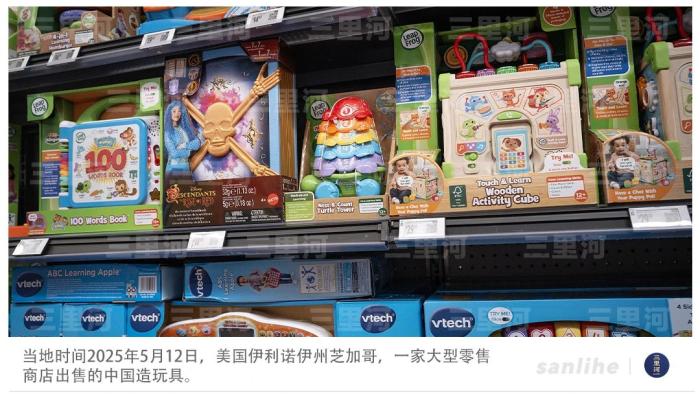
抓住“90天窗口期”,澄海玩具厂商开足马力出货
Di Yi Cai Jing· 2025-05-16 03:24
Core Viewpoint - The recent adjustments in U.S.-China tariffs have led to a surge in production and export activities among toy manufacturers in Chaozhou, Guangdong, as they aim to capitalize on a 90-day window to ship goods before potential tariff re-implementation [1][4]. Group 1: Impact of Tariff Adjustments - The U.S. has canceled 91% of additional tariffs on Chinese goods and suspended 24% of tariffs for 90 days, prompting manufacturers to expedite shipments [1]. - Many toy manufacturers, including Weili Intelligent Technology Co., have resumed production and shipping after previously facing order delays due to high tariffs [2][4]. - The toy industry in Chaozhou typically sees a peak in exports from April to October, but the imposition of tariffs in April caused significant disruptions [2][3]. Group 2: Production and Order Fulfillment - Weili Intelligent reported a full production schedule, with orders extending into September as they work to fulfill delayed shipments [4]. - Other companies, such as Daya Plastic Toys Co., have also resumed production and are receiving new orders from U.S. clients [4]. - Blue Light Electronics Technology Co. noted a 30% increase in order volume compared to pre-tariff levels, indicating a recovery in business activity [5]. Group 3: Strategic Adjustments and Future Planning - Companies are exploring overseas production options in Southeast Asia to mitigate the impact of tariffs, with some already establishing factories in countries like Vietnam [6][7]. - Despite the tariff relief, the cost of exporting from China remains higher compared to Southeast Asian countries, prompting companies to consider diversifying their production locations [6][7]. - The efficiency of production in Southeast Asia is perceived to be lower than in China, which may limit the extent of production relocation [7].
肖耿:中国企业需要继续走出去,成为真正的全球性跨国公司
Jing Ji Guan Cha Wang· 2025-05-16 03:08
Group 1 - The recent high-level economic talks between China and the U.S. in Geneva resulted in substantial progress on tariff policies [2] - The trade imbalance between China and the U.S. is a reflection of their differing development models, with the U.S. adopting a strong dollar and high consumption approach leading to long-term trade deficits, while China maintains a weak yuan and high savings resulting in trade surpluses [3] - The previous U.S. administration's tariffs were aimed at addressing structural economic issues domestically, rather than being a direct critique of China's performance [3] Group 2 - Chinese enterprises need to expand globally and explore becoming true multinational companies, with local and central government policies supporting this initiative [4] - Current macroeconomic policies are correctly focused on encouraging consumption, but there is a need for greater emphasis on increasing residents' income and wealth to change expectations fundamentally [5]