
美联储换帅

Search documents
中国银河证券:由沃什领导的美联储或将开启央行角色的深刻转变
智通财经网· 2026-02-06 00:55
Core Viewpoint - The nomination of Kevin Warsh as the next Federal Reserve Chairman by Trump is not merely a personnel change but signals a shift in the defense of the dollar and U.S. Treasury credit, with the dollar index rising by 1% on the announcement [2]. Group 1: Warsh's Monetary Policy Views - Warsh is a clear critic of the current Federal Reserve's policies, opposing quantitative tightening (QT) during market turmoil and questioning the Fed's focus on price stability [2]. - He criticizes the Fed's reliance on data and its disconnect from reality, emphasizing the need for credible monetary policy and a return to normalization, opposing unlimited quantitative easing (QE) [2][3]. Group 2: Proposed Reforms for the Federal Reserve - Warsh advocates for a revival of the Fed's core framework while eliminating past policy errors, focusing on reducing the balance sheet to control inflation, which could create room for lowering interest rates [3]. - He stresses the importance of the Fed and Treasury fulfilling their respective roles and calls for a reassessment of the 1951 Treasury-Fed Accord, emphasizing the need for Fed independence [3]. Group 3: Impact on Major Assets - The leadership change at the Fed should not be automatically interpreted as a major market trend shift; the impact of policies on the U.S. economy is fundamental to dollar pricing [4]. - Under Warsh's leadership, the Fed may transition from a supportive role post-financial crisis to a more traditional, rule-based approach, with expectations of a stronger dollar in the short term and a slow bearish trend in the long term [4]. - Short-term U.S. Treasury yields are expected to rise, putting pressure on prices, while long-term inflation expectations are anchored around 2% [4].

银河证券:黄金中长期牛市的核心逻辑依然稳固 央行购金将持续增加
Sou Hu Cai Jing· 2026-02-06 00:13
Core Viewpoint - The leadership change at the Federal Reserve should not be automatically equated with a major market trend shift; the impact of its policies on the fundamental aspects of the U.S. economy is crucial for dollar pricing [1] Group 1: Federal Reserve Policy Implications - A Federal Reserve led by Walsh may initiate a profound transformation in the central bank's role, shifting from a post-financial crisis support system to a more traditional approach focused on rules and discipline [1] - Short-term dollar strength is anticipated, while a long-term "slow bear" trend is expected [1] Group 2: Market Reactions - Short-term U.S. Treasury yields are projected to rise, putting pressure on prices; if policies are credible, long-term inflation expectations may stabilize around 2% [1] - Global stock markets are expected to face short-term pressure, with U.S. stocks likely to experience a "break before recovery" in the long term [1] Group 3: Gold and Reserve Dynamics - The core logic for a long-term bull market in gold remains solid, with central bank purchases of gold expected to continue [1] - Any flaws in dollar credibility could accelerate the construction of a multipolar reserve system globally [1]
美联储换帅前瞻:历史复盘与影响展望
GUOTAI HAITONG SECURITIES· 2026-01-27 12:09
Group 1 - The report highlights that the correlation among global capital markets has significantly increased since the Federal Reserve initiated a rate-cutting cycle in September 2024, with major economies like China and Europe also pursuing similar monetary easing policies [7][10][11] - The easing monetary policies have led to a strong performance in equity markets, with indices such as the Nasdaq 100 and Nikkei 225 showing substantial gains, while emerging markets like the Shanghai Composite and Ho Chi Minh indices have also performed well [12][14] - The report indicates that the current global easing cycle is fundamentally a "debt reduction action," aimed at lowering funding costs and alleviating government debt servicing pressures, which has resulted in a synchronized upward trend in various asset classes [10][11] Group 2 - The Federal Reserve's operational mechanisms have evolved over the past 40 years, transitioning from secretive decision-making to a more transparent and data-driven approach, enhancing market communication and expectation management [19][20] - The report outlines the general process for selecting a new Federal Reserve Chair, which involves presidential nomination followed by Senate confirmation, emphasizing the potential for political influences on monetary policy [22][24] - The report identifies four main candidates for the upcoming Federal Reserve Chair position, noting their varying degrees of dovishness and potential impacts on monetary policy, with Kevin Walsh and Rick Reed being prominent contenders [28][31][32] Group 3 - The report anticipates that the new Federal Reserve Chair will likely maintain a dovish monetary policy stance, which could lead to a weaker dollar and continued support for precious metals and equity markets [39][40][41] - It discusses the potential impacts of each candidate on the dollar index, precious metals, and global equity markets, suggesting that regardless of who is appointed, the overall market sentiment may remain positive due to expected rate cuts [41][43] - The report emphasizes that the ongoing economic transformation in China, coupled with favorable liquidity conditions and regulatory reforms, supports the continuation of a bullish trend in the Chinese equity market [44]
黄金调整还没结束,但牛市仍在!
Sou Hu Cai Jing· 2026-01-02 02:15
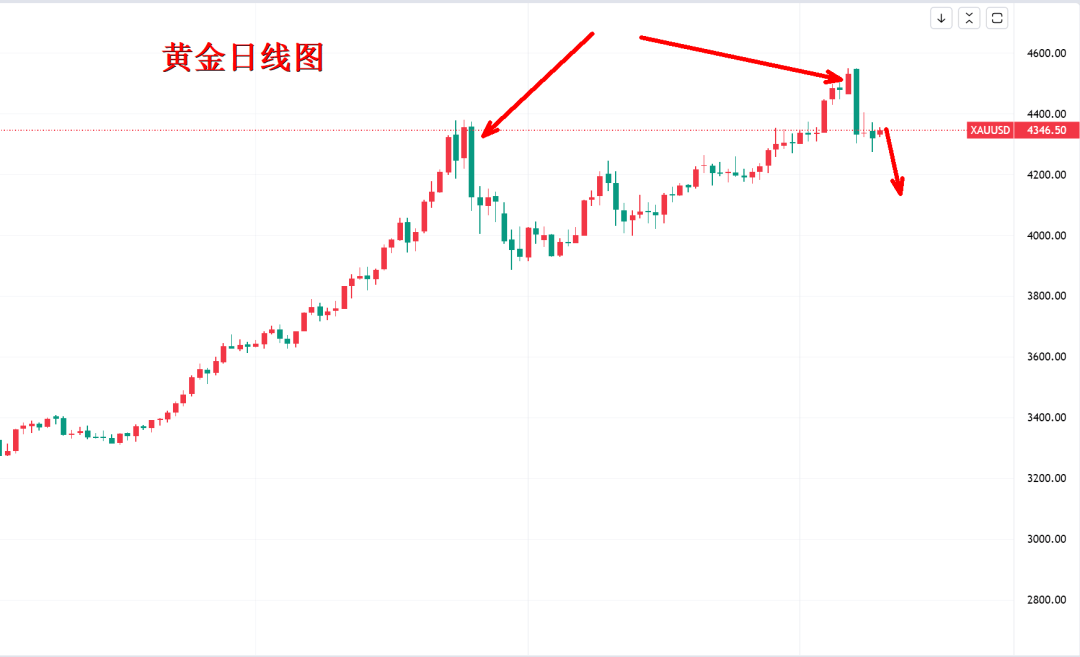
Group 1 - The current gold bull market is under discussion, with potential price targets of $5000 or $6000, and RMB gold prices possibly reaching 1200 or 1300 [1] - The US dollar has declined by over 8%, and further interest rate cuts by the Federal Reserve could lead to a more significant drop by 2026, which would benefit non-USD currencies, particularly the RMB [2] - The upcoming announcement of the new Federal Reserve Chair is crucial, as a more aggressive monetary easing policy could further suppress the dollar and boost the gold and silver markets [2] Group 2 - The ongoing power struggle between the President and the Federal Reserve is expected to intensify, especially with the upcoming elections and the limited time frame of the current administration [3] - Recent fluctuations in gold prices have shown a significant drop from $4550 to around $4300, with current trading between $4400 and $4300 [4] - The gold market is experiencing a typical adjustment phase, with key resistance at $4400, indicating potential opportunities for future buyers [6]

美元遭遇8年来最惨一年!华尔街正紧盯美联储换帅
Jin Shi Shu Ju· 2025-12-31 12:59
Group 1 - The US dollar is facing its most severe annual decline in eight years, with a year-to-date drop of 8.1% in the dollar index, primarily due to expectations of significant interest rate cuts by the next Federal Reserve chair [2][4] - The market has priced in at least two rate cuts in the coming year, which has diminished the dollar's attractiveness compared to other developed countries [2] - The focus is on the Federal Reserve and the potential successor to Chair Powell, with candidates like Hassett and Walsh being considered, which could influence future dollar performance [4] Group 2 - The euro has surged against the dollar due to mild inflation and anticipated defense spending in Europe, leading to negligible expectations for rate cuts [3] - In contrast, rate traders in Canada, Sweden, and Australia are betting on interest rate hikes, indicating a divergence in monetary policy expectations [3] - Market sentiment has shifted back to a more pessimistic view on the dollar, as evidenced by recent CFTC data showing a return to bearish positions [3]
美联储换帅风波引爆信任危机,美债市场慌了!
Jin Shi Shu Ju· 2025-12-16 08:50
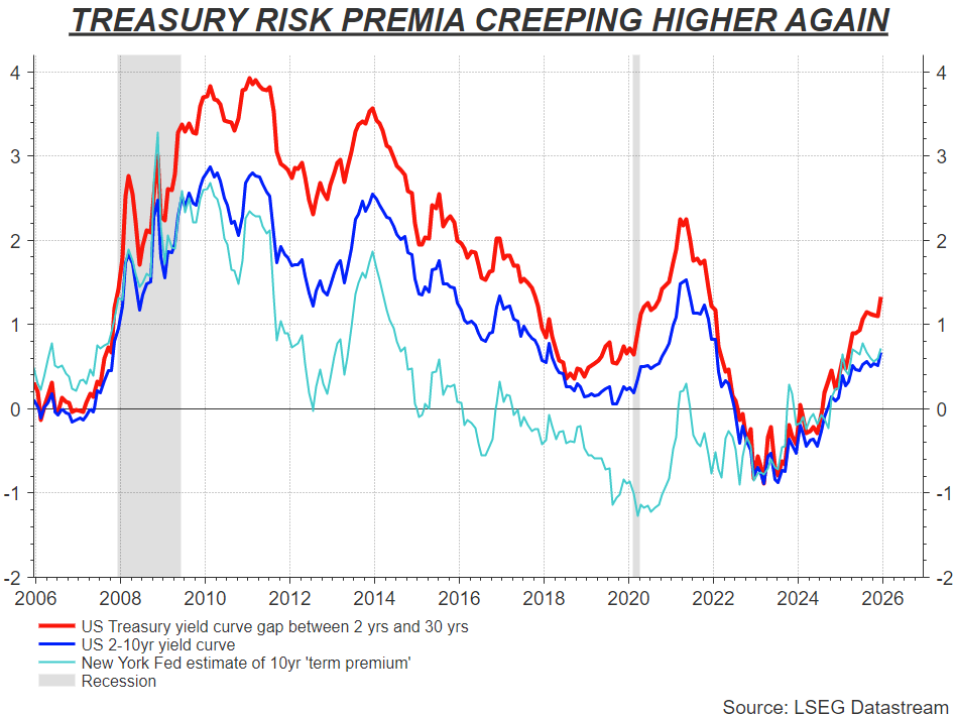
Core Viewpoint - Concerns regarding the U.S. Treasury market for 2026 are increasing, with the bond market reintroducing risk premium pricing ahead of the new year, despite potential further interest rate cuts by the Federal Reserve [2][3]. Group 1: Market Dynamics - The yield curve for U.S. Treasuries has steepened to its widest level in four years, with the 2-10 year spread surpassing the peak from April [2]. - The 10-year term premium, which reflects the extra compensation investors require for holding long-term U.S. Treasuries, has begun to rise again, reaching a three-month high [2]. Group 2: Upcoming Events - Key events in the U.S. Treasury market this week include the release of the latest employment report, October inflation data, and a 20-year Treasury auction, with potential impacts from the Bank of Japan's anticipated interest rate hike [4]. Group 3: Federal Reserve Concerns - Investor anxiety is driven by ongoing worries about potential changes in the Federal Reserve's response mechanism, particularly regarding political pressures affecting its independence [4]. - The uncertainty surrounding long-term inflation and the Fed's policy framework is a key factor pushing up risk premiums, contrasting with the post-2008 quantitative easing era [4]. Group 4: Leadership Speculation - President Trump has narrowed down the candidates for the next Federal Reserve Chair to Kevin Warsh and Kevin Hassett, with market perceptions shifting regarding their likelihood of appointment [6][8]. - Market sentiment suggests that Warsh's potential appointment may provide reassurance, while Hassett is viewed as more politically influenced [8]. Group 5: Policy Implications - Despite recent interest rate cuts, the Fed faces pressure from hawkish regional Fed presidents, which could lead to a more contractionary policy stance [9]. - The Fed's recent decision to actively purchase Treasury securities has raised questions about political interference and its implications for market liquidity and inflation risk premiums [10]. Group 6: Inflation Expectations - Current inflation expectations in the bond market are stabilizing around 2.5% [12].
换帅即降息?安联首席泼冷水:FOMC已四分五裂,新官上任难掌权
Hua Er Jie Jian Wen· 2025-12-09 09:51
Core Viewpoint - The article emphasizes that while the market anticipates a quick interest rate cut following the nomination of a new Federal Reserve Chair, the actual impact may be less significant than expected. The new Chair's real challenge lies in implementing deep reforms to restore the Fed's long-term credibility [1][2]. Group 1: Market Expectations and Challenges - The market's optimistic expectation of an immediate rate cut is based on fragile assumptions, as the potential policies of the new Chair have likely already been priced in by investors [2]. - The new Chair will require time to establish authority within the large bureaucratic structure of the Federal Open Market Committee (FOMC), which is currently divided and lacks a unified strategic vision [2][3]. - Existing FOMC members are highly sensitive to any accusations of yielding to political pressure, which may lead to resistance against a new Chair's attempts to change the current policy direction [2][3]. Group 2: Decision-Making and Trust Issues - The incoming Chair will inherit a committee that heavily relies on "backward-looking" data, making it difficult to accurately diagnose complex issues like labor market weaknesses [3]. - The Fed has faced multiple missteps in analysis, forecasting, and communication, which have eroded its credibility. A recent Gallup poll indicated that only 9% of Americans view the Fed's performance as "excellent," while 27% consider it "poor" [3]. Group 3: Structural Reforms Needed - The new Chair's historical mission should extend beyond merely cutting rates to implementing reforms aimed at enhancing the Fed's performance and safeguarding its independence [4]. - Proposed reforms include adjusting inflation target-setting methods, modifying the "dot plot" for interest rate expectations, and improving communication practices [4][5]. - The Fed's decision-making logic needs to shift from a focus on demand management to a greater emphasis on supply-side developments, especially in light of significant global economic changes [5].
深夜,外媒一篇长长的文章
Sou Hu Cai Jing· 2025-12-05 13:44
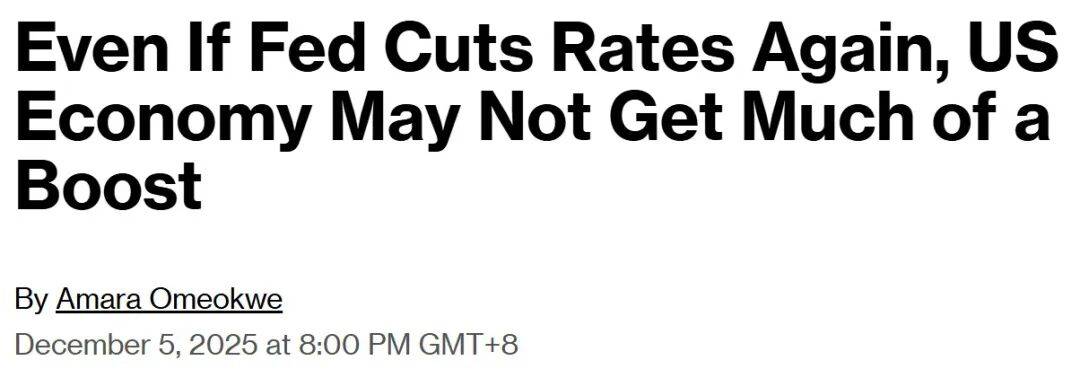
Group 1 - The core viewpoint of the article emphasizes that while the Federal Reserve is inclined to continue lowering interest rates, the impact of these rate cuts on the economy may be slower and weaker than in the past [3][4] - The article discusses that even with lower mortgage rates, the housing market may not recover as people are hesitant to buy homes [3] - It highlights that rate cuts have not effectively addressed issues in the manufacturing sector, which are primarily driven by tariffs [3] - The article points out that rate cuts have not significantly reduced the interest rates perceived by the general public [3] - The Federal Reserve is currently in a dilemma, needing to lower rates to support employment while wanting to maintain high rates to control inflation [3] Group 2 - The timing of the article suggests a strategic communication from the Federal Reserve, indicating that even positive data should not lead to overly optimistic expectations [3] - It serves as a warning to the market to temper expectations regarding economic recovery following rate cuts, suggesting that the stock market should not react too aggressively [3][4] - The article emphasizes significant divisions among officials regarding the future path of rate cuts, indicating that the next statement from the Federal Reserve may be cautious and not to be over-interpreted [4] Group 3 - The implications for global markets are that rate cuts do not guarantee improvement, leading to a phase of increased volatility and uncertainty in global assets [5] - A report titled "Global Market Strategy: 2026 Outlook" suggests that 2026 will not be a year for trading but rather for understanding global dynamics [6] - Key highlights from the report include the potential leadership change at the Federal Reserve and its implications for the market, as well as a detailed analysis of the dollar's trajectory over the next three years [7] - The report also includes insights on selected stocks in China and a broader list of favored stocks in the Asia-Pacific and U.S. markets [8] - It addresses the future of gold and Bitcoin following their significant price increases, providing deeper insights into potential market movements [9]
【UNforex财经事件】美联储换帅倒计时 谁将掌控美元命脉与全球金融风向?
Sou Hu Cai Jing· 2025-10-28 10:25
Group 1 - The selection process for the next Federal Reserve Chair has narrowed down to five candidates, including current governors Christopher Waller and Michelle Bowman, former governor Kevin Warsh, White House National Economic Council Director Kevin Hassett, and BlackRock's Rick Rieder [1] - Key issues in this selection include interest rate policy and central bank independence, with candidates expressing varying views on the need for policy adjustments in response to labor market conditions and economic growth [1] - The new chair's stance will directly influence the Federal Reserve's future communication and policy operations, impacting market expectations [1] Group 2 - Trump may announce his nominee for the Federal Reserve Chair earlier than usual, which could lead to market adjustments in interest rate and policy expectations [2] - The ongoing public disagreement between Trump and Powell highlights concerns over political interference in the Federal Reserve's operations, emphasizing the need for institutional independence [2] - The new chair's policy orientation will be a focal point for the market, with potential implications for interest rates, the strength of the dollar, and the performance of risk assets [2] Group 3 - The discussion around a leadership change at the Federal Reserve is gaining attention, with candidates like Warsh and Rieder being considered for their respective backgrounds and experiences [3] - The incoming chair will face a complex environment characterized by high inflation, slowing growth, and political pressures, marking a potential turning point in global monetary policy [3]