卡车运输

Search documents
“AI颠覆一切”重创市场之际 “聪明钱”如何斩获阿尔法? 答案是短线战术操作
Zhi Tong Cai Jing· 2026-02-21 07:44
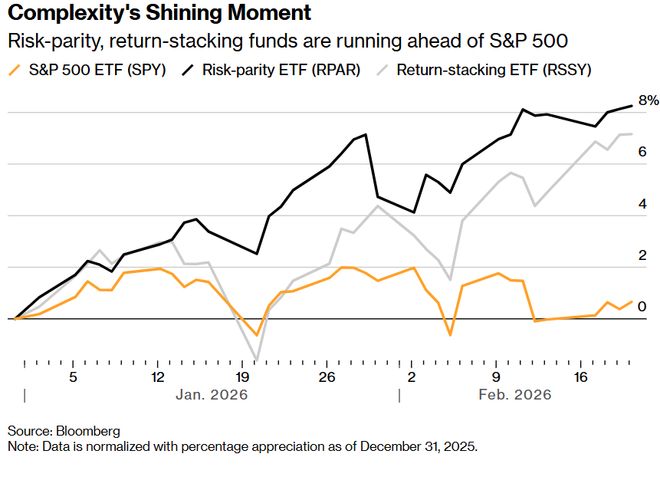
Core Insights - The article highlights that hedge funds and active stock pickers have outperformed benchmark indices due to market volatility driven by tariff fluctuations, AI disruption fears, and geopolitical tensions in the Middle East [1][7][10]. Group 1: Market Conditions - The current market is characterized by high instability and multiple factors causing disruption, including tariff uncertainties, AI-related concerns impacting software and growth sectors, and escalating geopolitical tensions in the Middle East [5][6][9]. - The S&P 500 software and services index has dropped approximately 15% since late January, erasing nearly $1 trillion in market value due to fears surrounding AI's disruptive potential [6][9]. Group 2: Investment Strategies - Hedge funds employing short-term tactical strategies and active stock selection have achieved significant "alpha" returns, outperforming the S&P 500 index by nearly double in recent months [7][12]. - The Bloomberg All Hedge Index reported a nearly 3% increase in hedge fund performance, marking the best relative performance against the S&P 500 in over two years [12][16]. - Complex strategies such as risk parity and return stacking have shown superior performance compared to traditional buy-and-hold strategies, which have become less effective in the current volatile environment [5][6][11]. Group 3: Economic Indicators - Bond yields, credit spreads, and the S&P 500 index have remained relatively stagnant, contrasting with the dynamic nature of short-term tactical trading favored by institutional investors [2][17]. - The market is currently not a passive investment paradise but rather a phase where tactical opportunities exist amidst liquidity and directional challenges [8][18].

亿万富翁对冲基金经理做空美股做多全球 美资产回报率全球20市排末位 估值较全球其他资产高40%
Jin Rong Jie· 2026-02-19 21:06
Core Viewpoint - Rob Citrone, founder of Discovery Capital and billionaire hedge fund manager, publicly outlines his investment strategy: "shorting the U.S. market and going long on global markets" [1] Group 1: U.S. Market Performance - Over the past year, U.S. asset returns, when measured in dollars, have been the weakest among 20 global markets, lagging emerging markets by approximately 30 percentage points [1] - The U.S. ranks last (20th) among these 20 markets, indicating a significant performance gap [1] Group 2: Reasons for U.S. Market Underperformance - Global investors are significantly over-allocated to U.S. assets, with U.S. institutions averaging about 80% of their funds invested domestically, suggesting a potential shift of capital towards other markets [1] - U.S. asset valuations are considered high, trading at about 40% above global asset prices [1] - The U.S. market faces uncertainties regarding the development of artificial intelligence (AI) businesses, with unclear monetization plans and concerns over high AI investment expenditures, leading to selling pressure in sectors like software, real estate, and trucking [1] Group 3: Emerging Market Opportunities - Citrone expresses a favorable outlook on emerging market investment opportunities, specifically highlighting Mexico as a top choice due to its deep integration with the U.S. economy, strong leadership, and competitive local companies that possess significant competitive advantages through monopolistic or oligopolistic positions [1] - Other countries such as Argentina and Brazil are also noted as having attractive investment potential [1] Group 4: Shift in Investor Focus - Since the implementation of tariff policies by Trump, there has been a growing trend of investors shifting their focus to other markets [1] - Institutions like Goldman Sachs and Lazard indicate that the U.S.'s dominant position in the global market may continue to weaken [1]
美股点金丨AI恐慌交易蔓延,美股“2月寒流”何时结束?
Di Yi Cai Jing Zi Xun· 2026-02-15 03:25
Group 1 - The US stock market experienced a decline this week due to "AI panic trading" and increased probabilities of the Federal Reserve maintaining its policy unchanged after the January non-farm employment report [1] - Concerns over cost and profit margin pressures for technology companies have suppressed optimism, despite a generally favorable macroeconomic environment characterized by steady job growth and easing inflation [1] - The ability of technology stocks to stabilize and the strengthening of interest rate cut expectations from the Federal Reserve will be critical for market recovery in the coming week [1] Group 2 - The retail sales data showed weakness, with December retail sales unchanged month-on-month, below the previous value of 0.6% and the expected 0.4% [2] - The Atlanta Fed's GDPNow model revised its forecast for Q4 GDP from 4.2% to 3.7% due to the retail sales performance [2] - The January non-farm payrolls increased by 130,000, significantly above the market expectation of 65,000, with the unemployment rate dropping to 4.3% from 4.4% [2] - The Consumer Price Index (CPI) for January rose by 0.2% month-on-month, lower than the expected 0.3%, and the year-on-year increase was 2.4%, also below the expected 2.5% [2] Group 3 - Economic signals are mixed, with the January employment report contradicting the narrative of stagnant hiring, while retail sales data challenges the view of strong consumer spending [3] - The flattening of the US Treasury yield curve indicates a significant drop in long-term yields, with the 2-year yield approaching 3.40%, and the probability of two rate cuts this year nearing 90% [3] - The inflation report shows encouraging signs, particularly with housing prices slowing and tariff-related impacts diminishing, which may lead the Federal Reserve to consider rate cuts later this year [3] Group 4 - The recent signals are unlikely to persist, as the decline in retail sales may be a temporary pause following strong spending, and the sustainability of the significant increase in non-farm employment is questionable [4] - The cooling inflation data provides a favorable environment for the Federal Reserve to potentially restart rate cuts later in the year [4] Group 5 - The US stock indices fell over the past week, with investors continuing to reduce exposure to technology sectors, and the S&P 500 index turned negative for the year [5] - Concerns regarding the impact of new AI tools on specific industries have led to market volatility, initially affecting software and financial stocks, and later spreading to real estate and logistics sectors [5] Group 6 - The financial sector experienced the largest decline this week, down 4.8%, followed by communication services down 3.5%, and both non-essential consumer goods and technology sectors fell over 2% [6] - Utility stocks surged by 7.1% due to safe-haven inflows, while real estate and materials rose over 3% [6] Group 7 - The launch of AI tools by companies like Altruist and Anthropic has heightened fears of job displacement, leading to a cautious sentiment among traders regarding US stock exposure [7] - The sell-off pressure in the market is primarily driven by concerns over the disruptive effects of AI, affecting not only software stocks but also real estate and logistics [7] Group 8 - The significant decline in US Treasury yields typically serves as a bullish catalyst for the stock market, but bearish confirmation signals in the Nasdaq indicate potential further downside risks [8] - The volatility index (VIX) remains around 20, suggesting that the market is seeking protective measures and may maintain higher-than-average volatility in the short term [8]
尾盘:美股三大股指本周均有可能录得跌幅
Xin Lang Cai Jing· 2026-02-13 19:54
Market Overview - US stock indices showed mixed performance, with the Dow Jones down 98.54 points (0.20%) at 49,550.52, the Nasdaq down 49.58 points (0.22%) at 22,646.72, and the S&P 500 down 23.06 points (0.34%) at 6,855.82 [3][9] - Concerns over the impact of artificial intelligence (AI) on various sectors, particularly logistics, real estate, and software, continue to weigh on market sentiment [1][9] Company Performance - Applied Materials saw a significant stock increase of 10.3% due to strong earnings and positive outlook [3][9] - Airbnb's stock rose by 5.4% as investors welcomed the company's optimistic guidance [3][9] - Pinterest's stock plummeted by 19.8% after reporting disappointing Q4 results and a weak outlook [3][9] - Cisco Systems' stock fell by 12% due to disappointing guidance, contributing to broader market declines [3][9] - Apple experienced its largest single-day drop since April 2025, falling by 5% [3][9] AI Impact on Industries - Concerns about AI's disruptive effects are spreading across various sectors, especially real estate, trucking, and software, leading to a nearly 1.6% drop in the S&P 500 and about 2% in the Nasdaq [3][9] - UBS strategists noted that while the full impact of AI on these industries is still being assessed, it highlights AI's monetization potential and transformative nature, making it a key component of investment portfolios [3][9] Analyst Insights - Dan Ives from Wedbush Securities indicated that while some software stocks may suffer due to AI's rise, not all should be dismissed, citing Salesforce and ServiceNow as potential core beneficiaries of the AI revolution [4][10] - Ives criticized Wall Street for misjudging the widespread effects of AI across the tech sector, suggesting a significant disconnect in market perceptions [5][10] Economic Data - The US Consumer Price Index (CPI) for January rose by 2.4% year-over-year, a decrease of 0.3 percentage points from the previous month, marking the lowest inflation rate since April 2025 [6][12] - Core CPI, excluding food and energy, increased by 2.5%, aligning with economists' expectations [6][12] - The overall CPI rose by 0.2% month-over-month, while core CPI increased by 0.3%, both slightly below market expectations [6][12] Future Outlook - The Atlanta Fed's GDPNow model projects a 3.7% growth rate for the US economy in Q4, despite ongoing inflation concerns and a labor market that remains a worry for Federal Reserve officials [7][14] - Market expectations suggest that the Federal Reserve may pause its rate-cutting cycle, with a shift in policy environment anticipated under new leadership [7][14]

午盘:美股震荡走高 道指上涨230点
Xin Lang Cai Jing· 2026-02-13 17:08
Market Overview - The Dow Jones Industrial Average rose by 230.75 points, an increase of 0.47%, closing at 49,682.73 points; the Nasdaq gained 85.93 points, up 0.38%, at 22,683.08 points; and the S&P 500 increased by 38.10 points, a rise of 0.56%, ending at 6,870.86 points [3][10] - The market is weighing the impact of artificial intelligence on various sectors, including logistics, real estate, and software [1][8] Company Performance - Applied Materials saw its stock price surge by 8.8% due to strong earnings and an encouraging outlook [3][10] - Airbnb's stock rose by 54.3%, reflecting investor optimism regarding the company's guidance [3][10] - Pinterest's stock plummeted by 17.8% after reporting fourth-quarter results that fell short of expectations and providing a weak outlook [3][10] Sector Analysis - Concerns about the disruptive effects of artificial intelligence have spread across multiple sectors, particularly real estate, trucking, and software, leading to a nearly 1.6% drop in the S&P 500 and approximately 2% decline in the Nasdaq on the previous day [3][10] - The "Tech Seven" giants all experienced declines, with Cisco Systems dropping 12% due to disappointing guidance, and Apple falling 5%, marking its largest single-day drop since April 2025 [3][10] Analyst Insights - Brian Levitt, a strategist at Invesco, noted that while there is a frenzy around AI, the market is becoming more discerning in identifying winners and losers, suggesting that the overall market remains robust despite some significant declines [3][10] - UBS strategists indicated that the full impact of AI on various industries and stocks is still to be observed, but they believe it validates the monetization potential of AI, making it a key component of investment portfolios [3][10] Software Sector Commentary - Dan Ives, a global technology research head at Wedbush Securities, stated that while some software stocks may suffer due to the rise of AI, not all should be dismissed, highlighting Salesforce and ServiceNow as potential core players in the AI revolution [4][11] - Ives criticized Wall Street for misjudging the widespread effects of AI across the tech sector, suggesting a significant disconnect in how the industry is perceived [5][11] Economic Data - The U.S. Consumer Price Index (CPI) for January rose by 2.4% year-over-year, a decrease of 0.3 percentage points from the previous month, marking the lowest inflation rate since April 2025 [6][13] - Core CPI, excluding food and energy, increased by 2.5%, aligning with economists' expectations [6][13] - The overall CPI rose by 0.2% month-over-month, while core CPI increased by 0.3%, both below market expectations [6][13]
卡车运输和房地产股成为AI恐慌交易的最新受害者,周五盘前走势乏力
Xin Lang Cai Jing· 2026-02-13 13:23
Group 1: Logistics Sector - Logistics stocks were significantly impacted by concerns over artificial intelligence, particularly following the launch of Algorhythm Holdings' new tool, SemiCab, which claims to be the "smoothest transportation platform globally" [2] - Major logistics companies C.H. Robinson Worldwide and RXO both saw their stocks drop by 20% on Thursday, with C.H. Robinson rebounding slightly by 0.7% in pre-market trading on Friday, while RXO continued to decline by 1.5% [2] - Expeditors International experienced a drop of over 16% on Thursday, with its pre-market trading price remaining flat [3] - J.B. Hunt Transport Services fell by 9% on Thursday and further declined by 0.6% in early Friday trading, while XPO's latest drop was 1% [4] Group 2: Real Estate Sector - The sell-off in commercial real estate companies continued into a second day, with CBRE Group being one of the hardest hit, down 0.6% in pre-market trading on Friday [6] - Jones Lang LaSalle saw a slight decline before Friday's opening, while Hudson Pacific Properties remained flat after experiencing drops of nearly 8% and 4% respectively on Thursday [6] - SL Green Realty dropped by 5% on Thursday but rebounded by 0.4% in pre-market trading on Friday [7] Group 3: Software Sector - Software stocks, which were at the center of a historic sell-off the previous week, also faced declines on Thursday, with mixed performance in early Friday trading [8] - Palantir continued its downward trend, falling by 1.5%, while Autodesk and Salesforce both saw minor declines of 0.1% [9] - The iShares Expanded Tech-Software Sector ETF (IGV) dropped approximately 3% on Thursday and was down 0.3% in the latest trading, having entered a bear market last month with a year-to-date decline of about 23% [9] - All "Tech Seven" stocks closed lower on Thursday, with most continuing to decline in early Friday trading, led by Tesla's 0.8% drop [9] - UBS strategists noted that the latest developments highlight the transformative potential of AI, suggesting that it should be a key component of investors' portfolios, and advised diversification across sectors and regions [9][11]
人工智能恐慌蔓延——房地产、卡车运输与物流行业成为最新受害者
Xin Lang Cai Jing· 2026-02-13 08:19
Group 1: Impact of Artificial Intelligence on Industries - Artificial intelligence is becoming a market focus, negatively impacting real estate, trucking, and logistics stocks, alongside financial and software service stocks due to concerns over job displacement [1][3] - Elon Musk indicated that as AI replaces employees, office buildings may soon become vacant, reflecting a broader concern about job losses in various sectors [1][3] - The trucking industry faces specific pressures, with Algorhythm Holdings claiming its tool can increase freight volume by 300% to 400% without hiring additional staff, leading to a significant drop in transportation and logistics stocks [1][3] Group 2: Company-Specific Developments - Siemens' stock rose slightly after the company raised its earnings forecast for the fiscal year 2026, indicating that AI's impact on industrial manufacturing, product design, and operations management may be arriving faster than expected [1][4] - L'Oréal's stock fell by 7.3% in the U.S. due to the company's annual sales falling short of expectations, highlighting challenges in the consumer goods sector [5] Group 3: Broader Economic Context - The European Union passed an economic restructuring plan aimed at enhancing competitiveness amid fragmented global trade relations influenced by previous U.S. policies [5] - The Munich Security Conference highlighted that the international order has been disrupted, suggesting that EU economic reforms extend beyond mere financial considerations [5]
从房产到AI,风险全面引爆,美股金银罕见三杀
Xin Lang Cai Jing· 2026-02-13 02:15
Group 1: Market Reactions - The U.S. stock market experienced significant declines, with the Dow Jones falling over 2% to close at 49,451 points, marking a drop of 669 points or 1.3% [2] - Major tech stocks saw widespread losses, including Apple down 5%, Amazon and Meta down over 2%, and Nvidia down over 1% [2] - Concerns over the impact of artificial intelligence (AI) on various industries have led to a re-evaluation of stock valuations, causing a shift towards safer assets like U.S. Treasury bonds [2][3] Group 2: Real Estate Market - U.S. existing home sales in January totaled an annualized 3.91 million units, falling short of the expected 4.15 million and marking an 8.4% month-over-month decline, the largest drop since February 2022 [3][4] - The median home price increased by 0.9% year-over-year to $396,800, but affordability remains a significant issue, with the affordability index reaching its highest level since 2022, yet still below pre-pandemic levels [4] - Economic analysts suggest that high mortgage rates and increased housing inventory will continue to suppress home price growth in the short term [4] Group 3: AI Impact on Industries - Concerns about AI disrupting traditional business models have intensified, particularly affecting sectors like software, insurance, and real estate [5][6] - The anticipated capital expenditure for AI by 2026 is projected to reach $659 billion, a 60% increase from 2025, but the growth rate is expected to slow compared to previous years [5] - The logistics and transportation sectors are facing significant sell-offs due to fears that AI will disrupt traditional freight markets, with the Russell 3000 trucking index experiencing a drop of over 9% [6][8] Group 4: Investment Trends - There is a notable shift in investment from U.S. tech stocks to emerging markets and commodities, as the market experiences a late-cycle phase characterized by internal divergence [8] - Financial assets are beginning to lose ground to physical assets, indicating a potential historical shift in investment dynamics [8]

苹果大跌5%
Xin Lang Cai Jing· 2026-02-13 00:29
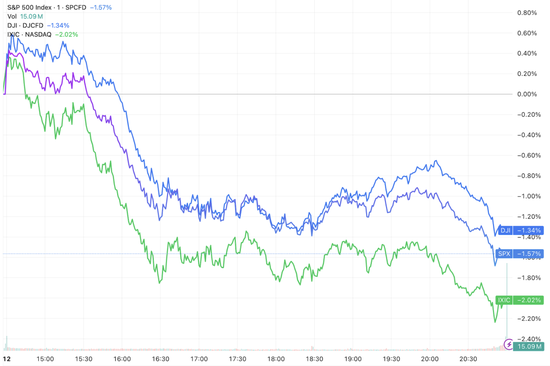
Core Viewpoint - Investors are increasingly concerned about the disruptive potential of artificial intelligence (AI), leading to a decline in major stock indices, with the Nasdaq falling by 2% [1][7]. Market Performance - The Dow Jones index fell by 1.34% to 49,451.98 points, the S&P 500 index dropped by 1.57% to 6,832.76 points, and the Nasdaq index decreased by 2.03% to 22,597.15 points [2][9]. - Defensive sectors saw gains, with Walmart and Coca-Cola shares rising by 3.8% and 0.5%, respectively [2][9]. Sector Impact - The introduction of AI tools has negatively impacted various sectors, including software companies, publishers, and financial services, raising concerns that these tools could replicate business models or erode profit margins [2][9]. - Financial stocks, such as Morgan Stanley, faced pressure due to fears of AI disrupting wealth management [2][9]. - The trucking and logistics sector, exemplified by C.H. Robinson, saw a 14% drop in stock price as AI is expected to optimize freight operations, potentially reducing revenue sources [2][9]. - The real estate sector is also affected, with concerns that higher unemployment rates will reduce demand for office space, leading to declines in stocks like CBRE and SL Green Realty [2][9]. Stock Movements - Major tech stocks experienced declines, with Apple down by 5%, erasing its gains for the year, attributed to delays in the rollout of upgraded AI features for Siri [3][11]. - Other notable declines included Nvidia down by 1.64%, Microsoft down by 0.63%, Google down by 0.63%, Amazon down by 2.20%, and Meta down by 2.82% [4][12]. - Chinese stocks also fell, with the Nasdaq Golden Dragon China Index down by 3%, Alibaba down by 3.40%, and Pinduoduo down by 4.16% [5][12].

苹果大跌5%
财联社· 2026-02-12 23:41
Core Viewpoint - Concerns over the disruptive potential of artificial intelligence (AI) have led to a decline in major stock indices, with the Nasdaq falling by 2% and the S&P 500 and Dow Jones also experiencing significant drops [1][4]. Group 1: Market Performance - The Dow Jones index closed down 1.34% at 49,451.98 points, the S&P 500 index fell 1.57% to 6,832.76 points, and the Nasdaq index dropped 2.03% to 22,597.15 points [4]. - Major technology stocks saw declines, with Apple down 5%, erasing its gains for the year, and Nvidia down 1.64% [9]. Group 2: Sector Impact - The introduction of AI tools has negatively impacted various sectors, including software companies, publishers, and financial services, raising concerns about potential business model replication and profit margin erosion [5]. - Financial stocks, such as Morgan Stanley, faced pressure due to fears that AI could disrupt wealth management services [5]. - Trucking and logistics companies, like C.H. Robinson, saw a 14% drop in stock price as AI is expected to optimize freight operations, potentially reducing revenue sources [5]. Group 3: Real Estate and Defensive Sectors - The real estate sector is also affected, with concerns that higher unemployment rates will reduce demand for office space, leading to declines in stocks like CBRE and SL Green Realty [6]. - Investors are shifting towards more defensive sectors, with Walmart and Coca-Cola seeing stock price increases of 3.8% and 0.5%, respectively [7]. - In the S&P 500, the consumer staples and utilities sectors outperformed, both rising over 1%, with the consumer staples sector reaching a historical closing high [8].