锂资源

Search documents
欲通过交叉持股战略投资晋景新能(01783),天齐锂业(09696)加速挖掘“城市矿山”产业红利
智通财经网· 2026-02-03 11:46
Core Viewpoint - Tianqi Lithium's recent strategic moves indicate a shift in resource allocation and a focus on enhancing its position in the lithium battery recycling sector, particularly following a legal setback in Chile [1][2]. Group 1: Legal Setback - Tianqi Lithium's subsidiary Tianqi Chile lost a final ruling in the Chilean Supreme Court, potentially diminishing its governance influence and future revenue certainty in SQM, a key company in its portfolio [1]. - Despite the announcement stating no immediate significant impact on profits, the long-term investment return potential in the Atacama Salt Flat is perceived to be under substantial challenge [1]. Group 2: Strategic Partnership - On the same day as the court ruling, Tianqi Lithium signed a strategic cooperation agreement with JinJing New Energy to develop a green recycling industry chain for lithium batteries [1][2]. - The partnership encompasses multiple dimensions, including core R&D, overseas expansion, black powder materials, and cross-equity investment, indicating a deep collaboration beyond simple business cooperation [2]. Group 3: R&D and Market Expansion - The agreement includes establishing joint laboratories and projects to tackle key challenges in lithium-ion battery recycling and refining high-value materials [2]. - The collaboration aims to expand overseas battery recycling operations, starting from Hong Kong and gradually extending to other regions [2]. Group 4: Industry Context and Strategic Importance - The partnership aligns with Tianqi Lithium's need to enhance supply chain resilience amid uncertainties regarding control over core resources and regulatory pressures from the EU's new battery laws [3]. - The global peak in battery retirements is approaching, making the establishment of a dual assurance system of "primary mines + urban mines" a critical strategic choice for Tianqi Lithium [3]. Group 5: JinJing New Energy's Capabilities - JinJing New Energy has developed a global recycling network covering 28 countries, with three pre-treatment plants and 74 collection and dismantling points, making it a preferred service provider for new energy companies [4]. - The strategic value of JinJing New Energy's Hong Kong hub is emphasized, as it serves as a critical node for building a strategic recycling resource supply chain [4]. Group 6: Future Implications - The collaboration with JinJing New Energy is expected to provide Tianqi Lithium with access to a comprehensive international infrastructure, facilitating the establishment of a green recycling channel for battery materials [5]. - The trend towards battery recycling is becoming essential for internationalization in the new energy sector, suggesting that more upstream lithium resource companies will seek partnerships with JinJing New Energy [5].

欲通过交叉持股战略投资晋景新能,天齐锂业加速挖掘“城市矿山”产业红利
Zhi Tong Cai Jing· 2026-02-03 11:45
作为全球锂资源的龙头企业,天齐锂业(002466)(09696)的一举一动都被市场格外关注,而于近期发 生的两件大事,表明了其在资源布局上的最新战略意图。 1月28日,天齐锂业发布公告称,其全资子公司天齐智利在智利最高法院的终审判决中败诉。这意味着 天齐锂业在SQM这家核心公司中的治理话语权和未来收益的确定性或将出现下降。 虽然天齐锂业于公告中表示,此次败诉对公司当前的利润没有重大直接影响,但市场普遍认为,从长远 来看,天齐锂业在全球最大锂盐湖——阿塔卡马盐湖中的投资回报潜力和资源影响力正面临实质性挑 战。 而就在这份败诉公告发布的当天,天齐锂业便迅速展开另一项关键布局——与全球循环经济产业中的领 先玩家晋景新能(01783)正式签署了《战略框架合作协议》。 智通财经APP观察到,晋景新能于1月30日发布自愿性公告称,其已于1月28日与天齐锂业的全资附属公 司Tianqi Grand Vision Energy Limited(以下简称"Tianqi Grand")达成战略合作,双方将共同构建锂电池绿 色循环产业链,推动产业闭环与资源高效回收。 对于天齐锂业而言,随着公司在海外核心资源(如智利阿塔卡马盐湖)面 ...
南华期货2026年度碳酸锂展望:淡季炒预期,旺季证现实
Nan Hua Qi Huo· 2025-12-25 13:09
1. Report's Investment Rating for the Industry No information provided regarding the report's investment rating for the industry. 2. Core Views of the Report - In 2026, with multi - dimensional domestic and international policies, the lithium carbonate industry will see growth in demand from new energy vehicles and energy storage. The supply of lithium resources will increase steadily, but the price of lithium carbonate will be affected by multiple factors, showing a pattern of "bottom support, top constraint, and stage fluctuations dominated by expectations" [1][2][5]. - The new energy vehicle market is transitioning from high - growth to structural adjustment. Domestic policies will focus on increasing the battery capacity per vehicle of plug - in hybrid (including extended - range) models, while overseas policies vary by country. The energy storage industry will develop around the goals of efficient use of renewable energy and energy system security, with significant regional differences in policies [8][12][15]. 3. Summary by Relevant Catalogs 3.1 Chapter 1: Viewpoint Summary 3.1.1 Policy End - Domestic policies in 2025, such as the preferential procurement of new energy vehicles by government agencies and the new energy vehicle countryside campaign, helped the industry achieve its annual sales target ahead of schedule. In 2026, the focus will be on plug - in hybrid vehicles, increasing their battery capacity per vehicle. Although the vehicle purchase tax halving policy may suppress short - term growth, the long - term trend is positive. In the energy storage field, after the cancellation of mandatory energy storage allocation, policies focus on new energy consumption [1]. - Internationally, European countries have introduced subsidy and leasing policies to meet carbon emission assessments. The United States, India, and South Korea have different new energy vehicle policies. In the energy storage field, the US focuses on large - scale projects and technological breakthroughs, Europe relies on subsidies and market mechanisms, and African countries like South Africa emphasize the self - controllability of the industrial chain [1]. 3.1.2 Supply End - In 2026, global lithium resource supply will increase by about 471,000 tons of lithium carbonate, showing a pattern of "overseas - led, domestic and international coordinated release". Domestic production will see significant growth, especially in salt - lake lithium extraction. However, high lithium prices may stimulate the resumption of production of suspended mines [2]. - In the second half of 2025, lithium carbonate production remained high. The capacity utilization rate of spodumene - based lithium extraction was relatively high, that of lepidolite - based lithium extraction was low due to production suspension, and the capacity utilization rate of recycled material - based lithium extraction gradually recovered [2]. 3.1.3 Demand End - In the new energy vehicle field, from January to November 2025, domestic production increased by more than 32% year - on - year, with pure - electric vehicles leading and hybrid vehicles collaborating. From 2026 to 2027, the increase in battery capacity per vehicle of plug - in hybrid vehicles will drive the demand for lithium carbonate [2]. - In the energy storage market, from January to November 2025, the tender and winning scale expanded steadily. This was supported by policies and market mechanisms, and the decline in lithium battery costs and the maturity of large - capacity battery cell technology further enhanced the economy of energy storage systems. The consumer battery cell market also performed well, with demand surging in the fourth quarter of 2025 and expected high - speed growth in 2026 [2]. 3.1.4 Future Outlook - In 2026, the explosive growth of the energy storage field will push up the cost curve of lithium resources and the price center of lithium carbonate. However, the upper price limit will be restricted by factors such as the resumption of production of mines at high prices, profit pressure in the battery cell link, and the price comparison effect of alternative batteries. The lower price limit will be anchored to the cash cost. The price will fluctuate based on the verification of "expectations and reality" [5]. - Futures prices are more affected by market sentiment, with stronger short - term upward elasticity than spot prices [5]. 3.2 Chapter 2: Market Review - In the first quarter of 2025, the market expected post - holiday demand to pick up, but after the Spring Festival, the unexpected resumption of production of the Jianxiawo mine increased supply, while downstream demand was overdrawn, causing the futures price of lithium carbonate to fall from its high [6]. - In the second quarter, the demand for lithium carbonate was weak during the peak season, and the Trump administration's tariff policy on China led to a general decline in the commodity market, further depressing the futures price [6]. - In the third quarter, the market sentiment improved. Supply concerns due to issues such as mine certificates and production suspension pushed up the lithium price. However, the expected resumption of production of the Jianxiawo mine later reversed the supply expectation and led to price fluctuations [6]. - In the fourth quarter, the release of energy storage demand led to a "strong supply and demand" situation, and the price center of lithium carbonate continued to rise [6]. 3.3 Chapter 3: Core Focus Points 3.3.1 New Energy Policies 3.3.1.1 New Energy Vehicle Policies - In 2025, domestic new energy vehicle policies, such as the preferential procurement of government agencies and the new energy vehicle countryside campaign, helped the industry achieve its annual sales target. By November 2025, the cumulative sales of domestic new energy vehicles reached 15.5 million [8]. - In 2026, domestic policies will focus on increasing the battery capacity per vehicle of plug - in hybrid vehicles, which will drive the growth of the power battery market. However, the vehicle purchase tax halving policy may suppress short - term market growth [8]. - Internationally, European countries will face stricter carbon emission assessments and have introduced subsidy policies. Other countries have different policies: India has set a low electric vehicle penetration target, the US is ending its subsidy policy, and South Korea is increasing subsidies [10]. 3.3.1.2 Energy Storage Policies - Domestically, after the cancellation of mandatory energy storage allocation, policies focus on new energy consumption, promoting the coupling of energy storage with terminal energy demand through scenario - based projects and activating the "peak - shaving and valley - filling" function of energy storage [12]. - Internationally, the US focuses on large - scale energy storage projects and technological breakthroughs, European countries use subsidy and market - based mechanisms, and African countries like South Africa aim to build a self - controllable industrial chain [15][16]. 3.3.2 Lithium Resources 3.3.2.1 Global Lithium Resources - In 2026, the global new supply of lithium resources is expected to reach 471,000 tons of lithium carbonate, with overseas accounting for 60%. Attention should be paid to the price conditions for the resumption of Australian mines and geopolitical risks in Africa [20]. 3.3.2.2 Chinese Lithium Resources - In 2025, domestic lithium resource supply increased significantly, with lithium ore production reaching 265,000 tons of lithium carbonate equivalent and salt - lake lithium extraction reaching 146,600 tons. In 2026, the production is expected to grow by over 40% [22]. - In terms of imports, domestic lithium concentrate imports are increasing, with Australia accounting for about 50%. African imports decline in the second quarter due to the rainy season, and imports increased in the second half of 2025 due to rising prices [25]. - In 2025, domestic lithium carbonate imports were about 230,000 tons, mainly from southern hemisphere salt - lake regions. Imports from Chile and Argentina decreased in the third quarter due to winter and equipment maintenance [34]. 3.3.3 Chinese Lithium Salt Production - Since the second half of 2025, domestic lithium carbonate production has remained high. The capacity utilization rate of spodumene - based lithium extraction was above 65%, that of lepidolite - based lithium extraction was about 30% due to mine suspension, and that of recycled material - based lithium extraction rose from 20% to about 33% [37]. 3.3.4 Battery Cells - In 2025, China's total lithium battery production is expected to reach 1,859 GWh, a year - on - year increase of 43%. Power batteries are the main driver of growth, with an output of 1,226.55 GWh, a year - on - year increase of 39.74%. Energy storage battery cells and consumer battery cells also performed well, with growth rates of 52.33% and 42.24% respectively [40]. 3.3.5 Terminal Applications 3.3.5.1 New Energy Vehicles - From January to November 2025, domestic new energy vehicle production reached 14.867 million, a significant year - on - year increase. Pure - electric vehicles led the growth, while hybrid vehicles also increased steadily. From 2026 to 2027, the increase in battery capacity per vehicle of plug - in hybrid vehicles will drive the demand for lithium carbonate [44]. 3.3.5.2 Energy Storage - From January to November 2025, the tender and winning scale of the domestic energy storage market continued to expand, with a cumulative winning capacity of 160.39 GWh. This growth was supported by policies and market mechanisms, and the maturity of large - capacity battery cell technology enhanced the economy of energy storage systems [49]. 3.4 Chapter 4: Valuation Feedback and Supply - Demand Outlook 3.4.1 Valuation Feedback No information provided regarding the global lithium resource valuation - cash cost. 3.4.2 Supply - Demand Outlook - In 2026, the total supply of lithium resources will reach 2.131 million tons (a year - on - year increase of 28.37%), and the total demand will be 2.036 million tons (a year - on - year increase of 23.87%), with the surplus narrowing to 95,000 tons. The high elasticity of supply will suppress the upper price limit, while the structural growth of demand will push up the lower price limit [54]. - In terms of demand structure, the demand for power batteries will reach 1.15 million tons in 2026 (a year - on - year increase of 20.55%), and the demand for energy storage batteries will increase by 50% year - on - year to 564,000 tons. The demand side has the potential for over - performance [55]. 3.4.3 Price Outlook - In the scenario of rising prices in 2026, lithium prices will fluctuate upwards in the early stage. If demand materializes in March - April, battery - grade lithium carbonate will rise to over 130,000 yuan/ton and then enter a volatile phase. In the third quarter, if demand remains strong, it will start a second wave of increase and reach the annual high in October - November [57]. - In the scenario of falling prices in 2026, if demand is lower than expected in March - April, battery - grade lithium carbonate will fall quickly. If supply expansion exceeds expectations, prices will continue to decline. The price decline of battery - grade lithium hydroxide will be similar to that of lithium carbonate [58].
被低估的能源新黄金,正悄悄重写全球估值逻辑
Ge Long Hui· 2025-12-20 09:25
Core Viewpoint - Lithium carbonate is currently undervalued due to market sentiment, despite undergoing a structural transformation that enhances its long-term value in the energy transition [2][4]. Demand and Supply Dynamics - The long-term demand for lithium carbonate is confirmed as electric vehicles become essential for global energy transition, with lithium remaining irreplaceable in battery systems for at least the next decade [4][6]. - New demand from energy storage, electric tools, and low-altitude economy is expanding the application boundaries of lithium carbonate [4]. - Supply constraints are emerging as high prices from the past two years lead to a reality check for new projects, filtering out players with sustainable supply capabilities [4][8]. Cost Structure and Pricing - The industry is transitioning from a phase of chaotic supply expansion to one where the cost curve dictates market dynamics, marking a clearer point for long-term investment value [4][8]. - Lithium carbonate is evolving from a uniform price commodity to a segmented pricing model based on resource quality and cost structure, emphasizing the importance of cash flow stability over price elasticity [8][10]. Market Perception and Investment Strategy - The market currently simplifies the pricing of lithium resource companies, focusing heavily on short-term price assumptions while overlooking structural differences among companies [10][11]. - As the industry matures, some lithium resource companies are expected to evolve into stable cash flow providers, while others may struggle with price volatility [11][12]. - New entrants in the lithium market are crucial for determining the industry's long-term cost floor, impacting future supply dynamics [12]. Conclusion - Lithium carbonate is characterized as a long-term asset that requires patience and a focus on cost and resource quality rather than short-term price fluctuations [16][17].


博时基金桂征辉:股债均衡,市场波动中的投资“平衡术”
Xin Lang Ji Jin· 2025-12-02 02:00
Group 1: A-Share Market Insights - The A-share market in 2025 is characterized by "structural differentiation and prominent main lines," with technology, non-ferrous metals, and new energy sectors standing out, particularly in AI computing power, semiconductor equipment, gold, and lithium resources [1] - The rise in these sectors is driven by the global explosion in AI demand, supportive new energy policies, and improved supply-demand relationships [1] - Challenges include slow recovery in traditional real estate and consumer sectors, as well as external factors like fluctuating Federal Reserve policies and geopolitical conflicts affecting market trends [1] Group 2: Global Economic Impact - Global macroeconomic events, such as Federal Reserve interest rate cuts and geopolitical tensions, have an indirect but significant impact on A-shares [2] - Interest rate cuts can attract foreign capital into A-shares, but expectations during the cut process may lead to short-term volatility [2] - Geopolitical conflicts may increase energy prices, affecting industry costs and enhancing the attractiveness of assets like gold [2] Group 3: Investment Opportunities - Three key areas to focus on include: 1. Technological innovation, such as AI, semiconductors, and biomanufacturing, benefiting from national policies and technological breakthroughs [3] 2. Consumption upgrades, including cultural tourism, health, and green consumption, showing strong demand resilience [3] 3. High-end manufacturing, like new energy equipment and industrial mother machines, aligning with global industrial chain restructuring trends [3] - Some sectors have seen valuation recoveries, suggesting a diversified approach through index or sector funds to mitigate risks associated with single-stock bets [3] Group 4: Bond Investment Risks - Key risks in bond investment include interest rate risk, where market rate changes can lead to bond price fluctuations, and credit risk, which refers to the possibility of the issuer failing to pay interest or principal [4] - Investors are advised to prioritize government bonds or high-credit-rated bonds to mitigate these risks [4] Group 5: Balanced Investment Strategy - The effectiveness of a balanced stock-bond strategy lies in the inverse relationship between stocks and bonds, where stocks provide returns during market upswings and bonds may appreciate during downturns, thus cushioning losses [5] - Historical data indicates that during significant A-share adjustments, the bond market often performs well, leading to lower drawdowns in balanced portfolios compared to pure equity investments [5] Group 6: Public Fund Benefits - Public funds address the high entry barriers of direct stock and bond investments by offering professional management, diversified investment, and low minimum investment thresholds [6] - Funds select a basket of stocks or bonds, automatically diversifying risk, and have flexible investment amounts starting as low as 10 yuan [6] Group 7: Risk Preference-Based Fund Allocation - Investors should assess their risk tolerance before determining stock-bond fund ratios, with suggested allocations for different risk profiles: 1. Defensive investors: Up to 30% in stock funds, at least 70% in bond funds, focusing on low-volatility assets [7] 2. Moderate investors: Approximately equal allocation (around 50% each) with potential inclusion of thematic or convertible bond funds [7] 3. Aggressive investors: 70%-80% in stock funds, 20%-30% in bond funds, focusing on growth-oriented stock funds [7] Group 8: Additional Considerations - Factors such as age and investment horizon should influence asset allocation, with younger investors leaning towards aggressive strategies and those nearing retirement shifting to defensive ones [8] - Regular review and adjustment of investment ratios are essential to align with life stages, market changes, and goals [8] - Diversification within the same asset class is crucial to further reduce non-systematic risks [8]
帮主郑重早间观察:5万存取款免登记+转融资破百亿!12月中长线布局抓准这两大主线
Sou Hu Cai Jing· 2025-12-01 00:59
Core Insights - The recent policy change allowing individuals to withdraw cash over 50,000 without registration is seen as a move to enhance liquidity in the financial market, boosting consumer and investment confidence [3] - The significant borrowing by brokerages, exceeding 100 billion from China Securities Finance, indicates their confidence in the market and willingness to leverage for business, which is a positive sign for market liquidity in the medium to long term [3] Group 1: Economic Indicators - The PMI for November rose to 49.2%, with all 11 sub-indices showing improvement, indicating a steady recovery in economic activity supported by both domestic policies and overseas demand [4] - The food and beverage, hotel, and tourism sectors are highlighted as key areas benefiting from the recovery in consumer spending, with companies like Shoulu Hotel and Jinjiang Hotel expected to see performance improvements [5] Group 2: Investment Opportunities - The technology growth sector is emphasized, with companies like Haiguang Information and Zhaoyi Innovation repeatedly mentioned as potential long-term investments, particularly in the fields of domestic computing power and commercial aerospace [4] - The lithium carbonate price has surged by 60% over six months, driven by increased demand for energy storage, presenting long-term investment opportunities in related industries [5] Group 3: Market Trends - The likelihood of a Federal Reserve interest rate cut in December has risen to 85.4%, which could lead to increased liquidity globally, benefiting both cyclical and growth sectors [5] - The focus for December's investment strategy should be on two main lines: technology growth in domestic computing power and commercial aerospace, and consumer recovery in hotel, tourism, and food and beverage sectors, along with demand-driven cyclical stocks like lithium resources [6]
突袭!一则传闻,万亿AI巨头一度跌停!公司紧急辟谣:未向市场下调第四季度利润目标!
雪球· 2025-11-24 08:13
Core Viewpoint - The market is experiencing a rebound with major indices closing in the green, but there are significant disparities in sector performance, particularly in AI hardware and applications [2][4]. Group 1: AI Hardware and Applications - Industrial Fulian, a trillion-yuan company, saw its stock price plummet, hitting a limit down of 7.80% amid rumors of order reductions, although the company later confirmed that operations are proceeding as planned and there are no adjustments to profit targets for Q4 [4][6]. - The AI hardware sector is facing challenges, while the AI application sector is thriving, with notable stock performances from companies like Alibaba and Tencent, which are launching new AI products [7][11]. - Recent AI applications have seen rapid adoption, with Alibaba's "Qianwen" app achieving over 10 million downloads in just one week, marking it as one of the fastest-growing AI applications [11]. Group 2: Investment Opportunities in AI - Analysts suggest focusing on both foundational and application layers for AI investments, emphasizing the importance of companies with large user bases and proven willingness to pay [12]. - The ongoing development of AI applications by major companies presents significant investment opportunities, particularly in sectors with high-value applications such as automotive and industrial [12]. Group 3: Lithium Resource Market - The lithium resource sector is experiencing volatility, with significant price fluctuations in lithium carbonate futures, leading to sharp declines in related stocks [14][16]. - Recent trading actions by the Guangxi Futures Exchange, including increased transaction fees and adjusted trading limits, have contributed to market reactions and price drops in lithium futures [17]. - Goldman Sachs has revised its forecasts for lithium prices and company earnings, predicting a shift from profit to loss for certain companies in the sector, which has led to downgrades in stock ratings [17].

做空动能衰减,锂电军工双线逆袭!
Jiang Nan Shi Bao· 2025-11-19 11:07
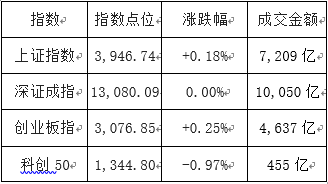
Market Overview - A-shares exhibited a weak recovery pattern characterized by "low opening, high rebound, afternoon pullback, and stabilization at the end" after three consecutive days of decline, indicating insufficient rebound momentum [1][3] - The Shanghai Composite Index closed slightly up by 0.18% at 3,946.74 points, while the Shenzhen Component Index remained flat at 13,080.09 points, and the ChiNext Index saw a minor rebound of 0.25% to 3,076.85 points [2] - Total trading volume dropped significantly to 1.73 trillion yuan, a decrease of 200.2 billion yuan from the previous day, marking a new low for the past month, suggesting that institutions are still cautiously observing the market [1][3] Technical Analysis - The Shanghai Composite Index maintained support at 3,930 points, forming a combination of "three consecutive declines followed by a small increase and extreme volume contraction," indicating that short-term selling pressure is nearing its end [3] - The ChiNext Index found support at the 60-day moving average, with blue-chip stocks providing a stabilizing effect on the index, although small and mid-cap stocks remain in the early stages of emotional recovery [3] Industry and Hotspot Capture - The banking and insurance sectors showed strong performance, with high-dividend assets acting as a stabilizing force; China Bank surged by 3.81%, reaching a historical high, while China Life and China Pacific Insurance also performed well [5] - Lithium resources regained strength, with lithium carbonate futures breaking through 100,000 yuan per ton, driven by increased downstream battery orders and strong pricing from Australian mines [6] - The military and aquaculture sectors experienced collective surges, driven by geopolitical tensions and China's strong protest against Japan's remarks regarding Taiwan, leading to a suspension of Japanese seafood imports [7] Forward Strategy - Key signals to watch include whether trading volume can return to above 1.9 trillion yuan, and if military and lithium sectors can expand as main lines to drive market momentum [8] - The medium to long-term strategy focuses on high-dividend blue-chip stocks and resource leaders, while the short-term strategy emphasizes participation in event-driven opportunities and avoiding purely emotional stocks [8][9]
兆新股份拟通过“资源深耕+模式迭代”打开增长新空间
Zheng Quan Ri Bao Zhi Sheng· 2025-11-13 13:09
Core Viewpoint - Shenzhen Zhaoxin New Energy Co., Ltd. plans to integrate equity with Qinghai Jintai Potash Co., Ltd. through a debt-to-equity swap, aiming to establish a vertical layout in the "new energy aftermarket + upstream resources" to gain a first-mover advantage in the lithium resource sector [1] Group 1: Resource Integration and Competitive Advantage - The core value of the equity integration lies in securing Qinghai Jintai's scarce high-quality salt lake lithium resources, which are crucial for cost advantages and cyclical resilience in the new energy industry [2] - Qinghai Jintai possesses a high-quality mining area of 450 square kilometers, with lithium chloride resource reserves of 1.6349 million tons and a recoverable reserve equivalent to 1.1384 million tons of lithium carbonate, placing it among the upper tier of domestic salt lake projects [2] - The average lithium chloride grade in Qinghai Jintai's brine is 168.87 mg/L, which is 40.7% higher than some domestic salt lakes, allowing for a significant reduction in production costs due to its inherent quality advantage [2] Group 2: Growth Potential and Strategic Upgrade - The resource strategy of Zhaoxin is resonating with the industry's cyclical upturn, with significant performance growth potential as global demand for lithium carbonate is expected to remain between 80,000 to 150,000 yuan per ton over the next two years [3] - With a planned annual production capacity of 10,000 tons of battery-grade lithium carbonate, Qinghai Jintai's project could generate annual revenue of 800 million to 1 billion yuan upon reaching full capacity, contributing significantly to the company's performance [3] - The equity injection is expected to facilitate Zhaoxin's strategic upgrade from traditional assets to high-value new energy resource assets, allowing the company to capitalize on the lithium carbonate industry's growth and build a sustainable competitive advantage [3]

三季度利润激增249%,拐点已至?融捷股份的资源禀赋与转型挑战
市值风云· 2025-11-07 10:09
Core Viewpoint - The article emphasizes the critical role of lithium in the new energy sector, highlighting the resource advantages of companies like Rongjie Co., Ltd. in lithium resource development and transformation [3][4]. Financial Performance - In the first three quarters of 2025, the company reported a revenue of 510 million yuan, a year-on-year increase of 26%, but the net profit attributable to shareholders decreased by 21% to 140 million yuan, indicating a situation of "increased revenue but decreased profit" [5][6]. - The company's gross margin was 45.9%, showing a slight decline, while the net profit margin dropped significantly from 38.3% in 2024 to 28.3% in 2025, reflecting pressure on cost control and expense management [6]. - In Q3 2025, the company experienced a significant rebound with revenue of 210 million yuan, up 35% year-on-year, and a net profit of 58.58 million yuan, soaring by 249% [7]. Cash Flow Analysis - The net cash flow from operating activities for the first three quarters of 2025 was 230 million yuan, down 36% year-on-year, primarily due to high accounts receivable and increased inventory [9]. - As of September 2025, accounts receivable amounted to 160 million yuan, a 59% increase from the end of the previous year, while inventory rose by 120% to 160 million yuan [9]. Business Structure and Capacity Expansion - The company's business structure is heavily focused on lithium mining, with lithium concentrate revenue increasing by 52% in the first half of 2025 due to a 1.5 times increase in production [10]. - The core asset is the Majiaka lithium spodumene mine in Sichuan, which has favorable resource endowments and low extraction costs. The company signed a cooperation agreement with the government to expand production capacity [10][11]. - The company is transitioning from "resource extraction" to "material processing," aiming to build a complete industrial chain from lithium mining to battery materials [10]. Market Outlook - The company's Q3 2025 report reflects characteristics of an "initial stage of transformation." In the short term, the lithium mining business maintains profitability despite industry downturns, while the success of the strategic transition to lithium battery materials manufacturing remains to be seen [12]. - The establishment of the positive electrode material base in Nansha, Guangzhou, is crucial for the company's transformation, with potential production starting in 2026-2027 [12]. - Following July 2025, the company's stock has shown a bullish trend, with a breakout observed on October 23, indicating a need to monitor the continuation of this bullish momentum [12].