外卖

Search documents
外卖“三国杀”后,电商终究阿里“坐庄”?
Hu Xiu· 2025-09-03 14:17
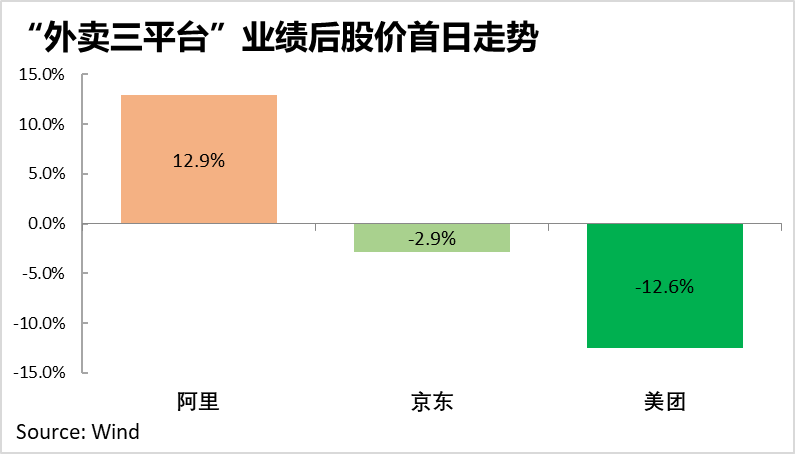
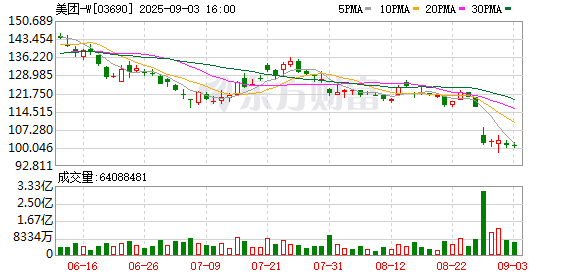
Group 1 - Alibaba achieved significant victories in both performance data and stock price during the summer of 2025, indicating a strong recovery [1] - The recent e-commerce battle involving Alibaba, JD.com, and Meituan is reshaping the market landscape, hinting at potential long-term changes in the e-commerce sector [2][3] - The stock market reaction to the earnings reports of Alibaba, Meituan, and JD.com shows that Alibaba's stock surged nearly 13% on the first day after its earnings announcement, while Meituan's stock dropped nearly 13% [4] Group 2 - In the second quarter, Alibaba's adjusted profit was 38.8 billion yuan, a decline of less than 14% year-on-year, indicating that its investments in the food delivery sector did not severely impact its profitability [18] - In contrast, Meituan's operating profit plummeted by 97% to only 200 million yuan, while JD.com reported a loss of 860 million yuan, highlighting the severe financial impact of the delivery battle on these companies [17] - The market's perception of the three companies is evident: Alibaba is seen as having a strong position due to its size and financial resources, while Meituan and JD.com face significant challenges [9][10][13] Group 3 - The food delivery battle has led to a substantial increase in daily active users (DAU) for all three companies, with Alibaba experiencing a 17% year-on-year increase in DAU by July [29][30] - Alibaba's Taobao Flash has achieved a significant increase in order volume, reaching an average of 75 million daily orders in the third quarter, nearly matching Meituan's expected 90 million [34] - The competitive landscape has shifted, with Alibaba's market share in food delivery approaching parity with Meituan, indicating a successful strategy in scaling operations [36][88] Group 4 - Alibaba's management anticipates that the integration of its various business units will create a comprehensive consumption platform, aiming for a seamless user experience across different services [89][90] - The company plans to enhance its operational efficiency and reduce average losses per order by optimizing its delivery structure and increasing the average order value [85][86] - The long-term goal for Alibaba is to establish a unified platform that encompasses all aspects of consumer needs, including food delivery, traditional e-commerce, and other services [92]

美团CEO王兴和骑手一同受邀观礼,还有员工参加受阅方队
第一财经· 2025-09-03 11:14
Core Viewpoint - The article highlights the participation of Meituan riders and employees in the 80th anniversary of the victory in the Chinese People's War of Resistance Against Japanese Aggression, showcasing their contributions to society and the pride they feel in serving the nation [2][5][6]. Group 1: Participation and Contributions - Sixteen Meituan riders from various regions attended the ceremony, including veterans and those recognized for their heroic actions [3][7]. - Riders like Lian Shuangpeng and Gao Feng expressed their pride and honor in participating in such a significant national event, emphasizing their commitment to work and community service [5][6]. - Meituan employees also participated, with individuals like Fan Na representing the company in the military parade, reflecting the dedication of the workforce [6]. Group 2: Recognition and Achievements - Gao Feng, a Meituan rider and veteran, has received multiple honors for his contributions, including "National Labor Model" and "Most Beautiful Retired Soldier" [5][6]. - The article mentions the involvement of other delivery personnel from various companies, indicating a broader recognition of the role of delivery workers in society [7].


美团CEO王兴和骑手一同受邀观礼 还有员工参加受阅方队
Di Yi Cai Jing· 2025-09-03 10:13
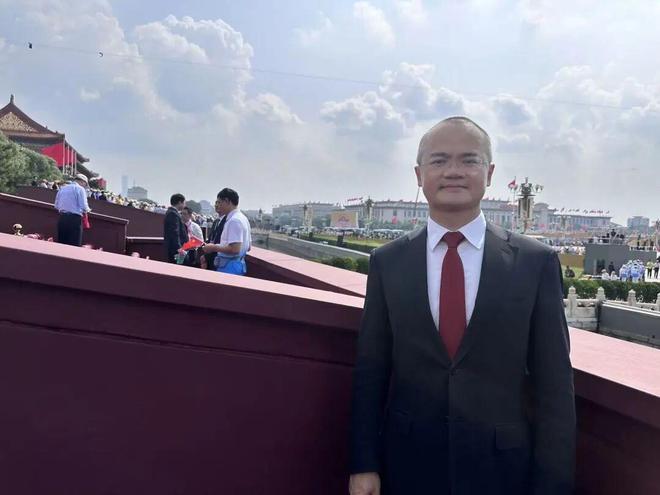
Group 1 - The 80th anniversary of the victory in the Chinese People's Anti-Japanese War and the World Anti-Fascist War was commemorated with a grand ceremony at Tiananmen Square in Beijing on September 3 [2] - Meituan CEO Wang Xing attended the event and shared his feelings with company partners, highlighting the significance of witnessing this historical moment [2] - Several Meituan delivery riders, including veterans and community service participants, were invited to observe the ceremony, showcasing their contributions to society [2][3] Group 2 - Delivery rider Lian Shuangpeng expressed his pride and honor in attending the ceremony as a Communist Party member, emphasizing his commitment to work and life after the event [2] - Another rider, Gao Feng, a veteran and recipient of multiple labor awards, actively participates in urban governance through community projects, reflecting the integration of delivery work with civic responsibility [3] - Meituan employees also participated in the ceremony, with staff member Fan Na representing the company in the military parade, symbolizing the dedication of Meituan employees to their roles [3] Group 3 - In addition to Meituan riders, several couriers from other delivery companies, including SF Express and Zhongtong Express, also attended the ceremony, indicating a broader representation of the delivery industry [4]
美团CEO王兴和骑手一同受邀观礼,还有员工参加受阅方队
Di Yi Cai Jing Zi Xun· 2025-09-03 09:56
Core Viewpoint - The 80th anniversary of the victory in the Chinese People's Anti-Japanese War and the World Anti-Fascist War was commemorated with a grand ceremony at Tiananmen Square, where Meituan's CEO Wang Xing attended and shared his experiences with company partners [1] Group 1 - Sixteen Meituan delivery riders from across the country were invited to witness the ceremony, including veterans who participated in significant rescue operations [3] - Rider Lian Shuangpeng expressed his pride and honor in attending the event as a Communist Party member, stating it motivated him to work harder and appreciate life more [3] - Another rider, Gao Feng, a veteran and recipient of multiple labor awards, actively participates in urban governance projects, reflecting Meituan's commitment to community involvement [4] Group 2 - Sun Xihe, a Meituan delivery rider and former military personnel, highlighted the continuity of service to the people, whether in the military or as a delivery worker [5] - Meituan employees also participated in the ceremony, including Fan Na, who represented the company in the military parade, showcasing the pride and dedication of Meituan's workforce [5] - Other delivery personnel from various courier companies, including SF Express and JD, also attended the event, indicating a broader representation of the logistics and delivery industry at the ceremony [5]
景气度为王:股市牛熊更迭,新老龙头交替上演资本盛宴
Sou Hu Cai Jing· 2025-09-03 09:37
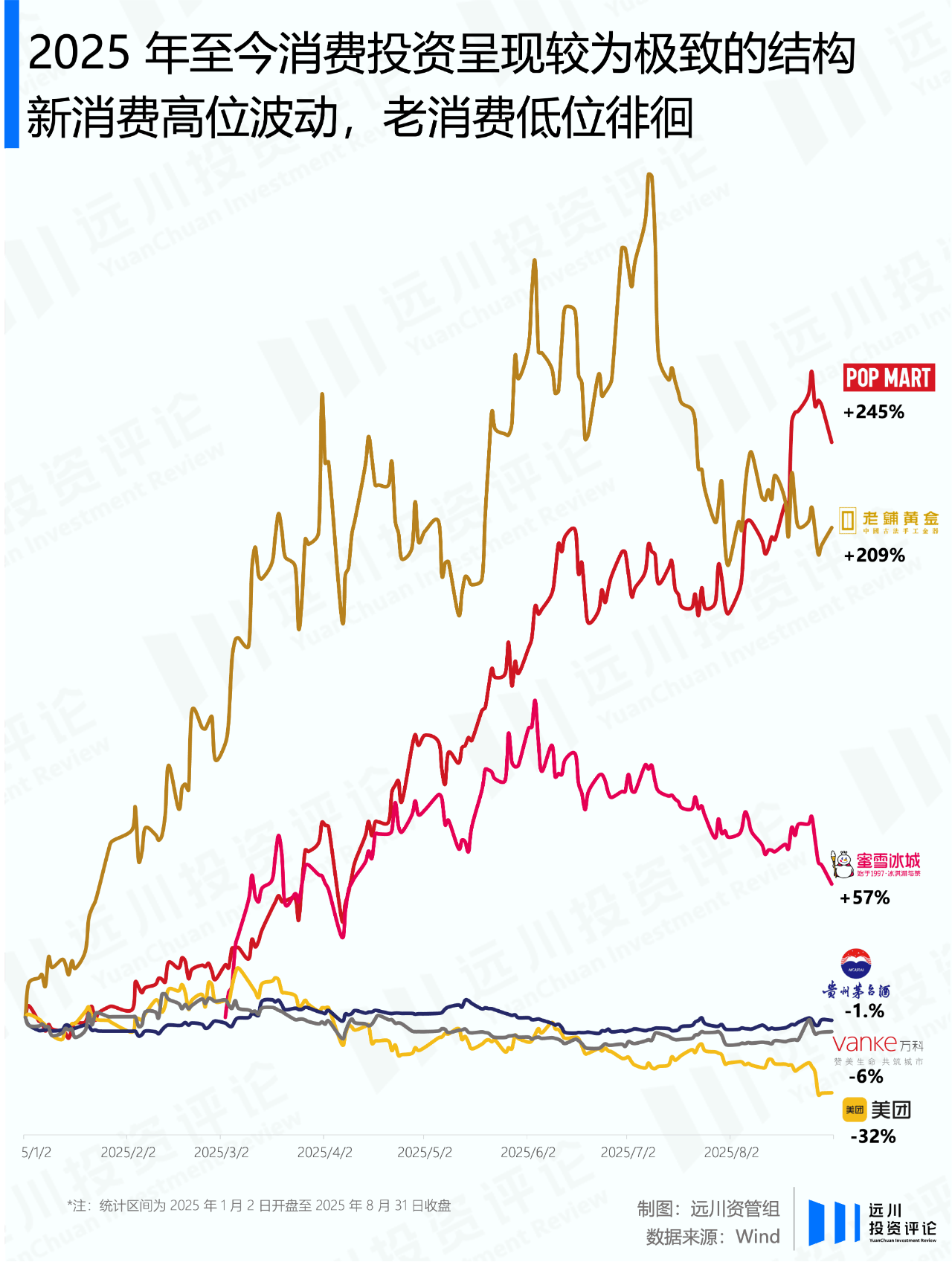
Group 1 - The concept of "景气度" (economic prosperity) is crucial in the Chinese stock market, serving as a common code behind high-performing stocks and a "safety valve" for measuring current corporate performance growth [1] - The market landscape for the first half of 2025 reveals a significant performance gap between new growth forces and established leaders, highlighting a shift in consumer preferences and market dynamics [1] - The rise of new consumption trends, particularly among the post-2000 generation, is changing market dynamics, with a preference for lifestyle and emotional value over traditional investments like real estate [1] Group 2 - The previous bull market saw sectors like solar energy, lithium batteries, and electric vehicles undergo a dual cleansing of performance and valuation, with high penetration rates leading to significant declines in both areas [2] - The AI industry is emerging as a new growth driver, with companies like Cambrian witnessing a 43-fold increase in revenue, challenging established market leaders [2] - Fund managers are showing generational differences in performance, with newer managers excelling in AI and innovative pharmaceuticals, while veteran managers remain cautious [2] Group 3 - The stock market is characterized by constant changes, with investors either chasing high-prosperity new stars or adhering to traditional value investment strategies [5] - The performance of various companies varies significantly, with some like POP MART showing a 286% increase, while others like Vanke and Kweichow Moutai experiencing declines of -21% and -38% respectively [7]

眼睛在做主?外卖大战中“看图下单”的真相
3 6 Ke· 2025-09-03 02:17
Core Insights - The article emphasizes the significant impact of visually appealing food images on consumer purchasing decisions in the food delivery industry, highlighting that attractive images can lead to increased sales without additional marketing efforts [1][2][3]. Group 1: Research Findings - A study conducted in collaboration with a major food delivery platform analyzed over 506,553 orders from 71 restaurants, revealing that aesthetically pleasing food images correlate with higher sales [2]. - Specifically, for every unit increase in the aesthetic score of food images, average sales increase by 4.8%, indicating that even a small improvement in image quality can lead to substantial revenue gains [2]. - The effect of image quality is particularly pronounced during the "cold start" phase for new restaurants, where consumers rely heavily on visual cues due to a lack of reviews [2]. Group 2: Pricing and Consumer Behavior - High-quality images not only influence the decision to purchase but also affect consumers' willingness to pay higher prices, acting as a natural premium tool [3]. - For instance, a well-presented dish priced at 20 yuan can maintain or even increase sales without discounts, while a poorly presented image may require discounts to attract buyers [3]. Group 3: Role of AI in Aesthetics - The research utilized AI to evaluate image aesthetics, achieving a correlation of 0.75 between AI ratings and human consumer preferences, demonstrating that AI can effectively assess visual appeal [4]. - This AI-driven approach allows businesses to enhance their visual presentation without the need for expensive photography services, making aesthetic improvements accessible to smaller establishments [5]. Group 4: Signal Interaction - The study identifies two types of signals influencing consumer decisions: promotional signals (e.g., advertisements, beautiful images) and reputational signals (e.g., platform certifications, user reviews) [9]. - It was found that excessive advertising can dilute the effectiveness of attractive images, as consumers may become skeptical of the authenticity of the visuals when overwhelmed by promotional content [10]. - Conversely, third-party endorsements can amplify the positive effects of appealing images, leading to increased consumer trust and higher sales [11]. Group 5: Broader Implications - The findings suggest a universal principle in business: in environments lacking direct experience, visual aesthetics serve as a powerful persuasive tool [12]. - This principle applies across various industries, indicating that high-quality visuals can significantly influence consumer confidence and purchasing behavior, even in B2B contexts [13]. - The research outlines three key takeaways for businesses: the importance of first impressions, the need to avoid conflicting signals, and the recognition of aesthetics as a productivity driver [18][19][20].

财经早报:9月3日
Xin Hua Cai Jing· 2025-09-03 02:16
Group 1 - The China-Shanghai Cooperation Organization (SCO) has officially launched three cooperation platforms focusing on energy, green industries, and digital economy to enhance collaboration and promote sustainable development among member states [2] - In August, the number of new A-share accounts reached 2.65 million, a year-on-year increase of 165%, significantly surpassing the same period last year [2] - The software and information technology service industry in China reported a revenue of 83,246 billion yuan in the first seven months of 2025, with a year-on-year growth of 12.3% [2] - The Beijing Stock Exchange reported that all 274 listed companies completed their semi-annual reports, with total operating income of 92.064 billion yuan, reflecting a year-on-year growth of 6.01% [2] - Major food delivery platforms in China, including Meituan, Alibaba, and JD, reported significant declines in net profits due to increased marketing expenses during a competitive period, with Meituan's net profit dropping nearly 90% [2] Group 2 - The Ministry of Finance and the State Taxation Administration of China issued new tax policies to support the management of state-owned equity and cash income for social security fund transfers [2] - The net inflow of southbound funds in Hong Kong reached 9.281 billion HKD, marking a record high since the launch of the mutual market access mechanism [2] - The People's Bank of China reported a net liquidity injection of 300 billion yuan through medium-term lending facilities in August [2] - The IPO application for Yuzhu Technology is expected to be submitted to the stock exchange between October and December, with quadruped and humanoid robots projected to account for 65% and 30% of sales in 2024, respectively [2]

红黄蓝三家营销费用激增 战略性亏损Q3或将继续相伴
Mei Ri Shang Bao· 2025-09-02 22:14
Core Insights - The recent Q2 financial reports from major companies like JD, Meituan, Alibaba, and Pinduoduo reveal a significant focus on the competitive landscape of the food delivery market, highlighting increased marketing expenditures and strategic losses due to heightened competition [2][4][5][6][7] Group 1: Financial Performance - JD's Q2 total revenue reached 356.7 billion yuan, a year-on-year increase of 22.4%, but it reported an operating loss of 900 million yuan due to increased strategic investments in new businesses, particularly food delivery [4] - Meituan's Q2 revenue was 91.84 billion yuan, up 11.7% year-on-year, but its adjusted net profit plummeted by 89% to 1.49 billion yuan, attributed to irrational competition in the food delivery sector [5] - Alibaba's Q2 net profit surged by 76% to 42.38 billion yuan, primarily driven by investment income, while its total revenue was 247.65 billion yuan, reflecting only a 2% year-on-year growth [6][7] Group 2: Marketing Expenditures - JD's marketing expenses soared by 127.6% year-on-year to 27 billion yuan, accounting for 7.6% of its revenue in Q2 [4] - Meituan's marketing spending reached 22.5 billion yuan, contributing to its profit decline [5] - Alibaba's marketing expenses increased by 62.6% to 53.18 billion yuan, with significant investments in its instant retail segment [6] Group 3: Strategic Focus and Future Outlook - JD's CEO emphasized that the food delivery business is a long-term project aimed at sustainable growth over the next five to ten years [4] - Alibaba's CEO highlighted the dual opportunities in AI and consumer sectors, with cloud business revenue growing by 26% year-on-year, driven by AI-related products [7] - The intense competition in the food delivery market is expected to continue impacting financial results in the upcoming quarters, with strategic losses likely persisting [2][7]



聊聊外卖的护城河
Hu Xiu· 2025-09-02 13:46
Core Viewpoint - The competitive moat of Meituan's food delivery service is considered very wide, especially when compared to WeChat's moat, which is perceived to be even wider [1][12]. Group 1: Competitive Landscape - The food delivery business operates on a three-sided network effect, connecting users, merchants, and delivery personnel, where the increase in any one party enhances the value for the others [5][6]. - The food delivery market is characterized by a "winner-takes-all" dynamic, where companies with higher market shares can achieve better monetization rates, lower subsidy rates, and reduced fulfillment costs [8]. - The second-place player in the food delivery market faces significant challenges, making it difficult for new entrants like JD to compete effectively [10][11]. Group 2: Market Dynamics - Users primarily order food from within a 3km radius, where price, delivery service, and variety are crucial factors influencing their choices [9]. - The competitive environment in e-commerce is likened to the liquor industry, where despite intense competition, market share remains fragmented, and leading players are still profitable [7]. Group 3: Strategic Considerations - Even the widest moats must consider pricing strategies, as excessively high prices can create vulnerabilities [14]. - Long-term profitability should be evaluated, taking into account not just pricing but also the importance of corporate culture in sustaining service quality for users and merchants [16]. - Warren Buffett emphasized the need for companies to continuously strengthen and widen their moats, suggesting that a company's ability to do so is a key indicator of its greatness [17].
外卖竞局尚未撤席,AI牌局开场已酣
Qi Lu Wan Bao Wang· 2025-09-02 10:56
Core Insights - The intense competition in the food delivery industry is highlighted by the recent financial reports from major players like Alibaba, Meituan, and JD.com, indicating a fierce battle for market share and user engagement [1][2][4] Financial Performance - Alibaba's Taobao Flash reported a peak daily order volume of 120 million in August, with a monthly active user count reaching 300 million, reflecting a 200% increase since April [2] - Meituan's Q2 revenue was 91.84 billion yuan, a year-on-year growth of 11.7%, with monthly active users surpassing 500 million [2] - JD.com's total revenue for the first half of the year was 356.7 billion yuan, showing a year-on-year increase of 22.4%, with its food delivery business driving a 199% growth in new business revenue [4] Strategic Moves - Alibaba has integrated Ele.me and Fliggy into its China e-commerce group, indicating a strategic restructuring to enhance its core e-commerce operations [2][3] - Meituan's CEO emphasized the company's commitment to maintaining its market leadership while exploring new business opportunities [4] - JD.com is focusing on integrating its supply chain advantages into food delivery and hospitality services, positioning instant retail as a critical battleground [4] AI and Technology Investments - Meituan has launched several AI applications and announced a significant investment exceeding 10 billion yuan annually in AI development [5] - Alibaba's new AI framework, AgentScope 1.0, aims to outperform competitors in both technology and commercial application [6] - JD.com is advancing its AI strategy with a focus on creating world-class capabilities and has made substantial investments in robotics and AI technologies [8] Offline Retail Expansion - The competition is extending into offline retail, with both JD.com and Meituan launching new supermarket formats aimed at community needs [9][10] - JD.com's discount supermarkets emphasize direct sourcing and private label products, targeting lower-tier markets with competitive pricing strategies [10] - The shift in offline retail strategies reflects a broader adjustment among internet giants to capture market share in various consumer segments [10]