
新能源汽车

Search documents
【光大研究每日速递】20260205
光大证券研究· 2026-02-04 23:06
Real Estate - The top 10 real estate companies experienced a year-on-year sales decline of 12% in January, while the top 100 companies saw a decline of 25%, indicating a significant disparity in sales performance among different tiers of companies [5] - Notable performers in terms of sales growth include China Overseas Land & Investment, which saw a 20.5% increase, and China Jinmao, with a 13.3% increase [5] - The government is taking measures to stabilize the real estate market, including direct purchases of second-hand homes to promote sales and inventory reduction, which is expected to improve market sentiment [5] Steel - The price difference between hot-rolled steel and rebar is at a five-year low, indicating a potential shift in market dynamics [5] - The SPDR Gold ETF holdings are at their highest level since June 2022, reflecting increased liquidity in the market [5] - The national PMI new orders index for January stands at 49.20, suggesting a contraction in manufacturing activity [5] Non-ferrous Metals - The price of crude indium has increased by 35% over the past week, indicating strong demand in the consumer electronics sector [6] - Prices for other materials such as lithium hydroxide and polysilicon have decreased, while uranium prices have risen, reflecting mixed trends in the new energy and nuclear sectors [6] Display Technology - Hisense Visual Technology is positioned as a leading global provider of display solutions, focusing on a multi-scenario large display strategy and a comprehensive layout in LCD, laser display, and LED technologies [7] - The company achieved a total revenue of 58.5 billion yuan and a net profit of 2.2 billion yuan in 2024, showcasing its strong market presence [7] Industrial X-ray Detection - Dayun Technology is recognized as a leader in the industrial X-ray detection equipment sector, benefiting from high demand in semiconductor, electronic manufacturing, and new energy battery sectors [8] - The company is expected to enhance its competitive advantage through self-research in core components and product structure upgrades [8] Baidu Group - Baidu's advertising business is under pressure, with a projected year-on-year revenue decline of approximately 8.7% for Q4 2025, primarily due to weak demand for traditional search advertising [9] - The company’s cloud business is experiencing a short-term slowdown, but the reduction in depreciation pressure from previous asset impairments is expected to support non-GAAP operating profit [9] XPeng Motors - XPeng Motors reported a significant decline in January deliveries, down 34.1% year-on-year and 46.6% month-on-month, attributed to the phasing out of subsidies and transitions between old and new products [8]

全世界都在抢的车,中国却开始嫌弃
汽车商业评论· 2026-02-04 23:06
Core Viewpoint - The article discusses the significant decline in the growth rate of plug-in hybrid vehicles (PHEVs) in the Chinese automotive market, highlighting the competitive pressure from pure electric vehicles (EVs) and the changing consumer preferences that have led to this shift [4][6][7]. Group 1: Market Trends - In 2025, the growth rate of PHEVs dropped to 8.8%, with range-extended vehicles seeing a mere 6% increase, marking the first instance of consecutive monthly declines in this segment [6][7]. - The penetration rate of PHEVs in the new energy vehicle market surged from 17% in 2021 to 40% in 2024, but the market dynamics shifted dramatically in 2025 [4][6]. - The average price of pure electric vehicles fell by 15% from 168,000 yuan in 2024 to 143,000 yuan in 2025, while mainstream PHEVs remained in the 150,000 to 180,000 yuan range, erasing the price advantage previously held by PHEVs [11]. Group 2: Consumer Behavior - The average range of pure electric vehicles exceeded 528 kilometers in 2025, with many mainstream models surpassing 600 kilometers, significantly reducing consumer anxiety regarding range [15]. - The rapid development of charging infrastructure, with a car-to-charging station ratio of 2.5:1 and a total of 20.09 million charging facilities by the end of 2025, has made pure electric vehicles a more reliable choice for consumers [15]. - Consumers are increasingly viewing pure electric vehicles as a dependable option, leading to a decline in the perceived necessity of PHEVs, which were initially chosen to alleviate range anxiety [15][19]. Group 3: Technological Shifts - PHEVs are experiencing a shift towards larger battery capacities and faster charging solutions, with many manufacturers adopting battery sizes exceeding 60 kWh to enhance their appeal [27][29]. - The introduction of 800V high-voltage platforms and ultra-fast charging technologies is becoming standard, allowing for significant improvements in charging efficiency [15][27]. - The trend of integrating larger batteries into PHEVs is raising production costs, which could undermine their competitive pricing advantage [32][35]. Group 4: Regulatory Environment - New regulations set to take effect in 2026 will tighten the eligibility criteria for tax exemptions for PHEVs, making it more challenging for lower-end models to compete [39][40]. - The shift from a "universal" tax exemption policy to one that favors stronger models will further complicate the market landscape for PHEVs [37][41]. Group 5: Future Outlook - Despite the current challenges, the article suggests that PHEVs will maintain a significant market share, with a projected penetration rate of 36% in 2025, corresponding to 4.669 million units [51]. - The global market for PHEVs is expected to grow, with predictions indicating that their growth rates will surpass those of pure electric vehicles in the coming years [60][66]. - The unique energy structure and market conditions in China suggest that PHEVs will continue to play a crucial role in the automotive landscape, particularly in regions with less developed charging infrastructure [52][54].


贷款贴息“红包”更大了
Ren Min Ri Bao Hai Wai Ban· 2026-02-04 22:59
Core Viewpoint - The Chinese government is enhancing financial support through interest subsidies for consumer loans and small and micro enterprises, aiming to stimulate domestic demand and support the real economy [8][9][12]. Group 1: Consumer Loan Policies - The upgraded consumer loan subsidy policies will provide a 1% interest subsidy on personal consumption loans and service industry loans, benefiting both consumers and businesses [9][10]. - The policies have been optimized to include credit card installment payments, allowing more consumers to benefit from the subsidies [11]. - The implementation period for these policies has been extended to December 31, 2026, with potential for further extensions based on effectiveness [17][19]. Group 2: Support for Small and Micro Enterprises - A new interest subsidy policy for small and micro enterprises will provide a 1.5% subsidy on loans, with a maximum loan amount of 50 million yuan and a subsidy period of up to two years [14][16]. - The policy targets key industries such as new energy vehicles, industrial robots, and medical equipment, aiming to alleviate financing difficulties for private enterprises [14][16]. - The equipment update loan subsidy policy has been expanded to include fixed asset loans related to equipment updates and technology innovation [15][16]. Group 3: Implementation and Efficiency - The government aims to streamline the process for accessing these subsidies, ensuring that consumers and businesses can benefit from the policies with minimal bureaucratic hurdles [18][19]. - There is a focus on making the subsidy process more efficient, with an emphasis on automatic recognition of eligible transactions to facilitate immediate benefits for consumers [18][19]. - The policies are designed to create a favorable consumption environment by reducing credit costs and enhancing consumer purchasing power [19].
GDP首破5万亿元——北京探索超大城市发展动力之变
Jing Ji Ri Bao· 2026-02-04 22:10
Core Viewpoint - Beijing is transitioning from a phase of rapid economic growth to high-quality development, aiming to balance stable growth with transformation while achieving a GDP of 52,073.4 billion yuan by 2025, reflecting a 5.4% increase from the previous year [1] Economic Growth Dynamics - New driving forces have become crucial for economic growth in Beijing, with a focus on the transformation of industrial structure and innovation density [2][3] - The scale of high-tech industries in Beijing is projected to reach over 1.8 trillion yuan by 2025, accounting for 35.2% of the city's GDP, contributing approximately 60% to overall economic growth [2] - The core AI industry in Beijing is expected to reach 450 billion yuan by 2025, with over 2,500 AI companies operating in the city [3] Consumer Trends - The demand side of the economy is stable and upgrading, with service consumption accounting for nearly 60% of resident spending by 2025, and online retail sales exceeding 40% of total retail sales [4] - There is a shift in consumer behavior from functional consumption to emotional value, with a focus on experiential consumption [4][5] Collaborative Development - Beijing's economic growth is part of a broader regional collaboration with Tianjin and Hebei, enhancing transportation integration and ecological cooperation [6][7] - The output of technology contracts from Beijing to Tianjin and Hebei is projected to grow from over 7 billion yuan in 2013 to over 99 billion yuan by 2025, indicating improved regional collaboration [7] - The development of a modern capital metropolitan area is emphasized, with a focus on alleviating non-capital functions and enhancing collaborative innovation [7]

补链强链+绿色创新 想让电池更“耐扛”
Xin Lang Cai Jing· 2026-02-04 21:35
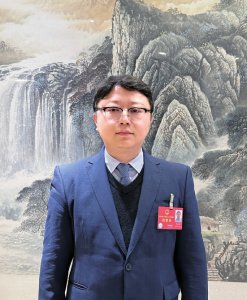
Core Insights - The article discusses the advancements in solid-state battery technology and the strategic initiatives proposed by Huajianfeng, a representative from Sichuan, to enhance the local new energy industry [1][2]. Group 1: Industry Developments - Sichuan has made significant breakthroughs in solid-state battery manufacturing, overcoming key technical challenges such as the mass production of sulfide electrolytes and ultra-thin electrolyte membranes [2]. - The company Sike Power, incubated by the Sichuan New Energy Innovation Center, has begun production of high-safety batteries in Yibin, establishing a pilot line for 30MWh solid-state batteries and 30 tons of solid electrolytes, achieving international advanced technical standards [2]. Group 2: Strategic Recommendations - Huajianfeng presented seven recommendations focused on "strengthening the supply chain and green innovation," aiming to transform Sichuan from a resource-rich province to an industrial hub by creating a closed-loop system from lithium mining to battery recycling [1]. - Suggestions include establishing a national-level battery public technology service platform to help local companies comply with international regulations like the EU's "battery passport" and promoting a province-wide network for electric heavy truck charging and swapping infrastructure [1]. Group 3: Future Plans - The company aims to focus on three key areas: advancing the industrialization of solid-state batteries, developing green zero-carbon scenarios, and integrating artificial intelligence with new energy technologies to enhance research and development efficiency [4]. - The goal is to achieve demonstration vehicles by 2027 and mass application before 2030, while also creating solutions for zero-carbon industrial parks, mining, and transportation [4].
龙头企业发力助推经济发展
Xin Lang Cai Jing· 2026-02-04 20:31
2025年以来,以领克汽车义乌工厂为代表的龙头企业持续发力。2025年义乌市新能源汽车及零部件产业 发展势头良好,有力支撑工业经济发展。本报通讯员 陈业 摄 2月3日,位于浙江省金华市的领克义乌工厂,工人正在生产线上装配新能源汽车。 (来源:工人日报) ...
把脉产业发展趋势 解锁企业“风控密码”
Qi Huo Ri Bao Wang· 2026-02-04 18:49
上海有色网行业研究院新能源事业部储能分析师李亦沙在会上介绍,全球储能市场主要增长区域集中于 中国、美国、欧洲、中东以及澳大利亚等地。预计2024—2030年全球储能电芯需求将持续增长,复合年 均增长率(CAGR)为24%。谈及碳酸锂价格变动对储能成本的影响,李亦沙表示,碳酸锂价格每上涨 1万元/吨,电芯成本增加6元/千瓦时,内部收益率(IRR)下降0.12%。 碳酸锂是动力电池的核心原材料,它的价格波动也会给电池和新能源汽车市场带来影响。中国汽车流通 协会乘用车市场信息联席分会秘书长崔东树在会上介绍,近年来新能源汽车销量呈现持续增长态势, 2025年全年零售量大幅增长。与此同时,2025年,新能源商用车电池月度需求峰值突破1700万千瓦时, 全年需求规模较往年翻倍。崔东树认为,当前汽车正从机械工具转变为耐用电子消费品,使用周期缩 短、更新加速。电动车兼具出行工具、第三空间、储能单元等多重属性,将推动锂电池在能量密度、循 环寿命等方面的需求升级。目前来看,世界汽车生产体系正从美日韩向中国等新兴市场转移,中国新能 源汽车产业链优势持续强化,锂电池需求将随产业转移进一步增加。崔东树预测,"十五五"期间,我国 汽车销 ...
【公告臻选】新能车+锂电池+机器人+C2M+出海!公司控股子公司获韩国电池客户项目定点
Xin Lang Cai Jing· 2026-02-04 17:28
Core Viewpoint - The article highlights significant contract wins and growth opportunities for companies in various sectors, including energy, robotics, and oil and gas, indicating a positive trend in their business activities and market positioning. Group 1: Contract Wins and Orders - Far East Holdings' subsidiary secured contracts/orders exceeding 3 billion yuan in January, leading to a strong stock performance with a limit-up on February 3 and a 1.97% increase on February 4 [1] - Trina Solar reported that its overseas energy storage orders have surpassed 12 GWh, contributing to stock surges of 7.76% and 8.93% on February 3 and 4, respectively [1] Group 2: Industry Developments - The company involved in humanoid robots, reducers, intelligent driving, and low-altitude economy has commenced mass production of core components for industry-leading clients [1] - A subsidiary focused on new energy vehicles, lithium batteries, and robotics has secured a project with a South Korean battery client, with an expected procurement of approximately 360 million cylindrical battery shells from 2027 to 2031 [1] - The oil and gas engineering and service company signed a contract worth about 1.596 billion yuan for the resumption of operations at an oil field in Iraq [1]

造车新势力2026开年洗牌,AI军备赛已打响
2 1 Shi Ji Jing Ji Bao Dao· 2026-02-04 16:04
Core Insights - The new energy vehicle (NEV) market did not experience the expected strong start in early 2026, with a significant month-on-month decline in delivery volumes due to seasonal factors and policy transitions, leading to a reshuffling of the industry landscape [1][7] Group 1: Market Performance - In January, the majority of car manufacturers saw a substantial month-on-month drop in delivery volumes, but year-on-year performance showed significant divergence among leading players [2][7] - Hongmeng Zhixing led the market with 57,915 units delivered, a year-on-year increase of 65.6%, supported by strong brand and technology integration [2] - Xiaomi and Leap Motor followed with deliveries of over 39,000 and 32,000 units respectively, while the previously dominant "Wei Xiaoli" trio struggled, with Li Auto and NIO delivering around 27,000 units each, and XPeng just over 20,000 units, showing significant declines [1][4] Group 2: Strategic Shifts - Leading NEV companies are increasingly focusing on AI and robotics for future growth, with Li Auto transitioning to a "embodied intelligence" company and establishing a dedicated team for humanoid robots as a second growth driver [1][5] - XPeng has identified 2026 as a critical year for the commercialization of physical AI, aiming to make AI a core driver of growth across its automotive and robotics businesses [1][5] - NIO is also investing in AI, establishing a company-level "Artificial Intelligence Technology Committee" to enhance its capabilities across various operational areas [6] Group 3: Market Challenges - The automotive market faced a significant decline in consumer demand in January, with a 28% year-on-year drop in retail sales, including a 16% decrease in NEV sales [7][8] - The expiration of the NEV purchase tax exemption at the end of 2025 has led to a preemptive depletion of demand, while new subsidy policies have yet to be fully implemented, creating a consumption "vacuum" [7][8] - Companies like Tesla, Xiaomi, Li Auto, and NIO have initiated financial strategies, including low-interest loan offers, to stimulate consumer purchases amid declining demand [7][8]
四川省政协委员建言成渝地区双城经济圈发展能级提升
Zhong Guo Xin Wen Wang· 2026-02-04 14:36
中新网成都2月4日电(袁牟知博)四川省政府工作报告显示,"十四五"期间,成渝地区双城经济圈经济总 量超9万亿元,占全国比重升至6.5%左右,具有全国影响力的重要经济中心、科技创新中心、改革开放 新高地、高品质生活宜居地建设成势见效。"十五五"开局,川渝如何联动提升成渝地区双城经济圈发展 能级?正在成都举行的四川省两会上,多位四川省政协委员积极建言。 "提升成渝地区双城经济圈发展能级,需以双核引领为核心,走协同创新、开放赋能、产业集群、设施 互联、市场一体的路径。"四川省政协委员、九三学社四川省委会监督委员会副主任延华表示,在创新 体系共建方面,川渝应进一步强化成都与重庆在研发、转化、制造环节的分工协同,提升对全域的辐射 带动能力;在产业互补方面,重庆在新能源汽车等产业布局上优势明显,四川制造业基础雄厚,两地可 深化细分领域合作。 四川省政协委员、农工党四川省委会副主委、西南财经大学中国西部经济研究院院长毛中根从全局出 发,提出三大提升路径:一是加强基础设施建设,加快共建世界级机场群,统筹推进高铁、城际铁路建 设,打通成渝主轴走廊与沿江通道,构建内联外畅的现代化综合交通体系;二是推动经济扩量提质,以 科技创新驱 ...