白酒

Search documents
白酒板块上涨难掩资金分歧,拐点临近还是短期博弈?
Di Yi Cai Jing· 2026-02-02 12:02
Core Viewpoint - The recent rebound in the liquor sector, particularly in the white liquor stocks, is seen as a potential turning point after four years of deep adjustments, but there are concerns about whether this is a genuine recovery or merely a temporary bounce [1][4]. Group 1: Market Performance - On February 2, the overall A-share market declined by 2.48%, while the white liquor sector saw a counter-trend rise, with the Wind white liquor index increasing by 3% [2]. - Leading stocks like Kweichow Moutai (600519.SH) rose by 1.86%, and other companies such as Huangtai Liquor (000995.SZ) and Jinhuijiu (603919.SH) experienced significant gains, with some stocks hitting the daily limit [2]. - The food and beverage sector, particularly white liquor, outperformed the market, indicating a strong interest from investors despite overall market weakness [2]. Group 2: Fund Holdings and Investor Sentiment - As of the end of Q4 last year, public fund holdings in white liquor stocks dropped to 3.93%, down from a peak of 16% in 2020, suggesting a significant shift in investor sentiment [4]. - There is a notable divergence in fund operations, with some funds increasing their positions in specific stocks like Shede Liquor (600702.SH) and Yanghe Brewery (002304.SZ), while others have reduced their holdings [4][5]. - The recent increase in white liquor stock prices is attributed to short-term factors such as pre-holiday demand and low valuations, but there remains skepticism about the sustainability of this rebound [3][6]. Group 3: Future Outlook - Analysts suggest that while the current market conditions may benefit from seasonal demand, the long-term outlook for the white liquor industry remains dependent on economic recovery and consumption trends [6]. - The industry is expected to see a structural shift with increased concentration among leading companies, which could support their fundamentals and valuation recovery [6]. - The cultural significance of white liquor in China is highlighted, suggesting that it may retain its value as a core asset capable of weathering economic cycles [6].

注意!A股超4600股下跌背后:聪明资金已在这三条战线完成集结
Sou Hu Cai Jing· 2026-02-02 11:47
Core Viewpoint - The market experienced a significant downturn, with major indices like the Shanghai Composite Index dropping by 2.48%, and over 4600 stocks declining, indicating a severe market sentiment shift towards panic selling [1] Group 1: Market Overview - The overall market sentiment is extremely negative, with a notable decrease in trading volume to 2.61 trillion, suggesting that many investors are hesitant to engage [1] - The primary driver of the market decline is identified as the cyclical sectors, particularly the non-ferrous metals sector, which fell over 7% [1] Group 2: Investment Opportunities - The first identified opportunity is in the electric grid equipment sector, which saw a surge in stock prices despite the overall market decline, driven by the increasing demand for stable power supply in AI data centers [2] - The second opportunity lies in CPO (Co-Packaged Optics) modules, which showed strong performance due to significant profit growth from leading companies, indicating robust demand in the global computing infrastructure [3] - The third opportunity is in the liquor industry, particularly high-quality brands that have undergone long-term adjustments, attracting long-term investors looking for stable core assets [4] Group 3: Market Dynamics - The immediate trigger for the market decline was a significant drop in gold and silver prices in international markets, which created a ripple effect in the A-share market [6] - The internal issue was the excessive speculation in cyclical sectors, which had previously seen rapid price increases, leading to a high trading density that made them vulnerable to external shocks [6] Group 4: Strategic Recommendations - Investors are advised to avoid bottom-fishing in recently plummeted cyclical stocks, as their adjustments may not be over [7] - Focus should shift towards sectors representing future technology, such as AI power infrastructure and high-growth hard technology, as indicated by market movements [7] - A change in investment strategy is recommended, moving from speculative narratives to a focus on tangible orders and financial performance [7]
山西汾酒:二级市场股价受多重因素影响存在波动
Zheng Quan Ri Bao Wang· 2026-02-02 11:45
证券日报网讯2月2日,山西汾酒(600809)在互动平台回答投资者提问时表示,二级市场股价受多重因 素影响存在波动。公司将严格按照规定及时履行信息披露义务,相关动态请以公司公告为准。 ...

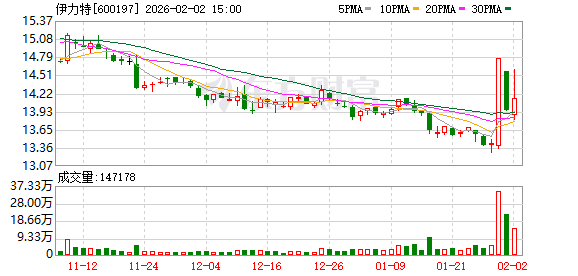
伊力特:冠名新疆广汇男篮是基于伊力特品牌的长期营销战略考量
Zheng Quan Ri Bao· 2026-02-02 11:41
Group 1 - The core viewpoint of the article is that the company, Yili, is strategically sponsoring the Xinjiang Guanghui basketball team as part of its long-term marketing strategy to enhance brand value through stable audience engagement and event popularity [2] Group 2 - The company will continue to monitor the value of this partnership to ensure it aligns with its marketing objectives [2]


净利暴跌近500%,经销商持续流失的酒鬼酒如何挽回消费者?
3 6 Ke· 2026-02-02 11:30
Core Viewpoint - The company, JiuGuiJiu, is facing significant financial challenges, projecting a net loss for 2025, marking its first loss in a decade, attributed to intensified competition and declining market demand in the liquor industry [1][2][4]. Group 1: Financial Performance - For 2025, JiuGuiJiu expects a net loss of 33 million to 49 million yuan, a year-on-year decrease of 364.1% to 492.2% [1]. - In 2023, the company reported a revenue of 2.829 billion yuan, down 30.14% year-on-year, with a net profit of 548 million yuan, a decrease of 47.77% [2]. - The revenue for 2024 further declined to 1.423 billion yuan, a 49.7% year-on-year decrease, with a net profit of 12.49 million yuan, down 97.72% [3]. Group 2: Product Strategy and Market Position - JiuGuiJiu is implementing a "1+3" product strategy to create a comprehensive product system across different price segments [2]. - The company plans to streamline its product offerings, reducing SKUs by 50% and focusing on high-potential products to avoid market saturation [3][8]. - The revenue from the core product series, including the Inner Reference series and JiuGui series, has seen significant declines, with the Inner Reference series down 67.06% in 2024 [3][4]. Group 3: Distribution and Channel Management - The number of distributors has decreased from 1,774 in the previous year to 1,336, indicating a contraction in the distribution network due to performance pressures [2][3]. - The company is focusing on improving distributor quality and has seen a reduction in low-efficiency distributors, enhancing overall stability [3]. - JiuGuiJiu is investing in channel development and new retail strategies to stimulate demand and improve inventory levels [5][6]. Group 4: Production Capacity and Future Plans - Despite the financial downturn, JiuGuiJiu is continuing with its production expansion plans, including a significant investment in new production facilities [7]. - The company has a production capacity of approximately 15,000 tons, with ongoing projects expected to add 7,800 tons of capacity [7]. - The company is adopting a "two low, one small" product strategy to cater to the mid-to-low-end market segments, aiming to enhance competitiveness [7][8].

市场全天震荡调整,持续关注A500ETF易方达(159361)、沪深300ETF易方达(510310)等产品投资机遇
Sou Hu Cai Jing· 2026-02-02 11:30
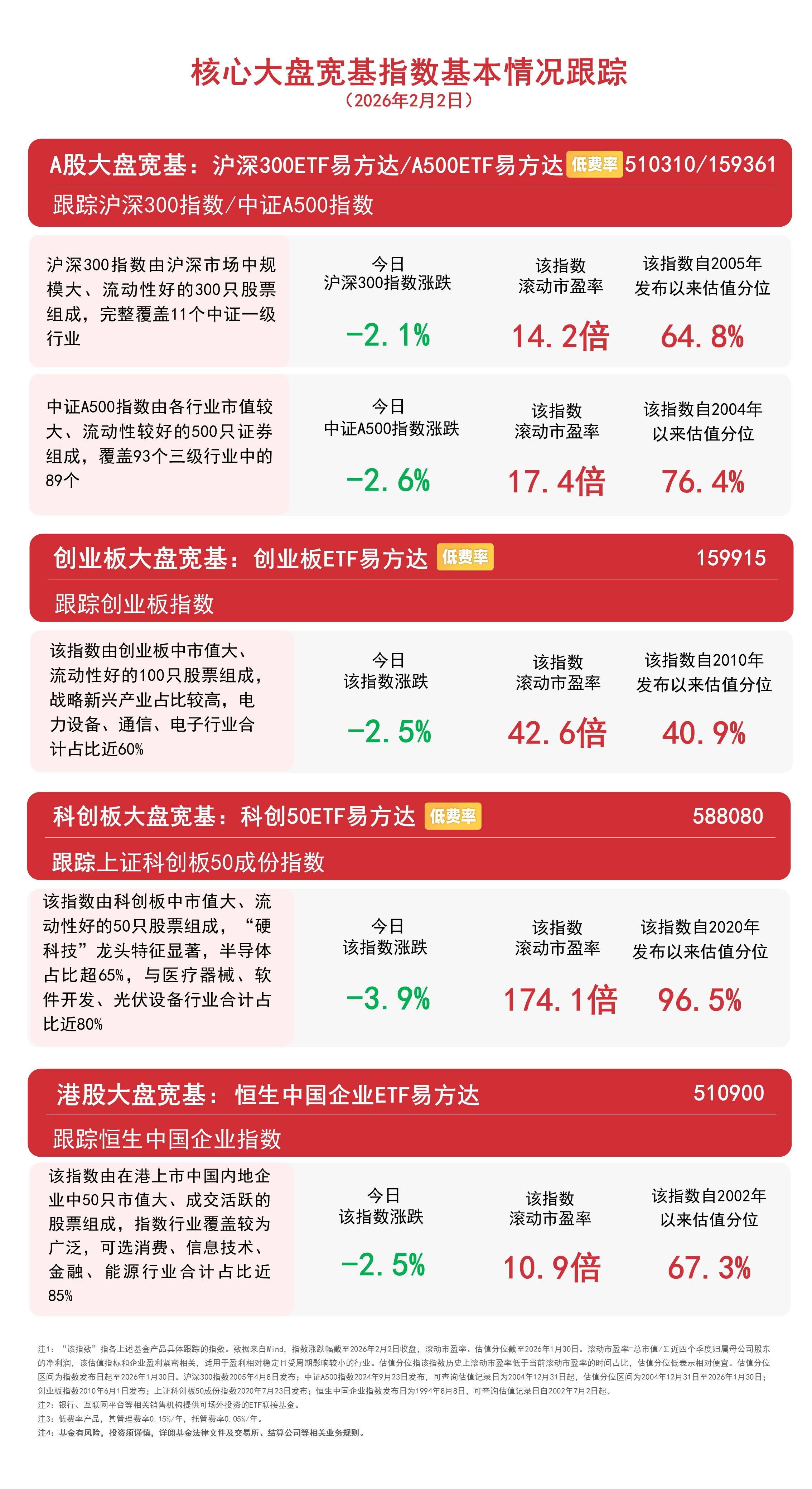
Market Performance - The A-share market indices collectively declined, with significant drops in sectors such as precious metals, oil and gas extraction and services, chemicals, coal, steel, semiconductors, and photolithography concept stocks [1] - The CSI A500 index fell by 2.6%, the CSI 300 index decreased by 2.1%, the ChiNext index dropped by 2.5%, the STAR Market 50 component index declined by 3.9%, and the Hang Seng China Enterprises index decreased by 2.5% [1] Sector Analysis - Precious metals, oil and gas extraction and services, chemicals, coal, steel, semiconductors, and photolithography concept stocks experienced collective declines [1] - The liquor and power grid equipment sectors showed relatively strong performance amidst the overall market downturn [1] - In the Hong Kong market, technology and internet stocks faced the largest declines, while the consumer sector showed localized activity [1]
看涨率跌破5成
第一财经· 2026-02-02 11:27
Market Overview - The A-share market has experienced a significant adjustment, with the Shanghai Composite Index falling below the 4100-point mark, primarily due to the decline of resource cyclical stocks [3] - The Shenzhen Component Index has seen a substantial drop influenced by both technology and cyclical sectors, while the ChiNext Index is under pressure from high-valuation stocks [3] Sector Performance - The market is characterized by a broad decline, although some sectors remain active, such as the strong performance of ultra-high voltage concept stocks and the resilience of liquor stocks [3] - Other sectors like cultural media AI applications and film industry themes are also showing activity, while gold, non-ferrous metals, oil and gas, coal, steel, and chemical sectors are experiencing significant downturns [3] Trading Volume and Sentiment - The total trading volume in the two markets has decreased by 8.8%, indicating a reduction in trading activity as the Spring Festival approaches, leading to increased risk aversion and a strong wait-and-see sentiment among investors [5] - There is an adjustment demand within the market, with previously popular sectors facing profit-taking pressure, prompting a shift in funds from high-risk, cyclical sectors to more defensive and stable sectors [5] Fund Flow Dynamics - There has been a net outflow of 19.98 billion from institutional funds, while retail investors have seen a net inflow [6] - Institutions are reallocating funds away from sectors like electronics, semiconductors, and non-ferrous metals, directing them towards defensive sectors such as electric grid equipment, liquor, and food and beverage [7] Retail Investor Behavior - Retail investor sentiment is reported at 75.85%, indicating a relatively high level of engagement despite market volatility [8] - The current positioning shows 28.19% of retail investors increasing their holdings, while 19.85% are reducing their positions, with 51.96% choosing to hold their positions steady [10]

华润入主三年后,金种子酒还在亏损
Xin Lang Cai Jing· 2026-02-02 11:22
Core Viewpoint - The company, Jinzhongzi Liquor, continues to face significant financial losses despite efforts from its parent company, China Resources, to revitalize the brand. The projected net loss for 2025 is between 1.5 billion to 1.9 billion yuan, indicating ongoing struggles in a challenging market environment [2][3][4]. Financial Performance - Jinzhongzi Liquor's net profit for 2024 was a loss of 2.58 billion yuan, showing a slight improvement compared to previous years, but the company remains in a loss-making position [2][4]. - Revenue figures from 2022 to 2024 were 1.186 billion yuan, 1.469 billion yuan, and 0.925 billion yuan, reflecting a decline of 2.11%, an increase of 23.92%, and a decrease of 37.04% respectively [4]. - For the first three quarters of 2025, the company reported revenue of 628 million yuan, a decrease of 22.08%, and a net profit loss of 1 billion yuan, a slight reduction of 0.97% year-on-year [5]. Industry Context - The liquor industry is undergoing a deep adjustment, with many companies experiencing significant revenue and profit declines. Notably, five other liquor companies reported profit drops exceeding 50% [3][11]. - The market is characterized by a shift in sales channels and increased pressure on sales, which has affected Jinzhongzi Liquor's performance [3][12]. Management Changes - In July 2025, the company's general manager, He Xiuxia, resigned, raising concerns about the stability of the company's strategic direction [5][12]. - Since the entry of China Resources in 2022, Jinzhongzi Liquor has struggled to escape its loss-making status, with cumulative losses of approximately 6.33 billion yuan from 2021 to 2024 [5][9]. Product Strategy - Jinzhongzi Liquor has attempted to innovate its product offerings, launching a new product line aimed at the mid-range market, but has faced challenges in achieving effective market penetration [6][7]. - The revenue from high-end products increased by 7.33% to 51.27 million yuan, while mid-range and low-end products saw declines of 24.06% and 23.83% respectively, indicating difficulties in product structure optimization [7]. Financial Health - As of the end of the third quarter of 2025, the company had cash reserves of 367 million yuan, but short-term borrowings reached 270 million yuan, indicating a significant debt burden [8]. - The ratio of cash to current liabilities was only 53.58%, suggesting weak short-term solvency and ongoing cash flow challenges [8].


A股大跌,原因来了!公募最新研判
Zhong Guo Ji Jin Bao· 2026-02-02 11:13
Core Viewpoint - The recent adjustment in A-shares is attributed to a combination of technical corrections and emotional releases, rather than systemic risks, with a continued positive outlook for the spring market driven by economic recovery and liquidity easing [1][2][4]. Market Adjustment Reasons - The primary disturbance in the market is linked to the nomination of Kevin Warsh as the next Federal Reserve Chairman by President Trump, which is interpreted as a hawkish stance advocating for "rate cuts + balance sheet reduction," leading to a stronger dollar and impacting commodity prices [2][3]. - The direct trigger for the adjustment was the significant drop in international precious metals markets, particularly gold and silver, which negatively affected the A-share market, especially in the non-ferrous metals sector [2][3]. Market Structure and Performance - Despite the overall market decline, certain sectors such as electric grid equipment, liquor, and banking showed resilience and strength, indicating a structural differentiation rather than a complete market downturn [2][4]. - The market is expected to enter a phase of consolidation, with a focus on verifying corporate earnings and fundamental performance as the Chinese New Year approaches [4][5]. Future Market Outlook - The spring market rally is anticipated to continue, supported by domestic policies aimed at stabilizing expectations and expanding domestic demand, with a focus on sectors like consumption and technology [4][6]. - The market is likely to experience a balanced structural feature, with opportunities in previously lagging sectors such as consumption and finance, as well as in technology growth stocks that are supported by industry trends [6][7]. Investment Focus Areas - Investment strategies should consider sectors with clear industry trends and low macroeconomic dependence, such as computing power and energy storage, as well as undervalued high-beta index sectors like non-bank financials [6][7]. - Post-earnings announcement, the market may focus on themes such as commercial aerospace, AI applications, and sectors experiencing price increases like petrochemicals and construction materials [7].
2025白酒产能持续下滑,新一轮产能出清来了?
Xin Lang Cai Jing· 2026-02-02 11:11
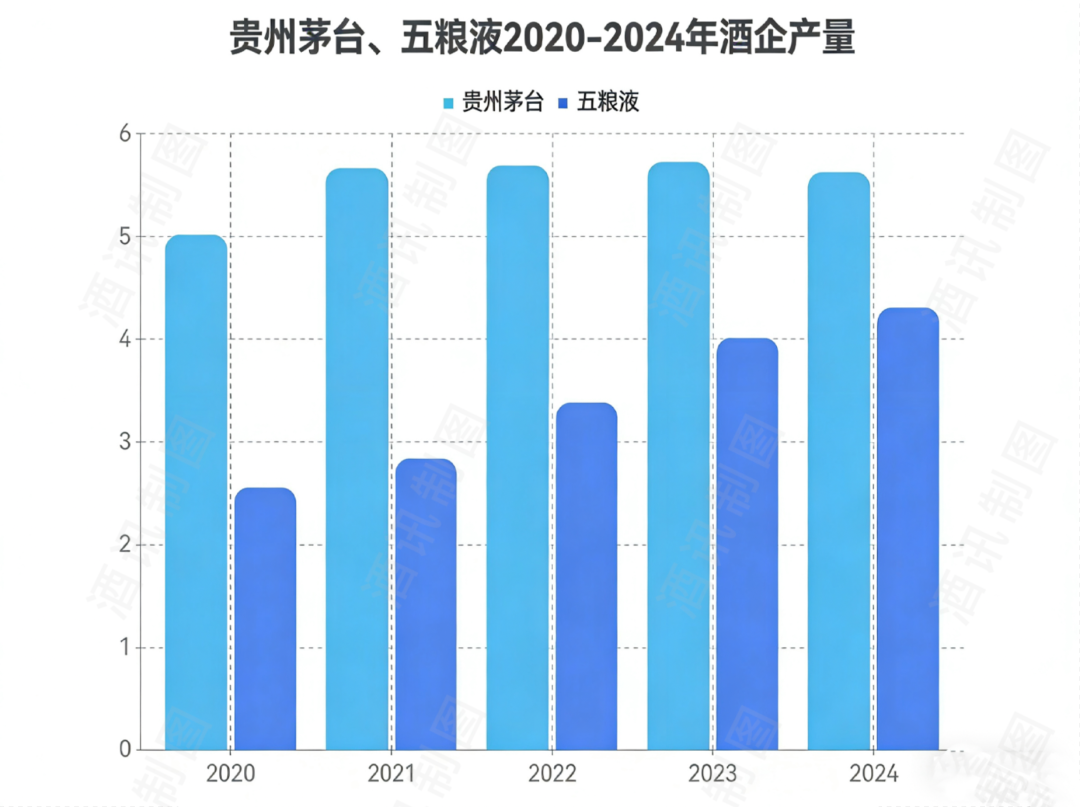
Core Insights - The Chinese liquor industry is experiencing a significant decline in production, with a projected 12.1% decrease in 2025, bringing total output down to 3.549 million kiloliters, marking the ninth consecutive year of decline and a nearly 74% reduction from the peak of 13.584 million kiloliters in 2016 [1][2] Group 1: Production Trends - The downward trend in production is evident, with December 2025's output at 376,000 kiloliters, a substantial year-on-year decrease of 19.0% [2] - Since reaching its peak in 2016, the liquor production has been on a steady decline, dropping below 5 million kiloliters in 2023 and further down to 3.549 million kiloliters in 2025, a reduction of over 10 million kiloliters compared to 2016 [2] - Despite the overall decline, leading companies like Kweichow Moutai and Wuliangye have shown consistent growth in their production volumes during the same period [2] Group 2: Inventory and Market Dynamics - The industry is facing high inventory levels, with total social inventory estimated at over 160 billion yuan, sufficient to support 4.2 years of sales [4] - A significant 58.1% of distributors and retailers report increased inventory, with many facing cash flow pressures due to price inversions [4] - The need for destocking has become a priority for many liquor companies, leading to actions such as halting orders and limiting production to alleviate pressure on channels [4] Group 3: Industry Restructuring - The decline in production is seen as a necessary adjustment for the industry, transitioning from rapid growth to a focus on high-quality development [5] - The number of large-scale liquor enterprises has decreased significantly, with 887 companies reported in the first half of 2025, down from 1,578 in 2016, indicating a consolidation trend [6] - Changes in consumer preferences, particularly among younger generations, are reshaping the market, with a shift towards quality over quantity in liquor consumption [7] Group 4: Future Outlook - The industry is undergoing a profound capacity clearing process, influenced by economic cycles, policy changes, and evolving consumer demands [6] - The integration of digital and intelligent technologies is becoming crucial for leading companies to enhance efficiency and quality [10] - The focus on premium products and the restructuring of production capabilities are expected to drive the industry towards a more sustainable and quality-oriented future [10][11]