
石化

Search documents
江苏首富00后儿子登场!千亿民企恒力少东家进入造船板块董事会
Bei Ke Cai Jing· 2025-08-07 12:53
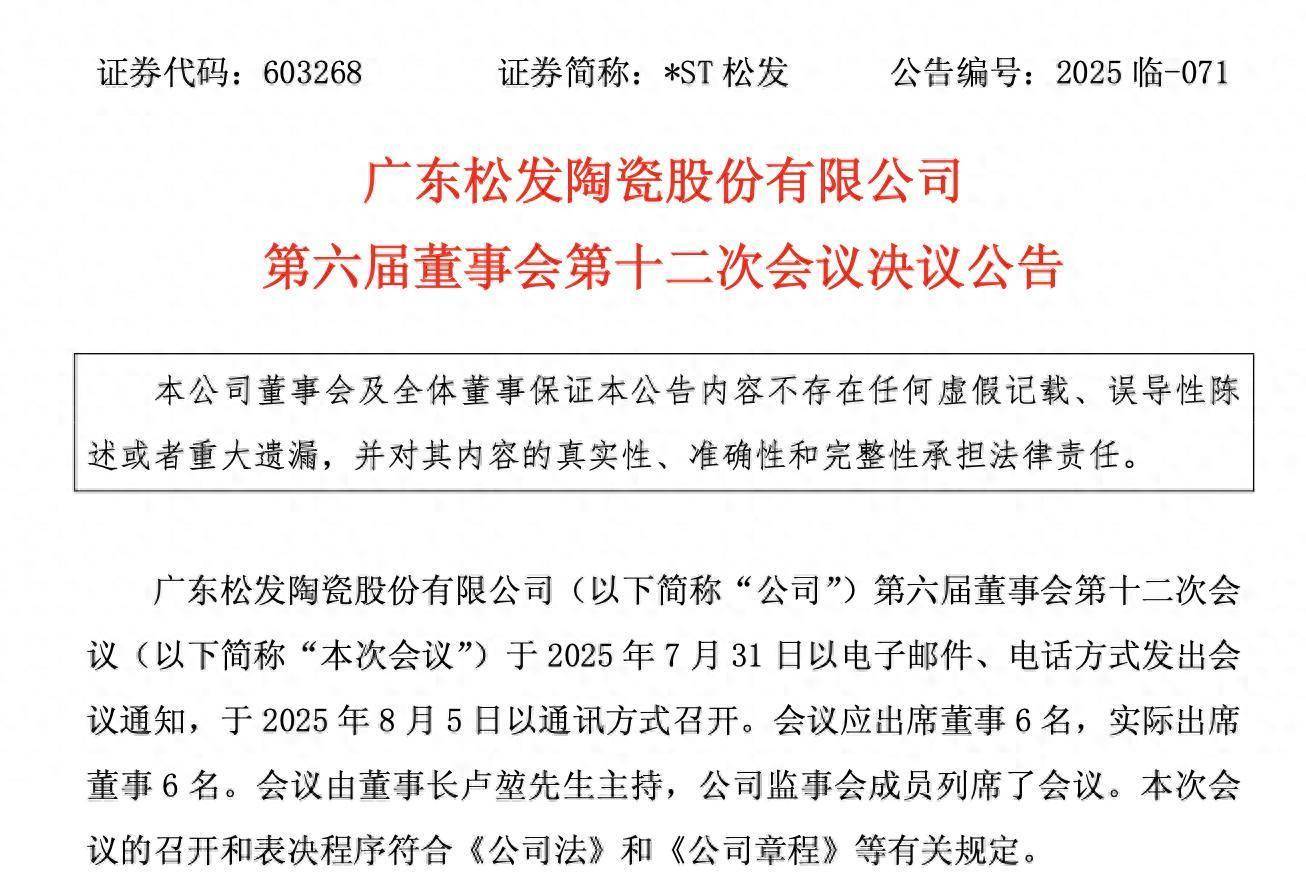
Group 1 - The core viewpoint of the article highlights the succession of the second generation in large private enterprises, particularly focusing on the entry of Chen Hanlun into the board of *ST Songfa [1][5] - Chen Hanlun, born in 2001, holds a master's degree in applied finance and has been appointed as a director of *ST Songfa after the company's board restructuring [5][6] - Hengli Group, led by Chen Jianhua and Fan Hongwei, is a prominent private enterprise with a projected total revenue of 871.5 billion yuan in 2024, ranking 81st in the Global Fortune 500 and 25th in China's top 500 enterprises [2][10] Group 2 - Hengli Heavy Industry, a subsidiary of Hengli Group, aims to enter the top tier of the global shipbuilding industry, reflecting the company's strategic focus on high-end equipment manufacturing [4][10] - The restructuring of *ST Songfa involved a significant asset swap, changing its main business to shipbuilding and high-end equipment manufacturing, with the actual controllers remaining Chen Jianhua and Fan Hongwei [5][10] - The article notes that several petrochemical private enterprises, including Rongsheng Petrochemical and Hengyi Petrochemical, are also undergoing generational transitions [3][7][8][9] Group 3 - Hengli Group has attempted to spin off its subsidiary Kanghui New Materials for public listing but has faced two unsuccessful attempts due to market conditions and financial issues with the partner company [12][13] - The establishment of Hengli Heavy Industry in July 2022 marked a significant investment in high-end marine equipment manufacturing, with plans to utilize the STX (Dalian) shipyard assets [10] - The shipbuilding industry is highlighted as crucial for global trade and national security, with a positive outlook for profitability in the sector [10]


全国外贸十强市又变了!这座小城一直在默默发财...
Sou Hu Cai Jing· 2025-08-07 05:35
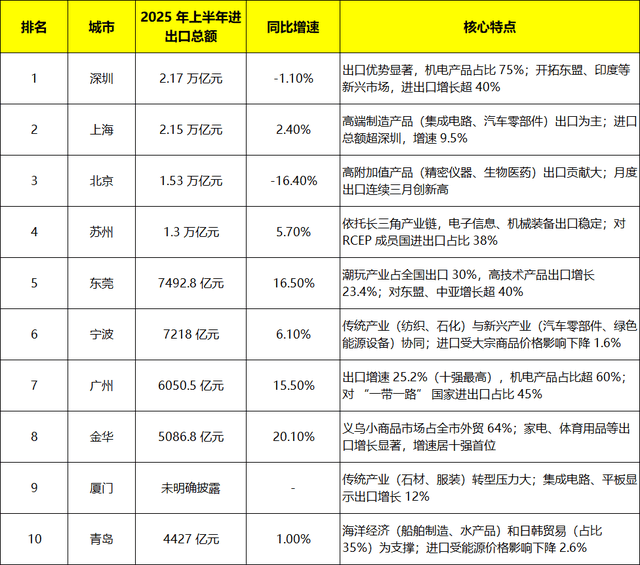
Core Insights - The top ten foreign trade cities in China for the first half of 2025 have been released, showcasing a stable position for leading cities while new contenders are emerging [1] Group 1: Trade Performance - Shenzhen ranks first with a total import and export value of 2.17 trillion yuan, accounting for 9.9% of the national foreign trade value, despite a slight decline of 1.1% year-on-year [2][3] - Shanghai follows closely with 2.15 trillion yuan, showing a year-on-year increase of 2.4%, with a notable 9.5% growth in imports [2][3] - Beijing's trade value is 1.53 trillion yuan, down 16.4% year-on-year, but it has seen three consecutive months of record-high exports [2][3] - Suzhou's trade reached 1.3 trillion yuan, growing by 5.7%, benefiting from the Yangtze River Delta industrial chain [2][3] Group 2: Sector Contributions - Dongguan's trade value is 749.28 billion yuan, with a significant year-on-year growth of 16.5%, driven by the trendy toy industry, which accounts for 30% of national exports [4][5] - Ningbo's trade reached 721.8 billion yuan, growing by 6.1%, with traditional industries collaborating with emerging sectors [4][5] - Guangzhou's trade value is 605.05 billion yuan, with the highest export growth rate of 25.2%, supported by machinery and electrical products [4][5] - Yiwu's trade reached 508.68 billion yuan, growing by 20.1%, with the small commodity market playing a crucial role [4][5] Group 3: Market Dynamics - The competition between Shenzhen and Shanghai for the top position is expected to continue, influenced by global demand recovery in the second half of the year [6] - The combined trade value of Shanghai, Suzhou, Ningbo, and Jinhua exceeds 4.7 trillion yuan, representing 21.6% of the national total [5][6] - Emerging markets are becoming the main growth drivers, with significant increases in trade with ASEAN and Central Asia [5][6]

新增产能持续放量,供应压力增大
Hua Tai Qi Huo· 2025-08-07 05:09
聚烯烃日报 | 2025-08-07 新增产能持续放量,供应压力增大 价格与基差方面,L主力合约收盘价为7321元/吨(-2),PP主力合约收盘价为7078元/吨(-17),LL华北现货为7230 元/吨(+30),LL华东现货为7280元/吨(+0),PP华东现货为7050元/吨(+10),LL华北基差为-91元/吨(+32), LL华东基差为-41元/吨(+2), PP华东基差为-28元/吨(+27)。 市场要闻与重要数据 上游供应方面,PE开工率为81.1%(+2.1%),PP开工率为76.9%(+0.0%)。 生产利润方面,PE油制生产利润为292.5元/吨(+88.1),PP油制生产利润为-187.5元/吨(+88.1),PDH制PP生产利 润为302.7元/吨(-27.7)。 进出口方面,LL进口利润为-71.8元/吨(+2.4),PP进口利润为-506.2元/吨(-17.5),PP出口利润为30.3美元/吨(+2.2)。 下游需求方面,PE下游农膜开工率为12.6%(+0.0%),PE下游包装膜开工率为48.7%(+0.6%),PP下游塑编开工 率为41.1%(-0.1%),PP下游BOPP膜开 ...
广东产业焕新:数智力量改写传统图景 新兴赛道 “粤” 跑在前
Guang Zhou Ri Bao· 2025-08-07 02:20
Group 1: Economic Development in Guangdong - The integration of digital intelligence is accelerating the upgrade of industries such as food, trendy toys, and petrochemicals in Guangdong, transitioning from traditional manufacturing to intelligent manufacturing [1][4] - Data from China Mobile Guangdong indicates that from January to June 2025, the average number of permanent staff in 96 key industrial transfer parks reached 1.273 million, an increase of 43,000 year-on-year, reflecting a growth rate of 3.5% [1] Group 2: Technological Innovations - AI, low-altitude, and robotics technologies are reshaping the structure of social productivity and are key drivers for industrial upgrading and high-quality development [2] - The implementation of "cloud network + AI + low-altitude" technology at Maoming Petrochemical has enabled significant operational improvements, achieving a 15-fold increase in inspection efficiency and a 92% reduction in single operation costs [3] Group 3: Industry-Specific Advancements - The introduction of 5G and intelligent forklifts at Donggu Food Company has significantly improved warehouse management efficiency, allowing for precise cargo location and one-click order completion [4] - The trendy toy industry in Dongguan is experiencing a surge in orders, necessitating enhanced collaboration between design, production, and sales, supported by high-speed dedicated networks [4] Group 4: Growth in New Industries - In the first half of the year, Guangdong's advanced manufacturing and high-tech manufacturing sectors saw industrial added value growth rates of 5.9% and 6.0% respectively [5] - The production of industrial robots, service robots, and civilian drones has seen substantial growth, with increases of 34.0%, 23.0%, and 58.2% respectively, positioning Guangdong at the forefront nationally [5][6]
让硬核制造与诗意栖居共融——宁波高质量奏响新时代“两山”转化澎湃乐章
Zhong Guo Huan Jing Bao· 2025-08-07 01:49
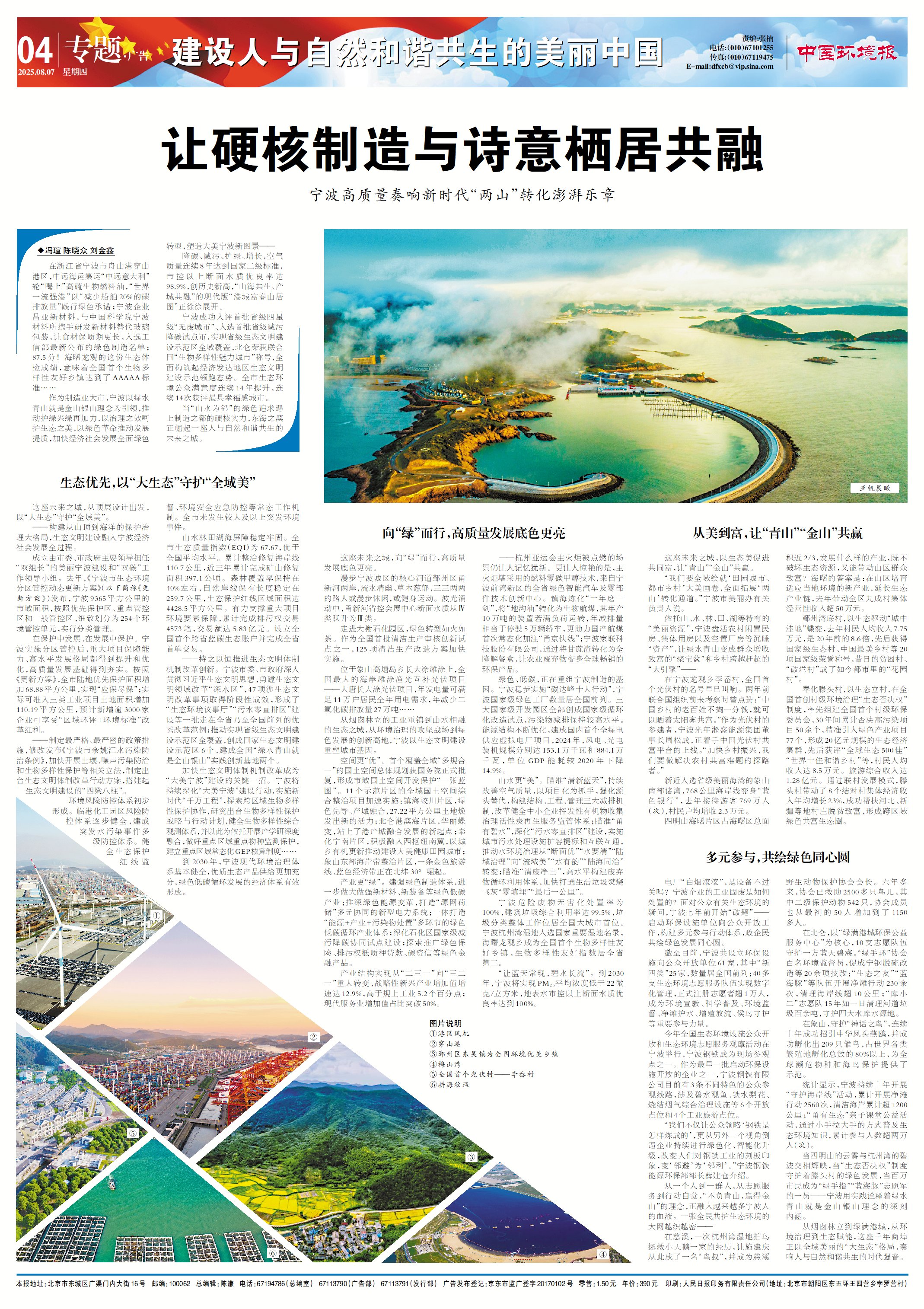
在浙江省宁波市舟山港穿山港区,中远海运集运"中远意大利"轮"喝上"高硫生物燃料油,"世界一流强港"以"减少船舶20%的碳排放量"践行绿色承诺;宁波 企业昌亚新材料,与中国科学院宁波材料所携手研发新材料替代玻璃包装,让食材保质期更长,入选工信部最新公布的绿色制造名单;87.5分!海曙龙观的 这份生态体检成绩,意味着全国首个生物多样性友好乡镇达到了AAAAA标准…… 作为制造业大市,宁波以绿水青山就是金山银山理念为引领,推动护绿兴绿再加力,以治理之效呵护生态之美,以绿色革命推动发展提质,加快经济社会发 展全面绿色转型,塑造大美宁波新图景—— 降碳、减污、扩绿、增长,空气质量连续8年达到国家二级标准,市控以上断面水质优良率达98.9%,创历史新高,"山海共生、产城共融"的现代版"港城富 春山居图"正徐徐展开。 宁波成功入评首批省级四星级"无废城市"、入选首批省级减污降碳试点市,实现省级生态文明建设示范区全域覆盖,北仑荣获联合国"生物多样性魅力城 市"称号,全面构筑起经济发达地区生态文明建设示范领跑态势。全市生态环境公众满意度连续14年提升,连续14次获评最具幸福感城市。 当"山水为邻"的绿色追求遇上制造之都的硬核实 ...
环保设施开放里的治理之道(人民时评)
Ren Min Ri Bao· 2025-08-06 22:11
Core Viewpoint - The opening of environmental facilities to the public serves as a window to observe the effectiveness of building a beautiful China and as a tool to strengthen ecological environment protection and governance [1][3]. Group 1: Public Engagement and Awareness - The initiative to open environmental facilities allows the public to experience firsthand the role of technology in pollution reduction and carbon neutrality, enhancing ecological awareness among citizens [1][2]. - Currently, there are 2,512 environmental facilities open to the public across all prefecture-level cities in China, covering both traditional and new categories of environmental management [1][2]. - Engaging the public through facility visits helps to build consensus on ecological civilization and promotes environmental knowledge dissemination [1][2]. Group 2: Trust and Participation - Public access to environmental facilities is an effective way to ensure the public's right to know and supervise environmental governance, reducing misunderstandings and increasing trust between the government, enterprises, and the public [2][3]. - Initiatives like inviting local residents to observe operations in the petrochemical industry help to change negative perceptions and encourage public participation in environmental oversight [2]. Group 3: Innovative Approaches to Governance - The methods of opening environmental facilities have evolved from traditional in-person visits to include online live streaming, allowing real-time access to operational data and enhancing public supervision [3]. - The shift towards proactive governance in environmental management is supported by the increased visibility and accessibility of environmental facilities, fostering a culture of accountability among enterprises [3].
江苏首富24岁儿子现身415亿市值公司董事会,此前已任恒力集团副总
Sou Hu Cai Jing· 2025-08-06 16:16
第七届董事会拟由9名董事组成,其中独立董事3名,其他非独立董事6名,任期自股东大会审议通过之日起三年。经股东提名,董事会提名与薪酬考核委员 会审查,提名陈建华、陈汉伦、王孝海、史玉高、张恩国、王月为第七届董事会非独立董事候选人。 瑞财经 吴文婷8月6日,*ST松发发布公告称,为稳步实现置入资产与上市公司管理体系、组织架构的衔接整合,公司董事会拟提前进行换届选举。 | 名次 | 2024名次 | 持股市值 (1670) | 姓名 | 主要公司 | 公司总部 | 主要行业 | 性别 | 年龄 | | --- | --- | --- | --- | --- | --- | --- | --- | --- | | 1 | 3 | 4815.7 | 3K-Da | 字节跳动 | 北京 | 推荐引擎产品、短视频 | ਛੇ | 42 | | 2 | 1 | 3624.1 | 钟談改 | 农夫山泉/万泰生物 | 浙江杭州/北京 | 矿泉水饮料、医药生物 | ਫੇ | 71 | | 3 | 4 | 3067.1 | 马化腾 | 腾讯控股 | 东深圳 | 互联网综合服务 | ਰੇਜੇ | 54 | | 4 | 2 | 3057 ...
西子洁能:主要下游企业为钢铁、建材、石化、水泥、化纤等高耗能企业
Ge Long Hui· 2025-08-06 12:43
Group 1 - The company primarily serves downstream industries such as steel, building materials, petrochemicals, cement, and chemical fibers, which are high energy-consuming sectors [1] - The company also caters to five major power companies and power plants that utilize clean energy, as well as engineering companies and design institutes [1]

李迅雷专栏 | 政治局会议将如何影响你所关心的“价格”
中泰证券资管· 2025-08-06 11:33
Economic Policy and Market Outlook - The Politburo meeting on July 30 provided a framework for economic policies for the second half of the year and the next five years, focusing on the impacts on the real estate market, stock market, and commodity prices [1] - The absence of explicit mentions of "real estate" in the meeting's communiqué suggests a nuanced approach to housing market stability, indicating that while the government has not abandoned the goal of stabilizing housing prices, the current phase of the real estate cycle complicates policy implementation [5] - The stock market has shown a significant rebound, with the Shanghai Composite Index rising over 30% since last year, and the meeting emphasized the need to enhance the attractiveness and inclusivity of domestic capital markets [7] Interest Rate and Monetary Policy - The meeting did not explicitly mention "timely interest rate cuts," which raises questions about the likelihood of further monetary easing; however, the context of improving economic indicators suggests that aggressive monetary policy may not be necessary at this time [3] - The shift from a "prudent" to a "moderately accommodative" monetary policy indicates a potential for interest rate cuts to lower financing costs, especially if external economic pressures increase [3] Commodity Prices and Supply Chain Dynamics - Recent rebounds in commodity prices are contingent on supply-demand dynamics, and the government's focus on regulating competition aims to prevent disorderly price increases without necessarily expanding demand [10] - The meeting highlighted the need for capacity governance in key industries, including steel and automotive, to optimize supply and eliminate excess capacity, which could influence commodity price trends [10][11] Fiscal Policy and Economic Recovery - The meeting underscored the importance of fiscal policy in driving economic recovery, with a noted increase in macro leverage ratios, particularly in government sectors, indicating a reliance on government spending to stabilize the economy [14] - The government's capacity for further fiscal expansion remains significant compared to other economies, suggesting that proactive fiscal measures will be essential in countering economic contraction and boosting confidence [14]

“反内卷”助力A股市场良性循环
Zheng Quan Shi Bao Wang· 2025-08-06 07:29
Group 1: Core Insights - The current Chinese economy is transitioning from high-speed growth to high-quality development, with "involution" competition being a major obstacle to industrial upgrading and economic transformation [1] - The government has introduced a series of "anti-involution" policies since 2025 to curb vicious price wars, eliminate backward production capacity, and optimize supply structure, which are significantly changing the competitive landscape and profit models across various industries [1][2] - The investment themes for 2024 and 2025 focus on optimizing supply and seeking quality companies, with "anti-involution" expected to be the main line of the new A-share market [1][2] Group 2: Policy Framework - The "anti-involution" policy has evolved from concept to institutional design and implementation, with the first mention in the Central Political Bureau meeting in July 2024, marking its entry into national policy [2] - The policy framework includes legal revisions, such as the amended Anti-Unfair Competition Law, which prohibits disorderly competition behaviors like below-cost pricing [3] - The government encourages industry self-regulation through associations and companies, exemplified by commitments from automotive companies to settle payments within 60 days [4] Group 3: Characteristics of the Current "Anti-Involution" Policies - Compared to the supply-side structural reform of 2016, the current "anti-involution" policies cover a broader range and address more complex issues, tackling both traditional industries' demand shortages and emerging industries' supply expansions [5] - The policies aim to improve profitability across multiple industries by reducing supply through the elimination of backward capacity and promoting demand through domestic consumption [5][9] - The "anti-involution" approach is seen as a long-term factor for improving the supply-demand structure in the A-share market, contributing to a virtuous cycle of innovation, profit, and reinvestment [5][9] Group 4: Impact on A-Share Market - The "anti-involution" policies are expected to enhance the fundamentals of the A-share market by optimizing the supply-demand structure, which can lead to improved profit margins for companies [6][10] - The current low prices in the domestic market are attributed to continuous capacity expansion rather than demand shortages, indicating that supply-side changes are crucial for breaking the deadlock [9] - The policies are likely to benefit sectors such as chemicals, non-ferrous metals, new energy vehicles, and lithium batteries, providing sustainable support for the A-share market and long-term investment opportunities [10]