
软件

Search documents
风暴眼转向债市?全球投资级债券利差走阔近4个基点,软件业违约风险引发担忧
Hua Er Jie Jian Wen· 2026-02-27 13:29
Group 1 - The global investment-grade bond market, previously seen as a safe haven amid AI-driven stock market volatility, is now showing signs of pressure with credit spreads widening significantly [1] - Investment-grade bond yield premiums have widened by nearly 4 basis points this week, marking the largest change since early November last year [1] - Concerns are rising that the rapid development of AI may increase default risks for highly leveraged borrowers in the software industry, alongside challenges in the private credit sector [1][2] Group 2 - The risk premium for investment-grade corporate bonds has increased by approximately 8 basis points over the past month, reaching 82 basis points, although still below the 10-year average of 119 basis points [3] - Recent corporate credit events, such as the insolvency of Market Financial Solutions Ltd., have heightened market concerns regarding the loosening of underwriting standards in the credit market [3] - Despite increasing risk factors, some market participants believe that the risk of contagion to the public debt market remains manageable, particularly in Asia where private credit and the software sector represent a smaller proportion of high-risk debt [3][4] Group 3 - CreditSights Singapore's Asia strategy head noted that the relative scale of the private market has not yet shown serious contagion risks to public credit bonds [4] - Investors are advised to closely monitor signs of deteriorating credit quality, especially among smaller lending institutions and concentrated risks in technology sectors [4]
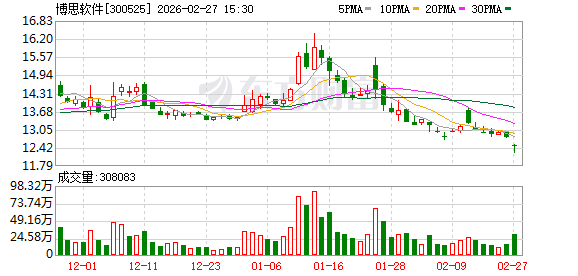
博思软件:公司作为融资融券标的股票,投资者依法融资买入或融券卖出系正常的交易行为
Zheng Quan Ri Bao· 2026-02-27 13:10
Group 1 - The company, Bosi Software, confirmed that it is a margin trading and securities lending stock, and that investors engaging in margin buying or short selling is a normal trading behavior [2] - The company stated that it will fulfill its information disclosure obligations in a timely manner if any matters requiring disclosure arise [2]


纳指与标普500将迎来3月以来最差月度表现,投资者如何应对
Xin Lang Cai Jing· 2026-02-27 13:03
Core Viewpoint - Technology and AI stocks, which have historically driven market growth, are currently experiencing a downturn, while stocks less associated with AI are rising, indicating a significant market shift following the AI hype [3][9]. Market Performance - The Nasdaq Composite Index, heavily weighted in technology stocks, has not reached a new high in four months, while the S&P 500 Index has remained flat this year and may face its worst month since March [3][9]. - The Dow Jones Index, which is less reliant on technology stocks, has increased by 3% this year [3][9]. - Nvidia (NVDA), a leading AI stock, despite strong quarterly performance, faced its worst single-day performance since April [3][9]. Investor Sentiment and Strategy - Concerns about the impact of AI on business models are affecting software companies, and there is uncertainty regarding the return on substantial investments made by tech giants in data centers [3][9]. - Analysts suggest that investors should not panic and that the market style shift could present new opportunities [3][9]. - Approximately 40% of the S&P 500's market capitalization is concentrated in major tech stocks like Nvidia, Microsoft, and Google, prompting investors to consider reallocating their portfolios to sectors with lower AI exposure [5][12]. Sector Rotation - Investment strategies are shifting, with a notable decrease in the allocation to large tech stocks in favor of sectors such as materials, energy, infrastructure, industrials, healthcare, and consumer staples [5][13]. - Piper Sandler's chief market strategist downgraded tech stocks from "overweight" to "market weight," indicating a reduced emphasis on technology in investment portfolios [5][13]. - The best-performing sectors in the S&P 500 this year are energy, materials, and consumer staples, while technology and financial sectors have lagged [5][14]. Portfolio Diversification - Analysts recommend building a highly diversified portfolio to mitigate risks associated with the volatility of tech stocks [6][15]. - Rebalancing investments or opting for equal-weighted indices like the S&P 500 Equal Weight Index, which has risen nearly 7% this year compared to the S&P 500's less than 1% increase, is suggested as a protective strategy [6][15]. - Increasing exposure to international stocks may also enhance returns, as European and Asian markets continue to outperform the U.S. market this year [6][16]. Long-term Outlook - Despite current market volatility, analysts maintain a positive long-term outlook, suggesting that the market will trend upward by 2026 [7][17].


业绩狂飙、估值回落:当英伟达(NVDA.US)被当作价值股,增量资金从何而来?
智通财经网· 2026-02-27 12:12
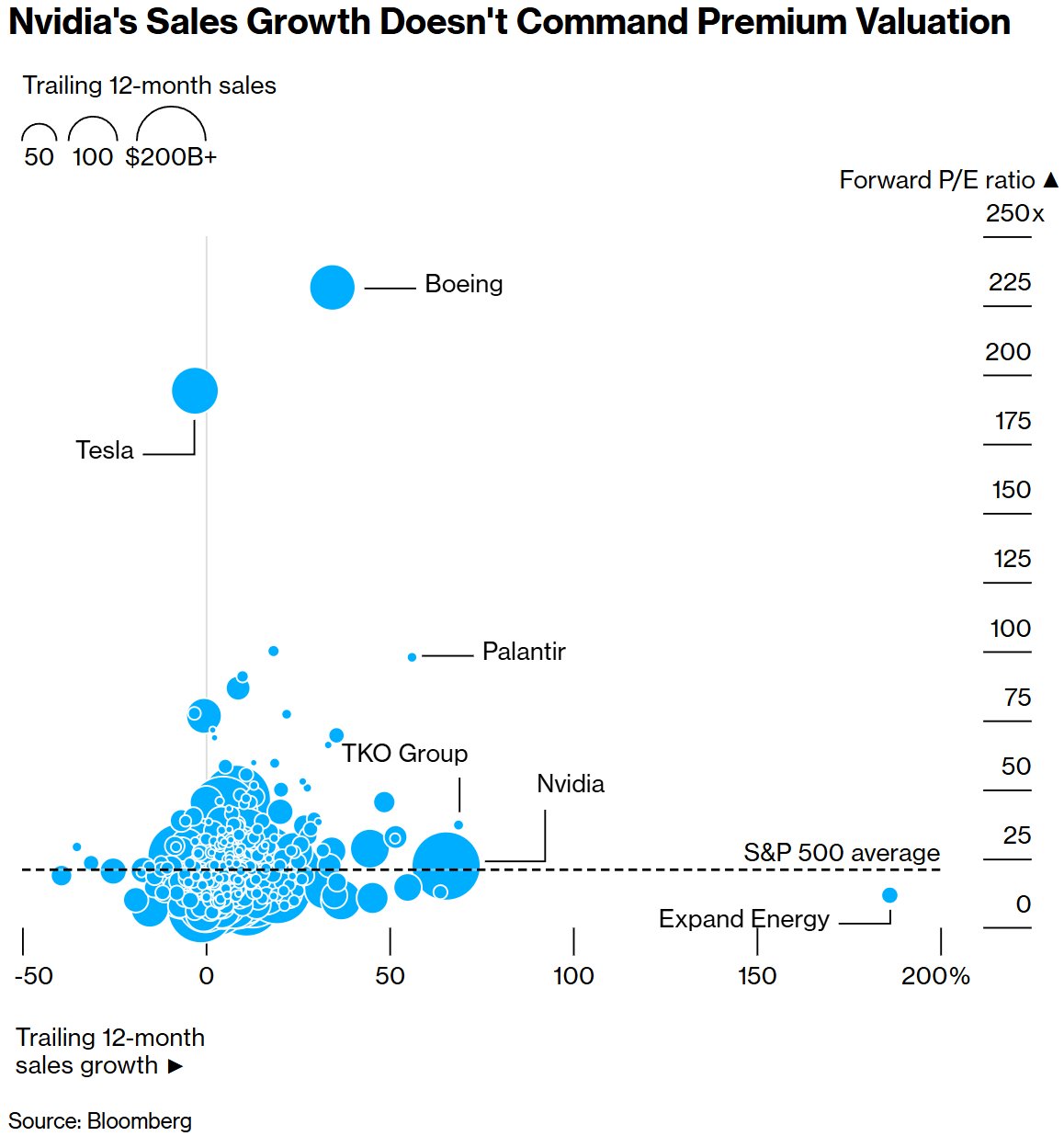
智通财经APP注意到,英伟达(NVDA.US)在周三公布远超预期的业绩后,成为市场上最具增长潜力的股票之一。然而,其交易价格为何看起来像一只价值 股? 这家芯片巨头的股价周四下跌 5.5%,创下 4 月 16 日以来的最大单日跌幅,并拖累标准普尔 500 指数一同走低。目前该股的价格约为预期收益的 22 倍,远 低于其 37 倍的五年平均水平,且仅略高于标普 500 指数的平均估值倍数。 由于分析师基于英伟达第一季度营收预期达到780亿美元(远超华尔街此前约730亿美元的共识预期)而纷纷上调盈利预测,这个市盈率数字预计将进一步下 降。 "如此强劲的业绩与股价表现乏力之间存在某种脱节,"持有英伟达股票的 Dakota Wealth Management 高级投资组合经理罗伯特·帕夫利克表示。"你当然会认 为在这样的财报之后它会表现良好。公司展现出了非常强劲的增长。" 数据显示,英伟达现在的市盈率比标普 500 指数中约三分之一的股票都要便宜,但其过去 12 个月 65% 的营收增长率在该指数中排名第三。相比之下, Palantir 的营收扩张排名标普 500 第四,而其股价交易倍数约为预期收益的 98 倍。 M ...
从“参与”到“主导”:华为开源之路越走越宽
Sou Hu Cai Jing· 2026-02-27 11:44
Core Insights - Huawei has rapidly evolved from using open-source software to becoming a major contributor to various large open-source projects since 2010, with over 6,000 employees involved in development [1][3]. Group 1: Open Source Contributions - Huawei is a top player in the global open-source field, being a founding member of several prominent international open-source foundations and contributing core code to many communities [3]. - The company has initiated over ten significant open-source projects, particularly in foundational software, which has garnered widespread support from global developers [3]. Group 2: AI and Computing Frameworks - Huawei's CANN architecture, launched in 2019, facilitates AI developers in utilizing underlying computing power and is set to be fully open-sourced by 2025, allowing clients to optimize their usage [4]. - The CANN community is actively collaborating with universities to cultivate professional talent, enhancing the AI ecosystem [4]. Group 3: Hardware and Software Ecosystem - Huawei's Kunpeng processor, launched in 2019, has made significant strides in supporting major open-source software, addressing the challenges posed by the dominance of X86 architecture [5]. - The company has developed the Kunpeng DevKit and BoostKit to improve computing performance through software-hardware synergy, boosting the Kunpeng ecosystem's attractiveness [5]. Group 4: Operating Systems and Databases - The openEuler operating system, based on Linux, has attracted over 2,100 enterprises and institutions, with more than 26,000 contributors, and is projected to exceed 16 million installations by the end of 2025 [6]. - Huawei's openGauss project, a relational database, is gaining traction in critical industries and will continue to enhance its capabilities to support distributed architectures and multi-modal data [7]. Group 5: Strategic Vision - Huawei's strategy in the computing sector focuses on hardware openness, software open-sourcing, enabling partners, and talent development to drive innovation in China's computing industry [7].

马年A股开门红,2月份指数出现分化
Sou Hu Cai Jing· 2026-02-27 11:35
Group 1 - The overall performance of A-shares is positive, with major indices rising across the board at the beginning of the Year of the Horse [1] - In February, there is significant divergence in index performance, with the Shanghai Composite Index and Shenzhen Component Index showing gains, while the ChiNext and STAR Market indices recorded losses [2][4][6][8] - The market is witnessing a shift in hotspots, with traditional industries like coal, steel, and chemicals showing strong performance, contrasting with the underperformance of technology stocks [10][12][13] Group 2 - The Shanghai Composite Index experienced a significant drop of 2.48% on the first trading day of February, but rebounded to close at 4162.88 points, marking a 1.09% increase for the month [2][4] - The Shenzhen Component Index also saw a recovery, closing at 14495.09 points with a monthly increase of 2.04% [4] - The ChiNext Index and STAR Market indices both faced declines, with the ChiNext down 1.08% and the STAR Market down 1.42% in February [6][8] Group 3 - The energy sector was a major driver of the market's rise, with the China Energy Index increasing by 4.84%, and oil and gas resources up by 10% [12][13] - Traditional sectors such as coal and steel showed remarkable gains, with coal indices rising by 9% and steel indices by 8% in February [13] - The financial sector, despite its weight in the market, underperformed, with the China Securities Financial Index down 2.22%, and the insurance theme index down 7.29% [12][13]

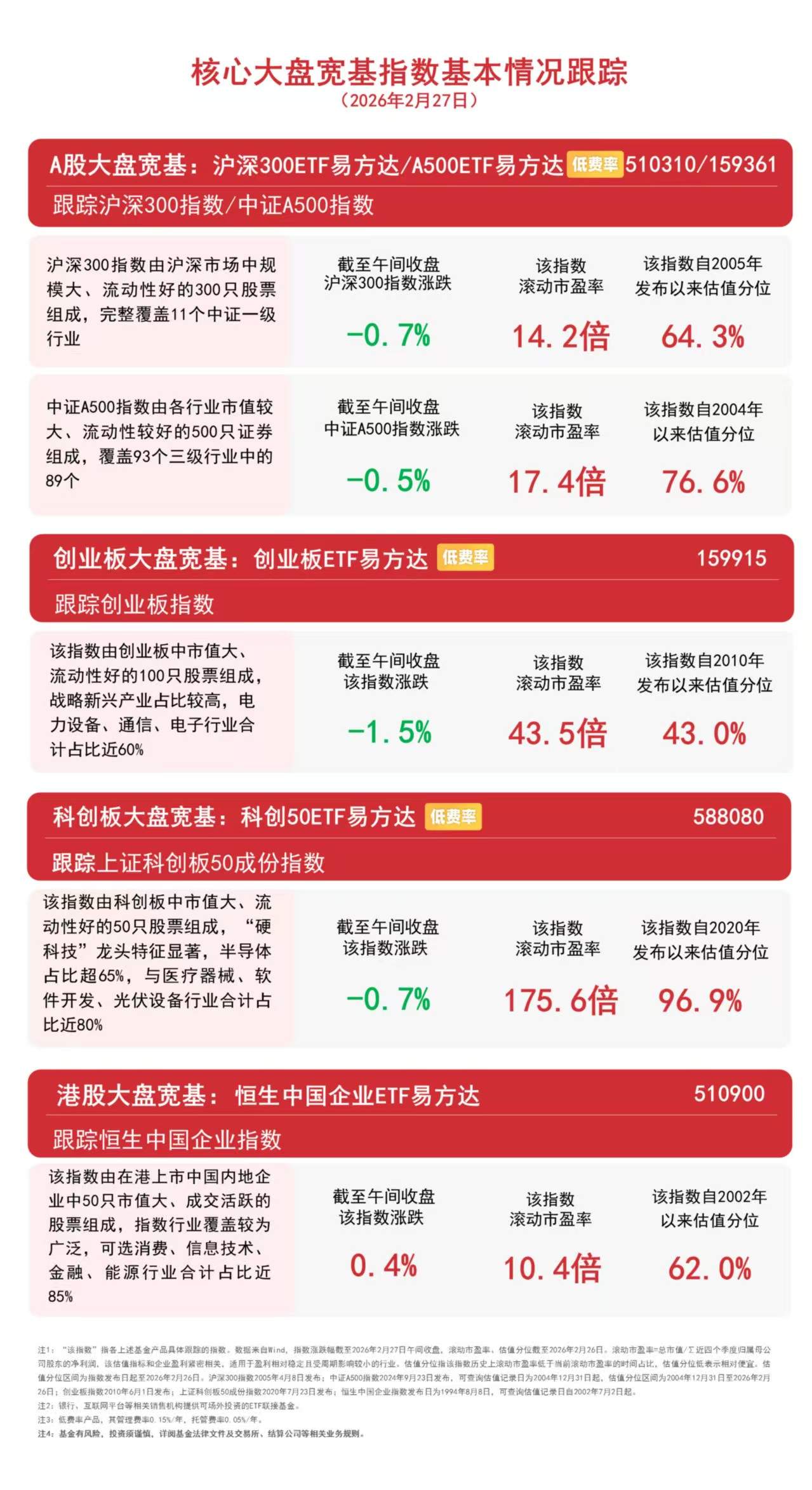
A股三大指数低开震荡,关注沪深300ETF易方达(510310)、A500ETF易方达(159361)等产品投资机会
Mei Ri Jing Ji Xin Wen· 2026-02-27 09:35
Core Viewpoint - The A-share market experienced a low opening and fluctuated throughout the morning session, with significant trading activity across various sectors, indicating mixed investor sentiment and sector performance [1]. Group 1: Market Performance - The three major A-share indices opened lower, with the Shanghai Composite Index briefly turning positive, while the total trading volume in the Shanghai, Shenzhen, and Beijing markets reached 1.6 trillion yuan [1]. - By midday, the CSI 500 Index fell by 0.5%, the CSI 300 Index decreased by 0.7%, the ChiNext Index dropped by 1.5%, and the STAR Market 50 Index declined by 0.7% [1]. - The Hang Seng China Enterprises Index increased by 0.4%, contrasting with the declines in the A-share indices [1]. Group 2: Sector Performance - Sectors such as rare earths, rare metals, cloud computing, software, and tourism showed notable gains, while construction materials, engineering machinery, wafer industry, copper-clad laminates, and CPO sectors faced declines [1]. - The CSI 300 Index consists of 300 stocks with good liquidity, covering 11 primary industries, and has a rolling P/E ratio of 14.2 times [3]. - The CSI 500 Index is made up of 500 securities with good liquidity, covering 89 out of 93 tertiary industries, and has a rolling P/E ratio of 17.4 times [3].
反转,吓崩华尔街的AI末日预言报告被证伪,纳斯达克道琼斯都白跌了
3 6 Ke· 2026-02-27 09:11
Core Viewpoint - Citrini Research's report titled "Global Intelligence Crisis 2028" predicts a potential economic crisis driven by AI advancements, suggesting a significant rise in unemployment and consumer spending collapse in the U.S. by 2028 [1][6]. Group 1: Report Summary - The report claims that the U.S. economy, primarily service-oriented, could see white-collar workers, who make up 50% of employment and contribute 75% of discretionary spending, replaced by AI, leading to a vicious cycle of job losses and reduced consumer spending [7][10]. - Citrini introduces the term "ghost GDP" to describe a scenario where corporate profits rise while individuals see a decline in income, resulting in decreased consumer spending and a slowdown in money circulation [12]. - By June 2028, the report forecasts an unemployment rate of 10.2%, with discontented jobless individuals initiating protests against tech companies like OpenAI and Anthropic [12][20]. Group 2: Criticism and Rebuttal - Economists and institutions, including Citadel Securities, have criticized the report, arguing that it contradicts economic principles and that AI is more likely to complement rather than replace labor [6][13]. - Citadel highlights that the demand for software engineers is increasing, with job vacancies up by 11% year-on-year, countering Citrini's assertion that such roles will be eliminated by AI [14][16]. - The report's assumption that AI will rapidly replace jobs is challenged by historical patterns of technology adoption, which typically follow an S-curve, indicating that while AI may advance quickly, its deployment will be constrained by physical and economic limits [17][18]. Group 3: Market Reaction - Following the report's release, the stock market experienced significant declines, with major indices like the Dow Jones dropping 800 points and software stocks suffering substantial losses [3][20]. - However, as the initial panic subsided, stocks began to recover, with companies like Microsoft and Oracle rebounding sharply, indicating that the market may have overreacted to the report [20][21]. - The founder of Citrini expressed surprise at the report's impact on the stock market, suggesting that if he had known it would influence stock prices, he would not have released it for free [21].



中望软件业绩快报:2025年归母净利润2153.15万元,同比下降66.34%
Xin Lang Cai Jing· 2026-02-27 08:05
Group 1 - The core point of the article is that Zhongwang Software reported its 2025 annual performance, showing a slight increase in total revenue but a significant decline in net profit [1] Group 2 - The company achieved total operating revenue of 894 million yuan, representing a year-on-year growth of 0.68% [1] - The net profit attributable to shareholders of the listed company was 21.53 million yuan, reflecting a year-on-year decrease of 66.34% [1] - The basic earnings per share were reported at 0.13 yuan [1]

软件板块开盘走高,软件ETF(515230)涨超1.5%,AI产业深化继续
Mei Ri Jing Ji Xin Wen· 2026-02-27 07:51
Group 1 - The software sector opened higher on February 27, with the software ETF (515230) rising over 1.5%, indicating a continued deepening of the AI industry [1] - Domestic advancements in AI, including large models and applications such as robotics, are meeting or slightly exceeding expectations, with significant new releases occurring around the Spring Festival [1] - The competition in large models may reshape the competitive landscape from the traffic entry point, while the overall bullish logic of the industry is strengthening despite further differentiation in competition [1] Group 2 - The software ETF (515230) tracks the software index (H30202), which selects listed companies involved in software development and services from the Shanghai and Shenzhen markets [1] - The software index reflects the overall performance of listed companies related to software, covering a wide range of representative enterprises in application software and system software [1] - This index serves as an important indicator of the overall development status and market trends within the software sector in the information technology field [1]