
镍矿

Search documents
解读印尼镍政策调整,如何看待接下来的镍价走势?
对冲研投· 2026-01-12 07:00
Core Viewpoint - The recent adjustments in Indonesia's nickel mining quota and management policies have become the central driving force in the global nickel market, reflecting a strategic shift in resource control, fiscal demands, and industrial upgrades [4][5]. Group 1: Indonesia's Fiscal Situation and Non-Tax Revenue - Indonesia's fiscal expenditure model has been characterized by "growth driven by investment, stability maintained by subsidies, and development funded by deficits," with infrastructure spending prioritized at over 15% of the national budget during Jokowi's administration [5][6]. - The government's long-term energy subsidies have created a heavy fiscal burden, especially during periods of social unrest or high global energy prices, with social spending initiatives further increasing fiscal pressure [5][6]. - Non-tax revenue, particularly from resource-related royalties, plays a crucial role in the fiscal structure, accounting for 27%-30% of total revenue, with the nickel industry increasingly contributing to this segment [6]. Group 2: Nickel Mining RKAB Policy Adjustments - The Indonesian Ministry of Energy and Mineral Resources plans to significantly reduce the nickel mining RKAB quota for 2026 from an expected 379 million tons to around 250 million tons, creating strong market expectations for mid-term supply tightness [7]. - The approval process for RKAB has been restructured to enhance government control over resource outflow, with a shift back to annual approvals from a previous three-year cycle [8]. - The royalty rates for nickel mining have been increased to a floating rate linked to LME nickel prices, raising mining costs and providing solid support for nickel prices [8]. Group 3: Drivers Behind Policy Adjustments - Fiscal pressure is the most immediate driver for these policy changes, as the government faces funding demands from major projects like the Jakarta-Bandung High-Speed Railway and the new capital city, Nusantara [9][10]. - The depletion of high-grade nickel resources and the prevalence of illegal mining, which accounts for about 30% of total supply, necessitate stricter controls to enhance revenue and environmental governance [10][11]. - Indonesia aims to upgrade its industrial chain by moving beyond being a mere supplier of raw materials, encouraging local processing of nickel into higher-value products [11]. Group 4: Expected Discrepancies - The efficiency of the RKAB approval process has improved, but actual production often falls short of approved quotas, typically at 70%-80% of the approved amount [12]. - The Philippines is expected to increase its nickel exports, potentially alleviating regional supply tightness, but global nickel markets still face structural oversupply with high inventory levels [13]. - Future adjustments to Indonesia's RKAB quotas may lead to significant supply-demand imbalances, with potential shortfalls projected based on historical production ratios [14]. Group 5: Outlook - Indonesia's nickel policies are reshaping the global supply landscape with a more stringent and refined approach, driving price volatility and establishing a new support level around $18,000 per ton in the LME market [14][15]. - The market should closely monitor the final approval results for RKAB in early 2026, the implementation details of the new resource tax system, and trends in inventory changes [14].


大越期货沪镍、不锈钢周报-20260112
Da Yue Qi Huo· 2026-01-12 02:50
Group 1: Report Industry Investment Rating - No relevant content provided Group 2: Core View of the Report - The nickel price showed a pattern of rising and then falling this week, but still remained in an upward trend overall. Short - term spot supply was tight. In the industrial chain, nickel ore prices rose slightly, and mines were bullish. Nickel iron prices increased significantly, and the cost line went up. Stainless steel inventory declined. Refined nickel inventory remained at a high level, and the oversupply situation remained unchanged. Although the production and sales data of new energy vehicles were good, the overall boost to nickel demand was limited [8]. - The nickel price of the main Shanghai nickel contract was strong. Short - sellers were advised to wait and see, while long - sellers could hold a small amount of positions. The main stainless steel contract was expected to run with a slightly upward trend, and short - sellers should wait for the moment [9][10]. Group 3: Summary by Directory 1. Viewpoints and Strategies - **Shanghai Nickel View**: The nickel price rose and then fell this week, still in an upward trend. Short - term spot was in short supply. Nickel ore prices rose slightly, mines were bullish, nickel iron prices increased sharply, cost line rose, stainless steel inventory decreased, refined nickel inventory was high, and the new energy vehicle sector had limited impact on nickel demand [8]. - **Operation Strategy**: For the main Shanghai nickel contract, short - sellers should wait and see, and long - sellers hold a small number of positions; for the main stainless steel contract, it would run with a slightly upward trend, and short - sellers should wait [9][10]. 2. Fundamental Analysis - **Industry Chain Weekly Price Changes**: Some nickel ore prices rose slightly, battery - grade and electroplating - grade nickel sulfate prices increased by 20.40% and 5.69% respectively, low - nickel iron price remained unchanged, high - nickel iron price rose by 4.86%, electrolytic nickel prices increased, and the 304 stainless steel price rose by 5.63% [13][14]. - **Nickel Ore Market Situation**: Some nickel ore prices rose 1 cent/wet ton, and freight decreased 1 cent/wet ton. On January 8, 2026, the total nickel ore inventory at 14 ports in China was 13.1977 million wet tons, a decrease of 0.92%. In November 2025, nickel ore imports decreased by 28.69% month - on - month and increased by 2.92% year - on - year. Mines were firm on prices [18]. - **Electrolytic Nickel Market Situation**: The nickel price rose and then fell with large fluctuations and average trading volume. Spot supply was tight. Globally, the nickel market was expected to remain oversupplied. In December 2025, China's refined nickel production increased by 2.35% month - on - month and decreased by 16.39% year - on - year. In November 2025, imports increased by 30.07% month - on - month and 40.86% year - on - year, and exports decreased by 20.06% month - on - month and increased by 0.80% year - on - year. LME and SHFE inventories increased [26][27][39]. - **Nickel Iron Market Situation**: Low - nickel iron price remained stable, and high - nickel iron price rose. In December 2025, China's nickel pig iron production decreased by 3.1% month - on - month. In November 2025, imports decreased by 1.1% month - on - month and increased by 1.4% year - on - year. The December inventory was 217,200 physical tons, equivalent to 22,400 nickel tons [46][48][54]. - **Stainless Steel Market Situation**: The 304 stainless steel price rose by 5.63%. In December, stainless steel production was 3.2605 million tons. Imports were 112,100 tons, and exports were 405,300 tons. On January 9, the national inventory was 948,300 tons, a decrease of 2.91 million tons [59][65][72]. - **New Energy Vehicle Production and Sales Situation**: From January to November, new energy vehicle production and sales increased by 31.4% and 31.2% year - on - year respectively. In November, production and sales were 1.88 million and 1.823 million respectively. In November 2025, the production of power + energy - storage batteries was 193GWh, and the total production of power + energy - storage + consumer batteries increased by 12.4% month - on - month and 64.6% year - on - year [77][80]. 3. Technical Analysis - From the daily K - line, the price continued to rise significantly and deviated from the moving average. There was some competition among long - sellers at high positions. MACD and other indicators were in an upward trend. The price should be followed, but risks should also be noted. A small number of long positions could be held, and short - sellers should wait and see [83]. 4. Industrial Chain Summary - **Fundamental View**: The impact of the nickel ore link on the nickel price was neutral to strong, with stable prices and bullish mines; the nickel iron link was also neutral to strong, with rising prices and an upward - moving cost line; the refined nickel link was neutral, with short - term supply shortages and long - term oversupply; the stainless steel link was neutral, with falling inventory and rising costs; the new energy link was neutral, with good production data but the continued replacement of ternary batteries [86]. - **Trading Strategy**: For the main Shanghai nickel contract, short - sellers should wait and see, and long - sellers hold a small number of positions; for the main stainless steel contract, it would run with a slightly upward trend, and short - sellers should wait [88][89].
镍、不锈钢产业链周报-20260112
Dong Ya Qi Huo· 2026-01-12 02:07
Report Overview - Report Title: Nickel Stainless Steel Industry Chain Weekly Report - Report Date: January 12, 2026 1. Report Industry Investment Rating - Not provided in the given content 2. Core Viewpoints Bullish Factors - Indonesia's production cut plan: Indonesia plans to reduce nickel ore production by 34%, leading to expectations of supply tightening and stimulating a rebound and limit - up in futures prices [3] - Recovery in stainless steel demand: The strong performance of stainless steel mill prices, along with the recovery of terminal demand, supports the upward space for nickel prices despite high inventory costs [3] Bearish Factors - Strong US dollar: The continuous strengthening of the US dollar index reduces the pricing competitiveness of commodities and suppresses the price performance of non - ferrous metals [3] - High inventory: Global nickel inventories continue to accumulate, especially the high level of visible inventories, weakening market concerns about supply - demand tightness [3] Trading Advisory Viewpoint - Although Indonesia's policy stimulus boosts expectations, the improvement in fundamentals is limited. It is recommended to stay on the sidelines and pay attention to the actual implementation of policies [3] 3. Summary by Relevant Catalogs Market Data - **Nickel Futures**: The latest value of the main contract of Shanghai nickel is 139,090 yuan/ton, with a weekly decrease of 710 yuan and a weekly decline of 0.51%. Other contracts like Shanghai nickel continuous one, two, and three have different price changes and percentage increases. LME nickel 3M is at 17,700 dollars/ton, with a weekly increase of 410 dollars and a 3.60% increase [4] - **Stainless Steel Futures**: The main contract of stainless steel is at 13,860 yuan/ton, with a weekly increase of 465 yuan and a 3% increase. Other contracts also show price increases. The trading volume and open interest have significant increases [5] - **Spot Prices**: The prices of金川 nickel, imported nickel, 1 electrolytic nickel, nickel beans, and electrowon nickel have all decreased by 7,150 yuan/ton, with percentage declines ranging from 4.67% to 4.96% [5] - **Inventory Data**: Domestic social nickel inventory is 61,046 tons, an increase of 2,126 tons; LME nickel inventory is 284,790 tons, an increase of 8,490 tons; stainless steel social inventory is 854,600 tons, a decrease of 18,000 tons; nickel pig iron inventory is 29,346 tons, a decrease of 879 tons [7] Supply - Side Information - **Primary Nickel Supply**: Information on China's refined nickel monthly production, primary nickel monthly total supply including imports shows seasonal trends [13] - **Upstream Nickel Ore**: The average price of Philippine laterite nickel ore 1.5% (FOB), China's port nickel ore inventory, and the prices of different types of nickel pig iron (such as 8 - 12% and Ni≥14% Indonesian high - nickel pig iron) are presented with historical data [16][18] - **Nickel Iron Production**: China and Indonesia's nickel iron monthly production shows seasonal patterns [19][20] Downstream Information - **Nickel Sulfate**: The average price of battery - grade nickel sulfate, its premium over primary nickel, production profit margins, monthly production, and the monthly production capacity of ternary precursors are all presented with historical data [22][24][25] - **Stainless Steel**: The profit margin of China's 304 stainless steel cold - rolled coils, monthly production, and inventory show seasonal trends [28][30][31]
华泰期货镍不锈钢周报:印尼政策反复,价格剧烈波动
Xin Lang Cai Jing· 2026-01-12 01:23
Market Analysis - Nickel prices have shown significant volatility, with the main contract opening at 135,000 CNY/ton, peaking at 149,600 CNY/ton, and closing at 139,090 CNY/ton, resulting in a weekly increase of 4.7% and a fluctuation of 12.5% [2][12] - The average price of SMM1 electrolytic nickel rose to 144,540 CNY/ton, an increase of 4,350 CNY/ton from the previous week [2][12] - The domestic market is experiencing speculative hoarding due to low acceptance of high-priced nickel by downstream users [2][12] Supply and Demand - Supply remains tight for Jinchuan electrolytic nickel, with some downstream users substituting with Sumitomo resources, leading to a significant increase in premiums [3][13] - Domestic demand for nickel iron is rising, but the stainless steel sector is entering a low season, limiting potential rebounds [3][13] - Nickel sulfate prices are increasing due to rising costs, but demand remains weak [3][13] Cost and Profit - The production costs for integrated MHP and high nickel products are 111,026 CNY/ton and 124,817 CNY/ton respectively, with profits of 9.00% and -3.00% [4][13] - The cost of producing electrolytic nickel from externally sourced nickel sulfate is 153,590 CNY/ton, resulting in a profit margin of -10.80% [4][13] - Nickel inventory levels have increased, with Shanghai Futures Exchange nickel stock at 46,650 tons, up from 45,544 tons the previous week [4][13] Strategy - The market is expected to experience significant fluctuations between 135,000 CNY/ton and 150,000 CNY/ton due to the interplay of supply contraction expectations and seasonal demand realities [5][14] - A cautious approach is recommended for high-price chasing, with a focus on range trading [5][14] Macro Environment - U.S. economic data indicates resilience, delaying expectations for Federal Reserve interest rate cuts, which has strengthened the dollar [2][12] - The People's Bank of China has committed to maintaining a moderately loose monetary policy through 2026 to support economic recovery [2][12] - Global resource supply concerns are heightened due to geopolitical tensions, impacting market sentiment towards nickel and stainless steel [7][15] Stainless Steel Market - The stainless steel futures market has followed nickel prices, with the main contract opening at 13,150 CNY/ton and closing at 13,860 CNY/ton, reflecting a weekly increase of 5.6% [6][14] - The market is experiencing a cautious buying atmosphere despite rising prices, as both buyers and sellers are hesitant [6][14] - The uncertainty surrounding Indonesian policies is expected to significantly influence stainless steel costs and price movements [9][17]

镍:产业与二级资金博弈,宽幅震荡运行,不锈钢:镍铁抬升震荡重心,盘面博弈印尼政策
Guo Tai Jun An Qi Huo· 2026-01-11 10:18
Report Summary 1. Industry Investment Ratings The document does not provide industry investment ratings. 2. Core Views - **Nickel and Stainless Steel**: The market is influenced by Indonesian policy news, with differences in expectations between the secondary market and the industry. Nickel prices are expected to fluctuate widely in the short - term, and stainless - steel prices may also show wide - range fluctuations. The key lies in the implementation of Indonesian policies in the first quarter [4][8][9]. - **Industrial Silicon and Polysilicon**: Industrial silicon inventory has decreased, and attention should be paid to downstream production cuts. Polysilicon is expected to see a boost in sentiment, with the supply - demand situation showing a pattern of weak supply and strong demand. It is recommended to short industrial silicon at high levels [28][34][35]. - **Lithium Carbonate**: The "rush - to - export" demand may boost off - season demand, and lithium prices are likely to remain strong. It is recommended to use options for hedging [65][66][68]. - **Palm Oil and Soybean Oil**: Palm oil is in a bottom - range oscillation, with a potential short - term reaction of negative news being digested after the MPOB report. Soybean oil is in a range - bound operation, waiting for the resonance of themes in the first quarter [99][100][102]. - **Soybean Meal and Soybean No.1**: The price fluctuations of soybean meal and soybean No.1 mainly depend on the USDA report. If the report is positive, soybean meal prices are expected to rise; otherwise, they will remain in a low - level oscillation [113][114][119]. - **Corn**: The corn market is expected to be oscillating strongly. Although there are some negative factors, the price decline before the Spring Festival is expected to be limited [133][134][138]. - **Sugar**: The international sugar market is in a low - level consolidation, and the domestic market maintains a weak basis expectation. Attention should be paid to Brazilian production and export rhythms, Indian production and policies, and domestic import policies [157][159][184]. - **Cotton**: ICE cotton followed the Chinese cotton price and then declined. The domestic cotton market lacks new drivers, and it is recommended to wait until after the Spring Festival to consider trading based on demand [185][186][201]. - **Hogs**: The spot price of hogs is expected to be weakly oscillating, and the futures price of the LH2603 contract is under pressure in the near - term [203][204][206]. - **Peanuts**: The peanut market is oscillating. In the short - term, attention should be paid to the pre - Spring Festival stocking by oil mills, and after the festival, attention should be paid to the selling pressure [220][221]. 3. Summary by Related Catalogs Nickel and Stainless Steel - **Market Influencing Factors**: News mainly includes the 250 million - ton nickel ore quota target in Indonesia, the consideration of including associated minerals in the pricing and taxation system, and fines for illegal mining [4][5]. - **Market Outlook**: Nickel prices are expected to fluctuate widely due to the confrontation between industrial and secondary - market funds. Stainless - steel prices may follow nickel prices and are also affected by cost and fundamental factors [8][9]. - **Inventory Situation**: Refined nickel, new - energy, and nickel - iron - stainless - steel inventories have different trends. For example, on January 9, China's refined nickel social inventory increased by 3,306 tons [10]. Industrial Silicon and Polysilicon - **Price Trends**: Industrial silicon prices fell from high levels, and polysilicon prices adjusted downward [28]. - **Supply - Demand Fundamentals**: Industrial silicon supply decreased marginally, and demand was weak. Polysilicon supply decreased, and demand increased. The overall industry inventory showed different trends [29][30][33]. - **Market Outlook**: Industrial silicon is recommended to be shorted at high levels, and polysilicon is expected to be in a certain price range [34][35]. Lithium Carbonate - **Price Trends**: Futures and spot prices continued to rise [65]. - **Supply - Demand Fundamentals**: Supply increased slightly, and demand was uncertain. Inventory increased [66][67]. - **Market Outlook**: Lithium prices are likely to remain strong, and it is recommended to use options for hedging [68]. Palm Oil and Soybean Oil - **Previous Week's Situation**: Palm oil was supported in the short - term, and soybean oil followed the range - bound operation of the oil and fat sector [99]. - **This Week's Outlook**: Palm oil may have a short - term reaction of negative news being digested, and soybean oil is waiting for the resonance of themes in the first quarter [100][102]. Soybean Meal and Soybean No.1 - **Previous Week's Situation**: U.S. soybean prices fluctuated, and domestic soybean meal and soybean No.1 prices showed different trends [113][114]. - **This Week's Outlook**: Price fluctuations depend on the USDA report [119]. Corn - **Market Review**: Spot and futures prices rose in the week of January 9. The basis of the main contract weakened [133][134]. - **Market Outlook**: CBOT corn rose, wheat prices fell, and corn starch inventory increased. The price decline before the Spring Festival is expected to be limited [135][136][138]. Sugar - **This Week's Review**: International and domestic sugar prices showed different trends. Fund positions and production data in different countries changed [157][158]. - **Next Week's Outlook**: The international market is in a low - level consolidation, and the domestic market maintains a weak basis expectation [159][184]. Cotton - **Market Situation**: ICE cotton followed the Chinese cotton price and then declined. Domestic cotton prices also fluctuated [185][186]. - **Market Outlook**: It is recommended to wait until after the Spring Festival to consider trading based on demand [201]. Hogs - **This Week's Review**: Spot prices were strong and oscillating, and futures prices were oscillating. The basis of the LH2603 contract increased [203][204]. - **Next Week's Outlook**: Spot prices are expected to be weakly oscillating, and the futures price of the LH2603 contract is under pressure in the near - term [205][206]. Peanuts - **Market Review**: Spot prices were stable, and futures prices fell [220]. - **Market Outlook**: The market is oscillating. In the short - term, attention should be paid to the pre - Spring Festival stocking by oil mills, and after the festival, attention should be paid to the selling pressure [221].
镍价狂飙两周暴涨逾20%,概念股集体走强,兴业银锡年内涨超18%
2 1 Shi Ji Jing Ji Bao Dao· 2026-01-10 14:56
Core Viewpoint - Nickel prices have surged significantly since mid-December 2022, driven by supply concerns from Indonesia and increased investment in China's metal market, although signs of cooling have emerged recently [1][5]. Group 1: Nickel Price Movements - On January 6, 2023, three-month nickel futures in London surged by 10.5% to nearly $18,800 per ton, marking the largest single-day increase since late 2022 [1]. - As of January 9, 2023, the price fell to $17,155 per ton, reflecting a year-to-date increase of 3.3% [1]. - The recent nickel price rally has led to strong performances in related stocks, with Guiyan Platinum Industries up nearly 16% and Xingye Silver Tin up over 18% year-to-date [1]. Group 2: Supply Dynamics - Indonesia controls approximately 70% of global nickel production and plans to reduce production quotas by about 34% to 250 million tons by 2026 [6][10]. - The Indonesian government is also adjusting nickel pricing formulas and imposing taxes on by-products like cobalt, which could increase production costs [6][11]. - Analysts suggest that Indonesia's shift from expansion to active regulation aims to stabilize prices and address supply concerns [6][11]. Group 3: Market Sentiment and Future Outlook - Current market sentiment indicates limited downside for nickel prices, with predictions suggesting an average price of $15,250 per ton by 2026 if no significant production cuts occur [3]. - Despite recent price increases, analysts warn that the underlying oversupply situation has not changed, and prices may decline if demand does not significantly increase [14][15]. - The potential for structural changes in demand due to high nickel prices exists, but large-scale substitutions are unlikely in the short term [16].

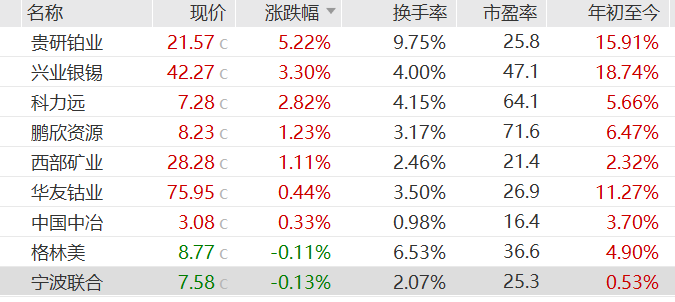
镍价狂飙两周暴涨逾20%,概念股集体走强,兴业银锡年内涨超18%
21世纪经济报道· 2026-01-10 14:49
Core Viewpoint - Nickel prices have surged since mid-December 2022, driven by supply risks from Indonesia and a large-scale investment boom in China's metal market, although signs of cooling have emerged recently [1][3]. Group 1: Nickel Price Trends - On January 6, 2023, nickel futures prices soared by 10.5% to nearly $18,800 per ton, marking the largest single-day increase since late 2022 [1]. - By January 9, 2023, the three-month nickel futures price had dropped to $17,155 per ton, reflecting a year-to-date increase of 3.3% [1]. - The recent nickel price surge has been accompanied by a collective rise in nickel-related stocks, with Guiyan Platinum and Xingye Yinxin seeing increases of nearly 16% and over 18% respectively since the beginning of the year [1][2]. Group 2: Supply Dynamics - Indonesia controls nearly 70% of global nickel production and has announced plans to cut production quotas by approximately 34% in 2026, which could significantly impact global nickel pricing [5][6]. - The Indonesian government is also adjusting the pricing formula for nickel and imposing taxes on by-products like cobalt, which could increase production costs [6][11]. - Analysts suggest that Indonesia's shift from production expansion to active price support could ignite concerns about future supply shortages [6][11]. Group 3: Market Sentiment and Investment Trends - The recent volatility in nickel prices has been partly fueled by a surge in investment activity in the Chinese metal market, with trading volumes for nickel and other metals increasing significantly [7]. - Despite the recent price increases, analysts predict that without substantial demand recovery or coordinated production cuts, nickel prices may struggle to maintain high levels, with forecasts suggesting an average price of $15,250 per ton by 2026 [3][15]. - The current market sentiment indicates that while nickel prices have risen, the underlying supply-demand imbalance remains, with expectations of a surplus of 350,000 to 400,000 tons by 2026 [15].

印尼拟减产引发镍市震荡,下游雄心遭遇需求和替代化双重挑战
2 1 Shi Ji Jing Ji Bao Dao· 2026-01-10 02:24
Core Viewpoint - Nickel prices have surged significantly since mid-December 2022, driven by supply concerns from Indonesia and increased investment in China's metal market, although signs of cooling have emerged recently [1][2]. Group 1: Price Movements - On January 6, 2023, nickel futures prices surged by 10.5%, nearing $18,800 per ton, marking the largest single-day increase since late 2022 [1]. - As of January 9, 2023, nickel futures prices fell to $17,155 per ton, reflecting a cumulative increase of 3.3% since the beginning of the year [1]. - The Shanghai nickel contract reached a peak of 147,720 yuan per ton, with a significant increase of nearly 24,000 yuan per ton from its December 2022 low [2]. Group 2: Supply Dynamics - Indonesia controls approximately 70% of global nickel production and plans to reduce its production quota by about 34% to 250 million tons by 2026 [3]. - The Indonesian government is also adjusting the pricing formula for nickel and imposing taxes on cobalt, which is expected to increase production costs [3][7]. - Analysts suggest that Indonesia's shift from production expansion to active regulation aims to stabilize prices and address supply concerns [3][7]. Group 3: Market Sentiment and Investment Trends - The recent surge in nickel prices is partly attributed to a broader investment boom in the Chinese metal market, with trading volumes for nickel and other metals significantly increasing [4]. - Despite the recent price increases, there are indications that investor sentiment may be cooling, particularly in the precious metals market [4]. Group 4: Future Outlook - Analysts predict that without substantial coordinated production cuts or a significant recovery in demand, nickel prices are unlikely to remain high, with a forecast average price of $15,250 per ton by 2026 [1][9]. - The current oversupply situation in the nickel market is expected to persist, with projections indicating a surplus of 350,000 to 400,000 tons by 2026 [9]. - The effectiveness of Indonesia's production quota adjustments will be crucial in determining future nickel price trends, with strict implementation potentially leading to a tighter supply-demand balance [10].
印尼拟减产引发镍市震荡 下游雄心遭遇需求和替代化双重挑战
2 1 Shi Ji Jing Ji Bao Dao· 2026-01-10 01:39
Core Viewpoint - Nickel prices have surged significantly since mid-December 2022, driven by supply concerns from Indonesia and increased investment in China's metal market, although signs of a cooling trend are emerging [1][2][4] Group 1: Price Movements - On January 6, 2023, nickel futures prices on the London Metal Exchange surged by 10.5%, nearing $18,800 per ton, marking the largest single-day increase since late 2022 [1] - As of January 9, 2023, nickel futures prices fell to $17,155 per ton, reflecting a cumulative increase of 3.3% since the beginning of the year [1] - The Shanghai nickel futures contract reached a peak of 147,720 yuan per ton, with a significant increase of nearly 24,000 yuan per ton from its December 2022 low [2] Group 2: Supply Dynamics - Indonesia controls approximately 70% of global nickel production and plans to reduce its production quota by 34% to about 250 million tons by 2026 [3][5] - The Indonesian government is also adjusting the pricing formula for nickel and imposing taxes on by-products like cobalt, which could increase production costs [3][5] - Analysts suggest that Indonesia's shift from production expansion to active regulation aims to stabilize prices and address supply concerns [3][6] Group 3: Market Sentiment and Demand - The recent surge in nickel prices is partly attributed to a broader investment boom in the Chinese metal market, with trading volumes for nickel and other metals increasing significantly [4] - Despite the recent price increases, there are concerns about ongoing weak demand in the stainless steel and battery sectors, which could limit future growth [7][9] - The market anticipates that unless there is a substantial and sustained reduction in supply or a significant recovery in demand, nickel prices may not remain elevated [8][9] Group 4: Future Outlook - Analysts predict that if Indonesia strictly implements its production quota, nickel prices may stabilize at higher levels in the short term, but long-term supply overhang remains a concern [9] - The potential for structural substitution in nickel usage is limited, as changes in demand are primarily driven by cost and performance requirements rather than price fluctuations [9]
印尼政策反复叠加板块表现弱势,沪镍大幅下跌
Hua Tai Qi Huo· 2026-01-09 02:46
1. Report Industry Investment Rating - There is no mention of the report industry investment rating in the provided content. 2. Core Viewpoints - For the nickel variety, although the current fundamentals show high inventory and oversupply, with frequent positive policies from Indonesia and a long period of bottom - side oscillation, it is likely to be in a high - level oscillation state, but its trend depends on the overall sector sentiment. For the stainless - steel variety, the short - term trend highly depends on the performance of Shanghai nickel, and in the medium - to - long - term, attention should be paid to the improvement of spot trading and policy implementation rhythm [3][4]. 3. Summary by Related Catalogs Nickel Variety Market Analysis - **Futures**: On January 8, 2026, the Shanghai nickel main contract 2602 opened at 146,500 yuan/ton and closed at 136,440 yuan/ton, a - 6.14% change from the previous trading day. The trading volume was 1,520,564 (+388,308) lots, and the open interest was 128,055 (-4,900) lots. The sharp decline was due to the Indonesian energy and mineral resources minister not disclosing the specific amount of 2026 nickel - mine RKAB approval and the decline of the precious - metal and non - ferrous sectors [1]. - **Nickel Ore**: The nickel - ore market has limited resources. The 1.25 nickel - ore from the Benguet mine in the Philippines was tendered at $32.5, a month - on - month increase. In January 2026 (Phase 1), the domestic trade benchmark price in Indonesia increased by $0.05 - 0.08 per wet ton, and the current mainstream premium is +25 [2]. - **Spot**: Jinchuan Group's Shanghai market sales price was 152,600 yuan/ton, a decrease of 700 yuan/ton from the previous day. Spot trading improved, and the spot premiums of refined nickel brands remained high. The previous trading day's Shanghai nickel warehouse receipts were 39,330 (+554) tons, and LME nickel inventory was 276,300 (+666) tons [2]. Strategy - Unilateral: Mainly conduct range operations. There are no strategies for cross - period, cross - variety, spot - futures, and options [3]. Stainless - Steel Variety Market Analysis - **Futures**: On January 8, 2026, the stainless - steel main contract 2603 opened at 14,050 yuan/ton and closed at 13,675 yuan/ton. The trading volume was 424,667 (+136,211) lots, and the open interest was 114,820 (-4,171) lots. The contract showed a high - opening, low - closing, and oscillating - downward trend. The stainless - steel futures are easily affected by the price fluctuations of Shanghai nickel, and the fundamentals are weak. Attention should be paid to the implementation rhythm of the Indonesian nickel - ore quota policy [3]. - **Spot**: The futures decline led to a limited callback in some spot prices, and the trading volume also decreased significantly. The stainless - steel prices in Wuxi and Foshan markets were 13,900 (+0) yuan/ton, and the 304/2B premium was 130 - 330 yuan/ton. The ex - factory tax - included average price of high - nickel pig iron changed by 12.50 yuan per nickel point to 960.0 yuan per nickel point [3][4]. Strategy - Unilateral: Neutral. There are no strategies for cross - period, cross - variety, spot - futures, and options. It is recommended to control positions, trade based on key support levels, and be vigilant against the risk of linked callbacks [4].