
制造业

Search documents
报告显示,我国已迈入制造强国行列!
券商中国· 2025-12-30 06:57
Group 1 - The core viewpoint of the article is that China has made significant progress in its manufacturing sector, achieving a position among the world's leading manufacturing countries by 2024, alongside Germany and Japan [1] - The report indicates that the manufacturing power development index for China has shown positive growth across all sub-indices, marking a successful first step towards becoming a global manufacturing powerhouse [1] - The next decade is identified as a critical period for advancing manufacturing capabilities, emphasizing the need for innovation, quality improvement, and transformation within the sector [1] Group 2 - The report outlines that by 2035, China aims to achieve a new type of industrialization and rank among the top manufacturing countries globally [1] - It stresses the importance of maintaining a reasonable proportion of manufacturing in the national economy and enhancing the role of the real economy [1] - The strategy includes accelerating the integration of artificial intelligence into industrialization and developing a green energy and manufacturing system [1]

从国家治理看宏观:中国式“长期主义”
Orient Securities· 2025-12-30 06:44
Group 1: Long-term Strategy - China's political economy relies on "long-termism," emphasizing historical patience and strategic stability amid global changes[5] - The "Five-Year Plan" exemplifies China's long-term strategy, focusing on continuity and gradual execution rather than disruption[5] - China's understanding of time spans centuries, supporting the value of its assets through long-term goals[5] Group 2: Policy Continuity - The continuity of goals ensures that strategic intentions are realized, with each Five-Year Plan building on the previous one[9] - The "14th Five-Year Plan" and "15th Five-Year Plan" are interconnected, leading towards the centenary goals of building a prosperous socialist modern state[9] - China's commitment to carbon neutrality by 2060 illustrates its steadfast approach to long-term objectives, contrasting with the policy fluctuations seen in Western countries[10] Group 3: Incremental Capability Development - China's governance evolves through iterative upgrades, with policies adapting to current challenges while maintaining overarching themes[12] - The "Made in China 2025" strategy employs a phased approach, aiming for significant advancements by 2025, 2035, and 2049[13] - Infrastructure investments in key regions, such as the "Belt and Road Initiative," reflect a long-term vision for regional connectivity and economic growth[21] Group 4: Social Cohesion and Action - The realization of long-term economic goals depends on collective action across society, facilitated by clear roadmaps and accountability mechanisms[27] - The "14th Five-Year Plan" includes a comprehensive responsibility system to ensure effective implementation and monitoring of goals[27] - Cultural values, such as the promotion of socialist core values, underpin the social cohesion necessary for achieving long-term objectives[27] Group 5: Investment Themes - Long-termism translates into investment themes, including cultural confidence, strategic industries, and energy security[30] - The focus on local cultural heritage and strategic sectors is expected to continue evolving, reflecting China's unique economic landscape[30] - The stability of China's macro policies is increasingly recognized as a comparative advantage by global investors[30]
普惠金融—小微指数显示:2025年三季度,小微企业融资成本稳步下降
Zhong Guo Jing Ji Wang· 2025-12-30 05:22
Core Insights - The "Inclusive Finance - Micro and Small Enterprises Index" indicates a significant decrease in financing costs for micro and small enterprises by Q3 2025, with a continuous increase in funding supply and improved quality of financial services [1][2] Group 1: Financing Trends - By the end of September 2025, the balance of inclusive micro and small loans reached 36.1 trillion yuan, a year-on-year increase of 12.2%, driven by ongoing optimization of systems and innovation in products and services [1] - The financing supply index reached 209.45 points in Q3 2025, reflecting a quarter-on-quarter increase of 2.12%, indicating ample financing supply [1] - Over 70% of micro and small enterprises reported that the financing amounts met their needs, showing high satisfaction with financing [1] Group 2: Cost and Efficiency - The financing price index fell to 65.32 points, a decrease of 4.92% quarter-on-quarter, indicating a stable decline in comprehensive financing costs for inclusive micro and small enterprises [2] - The weighted average interest rate for newly issued loans in September was approximately 3.1%, down about 40 basis points from the same period last year [2] - The financing efficiency index rose to 215.09 points, with nearly 60% of micro and small enterprises able to receive loans in a timely manner, reflecting improved financing efficiency [2] Group 3: Financial Service Quality - The inclusive finance service index showed improvements in both accessibility and quality, with the accessibility index at 203.47 points (up 3.02% quarter-on-quarter) and the quality index at 111.76 points (up 0.31% quarter-on-quarter) [2] - The inclusive finance development index remained stable at 52.48 points, with a slight increase of 0.21% quarter-on-quarter, indicating a positive trend in the development of micro and small enterprises [3] - The business environment for micro and small enterprises continues to improve, with the inclusive finance - micro business index at 57.85 points, reflecting a slight increase of 0.02% quarter-on-quarter [3] Group 4: Sector Analysis - Financing price indices across five major sample industries (wholesale and retail, manufacturing, leasing and business services, construction, and scientific research and technical services) showed declines, indicating the effectiveness of accommodative monetary policies [3] - The accessibility and quality indices for financial services in these sectors also increased, with construction, manufacturing, and scientific research sectors seeing over 2% growth in accessibility [3]
“十四五”期间安徽省经营主体净增263.69万户
Xin Hua Wang· 2025-12-30 04:38
Group 1 - The core viewpoint of the articles highlights the significant progress made by Anhui Province in market regulation and quality development during the "14th Five-Year Plan" period, with a focus on enhancing the business environment and consumer protection [1][2] Group 2 - Anhui Province has seen a net increase of 2.6369 million business entities over five years, moving from 14th to 9th in the national ranking of total business entities, reaching a total of 8.5151 million by the end of November this year [1] - The province has implemented several groundbreaking reforms, including "multiple certificates combined," "separation of licenses," and "mandatory cancellation," which have significantly reduced institutional transaction costs for market entry and operation [1] - The province's quality competitiveness index for manufacturing reached 89.25, with a consumer product quality pass rate of 93%, both exceeding the national average by 3.65 and 0.9 standard points respectively [2] - The 12315 platform in Anhui received 6.7888 million complaints and consultations, recovering economic losses of 0.779 billion yuan for consumers, with a high success rate of 87.38% in online dispute resolutions [2] - Food safety supervision has been strengthened, with a compliance rate of over 99% for food and drug quality inspections, and a stable pass rate of 93% for provincial product quality supervision [2]
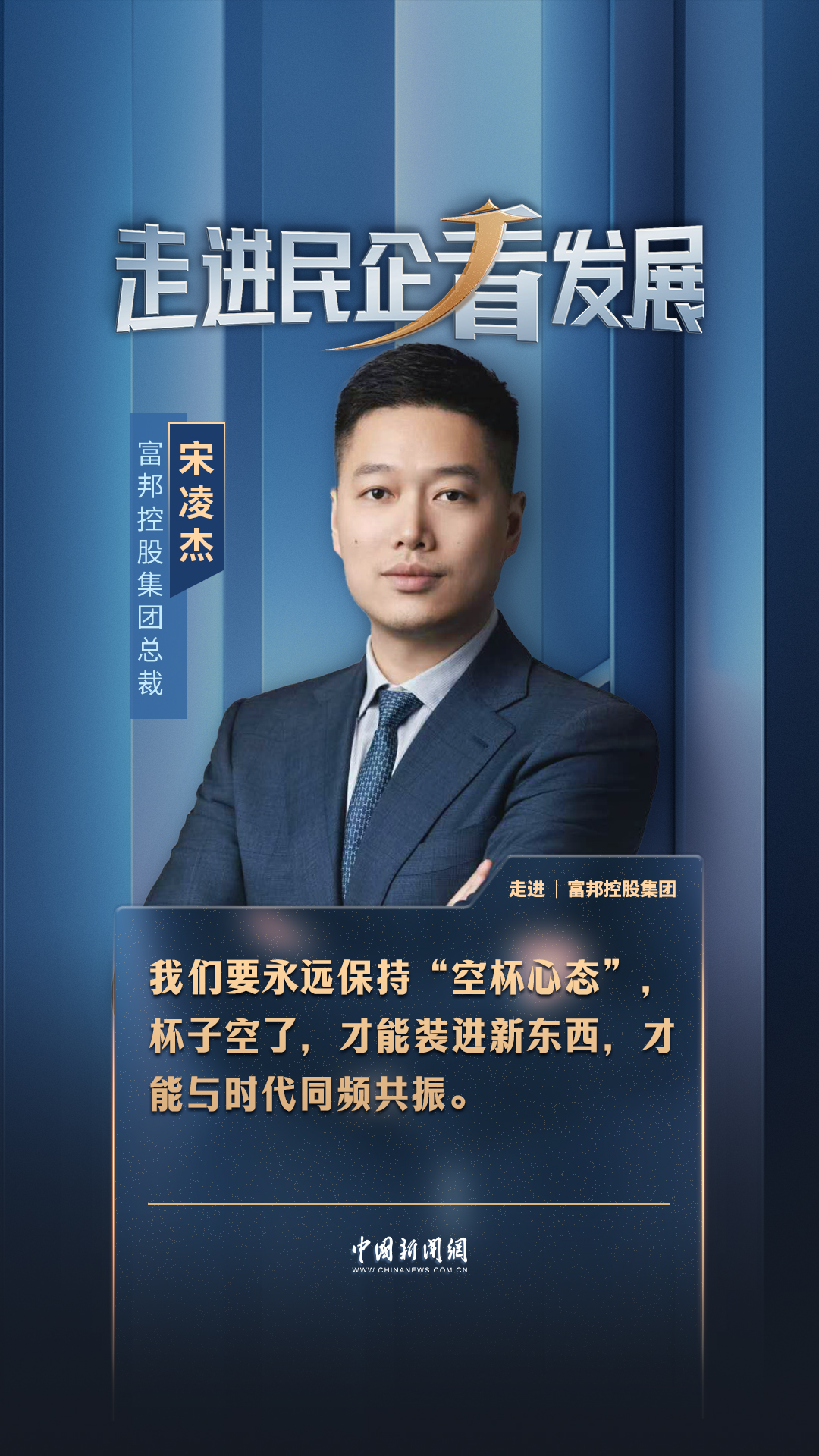
走进民企看发展|富邦控股宋凌杰:以“空杯”心态拥抱变革
Zhong Guo Xin Wen Wang· 2025-12-30 03:26
Core Viewpoint - Ningbo Fubang Holding Group has maintained its position in the "China Top 500 Enterprises" for 24 consecutive years and in the "China Top 500 Private Enterprises" for 16 years, demonstrating resilience in a changing market environment [1] Group 1: Business Philosophy and Strategy - The company emphasizes a "empty cup mentality," which allows for continuous learning and adaptation to new trends [1] - Manufacturing remains the cornerstone of Fubang's development, with a strong belief that practical industry is essential for long-term value [3] - The company is investing significantly in digital transformation, including a multi-billion yuan investment in 5G technology and smart manufacturing to enhance production efficiency [3] Group 2: Environmental Initiatives - Fubang views the environmental industry as a major growth area, asserting that it is not a "money-losing business" but rather a "commercial blue ocean" for the next thirty years [5] - The "Tapping Hands" recycling project utilizes IoT and digital management to improve waste sorting and collection, significantly increasing community participation [6][7] - The project has expanded to over 4,000 locations in Ningbo, with 1.2 million registered users and over 500,000 tons of resources recycled, creating thousands of jobs [7] Group 3: International Expansion - The company has initiated its international strategy early, establishing a presence in Hong Kong and Singapore, which serve as strategic bases for entering emerging markets [8] - Fubang has successfully set up factories in Vietnam and Myanmar, with plans for further expansion into Laos and Cambodia, enhancing its global operational experience [8] Group 4: Entrepreneurial Vision - The company’s leadership emphasizes the connection between business success and social welfare, aiming to provide stable jobs and reliable products to families [9] - The founder's commitment to maintaining a balance between traditional values and modern innovation reflects a deep understanding of the responsibilities of entrepreneurship [9]
21社论丨规模和效率并重,财政政策将更加积极
21世纪经济报道· 2025-12-30 02:23
Core Viewpoint - The article emphasizes the implementation of a more proactive fiscal policy in 2026, focusing on enhancing precision and effectiveness to support the "14th Five-Year Plan" and achieve high-quality economic development [1]. Group 1: Fiscal Policy and Domestic Demand - In 2026, fiscal spending will be expanded while maintaining necessary intensity to effectively boost domestic demand and build a strong domestic market [1]. - The fiscal policy will leverage financial resources to stimulate consumer market vitality and expand effective investment, creating a positive cycle between consumption and investment [1]. Group 2: Consumer and Investment Support - On the consumer side, fiscal funds will be used for direct subsidies and financial tools to enhance consumption willingness and capacity, with a focus on high-efficiency and intelligent new products [2]. - Investment will be concentrated on major national strategies and projects, particularly in advanced manufacturing and infrastructure, with an emphasis on optimizing government bond tools to ensure sufficient funding for long-term projects [2]. Group 3: High-Quality Development and Innovation - The policy aims to support the deep integration of technological and industrial innovation, increasing fiscal investment in technology and improving fund management for research projects [3]. - There will be targeted fiscal support for key industrial chains to enhance resilience and value, alongside pilot programs for digital, green, and intelligent transformations in traditional industries [3]. Group 4: Social Welfare and Employment - The fiscal policy will increase spending on social welfare, focusing on job creation and enhancing healthcare services, while improving the sustainability and precision of social security systems [4]. - These measures aim to combine the enhancement of livelihoods with the stimulation of domestic demand, effectively transforming development outcomes into endogenous economic growth [4].

55家港股公司出手回购(12月29日)
Zheng Quan Shi Bao Wang· 2025-12-30 01:59
Summary of Key Points Core Viewpoint - On December 29, 55 Hong Kong-listed companies conducted share buybacks, totaling 37.9 million shares and an aggregate amount of HKD 999 million [1][2]. Group 1: Major Companies Involved in Buybacks - Tencent Holdings repurchased 1.057 million shares for HKD 636 million, with a yearly total buyback amount of HKD 78.765 billion [1][2]. - Xiaomi Group-W bought back 3.9 million shares for HKD 151 million, with a total buyback amount of HKD 6.136 billion for the year [1][2]. - China COSCO Shipping Holdings repurchased 3.46 million shares for HKD 47.9 million, with a total buyback amount of HKD 6.866 billion for the year [1][2]. Group 2: Buyback Statistics - The highest buyback amount on December 29 was from Tencent Holdings at HKD 636 million, followed by Xiaomi Group-W at HKD 151 million [1][2]. - The largest number of shares repurchased on December 29 was by Four Seasons Medicine, with 8 million shares, followed by Xiaomi Group-W and China COSCO Shipping Holdings with 3.9 million and 3.46 million shares, respectively [1][2]. Group 3: Additional Companies and Their Buyback Data - Kingsoft repurchased 713,600 shares for HKD 20 million, with a total buyback amount of HKD 33.465 million for the year [2]. - Kuaishou-W bought back 310,000 shares for HKD 20 million, with a total buyback amount of HKD 306.840 million for the year [2]. - Other notable companies include Miniso Group, which repurchased 320,600 shares for HKD 1.195 million, and Four Seasons Medicine, which had a total buyback amount of HKD 15.332 million for the year [2][3].




国家统计局:1-11月份电力、热力生产和供应业增长11.8%
Guo Jia Tong Ji Ju· 2025-12-30 01:37
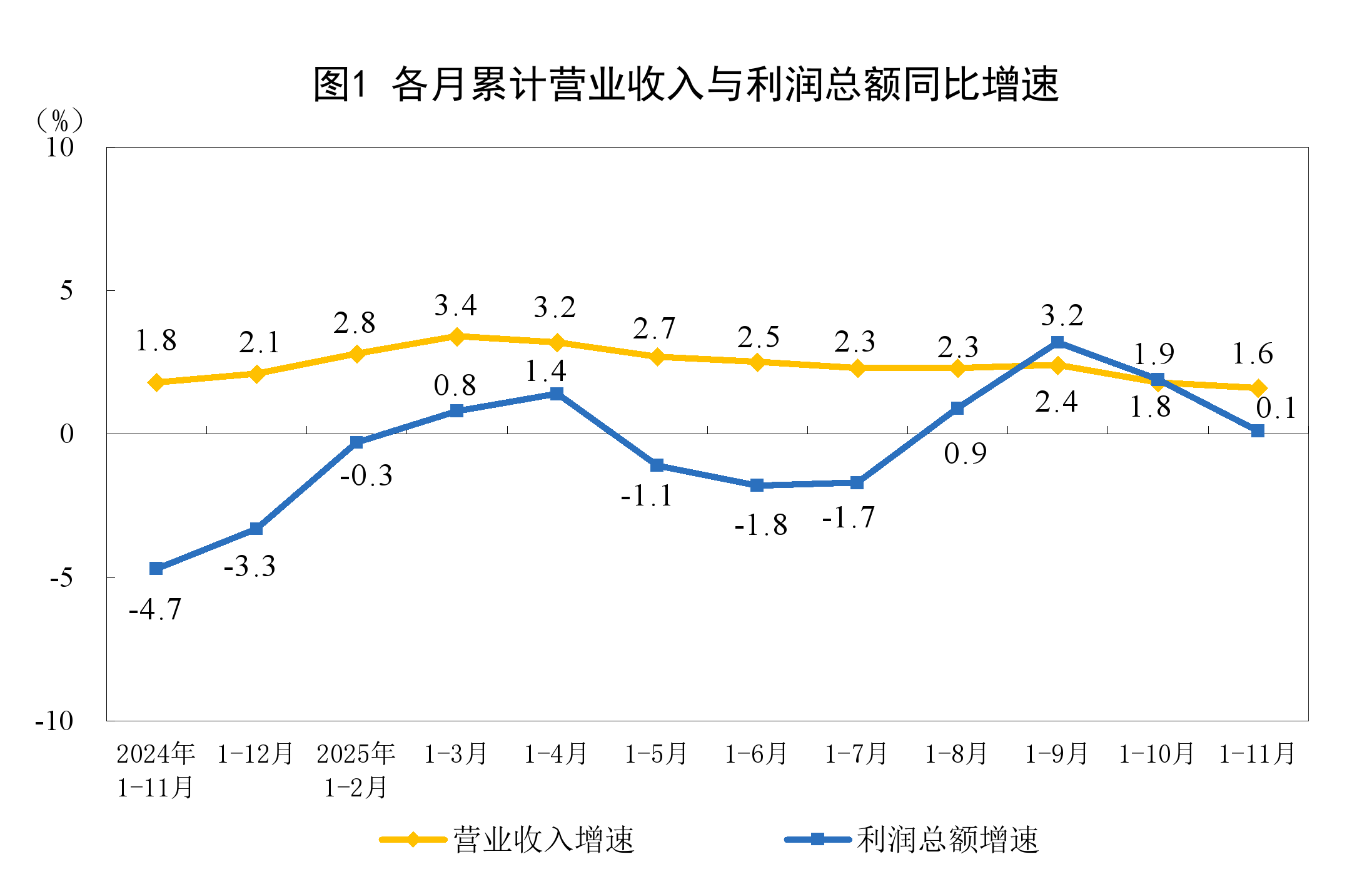
Core Insights - The total profit of industrial enterprises above designated size in China reached 66,268.6 billion yuan from January to November, showing a year-on-year increase of 0.1% [1] - The profit performance varied across different types of enterprises, with state-owned enterprises experiencing a decline of 1.6%, while foreign and Hong Kong, Macao, and Taiwan-invested enterprises saw a growth of 2.4% [1] - The mining industry faced a significant profit drop of 27.2%, while the manufacturing sector reported a profit increase of 5.0% [1] Profit by Industry - The computer, communication, and other electronic equipment manufacturing industry saw a profit increase of 15.0%, while the power, heat, and gas production and supply industry grew by 11.8% [2] - The automotive manufacturing industry reported a profit growth of 7.5%, while the textile industry experienced a decline of 8.2% [2] - The coal mining and washing industry faced a dramatic profit decrease of 47.3% [2] Financial Performance - From January to November, the total operating revenue of industrial enterprises was 1,253,395.1 billion yuan, reflecting a year-on-year growth of 1.6% [2][11] - The operating costs increased by 1.8% to 1,071,672.4 billion yuan, resulting in an operating revenue profit margin of 5.29%, down by 0.08 percentage points year-on-year [2][11] - By the end of November, total assets of these enterprises reached 189.28 trillion yuan, a 4.8% increase year-on-year, while total liabilities rose by 5.0% to 109.96 trillion yuan [2] Accounts and Inventory - As of the end of November, accounts receivable amounted to 28.40 trillion yuan, up 5.5% year-on-year, and finished goods inventory was 6.92 trillion yuan, increasing by 4.6% [3] - The average collection period for accounts receivable was 70.4 days, an increase of 3.7 days year-on-year [3] Monthly Profit Trends - In November alone, the profit of industrial enterprises decreased by 13.1% year-on-year [4]
更好发挥财政扩内需的主动力和稳定锚作用
Sou Hu Cai Jing· 2025-12-30 01:28
Core Viewpoint - The Ministry of Finance emphasizes the need to prioritize domestic demand in 2026, focusing on boosting consumption and effective investment to support a strong domestic market [2] Group 1: Policy Effectiveness in 2025 - The government has utilized public budget funds to enhance disposable income through various subsidies, thereby increasing consumer willingness to spend [3] - Special long-term bonds have been employed to support the replacement of old consumer goods, stabilizing and expanding consumption [3] - Employment services and vocational training have been improved through policies like tax reductions and employment subsidies, promoting job opportunities for key demographics [3] - A comprehensive social security system has been established to alleviate concerns for citizens, thereby boosting consumer confidence [3] - Development funds have been allocated to support commercial construction in rural areas, enhancing the consumption environment and unlocking rural consumption potential [3] Group 2: Challenges in Policy Implementation - Global economic growth is sluggish, and rising protectionism necessitates a greater reliance on domestic markets to drive economic growth [5] - Despite being a leader in agricultural and industrial consumption, challenges remain in scaling and improving quality in domestic demand [5] - New infrastructure investments still have room for growth, but issues such as reliance on imported technology and lack of unified standards pose significant challenges [5] - The government faces difficulties in balancing short-term performance pressures with long-term investments in human capital [7] Group 3: Recommendations for Expanding Domestic Demand - The government should increase fiscal spending to ensure necessary expenditures, focusing on public service and social welfare investments [9] - There is a need to combine domestic demand expansion with improving living standards, ensuring that public services meet the quality and quantity required by citizens [9] - Policy support and innovative reforms should be implemented to provide robust fiscal backing for expanding domestic demand, enhancing budget management and efficiency [10]
工信部部署2026年十项重点工作 将培育一批重点行业智能体
2 1 Shi Ji Jing Ji Bao Dao· 2025-12-29 23:09
Core Viewpoint - The national industrial and information technology conference emphasizes the need to consolidate the positive momentum of the industrial economy as the primary task for 2026, shifting focus from promoting stable growth to ensuring quality improvement [2][3]. Group 1: Industrial Economy - The conference highlights the importance of stabilizing the industrial economy, with expectations for telecommunications and software business revenues to grow by approximately 9% and 12% year-on-year, respectively, in 2025 [2]. - The shift in focus from "promoting stable growth" to "consolidating a positive momentum" reflects a deeper policy transition from stabilizing the economy to enhancing quality [2][3]. - The conference outlines ten key areas of focus for 2026, with the first being the consolidation of the industrial economy's positive momentum [2]. Group 2: Supply and Demand - The conference plans to increase the supply of green products, trendy products, and products for the elderly, responding to market demand trends [3]. - The emphasis on domestic demand as a priority aligns with the need for relevant supply to stimulate demand, indicating a policy shift towards domestic market strengthening [3]. Group 3: Technological Integration - The conference promotes the "Artificial Intelligence + Manufacturing" initiative, aiming to cultivate key industry intelligent entities and original intelligent enterprises [4][5]. - The transition from "digital empowerment" to "intelligent empowerment" signifies a deeper integration of intelligent technologies into traditional industries, enhancing efficiency and value creation [6]. Group 4: Emerging Industries - The conference outlines plans to develop emerging pillar industries such as integrated circuits, new displays, new materials, aerospace, low-altitude economy, and biomedicine [8][9]. - The focus on these industries is seen as a strategic move to address key technological challenges and enhance new productive forces, aligning with national strategic needs [10]. Group 5: Quality Enterprises - The conference emphasizes the cultivation of high-quality enterprises, including "little giant" enterprises and manufacturing champions, while addressing issues of overdue payments to businesses [12]. - The goal is to enhance the service capabilities of the information and communication industry, with significant growth in 5G infrastructure, reaching 4.758 million base stations by the end of October 2025 [12]. Group 6: Low-altitude Economy - The conference highlights the low-altitude economy as a new growth point, with the introduction of frequency development guidelines to support the industry [13]. - This initiative aims to facilitate the commercial operation of low-altitude logistics and aerial tourism, ensuring resource allocation and regulatory clarity [13].