
生猪养殖

Search documents
猪价下跌或加速产能去化,牛肉价格有望加速上涨
SINOLINK SECURITIES· 2025-10-12 11:11
Investment Rating - The report suggests a cautious approach towards the agricultural sector, particularly in pig farming, with a focus on selecting low-cost quality enterprises [2][22]. Core Insights - The agricultural sector index outperformed the Shanghai Composite Index, indicating a positive trend in the agricultural market [12][13]. - The pig farming industry is currently facing significant losses due to falling prices, with an average price of 10.91 yuan/kg, leading to a potential reduction in production capacity [21][22]. - The poultry sector shows signs of stabilization, with yellow feathered chicken prices remaining resilient due to improved downstream demand [3][37]. - The beef market is expected to see price increases as it enters the consumption peak season, while dairy cow inventory is on a downward trend [4][42]. - The planting industry is experiencing pressure from supply and demand, but potential price increases could occur if there are significant reductions in grain production [5][49]. - Feed prices are stabilizing, and the aquaculture sector is showing upward trends in pricing [62][68]. Summary by Sections Pig Farming - The national average pig price has dropped below 11 yuan/kg, with the industry currently in a loss-making state. The average weight of pigs at slaughter is 128.48 kg, indicating high inventory levels despite price declines [2][21]. - Short-term expectations indicate further price declines, but medium to long-term prospects remain positive for quality enterprises [22]. Poultry Farming - The average price for white feathered chicken is 6.88 yuan/kg, with a slight decrease from the previous week. The profitability of parent breeding chickens has improved, while broiler profitability remains under pressure [3][36]. - The sector is expected to stabilize as consumer demand gradually recovers [37]. Livestock - Live cattle prices in Shandong are at 27.20 yuan/kg, with expectations for steady price increases as the consumption season approaches. The dairy sector is experiencing a reduction in inventory due to ongoing financial pressures [4][42]. - The beef cycle is anticipated to begin anew, with a focus on the synergy between meat and dairy production [43]. Planting Industry - Recent fluctuations in grain prices are noted, with corn prices at 2215.71 yuan/ton and soybean prices at 3987.37 yuan/ton. The planting sector is stabilizing, with potential improvements if significant reductions in crop yields occur [5][48]. - The report emphasizes the importance of advancements in seed technology and production efficiency [49]. Feed and Aquaculture - Feed prices for fattening pigs and poultry remain stable, while aquaculture prices are showing positive trends, particularly for shrimp and fish products [62][68].


双节后猪价下跌加速,主动去产预期加强
GOLDEN SUN SECURITIES· 2025-10-12 09:32
Investment Rating - The industry investment rating is maintained as "Increase" [4] Core Viewpoints - After the double holiday, pig prices have rapidly declined to below 12 yuan/kg, with self-breeding and self-raising profitability dropping to -152.15 yuan/head, a decrease of 47.2 yuan/head from the previous week. The pressure from high supply is expected to continue to weigh on pig prices, leading to increased market pessimism and a potential for further price declines. However, there is an expectation for a mid-to-long-term price reversal driven by policy and proactive production cuts [1][15][19] - The average selling price of lean pigs nationwide is 11.39 yuan/kg, down 6.1% from last week. The current valuation remains relatively low, suggesting investment opportunities in low-cost pig farming companies such as Muyuan Foods, Wens Foodstuff Group, and others [2][16] - In poultry farming, the price of white feather chickens is 6.88 yuan/kg, down 0.1% from last week, while the average price of chicken products remains stable at 8.65 yuan/kg. The price of meat chicken chicks has increased by 0.6% to 3.22 yuan each. There are expectations for a price rebound in the chicken market [2][16][34] Summary by Sections Livestock - The average weight of pigs sold is 128.48 kg, showing a 0.5% increase from the low point in early August. Feed prices have also increased, indicating a gradual rise in pig inventory since July [1][15] - The profitability of self-breeding and self-raising pigs is -152.15 yuan/head, while the profitability of purchased piglets is -301.04 yuan/head, indicating significant losses in the sector [19][20] Poultry - The price of yellow feather chickens has seen a week-on-week increase of 1.9%, with the current price at 14.18 yuan/kg. This suggests seasonal price elasticity opportunities [2][16][40] - The profitability of parent breeding chickens is 0.47 yuan/head, while the profitability of meat chickens is -2.23 yuan/head, reflecting challenges in the poultry sector [38][44] Agricultural Products - The approval of genetically modified varieties is expected to lead to commercial sales, with potential growth for industry companies as prices and profit distribution become clearer [2][16] Feed and Vaccines - The volatility in agricultural product prices is increasing, and leading feed companies are expected to replace smaller competitors due to their advantages in procurement and scale [2][16]


农林牧渔行业2025年三季报业绩前瞻:养殖板块盈利分化,优质龙头企业盈利能力提升
Changjiang Securities· 2025-10-11 14:48
Investment Rating - The report gives an investment rating of "Positive" for the agricultural products sector [11] Core Viewpoints - The swine breeding industry has transitioned from a rapid growth phase to a stable development phase, with medium to long-term capacity regulation becoming the new normal. High-quality breeding companies are expected to see significant improvements in profit margins and profitability levels [2][20] - The report highlights a divergence in profitability within the breeding sector, with leading companies still achieving good performance despite overall industry challenges. The poultry sector is experiencing a recovery in yellow-feathered chicken prices, which is gradually improving profitability [2][20] - The aquaculture feed industry continues to show strong performance, with leading companies like Haida Group expected to achieve simultaneous growth in volume and profit [2][20] - The pet food sector is experiencing sustained high growth in proprietary brands, with overseas factories demonstrating resilience in exports. Key recommendations include Guibao Pet and Zhongchong Co [2][20] Summary by Sections Swine Breeding Sector - The swine breeding sector is gradually entering a loss phase, with significant divergence in profitability among listed companies. The average price of live pigs in Q3 2025 is approximately 14.0 CNY/kg, down 4% quarter-on-quarter and 28% year-on-year. The average profit for self-bred pigs is about 42 CNY/head, while purchasing piglets incurs a loss of 118 CNY/head [7][21] - High-quality breeding companies have a complete cost below 12 CNY/kg, maintaining a profit of over 200 CNY/head, while companies with higher costs may still face losses [7][21] - Future pig prices are expected to rise in Q4 2025 and 2026 due to increased supply indicators and policy-driven capacity restrictions [26] Feed Sector - The feed industry maintains growth in production, with aquaculture feed demand recovering. Haida Group's feed sales are expected to grow by about 20% year-on-year in Q3 2025, with net profit in the feed sector expected to increase by 30%-40% year-on-year [8][43] - The report notes that the structure of feed products is improving, with higher-margin products gaining a larger share of sales [8][43] Poultry Sector - The yellow-feathered chicken prices have bottomed out and are recovering, which is enhancing the profitability of the poultry breeding sector [2][20] Pet Food Sector - The pet food sector continues to see high growth in proprietary brands, with Guibao Pet and Zhongchong Co recommended for their resilience in overseas sales. Online sales growth for the pet food industry is around 7.7%, with Guibao's proprietary brand growing by 21% [9][20]

猪价狂跌、融资收紧,猪企能否熬过这个寒冬?| 行业风向标
Tai Mei Ti A P P· 2025-10-11 14:41
Core Insights - The continuous decline in pig prices has created significant challenges for pig farming companies, with prices dropping to a new low of 11.20 yuan/kg, below the cost line of 13-14 yuan/kg for most producers [2][3][6] - Major companies like Wen's Foodstuffs and New Hope are adopting a "volume compensates for price" strategy, but this has not mitigated the impact of falling prices [2][6] - The tightening of financing options due to policy changes is exacerbating the cash flow issues faced by some pig farming companies, leading to a survival-of-the-fittest scenario in the industry [9][11] Industry Overview - As of October 11, the national average price for live pigs was 11.20 yuan/kg, reflecting a 15.92% month-on-month decline and a 38.36% year-on-year drop [3] - The industry is experiencing widespread losses, with many companies forced to sell off stock due to oversupply, leading to a grim outlook for the future [8][12] - The government has implemented measures to control pig production capacity, aiming to stabilize prices and reduce the number of breeding sows [9][12] Company Performance - Major pig farming companies reported declining sales and revenues in September 2025, with examples including: - Muyuan Foods sold 5.573 million pigs, generating 9.066 billion yuan in revenue, with an average price of 12.88 yuan/kg, all showing declines from August [7] - Wen's Foodstuffs sold 3.3253 million pigs, with a revenue of 4.975 billion yuan and an average price of 13.18 yuan/kg, also reflecting declines [7] - New Hope sold 1.3942 million pigs, generating 1.746 billion yuan in revenue, with an average price of 12.89 yuan/kg, showing significant year-on-year declines [7] Market Dynamics - The market is entering a phase of weak demand and strong supply, with an increase in planned slaughter numbers for October, indicating continued pressure on prices [12] - Analysts predict that the fourth quarter will be crucial for the performance of listed pig farming companies, with price recovery largely dependent on the effectiveness of production capacity controls [12][13] - The ongoing price decline is expected to lead to a reduction in production capacity, although the timing and extent of this adjustment remain uncertain [13]



三季度青岛市粮油副食品市场供应充足
Zhong Guo Fa Zhan Wang· 2025-10-11 05:02
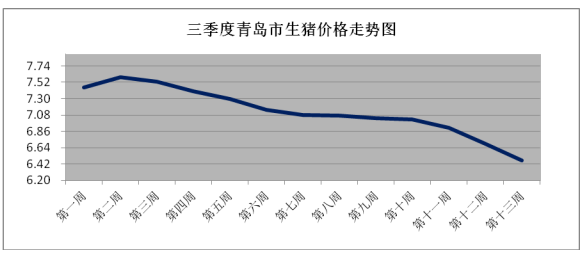
Core Viewpoint - The supply of grain and oil products in Qingdao is sufficient in the third quarter of 2025, with some prices experiencing slight declines while others, such as eggs and vegetables, have seen varying degrees of increases [1] Grain and Oil Prices - The average price of first-grade long-grain rice is 3.26 yuan per 500 grams, remaining stable compared to the previous quarter but down 2.11% year-on-year [2] - The average price of special flour is 2.37 yuan, down 1.67% quarter-on-quarter and 0.58% year-on-year [2] - The average price of 5-liter bottled peanut oil is 133.10 yuan per barrel, down 0.55% quarter-on-quarter and 2.06% year-on-year [2] - The average price of soybean oil is 59.43 yuan, down 0.37% quarter-on-quarter and 2.11% year-on-year [2] Pork Prices - The average price of live pigs is 7.09 yuan, down 3.70% quarter-on-quarter and 28.01% year-on-year [3] - The average price of pork belly is 15.42 yuan, down 1.06% quarter-on-quarter and 15.20% year-on-year [5] - The average price of lean pork is 15.68 yuan, down 1% quarter-on-quarter and 15.52% year-on-year [5] Egg Prices - The average price of eggs is 3.76 yuan, up 2.49% quarter-on-quarter but down 28.20% year-on-year [7] - The price fluctuations in eggs are influenced by seasonal demand and supply constraints due to high temperatures affecting production [8] Vegetable Prices - The average wholesale price of vegetables in three major markets is 2.47 yuan, up 11.26% quarter-on-quarter but down 11.79% year-on-year [12] - The average retail price of 19 vegetable varieties is 3.92 yuan, up 9.50% quarter-on-quarter but down 16.06% year-on-year [12] - The total supply of vegetables in the three major wholesale markets is 19,425 million kilograms, up 1.05% quarter-on-quarter but down 9.45% year-on-year [11]
【品种交易逻辑】铜矿扰动影响未消,铜价后续走势如何?
Jin Shi Shu Ju· 2025-10-11 01:17
Group 1: Palm Oil - Indonesia's Energy Minister announced a mandatory B50 biodiesel policy to be implemented by 2026, leading to expectations of reduced palm oil exports from Indonesia [1] - MPOA data indicates a 2.35% decrease in Malaysia's palm oil production for September 1-30, with market surveys suggesting a potential decline in palm oil inventory for the first time in seven months due to increased exports and decreased production [1] - Concerns exist regarding India's potential increase in vegetable oil import tariffs, and domestic demand is under pressure following the end of the dual festival stocking period [1] Group 2: Gold - Concerns about a potential U.S. federal government shutdown have increased demand for safe-haven assets, with the World Gold Council reporting a 12% year-on-year increase in global central bank gold purchases in Q3 [1] - The Federal Reserve's September meeting minutes indicated a consensus on the necessity of another interest rate cut this year, putting pressure on the U.S. dollar [1] - Factors to watch include changes in inflation statements, adjustments to the balance sheet plan, and developments in geopolitical conflicts [1] Group 3: Copper - Global copper supply is tightening, exacerbated by production cuts at Chile's Escondida copper mine, with LME copper inventory dropping below 150,000 tons, the lowest level since 2005 [1] - Traditional sectors are experiencing weak demand, which may suppress downstream replenishment intentions due to high copper prices [1] - Key events to monitor include labor negotiations at Chile's Antofagasta copper mine and the resumption progress at Indonesia's Grasberg copper mine [1] Group 4: Live Pigs - The inventory of breeding sows remains high, leading to sufficient supply of market pigs, while post-festival demand recovery has not met expectations [1] - National breeding sow inventory is being gradually reduced, with plans to decrease by 1 million heads within six months [1] - Events to watch include policy intervention signals, slaughter rhythm and weight, and the impact of weather changes on transportation and consumption demand [1] Group 5: Shipping - A ceasefire agreement in Gaza has been confirmed, and global fleet capacity is expected to grow by 6.3% by 2025, creating significant pressure from new ship deliveries [1] - The period from late Q3 to early Q4 is traditionally a low season, with spot rates continuing to decline [1] - Risks include potential seasonal demand for Christmas stocking, which may lead to a temporary increase in cargo volume, and ongoing threats from Houthi forces in Yemen [1] Group 6: Coking Coal - Weekly inventory of coking coal has decreased by 132, reaching 36.324 million tons, with recent mining accidents raising concerns about production capacity [2] - The long-term contract price for Mongolian coal has increased by $3.8 per ton in Q4, indicating a potential shift in market sentiment towards traditional peak season demand [2] - Key events to monitor include the maintenance of high iron water production capacity and the fulfillment of steel demand [2] Group 7: Industrial Silicon - The southwestern region is approaching a dry season, with expectations of rising electricity prices pushing production costs higher [2] - Institutions forecast a 5.95% month-on-month increase in October's polysilicon output to 142,500 tons, with a 3.7% increase in operating rates to 50.05% [2] - Events to watch include the progress of polysilicon storage plans and discussions on revising energy consumption standards for industrial silicon [2]
北京大北农科技集团股份有限公司 2025年9月份生猪销售情况简报
Zheng Quan Ri Bao· 2025-10-10 22:36
Group 1 - The core viewpoint of the article highlights the sales performance of the company's hog sales in September 2025, indicating a significant year-on-year growth in sales volume and a slight increase in sales revenue compared to the previous month [2][4]. Group 2 - In September 2025, the company sold 373,700 hogs, generating sales revenue of 541 million yuan, with a month-on-month sales volume increase of 6.10% and a year-on-year increase of 33.08% [2]. - The average weight of the hogs sold was 128.86 kg, with an average selling price of 12.91 yuan per kg [2]. - From January to September 2025, the cumulative sales volume reached 3.1608 million hogs, representing a year-on-year growth of 25.93%, while the cumulative sales revenue was 4.898 billion yuan, up 13.96% year-on-year [2].

天邦食品股份有限公司 2025年9月份商品猪销售情况简报
Zheng Quan Ri Bao· 2025-10-10 22:27
Group 1: Core Insights - The company sold 612,700 pigs in September 2025, generating sales revenue of 634.46 million yuan, with an average selling price of 13.69 yuan/kg [2] - For the first nine months of 2025, the company sold 4.6373 million pigs, with a total sales revenue of 6.08491 billion yuan and an average selling price of 15.77 yuan/kg [2] - The company slaughtered 117,242 pigs in September 2025, with a cumulative slaughter of 1,179,275 pigs from January to September 2025 [3] Group 2: Sales Performance - The sales volume of piglets in September 2025 was 252,300, contributing to the overall sales figures [2] - The average price for fat pigs in September was 12.80 yuan/kg, reflecting a month-on-month decrease of 8.88% [2] - The sales revenue for the first nine months of 2025 showed a year-on-year decrease of 11.76% in average selling price [2] Group 3: Additional Information - The data provided is based solely on the company's controlling subsidiaries and does not include figures from associated companies [2] - The reported figures are unaudited and may differ from those disclosed in periodic reports, serving only as reference data for investors [4]
猪价拐点何时出现?
Si Chuan Ri Bao· 2025-10-10 21:58
Core Viewpoint - Domestic pig prices have been continuously declining after the National Day and Mid-Autumn Festival holidays, with significant drops in futures contracts and sales revenue for major pig companies [1][2][3]. Group 1: Price Trends - On October 9, the main pig futures contract fell nearly 6%, followed by a 3.21% drop on October 10, reaching a new low since its listing [1]. - The average selling price of pigs for major companies like Muyuan Foods and New Hope has dropped below 13 yuan per kilogram, with a year-on-year decline of approximately 30% in September [3][4]. - As of October 10, the price of pigs was reported at 11.42 yuan per kilogram, marking a year-on-year decrease of 35.22% and a month-on-month decrease of 14.58% [3]. Group 2: Sales Performance - In September, major pig companies reported significant increases in sales volume, with Muyuan Foods selling 5.573 million pigs, Wens Foodstuffs selling 3.3253 million, and New Hope selling 1.3942 million, all showing double-digit growth year-on-year [2]. - Despite the increase in sales volume, the sales revenue for these companies saw substantial declines, with Muyuan Foods down 22.46%, Wens down 15.16%, and New Hope down 23.82% year-on-year [2]. Group 3: Supply and Demand Dynamics - The primary reason for the recent price drop is the concentrated release of pig production capacity, with the number of breeding sows reaching 40.78 million, close to the upper limit of the reasonable production capacity control zone [3][4]. - Improved production efficiency has also contributed to the oversupply, with the average PSY (pigs weaned per sow per year) increasing from 18 to around 24, and some leading companies achieving PSY levels of 28 to 29 [4]. Group 4: Government Intervention - To stabilize pig prices, the government has initiated measures such as reducing the number of breeding sows and controlling the weight of pigs being sold [6][7]. - The Ministry of Agriculture has emphasized the need for comprehensive production capacity regulation, with plans to reduce the breeding sow population by 1 million heads by January 2026 [7]. - The government has also been actively conducting frozen pork reserves to curb price declines, with multiple rounds of storage initiated in August and September [7]. Group 5: Future Outlook - Analysts predict that a turning point for pig prices may not occur until at least 10 months from now, with the fourth quarter being critical for the implementation of production capacity control measures [6][7].
猪价 继续下行!
Zheng Quan Shi Bao· 2025-10-10 13:32
Core Viewpoint - The sales reports of A-share listed pig companies for September 2025 indicate a mixed trend in sales volume and revenue, with a general decline in sales prices both month-on-month and year-on-year [1][4]. Sales Performance Summary - Tianbang Food reported sales of 612,700 pigs in September 2025, generating revenue of 634 million yuan, with an average selling price of 13.69 yuan/kg, showing month-on-month changes of 15.68% in volume, 2.14% in revenue, and a decline of 8.88% in price [2]. - Dabeinong's sales for September 2025 reached 373,700 pigs, with revenue of 541 million yuan. The sales volume increased by 6.10% month-on-month and 33.08% year-on-year, while revenue saw a month-on-month increase of 3.64% but a year-on-year decrease of 6.24% [2]. - Muyuan Foods sold 5.573 million pigs in September 2025, with a year-on-year increase of 11.05%. The average selling price was 12.88 yuan/kg, down 30.94% year-on-year, and total revenue was 9.066 billion yuan, down 22.46% year-on-year [3]. - Wens Foodstuffs sold 3.3253 million pigs, generating revenue of 4.975 billion yuan, with an average price of 13.18 yuan/kg. The sales volume and revenue showed mixed trends compared to previous months [3]. - New Hope reported sales of 1.3942 million pigs, with revenue of 1.746 billion yuan and an average price of 12.89 yuan/kg, reflecting a decline in price year-on-year [3]. Price Trends - Since October 2025, pig prices have continued to decline, with the market price dropping to 12.50 yuan/kg by October 10, down from 12.59 yuan/kg at the end of September [5]. - The wholesale price of pork has also decreased, reaching 18.85 yuan/kg on October 10, down from 19.40 yuan/kg at the end of September [5]. - Futures prices for live pigs have seen a significant drop, with a cumulative decline of approximately 9% in September and over 8% in the first two trading days of October [6]. Future Price Outlook - Long-term forecasts suggest that the pig farming industry is entering a pressure period, with potential for continued price declines. However, government policies aimed at stabilizing prices may mitigate the duration and extent of this pressure [7]. - Mid-term expectations indicate that pig prices may remain under pressure due to supply-demand dynamics, despite some consumption recovery. The market is likely to experience a "supply-demand increase" scenario, maintaining a loose supply condition [7].