存储芯片

Search documents
A股高开低走,创业板超跌1%,港股恒指科指涨幅收窄,光伏概念走强,创新药题材走弱
Hua Er Jie Jian Wen· 2025-11-10 01:57
Market Overview - A-shares opened high but closed lower, with the ChiNext index dropping over 1%. Key sectors such as lithium batteries, fluorine chemicals, memory chips, satellite navigation, phosphorus chemicals, and photovoltaic concepts showed strength, while sectors like ice and snow tourism, nuclear fusion, decelerators, and innovative drugs weakened [1] - The Hong Kong Hang Seng Technology Index's gains narrowed to 0.07%, and the Hang Seng Index's gains narrowed to 0.3%. Lithium batteries and photovoltaic concepts performed well, while innovative drugs, new energy vehicles, and robotics sectors weakened [1] - The bond market saw a decline across the board, with the 30-year government bond futures dropping by 0.1% [1] Stock Performance - Notable stock movements included: - New Era Group Holdings rose by 8.70% to 0.050 - Pearl River Steel Pipe increased by 6.06% to 0.350 - Sunshine Oil Sands gained 5.80% to 0.365 - China Petroleum & Chemical Corporation rose by 2.60% to 0.790 - China Petroleum's shares increased by 2.47% to 8.720, marking a seven-day consecutive rise [2][3] Index Performance - The Shanghai Composite Index opened at 3995.75, down 0.05% - The Shenzhen Component Index opened at 13453.37, up 0.37% - The ChiNext Index opened at 3221.93, up 0.43% - The STAR Market 50 Index opened at 1422.32, up 0.47% [6][7][8] Commodity Market - Most commodities opened lower, with coking coal dropping by 2.11% [1] - The futures market for coking coal saw a decline of over 2%, while crude oil and aluminum saw slight increases of nearly 1% [11] Currency Exchange - The RMB to USD central parity rate was reported at 7.0856, down by 20 points from the previous trading day [10]


闪存龙头宣布涨价50% 10股年内股价翻倍
2 1 Shi Ji Jing Ji Bao Dao· 2025-11-09 14:11
Core Viewpoint - The storage industry is experiencing significant price increases, with SanDisk raising NAND flash contract prices by 50%, marking at least the third price hike this year [1] Group 1: Price Increases and Market Trends - Since September, there has been a strong expectation for price increases across mainstream storage products, including HBM, DRAM, NAND flash, SSDs, and mechanical hard drives, all facing shortages [1] - DDR5 spot prices surged by 25% within a week as multiple storage manufacturers suspended DDR5 pricing [1] - The A-share storage chip sector has seen strong performance, with 10 stocks doubling in price year-to-date, including Demingli, which rose nearly 330% [1][2] Group 2: Company Performance - Jiangbolong reported a 54.6% year-on-year increase in revenue for Q3, reaching 6.539 billion yuan, and a staggering 1994.42% increase in net profit [3] - Bawei Storage achieved a 68.06% year-on-year revenue growth in Q3, totaling 2.663 billion yuan, with net profit soaring by 563.77% [3] - Lanke Technology's Q3 revenue grew by 57.22% year-on-year, reaching 1.424 billion yuan, maintaining stable growth [3] Group 3: Industry Dynamics - The transition from DDR4 to DDR5 is influencing revenue growth among companies, with some experiencing slight declines due to supply shortages and price surges [4] - The overall market for chip design firms is undergoing structural changes driven by the recovery in storage and the rise of edge AI applications [4] - The storage price fluctuations are impacting the shipment rhythm of terminal products, necessitating a balance between technological iteration and cost control [4] Group 4: Future Outlook - ICBC Credit Suisse believes the current storage price increase is primarily driven by unexpected demand from AI servers, with expectations for high prices to persist at least until mid-2026 [5] - The ongoing investment in AI infrastructure by domestic and international manufacturers is expected to further support the upward price trend in the storage market [5]


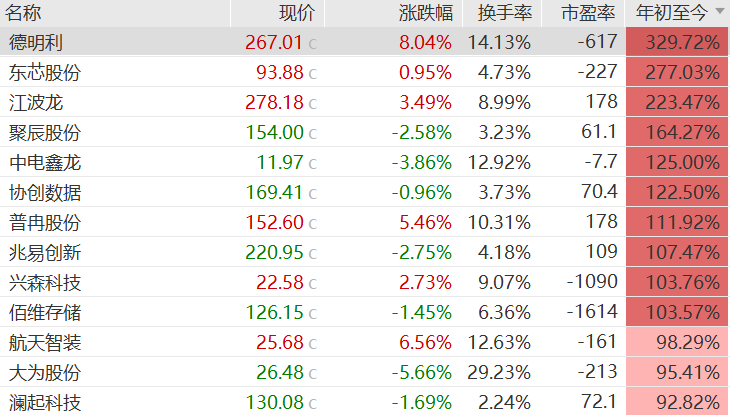
A股存储芯片四大外资新进,市值仅20亿,横盘最长达638天
Sou Hu Cai Jing· 2025-11-08 19:47
Core Insights - The storage chip market has seen significant activity, with four foreign investment firms—Goldman Sachs, Morgan Stanley, UBS, and Abu Dhabi—simultaneously investing in several small-cap stocks with market capitalizations below 5 billion [1][5][9] Group 1: Company Activities - Xingfu Electronics, with a market cap of 2.6 billion, specializes in electronic-grade chemicals and saw Goldman Sachs increase its holdings by 480,000 shares, a 134% increase, while Morgan Stanley entered with 630,000 shares [1][5] - Jintaiyang, valued at 2.8 billion, has a stake in the parent company of Zhongke Shenglong, which is involved in 3D heterogeneous integration chips. UBS, Goldman Sachs, and J.P. Morgan all made significant new investments in the third quarter [3][5] - Tailong Co., with a market cap of 3.2 billion, has a subsidiary providing storage chip solutions. Four foreign investors entered the top ten shareholders, indicating strong interest and a positive market response [3][5] - Ruineng Technology, valued at 4.7 billion, focuses on industrial automation and has a series of storage chip products. It also attracted significant foreign investment, with multiple firms increasing their stakes [3][5] Group 2: Market Trends - The third quarter saw a concentrated effort from foreign investors targeting small-cap stocks with high volatility, particularly those that had been trading sideways for extended periods [5][7] - The influx of capital into these companies often leads to increased trading volume and subsequent price increases, demonstrating a clear correlation between foreign investment and market performance [5][9] - The trend indicates that foreign investors are aligning their strategies with the rising demand in the storage chip sector, favoring companies with direct business ties to storage manufacturing [9]

37岁“创二代”,冲击港股IPO!公司业绩剧烈波动,客户包括谷歌、小米等,市值近600亿元
Mei Ri Jing Ji Xin Wen· 2025-11-07 15:45
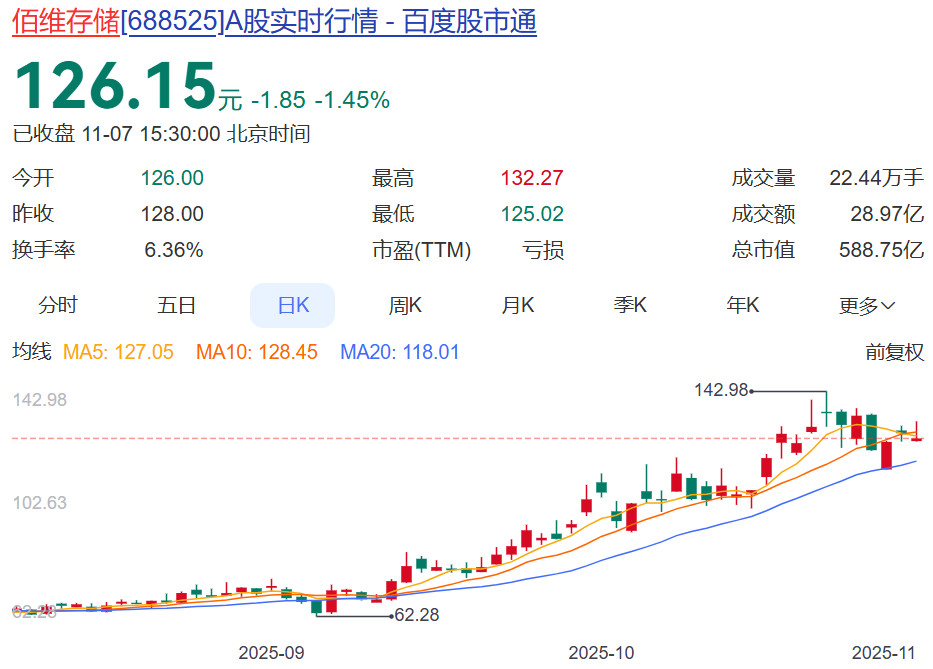
Core Viewpoint - The storage chip industry remains vibrant, with Baiwei Storage (688525.SH) pursuing a listing on the Hong Kong Stock Exchange after nearly three years on the A-share Sci-Tech Innovation Board, amid a significant surge in its stock price and market value [1][3]. Company Overview - Baiwei Storage is the only independent storage solution provider globally with wafer-level packaging capabilities, experiencing a stock price increase of approximately 110% in 2023, with a market value exceeding 60 billion RMB [1]. - The company was founded by Sun Rixin, who transitioned from a government job to entrepreneurship in the 1990s, establishing partnerships with major semiconductor manufacturers like Intel and Micron [3][4]. - The company underwent a generational leadership transition, with Sun Chengsi, the second-generation leader, taking over as chairman and executive director, controlling 24.74% of the voting rights [4]. Financial Performance - Baiwei Storage's revenue grew from 2.986 billion RMB in 2022 to an estimated 6.695 billion RMB in 2024, but its net profit has fluctuated significantly, with a profit of 71.22 million RMB in 2022, a loss of 630.87 million RMB in 2023, and a projected profit of 135.24 million RMB in 2024 [5][6]. - The company's gross margin has also shown volatility, reflecting the cyclical nature of the storage chip industry, with DRAM and NAND Flash product prices dropping over 50% year-on-year in 2023 [6][7]. Market Challenges - The company faces challenges due to the cyclical nature of the storage chip industry, which has led to significant fluctuations in financial performance and cash flow, with net outflows reported in 2022, 2023, and the first half of 2025 [7]. - Baiwei Storage's customer and supplier concentration is high, with the top five customers accounting for 47.3% of revenue and the largest customer representing 12.6%, while the top five suppliers account for 65.6% of purchases [7].
【研选行业+公司】五矿入主锂盐产能跃升5倍,钾锂双龙头价值正待重估
第一财经· 2025-11-07 12:41
Group 1 - The article emphasizes the importance of timely and insightful research reports to identify investment opportunities, particularly in the context of the rapidly evolving AI and semiconductor markets [1] - The global storage chip market is experiencing a structural supply-demand imbalance due to the continuous explosion of AI demand, with a strong investment outlook for this sector [1] - The stock of Xiangnong Chip Innovation has seen a significant increase, with a maximum rise of over 360% following multiple alerts to investors [1] Group 2 - The value of the "dual leaders" in potassium and lithium is expected to be reassessed, with the potential increase in lithium salt production capacity from 40,000 tons to 200,000 tons after the acquisition by Wenkang [2] - The industry is accelerating due to dual drivers of policy and technology, with the satellite internet computing power scheduling space potentially reaching hundreds of billions, prompting institutions to identify beneficiaries of "computing power in space" [2]

沪指重回4000点!
Sou Hu Cai Jing· 2025-11-07 11:53
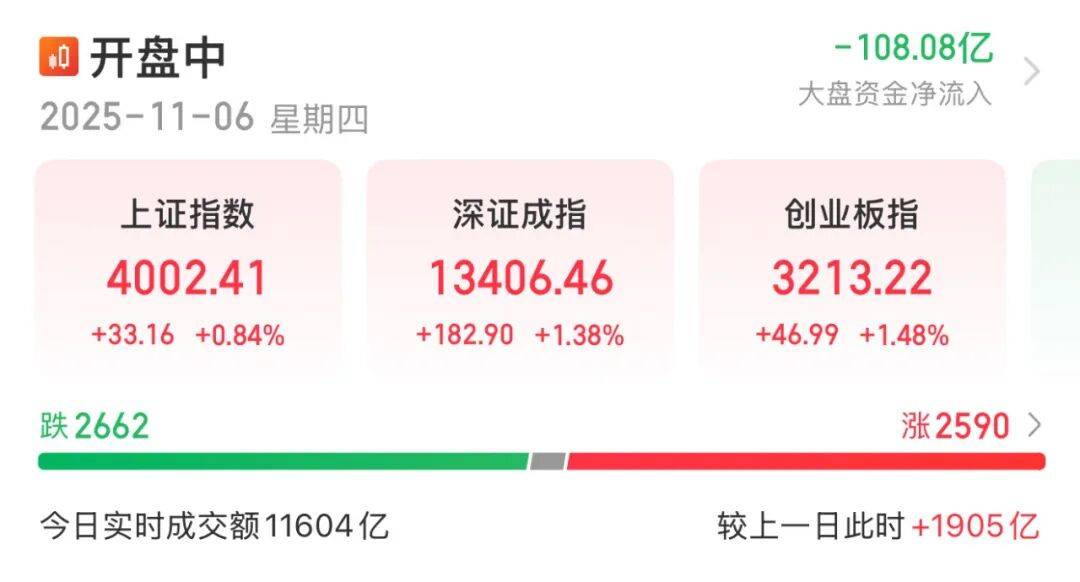
Market Performance - On November 6, the A-share market opened high and continued to rise, with the Shanghai Composite Index breaking through the 4000-point mark again, marking the fourth occurrence of this level recently [1] - The ChiNext Index and Shenzhen Component Index both increased by over 1%, with the phosphate chemical, insurance, and storage chip sectors leading the gains [1] Market Outlook - Zhongyuan Securities predicts that the market will enter a window period lacking clear directional catalysts, expecting the A-share market to likely exhibit a sideways consolidation pattern in November, preparing for a potential index-level rally by year-end [3] - A rebalancing trend in market styles is anticipated, with attention on the rotation between growth and value styles, as well as large-cap and small-cap styles [3]
再造一个HBM!
半导体芯闻· 2025-11-07 10:24
Core Insights - The storage market is experiencing a rare supply-demand imbalance, driven by increased capital expenditure from cloud giants and rising AI demand, leading to memory shortages and significant price increases for both DRAM and NAND flash [2][3] - High Bandwidth Flash (HBF) is emerging as a new technology concept that could elevate NAND flash to a core asset in the AI era, similar to how High Bandwidth Memory (HBM) has transformed DRAM [2][3][4] Group 1: HBF Technology Development - HBF is a NAND version of high bandwidth memory technology, connecting 16-layer NAND stacks to logic chips and then to GPUs via multi-channel high bandwidth connections [3][4] - The architecture of HBF aims to balance performance and cost, matching HBM's bandwidth while providing 8 to 16 times the storage capacity at a similar cost [4][5] - The HBF ecosystem is beginning to take shape, with various industry players showing interest and starting to develop this technology [4][5] Group 2: Industry Players and Strategies - SK Hynix has launched the "AIN Family" product lineup, which includes HBF technology, aiming to meet the rapidly growing demand for NAND storage products in the AI inference market [5][6] - SanDisk is aggressively pushing HBF technology, planning to provide samples by mid-2026 and formal products by early 2027, showcasing strong confidence in its technological prospects [10][12] - Kioxia is taking a pragmatic approach by exploring multiple technical paths for HBF, which allows it to leverage partnerships while developing differentiated solutions [13][15] Group 3: Competitive Landscape - Samsung is cautiously entering the HBF space, focusing on early concept designs without a clear timeline for product release, reflecting a more conservative strategy compared to its competitors [16][17] - The competition among SK Hynix, SanDisk, Kioxia, and Samsung will shape the emerging HBF market, with each company adopting different strategies to establish their positions [19] - The transition of NAND from a low-cost storage solution to a high-value core component is underway, driven by AI demands and the evolution of memory architecture [19]
天奥电子(002935.SZ):公司存储芯片业务主要应用于国防军工等特定领域
Ge Long Hui· 2025-11-07 08:12
Group 1 - The core viewpoint of the article is that Tianao Electronics (002935.SZ) has reported positive momentum in its storage chip business, which is primarily applied in specific fields such as national defense and military [1] Group 2 - The storage chip business of the company is focused on specialized applications, indicating a niche market strategy [1] - The company is actively engaging with investors through interactive platforms to communicate its business developments [1]

突发利空!2700亿潮玩一哥跳水,股价自历史高点已跌近40%!当前是否值得投资?股民吵起来了...
雪球· 2025-11-07 08:05
Market Overview - The market experienced fluctuations with all three major indices retreating after initial gains, with the Shanghai Composite Index down 0.25%, the Shenzhen Component down 0.36%, and the ChiNext Index down 0.51% [2] - The total trading volume in the Shanghai and Shenzhen markets was 2 trillion yuan, a decrease of 56.2 billion yuan compared to the previous trading day, with over 3,100 stocks declining [3] Sector Performance - Sectors such as organic silicon, fluorine chemicals, phosphorus chemicals, and batteries saw significant gains, while AI models and software development sectors faced notable declines [4] Company Spotlight: Pop Mart - Pop Mart's stock fell over 5%, reaching a new low since the recent adjustment, with a market capitalization of 274.7 billion HKD, marking a 40% drop from its historical peak [7][10] - The controversy arose from a live-stream incident where staff questioned the pricing of a product, leading to public backlash and trending discussions on social media [10] - Despite the controversy, Pop Mart reported a 245% year-on-year increase in overall revenue for Q3, and analysts remain optimistic about its long-term value, especially with the upcoming holiday sales season [11] Investor Sentiment on Pop Mart - Investor opinions on Pop Mart are divided, with some expressing skepticism about its ability to sustain high valuations given its current revenue and profit levels [12] - Others argue that Pop Mart's business model, which targets consumers less concerned with price, remains strong, suggesting that the recent stock drop is more driven by market sentiment than fundamentals [12] - The potential success of Pop Mart's international strategy is seen as a key factor in determining its future valuation [13] Semiconductor Sector - The storage chip sector showed signs of activity, with companies like Demingli reaching historical highs, driven by tight supply and demand dynamics [14][18] - SK Hynix's negotiations with Nvidia for HBM4 supply indicate a price increase of over 10% compared to previous expectations, with DDR5 spot prices rising by 25% [18] Organic Silicon Sector - The organic silicon sector has been on a strong upward trend, with significant gains in stock prices, particularly for companies like Dongyue Silicon Material [19][20] - The demand for organic silicon is projected to grow significantly, with consumption expected to rise from 1.062 million tons in 2019 to 1.816 million tons by 2024, reflecting a compound annual growth rate of 11.3% [23]

存储成本暴涨数万元,AI服务器客户不怕涨价怕没货
雷峰网· 2025-11-07 06:31
Core Viewpoint - The storage market is experiencing significant price fluctuations driven by the demand from the AI industry, leading to a complex interplay of supply and demand dynamics [1][2][4]. Group 1: Price Dynamics - The storage market has seen a phenomenon of "daily price changes," with distributors adjusting prices frequently due to market volatility [1]. - Major players like SanDisk and Micron have announced price increases for NAND Flash and DDR products, with potential hikes reaching 30% [2][3]. - The price of DDR4 memory has surged dramatically, with reports indicating increases of up to 1.5 times, reflecting a scarcity premium as it approaches obsolescence [11][12]. Group 2: Demand and Supply Factors - The AI industry's expansion is driving an exponential increase in storage demand, with AI servers requiring significantly more DRAM and NAND compared to traditional servers [4][5]. - The construction of data centers in the U.S. has surged, with investments exceeding $40 billion, indicating a strong correlation between AI demand and storage market growth [5][6]. - A self-reinforcing cycle of demand is emerging, where expectations of price increases lead to strategic stockpiling by buyers, further tightening supply [2][6]. Group 3: Market Structure and Future Outlook - The current supply adjustments by major manufacturers are lagging behind the rapid demand growth, creating a "capacity gap" between old and new generation products [8][10]. - The storage market is expected to exceed $200 billion by 2025, with AI demand contributing over 40% of this growth [7][21]. - The market is in a "seller's cycle," with manufacturers controlling supply to maintain high prices, which is expected to continue until at least the end of 2026 [21][24]. Group 4: Impact on AI Server Market - AI server manufacturers face rising costs due to increased storage prices, but demand remains strong as hardware configurations are rigid and cannot be compromised [15][19]. - The cost of AI training servers is projected to rise by 3% to 5% due to storage price increases, but this has not deterred buyers from purchasing [16][19]. - The pricing mechanism in the industry is shifting, with contracts now being negotiated on a more frequent basis due to price volatility [18][19]. Group 5: Key Signals for Market Turning Point - The storage market's turning point may hinge on two key signals: the pace of AI capital investment in North America and the supply situation from manufacturers [22][24]. - Current market conditions suggest that unless there is a significant increase in production capacity or a slowdown in demand, prices are likely to remain elevated [22][24].