潮玩

Search documents
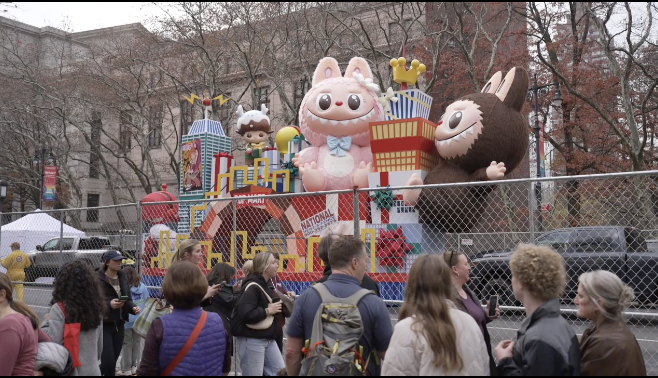
Labubu首现美国感恩节游行,北美成中国潮玩IP出海新热门
Di Yi Cai Jing· 2025-11-29 02:19
Core Viewpoint - The future potential of China's new consumption sector relies on the ability to create new IPs, continuously resonate with consumers, and expand internationally [1][4]. Group 1: Market Overview - The global toy market is projected to grow from 8.7 billion yuan in 2015 to 44.8 billion yuan by 2024, with a compound annual growth rate (CAGR) of nearly 23% [3]. - North America, Europe, and China are currently the top three markets for toys, with emerging markets in Southeast Asia and Eastern Europe also experiencing rapid growth [3]. Group 2: International Expansion - Numerous Chinese new consumption companies, including Miniso, Luckin Coffee, and Heytea, are entering overseas markets to seek higher profit margins [3]. - Pop Mart's toy brand TOP TOY is accelerating its overseas store openings [3]. Group 3: Insights from Industry Experts - Keywise's fund manager Xu Tao noted that successful toy IP companies can stand out in international markets due to their creativity, global influence, penetration, and marketing capabilities [4]. - Xu emphasized that the future growth of China's new consumption sector will depend on the ability to create new IPs and resonate with consumers, with North America being a key focus for expansion [4]. Group 4: U.S. Market Potential - Pop Mart's COO, Si De, highlighted the large and strong purchasing power of the U.S. market, along with a high demand for IP design and related products [5]. - The U.S. retail environment is mature, providing a solid foundation for retail talent and shopping center systems, although the pace of product updates and creative design may not match China's efficiency [5]. - Si De mentioned that the company has spent two years building a capable team to navigate the U.S. retail landscape, leading to rapid growth since last year [5].


【图解】权威解读:3个万亿级和10个千亿级消费热点有哪些?
Zhong Guo Jing Ji Wang· 2025-11-29 01:34
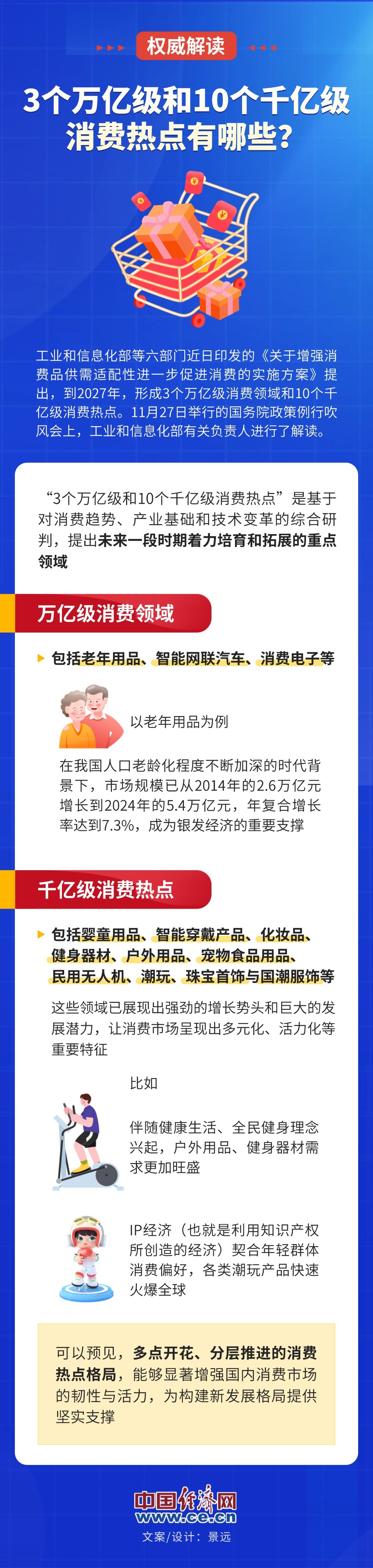
Core Insights - The implementation plan by six departments, including the Ministry of Industry and Information Technology, aims to establish three trillion-level consumption sectors and ten hundred-billion-level consumption hotspots by 2027, based on comprehensive analysis of consumption trends, industrial foundations, and technological changes [3][4]. Trillion-Level Consumption Sectors - The three trillion-level consumption sectors identified include elderly products, smart connected vehicles, and consumer electronics. For instance, the market size for elderly products has grown from 2.6 trillion yuan in 2014 to an expected 5.4 trillion yuan by 2024, reflecting a compound annual growth rate of 7.3%, highlighting the significance of the silver economy [4]. Hundred-Billion-Level Consumption Hotspots - The ten hundred-billion-level consumption hotspots encompass a diverse range of products, including baby products, smart wearable devices, cosmetics, fitness equipment, outdoor goods, pet food, civilian drones, trendy toys, jewelry, and national trend clothing. These sectors are showing strong growth momentum and significant development potential, contributing to a diversified and vibrant consumer market [4][6]. Emerging Trends - The rise of health-conscious living and the concept of national fitness are driving increased demand for outdoor products and fitness equipment [6]. - The IP economy, which leverages intellectual property to create economic value, aligns with the consumption preferences of younger demographics, leading to a rapid global popularity of trendy toy products [8]. Market Resilience - The multi-faceted and layered approach to consumption hotspots is expected to significantly enhance the resilience and vitality of the domestic consumer market, providing solid support for the construction of a new development pattern [8].
打直球、说真话,从路演问答“灵魂拷问”隐现IP孵化真章
2 1 Shi Ji Jing Ji Bao Dao· 2025-11-29 00:20
Core Insights - The article discusses the challenges and opportunities in the Chinese cultural IP (Intellectual Property) industry, particularly during a recent roadshow event where startups faced tough questions from investors about their business models and market positioning [1][2][3] Industry Overview - The market size of China's cultural IP industry is projected to exceed 2.3 trillion yuan in 2024 and is expected to surpass 2.5 trillion yuan in 2025, indicating significant growth potential [1] - The event featured nearly 10 startup teams presenting projects across various segments, including animation, film, trendy toys, and theme parks, showcasing a diverse range of business models [1] Market Trends - There is a growing demand for cultural products that go beyond superficial representations of traditional culture, with a need for deeper storytelling that resonates with modern consumers [2][3] - Successful cultural IPs are characterized by their ability to extract and refine elements of national, regional, and historical culture, creating narratives that connect with audiences [2] Investment Insights - Investors emphasized the importance of focusing on core business models and avoiding overly complex strategies, suggesting that startups should concentrate on their primary monetization paths [4] - The example of Pop Mart, which took over a decade to develop its brand before expanding, was cited as a model for startups to follow in terms of building long-term value [4] Technology Integration - The integration of technology, such as AI and XR (Extended Reality), is reshaping the creative landscape, prompting discussions on how to maintain the essence of artistic works while leveraging technological advancements [3] - Companies are encouraged to ensure that technology serves the storytelling aspect of their projects rather than overshadowing it [3] Case Studies - The "Ice and Snow Guardian Alliance" project from Harbin aims to incorporate local minority cultures into its narrative but was advised to delve deeper into cultural exploration [2] - The "Suanmiao" building block product from Beijing's Qiaohuan Suanmiao Cultural Technology Co., Ltd. has achieved a stable repurchase rate of 50% to 60%, indicating strong market acceptance and potential for educational integration [5]
行稳致远 |《资本周期》读后感
Xin Lang Cai Jing· 2025-11-28 13:36
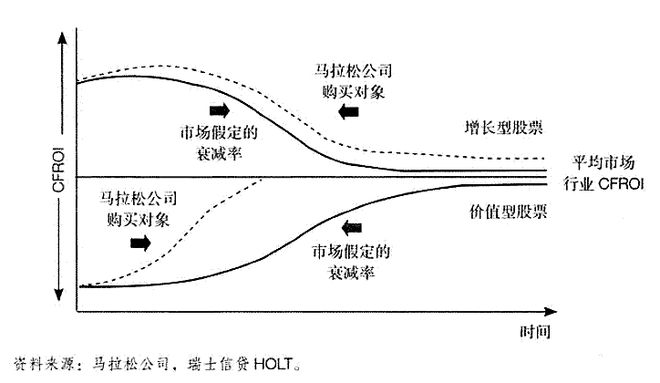
Core Viewpoint - Marathon Capital focuses on two types of investment opportunities: "sustained advantage" (growth type) and "turnaround" (value type) companies, utilizing a framework called "return decay rate" to identify these investments [1][6]. Group 1: Investment Type A - Sustained Advantage - Investment Type A refers to companies that can maintain returns above market expectations for an extended period, often mispriced by the market due to short-term issues [3][6]. - A notable example is Apple during the period from 2014 to 2016, where its stock was undervalued due to temporary performance declines following Steve Jobs' death, leading to significant long-term gains for investors like Warren Buffett [3][6]. Group 2: Investment Type B - Turnaround - Investment Type B consists of companies in traditional industries that are overlooked by the market but possess certain advantages, with returns improving faster than general market expectations [6]. - The turnaround often occurs during periods of extreme pessimism, where market consolidation or the exit of weaker competitors creates favorable conditions for the remaining companies [6]. Group 3: Investment Patience and Timing - Successful investments require patience, as the majority of the time is spent waiting for the company to deliver strong performance, with the actual realization of returns being a small fraction of the investment period [10][14]. - The case of Pop Mart illustrates that the best buying opportunities often arise during periods of short-term performance decline and market pessimism, as seen when its stock price fell significantly in 2022 [10][12]. Group 4: Historical Investment Examples - The investment journey of Pop Mart shows that despite an 80% decline in stock price over two years, a subsequent recovery led to a fivefold return after holding for over four years [9][10]. - Warren Buffett's investment in BYD, where he bought shares at HKD 8 and saw a tenfold increase within a year, exemplifies the potential for significant returns despite long periods of underperformance [13][14].
贪玩十周年新征程:构建“经典+艺术家”IP体系,潮玩业务迎来战略升级
Zhi Tong Cai Jing· 2025-11-28 13:05
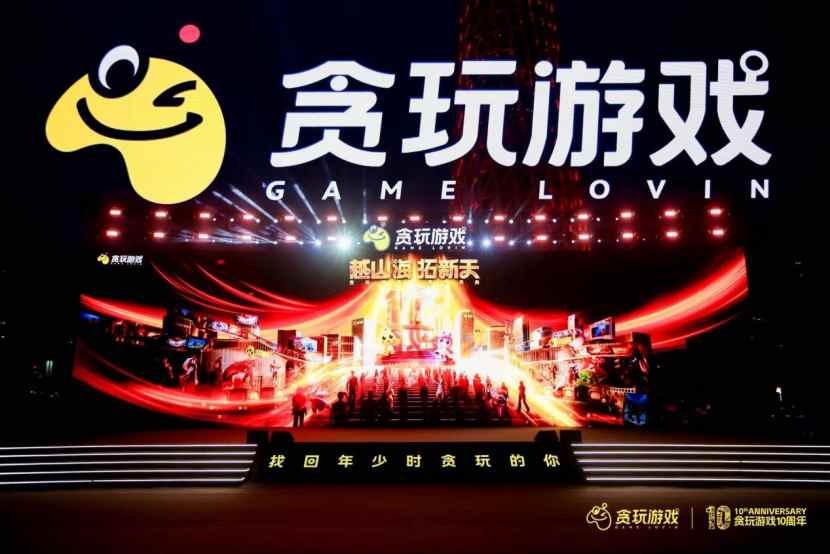
Core Insights - The company celebrates its tenth anniversary, marking a significant milestone in its development journey and showcasing its commitment to building a pan-entertainment ecosystem driven by "AI + Gaming," "Globalization of IP Products," and "Gaming + Trendy Toys" strategies [1][2] Strategic Developments - The company held a grand anniversary celebration themed "Crossing Mountains and Seas, Expanding New Horizons" in Guangzhou, highlighting key milestones from its inception to product launches and international expansion [1] - The founder expressed gratitude towards industry partners and employees, emphasizing the importance of innovation, player-centric approaches, and technology-driven strategies for future growth [2] Partnerships and Collaborations - The company signed a cooperation agreement with COEXIST Group to develop and promote derivative products with over 200 trendy toy artists, marking a significant step in expanding its trendy toy business [2][4] - A licensing agreement was established with Chengdu Model Cafe Cultural Communication Co., Ltd. for exclusive distribution rights of "The Garfield Movie" IP derivatives in Greater China, enhancing the company's market presence [3] Product Development and Ecosystem - The company is focusing on a comprehensive upgrade of its trendy toy business, launching new products like "CASHY BABY" and planning to introduce the first crystal element trendy toy IP "LILIA ANGEL" [3] - The establishment of a "Classic IP + Artist IP" system aims to diversify creative development and enhance the IP lifecycle through a virtual-to-physical value enhancement system [5] Consumer Engagement Strategies - The company emphasizes "Emotional Interaction Design" and "Scene Social Experience" as core strategies to reshape consumer engagement, aiming to make trendy toys emotional mediums that resonate with users [6][7] - The strategy includes deep integration of digital technology and artistic creation, exploring interactive experiences and community-driven content creation [6][7] Future Outlook - The company plans to deepen its user-centric IP ecosystem strategy, leveraging its strengths in digital technology and marketing to promote its trendy toy business [7] - By combining the influence of international classic IPs, the artistic value of artist IPs, and its core competencies, the company aims to provide emotionally resonant and culturally rich IP derivative experiences [7]
新消费行业框架分析:星星之火,灿若星辰
China Post Securities· 2025-11-28 12:45
Investment Rating - The report maintains a strong buy rating for the new consumption industry [3] Core Insights - New consumption is characterized by new demand from emerging consumer groups like Generation Z and a shift from leverage-driven consumption to income-driven consumption among older demographics [5][17] - The supply side benefits from China's robust manufacturing capabilities and the internet's ability to reshape business models and efficiency [5][17] - The report highlights two main investment opportunities: aggressive new consumption sectors such as trendy toys and gold jewelry, and defensive cyclical sectors like liquor and travel [5][4] Summary by Sections New Consumption: What is New Consumption? - New consumption has gained traction in recent years, initially a term from the primary market, now widely recognized [17] - It encompasses both new demand from younger consumers and a shift in older consumers' preferences towards more rational spending [17][21] New Demand: Stars Gather to Form Light - Emotional consumption and the rise of national trends are significant drivers, with luxury attributes associated with products [46] - The report identifies key sectors: IP toys, gold jewelry, and new tea drinks, which align with current consumer trends [5][4] New Supply: Old Trees Sprout New Buds - The report emphasizes that industries with easier pathways develop first, while more challenging sectors follow as technology and information improve [33] - It discusses the efficiency gains in retail and service sectors through standardization and technological advancements [33] Investment Recommendations - The report suggests focusing on two types of opportunities: aggressive new consumption sectors (e.g., trendy toys, gold jewelry) and defensive cyclical sectors (e.g., liquor, travel) [5][4] - Specific companies to watch include Pop Mart, Mijia, and various tea brands [5][4] Emotional Consumption and National Trends - Generation Z's emotional consumption is highlighted, with a significant portion willing to pay for emotional value [21][23] - The report notes the increasing acceptance of Chinese brands among younger consumers, contrasting with older generations' preferences [21][22] Gold Jewelry Market - The gold jewelry market is projected to grow significantly, with ancient gold jewelry gaining popularity due to its cultural significance [86][87] - The market size for ancient gold jewelry is expected to reach 4,214 billion by 2028, with a compound annual growth rate of 21.8% [86][87] IP Toy Market - The report outlines the rapid growth of the IP toy market, with a projected market size of 1,741 billion by 2024, reflecting a compound annual growth rate of 13.6% [69][70] - The emotional value associated with IP toys is a key driver of consumer interest and market expansion [78][79]

泡泡玛特(09992):跨区域+扩IP,支撑长线运营:泡泡玛特(09992):
Shenwan Hongyuan Securities· 2025-11-28 12:10
Investment Rating - The report maintains a "Buy" rating for the company, indicating a positive outlook for its stock performance relative to the market benchmark [4][7]. Core Insights - The company is focusing on cross-regional expansion and IP development to support long-term operations, with a significant increase in revenue and net profit projected over the next few years [7]. - The company has successfully expanded its overseas retail presence, with 171 stores globally, and is well-positioned to meet growing demand from international markets [7]. - The report highlights the company's strong brand power and competitive advantages in IP design, operation, and supply chain management, which are expected to sustain long-term value creation [7]. Financial Data and Profit Forecast - Revenue projections show a substantial increase from RMB 6.301 billion in 2023 to RMB 66.946 billion by 2027, with a compound annual growth rate (CAGR) of approximately 27% [5][8]. - Net profit is expected to grow from RMB 1.184 billion in 2023 to RMB 23.569 billion in 2027, reflecting a CAGR of around 28% [5][8]. - The report anticipates a significant rise in earnings per share (EPS), from RMB 0.88 in 2023 to RMB 17.55 in 2027, indicating strong profitability growth [5][8].
泡泡玛特(09992):跨区域+扩IP,支撑长线运营
Shenwan Hongyuan Securities· 2025-11-28 10:15
Investment Rating - The report maintains a "Buy" rating for the company [1] Core Insights - The company is expanding its global presence and IP portfolio, which supports long-term operations. The retail store expansion is expected to activate new user demand in various regions [9] - The company has demonstrated strong IP operation capabilities, maintaining fan engagement through product innovation and iteration. The overall brand strength has significantly improved [9] - The long-term business model is viewed positively, with competitive advantages in IP design, operation, and supply chain management [9] - Revenue and profit forecasts have been revised upwards for 2025-2027, reflecting confidence in the company's growth trajectory [9] Financial Data and Profit Forecast - Revenue projections for 2023 to 2027 are as follows: - 2023: 6,301 million RMB - 2024: 13,038 million RMB - 2025E: 38,865 million RMB - 2026E: 52,738 million RMB - 2027E: 66,946 million RMB - Net profit projections for the same period are: - 2023: 1,184 million RMB - 2024: 3,220 million RMB - 2025E: 13,648 million RMB - 2026E: 18,429 million RMB - 2027E: 23,569 million RMB - The company expects significant growth rates, with net profit growth rates reaching 324% in 2025 [7][10]
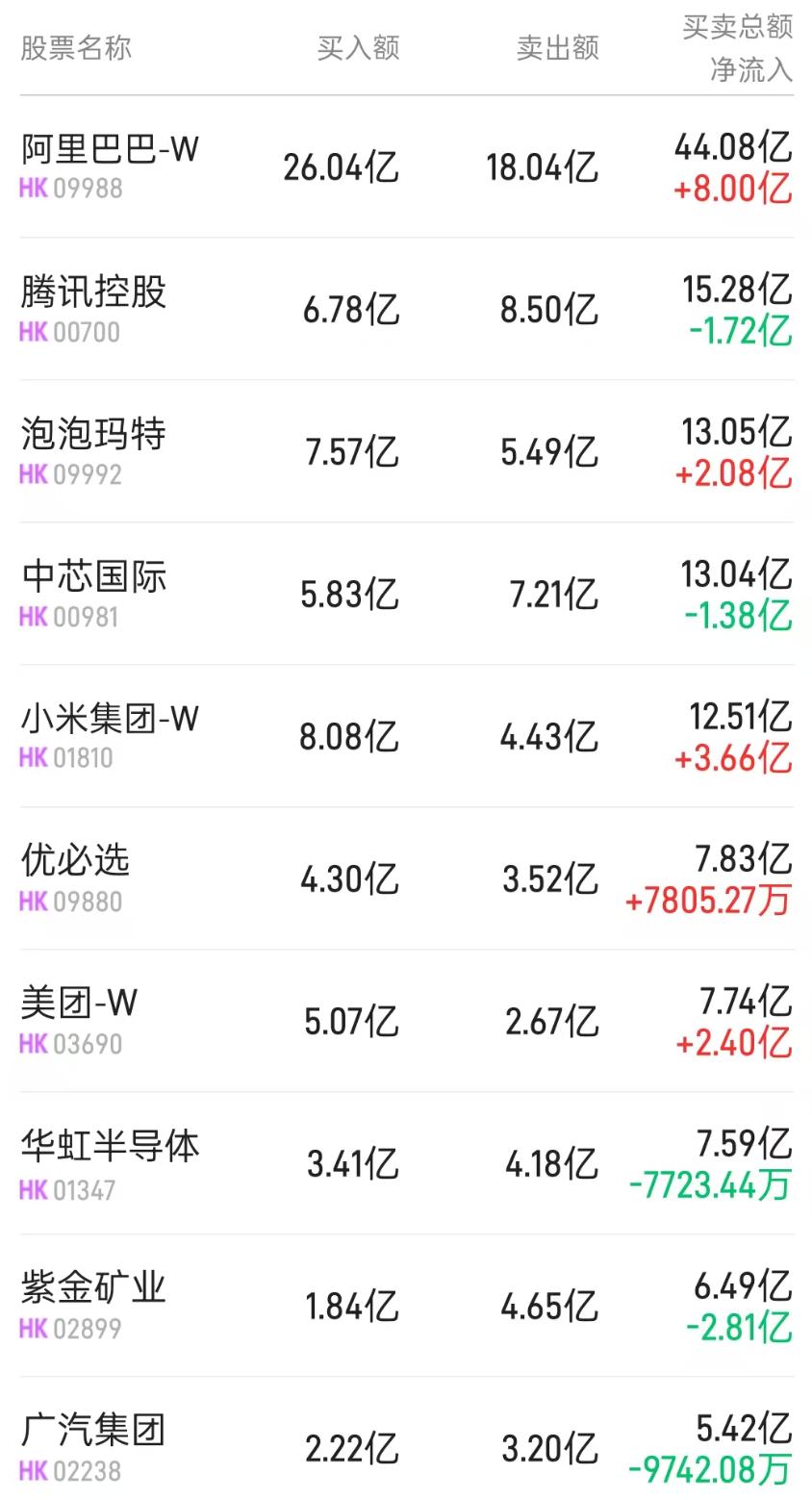
北水动向|北水成交净买入27.27亿 阿里(09988)再获加仓 广汽集团(02238)暴涨后遭抛售
智通财经网· 2025-11-28 10:07
Core Viewpoint - The Hong Kong stock market saw significant net inflows from northbound trading, totaling HKD 27.27 billion on November 28, with notable net purchases in stocks like Alibaba, Pop Mart, and Xiaomi [1][2]. Group 1: Northbound Trading Activity - Northbound trading through Stock Connect recorded a net purchase of HKD 27.27 billion, with HKD 9.33 billion from the Shanghai Stock Connect and HKD 17.94 billion from the Shenzhen Stock Connect [1]. - The most purchased stocks included Alibaba-W (09988) with a net inflow of HKD 10.94 billion, Pop Mart (09992) with HKD 5.49 billion, and Xiaomi Group-W (01810) with HKD 4.7 billion [4][5]. Group 2: Individual Stock Performance - Alibaba-W (09988) had a total trading volume of HKD 44.08 billion, with a net inflow of HKD 8 billion, driven by the launch of its new AI product, Quark AI Glasses S1 [2][4]. - Pop Mart (09992) benefited from government initiatives to promote consumer goods, resulting in a net inflow of HKD 2.08 billion [5]. - Xiaomi Group-W (01810) saw a net inflow of HKD 3.66 billion, supported by its recent share buyback program totaling over HKD 12 billion this month [5]. - Other notable stocks included Meituan-W (03690) and Tencent Holdings (00700), which received net inflows of HKD 4.7 billion and HKD 2.62 billion, respectively [6]. Group 3: Net Sell-offs - The stocks with the highest net sell-offs included Semiconductor Manufacturing International Corporation (00981) and Zijin Mining (02899), with net outflows of HKD 3 billion and HKD 2.81 billion, respectively [6]. - The semiconductor sector continues to face selling pressure, as evidenced by the net sell-off of Huahong Semiconductor (01347) amounting to HKD 1.23 billion [6].



贪玩(09890)十周年新征程:构建“经典+艺术家”IP体系,潮玩业务迎来战略升级
智通财经网· 2025-11-28 10:07
Core Insights - The article highlights the 10th anniversary of Tanwan (贪玩), showcasing its strategic initiatives in "AI + Gaming," "Globalization of IP Products," and "Gaming + Trendy Toys" to build a pan-entertainment ecosystem [1][5][12] Group 1: Company Milestones and Achievements - Tanwan celebrated its 10th anniversary with a grand event in Guangzhou, marking significant milestones from its inception to product launches and international expansion [1] - The company has established itself as a leader in marketing within the gaming industry, creating notable marketing campaigns over the past decade [3] - Tanwan's founder expressed gratitude towards industry partners and employees, emphasizing the importance of collaboration and innovation for future growth [5] Group 2: Strategic Partnerships and Collaborations - On November 27, Tanwan signed a cooperation agreement with COEXIST Group to develop and promote derivative art products with over 200 artists [7] - This partnership signifies Tanwan's expansion into the trendy toy industry, integrating classic IP with artist IP to enhance its business ecosystem [9] Group 3: Product Development and Market Expansion - Tanwan is set to upgrade its trendy toy business strategy by 2025, focusing on the globalization of IP products and the integration of gaming with trendy toys [8] - The company has launched new products, including the plush toy "CASHY BABY" and plans for the crystal-themed trendy toy IP "LILIA ANGEL," building a comprehensive trendy toy IP ecosystem [8] - A licensing agreement with Chengdu Model Coffee Culture Communication Co., Ltd. allows Tanwan to operate derivative products of the "Garfield Movie" IP in Greater China, leveraging its global popularity [8] Group 4: Emotional and Social Engagement Strategies - Tanwan's trendy toy strategy emphasizes "emotional interaction design" and "scene social experience," aiming to transform trendy toys into emotional mediums that enhance daily life [11][12] - The company plans to integrate digital technology with artistic creation to foster deeper emotional connections and interactive experiences for users [11] - Tanwan aims to create a seamless trendy toy ecosystem that integrates into the daily lives of consumers through online and offline collaborations [12] Group 5: Future Vision and Market Positioning - The company is committed to deepening its user-centric IP ecosystem strategy, expanding the breadth and depth of its trendy toy business [12] - By combining the influence of international classic IPs, the artistic value of artist IPs, and its core competencies in digital technology and marketing, Tanwan seeks to provide emotionally resonant and culturally rich IP experiences [12]