
石化

Search documents
LyondellBasell(LYB) - 2025 Q2 - Earnings Call Transcript
2025-08-01 16:00
Financial Data and Key Metrics Changes - Earnings per share for Q2 2025 were $0.62, with EBITDA reported at $715 million, showing sequential improvement due to less downtime and lower feedstock costs [14][21] - Cash returns to shareholders exceeded $500 million, with an increase in ordinary dividends and continued share repurchases [14][20] - The company is targeting approximately $200 million in reductions in working capital for 2025, alongside fixed cost reductions of $200 million [11][12] Business Line Data and Key Metrics Changes - The Olefins and Polyolefins Americas segment generated EBITDA of $318 million, a more than 25% improvement from Q1, attributed to higher integrated polyethylene margins and less downtime [22] - The Intermediates and Derivatives segment reported EBITDA of $290 million, an increase of $79 million, driven by improved margins for styrene and propylene oxide [27] - The Advanced Polymer Solutions segment maintained EBITDA at $40 million, despite challenges in automotive markets and a slight decline in volumes [30] Market Data and Key Metrics Changes - North American polyethylene industry saw domestic sales rebound to the highest volumes since 2022, with producer inventories declining by three days of sales during Q2 [23][35] - In Europe, lower naphtha and LPG feedstock costs improved margins, while capacity rationalizations are enhancing supply-demand balances [25][36] - In Asia, near-term capacity additions are pressuring regional supply-demand balances, but there is cautious optimism regarding China's stimulus programs [36] Company Strategy and Development Direction - The company is focusing on growing and upgrading core businesses, with a strategic emphasis on low-cost feedstocks in North America and the Middle East, and increasing access to circular and renewable feedstocks in Europe [6][8] - The planned sale of European assets is expected to reduce recurring CapEx and other costs, aligning with the strategy to optimize the portfolio [41] - The company is delaying selected growth investments until market conditions improve, preserving options for profitable growth [12][13] Management's Comments on Operating Environment and Future Outlook - Management expressed confidence in navigating the current cycle, emphasizing a disciplined approach to capital allocation and cash management [55][39] - The company anticipates improved cash flow generation in the second half of 2025, with a target of achieving 80% cash conversion for the full year [68] - There is cautious optimism regarding potential price increases in polyethylene due to improved domestic demand and low global inventories [48][72] Other Important Information - The company is on track to achieve a run rate of $600 million in incremental cash flow for 2025, exceeding the original target of $500 million [12][38] - The construction of the Muretic One chemical recycling plant in Germany is progressing well, aimed at meeting the demand for circular plastics [9][17] - The company is closely monitoring evolving tariffs and global trade flows, evaluating risks and opportunities presented by these dynamics [38] Q&A Session Summary Question: Sequential lift in O and P Americas and potential price increases - Management expects an $85 million improvement in Q3 due to less downtime and improved olefins margins, with potential for price increases if tariff uncertainties are resolved [44][45][48] Question: Safety of dividends amid cash flow challenges - The company confirmed the Q3 dividend of $1.37 per share, emphasizing strong liquidity and a commitment to maintaining dividends while managing cash flow [51][54] Question: Clarification on 2026 CapEx forecast - The 2026 CapEx forecast of $1.4 billion does not include the potential benefit from the European asset sale, which will be realized post-transaction [57][60] Question: Expectations for cash flow generation in 2025 - Management anticipates improved cash flow generation in the second half of 2025, with a target of $3 billion in EBITDA, driven by disciplined working capital management [64][68] Question: Dynamics in the Intermediates and Derivatives segment - The segment is expected to remain relatively flat in Q3, with no material improvements anticipated due to market conditions and scheduled turnarounds [78][82]

东华能源:2025年第四次临时股东大会决议公告
Zheng Quan Ri Bao· 2025-08-01 13:09
Group 1 - The company announced the approval of several resolutions during the fourth extraordinary general meeting of shareholders for 2025, including the election of non-independent directors and independent directors for the seventh board of directors [2] - The meeting also addressed the proposal regarding the remuneration of directors [2]


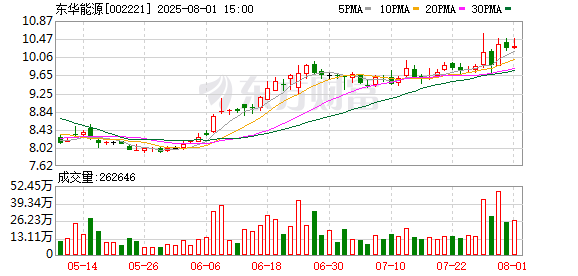
关税重磅!A股调整何时结束?
天天基金网· 2025-08-01 12:01
Core Viewpoint - The A-share market is experiencing a collective adjustment, but individual stocks are showing a mixed performance with sectors like traditional Chinese medicine, photovoltaic, and software leading the gains. Analysts remain optimistic about the medium to long-term upward trend despite short-term technical adjustments [1][3][5]. Group 1: Market Performance - The A-share market indices are undergoing a collective pullback, with a trading volume of 1.6 trillion yuan. Despite this, individual stocks are predominantly rising, particularly in the traditional Chinese medicine, photovoltaic, and software sectors [3][5]. - The recent adjustments are attributed to new U.S. tariff policies causing declines in the Asia-Pacific stock markets and uncertainties surrounding the U.S.-China trade agreement extension [4][6]. Group 2: Tariff Impact - The new tariffs imposed by the U.S. are raising concerns about potential economic slowdown and inflation, overshadowing previous optimism surrounding AI and large tech stocks [6][10]. - The 90-day pause in U.S.-China tariffs is set to end on August 12, which could lead to a temporary outflow of foreign capital if tariffs are reinstated. However, the market has partially priced in these expectations, and medium to long-term outlook remains positive due to domestic policy support [10][11]. Group 3: Adjustment Duration - Analysts suggest that the current adjustment phase may be a natural response to rapid price increases, with historical data indicating that significant adjustments often follow when indices reach certain thresholds, such as 3600 points [11][13]. - Historical patterns from previous bull markets in 2007 and 2015 show that significant adjustments occurred after reaching similar index levels, but ultimately led to new highs [13][14]. Group 4: Investment Strategy - The current market environment suggests a "slow bull" trend, with expectations for a gradual transition to a more stable trading phase as the market digests short-term profit-taking [18][20]. - Analysts recommend focusing on sectors that typically perform well in August, such as resources and military industries, with a particular emphasis on coal and petrochemical sectors in the first half of the month and larger-cap stocks in the latter half as earnings reports are released [21][25].

滨化股份筹划启动H股上市 双资本平台赋能绿色化工龙头跃迁
Zhong Guo Jin Rong Xin Xi Wang· 2025-08-01 08:09
Core Viewpoint - Shandong chemical leader Binhua Co., Ltd. plans to issue H-shares and list on the Hong Kong Stock Exchange, marking a strategic move to establish an "A+H" dual capital platform and enhance its global presence and competitiveness [1][5]. Industry Transformation - The global chemical industry is undergoing significant changes, with supply-demand mismatches, trade tensions, and geopolitical risks putting pressure on profits. However, long-term trends such as "green transformation," "domestic substitution," and "high-end industrialization" are creating strategic opportunities for structural shifts [1]. - The expansion of the new energy industry chain under the "dual carbon" strategy is generating new market opportunities within the chemical sector, making Binhua's timing for the Hong Kong listing particularly strategic [1]. Growth Drivers - Binhua Co., Ltd. reported strong growth in its Q1 2025 financial results, achieving revenue of 3.782 billion yuan, a significant year-on-year increase of 94.14%, primarily due to the production ramp-up of its carbon three and four projects. The net profit attributable to shareholders reached 95.9991 million yuan, reflecting a year-on-year growth of 225.75% [1]. - The company's net cash flow from operating activities surged by 8924.95% to 984 million yuan, indicating a marked improvement in cash flow management [1]. Technological Advancements - Continuous technological breakthroughs are laying the foundation for sustainable development. Binhua's newly developed processes for producing epoxy chloropropane and innovations in water resource utilization and energy-saving technologies have been recognized by industry associations [2]. - The successful production of qualified 6N-grade electronic-grade chlorine and the performance testing of a new alkaline water electrolysis hydrogen production system highlight the company's commitment to advancing in high-tech sectors [2]. Capital Strategy - The upcoming Hong Kong listing is expected to leverage international capital to accelerate Binhua's high-end and green industry layout, particularly in high-end chemical new materials and electronic chemicals [3]. Strategic Planning - Binhua has proposed the "Beikun Plan," which aims to establish a new green energy center in the northern coastal region of Binzhou, integrating renewable energy projects with biomass technology [4]. - The plan includes the development of six core industrial clusters, focusing on high-end new materials, deep processing of light hydrocarbons, electronic chemicals, and more, to promote cluster development in the Binzhou chemical industry [4]. - A strategic technology innovation system will guide industrial development, incorporating various initiatives to foster high-tech projects and support the creation of a zero-carbon industrial park [4].

政策发力稳增长,“反内卷”叠加推动行业结构优化
East Money Securities· 2025-08-01 07:07
Policy Overview - The new growth stabilization plan for key industries is set to be released, focusing on structural optimization and elimination of outdated capacity[1] - The previous plan (2023-2024) successfully achieved industrial added value growth targets across most key industries, with specific targets set for various sectors[3] Industry Performance - The power equipment sector aimed for an average annual growth rate of approximately 9%, while the non-ferrous metals sector had targets of 5.5% for both 2023 and 2024[3] - The automotive industry exceeded its 2023 target of 5% growth, achieving a 13% increase, while the non-ferrous metals sector grew by 7.5% in 2023 and 8.9% in 2024[3] Growth Targets and Achievements - Seven out of ten key industries met or exceeded their industrial added value growth targets, with the light industry achieving a growth rate of 3.4%, slightly below the target of 4%[3] - The construction materials sector fell short of its targets, with a decline of 0.5% in 2023 and 1.4% in 2024, against a target of 3.5% and 4% respectively[3] Future Expectations - The new growth stabilization plan is expected to be effective until 2026, likely maintaining industrial added value targets similar to the previous plan[4] - The upcoming policies may emphasize supply-side governance, balancing production efficiency with capacity optimization[7] Risks and Considerations - Potential risks include slower-than-expected economic recovery and uncertainties in external markets, which could impact the effectiveness of the growth stabilization policies[6] - The balance between production limits and sustainable profitability remains a critical concern, particularly in high-emission industries like steel[7]
国泰海通:石化行业积极推进反内卷 关注相关投资机会
智通财经网· 2025-08-01 06:25
Group 1 - The petrochemical industry is set to implement a stable growth work plan aimed at structural adjustment, supply optimization, and the elimination of outdated production capacity [1][2] - The National Development and Reform Commission and the Ministry of Industry and Information Technology are focusing on old petrochemical facilities that have reached their design lifespan or have been in operation for over 20 years, promoting their green, intelligent, and safe transformation [2][3] - Key petrochemical products such as acrylic acid, polyester filament, methanol, and PTA have a significant proportion of outdated capacity, which may benefit leading companies if stricter standards for old facilities are enforced [3] Group 2 - The upcoming stable growth work plan will address issues of low-price disorderly competition and encourage companies to enhance product quality while facilitating the orderly exit of outdated capacity [1][2] - Price and profitability for chemical products are expected to decline in 2025, with specific decreases projected for acrylic acid (18%), polyester filament (8%), methanol (10%), and PTA (1%), alongside significant drops in gross margins [3] - The draft amendment to the Price Law aims to optimize market conditions and competition order, addressing issues related to unfair pricing behaviors, particularly in the context of platform and digital economies [4]

练好查缺补漏“绣花功” | 大家谈 如何当好“碳路先锋”
Zhong Guo Hua Gong Bao· 2025-08-01 02:08
变被动"遇见"为主动"预见"。石化企业生产过程中涉及大量能源消耗,生产过程复杂,工艺条件苛刻, 设备管道种类和数量众多。企业要改变管理方式,变被动"遇见"为主动"预见",从根本上杜绝泄漏事件 发生。如针对地下水系统泄漏具有隐蔽性和长期性的问题,抚顺石化烯烃厂组建了"测漏小队",引进行 业先进的气体法测漏技术,采取定期摸排、精准定位、优化检测流程、高效修复等措施,发现多处隐蔽 漏点,取得了显著成效。 既要"算大账"更要算"细账"。石化企业生产过程包括燃料、水、电、蒸汽等10余种消耗项。企业不仅要 算好能耗指标"大账",也要算好每个指标的"细账",逐个指标分析、提升。比如,抚顺石化石油二厂组 织人员"表单式"列出每台加热炉的氧含量,排烟温度的设计值、实际值、极限值,"一炉一策"地制订降 耗措施,摸索出既能保证完全燃烧又能保证热效率的氧含量最佳值,使日均燃料消耗明显降低。 既要发"票子"也要打"板子"。石化企业装置多、流程长、地域分散,节能工作仅靠几个部门、几名管理 人员推进显然力不从心。企业要充分发挥车间、班组乃至每名员工的主观能动性,激活人这个最重要的 降本力量。如石油二厂加大考核力度,出台了节能降耗双向激励机 ...
广东传统产业“三化”融合发展调研:优势凸显仍需破局,多策并举促转型
Nan Fang Nong Cun Bao· 2025-08-01 01:34
Core Viewpoint - The research highlights the significant potential and challenges faced by Guangdong's traditional industries in their transformation towards high-end, intelligent, and green development, referred to as the "three integrations" [2][5]. Group 1: Current Status of Traditional Industries - Guangdong's traditional industries are described as the "ballast stone" for building a modern industrial system, with over 400 major industrial products and more than 160 products ranking first in national output [8][10]. - Key sectors such as food and beverage, textiles, and home appliances show strong performance, with the textile and apparel industry cluster reaching a scale of 2.86 trillion yuan and an annual output exceeding 4 billion garments [12][14]. - The automotive and petrochemical industries are also progressing, with automotive production reaching 1.3134 million units in the first half of 2025, including 431,000 new energy vehicles [15][16]. Group 2: Transformation Progress - Over 44,000 industrial enterprises in Guangdong have completed digital transformation, accounting for nearly 60%, with a digital management penetration rate of 88.2% [18]. - The adoption of artificial intelligence is highlighted, with examples such as Guangzhou Zhijing Technology's "Find Fabric God" reducing fabric search time from two days to two minutes [20][21]. - Guangdong leads in the number of green manufacturing demonstration units, indicating a clear low-carbon development path [21]. Group 3: Challenges in Transformation - The research identifies several challenges, including insufficient motivation for transformation among enterprises, particularly small and medium-sized enterprises facing a "four deficiencies" problem: lack of technology, talent, experience, and trial-and-error capability [28]. - The service ecosystem for transformation is not well-developed, with a shortage of industry-savvy service providers and insufficient collaboration within the industrial chain [30][32]. - There is a need for optimization in industrial structure, as some sectors face overcapacity in low-end production while lacking high-end materials and products [35]. Group 4: Policy Recommendations - The research group proposes seven strategies to facilitate the transition from passive to active upgrades in traditional industries, including optimizing the development environment and enhancing policy frameworks [39][41]. - Emphasis is placed on strengthening innovation-driven initiatives, supporting new technology and process development, and improving intellectual property protection [43]. - Recommendations also include enhancing the service ecosystem, providing customized transformation solutions, and promoting collaborative development through leading enterprises [46][48].

政治局会议再度明确“反内卷”决心:推进多个重点行业产能治理 下半年PPI有望回升
Hua Xia Shi Bao· 2025-07-31 23:09
继上半年汽车、光伏、钢铁、水泥等行业纷纷高举起"反内卷"大旗后,这一政策指向仍将成为下半年的 重点。 7月30日,中共中央政治局召开会议,分析研究当前经济形势,部署下半年经济工作。会议明确,要纵 深推进全国统一大市场建设,推动市场竞争秩序持续优化。依法依规治理企业无序竞争,推进重点行业 产能治理,规范地方招商引资行为。坚持"两个毫不动摇",激发各类经营主体活力。 部委层面,5月下旬,发改委新闻发布会上,发言人李超明确提到,针对内卷式竞争问题症结,发改委 因业施策、对症下药、标本兼治,化解重点产业结构性矛盾,促进产业健康发展和升级。5月底至6月 初,在中汽协发布"维护公平竞争秩序,促进行业健康发展"倡议书后,工信部随即发声,指出车企无 序"价格战"是"内卷式"竞争的典型表现,将加大整治力度,配合相关部门开展反不正当竞争执法。随 后,一汽、东风等17家重点车企作出的"支付账期不超过60天"承诺,工信部亦在7月初开通重点车企账 期问题反映窗口。7月3日,工信部召集14家光伏企业及行业协会负责人座谈,明确提出依法整治光伏行 业无序竞争,推动企业提升产品品质,促进落后产能有序退出。7月24日,国家发改委、国家市场监管 ...
“精准滴灌”稳住工业经济关键变量
Jing Ji Ri Bao· 2025-07-31 21:49
Core Viewpoint - The Ministry of Industry and Information Technology emphasizes the need for targeted policies to stabilize key industries, which are crucial for maintaining the industrial economy's foundation and facilitating long-term transformation [1][3]. Group 1: Importance of Key Industries - Key industries account for approximately 70% of the value added in large-scale industrial sectors, making their stability essential for the overall industrial economy [1]. - In the first half of the year, industries such as electrical machinery, automobiles, electronics, general equipment, chemicals, and non-ferrous metals showed rapid growth, contributing significantly to the growth of large-scale industries [1]. - The electronic information manufacturing industry has maintained the highest revenue share among 41 industrial categories for 12 consecutive years, highlighting its critical role in the industrial economy [1]. Group 2: Interconnectedness of Key Industries - Key industries have strong inter-industry linkages, where fluctuations can lead to domino effects across the supply chain, impacting overall industrial growth [2]. - Stability in key industries can foster collaborative growth in upstream and downstream sectors, enhance business confidence, attract more capital, and stimulate innovation and consumption [2]. - Different key industries face unique challenges and characteristics, such as the growth phase of new energy vehicles versus the maturity of traditional industries like steel and chemicals [2]. Group 3: Tailored Policy Approaches - Policies must be tailored to the specific needs of each industry; for example, tax reductions and infrastructure development for the automotive sector, environmental upgrades for steel, and supply chain stability for electronics [3]. - A dynamic policy adjustment mechanism is necessary to respond to evolving industry challenges, ensuring timely calibration of policy directions [3]. - The Ministry's previous initiatives aimed at stabilizing key industries through supply and demand measures have shown potential for long-term industrial economic growth [3].