
智能手机

Search documents
三星推出首款“三折叠”!罗永浩:意义在哪里?
中国基金报· 2025-12-02 10:36
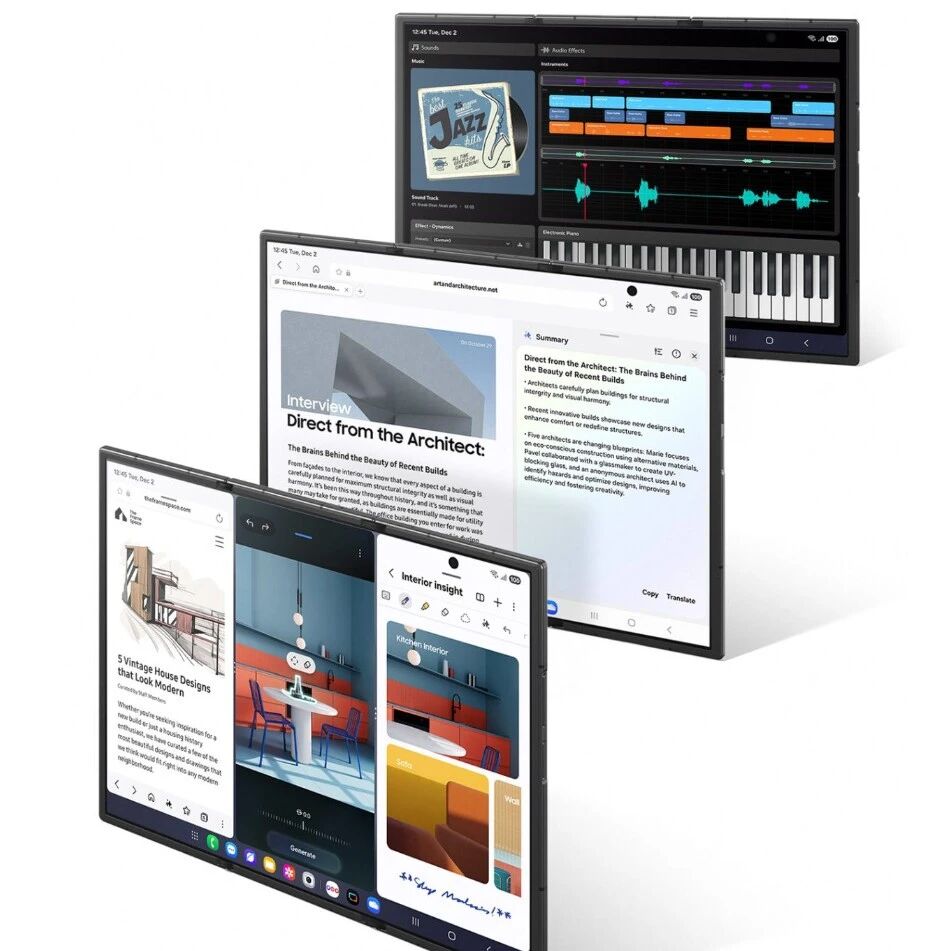
Core Viewpoint - Samsung has launched the Galaxy Z TriFold foldable phone, showcasing advanced folding technology and emphasizing its balance between portability, performance, and productivity [2][6]. Group 1: Product Features - The Galaxy Z TriFold is only 3.9 mm thick at its thinnest point and is powered by a custom Snapdragon 8 Elite mobile platform, featuring a 200-megapixel camera and the largest battery capacity in Samsung's foldable phones at 5600mAh [7]. - The device includes a 45W super-fast charging capability, allowing for continuous streaming, creation, and work [7]. - The phone utilizes Samsung's most advanced hinge technology and a new display technology designed for the 10-inch screen, which can fold twice to fit into a pocket [7]. Group 2: Market Position and Pricing - The Galaxy Z TriFold is expected to launch in South Korea on December 12, 2025, followed by other markets including China, Taiwan, Singapore, and the UAE, with a U.S. release in the first quarter of 2026 [9]. - The starting price for the Galaxy Z TriFold is approximately 3.59 million KRW, equivalent to about 17,000 RMB [9]. - Despite predictions that Apple's phone shipments may surpass Samsung's in 2025, the release of the Galaxy Z TriFold positions Samsung ahead in the foldable screen market [9]. Group 3: Competitive Landscape - Analysts suggest that the Galaxy Z TriFold may serve more as a showcase of new technology rather than a flagship product aimed at driving sales, given the challenges of scaling production for multi-directional folding devices [10]. - Huawei previously released the Mate XT, the world's first commercial triple-fold phone, which has a 10.2-inch screen and a starting price of 19,999 RMB [10]. - The folding mechanism of the Galaxy Z TriFold differs from Huawei's Mate XT, which features a Z-shaped structure, while Samsung employs a dual-side inward folding hinge design [10]. Group 4: Public Reception - Notable critic Luo Yonghao commented on the Galaxy Z TriFold's design, questioning its practicality and suggesting that the folding mechanism results in a device that is thicker without significant advantages over existing models [12].

涉苹果、三星等,印度电信部要求手机制造商预装官方APP引争议
Guan Cha Zhe Wang· 2025-12-02 09:47
Core Viewpoint - The Indian Ministry of Telecommunications has mandated smartphone manufacturers, including Apple, Samsung, Vivo, Xiaomi, and OPPO, to pre-install a government-developed cybersecurity app called "Sanchar Saathi" on all new devices sold in India, which cannot be uninstalled by users [1][3]. Group 1: Government Mandate - The Indian government issued a directive on November 28, requiring smartphone companies to pre-install the "Sanchar Saathi" app within 90 days on all new devices sold in the Indian market [1]. - Existing devices must receive the app through software updates as per the government's instructions [1]. Group 2: App Functionality - "Sanchar Saathi," launched in January 2025, aims to help users block and track lost or stolen smartphones and identify fraudulent mobile connections [3]. - The app has reportedly assisted in recovering over 700,000 lost phones since its launch, with 50,000 recoveries occurring in October alone [3]. Group 3: Industry Response - Concerns have been raised regarding user consent and potential government surveillance, with critics arguing that the mandate infringes on user rights [3]. - Apple’s response to the mandate is uncertain, as the company traditionally resists pre-installing government or third-party apps on its devices [4]. - Counterpoint Research reported a 5% year-over-year increase in smartphone shipments in India for Q3 2025, with sales revenue up 18%, marking a historical high [4].


苹果(AAPL.US)拒装印度监控应用,安全合规引冲突
智通财经网· 2025-12-02 09:13
Core Viewpoint - Apple Inc. plans to reject the Indian government's mandate to pre-install a state-owned cybersecurity app on its smartphones, citing privacy and security concerns related to its iOS ecosystem [1][3] Group 1: Government Mandate - The Indian government has ordered Apple, Samsung, and Xiaomi to pre-install an app called "Sanchar Saathi" within 90 days to track stolen phones and prevent misuse [1] - The app is intended to address serious cybersecurity threats, as confirmed by the Indian Ministry of Telecommunications [1][2] - Critics, including political opponents and privacy advocates, argue that this move is an attempt by the government to gain access to the data of 730 million smartphones in India [1][3] Group 2: Industry Response - Apple is not planning to comply with the directive and will inform the government that such regulations pose privacy and security issues for its iOS ecosystem [1][2] - Other manufacturers, such as Samsung, are evaluating the directive, with concerns that the government did not consult the industry before implementing it [3] Group 3: Legal and Regulatory Context - The directive comes at a time when Apple is involved in a legal battle regarding a $38 billion antitrust fine in India, related to allegations of abusing its market position [4][5] - Apple has indicated that its maximum penalty risk could reach $38 billion based on the average revenue from its global services business over the past three fiscal years [5]
剑指华为Mate XTs,三星首款三折叠来了
Guo Ji Jin Rong Bao· 2025-12-02 09:09
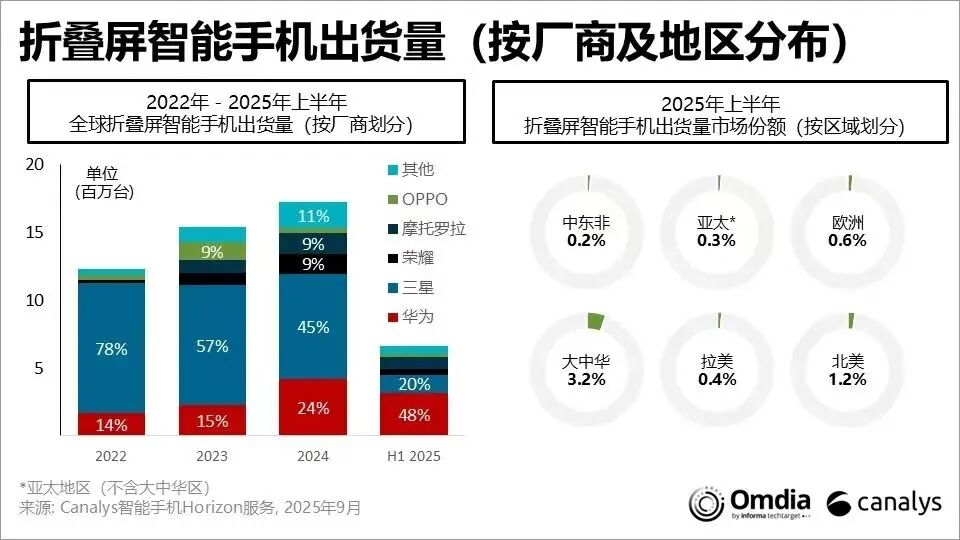
Core Viewpoint - The competition in the foldable smartphone market is intensifying, with Huawei and Samsung as the primary players, particularly following Samsung's recent launch of the Galaxy Z TriFold, which marks the second commercial three-fold smartphone after Huawei's Mate XTs [1][3][4]. Group 1: Product Launches - Huawei launched the world's first three-fold smartphone, Mate XT, in September 2024, with an initial price of 19,999 yuan, followed by the upgraded Mate XTs at 17,999 yuan [1]. - Samsung has introduced its first three-fold smartphone, Galaxy Z TriFold, which will be available for online reservation on December 9 and officially launched on December 12 [1][2]. Group 2: Technical Specifications - The Galaxy Z TriFold features a unique "G-shaped" inward folding design, a 6.5-inch outer screen, and a 10-inch main screen when fully unfolded, with a thickness of only 3.9 mm and a weight of 309 grams [1]. - It is powered by a customized Qualcomm Snapdragon 8 Elite for Galaxy chip, has a 5600mAh battery with 45W fast charging, and includes a camera system led by a 200-megapixel main camera [2]. Group 3: Market Dynamics - According to Canalys, Huawei led the global foldable smartphone market with a 48% share in the first half of 2025, while Samsung held 20% [4]. - The market share dynamics between Huawei and Samsung have shifted significantly, with Huawei increasing its share from 14% in 2022 to 48% in 2025, while Samsung's share decreased from 78% to 20% over the same period [4]. Group 4: Future Outlook - Apple is expected to launch its first foldable device in the fall of 2026, which could reshape the competitive landscape in the high-end foldable smartphone market [6]. - Despite the anticipated growth in the foldable smartphone segment, it remains a niche market, projected to account for only 1.0% to 1.5% of global smartphone shipments by 2026 [7]. Group 5: Strategic Importance - Foldable smartphones are seen as a strategic lever for manufacturers to drive premium branding and long-term profitability, with significant revenue contributions despite their limited market size [8].
豆包AI助手"理想丰满现实骨感"?大摩:手机大厂更倾向自研,要落地很困难
硬AI· 2025-12-02 09:07
Core Viewpoint - Morgan Stanley expresses skepticism about the practical implementation of the Doubao AI assistant, despite its impressive demonstration of features, and maintains a positive outlook on "super apps" like WeChat, Taobao, and Meituan [2][3][4]. Group 1: Challenges in Implementation - The Doubao AI assistant requires deep system-level integration, necessitating modifications to the operating system, which directly impacts the core interests of smartphone manufacturers (OEMs) [4][6]. - The successful implementation and promotion of the Doubao AI assistant depend on extensive technical collaboration and commercial negotiations with various smartphone OEMs, which poses significant challenges [7][11]. Group 2: Competitive Landscape - Major hardware players, including Apple, Huawei, and Xiaomi, are likely to develop their own AI assistants rather than collaborate with ByteDance, leaving limited options for partnerships with Doubao [10][11]. - The competitive environment in the Chinese market presents high entry barriers for Doubao to establish a broad hardware ecosystem [11][12]. Group 3: Investment Strategy - Given the difficulties in hardware breakthroughs, Morgan Stanley recommends investing in software application giants with substantial traffic and use cases, asserting that the dominance of "super apps" remains unchallenged [13][14]. - The report reiterates "overweight" ratings for Tencent, Alibaba, and Meitu, providing specific rationales for each: - Tencent is viewed as the best AI application proxy in China, with plans to launch its next-generation AI model, Hunyuan 2.0 [14]. - Alibaba is identified as the best AI infrastructure stock, with accelerating cloud revenue growth expected [14]. - Meitu is recognized as a beneficiary of AI multimodal capabilities, particularly in its "last mile" service capabilities that general AI assistants cannot fully replace [14].



国产手机开“卷”新功能?阶跃星辰、豆包入局
Xin Lang Cai Jing· 2025-12-02 08:54
Core Insights - The article discusses the launch of new AI-powered features in domestic smartphones, particularly focusing on the advancements made by Shanghai-based AI company Jieyue Xingchen and its collaboration with Doubao [1] Group 1: AI Technology Developments - Jieyue Xingchen has open-sourced the GELab-Zero suite, a GUI Agent technology similar to Doubao's mobile assistant, along with a 4B GUI Agent model and complete infrastructure for one-click deployment [1] - The new model has achieved state-of-the-art (SOTA) performance across multiple GUI benchmarks on both mobile and computer platforms [1] Group 2: Product Launches and Collaborations - Doubao released a technical preview of its "Doubao Mobile Assistant," which has system-level operational capabilities, allowing it to recognize UI elements on mobile screens and perform tasks like price comparison for food delivery and searching for travel guides [1] - Doubao has partnered with ZTE to launch a smartphone model equipped with this technology, leading to a significant increase in ZTE's stock price, which hit the daily limit [1] Group 3: Broader AI Applications - At the World Artificial Intelligence Conference in July, ZTE and Jieyue Xingchen introduced the "Elderly AI Assistant," which can execute tasks such as appointment scheduling and social security payments through voice commands [1]

大摩:“豆包”AI手机建生态系统难度大 重申对腾讯控股、阿里巴巴-W与美图公司
Xin Lang Cai Jing· 2025-12-02 08:52
Core Viewpoint - Morgan Stanley's report indicates that while the ideal "Doubao" ecosystem from ByteDance appears rich, there are significant execution challenges ahead [1][4] Summary by Sections Product Features - The "Doubao" AI assistant is deeply integrated into smartphone operating systems and showcases capabilities such as interactive functions, multi-modal generation, app proxying, memory functions, and a professional mode for complex tasks [2][6] Market Challenges - The report highlights major obstacles in promoting the "Doubao" assistant, particularly the need for in-depth technical cooperation and commercial negotiations with various smartphone OEMs, which may redefine the smartphone value proposition and weaken OEMs' bargaining power [3][6] - Major smartphone OEMs like Apple, Huawei, and Xiaomi are more likely to develop their own AI assistants rather than collaborate with ByteDance, limiting the options for partnerships in the Chinese market [3][6] Investment Perspective - Despite concerns that the "Doubao" assistant may become a traffic entry point and weaken C-end applications, Morgan Stanley remains optimistic about Chinese applications in AI investment, citing the dominance of super apps like WeChat, Taobao, and Meituan, which prefer to develop their own AI assistants to maintain traffic [7]
英媒:印度要求苹果、三星和小米等在手机上预装网络安全应用,苹果将拒绝
Guan Cha Zhe Wang· 2025-12-02 08:44
【文/观察者网 陈思佳】据路透社12月2日报道,印度政府近日向苹果、三星和小米等手机制造商发出 通知,要求这些公司在智能手机中预装一款网络安全应用。三名知情人士透露,苹果公司将拒绝印度政 府的要求,理由是这种做法可能给苹果iOS生态带来隐私和安全问题。 印度电信部要求手机制造商在90天内为新手机安装一款名为Sanchar Saathi的应用,并确保该应用的功能 不会被用户限制或禁止。这款应用的作用是追踪并封锁丢失或被盗的手机,防止这些手机被不当使用, 还可以识别诈骗性质的手机号码。 对于已经进入供应链的设备,印度电信部要求手机制造商通过软件更新的方式推送应用。报道称,印度 电信部没有公开这项命令,而是私下发送给制造商。 印度电信部很快证实了这一消息,该部门解释称,印度拥有庞大的二手移动设备市场,推广Sanchar Saathi应用可以帮助应对重复或伪造国际移动设备识别码(IMEI)的问题,遏制诈骗等"严重危害"网络 安全的活动。 业内人士指出,苹果会在新生产的手机上预装苹果自己的应用,但不会在手机售出前预装任何第三方应 用。市场研究公司Counterpoint的研究总监塔伦·帕塔克认为:"苹果可能寻求一个折中 ...
2025年10月国内智能机市场销量同比增长3%,苹果表现突出
CINNO Research· 2025-12-02 08:33
Core Insights - The article highlights a 3% year-on-year growth in China's smartphone market sales for October 2025, with Apple showing outstanding performance [3]. Group 1: Market Sales Trends - In the period from October 2024 to October 2025, the sales volume of smartphones in the Chinese market has shown a positive trend, indicating a recovery in consumer demand [3]. - The analysis includes a comparison of smartphone sales across different price segments, revealing shifts in consumer preferences [3]. Group 2: Brand Performance - The report details the performance of various smartphone brands in the Chinese market, with specific emphasis on Apple's strong sales figures compared to competitors [3]. - It provides insights into the top-selling products within the 4,000 to 4,999 yuan price range, showcasing brand strategies and consumer choices [3]. Group 3: Price Segment Analysis - The article breaks down the smartphone market into different price segments, including 4,000-4,999 yuan, 5,000-5,999 yuan, and above 6,000 yuan, analyzing brand performance and sales trends within each category [3]. - It highlights the competitive landscape and how brands are positioning themselves in response to market dynamics [3]. Group 4: Panel Price Trends - The report forecasts the price trends for various types of smartphone panels, including a-Si LCD, LTPS LCD, rigid OLED, and flexible OLED from January 2024 to December 2025 [3]. - This section provides valuable insights into the cost structure of smartphone manufacturing and potential impacts on retail pricing [3].
大摩:“豆包”AI手机建生态系统难度大 重申对腾讯控股的“增持”评级
Zhi Tong Cai Jing· 2025-12-02 07:57
Core Viewpoint - Morgan Stanley expresses skepticism about the feasibility of ByteDance's "Doubao" AI assistant smartphone ecosystem, emphasizing that while the concept appears rich, execution challenges are significant [1]. Group 1: Product Features - The "Doubao" AI assistant is deeply integrated into the smartphone operating system, showcasing capabilities such as interactive functions, multi-modal generation, app access, memory features, and a professional mode for complex tasks [2]. Group 2: Market Challenges - Morgan Stanley identifies major obstacles in promoting the "Doubao" assistant, particularly the need for in-depth technical collaboration and commercial negotiations with various smartphone OEMs, which may prefer developing their own AI assistants [3]. - The report highlights that leading smartphone OEMs like Apple, Huawei, and Xiaomi are likely to focus on their proprietary AI solutions rather than partnering with ByteDance, limiting the potential OEM options for collaboration [3]. Group 3: Investment Perspective - Despite concerns that the "Doubao" assistant could become a traffic entry point and weaken consumer-facing applications, Morgan Stanley maintains a positive outlook on Chinese applications, citing the dominance of super apps like WeChat, Taobao, and Meituan, which are likely to develop their own AI assistants to secure traffic [3].