
制造业

Search documents
泰祥股份:公司股东蒋在春、何华强减持计划实施完毕,共减持公司股份约31万股
Mei Ri Jing Ji Xin Wen· 2025-12-26 11:14
Group 1 - The core point of the article is that Tai Xiang Co., Ltd. announced the completion of a share reduction plan by shareholders Jiang Zai Chun and He Hua Qiang, resulting in a total reduction of approximately 310,000 shares, which accounts for 0.31% of the company's total shares [1] - As of the report date, Tai Xiang Co., Ltd. has a market capitalization of 3 billion yuan [2] - For the first half of 2025, the revenue composition of Tai Xiang Co., Ltd. is entirely from the manufacturing sector, with a 100.0% share [1]

宣亚国际:12月26日召开董事会会议
Mei Ri Jing Ji Xin Wen· 2025-12-26 10:55
Group 1 - The core point of the article is that Xuan Ya International (SZ 300612) held its 16th meeting of the fifth board of directors on December 26, 2025, to discuss various proposals related to fundraising projects and financial management [1] - The company's revenue composition for the year 2024 is as follows: automotive sector accounts for 89.26%, internet and information technology for 8.89%, retail for 0.84%, manufacturing for 0.45%, and finance for 0.22% [1] - As of the report date, Xuan Ya International has a market capitalization of 2.9 billion yuan [1]

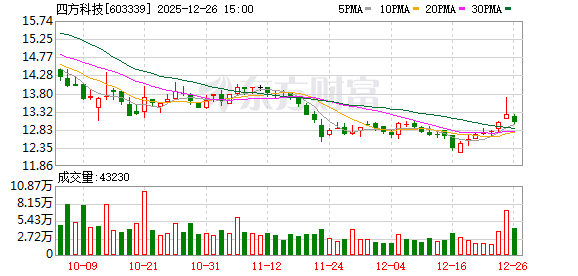
四方科技:公司目前产品暂未应用于商业航天
Mei Ri Jing Ji Xin Wen· 2025-12-26 10:13
Core Viewpoint - The company has not yet applied its special tanks in the commercial aerospace sector and is exploring potential developments in this industry [2] Group 1 - An investor inquired about the potential use of the company's special tanks in commercial aerospace and any improvements in sales [2] - The company responded that its products are currently not utilized in the mentioned direction [2] - The company will actively monitor and explore developments in related industries [2]


宏观解读 | 地产持续调整,内需动能待增强——2025年11月宏观数据点评
Sou Hu Cai Jing· 2025-12-26 09:46
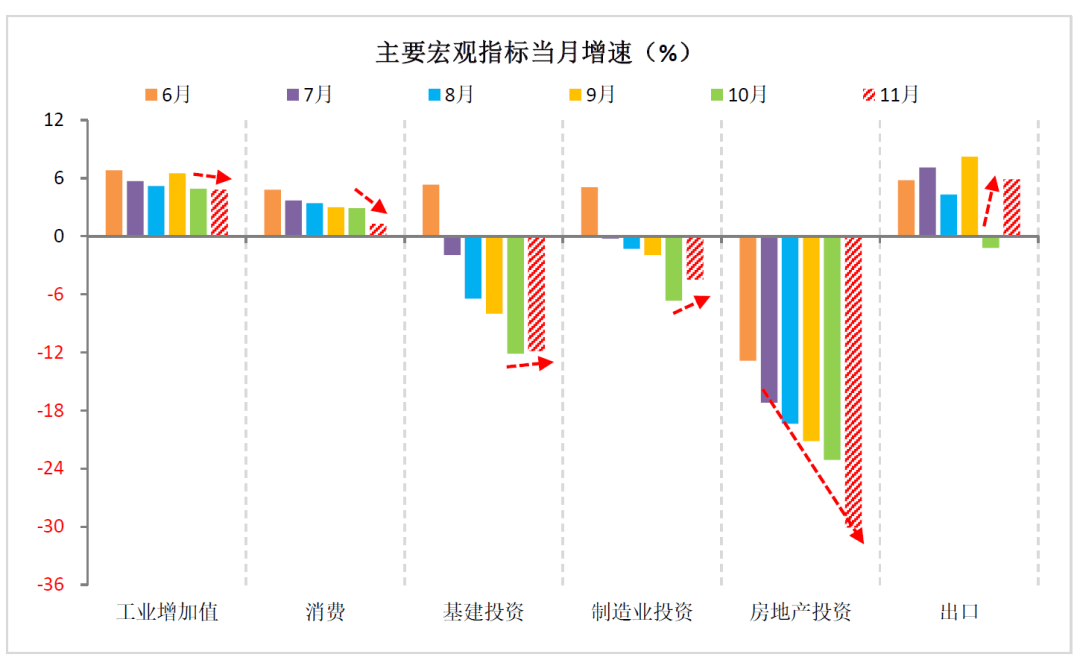
Core Viewpoint - The economic indicators in November show a divergence characterized by "strong production but weak demand, strong external demand but weak internal demand," indicating significant short-term downward pressure on the economy. Industrial production and export resilience are supported by ongoing industrial upgrades, while consumption growth is slowing, and investment continues to decline, highlighting insufficient domestic demand [1][3]. Group 1: Economic Dynamics - The economic indicators reflect a need for policy intervention to stabilize domestic demand as consumption growth slows and investment remains at low levels [3]. - Industrial production remains stable, with a year-on-year increase of 6.0% from January to November, slightly above last year's growth rate [4]. - The service sector shows signs of slowing down, with a year-on-year growth of 5.6% from January to November, indicating pressure from real estate and travel-related sectors [5]. Group 2: Consumption Trends - In November, the total retail sales of consumer goods grew by 1.3% year-on-year, reflecting increased pressure on consumption [8]. - The decline in consumption is notably influenced by the automotive sector and the "old-for-new" policy, which have both turned negative [8]. - Despite the overall slowdown, consumption among low- and middle-income groups remains stable, with service retail growth slightly improving [8]. Group 3: Investment Insights - Fixed asset investment decreased by 2.7% year-on-year from January to November, with a notable decline in real estate investment [12]. - Manufacturing investment shows initial signs of stabilization, with a year-on-year growth of 1.9% from January to November, indicating a potential recovery [14]. - Infrastructure investment remains steady, supported by new policy financial tools and fiscal funding, although traditional sectors face ongoing challenges [14]. Group 4: Export Performance - November exports saw a significant year-on-year increase of 5.9%, driven by low base effects and improved export volumes [18]. - Exports to the EU rebounded significantly, while exports to the US continued to decline due to previous import surges [18]. - The overall export resilience is supported by improvements in various product categories, including home appliances and textiles [18]. Group 5: Inflation Trends - The Consumer Price Index (CPI) rose by 0.7% year-on-year in November, supported by low base effects and rising food prices [22]. - The Producer Price Index (PPI) decreased by 2.2% year-on-year, with a slight month-on-month increase, indicating a mixed inflationary environment [22]. - Future inflation is expected to continue rising, influenced by domestic policies aimed at expanding demand [24]. Group 6: Financing Conditions - Social financing data in November showed a year-on-year increase of 160 billion yuan, indicating marginal improvements in financing demand driven by policy tools [28]. - However, credit growth remains weak, with new loans significantly lower than previous periods, reflecting ongoing challenges in consumer and housing market confidence [28][29]. - The M1 and M2 money supply growth rates continued to decline, indicating underlying weaknesses in the economy [29].
【数据发布】国家统计局关于2024年国内生产总值最终核实的公告
中汽协会数据· 2025-12-26 09:37
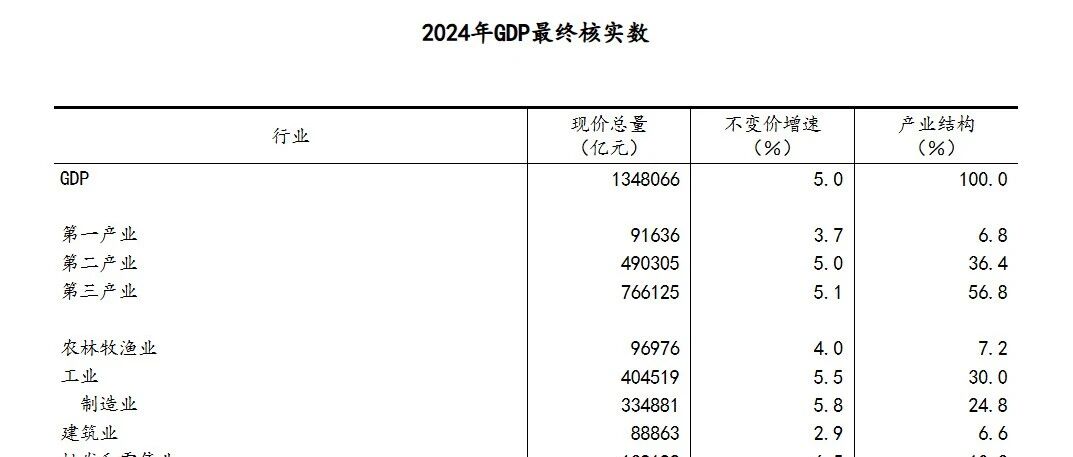
Core Viewpoint - The final verification of China's GDP for 2024 shows a total nominal GDP of 13,480.66 billion yuan, a decrease of 10.18 billion yuan from the preliminary estimate, with a year-on-year growth rate of 5.0% at constant prices, consistent with the preliminary estimate [1]. Summary by Categories GDP Overview - The final verified nominal GDP for 2024 is 13,480.66 billion yuan, reflecting a reduction of 10.18 billion yuan from the preliminary figure [1]. - The year-on-year growth rate at constant prices is 5.0%, unchanged from the preliminary estimate [1]. Industry Breakdown - **Primary Industry**: - Current value: 91,636 billion yuan - Growth rate: 3.7% - Contribution to GDP: 6.8% [4] - **Secondary Industry**: - Current value: 490,305 billion yuan - Growth rate: 5.0% - Contribution to GDP: 36.4% [4] - **Tertiary Industry**: - Current value: 766,125 billion yuan - Growth rate: 5.1% - Contribution to GDP: 56.8% [4] Specific Sector Performance - **Agriculture, Forestry, Animal Husbandry, and Fishery**: - Current value: 96,976 billion yuan - Growth rate: 4.0% - Contribution to GDP: 7.2% [4] - **Industrial Sector**: - Current value: 404,519 billion yuan - Growth rate: 5.5% - Contribution to GDP: 30.0% [4] - **Manufacturing**: - Current value: 334,881 billion yuan - Growth rate: 5.8% - Contribution to GDP: 24.8% [4] - **Construction**: - Current value: 88,863 billion yuan - Growth rate: 2.9% - Contribution to GDP: 6.6% [4] - **Wholesale and Retail Trade**: - Current value: 139,192 billion yuan - Growth rate: 6.5% - Contribution to GDP: 10.3% [4] - **Transportation, Storage, and Postal Services**: - Current value: 59,045 billion yuan - Growth rate: 6.7% - Contribution to GDP: 4.4% [4] - **Accommodation and Catering**: - Current value: 24,894 billion yuan - Growth rate: 7.0% - Contribution to GDP: 1.8% [4] - **Financial Sector**: - Current value: 96,956 billion yuan - Growth rate: 3.7% - Contribution to GDP: 7.2% [4] - **Real Estate**: - Current value: 84,047 billion yuan - Growth rate: -2.2% - Contribution to GDP: 6.2% [4] - **Information Transmission, Software, and IT Services**: - Current value: 63,958 billion yuan - Growth rate: 11.7% - Contribution to GDP: 4.7% [4] - **Leasing and Business Services**: - Current value: 56,941 billion yuan - Growth rate: 11.1% - Contribution to GDP: 4.2% [4] - **Other Industries**: - Current value: 232,676 billion yuan - Growth rate: 3.9% - Contribution to GDP: 17.3% [4]
康欣新材:12月25日召开董事会会议
Mei Ri Jing Ji Xin Wen· 2025-12-26 09:19
截至发稿,康欣新材市值为46亿元。 每经AI快讯,康欣新材(SH 600076,收盘价:3.39元)12月26日晚间发布公告称,公司第十二届2025 年第三次董事会临时会议于2025年12月25日以现场结合通讯的方式召开。会议审议了《关于选举第十二 届董事会各专门委员会委员的议案》等文件。 每经头条(nbdtoutiao)——对话马斯克脑机接口"一号受试者":大脑植入芯片23个月,我正重新夺回 人生的独立 (记者 贾运可) 2024年1至12月份,康欣新材的营业收入构成为:制造业占比106.73%,林业占比0.59%,分部间抵销占 比-7.32%。 ...

工信部重要会议,2026年这样干!
证券时报· 2025-12-26 09:07
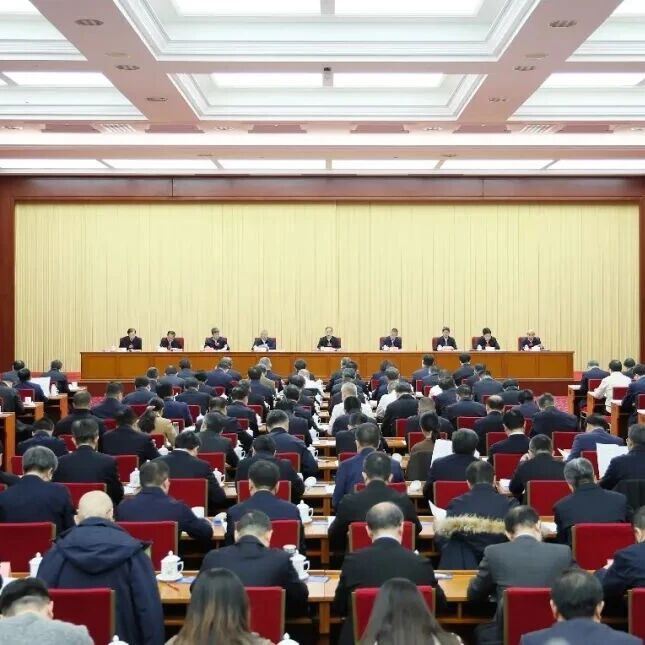
Core Viewpoint - The article discusses the key tasks and strategies for the industrial and information technology sectors in China for the year 2026, emphasizing the importance of new industrialization and high-quality development under the guidance of Xi Jinping's thoughts [1][6]. Summary by Sections 2025 Achievements - In 2025, the industrial economy showed resilience and vitality, with telecommunications and software business revenues expected to grow by approximately 9% and 12% respectively, and digital industry revenue also projected to increase by around 9% [3]. - The high-tech manufacturing and equipment manufacturing sectors saw value-added growth of 9.2% and 9.3% year-on-year from January to November [3]. - The artificial intelligence core industry surpassed 1 trillion yuan, and exports of new energy vehicles exceeded 2 million units [3]. 2026 Key Tasks - The year 2026 marks the beginning of the "15th Five-Year Plan," focusing on consolidating the industrial economy's positive momentum and enhancing the resilience and safety of industrial chains [6][7]. - Key areas of focus include improving technological innovation capabilities, optimizing traditional industries, and fostering new and future industries such as integrated circuits and biotechnology [8][9]. Industrial Development Strategies - The strategies for 2026 include: 1. Supporting industrial provinces and stabilizing effective investment in manufacturing [7]. 2. Enhancing the resilience of industrial chains through targeted actions [7]. 3. Accelerating technological innovation and establishing a national manufacturing pilot service network [8]. 4. Promoting green and low-carbon development in industries [9]. 5. Strengthening the cultivation of high-quality enterprises and improving industry governance [10]. Governance and Leadership - The article emphasizes the importance of the Party's leadership in ensuring the successful implementation of these strategies, highlighting the need for political construction and the enhancement of talent and cadre teams [11][12].
三驾马车拉爆美国GDP?三季度消费出口猛增,创两年最高增速!
Sou Hu Cai Jing· 2025-12-26 08:34
Group 1 - The U.S. economy's GDP for Q3 2025 surged to an annualized rate of 4.3%, exceeding expectations of 3.3% and surpassing Q2's 3.8% growth, marking the highest growth rate since Q3 2023 [5][3] - Personal consumption was the largest contributor to GDP growth, adding 2.39 percentage points, driven by wealth effects from capital markets as major stock indices reached historical highs [5][7] - Government spending also played a significant role, with federal defense spending increasing by 1.43% and a substantial rise in borrowing plans from $554 billion to $1.01 trillion, enabling investments in strategic companies like Intel [9] Group 2 - Exports grew by 2.13% in Q3, while imports fell by 1.2%, leading to a notable contribution from net exports, supported by improved global manufacturing PMI and new trade agreements reducing tariffs [11] - The economy is experiencing a "K-shaped" recovery, where wealth is increasingly concentrated among the top 10% of households, while low-income groups face challenges due to high inflation eroding purchasing power [13][16] - Large enterprises benefit from pricing power and stable PMI, while small businesses struggle with high interest rates and costs, leading to closures of many local establishments [17][19] Group 3 - The economic landscape shows a stark contrast between thriving sectors like information technology and finance, and struggling industries such as manufacturing and construction, highlighting the divide in economic recovery [22][23] - Despite a government shutdown impacting Q4 GDP, a rebound is expected in Q1 2026 as pent-up demand is released and AI investments continue to grow [24][25] - The Federal Reserve is anticipated to implement preventive rate cuts in 2026, addressing structural weaknesses in the labor market and the challenges faced by small businesses [28][29]
工信部最新发文,事关航空航天、人工智能
21世纪经济报道· 2025-12-26 07:30
Core Viewpoint - The national industrial and information technology work conference emphasized the importance of implementing the new development philosophy and accelerating the construction of a modern industrial system, aiming for high-quality development and a strong industrial economy in the upcoming "15th Five-Year Plan" period [1][7]. Summary by Sections Industrial Economic Performance - In 2025, the industrial economy is expected to show steady progress, with telecommunications business volume and software business revenue projected to grow by approximately 9% and 12% year-on-year, respectively. The digital industry revenue is also anticipated to increase by around 9% [3]. - From January to November, the added value of high-tech manufacturing and equipment manufacturing industries grew by 9.2% and 9.3% year-on-year, respectively. The core AI industry surpassed 1 trillion yuan, and exports of new energy vehicles exceeded 2 million units [3]. Key Tasks for 2026 - The conference outlined ten key areas of focus for 2026, including: 1. Consolidating the positive trend of the industrial economy and supporting major industrial provinces [8]. 2. Enhancing the resilience and safety of industrial supply chains [8]. 3. Accelerating the improvement of industrial technological innovation capabilities [8]. 4. Optimizing traditional industries through standards and technological upgrades [8]. 5. Cultivating emerging and future industries, including integrated circuits and biomedicine [8]. 6. Promoting deep integration of information technology and industrialization [9]. 7. Advancing green and low-carbon development in industries [9]. 8. Supporting high-quality development in the information and communication sector [9]. 9. Fostering high-quality enterprises and addressing overdue payments [10]. 10. Improving industry governance effectiveness [10]. Governance and Leadership - The conference stressed the importance of the Party's leadership in ensuring the success of various initiatives and called for strengthening political construction and enhancing the capabilities of the workforce [11][12]. Conclusion - The conference concluded with a call for unity around the central leadership and a commitment to achieving the goals set for the upcoming year, contributing to the modernization of China [12].

部委与地方学习中央经济工作会议精神解析:开局之年,地方如何因地制宜?
Shenwan Hongyuan Securities· 2025-12-26 06:58
Group 1: Economic Policy Insights - The central economic work conference emphasizes the need for fiscal policies to "leave room for future risks" and monetary policies to be "forward-looking and scientifically adjusted" [10] - The focus is on optimizing domestic demand structure, highlighting a shift from commodity consumption to a balance between commodity and service consumption, with service consumption retail growth reaching 5.4% year-on-year [12] - Investment strategies will combine physical and human capital, prioritizing consumer infrastructure projects and major projects under the 14th Five-Year Plan [14] Group 2: Departmental and Local Government Actions - The Ministry of Finance aims to strengthen fiscal support by effectively utilizing various government bond funds and issuing long-term special bonds to support key projects [22] - Financial regulatory bodies are tasked with safeguarding the real economy and real estate markets, emphasizing the need for a coordinated financing mechanism for urban real estate [24] - Local governments are focusing on breaking "involution," promoting "investment in people," and establishing a correct performance view, with regions like Guangdong and Henan actively participating in national market integration [31]