零售行业

Search documents
美联储维持利率稳定,无视特朗普
Sou Hu Cai Jing· 2025-06-18 19:30
Core Viewpoint - The Federal Reserve maintains a patient approach while observing the potential impacts of tariffs under President Trump's policies, keeping the benchmark interest rate unchanged between 4.25% and 4.5% [1][2] Group 1: Federal Reserve's Actions and Predictions - The Federal Reserve has not adjusted interest rates for six months, indicating a cautious stance as it monitors inflation and economic activity [1] - The Fed predicts that the personal consumption expenditure index, its preferred inflation measure, will rise from 2.1% to 3% by the end of 2025, reflecting increased inflation expectations [1] - The Fed forecasts a 25 basis point rate cut in 2025, with additional cuts in 2026 and 2027 [1] Group 2: Economic Implications of Tariffs - Fed Chair Jerome Powell warns that tariffs could raise prices and pressure economic activity, with the impact depending on the final tariff levels [1][2] - Recent months have seen a restrained stance from the Fed, which has drawn sharp criticism from Trump, who has urged for lower interest rates [3][5] - The uncertainty surrounding tariffs has contributed to a slowdown in hiring, although the job market remains robust [6] Group 3: Inflation and Economic Growth Concerns - Powell has cautioned about the risk of "stagflation," where rising inflation coincides with economic slowdown, complicating the Fed's policy decisions [8][9] - If the Fed raises rates to combat tariff-induced inflation, it risks stifling borrowing and further slowing the economy [9] - Conversely, lowering rates to stimulate the economy could exacerbate inflation [10] Group 4: Recent Developments in Tariff Policies - Trump has recently rolled back some of his most severe tariffs, easing costs for importers, which may mitigate price increases [11] - Despite some tariff reductions, a 10% comprehensive tariff remains on most imports, with certain tariffs still in effect for steel, aluminum, and automobiles [14] - Retailers like Walmart and Best Buy have warned of potential price increases due to tariffs, with the OECD projecting U.S. inflation could reach 4% by the end of 2025 [15]

5月CPI只是开始:关税引发的“通胀海啸”将席卷至年底!
Jin Shi Shu Ju· 2025-06-11 09:17
Group 1 - The import tariffs imposed by the Trump administration may have started to affect core commodity prices, potentially increasing inflationary pressures [1] - The U.S. Labor Department is expected to release the Consumer Price Index (CPI) report, which may show the largest increase in core CPI in four months, primarily due to the price increases from tariffs [1][2] - Economists predict that May will mark the beginning of high inflation readings related to tariffs, with this trend likely to continue until the end of the year [1] Group 2 - The CPI is expected to rise by 2.5% year-on-year in May, up from 2.3% in April, reflecting base effects from last year's lower data [2] - Core CPI is anticipated to increase by 0.3% month-on-month, the largest rise since January, and is expected to rise by 2.9% year-on-year, slightly above April's 2.8% [2] Group 3 - Concerns have been raised regarding the accuracy of CPI data due to the U.S. Bureau of Labor Statistics (BLS) pausing data collection in three cities, influenced by resource constraints and budget cuts [3] - The BLS has experienced a significant reduction in staffing levels, with at least a 15% decrease, which may impact data collection and reporting [4] - Despite staffing issues, the BLS maintains that the data quality meets strict standards and continues to evaluate data reliability [5]
胖东来痛击“胖东来”
新华网财经· 2025-06-10 10:16
在京东电商平台,一家名为"京胖宝库经营部"的珠宝店铺格外醒目——所售饰品均标注着"胖东来品 质"字样,产品标价从百余元到3万元不等。根据京东商城证照信息,该店铺属"个人经营者",经营 地址为江西宜春市某小区仓库。 当记者以消费者身份咨询时,该店铺客服声称,"与胖东来为同一供应链",并表示"货是一样的",甚至 提到"可到检测机构检测"。然而,当被要求出示具体凭证时,商家却闪烁其词。 对此,胖东来工作人员对记者称,暂未在京东平台开设相关店铺,其对上述店铺"打擦边球"行为也颇为 无奈。"一直都在各个(电商)平台检索、取证,但数量太多了。"该人士表示,尤其是这种标注"胖东 来品质"而非明确标注"胖东来"的行为,维权难度更大,"还需要消费者擦亮眼睛,慎重选择。" 实际上,这种"蹭名"胖东来的现象并不少见。不久前,浙江海宁一家名为"胖都来"的商场开业,因名称 与"胖东来"高度相似,被指蹭热度。 胖东来迅速反击,不仅向浙江当地市场监管部门正式投诉,还向对方邮寄了律师函。"因为'胖东来'作 为零售行业的知名品牌,已经有显著的辨识度。'胖都来'的宣传行为容易造成消费者的混淆。"胖东来 相关负责人表示。 君悦(合肥)律师事务所主 ...

航运价格飙升,美零售巨头被曝要求中国供应商承担货运成本
Guan Cha Zhe Wang· 2025-06-07 12:42
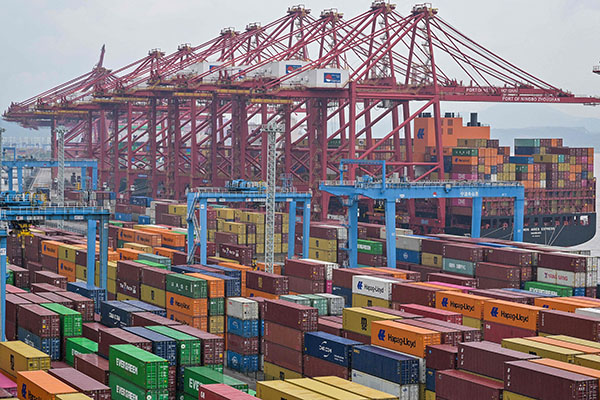
Group 1 - U.S. retail giants, under pressure from tariffs, initially sought to have Chinese suppliers bear the cost of tariffs but later agreed to have U.S. parties cover the costs after discussions with Chinese authorities [1] - Recently, U.S. retailers have attempted to shift the burden of shipping costs onto Chinese suppliers, exacerbated by a surge in shipping prices due to increased imports during the tariff suspension period [1][4] - Major U.S. retailers, including Walmart and Nike, are negotiating with Chinese suppliers to share up to 66% of the U.S. tariff costs, which were previously absorbed by U.S. buyers [2] Group 2 - Shipping costs have skyrocketed, with rates for containers to the U.S. West Coast reaching $6,000 to $7,000, nearly double the rates from late May [4] - The cost of shipping from Ningbo-Zhoushan Port to the U.S. West Coast has increased to $3,000, three times the price from April, raising concerns among exporters about their ability to absorb these costs [4] - The shipping industry is facing capacity shortages due to a surge in demand, with significant delays expected in restoring normal shipping operations [4][5] Group 3 - The Ningbo-Zhoushan Port is taking measures to handle the increased export orders, anticipating a recovery in shipping volumes to the U.S. following the tariff reductions [5] - The port plans to enhance service levels and improve operational efficiency to accommodate the expected rise in shipping demand [5]


美国贸易逆差创纪录收窄,多地家电“国补”暂停 | 财经日日评
吴晓波频道· 2025-06-07 00:47
Group 1: Global Manufacturing PMI - The global manufacturing PMI for May is 49.2%, indicating a slight increase of 0.1 percentage points from the previous month, but it remains below the expansion threshold for three consecutive months, reflecting weak economic momentum [1] - In Asia, the manufacturing PMI returned to the expansion zone at 50.4%, while the Americas, Africa, and Europe remain in contraction [1] - The US manufacturing PMI for May is 48.5%, down 0.2 percentage points from the previous month, marking a four-month decline [2][1] Group 2: US Trade Deficit - The US trade deficit in April narrowed significantly by 55.5% to $61.6 billion, the lowest level in 2023, reversing the trend of widening deficits seen in the first quarter [3] - Imports fell by a record 16.3% in April, while exports increased by 3%, indicating a shift in trade dynamics due to tariff policies [3] - The trade deficit with China decreased to $19.7 billion, the lowest since March 2020, while deficits with Canada and Mexico also shrank [3] Group 3: European Central Bank Actions - The European Central Bank (ECB) announced a 25 basis point cut in key interest rates, marking the eighth rate cut since June of the previous year, with the main refinancing rate now at 2% [5] - Eurozone inflation rates have decreased, with the harmonized CPI for May falling to 1.9%, the first time below 2% since September 2024 [5] - The ECB signaled a potential end to the rate-cutting cycle, as economic conditions stabilize and inflation pressures ease [6][5] Group 4: Domestic Appliance Subsidy Adjustments - Several regions in China have suspended or adjusted the "national subsidy" for replacing old appliances due to the depletion of available funds [8] - The subsidy program has been popular among residents, but its recent suspension may be a temporary measure as new funding is being planned [9] - The impact of the subsidy on stimulating domestic demand has been significant, but broader recovery in consumer spending is still needed [9] Group 5: Didi's Financial Performance - Didi reported a revenue of 53.26 billion yuan for Q1 2025, an 8.5% increase year-on-year, with a net profit of 2.36 billion yuan, up 188.14% from the previous year [10] - The total order volume for Didi's domestic ride-hailing services increased by 10.3% year-on-year, while international orders grew by 24.9% [10] - The improvement in profitability is attributed to higher order volumes and a reduction in losses from overseas operations [11][10] Group 6: Precious Metals Price Surge - Silver prices have surged past $36, reaching the highest level since February 2012, while platinum prices also hit a two-year high at $1,154.73 per ounce [12] - Over the past year, silver and platinum have increased by 19% and 13%, respectively, while gold has risen by 42% [12] - The price increases are linked to industrial demand, with silver being crucial for solar panels and platinum used in automotive catalysts [12] Group 7: Market Overview - The stock market experienced mixed performance, with the Shanghai Composite Index closing at 3,385.36 points, up 0.04%, while the Shenzhen Component Index fell by 0.19% [17] - Market activity was characterized by a lack of clear direction, with various sectors showing both gains and losses [17] - The recent market movements are influenced by expectations of future policy support and ongoing trade negotiations [18]

沃尔玛(WMT.US)加码无人机配送 力求加快订单送达速度
智通财经网· 2025-06-06 05:35
Core Insights - Walmart is expanding its drone delivery service to five new cities to enhance online sales and improve delivery speed [1] - The company aims to be the first retailer to implement large-scale drone delivery operations across five states [1] - Faster delivery services are crucial for Walmart's growth as consumers increasingly prioritize convenience [1] Group 1: Expansion of Drone Delivery - Walmart will launch drone delivery services in Charlotte, Tampa, Atlanta, Houston, and Orlando, covering 100 stores [1] - The service will allow for delivery of items such as fresh fruits, eggs, pet food, and ice cream within minutes [1] - Walmart's Chief eCommerce Officer highlighted the flexibility that faster delivery windows provide to consumers [1] Group 2: Financial Implications - Walmart expects its online business to become profitable this year after investing billions to compete with e-commerce giants like Amazon [1] - The company is focused on reducing costs associated with e-commerce, which have been high due to shipping, labor, and fuel expenses [1] - Efforts to cut costs include automating warehouses and processing more orders in bulk [1] Group 3: Partnerships and Collaborations - Walmart is deepening its collaboration with Alphabet's drone company Wing, which began in 2023 in Dallas [2] - Wing has received FAA approval to operate drones within a 6-mile radius of Walmart stores [2] - Walmart is also partnering with another drone delivery company, Zipline, in Texas and Arkansas [2]
美国对等关税反复横跳,后续走势如何展望?
2025-06-02 15:44
Summary of Key Points from Conference Call Records Industry or Company Involved - The discussion primarily revolves around the U.S.-China trade relations, specifically focusing on tariffs and legal proceedings related to these tariffs. Core Points and Arguments - The U.S. International Trade Court ruled that the President exceeded his authority in imposing tariffs based on international balance of payments, but the Federal Circuit Court has temporarily frozen this ruling, with a decision expected in mid-June [1][3][4] - The Federal Circuit Court may issue a special ruling allowing small and medium enterprises to import products tax-free, while other companies would still be subject to tariffs, differing from the International Trade Court's ruling that called for the cancellation of all tariffs [1][5] - The U.S. government is inclined to use Section 232 investigations to replace some reciprocal tariffs, as these tariffs are tied to national security and have legal stability, unlike reciprocal tariffs which have not undergone judicial scrutiny [1][6][7] - The Federal Circuit Court's decision on whether to suspend the lower court's ruling will determine the immediate future of the tariffs, with potential outcomes including the cancellation of tariffs or continued enforcement during a lengthy review process [3][9] - The IRA (Inflation Reduction Act) contains provisions unfavorable to Chinese companies, such as restrictions on cross-border technology transfers and collaborations with renewable energy equipment manufacturers, which could negatively impact Chinese renewable energy firms [1][19] Other Important but Possibly Overlooked Content - The Federal Circuit Court's handling of the current case reflects the complexity and uncertainty of the U.S. judicial system in dealing with international trade disputes [3][9] - The potential for a future U.S.-China tariff agreement is estimated to fall between 10% and 34%, with the fentanyl issue likely becoming a significant topic in discussions between leaders [2][25][26] - The U.S. Treasury Secretary indicated that the current stagnation in U.S.-China negotiations is partly due to judicial reviews and recent U.S. measures that are unfavorable to China, which could further complicate the competitive landscape for Chinese companies [21][22] - The U.S. government may seek to grant the President more authority to impose tariffs through legislative changes, although this process is expected to be complex and time-consuming [29] This summary encapsulates the critical aspects of the conference call records, highlighting the ongoing legal and political dynamics affecting U.S.-China trade relations and the implications for various stakeholders.
突发!美国、欧洲,重大变局!
券商中国· 2025-05-31 03:43
美国与欧盟的贸易谈判传来最新消息。 当地时间5月30日,欧盟委员会负责贸易和经济安全等事务的委员谢夫乔维奇与美国商务部长卢特尼克通话, 强调持续合作推动前瞻性解决方案,试图就双方贸易谈判进行沟通。据美媒报道,欧盟希望美国取消对钢铁和 汽车征收的25%关税,并希望美国总统特朗普放弃所谓的"对等关税"。 与此同时,欧盟委员会贸易委员东布罗夫斯基斯当天表示,近期美国法院对特朗普政府"对等关税"合法性的裁 决,给本已复杂的贸易环境再添一层不确定性。当前贸易谈判环境已充满变数,形势瞬息万变。 目前围绕关税的"司法大战"正面临较大的变数,包括美国企业在内的全球企业因"关税战"造成的损失也在持续 增加。据最新报道,因特朗普政府关税政策导致的成本上升和销售减少,全球主要大型企业的损失已经达到了 340亿美元。 关税的变数 据央视新闻客户端,当地时间30日,欧盟委员会负责贸易和经济安全等事务的委员塞夫科维奇与美国商务部长 卢特尼克通话,强调持续合作推动前瞻性解决方案,试图就双方贸易谈判进行沟通。 另据路透社报道,塞夫科维奇在社交平台上发帖称:"我们投入了充足的时间和精力,因为提供前瞻性的解决 方案仍然是欧盟的首要任务。我们将保 ...

美国消费者4月开始“踩刹车” 美联储最爱通胀指标保持温和
智通财经网· 2025-05-30 13:37
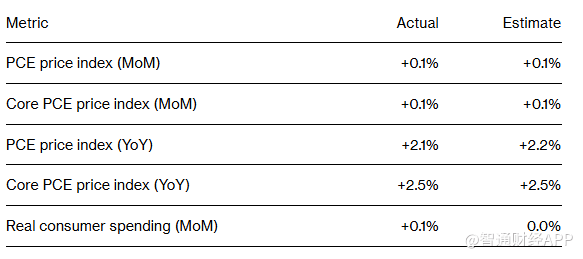
智通财经APP获悉,美国消费者在4月份开始"踩刹车",而通胀保持温和,这与经济放缓趋势相符。美 国经济分析局周五公布的数据显示,4月经通胀因素调整后的个人支出增长0.1%,上月增长0.7%。与此 同时,美联储青睐的通胀指标依然温和。不包括食品和能源的核心个人消费支出(PCE)物价指数环比上 涨0.1%,同比则上涨2.5%,是四年多来最小的年度涨幅。 | Metric | Actual | Estimate | | --- | --- | --- | | PCE price index (MoM) | +0.1% | +0.1% | | Core PCE price index (MoM) | +0.1% | +0.1% | | PCE price index (YoY) | +2.1% | +2.2% | | Core PCE price index (YoY) | +2.5% | +2.5% | | Real consumer spending (MoM) | +0.1% | 0.0% | 周五公布的另一项数据显示,进口下降近20%,导致美国4月份商品贸易逆差大幅收窄。 这些数据表明,在经历了近两年来支出最 ...
中金:美国还能“扛多久”?
中金点睛· 2025-05-25 23:32
Group 1 - The article discusses the dramatic changes in Trump's tariff policy towards China, with tariffs fluctuating from 34% to 125% and then down to 10% after negotiations, indicating a volatile trade environment [1][3] - The market has shown resilience, recovering losses incurred after the initial tariff announcements, suggesting that the impact of tariffs may not be as severe as initially feared [1][3] - The article highlights the necessity for the U.S. to lower tariffs to avoid significant economic and inflationary pressures, as high tariffs are unsustainable for both the U.S. and China [3][5] Group 2 - Tariffs are expected to have a significant impact on U.S. inflation, potentially raising the Consumer Price Index (CPI) by 1 percentage point, although factors like low oil prices and inventory replenishment may delay this effect until late Q3 [25][32] - The article outlines that U.S. inventory levels have increased significantly, with a 20% rise in import amounts and a 2.4% increase in nominal inventory compared to the previous year, indicating a robust supply chain response [10][18] - Different industries will experience varying levels of pressure from tariffs, with textiles, apparel, computers, and electronics facing the most significant challenges due to their high reliance on imports from China [22][23] Group 3 - The article emphasizes that U.S. economic growth can be sustained until the end of the year, supported by consumer spending and investment, but warns that renewed tariffs could lead to stagnation [36][37] - It notes that the Federal Reserve's ability to lower interest rates is constrained by inflationary pressures, which could further suppress private sector credit expansion and investment [8][36] - The potential for tax cuts and further tariff reductions could alleviate some of the economic pressures, but the timing and implementation of these measures remain uncertain [9][57] Group 4 - The financial market's stability is under scrutiny, particularly following a downgrade in the U.S. credit rating by Moody's, which could affect investor confidence and market dynamics [58][59] - The article points out that the upcoming debt ceiling resolution and increased bond supply could lead to liquidity issues in the market, impacting the overall financial landscape [59][61] - Long-term concerns about the U.S. dollar's status as a reserve currency are raised, particularly if tariffs continue to affect trade balances and investor sentiment [65]