
自动驾驶

Search documents
理想端到端自进化智能体系统CorrectAD
自动驾驶之心· 2025-12-09 00:03
以下文章来源于自动驾驶数据挖掘 ,作者黑客与作家 自动驾驶数据挖掘 作者 | 逆光飞翔2020 编辑 | 自动驾驶之心 原文链接: https://zhuanlan.zhihu.com/p/1980048833590339263 点击下方 卡片 ,关注" 自动驾驶之心 "公众号 戳我-> 领取 自动驾驶近30个 方向 学习 路线 >>自动驾驶前沿信息获取 → 自动驾驶之心知识星球 本文只做学术分享,如有侵权,联系删文 导读 破解"端到端模型长尾故障"痛点!现有端到端自动驾驶模型受限于训练数据中的罕见安全关键场景(长尾问题),手动收集此类数据成本高、风险大。西湖大学+理 想汽车+天津大学联合提出 CorrectAD自校正智能体系统 ,实现四重突破: 实验验证:在nuScenes和内部挑战性数据集上,分别修复62.5%和49.8%的故障案例,碰撞率降低39%和27%,为自动驾驶模型的持续优化提供自动化、低成本解决方 案。 推荐理由 1 核心概念:关键定义与术语解析 1.1 当前痛点 1. 手工数据收集成本极高 长尾故障(Long-tail Failure,如低能见度碰撞、密集车流绕行失效)罕见且危险,手工收集标注 ...


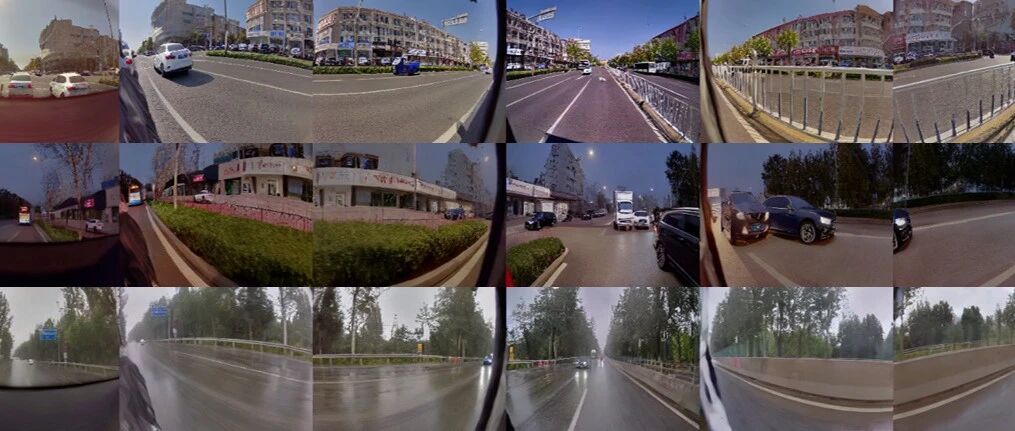
25年国内L4融资已突破300亿
自动驾驶之心· 2025-12-09 00:03
Core Insights - The financing scale for domestic L4 autonomous driving is expected to exceed 30 billion RMB by 2025, marking a historical high and a growth of approximately 257% compared to 2023, which was around 8.4 billion RMB [2] - Logistics delivery and Robotaxi are identified as the two main tracks attracting significant funding, with leading companies and established scenarios receiving financial support [2] - The industry is entering a technical deep-water zone, necessitating more dedicated individuals to address the challenges and pain points [2] Key Directions - The main focus areas include but are not limited to: autonomous driving product management, 4D annotation/data loop, world models, VLA, autonomous driving large models, reinforcement learning, and end-to-end solutions [4] Recent Financing Activities - Zhaofu Intelligent raised 3 billion RMB in June, with investments from Hello Chuxing, Ant Group, and CATL - New Stone Unmanned Vehicles secured 600 million USD in October led by Leishi Capital from the UAE - Pony.ai went public on the Hong Kong Stock Exchange in November, raising approximately 7.7 billion HKD - WeRide also went public on the Hong Kong Stock Exchange in November, raising about 2.4 billion HKD - Didi Autonomous Driving completed a D round financing of 2 billion RMB in October to enhance AI R&D and promote L4 autonomous driving applications - Zhuoyue Technology received a strategic investment of 3.6 billion RMB from China FAW in November [7]

没大厂做靠山的Robotaxi公司,陷入集体焦虑
3 6 Ke· 2025-12-08 23:45
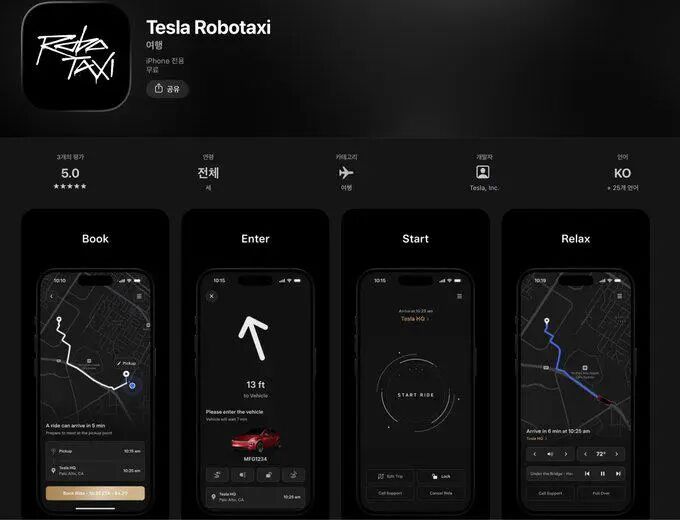
Core Viewpoint - Tesla's Robotaxi app is now available for download in multiple countries, indicating its expansion beyond the U.S. for autonomous ride-hailing services [1][3] Group 1: Industry Dynamics - The autonomous driving industry, particularly in the Robotaxi sector, is experiencing significant internal competition and conflict, as evidenced by the public disputes between leading companies like Xiaoma Zhixing and Wenyan Zhixing [3][4] - The conflict highlights the anxiety within the industry regarding survival and market positioning, as both companies have faced challenges in presenting accurate operational data to investors [4][5] Group 2: Financial Performance - Investment in China's autonomous driving sector peaked in 2021, with 58 financing events totaling 24.27 billion yuan, but has since declined, focusing more on established companies [5][8] - Xiaoma Zhixing and Wenyan Zhixing both faced disappointing stock performances upon their listings, with Xiaoma's shares dropping over 9% and Wenyan's also experiencing significant declines [8][9] Group 3: Company Comparisons - Xiaoma Zhixing reported revenues of 68 million USD, 71 million USD, and 75 million USD for 2022-2024, while Wenyan Zhixing's revenues are projected to decline from 530 million yuan to 360 million yuan over the same period [11][10] - Both companies are struggling with increasing losses, with Wenyan's cumulative losses reaching approximately 6.6 billion yuan and Xiaoma's at 4.58 billion yuan [10][11] Group 4: Market Positioning - The companies are perceived as lacking in the "Taxi" aspect of their business models, primarily relying on B2B project orders rather than direct consumer services, which limits their revenue generation capabilities [14][15] - Despite their technological advancements, both companies face skepticism from investors regarding their long-term viability in the competitive Robotaxi market [10][12] Group 5: Future Outlook - The future success of Robotaxi companies hinges on favorable government policies and the reduction of operational costs, which could lead to profitability as hardware costs decrease [17][12] - The potential for large-scale deployment of Robotaxi services is contingent upon regulatory changes and the ability to address safety and employment concerns associated with autonomous driving [17]
小马智行(2026.HK):单三季度收入同比增长72% ROBOTAXI商业化运营持续推进
Ge Long Hui· 2025-12-08 17:37
Core Viewpoint - The company reported significant revenue growth in Q3 2025, driven by its Robotaxi and Robotruck services, despite continuing net losses [1][2]. Financial Performance - In Q3 2025, the company achieved revenue of $25.44 million, representing a year-on-year increase of 72% and a quarter-on-quarter increase of 18.6% [1]. - The net profit for Q3 2025 was -$61.32 million, compared to -$41.89 million in Q3 2024 and -$53.10 million in Q2 2025 [1]. - Adjusted net profit (after adding back stock-based compensation) was -$54.72 million in Q3 2025, compared to -$41.21 million in Q3 2024 and -$45.89 million in Q2 2025 [1]. Business Segments - Robotaxi service revenue reached $6.70 million in Q3 2025, a year-on-year increase of 89.5%, with passenger fare revenue growing over 200% [1]. - Robotruck service revenue was $10.20 million, reflecting an 8.7% year-on-year growth, aided by a 70% reduction in BOM costs for the fourth-generation Robotruck [1]. - Revenue from licensing and applications surged to $8.60 million, a significant increase of 354.6%, driven by rising demand for autonomous driving domain controllers and unmanned delivery services [1]. Profitability Metrics - The company's gross margin improved to 18.4%, a year-on-year increase of 9.1 percentage points, while the net margin was -242.0%, improving by 42.8 percentage points year-on-year [1]. - The expense ratio was 292.2%, up 7.7 percentage points year-on-year but down 9.5 percentage points quarter-on-quarter [1]. Strategic Developments - The company is a global leader in the commercialization of autonomous driving, with 961 Robotaxi vehicles in operation, including 667 of the seventh-generation model, aiming to exceed 1,000 vehicles by year-end and 3,000 by the end of 2026 [1]. - The seventh-generation Robotaxi has achieved profitability on a per-vehicle basis at the city level [1]. - The company expanded its strategic partnerships, including a collaboration with Sunshine Travel for comprehensive cooperation in autonomous driving, and entered the Qatari market with Mowasalat [1]. - The company is also exploring new markets through partnerships with global ride-hailing platforms like Uber and Bolt [1]. Investment Outlook - The company maintains its profit forecast, projecting revenues of $80 million, $93 million, and $195 million for 2025-2027, with expected net losses of -$227 million, -$220 million, and -$195 million respectively [2]. - The company continues to hold an "outperform" rating, with optimism regarding its growth in the Robotaxi and Robotruck sectors [2].
资本围城中的自动驾驶,“讲故事”的终结与“看落地”的开启
3 6 Ke· 2025-12-08 08:51
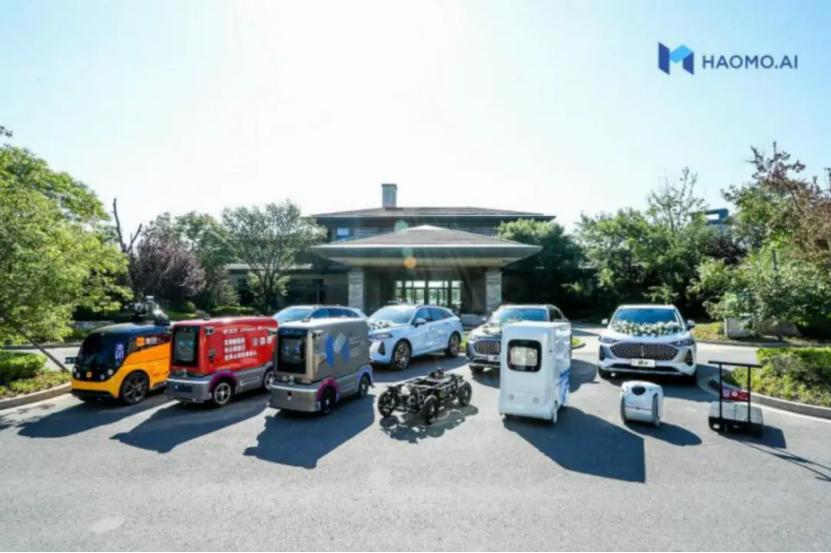
Core Viewpoint - The exit of Haomo Zhixing from the autonomous driving industry symbolizes the drastic changes in the financing environment, reflecting the challenges faced by companies in the sector as capital enthusiasm wanes and a more cautious investment approach emerges [1][2][10]. Group 1: Industry Financing Trends - The autonomous driving sector experienced a significant decline in financing, dropping from 932 billion yuan in 2021 to 200 billion yuan in 2023, a decrease of 78% [1][4]. - The initial phase of the industry was characterized by a "golden era" of capital influx, where investors were eager to fund unproven technologies and business models [2][4]. - The shift in capital strategy has moved from a broad investment approach to a more focused one, concentrating on companies with mature technologies and clear profit potential [5][9]. Group 2: Company-Specific Challenges - Haomo Zhixing, once a prominent player with over 2 billion yuan in financing and a valuation exceeding 1 billion USD, faced severe financial pressure, securing only 300 million yuan in 2024, insufficient for ongoing R&D and expansion [1][6][9]. - The company struggled with high hardware costs of 8,000 yuan per unit, while the industry average had fallen below 4,000 yuan, leading to a loss of competitive edge [9]. - The inability to demonstrate tangible results and a clear path to profitability contributed to the company's exit from the market, highlighting the need for firms to prove their technology can generate actual revenue [9][10]. Group 3: Market Dynamics and Future Outlook - The financing environment has led to a widening gap between leading companies and smaller players, with a clear trend of "head companies thriving, mid-tier struggling, and tail-end companies being eliminated" [7][10]. - Leading firms are leveraging their established technologies and funding to expand market share, while smaller companies are forced to adapt by focusing on niche markets or forming partnerships with larger entities [7][10]. - Despite the current challenges, there remains potential for recovery through technological breakthroughs, policy support, and innovative business models that lower entry barriers for users [10].
渣打银行李海强:连接大湾区与世界,为中国企业出海注入新动力
2 1 Shi Ji Jing Ji Bao Dao· 2025-12-08 08:33
Core Insights - The Southern Finance Forum 2025 Annual Conference emphasizes the theme "The Power of Consensus - Innovation Surges, China's Asset Revaluation" [1] - Standard Chartered Bank's CEO for the Greater Bay Area, Li Haiqiang, discusses the trends and challenges faced by Chinese enterprises going global, highlighting the importance of financial innovation in supporting these efforts [1][2] Group 1: Trends in Chinese Enterprises Going Global - Chinese enterprises are increasingly pursuing internationalization as a necessary path for large companies and a survival strategy for small and medium-sized enterprises [1] - The trend of Chinese companies going global has evolved from "going out" to "integrating in," indicating a deeper commitment to local markets [1] - The "new three items" have become significant forces in the global supply chain, with many Chinese companies emerging as industry leaders [1] Group 2: Financial Challenges and Innovations - Chinese enterprises face challenges in cross-border finance, including capital management, financing, supply chain coordination, currency settlement, and exchange rate risks [2] - Standard Chartered Bank has established a new economy business team to provide comprehensive services to support these enterprises since 2016, exemplified by its partnership with autonomous driving leader Pony.ai [2] - The bank has also innovated in cross-border RMB business to enhance the competitiveness of Chinese enterprises [2] Group 3: Technological Advancements and Support - Standard Chartered Bank is investing in technology-driven financial innovation, including artificial intelligence and digital assets, and is establishing an AI research center in Guangzhou [3] - The bank has formed strategic partnerships with leading Chinese tech companies to better support Chinese enterprises going global [3] - The Greater Bay Area is positioned as a vibrant cross-border financial ecosystem, leveraging its geographical advantages and technological strengths to provide efficient global financial support [3] Group 4: Role of Standard Chartered Bank - As an international bank with over 160 years of experience in the Greater Bay Area, Standard Chartered Bank aims to act as a "super connector" between the region and the world, facilitating cross-border financial innovation [4]

达晨、华控领投,极佳视界A2轮再融2亿,押注“世界模型+行动模型”原生架构
Tai Mei Ti A P P· 2025-12-08 07:17
Group 1 - The company, Jiga Vision, has completed a new round of financing, raising 200 million yuan in Series A2 funding, led by Dashen Caizhi, with participation from several notable investors, bringing the total funding raised in the last three months to 500 million yuan [2] - The founder and CEO, Dr. Huang Guan, has a strong background in AI and robotics, having previously worked at leading research institutions and has been instrumental in the evolution of physical AI from its inception to industrial application [2][3] - Jiga Vision has introduced a new paradigm for artificial general intelligence (AGI) that emphasizes a "world model + action model + reinforcement learning" framework, indicating a shift towards general action models in the industry [3] Group 2 - The company has officially launched two core models for physical AGI: GigaBrain-0, an end-to-end decision control model, and GigaWorld-0, a high-quality world model, along with the Maker H01 robot platform [4] - GigaBrain-0 enhances 3D spatial perception and structured reasoning capabilities, significantly improving navigation accuracy and task execution in complex environments, outperforming current state-of-the-art methods in various benchmarks [5] - GigaWorld-0 generates high-fidelity, controllable, and diverse interactive data, achieving nearly 300% performance improvement in key generalization dimensions, making it a cost-effective solution in the current market [6] Group 3 - Maker H01 is designed for open environments in home, commercial, and light industrial applications, featuring a dual-arm and omnidirectional mobile chassis, capable of performing precise operations and complex tasks [6][7] - The integration of GigaBrain-0, GigaWorld-0, and Maker H01 accelerates the transition of embodied intelligence from the laboratory to scalable applications, marking a significant step towards a reliable and generalizable physical AGI era [7]

孙志洋:“十四五”时期广州GDP增量预计达7000亿元
Nan Fang Du Shi Bao· 2025-12-08 05:21
Core Viewpoint - Guangzhou aims to achieve a GDP of 3.1 trillion yuan in 2024, with an expected GDP increment of 700 billion yuan during the 14th Five-Year Plan period [1][2] Economic Growth - Guangzhou's industrial investment has increased from 103 billion yuan in 2020 to 171.1 billion yuan in 2024, marking a growth of 66% [2] - The city has six advanced manufacturing clusters with output exceeding 100 billion yuan and ten service sectors with added value over 100 billion yuan [2] - The added value of advanced manufacturing accounts for 60% of the industrial output, while the added value of productive services constitutes 59% of the service sector [2] Innovation and Technology - Guangzhou has become a hub for major scientific platforms, including national laboratories and international scientific programs, enhancing its innovation ecosystem [2] - Significant breakthroughs have been made in key technologies such as deep-sea submersibles and high-performance integrated electric drives, with local industries breaking foreign technology monopolies [2] - R&D expenditure has consistently remained above 100 billion yuan annually for the past two years, with 24 companies listed as global unicorns, tripling since 2020 [2] Infrastructure and Urban Development - The city has made progress in the Nansha Free Trade Zone, with 45 and 136 institutional innovations being promoted nationwide and provincially, respectively [4] - Guangzhou's business environment has improved significantly, with over 425,000 operating entities, a 58% increase since the end of 2020 [4] - The city has seen the establishment of over 30,000 new foreign enterprises and an increase in Fortune 500 companies to 368 [4] Social and Environmental Progress - Guangzhou has achieved a historic low in PM2.5 concentration, with all monitored water quality sites meeting excellent standards [5] - The city has added 163,400 jobs, leading the province, and has expanded public education and healthcare services significantly [5] - The urban village renovation plan has seen 52 projects included and all have commenced construction [5] Safety and Governance - Guangzhou has built over 30,000 emergency response units and has not experienced major accidents for 13 consecutive years, with a continuous decline in criminal cases [6] - The city has been recognized as a national model for social security and legal governance [6] Future Outlook - Guangzhou is committed to taking on a leading role in the upcoming 15th Five-Year Plan, aiming to create new advantages and breakthroughs for national and provincial development [6]

Waymo决定召回无人驾驶汽车,以解决超校车问题
Guan Cha Zhe Wang· 2025-12-08 03:49
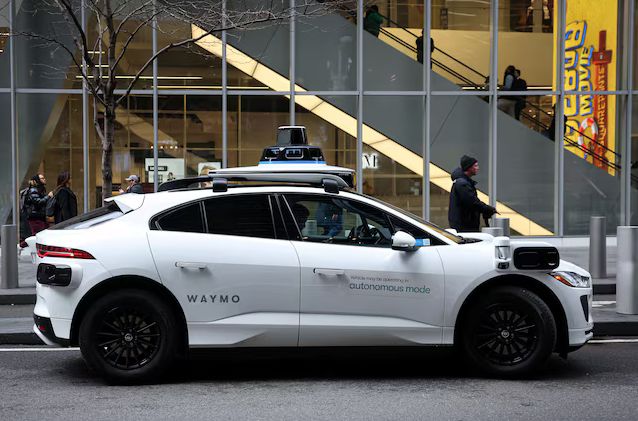
但此前得克萨斯州官员表示,自本学年开始以来,Waymo的Robotaxi至少19次非法驶过校车而非减速或 停车。对此,美国国家公路交通安全管理局(NHTSA)于10月对学区附近的Waymo车辆展开调查。 今年11月,NHTSA又发布消息称,得克萨斯州奥斯汀独立学区表示,在Waymo宣布通过软件更新以解 决该问题后,整个11月仍发生五起不停车事件。对此,学区方面要求Waymo在上学和放学期间停止在 学校周围运营,直到确保车辆不会再违反交规。 Waymo首席安全官毛里西奥·佩纳(Mauricio Pena)在一份声明中表示,Waymo决定向国家公路交通安 全管理局提交自愿软件召回,佩纳补充说,该公司认为,已经实施的软件更新显著提高了性能,以在经 过校车时适当减速和停车,并将继续根据需求跟踪并实施更多更新。 Waymo无人驾驶汽车 路透社 根据美国交通法规,只要校车亮起红色警示灯并伸出停车臂,所有车辆必须立即停车、禁止超车。这是 一条全国范围最严格、处罚最重的交通法规之一,目的是确保儿童在上下校车时的绝对安全。 【文/观察者网 潘昱辰 编辑/高莘】据路透社报道,自动驾驶服务供应商Waymo日前宣布,将召回其无 人驾 ...
中泰国际每日晨讯-20251208
ZHONGTAI INTERNATIONAL SECURITIES· 2025-12-08 03:24
Market Overview - The Hang Seng Index and the Hang Seng China Enterprises Index closed at 26,085 points and 9,198 points respectively, with weekly increases of 0.9% and 0.8% [1] - Total trading volume in Hong Kong stocks was HKD 933.2 billion, a decrease of 14.5% from the previous week [1] - The materials, industrials, and energy indices rose by 10.0%, 3.4%, and 3.1% respectively, while healthcare, real estate, and consumer staples indices fell by 0.8%, 0.2%, and 0.2% [1] - Major blue-chip stocks like Zijin Mining (2899 HK) and China Hongqiao (1378 HK) led the gains, rising by 12.1% and 9.3% respectively, while Shenzhou International (2313 HK) and Meituan (3690 HK) saw declines of 6.9% and 3.4% [1] Industry Dynamics - The performance of non-ferrous metals and gold stocks was strong, driven by expectations of tight copper supply and rising copper prices reaching USD 11,620, a recent high [2] - The semiconductor and AI sectors are gaining market attention, with energy demand expected to rise in the medium to long term, benefiting uranium and power equipment sectors [2] - The autonomous driving sector remains vibrant, with companies like WeRide (800 HK) and Pony.ai (2026 HK) seeing stock increases of 4%-5% [4] - The healthcare sector saw a slight decline, with the Hang Seng Healthcare Index dropping 0.7%, but companies like Kelun Biotech (6990 HK) showed resilience, rising 2.5% after announcing strategic partnerships [5] Specific Company Developments - Kelun Biotech announced a strategic partnership with Crescent Biopharma, involving exclusive rights for research and commercialization of antibody-drug conjugates and bispecific antibodies, with potential milestone payments totaling up to USD 1.25 billion [5] - In the uranium and power equipment sectors, companies like CGN Mining (1164 HK) and Harbin Electric (1133 HK) saw significant stock increases of 7.3% and 6.9% respectively, driven by positive market sentiment regarding AI's impact on energy demand [6]