
茶饮

Search documents
蜜雪想再造一个“蜜雪”
Jing Ji Guan Cha Wang· 2025-08-01 11:34
Core Viewpoint - The company aims to replicate the success of its tea brand, Mixue, with its coffee brand, Lucky Coffee, targeting 10,000 stores by 2025, despite facing a competitive market environment with established players like Luckin and Kudi [2][14]. Expansion Strategy - As of July 2023, Lucky Coffee has reached 7,000 stores and plans to double its market personnel to over 400 to accelerate store openings [3]. - The company has lowered the franchise fee to 17,000 yuan for new stores signed before August 1, 2023, and offers various subsidies in key provinces and major cities, with total discounts reaching up to 34,000 yuan in six major cities [3][14]. - Lucky Coffee has organized its expansion strategy by dividing regions into areas with 1,000 to 3,000 stores, assigning market personnel to support franchisees in operations and marketing [3]. Market Positioning - Lucky Coffee was established in 2017 and became an independent brand under Mixue Group in 2020, with a vision to provide high-quality, affordable coffee globally [4][5]. - The brand initially focused on lower-tier cities and university towns, filling a market gap where few chain coffee shops existed [13]. Pricing Strategy - Lucky Coffee has significantly reduced prices, with medium Americanos dropping from 8 yuan to 5 yuan and large lattes from 12 yuan to 9 yuan [6]. - In response to market competition, Lucky Coffee launched a promotional campaign offering all items at 6.6 yuan, resulting in a 44% increase in sales on the first day [16][17]. Competitive Landscape - The coffee market has become increasingly competitive, with major players like Luckin and Kudi rapidly expanding their store counts, while Lucky Coffee has seen a decline in new store openings [14][15]. - Despite the competitive pressure, Lucky Coffee maintains a competitive advantage with an average cup price of around 7 yuan [14]. Supply Chain and Operational Efficiency - Lucky Coffee benefits from a shared supply chain with Mixue Group, which enhances its operational efficiency and cost management [23]. - The company has opted for semi-automatic coffee machines to reduce costs, contrasting with competitors who have switched to more expensive fully automatic machines [18]. Financial Performance and Future Outlook - Mixue Group's revenue model heavily relies on selling equipment and raw materials to franchisees, with franchise fees contributing only 2.5% of total revenue [21][22]. - The company anticipates significant growth potential in the coffee market, with projections indicating a future increase in store numbers [22].


甜啦啦荔枝系列新品在全国门店上线
Bei Jing Shang Bao· 2025-08-01 11:05
Core Viewpoint - The new lychee series launched by the tea brand Sweet Lala aims to invigorate the summer beverage market with innovative flavors and appealing design while maintaining its core positioning of "low price, high value" [1] Product Launch - Sweet Lala has introduced four new lychee-flavored beverages: "Lychee Ice Brew, Lychee Ice Lemon, Lychee Peach, and Lychee Latte" to cater to diverse consumer preferences [1] - The visual design of the lychee series features a light pink color scheme, reflecting a sweet and fresh Eastern aesthetic [1] Market Strategy - The launch of the lychee series is positioned as a blend of innovative flavor combinations, eye-catching traditional aesthetics, and engaging interactive experiences, aimed at bringing a refreshing vitality to the beverage market this summer [1] - The company emphasizes that the lychee series represents not only a taste innovation but also a contemporary expression of Eastern culinary culture [1]
奶茶排队王茶颜悦色,为啥卖不动了?
Hu Xiu· 2025-08-01 11:03
茶颜悦色当年有多疯狂?朋友圈没发过茶颜打卡照,都不好意思说去过长沙。有人高铁跨省人肉代购, 光跑腿费就要600。武汉首店开张,排出史诗级长队,喝一杯奶茶要排队8小时。在南京开店,早上四五 点就有人来排队,可如今的茶颜,热度明显降下来了,长沙的门店早没了长队的影子,外地新店开业也 没那么火爆了。网友到现在还在吐槽:"罚站式排队""搞饥饿营销"。这网红奶茶祖师爷,怎么就突然卖 不动了? ...
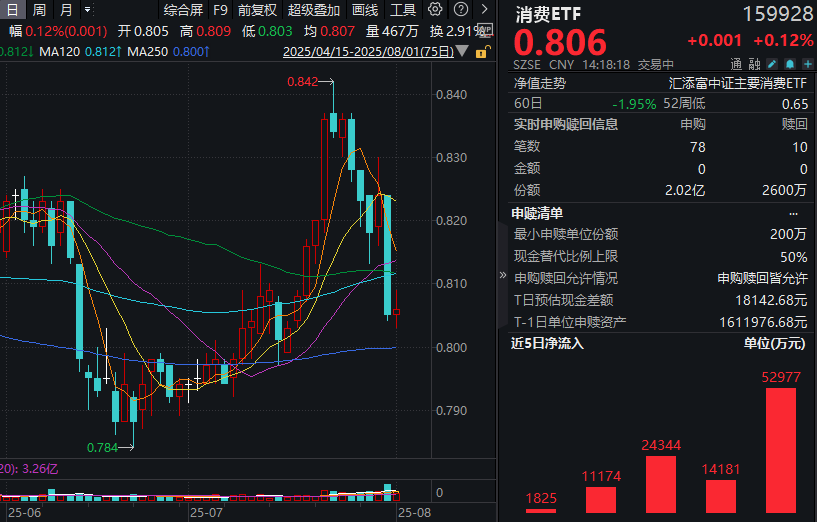
重要会议召开,高层谈下半年如何推动消费!消费ETF(159928)飘红盘中大举净申购1.76亿份,近7日暴力“吸金”超12亿元!
Xin Lang Cai Jing· 2025-08-01 07:48
Group 1: Market Overview - A-shares collectively declined, with consumer ETFs showing a mixed performance, as the Consumption ETF (159928) recorded a net inflow of 1.76 million units, marking the seventh consecutive day of capital inflow, totaling over 1.2 billion yuan [1] - The Consumption ETF (159928) has a current scale exceeding 12.9 billion yuan, leading its peers significantly [1] - The Hong Kong Stock Connect Consumption 50 ETF (159268) also experienced a decline of 0.8%, but has seen net inflows for four consecutive days [1] Group 2: Government Initiatives - The government has allocated 690 billion yuan for the third batch of special bonds to support the consumption of old goods, with plans to release another 690 billion yuan in October, completing the annual target of 300 billion yuan [2] - Officials emphasized that the healthy development of consumption is a result of both enhancing consumer capacity and providing high-quality supply to create new demand [2] Group 3: Consumer Policy and Impact - New policies aimed at supporting families with multiple children are expected to stabilize birth rates and enhance consumer sentiment, particularly in the infant formula sector [4] - The expected increase in newborns to approximately 10 million by 2025 could lead to a total of 28.56 million newborns covered by the subsidy system, with an estimated subsidy amount of 102.8 billion yuan [4] - The release of consumer capacity and expansion of demand base are anticipated to benefit the infant formula industry, as families may upgrade to mid-to-high-end products due to improved disposable income [4] Group 4: Industry Insights - The food and beverage sector is seeing a slight increase in active fund holdings, with a focus on high-demand categories such as beverages and snacks, indicating a potential recovery in consumer spending [5] - The pig farming industry is expected to maintain profitability despite price pressures, with a focus on low-cost producers as the market stabilizes [6] - The Consumption ETF (159928) is noted for its resilience across economic cycles, with top holdings including major liquor brands and dairy companies, indicating strong sector fundamentals [7][8]

对话柠季汪洁:我要是自己不到海外,得开除100个人
Sou Hu Cai Jing· 2025-08-01 06:59
Core Viewpoint - The global business environment is facing significant challenges, leading to a slowdown in economic growth and a shift in strategies for Chinese companies expanding overseas [4][5]. Group 1: Economic Context - The World Bank's report indicates that global economic growth is expected to be the slowest since 2008, with 70% of economies having their growth forecasts downgraded [4]. - The economic downturn presents challenges for companies looking to expand internationally, as traditional strategies based on scale may no longer be effective [5]. Group 2: Challenges for Chinese Companies - Chinese companies venturing abroad are encountering escalating difficulties, including compliance issues, expansion challenges, profitability concerns, brand recognition, and organizational development [5][6]. - The competition for Chinese companies will shift from market capture and price competition to organizational building and talent acquisition [6]. Group 3: Case Study - Ningji - Ningji, a tea beverage company, has faced significant hurdles in its international expansion, having opened only 15 stores in the U.S. after a year and a half, compared to 3,000 stores domestically in four years [7]. - The company experienced delays in regulatory approvals, such as advertising sign permits, which took nearly four months to secure [11]. - Ningji's strategy has evolved to focus on understanding local markets and building a diverse talent pool, rather than solely targeting Chinese communities abroad [8][9]. Group 4: Organizational Insights - The founder of Ningji emphasizes the importance of hands-on involvement in overseas operations to understand local challenges and adapt strategies accordingly [14][15]. - The company aims to create a management system similar to Danaher, focusing on organizational capability and talent diversity as key components of its global strategy [44][46]. - Ningji's approach to hiring prioritizes individuals who understand both Chinese culture and the U.S. market, reflecting a need for a balanced team [47][48]. Group 5: Market Observations - The U.S. tea market is characterized as a developing market, with significant opportunities for growth despite the perception of it being a developed market [17][32]. - Ningji's strategy includes adapting its product offerings to local tastes and gradually building brand recognition through community engagement [25][27]. - The company is also exploring markets in Southeast Asia and Australia, focusing on local consumer preferences while leveraging its brand [27][30].

外卖大战结束,“绕地球一圈” 的香飘飘却撑不住了?
3 6 Ke· 2025-08-01 03:09
Core Insights - The fierce price war in the ready-to-drink tea market has led to the downfall of Xiangpiaopiao, marking it as the first casualty of the ongoing food delivery battle [1][7] - The rapid growth of ready-to-drink tea brands is significantly impacting traditional brewing markets, raising questions about the future of established brands like Xiangpiaopiao [2][12] Company Performance - Xiangpiaopiao reported a net loss of 97.39 million yuan for the first half of 2025, with a year-on-year increase in losses of 68 million yuan, marking its worst mid-year performance since going public [5][6] - The company's stock price has dropped over 60% since its peak in 2019, resulting in a market capitalization loss exceeding 8.4 billion yuan [5] Market Trends - The ready-to-drink tea segment has seen explosive growth, with brands like Nayuki and Mixue experiencing significant increases in order volumes, while Xiangpiaopiao struggles to maintain its market position [4][8] - The number of new tea drink stores is projected to rise from 378,000 in 2020 to 630,000 by 2025, indicating a shift in consumer preferences towards ready-to-drink options [8] Competitive Landscape - New tea brands are rapidly innovating and introducing new products, while Xiangpiaopiao has stagnated with a limited product range, leading to a decline in sales volume from 45.59 million boxes in 2020 to 32.78 million boxes in 2024 [9][10] - The convenience of ready-to-drink options is reshaping consumer behavior, making traditional brewing methods less appealing [10][12] Strategic Challenges - Xiangpiaopiao's attempts to diversify into ready-to-drink products have faced challenges due to inconsistent brand positioning and competition from both new entrants and established players [15][18] - The company's marketing efforts have not effectively translated into market share gains, as it struggles to compete in both traditional and modern retail channels [16][17]

喜茶爆单,抹茶“杀疯”,中国抹茶会是下一个Labubu吗?
3 6 Ke· 2025-08-01 02:34
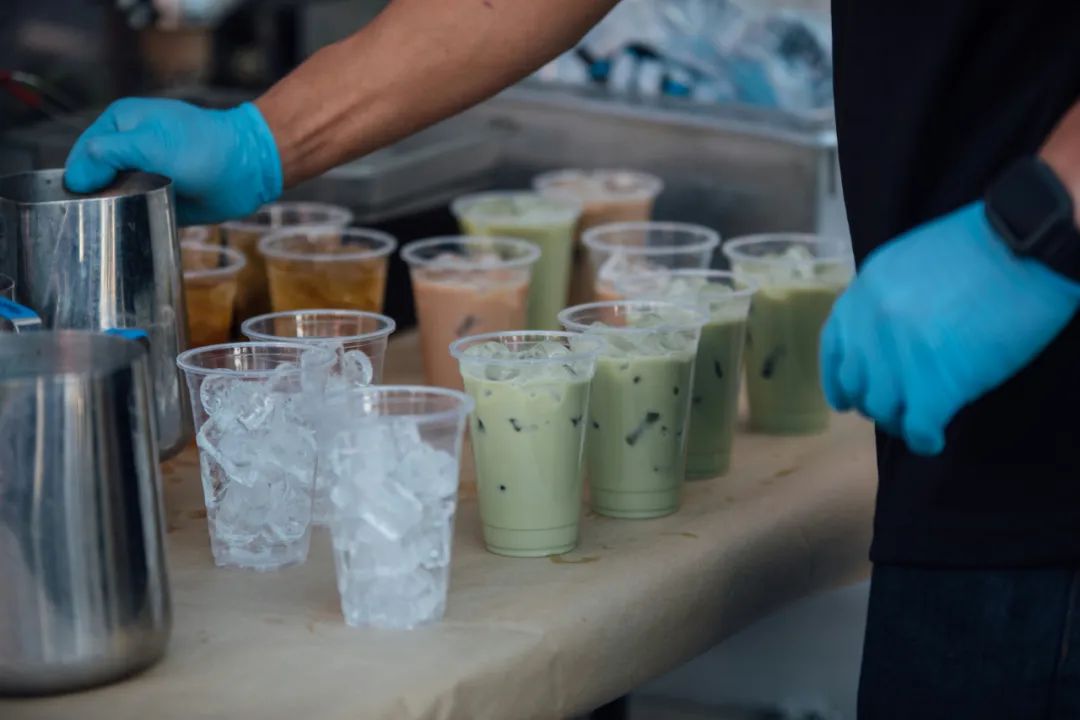
Core Insights - BLACKPINK member's social media post has significantly boosted the global sales of HEYTEA's "Triple Thick Matcha" drink, leading to a surge in orders across various countries [1][5][10] - The matcha market is experiencing rapid growth, with various brands launching new matcha products, indicating a trend towards increased consumer interest in matcha beverages [3][4][13] Group 1: Impact of Social Media - The Instagram post by a BLACKPINK member led to a dramatic increase in orders for HEYTEA's "Triple Thick Matcha," with sales in Shanghai and Hangzhou rising over 500% the day after the post [8][10] - Global HEYTEA stores quickly responded to the surge in demand, with some locations running out of stock and others offering limited-time promotional activities [10][12] Group 2: Market Trends - The matcha market in the Asia-Pacific region accounted for 57.76% of the global market in 2023, with significant growth expected in China, Japan, the UK, and Germany [4][20] - Various brands, including Nayuki and Tea Baidao, have introduced new matcha products, reflecting a broader trend in the beverage industry towards matcha [3][13] Group 3: Regional Production and Branding - China has become the largest producer and consumer of matcha globally, surpassing Japan in both production and consumption [20][34] - Regions like Zhejiang, Guizhou, and Hubei are emerging as key players in the matcha industry, each with unique advantages and potential to become "China's Matcha Capital" [20][26][30] Group 4: Consumer Awareness and Cultural Perception - There is a growing awareness among consumers that matcha originated in China, particularly in regions like Jing Mountain, which is gaining recognition alongside traditional Japanese matcha [4][18][20] - The popularity of matcha products has sparked discussions about cultural appropriation, as many consumers associate matcha primarily with Japanese culture despite its Chinese roots [15][17]

15家店关了一半,00后奶茶老板决定:上班赚钱养员工
3 6 Ke· 2025-08-01 02:28
"我打算出去上班,赚钱养员工了……" 最近,一位00后奶茶店老板突然告诉我。 巅峰期,他开过不止15家店,"30平小店3天营收8万""8个月让一家店回本",都是他曾经的成绩。 然而从去年开始,他接连关了8家店,如今更是决心"上班养店",背后到底有什么故事? 3天营收8万、8个月回本 作为一名00后,在很多人还在求职打工时,25岁的深深已经实打实成为一个老板,言谈间透露出成熟生意人身上的理性。 我了解到,高峰时他独立开出超15家奶茶店,还入股多家,加盟了四五个一线品牌。 其中有一家30平的奶茶店8个月就回本了。 "赶上了当时所在大餐层费大厨等一些知名餐饮品牌开业,带动了我们的生意。当时餐饮店桌子上基本都放着我们的产品。" 深深说,为了压低建店成本,他一直坚持开小店,超过40平就不看了,而且不选商场一楼、负一楼,"租金hold不住","水果茶清爽解腻,和香辣的小炒 菜正好匹配"。 "事实上,只要同层有一家知名餐饮店开业,我们都会做二次开业活动。"深深说,算算有得赚就做。 还有一家店开业3天营收做了8万,主要最对了两件事: 二是跟品牌方沟通好,设计"新人券包",给顾客很多券,让其在后续一周、甚至一个月都有抵扣。 其 ...
上半年,哪些消费投资人赚到大钱?
3 6 Ke· 2025-08-01 02:17
Group 1 - The investment landscape in the consumer sector in 2025 shows a stark contrast between successful exits and significant losses, highlighting the volatility of the market [1] - Bee Chao Capital achieved a remarkable exit from Pop Mart with a return of 31.23 billion HKD, while Jiangsu Hongxin faced a -10.6% IRR loss on its IPO [1] - The report analyzes various consumer industry exit events in the first half of 2025, aiming to provide insights into successful and unsuccessful investment strategies [1] Group 2 - Notable successful exits include companies like Honey Snow Group, which reported a staggering 401,276x return, while Jiangsu Hongxin and others faced negative returns [3] - The data indicates that some investors in the consumer sector have achieved returns exceeding 200%, while others have suffered losses of over 10% [2][3] - The analysis categorizes different consumer sectors based on their performance, identifying which sectors are gaining traction and which are being overlooked [1][2]

餐饮行业产品上新报告(2025年6月)
Hong Can Chan Ye Yan Jiu Yuan· 2025-07-31 14:27
Investment Rating - The report does not explicitly provide an investment rating for the restaurant industry Core Insights - The report analyzes the new product launch trends in the restaurant industry, focusing on six representative categories: Western fast food, noodles, tea drinks, coffee drinks, bakery, and hot pot. A total of 330 brands were monitored, with 177 brands launching new products in June 2025, accounting for 53.6% of the monitored sample. The total number of new products launched across these categories was 785, representing a 14.1% decrease compared to May 2025 [4][10][15]. Summary by Category Western Fast Food - In June 2025, 20 brands launched 66 new products, with dessert items leading at 24.2%. Innovations focused on filling and flavor, with 51.4% of new products emphasizing filling innovation, integrating local and healthy ingredients [24][17][22]. Noodles - Among 61 monitored brands, 21 launched 65 new products, with mixed noodles and dessert drinks forming a core launch strategy, together accounting for over 40%. The main innovation direction involved using local and wild ingredients as toppings, with 66.7% of innovations focusing on toppings [32][30]. Tea Drinks - A total of 64 brands launched 245 new products, with fruit tea leading the category. The report highlights the use of seasonal fruits and emphasizes the reduction of vegetable elements in new products. 73.1% of new products contained tea bases, with green tea being the most popular [35][36][40]. Coffee Drinks - 23 brands launched 78 new products, with fruit elements comprising 71.2% of the ingredients. Coffee liquid bases were predominant, making up 66% of new products. The report notes a trend towards complex flavor profiles in new coffee products [46][50][53]. Bakery - 33 brands launched 263 new products, with cakes being the most prevalent at 57.8%. The report indicates a focus on seasonal and health-oriented products, with a notable increase in the use of fruits and dairy ingredients [60][63]. Hot Pot - 16 brands launched 68 new products, with hot pot ingredients leading at 54.4%. The emphasis was on the quality of ingredients and traditional preparation methods, showcasing local specialties [66][64].