创新药

Search documents
港股投资价值深度解析:价值趋合理 稀缺资产成关注焦点
Zhong Guo Zheng Quan Bao· 2025-12-02 20:22
Market Overview - As of November 28, 2025, the Hong Kong Stock Exchange has 2,664 listed companies with a total market capitalization of approximately HKD 48 trillion [1] - The Hang Seng Index and the Hang Seng Tech Index have increased by 29% and 25% respectively this year, indicating significant market rotation [2][3] - The overall valuation of Hong Kong stocks is currently within a reasonable range, with a focus on scarce assets such as internet leaders and innovative pharmaceuticals [1][8] Market Structure - The market is characterized by a high concentration of value in large-cap companies, with 65% of companies having a market cap of HKD 0-20 billion, but only accounting for 1.80% of the total market capitalization [2] - Institutional investors dominate trading, contributing 85% of the transaction volume, with international investors making up 60% of the market [1][2] Valuation Insights - The AH premium index is currently at 121, which is historically low, indicating that Hong Kong stocks are not significantly overvalued nor is there substantial room for valuation recovery [3] - The valuation of the Hang Seng Index is at a historically high level compared to the CSI 300, while the Hang Seng Tech Index remains relatively low in absolute valuation terms [3] Asset Highlights - Key scarce assets in the Hong Kong market include internet leaders, innovative pharmaceuticals, new consumption, and dividend stocks, while high-end manufacturing is relatively weak [4][7] - Internet leaders like Tencent and Alibaba are seen as core highlights, with significant capital expenditures and a strong user ecosystem [4][5] - The innovative pharmaceutical sector is viewed as a "first-tier market" with a higher "innovation content" compared to A-shares, benefiting from favorable listing rules for biotech companies [5][6] Investment Dynamics - The investor structure is increasingly international, with a notable inflow of southbound funds, which have reached a cumulative net inflow of HKD 13,820 billion this year, a 90% increase year-on-year [7][8] - Despite the presence of quality assets, the market has passed the high-return investment phase, and the uncertainty of incremental capital inflows suggests a mixed outlook for future market performance [8]



博格是止疼药~2025年12月2日 市场温度
Sou Hu Cai Jing· 2025-12-02 18:35
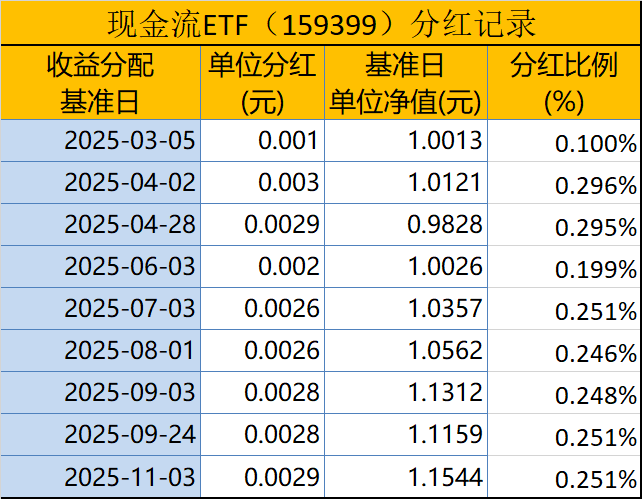
Group 1 - The cash flow ETF has shown a significant increase in performance, with a growth rate of 15.96% since its launch, compared to the 4.95% increase of the CSI Dividend Index [4] - The cash flow ETF's assets have grown from 1.6 billion units at launch to nearly 3.9 billion units, indicating increasing investor interest [4] - The cash flow ETF tracks the FTSE China A-Share Free Cash Flow Focus Index, which currently has a price-to-earnings (P/E) ratio of less than 14 times, suggesting it is undervalued [4] Group 2 - The innovation drug sector in Hong Kong is highlighted as having better value compared to A-shares, with leading companies concentrated in Hong Kong due to earlier listings [8] - The innovation drug sector has seen significant valuation adjustments this year, placing it in a reasonable range for future recovery [8] - The industry fundamentals are strong, with improved profitability for listed companies and ongoing policy support for innovation [8][9] Group 3 - The Hang Seng Technology Index is currently valued at around 20 times P/E, presenting a compelling investment opportunity [8] - The report suggests that the market is likely to experience a period of "boring" fluctuations without significant movements, advising investors to hold core positions [8] - The report emphasizes the importance of active management in the innovation drug sector, as internal differentiation may lead to better returns than simply tracking the index [10]

港股医药:回调之后,机会浮现?
Quan Jing Wang· 2025-12-02 14:02
Core Insights - The article discusses the recent developments in the Hong Kong pharmaceutical sector, particularly focusing on the innovative drug industry, which is experiencing a shift from traditional financing to becoming a showcase for new economy enterprises [3][4][5] - The article emphasizes the importance of external factors such as U.S. Federal Reserve monetary policy, international trade environment, and competition dynamics in influencing the performance of the Hong Kong pharmaceutical sector [6][7][8] Industry Overview - The Hong Kong stock market is transitioning to showcase high-quality companies in sectors like technology, innovative drugs, and new consumption, attracting global capital [3] - Recent adjustments in the Hong Kong pharmaceutical sector are attributed to short-term market sentiment fluctuations and profit-taking, rather than fundamental changes in the industry [4][5] Market Dynamics - The Hang Seng Healthcare Index and the Hong Kong Stock Connect Innovative Drug Select Index are highlighted for their differing coverage and focus, with the former being broader and the latter concentrating on high R&D investment and liquidity companies [2][20] - The innovative drug sector is seeing a significant increase in attention from investors, driven by strong performance in CXO and life sciences services, with profits in these areas growing over 50% year-on-year [19] Policy Environment - Domestic policies are shifting towards supporting genuine innovation, with measures like the establishment of a new drug pricing mechanism and the integration of commercial insurance with the medical insurance directory [7][8] - The article notes that the regulatory environment is improving, which is expected to stabilize profit expectations for pharmaceutical companies [7][8] Investment Strategies - The article advocates for ETF investments in the innovative drug sector due to their diversification, low entry barriers, cost advantages, and high liquidity [21][22] - Suggested investment strategies include dollar-cost averaging and phased investments to manage volatility in the high-risk pharmaceutical sector [24][25] Future Outlook - The long-term growth of the innovative drug sector is supported by a combination of favorable policies, improving industry fundamentals, and the ongoing internationalization of Chinese pharmaceutical companies [15][16] - The article concludes that the current market adjustments provide an opportunity for investors to reassess the long-term value of companies in the innovative drug sector [15][16]

创新药遭遇“窜天猴” 两个月大涨30% 1只实验猴卖12万元仍“有价无猴”
Mei Ri Jing Ji Xin Wen· 2025-12-02 13:09
Core Insights - The price of experimental monkeys, specifically the crab-eating macaque, has surged above 100,000 yuan, marking a significant increase of over 30% from previous prices, leading to a budget shortfall for companies [1][2] - The supply of experimental monkeys is critically low, with a reported annual demand-supply gap of approximately 10,000 monkeys in China, exacerbated by the increasing reliance on these animals for drug safety evaluations [10][11] - The cyclical nature of monkey prices is influenced by a seven-year breeding cycle, making it difficult for breeding companies to respond to market demands in a timely manner [6][7] Price Trends - The price of crab-eating macaques has fluctuated dramatically over the past decade, with a 14-fold increase since 2017, and current prices are expected to stabilize between 70,000 to 150,000 yuan in the next two to three years [2][5] - The peak price reached 200,000 yuan in 2022 and 2023, but has since decreased to around 100,000 yuan, still significantly impacting the cost structure of drug development projects [3][6] Supply Chain Dynamics - The concentration of monkey breeding facilities has increased, with major CRO companies acquiring a significant portion of the available monkeys, leading to a tighter market for smaller companies seeking to procure these animals [9][10] - The breeding cycle for crab-eating macaques is lengthy, taking approximately 6 to 7 years from birth to maturity, which complicates the ability of breeding companies to scale up production in response to rising demand [6][7] Industry Implications - The high cost of experimental monkeys now constitutes a core part of the toxicology testing budget, with estimates suggesting that a single project may require four to five million yuan just for safety evaluation experiments [3][4] - The ongoing demand for innovative drug development, particularly in areas such as antibody drugs and gene therapy, continues to drive the need for crab-eating macaques in preclinical testing [7][11] Future Outlook - The industry is facing a potential decline in self-sustaining breeding capacity, with projections indicating that the annual production of self-bred crab-eating macaques may fall below 10,000 in the next two to three years if current trends continue [7][10] - Companies are urged to consider long-term strategies for breeding and procurement to mitigate the impact of fluctuating prices and supply shortages in the future [6][9]
豪掷173亿!年内33家公募参与定增,硬科技成“最强磁场”
2 1 Shi Ji Jing Ji Bao Dao· 2025-12-02 12:40
Core Insights - The A-share private placement market is experiencing significant participation from public funds in 2025, with 33 fund companies involved and a total allocation amounting to 17.3 billion yuan, representing a 140% increase compared to the entire year of 2024 [1][2] Group 1: Market Participation - Public funds have shown a marked increase in enthusiasm for private placements, with a total allocation of 17.3 billion yuan in 2025, up from 7.2 billion yuan in 2024, indicating a growth of over 10 billion yuan [2] - Leading public fund institutions, such as E Fund, GF Fund, and Fortune Fund, have emerged as key players, with allocations of 3.687 billion yuan, 2.288 billion yuan, and 1.463 billion yuan respectively [2] Group 2: Investment Focus - The investment focus of public funds is heavily concentrated in hard technology sectors, particularly in semiconductors, artificial intelligence, and innovative pharmaceuticals, reflecting a strong alignment with the ongoing "technology bull" market [3][4] - Notable allocations include 7.45 billion yuan in the electronics sector and 5.6 billion yuan in the biopharmaceutical sector, with key companies like Cambricon, Chipone, and Bairi Tianheng receiving significant funding [3] Group 3: Drivers of Growth - The resurgence of private placements is driven by three main factors: policy incentives, a safety margin due to pricing discounts, and significant profit-making potential observed by participating institutions [4] - The overall performance of public funds in private placements has been strong, which has further encouraged institutional participation [5]
2025年度十大医药技术研报,解码产业创新与全球化新机遇
Xin Lang Cai Jing· 2025-12-02 11:59
Core Insights - In 2025, China's pharmaceutical and healthcare industry enters a critical phase driven by "innovation deepening + global breakthrough," with emerging therapies like small nucleic acids, PROTAC, and CGT accelerating from clinical validation to commercialization [2][34] - The reports from the top ten Chinese securities firms provide authoritative insights into technological iterations, industry trends, and globalization strategies, serving as a guide for industry practitioners and investors [2][34] Group 1: Small Nucleic Acids - 2025 is a pivotal year for small nucleic acid drugs, driven by technological breakthroughs and expanding indications from rare diseases to chronic diseases like hyperlipidemia and hypertension [4][36] - The small nucleic acid sector is expected to see a surge in catalysts, including the commercialization of major products like Novartis' Inclisiran and the approval of Alnylam's Vutrisiran and Fitusiran [5][37] - The market for small nucleic acids is projected to reach approximately $30 billion, with significant growth anticipated in CNS diseases [10][42] Group 2: Brain-Computer Interface - The brain-computer interface industry is accelerating innovation with three main technical paths: invasive, semi-invasive, and non-invasive, each with distinct advantages and challenges [7][39] - The global brain-computer interface market is expected to reach approximately $2.6 billion by 2024, with a CAGR of about 13% from 2023 to 2027 [7][39] Group 3: PROTAC - PROTACs are gaining traction as targeted protein degradation drugs, with advantages such as high oral bioavailability and broad target range, making them popular in oncology and autoimmune disease research [19][51] - The first BTK PROTAC has entered Phase III trials, showcasing promising efficacy and safety data [19][51] Group 4: Chinese Innovative Drugs - Chinese innovative drugs are entering a "DeepSeek" moment, with domestic companies increasingly recognized overseas, and the number of license-out projects surpassing license-in projects for the first time in 2023 [16][48] - The market for innovative drugs in China is expected to exceed 2 trillion RMB by 2030, with a CAGR of 24.1% [29][63] Group 5: Peripheral Intervention Industry - The peripheral intervention industry is experiencing rapid growth, with a significant patient base and low treatment penetration compared to international standards [25][57] - The market for peripheral artery interventions is projected to grow at a CAGR of 15.6% from 2021 to 2030, while peripheral venous interventions may see a CAGR of 29.3% [25][57] Group 6: Weight Loss and Diabetes Treatment - The market for GLP-1RA drugs, such as semaglutide and tirzepatide, is expected to exceed $150 billion by 2031, with significant business development opportunities emerging for domestic companies [26][58] - Multi-target drug development is anticipated to overcome the limitations of single-target therapies, enhancing efficacy in weight loss and metabolic health [26][58]

热门方向 “八连涨”!
Zhong Guo Ji Jin Bao· 2025-12-02 11:57
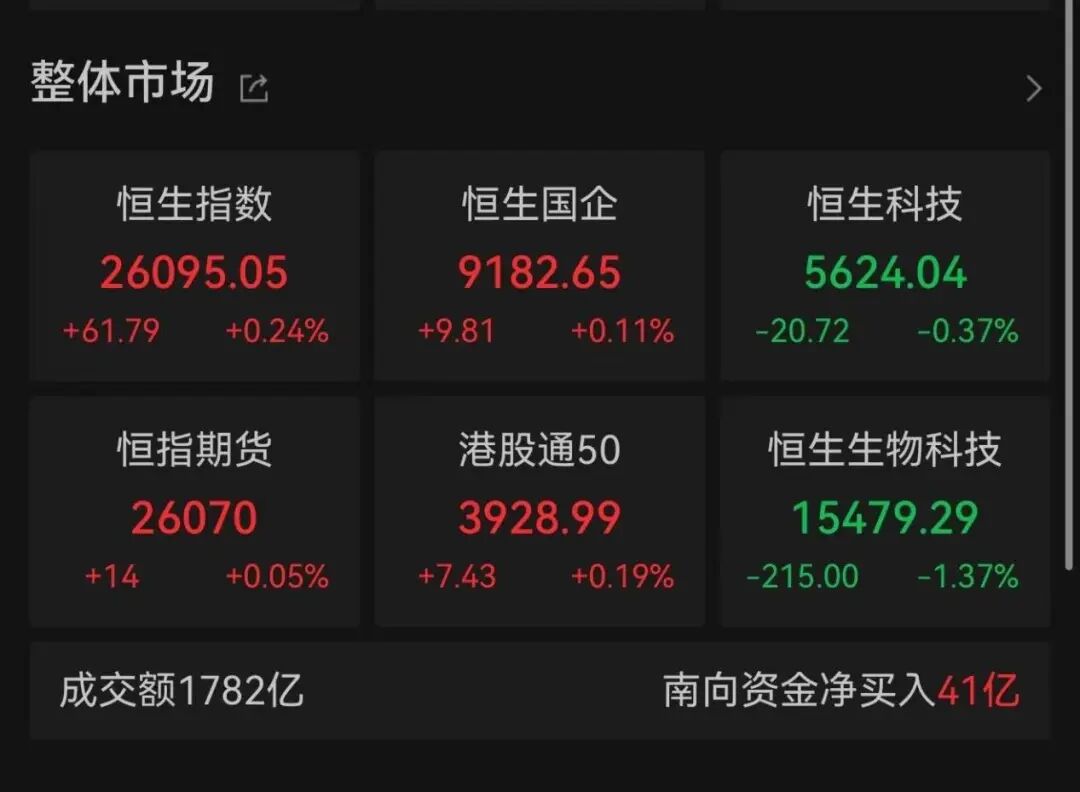
Market Overview - The Hong Kong stock market showed mixed performance with the Hang Seng Index closing at 26,095 points, the Hang Seng China Enterprises Index up by 0.11%, and the Hang Seng Tech Index down by 0.37% [3][4] - Southbound capital recorded a net inflow of 4.1 billion HKD today [3][4] Technology Sector - Major tech stocks exhibited divergent trends, with Meituan down over 3%, while Alibaba, Xiaomi, and NetEase saw gains [3][5] - The overall market sentiment is supported by the growth of China's tech industry, particularly in AI, and favorable policies from the 14th Five-Year Plan [5] Heavy Machinery Sector - Heavy machinery stocks experienced a significant rally, with Sany Heavy Industry rising over 5% and other companies like Zoomlion and China Longgong also reporting gains [7][8] - The heavy truck market in China saw sales of approximately 100,000 units in November, marking a year-on-year increase of about 46% [7] Insurance Sector - Insurance stocks showed recovery, with China Pacific Insurance, China Life, and China People's Insurance Group rising by 3.32%, 2.78%, and 2.54% respectively [9] - Analysts believe that the impact of real estate sector fluctuations on insurance companies is limited, and a rebound in the insurance liability side is expected [9] New Energy Vehicle Sector - The new energy vehicle sector faced declines, with NIO down 6.74%, XPeng down 5.52%, and Li Auto down 0.78% [10] - November sales data revealed XPeng delivered 36,728 vehicles (up 19% year-on-year), NIO delivered 36,275 vehicles (up over 76%), while Li Auto saw a decline of over 30% with 33,181 vehicles delivered [10] Innovation Drug Sector - The innovation drug sector weakened, with companies like Peijia Medical and WuXi AppTec experiencing declines of 10.36% and 5.13% respectively [13][14] - Analysts suggest that the innovation drug sector is sensitive to global financing conditions, and a potential easing of monetary policy could lead to a systemic recovery in valuations [14]
上证早知道|AI手机,来了!《疯狂动物城2》,超20亿元!万科债,继续大跌!谷歌芯片,上调预测200万块!
Shang Hai Zheng Quan Bao· 2025-12-02 11:44
来源:上海证券报微信公众号 今日提示 •2025企业家博鳌论坛系列活动12月2日至12月5日在海南博鳌举办。 •2025年中国国际海事会展12月2日至12月5日在上海举办。 •据网络实时数据,截至12月1日18时30分,影片《疯狂动物城2》票房突破20亿元。 •沐曦股份发行初步询价日为12月2日,申购日为12月5日。 •12月1日,DeepSeek同时发布两个正式版模型:DeepSeek-V3.2和DeepSeek-V3.2-Speciale。 上证精选 •广期所发布通知,对多晶硅期货PS2601合约的交易保证金标准及交易限额作如下调整:自2025年12月3 日结算时起,多晶硅期货PS2601合约投机交易保证金标准调整为13%,套期保值交易保证金标准调整为 12%。自2025年12月3日交易时起,非期货公司会员或者客户在多晶硅期货PS2601合约上单日开仓量不 得超过500手。 •上海市政府近日印发《上海市引进人才申办本市常住户口办法》《持有〈上海市居住证〉人员申办本 市常住户口办法》,12月1日起施行。《办法》第三条明确规定,在本市行政区域内注册的用人单位引 进本市紧缺急需的国内优秀人才,可以申办本市常住户 ...

机构称医药行业进入“创新驱动”的营收时代,关注恒生创新药ETF(159316)、医药ETF(512010)等配置价值
Sou Hu Cai Jing· 2025-12-02 11:22
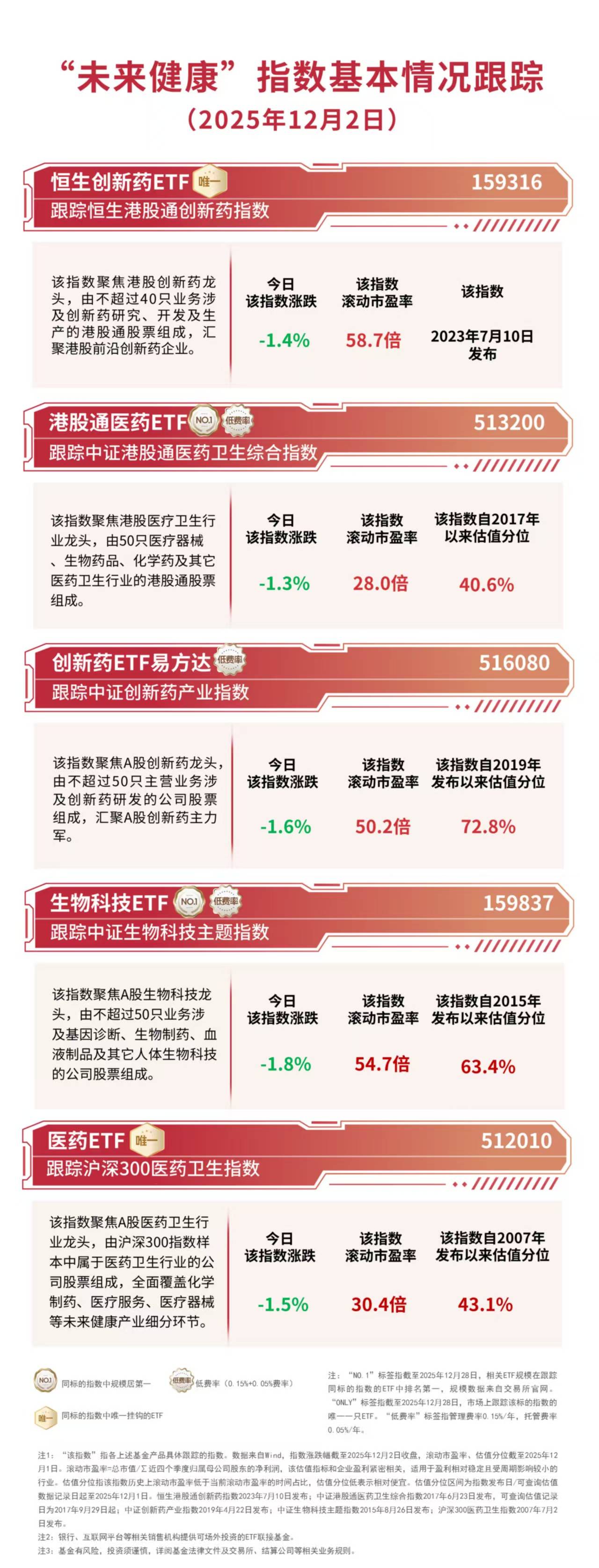
Group 1 - The pharmaceutical sector experienced a decline today, with the China Securities Hong Kong Stock Connect Pharmaceutical and Health Comprehensive Index down by 1.3%, the Hang Seng Hong Kong Stock Connect Innovative Drug Index down by 1.4%, the CSI 300 Pharmaceutical and Health Index down by 1.5%, the CSI Innovative Drug Industry Index down by 1.6%, and the CSI Biotechnology Theme Index down by 1.8% [1] - Huachuang Securities stated that the fundamental reason for the pharmaceutical industry's ability to reach new highs despite ongoing challenges is the continuous demand for pharmaceuticals and the increasing number of unmet needs, along with pharmaceutical companies continuously increasing R&D investments to meet these demands [1] - China has become a significant participant in global innovative drug R&D, with overseas licensing heat continuing to rise year after year, marking the pharmaceutical industry’s entry into a revenue era driven by innovation [1] Group 2 - The index focuses on leading innovative drug companies in the A-share market, consisting of no more than 50 stocks involved in innovative drug R&D, gathering the main players in A-share innovative drugs [5] - The index has seen a decline of 1.6%, with a rolling price-to-earnings ratio of 50.2 times and a valuation increase of 72.8% since its launch [6] - The biotechnology ETF tracks the CSI Biotechnology Theme Index, which focuses on leading biotechnology companies in the A-share market, consisting of no more than 50 stocks involved in gene diagnostics, biopharmaceuticals, blood products, and other human biotechnology [7] - The biotechnology index has declined by 1.8%, with a rolling price-to-earnings ratio of 54.7 times and a valuation increase of 63.4% since its launch [8] - The pharmaceutical ETF exclusively tracks the CSI 300 Pharmaceutical and Health Index, focusing on leading companies in the pharmaceutical and health industry within the CSI 300 Index, covering various segments of the future health industry [9] - The pharmaceutical index has declined by 1.5%, with a rolling price-to-earnings ratio of 30.4 times and a valuation increase of 43.1% since its launch [10]
谨慎观望?
第一财经· 2025-12-02 11:02
Market Overview - The market experienced a significant decline with a drop in trading volume, as the total transaction amount in both markets decreased by 14.97% to 0.59 trillion yuan [7] - The main index, the Shanghai Composite Index, closed at 3897.71 points [11] Sector Performance - The lithium battery industry chain led the decline, while sectors such as innovative drugs, GPUs, robotics, photovoltaics, AI applications, semiconductors, and new energy vehicles also saw significant losses [6] - Conversely, themes related to cross-strait integration, pharmaceutical commerce, and consumer electronics showed resilience and performed well [6] Fund Flow Analysis - There was a net outflow of 526.51 billion yuan from main funds, indicating a cautious sentiment among institutional investors [8] - Retail investors showed a net inflow, primarily focusing on short-term themes and low-priced rebound stocks, while avoiding high-valued sectors [8] Investor Sentiment - The sentiment among retail investors was measured at 75.85%, reflecting a cautious approach with a tendency to follow specific stocks rather than indices [9] - The overall positioning showed 29.77% of investors increasing their positions, while 18.67% reduced their holdings, with 51.56% remaining inactive [13]