快餐

Search documents
喜娜AI速递:今日财经热点要闻回顾|2026年1月22日
Xin Lang Cai Jing· 2026-01-22 12:03
Group 1 - US President Trump announced the suspension of tariffs on eight European countries, leading to a significant rebound in US stock markets, with all three major indices rising over 1% [2][7] - Goldman Sachs forecasts China's GDP growth to reach 4.8% by 2026, with strong export growth supported by global demand recovery and cost advantages [2][7] - The investment in copper bars has surged due to rising gold and silver prices, but experts warn that the investment's profitability is questionable due to significant price differences [2][7] Group 2 - A-shares rebounded with the Shanghai Composite Index up 0.14%, driven by strong performances in the computing power and commercial aerospace sectors [3][8] - National household deposits reached 167 trillion yuan, with per capita deposits nearing 120,000 yuan, indicating a shift in consumer confidence and increased corporate loan growth [3][8] - South Korea's semiconductor exports surged to $10.73 billion in the first 20 days of the year, reflecting strong global demand and boosting chip stocks [3][8] Group 3 - Yuanji Cloud Dumplings, a major Chinese fast-food chain, has submitted a listing application in Hong Kong, reporting significant revenue growth and plans for further expansion [3][9] - Dongtong Tui has been delisted but attracted attention from investors during its delisting period, indicating potential interest in its asset quality [4][9] - Volvo's global recall of the EX30 due to battery issues has sparked controversy in China, where some affected models were not recalled, raising concerns about sales pressure [4][9] Group 4 - The US has officially withdrawn from the World Health Organization, with an outstanding debt of approximately $260 million for the 2024-2025 period, which may impact global public health [5][9]
百胜中国1月21日合共回购约8.26万股股份
Zhi Tong Cai Jing· 2026-01-22 10:01
百胜中国(09987)公布,2026年1月21日于港交所耗资约772.11万港元回购2.065万股股份,于纽约证券交 易所耗资约300万美元回购约6.19万股股份。 ...
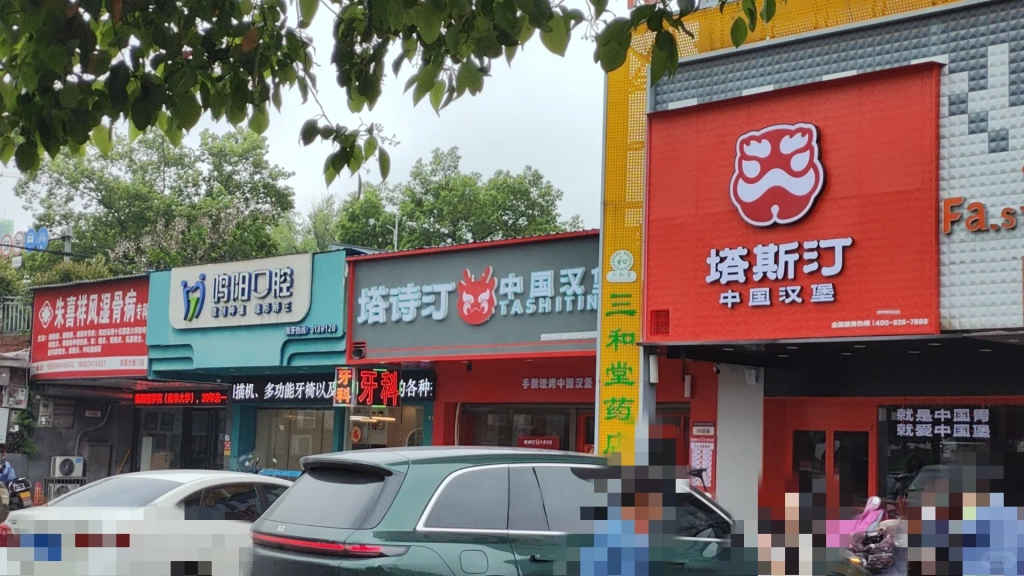
“塔斯汀”打假“塔诗汀”,获赔500万元;山寨方签约门店数量上千,不少消费者踩坑:难以分辨!
Mei Ri Jing Ji Xin Wen· 2026-01-22 07:37
Core Viewpoint - The court ruled that "塔诗汀" infringed on the trademark rights of "塔斯汀" and ordered it to cease its infringing activities, awarding a compensation of 5 million yuan to "塔斯汀" [1] Group 1: Legal Proceedings - "塔斯汀" filed a lawsuit against "塔诗汀" on January 13, 2025, with the Shanghai Minhang District People's Court publicly hearing the case on December 30, 2025, and delivering a verdict on January 14, 2026 [1] - The court found that "塔诗汀" had engaged in unfair competition by closely mimicking the "塔斯汀" brand, including similar decor and commercial signage [1][8] Group 2: Financial Implications - The court supported "塔斯汀's" claim for 5 million yuan in damages, which was awarded in full [1] - "塔诗汀" reportedly earned nearly 4 million yuan in franchise fees in 2023 and generated over 6.8 million yuan in sales through Douyin [8] Group 3: Consumer Impact - Many consumers were misled into believing they were purchasing from "塔斯汀" when they were actually buying from "塔诗汀," leading to confusion and complaints on social media [2][8] Group 4: Company Background - "塔斯汀" was established in 2012, initially focusing on pizza, but shifted to hamburgers in 2019 under the leadership of founder Wei Youchun [10] - The company has been rapidly expanding, opening over 2,300 new stores annually from 2022 to 2025, and is on track to become a "ten-thousand-store brand" by the second half of 2025 [12]

每日投资摘要-20260122
光大新鸿基· 2026-01-22 05:29
Market Overview - The Hang Seng Index closed at 26,585.06 points, up 0.37% for the day and 3.72% year-to-date[5] - The Technology Index rose by 1.11%, with a year-to-date increase of 14.18%[5] - The Financial Index decreased by 0.44%, while the Utilities Index increased by 1.15% year-to-date[5] Key Stock Movements - Kuaishou (1024.HK) surged by 3.6%, Baidu (9888.HK) rose by 3.3%, and Alibaba (9988.HK) increased by 2.2%[7] - Semiconductor stocks showed gains, with SMIC (981.HK) up 3.7%, and Hua Hong Semiconductor (1347.HK) up 5.2%[7] Economic Indicators - The U.S. 10-year Treasury yield rose to 4.2448%, reflecting a 7.54 basis point increase over five days[23] - The U.S. dollar index stood at 98.78, with a year-to-date change of 0.47%[23] Corporate Actions - China Shipbuilding Leasing (3877.HK) plans to issue HKD 2.338 billion convertible bonds due in 2031, with net proceeds of approximately HKD 2.322 billion for operational and general corporate purposes[7] - Nanshan Aluminum (2610.HK) announced a placement of 31 million shares at a discount of 6.39% to raise HKD 2 billion[7] Commodity Prices - Gold prices surpassed HKD 4,800, with several gold mining stocks reaching new highs[2] - New York crude oil closed at USD 60.62 per barrel, up 0.46%[7]


沙利文认证:鱼你在一起成为“中国米饭快餐门店数量第一”!
Jin Rong Jie Zi Xun· 2026-01-21 12:47
Core Insights - The Chinese rice fast food brand "Fish You Together" has been officially recognized by Frost & Sullivan as having the largest number of rice fast food outlets in China by 2025, with over 2,600 operational stores globally [1][5][11] - The brand's growth is attributed to its ability to standardize operations, integrate supply chains, and expand internationally, marking a new phase for Chinese fast food [1][3] Group 1: Brand Growth and Market Position - "Fish You Together" started its journey in 2017 with a focus on a standardized fast food model based on traditional dishes, successfully transforming the traditional sauerkraut fish into a fast food product [3][6] - The brand has expanded to over 360 cities worldwide, including major international cities like New York and Dubai, while also targeting lower-tier markets in China [3][5] - The certification from Frost & Sullivan is seen as a sign of maturity and scale in the Chinese rice fast food industry, highlighting the importance of operational standards and supply chain stability for brand expansion [5][6] Group 2: Operational Excellence and Social Impact - The founder emphasizes that the growth in store numbers is not the ultimate goal; the brand aims to create social value by supporting entrepreneurs and generating employment opportunities [6][8] - The brand employs a "light asset, high efficiency" model to assist thousands of franchisees and create jobs, while maintaining consistent quality across different market tiers [6][9] - Recent product innovations, such as the "Hot Pot" series, have been introduced to diversify offerings and enhance customer experience, further solidifying the brand's market position [9][11] Group 3: International Expansion and Strategic Partnerships - The brand is committed to global expansion, using sauerkraut fish as a cultural vehicle to introduce authentic Chinese cuisine worldwide [8][11] - A partnership with Oracle has been established to develop a global supply chain integration system, ensuring a balance between standardization and localization [8] - The introduction of dual-category stores featuring both sauerkraut fish and the new "Hot Pot" offerings marks a strategic shift towards a more diverse product lineup [9][11]
萨莉亚离“平价餐厅”越来越远?中国区增收不增利
2 1 Shi Ji Jing Ji Bao Dao· 2026-01-21 09:24
萨莉亚近日发布了2026财年第一季度(2025年9月至11月)财报,报告期内,公司整体实现销售额702亿 日元,同比增长15%;营业利润增长19%,达到46亿日元。 与此同时,萨莉亚还在加大对中国市场的押注,不断开厂、拓店。 2024年,萨莉亚社长松谷秀治曾透露称萨莉亚要在中国开出千家门店,计划2030年中国门店数超过日本 本土。目前看,萨莉亚在正在落实着这个中国内地千店计划,以广东为大本营,向华中区域拓展,将是 萨莉亚未来一段时间的目标。 (文章来源:21世纪经济报道) 虽然总体涨势喜人,但仔细来看,萨莉亚在中国地区的业绩却出现了"大转弯"。亚洲分部销售额达到 232.88亿日元,同比仅增长7.1%;营业利润却不增反减,为30.86亿日元,同比减少6.1%。 低价曾是萨莉亚在中国市突飞猛进的核心优势,但如今萨莉亚正在打破这一印象。2024年10月份,萨莉 亚因涨价而冲上过微博热搜。2025年内,萨莉亚再次上调部分菜品价格。尽管总体价格仍显著低于西餐 市场,但在以价格敏感型消费者为主的快餐市场,意味着高性价比优势不再,萨莉亚离"平价餐厅"越来 越远。 ...
美国快餐连锁 Steak 'n Shake 将向时薪员工发放比特币奖金,每小时 0.21 美元需锁定两年
Xin Lang Cai Jing· 2026-01-21 04:05
Core Insights - Steak 'n Shake, an American fast-food chain, announced that starting March 1, it will provide hourly employees at all company-owned restaurants with Bitcoin bonuses, amounting to $0.21 per hour worked [1] - Employees will need to wait for a two-year vesting period before they can access these Bitcoin bonuses [1] - The Bitcoin compensation plan is being implemented in collaboration with the Bitcoin rewards application, Fold [1] - Previously, Steak 'n Shake revealed a $10 million investment in Bitcoin as part of its strategic Bitcoin reserve plan [1]
比萨自助品牌冲刺港股
Mei Ri Shang Bao· 2026-01-20 22:21
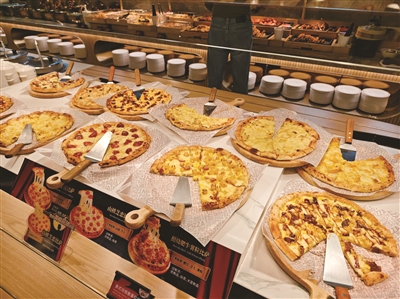
Core Viewpoint - The pizza chain brand Big Pizza has submitted its prospectus to the Hong Kong Stock Exchange, planning to open over 600 new stores in the next three years, aiming to become the first publicly listed "pizza buffet" in China [2] Company Overview - Big Pizza was established in 2002, offering a buffet model priced at 79.99 yuan per adult and 49.99 yuan per child, with a menu featuring 130 to 140 SKUs including pizzas, pasta, and snacks [2] - The brand targets various customer segments, including families, students, solo diners, social media users, and seniors [2] - Big Pizza has developed popular products such as durian pizza, lychee pizza, and strawberry chocolate pizza, while also introducing new snacks to attract younger customers [2] Expansion Plans - Currently, Big Pizza operates 387 stores nationwide and plans to open over 160 new stores by 2025, which is nearly equivalent to the total number of stores opened in the past 23 years [2] - New stores typically achieve breakeven within one month of opening, with an average investment recovery period of about 11 months, supporting rapid expansion [2] Market Presence - The brand's presence is concentrated in northern China, with over 80 restaurants in Beijing, while cities like Shanghai and Guangzhou have only a few locations [2] - The first store in Hangzhou is strategically located in a university area, targeting students with promotional pricing [3] Financial Performance - In the first three quarters of 2025, Big Pizza's revenue approached 1.4 billion yuan, reflecting a year-on-year growth of over 60% [3] - The founder, Zhao Zhiqiang, utilizes a "internet celebrity" strategy on social media platforms to engage with customers and respond to feedback [3] Future Goals - Zhao Zhiqiang has expressed plans to expand Big Pizza to 1,000 stores by 2028, which may be a driving factor behind the decision to pursue an IPO [3] - The company aims to add approximately 610 to 790 new restaurants by 2028, primarily focusing on self-operated locations [3] Competitive Landscape - Despite being a niche product, the pizza market has seen increased competition, with brands like Zunbao Pizza and Saliya expanding rapidly in China [4] - Big Pizza plans to accelerate its expansion into southern regions, focusing on first-tier cities, provincial capitals, and new first-tier cities, while also extending to second-tier and lower cities [4]
麦当劳中国餐厅开启包材PLA替代
Zhong Guo Hua Gong Bao· 2026-01-20 04:21
Core Viewpoint - McDonald's China is set to implement bio-based packaging across over 7,500 restaurants, significantly reducing the use of petroleum-based plastics by more than 5,800 tons annually [1] Group 1: Packaging Materials - The primary packaging materials will include polylactic acid (PLA) and paper, with applications covering McCafé packaging, beverage cups, and other food items [1] - Some packaging, such as beverage and food cup bodies, will transition from petroleum-based plastics to paper materials [1] Group 2: Industry Impact - The use of bio-based packaging materials aligns with China's strategic goals for carbon neutrality and sustainable development [1] - The initiative is seen as a forward-looking exploration of green packaging, which is expected to significantly contribute to the development of the bio-based materials industry and the sustainability of the food service sector [1] Group 3: Material Development - McDonald's China has been involved in the independent research and development of modified PLA formulations to enhance the toughness and heat resistance of PLA materials for hot beverage cup lids [1] - The new hot beverage cup lids, developed with proprietary formulations, aim to improve consumer experience by optimizing the properties of PLA materials [1]
菲律宾餐饮巨头向外扩张,永和大王母公司快乐蜂如何在全球开出万店? | 声动早咖啡
声动活泼· 2026-01-19 09:04
Core Viewpoint - Jollibee Foods Corporation, known as "快乐蜂," announced a restructuring plan to spin off its international business into a new company that will be listed in the U.S., aiming to enhance its valuation and compete with global giants like McDonald's and Yum Brands [4][3]. Group 1: Company Overview - Jollibee started as an ice cream shop in the Philippines in 1975 and evolved into a fast-food chain focusing on fried chicken after recognizing market demand [5]. - The company has expanded to over 10,000 restaurants and cafes globally, with about 70% located outside the Philippines [4]. Group 2: International Expansion Strategy - The initial overseas expansion aimed to serve the Filipino diaspora, which numbers between 10 to 12 million globally, with around 4.6 million in the U.S. [8]. - Jollibee strategically opened its first U.S. store in Daly City, California, where the Filipino population is significant [8]. Group 3: Growth and Market Position - Jollibee has over 1,700 global stores, with plans to open 500 more in North America by 2030 [7]. - The brand's signature fried chicken and other products have driven substantial international growth, with Jollibee's revenue from its restaurants accounting for half of the group's total income in 2023 [12]. Group 4: Challenges in Global Market - The acceptance of Filipino cuisine abroad is limited, as the diverse influences on Filipino food make it hard to define and promote [11]. - Jollibee faces stiff competition in the U.S. from established brands like KFC and McDonald's, which complicates its market penetration [11]. - Past acquisitions, such as Smashburger, have not always been successful, highlighting the risks associated with the company's growth strategy [12]. Group 5: Acquisition Strategy - Since 2000, Jollibee has made 27 cross-border acquisitions, spending approximately $1.1 billion, often targeting smaller, struggling companies for turnaround [9]. - The company operates multiple brands, including Jollibee, Chowking, and Yonghe King, but its core revenue still heavily relies on the Jollibee brand [9].