
智能手机

Search documents
谷歌新模型Nano Banana 2来了;手机厂商或集中涨价
2 1 Shi Ji Jing Ji Bao Dao· 2026-02-27 02:34
Group 1: Technology Developments - Google launched the next-generation image generation model Nano Banana 2, featuring improvements in subject consistency, instruction adherence, and the ability to produce high-quality materials across various resolutions from 512 pixels to 4K [2] - Anthropic acquired Seattle-based AI startup Vercept to enhance its AI model Claude with visual capabilities, allowing it to perform complex tasks by interacting with computer interfaces [4] - Huawei Cloud released the public beta of its CodeArts code AI, integrating large code models and supporting various coding processes to improve developer efficiency [5] Group 2: Market Trends - In February 2026, China's AI model API usage surged by 127%, surpassing the US for the first time, with four out of the top five models globally coming from Chinese companies, contributing to 85.7% of the total usage [6] - Major smartphone manufacturers are planning to raise prices due to an over 80% increase in storage chip procurement costs compared to the previous year, marking the largest collective price adjustment in five years [11] Group 3: Corporate Actions - Shanghai AI startup Jieyue Xingchen is reportedly planning an IPO in Hong Kong, aiming to raise approximately $500 million, with a potential filing timeline in the first half of the year [12] - NIO's chip subsidiary, Anhui Shenji Technology, completed its first round of financing exceeding 2.2 billion yuan, which will support its long-term plans in autonomous driving and intelligent systems [12] - Ruixin Technology plans to acquire a 51% stake in Deheng Equipment through a combination of stock issuance and cash payment, focusing on automotive parts and intelligent equipment solutions [13]

魅族:网上关于魅族公司“破产重组,业务停摆,手机退市”等为谣言和不实报道
Mei Ri Jing Ji Xin Wen· 2026-02-27 02:24
每经AI快讯,2月27日,魅族发布声明称,网上关于魅族公司"破产重组,业务停摆,手机退市"等为谣 言和不实报道,公司将坚决追究造谣者及传谣者的法律责任。 ...
谷歌版的“豆包手机”来了
Di Yi Cai Jing Zi Xun· 2026-02-27 02:23
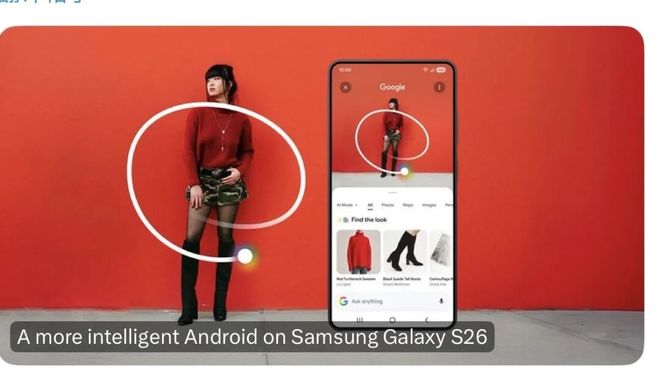
Group 1 - Samsung launched the Galaxy S26 series smartphones at the Galaxy Unpacked event, featuring AI capabilities in collaboration with Google to assist users with complex tasks like ordering food and hailing rides [2][5] - Google's Android ecosystem president, Sameer Samat, stated that this marks the next chapter for Android, evolving from an operating system to an intelligent system, with Gemini's multimodal reasoning capabilities aiding users in navigating applications [5][11] - The new AI features initially support scenarios such as ride-hailing (e.g., Uber) and food delivery (e.g., DoorDash, Grubhub), allowing users to issue commands to Gemini using natural language [5][6] Group 2 - Users can observe Gemini's operations transparently, with the ability to enter or stop tasks, while still being able to use their phones for other activities [6] - Google introduced an upgraded feature called Circle to Search, enabling users to search multiple items with a gesture and offering virtual try-on capabilities by uploading a photo [7] - The AI system can also identify potential scams during phone calls, providing real-time alerts to users, with the analysis conducted on-device to protect privacy [7][12] Group 3 - The collaboration between Google and Samsung is seen as a response to ByteDance's "Doubao Phone," which also features a system-level AI assistant capable of cross-app automation [8][9] - Industry experts note that while both devices share similarities in functionality, Google's approach utilizes AppFunctions and UI automation, differing from the single-path AI screen reading used by Doubao Phone [10][11] - The transition of Android from a mobile operating system to an intelligent system faces challenges, particularly in gaining support from app developers for broader automation capabilities [11][12] Group 4 - Predictions indicate that by 2026, the shipment of new-generation AI smartphones in China will reach 147 million units, representing a 31.6% year-on-year growth and capturing 53% of the overall market [12] - Samsung's Galaxy AI is expected to double its coverage to 800 million devices globally following the collaboration with Google [12] - The development of AI smartphones is influenced by two main technical routes: one focusing on system permissions and visual paths, and the other on intelligent agent interconnectivity, with Google's choice serving as a significant indicator for the industry's direction [12]

2026/2/27:申万期货品种策略日报——股指-20260227
Shen Yin Wan Guo Qi Huo· 2026-02-27 02:13
| 申万期货品种策略日报——股指 | 2026/2/27 | 星期五 | | | | | | | | | | --- | --- | --- | --- | --- | --- | --- | --- | --- | --- | --- | | 申银万国期货研究所 贾婷婷(从业资格号:F3056905;交易咨询号:Z0016232 )jiatt@sywgqh.com.cn;15921620356 | 申银万国期货研究所 柴玉荣 (从业资格号:F03111639;交易咨询号:Z0018586)chaiyr@sywgqh.com.cn;18802979529 | | | | | | | | | | | 一、股指期货市场 | IF当月 | IF下月 | IF下季 | IF隔季 | | | | | | | | 前两日收盘价 | 4731.40 | 4727.00 | 4696.40 | 4640.20 | 前日收盘价 | 4712.20 | 4706.60 | 4671.20 | 4614.80 | | | 涨跌 | -18.80 | -18.80 | -24.60 | -24.60 | 沪深300 | 涨跌幅 | ...
美科技大厂因AI裁掉近半员工 奈飞退出华纳兄弟收购案|环球市场
Sou Hu Cai Jing· 2026-02-27 02:06
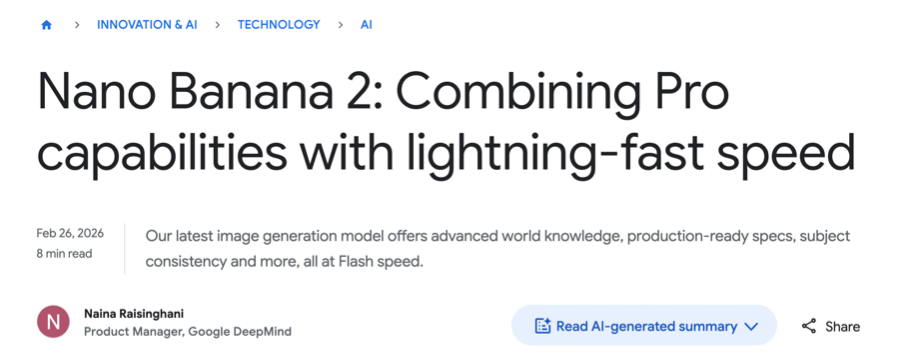
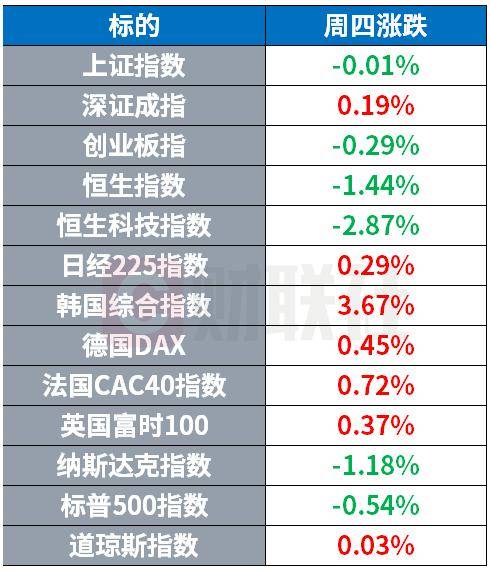
Market Performance - The Shanghai Composite Index decreased by 0.01%, while the Shenzhen Index increased by 0.19%. The Hang Seng Index fell by 1.44%, and the Hang Seng Tech Index dropped by 2.87% [1] - Nvidia experienced its largest single-day decline since April last year, with a market cap loss of $259.2 billion, ranking as the 7th largest in history [1] - Samsung Electronics and SK Hynix, suppliers to Nvidia, both saw their stock prices rise over 7%, contributing to a record high for the Korean benchmark index, which has gained nearly 50% this year [1] Company Updates - Nvidia's CEO Jensen Huang stated that the market cannot suppress the company indefinitely, emphasizing ongoing growth and expansion [1] - Samsung's market capitalization surpassed $1 trillion, ranking 12th globally, just behind Berkshire Hathaway [2] - Dell Technologies projected a doubling of AI server revenue to approximately $50 billion for the fiscal year ending January 2027, representing a 103% year-over-year increase [8] Industry Insights - The IDC warned of a potential crisis in the smartphone market due to memory shortages, predicting a record 13% year-over-year decline in shipments for 2026, with expected shipments dropping to around 1.1 billion units from 1.26 billion [4] - The U.S. Department of Defense is pressuring AI company Anthropic to agree to unrestricted military use of its model, threatening to terminate its contract if compliance is not met [5] - Google announced the launch of its new image generation model, Nano Banana 2, which combines high-quality generation with rapid processing capabilities [6] Corporate Actions - Block, a financial technology company, saw its stock surge over 20% after announcing plans to reduce its workforce from over 10,000 to under 6,000, citing AI's impact on productivity [7] - Netflix decided not to match Paramount's latest acquisition offer, leading to a nearly 10% increase in its stock price following the announcement [7] - Apple CEO Tim Cook confirmed that the company will begin releasing new products next week, aligning with previous reports of a series of product launches [10][12]
永安期货股指日报-20260227
Xin Yong An Guo Ji Zheng Quan· 2026-02-27 02:01
Market Overview - A-shares experienced weak fluctuations, with the Shanghai Composite Index closing down 0.01% at 4146.63 points, while the Shenzhen Component Index rose 0.19% and the ChiNext Index fell 0.29%[1] - The Hong Kong Hang Seng Index dropped 1.44% to 26381.02 points, with the Hang Seng Tech Index down 2.87% and the Hang Seng China Enterprises Index down 2.44%[1] - European indices closed higher, while US indices showed mixed results, with the Dow Jones up 0.03% at 49499.2 points, the S&P 500 down 0.54% at 6908.86 points, and the Nasdaq down 1.18%[1] Geopolitical Developments - Progress was reported in US-Iran talks in Geneva, with further negotiations scheduled for next week[1] - The Iranian Foreign Minister indicated that discussions on nuclear issues and sanctions were serious and productive, with a consensus nearing on several points[12] Industry Insights - IDC forecasts a significant contraction in the global smartphone market, predicting a decline of nearly 13% this year due to a storage chip shortage crisis[8][12] - Baidu reported a third consecutive quarter of revenue decline, with adjusted operating profit down 41%, highlighting challenges in its AI business development[8][12] Financial Highlights - The Hang Seng market recorded a total trading volume of 2592.769 billion HKD[1] - Baidu's revenue for the last quarter fell to 32.74 billion RMB (approximately 4.8 billion USD), a decrease of 4% year-on-year[12]





知名品牌手机上新,涨价数百至1000元!业内:智能手机全面涨价才刚开始
Mei Ri Jing Ji Xin Wen· 2026-02-27 01:57
Core Viewpoint - Samsung has launched the Galaxy S26 series, marking a significant entry into the 2026 smartphone market, featuring innovations such as an anti-peep display and increased AI functionalities, alongside a notable price increase across the models [1][3]. Pricing and Market Trends - The starting prices for the Galaxy S26 series are set at 6999 yuan for the standard version, 7999 yuan for the S26+, and 9999 yuan for the S26 Ultra, reflecting an increase of 1000 yuan for the standard and S26+ versions, and 300 yuan for the S26 Ultra compared to the previous generation [1][3]. - The rise in smartphone prices is attributed to the continuous increase in memory and storage chip costs, with predictions indicating that 2026 may see a widespread price hike across the smartphone industry [3][5]. - IDC forecasts that the average selling price of smartphones will rise to 465 USD, with total market revenue reaching 578.9 billion USD, marking a historical high [6]. Innovations and Features - The Galaxy S26 series introduces a built-in anti-peep display, allowing users to customize privacy settings based on usage scenarios, although concerns about the impact of screen protectors on this feature have been raised [2]. - The series emphasizes AI capabilities, enabling users to perform tasks such as booking movie tickets through AI operations, although some industry experts have noted that these features only replicate partial capabilities seen in competitors' products [2][3]. Supply Chain and Cost Pressures - The prices of memory chips have surged significantly, with DDR5 16Gb eTT prices increasing from 4.10 USD to 24.00 USD per unit within six months, indicating a nearly sixfold increase [5]. - The cost of memory semiconductors has risen from 10%-15% of smartphone costs to over 20%, with mid-range devices seeing storage costs approaching 30%, leading to negative profit margins for some budget smartphones [5]. - Major smartphone brands, including OPPO, Xiaomi, and others, are expected to initiate a new round of price adjustments in March due to these cost pressures [5][6].
资讯日报:美伊日内瓦会谈取得进展-20260227
Guoxin Securities Hongkong· 2026-02-27 01:50
Market Overview - The Hang Seng Index closed at 26,381, down 1.44% for the day and up 2.93% year-to-date[3] - The Hang Seng Technology Index fell 2.87%, reaching a new low since July of the previous year[9] - The Shanghai Composite Index remained relatively stable, closing at 4,147, with a slight decrease of 0.01%[3] Sector Performance - Major tech stocks like Bilibili and Baidu dropped over 4%, while Alibaba fell more than 3%[9] - The biopharmaceutical sector saw significant declines, with BeiGene down over 9% and WuXi Biologics down over 8%[9] - Conversely, power equipment stocks surged, with Dongfang Electric rising over 15%[9] Cryptocurrency and AI Stocks - Cryptocurrency-related stocks experienced a rally, with Jinrong Investment up 29.28% and Blue Ocean Interactive up 20%[9] - Nvidia's earnings report eased AI-related concerns, but its stock fell 5.46% following the announcement[12] Economic Indicators - The U.S. jobless claims increased less than expected, indicating a relatively low scale of layoffs[12] - The Federal Reserve's officials suggested potential interest rate cuts if inflation decreases[12] International Relations - Progress was reported in U.S.-Iran talks in Geneva, with further negotiations expected in about a week[12]
深度解析谷歌版「豆包手机」:Android 的统治者下了一盘什么棋?
3 6 Ke· 2026-02-27 01:47
Core Insights - The article discusses the evolution of AI in hardware design, particularly focusing on the collaboration between Google and Samsung in developing the Gemini AI capabilities for the Galaxy S26 series, which aims to enhance user interaction with smartphones [1][2][3]. Group 1: AI Integration in Hardware - AI is beginning to reshape hardware design, with devices like the Galaxy S26 incorporating new functionalities that allow for automated tasks through voice commands [3][5]. - The Gemini AI can perform tasks such as ordering food or booking rides by mimicking human interactions with apps, showcasing a significant advancement in user experience [8][9]. Group 2: Collaboration and Ecosystem - The partnership between Google and Samsung is pivotal, as Google, being the owner of the Android operating system, brings substantial influence to the integration of AI into mobile devices [6][20]. - The introduction of the AppFunctions framework allows developers to expose specific app functionalities for AI assistants to utilize, enhancing compatibility and user experience across various applications [20][23]. Group 3: Future Directions and Challenges - Google plans to expand the capabilities of Gemini beyond smartphones to other devices like smart glasses and cars, indicating a broader vision for AI integration in daily life [35][36]. - The article highlights potential challenges, including privacy concerns and competition among hardware manufacturers, AI model providers, and application platforms, which could complicate the implementation of AI automation [36][38].

2.27犀牛财经早报:IDC预计全球智能手机市场今年将萎缩13%
Xi Niu Cai Jing· 2026-02-27 01:31
Group 1 - The People's Bank of China has decided to lower the foreign exchange risk reserve ratio for forward foreign exchange sales from 20% to 0% starting March 2, 2026, to support enterprises in managing exchange rate risks and promote the development of the foreign exchange market [1] - The A-share merger and acquisition market has seen over 500 transactions since the beginning of the year, with a total value of approximately 130 billion yuan, marking a year-on-year increase in activity, particularly in the hard technology sector [1] Group 2 - In 2026, China plans to implement two manned spaceflight missions and one cargo supply mission, while also advancing the construction of lunar landing support facilities [2] - IDC forecasts a 12.9% decline in the global smartphone market in 2026 due to an unprecedented shortage of storage chips, which poses a significant threat to many smartphone manufacturers' business models [2] Group 3 - The cement industry is experiencing a positive start to 2026 with major projects commencing, although overall cement prices are expected to decline throughout the year [3] - The AI industry is entering a phase focused on commercial viability, with significant investment opportunities emerging in domestic AI chip development [3] Group 4 - Several domestic chip companies have announced price increases of at least 10% due to rising costs of upstream raw materials and key precious metals [5] - The controlled nuclear fusion sector is attracting significant investment from state-owned and industrial capital, indicating a growing interest in this technology as a potential solution to energy supply issues [5] Group 5 - Netflix has opted not to increase its bid for Warner Bros, allowing Paramount to win the acquisition, as Netflix deemed the deal financially unattractive [6] - Li Ka-shing's companies have agreed to sell their 100% stake in UK Power Networks for over 110 billion Hong Kong dollars, which will provide substantial accounting gains and cash for future investments [6] Group 6 - Stellantis reported a net loss of 22.3 billion euros for 2025, primarily due to restructuring costs, despite signs of recovery in the latter half of the year [7] - A dental robotics company, Shanghai Yangshan Medical Technology, has completed nearly 100 million yuan in Pre-A financing, led by a strategic investment from Aidi Tech [7] Group 7 - Jianghe Creation announced that an independent director is unable to perform duties due to involvement in a legal case, although it does not affect the company's operations [8] - Luyuan Energy reported a 20.49% decline in net profit for 2025, attributed to exchange rate fluctuations and increased management costs [12] Group 8 - The stock price of Beiliang Technology fell significantly due to a 28.94% decline in revenue and a net loss of approximately 89.3 million yuan for 2025 [14] - Teruide has submitted an application for H-share listing on the Hong Kong Stock Exchange [16]