家电

Search documents
十个勤天、许翠花登顶,天猫报告揭秘年度十大破亿“新势力”品牌
Guan Cha Zhe Wang· 2026-01-14 00:54
Core Insights - Tmall's 2025 New Brand Development Report indicates that over 150,000 quality new merchants launched brands on Tmall in the past year, marking a historical high for brand creation [1] - The number of brands achieving over 100 million yuan in sales in their opening year increased by over 40% year-on-year [1] - Among new brands established within three years, 276 achieved over 100 million yuan in annual sales, and 5,026 surpassed 10 million yuan [1] Industry Breakdown - The top ten industries with the most new brands achieving over 10 million yuan in sales include apparel, home appliances, home decoration, 3C digital products, health, sports and outdoor, maternal and infant products, home goods, food and fresh produce, and jewelry [1] - Notable brands that achieved over 100 million yuan in sales on Tmall in 2025 include Tenko Qintian, Tongpin, Xu Cuihua, Kutaike, Xiaoban Furniture, Junpei, LiberLive, Juequling, PANE, and CrzYoga, each leading in their respective niche markets [1][4] Regional Insights - The cities with the highest number of new merchants include Guangzhou, Shenzhen, Jinhua, Hangzhou, Quanzhou, Xiamen, Wuhan, Xuzhou, Dongguan, and Zhengzhou, with Guangzhou leading for three consecutive years [4] - In 2025, over 18,000 new merchants opened stores in Guangzhou, doubling the number from 2023 [4] Strategic Initiatives - Tmall plans to implement a "supporting excellence" strategy in 2025, focusing on brands with originality and creativity that can drive consumer demand and retain users [8] - Different support policies are provided based on the stage of new brands, including the "Blue Star Plan" for new merchants and the "Treasure New Brand" initiative to help brands grow from 1 to 10 [8] - The report also identifies 50 blue ocean opportunity sectors for 2026, including smart robots, AI glasses, skin science, personalized makeup, and more, indicating significant growth potential in these areas [8]


爆款圈粉全球:“广货行天下”春季行动来了
2 1 Shi Ji Jing Ji Bao Dao· 2026-01-14 00:30
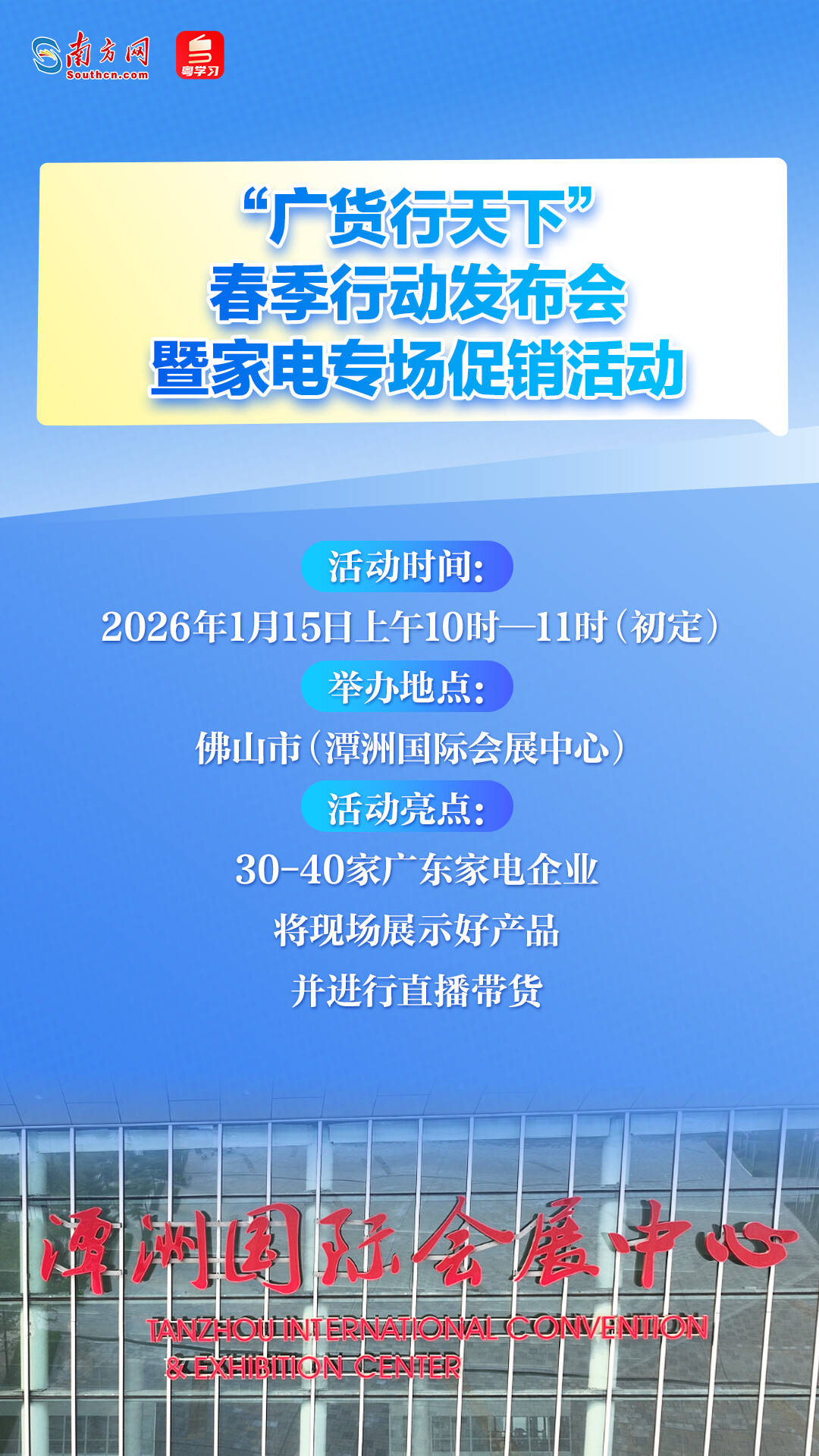
Core Insights - Guangdong products, known as "广货," have been popular for over 40 years, evolving from traditional goods to modern technology like robots and electric vehicles, driven by a deep understanding of consumer needs [2] - The "广货行天下" spring campaign will kick off on January 15, 2026, with 12 promotional events planned for the first quarter, showcasing the diversity of Guangdong manufacturing [2] - The campaign will feature a "one product per week" format, focusing on key categories such as home appliances, mobile phones, clothing, food, and beauty products, tailored to e-commerce platforms [2] Promotional Activities - A total of 18 supporting activities will be organized, leveraging local characteristics and aligning with seasonal festivals to enhance marketing efforts [3] - Live streaming and factory visits will be conducted to boost consumer trust and showcase product quality, with a focus on integrating cultural elements into marketing [3] - Major e-commerce platforms will establish dedicated promotional sections for "广货行天下," each focusing on specific product categories to maximize reach [3] Industry Statistics - Guangdong's cross-border e-commerce export scale has expanded 66 times over nine years, accounting for over one-third of the national total, maintaining the largest scale in the country [4] - One in every four express deliveries in China originates from Guangdong, highlighting the province's logistical significance [4] - Guangdong accounts for one-third of global smartphone sales, with DJI holding over 70% of the global consumer drone market share [4]

爆款圈粉全球:“广货行天下”春季行动来了
21世纪经济报道· 2026-01-14 00:29
Core Viewpoint - Guangdong products, known as "广货," have been popular for over 40 years, driven by the region's deep understanding of consumer needs and a commitment to quality products that are functional, aesthetically pleasing, and marketable [2] Group 1: Spring Action Launch - The "广货行天下" spring action will officially kick off on January 15, 2026, with a series of promotional activities planned, including 10 offline and 2 online events in the first quarter [2][5] - A total of 18 supporting activities will be organized to showcase the diverse appeal of Guangdong manufacturing [2][10] Group 2: Promotional Activities - The promotional events will adopt a "one product per week" format, focusing on key categories such as home appliances, mobile phones, clothing, food, 3C digital products, beauty, home goods, toys, and daily chemicals [7] - Each week, a promotional theme will be introduced in collaboration with local cities and major e-commerce platforms [7] Group 3: Marketing Strategies - The activities will include factory visits to highlight outstanding brands and quality products, enhancing consumer trust through live broadcasts of management and production processes [13] - Live streaming sales will be integrated with local festivals and cultural activities to boost product visibility and influence [13] Group 4: E-commerce Platform Participation - Six major e-commerce platforms will establish "广货行天下" promotional sections, each focusing on specific product categories: - Taobao/Tmall will promote smart home appliances and food - JD.com will focus on mobile phones and digital electronics - Pinduoduo will emphasize clothing and daily necessities - Douyin will highlight 3C electronics, beauty, and home goods - Kuaishou will promote daily consumer goods and festive food - Vipshop will focus on clothing and mobile phones [16]

视频|“新国补”落地近两周 各地消费市场迎来“换新”热潮
Yang Shi Xin Wen Ke Hu Duan· 2026-01-13 23:48
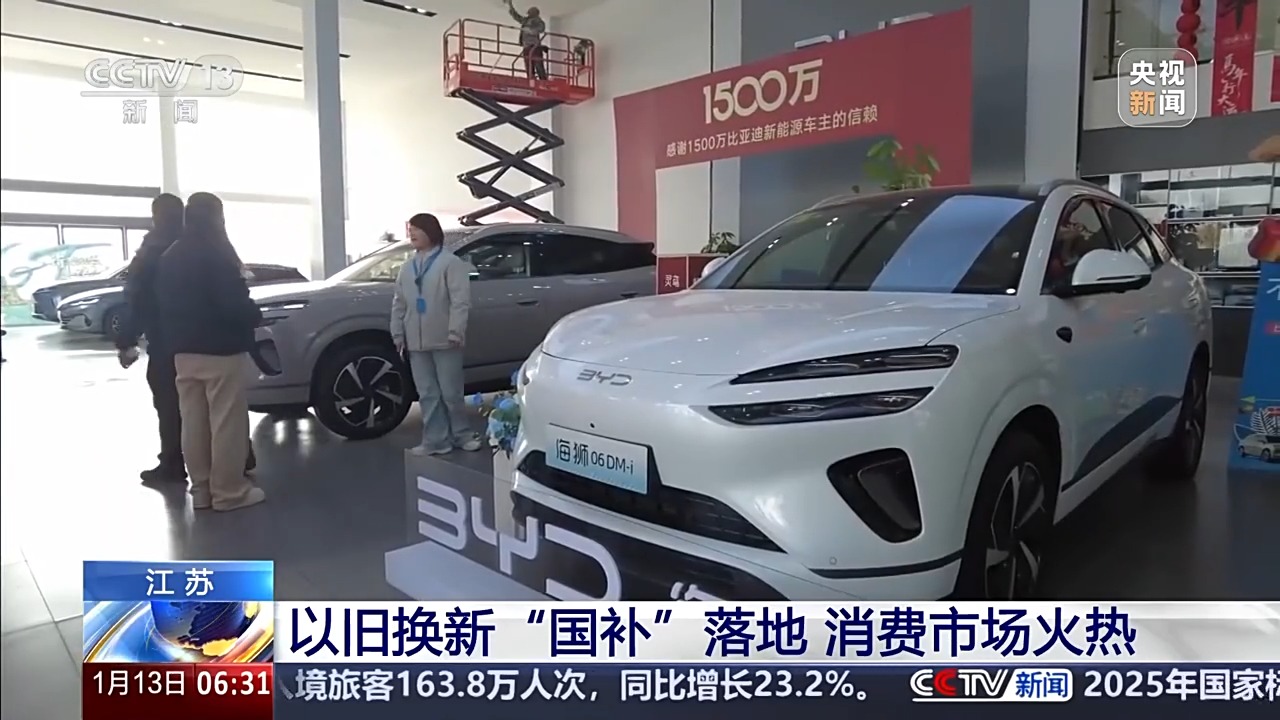
Core Insights - The new "National Subsidy" policy for trade-in of old consumer goods has been implemented, leading to a surge in consumer activity in various regions [2][11] Group 1: Automotive Sector - In Jiangsu, the subsidy for purchasing new energy vehicles is 12% of the vehicle price, with a maximum of 20,000 yuan, while traditional fuel vehicles receive a 10% subsidy, capped at 15,000 yuan [6] - For trade-in scenarios, new energy vehicles receive an 8% subsidy, with a maximum of 15,000 yuan, and fuel vehicles receive a 6% subsidy, capped at 13,000 yuan [6] Group 2: Home Appliances - The policy mandates that participating home appliances must meet "first-level energy efficiency" standards, covering six categories including refrigerators and washing machines, with a subsidy of 15% of the final price, limited to 1,500 yuan per item [8][15] - Consumers are showing increased willingness to purchase due to the subsidies, as evidenced by positive feedback from customers who have benefited from the discounts [8] Group 3: Digital Products - Digital products such as smartphones and tablets priced under 6,000 yuan are eligible for a 15% subsidy, with a maximum of 500 yuan per item [8][15] - The introduction of subsidies has led to a noticeable increase in sales of digital products, as consumers are eager to take advantage of the financial incentives [13] Group 4: Market Impact - The implementation of the subsidy policy has significantly boosted consumer spending, with over 1.3 billion yuan in subsidies utilized in Hebei province alone, driving sales exceeding 9.2 billion yuan from January 1 to 9 [18] - Retailers are enhancing consumer experience by offering "new for old" services, where old appliances are collected upon the purchase of new ones, further incentivizing purchases [10]
广东家电全链布局 构建产业生态体系
Nan Fang Du Shi Bao· 2026-01-13 23:12
Core Viewpoint - Guangdong's manufacturing sector is actively promoting its products through the "Guangdong Goods Go Global" spring campaign, aiming to enhance market presence and sales, particularly in the home appliance industry, showcasing its innovation and quality [2][3][4]. Group 1: Event Overview - The "Guangdong Goods Go Global" spring campaign will kick off on January 15, marking the beginning of the 2026 online promotional activities for Guangdong products, with 12 promotional events planned for the first quarter [2][4]. - The first event focuses on home appliances, highlighting Guangdong's significant contributions to the national market, including leading production figures in various categories [3][9]. Group 2: Industry Significance - Guangdong's home appliance industry has achieved over ten national firsts in various metrics, including production scale and patent numbers, reinforcing its status as a manufacturing powerhouse [3][9]. - The Guangdong-Hong Kong-Macao Greater Bay Area accounts for nearly 30% of the global smart home appliance market, emphasizing Guangdong's critical role in the global home appliance industry [3][9]. Group 3: Marketing Strategy - The promotional activities will utilize a dual online and offline approach, creating immersive experiences that combine live events with e-commerce platforms, enhancing consumer engagement [4][6]. - The campaign aims to not only sell products but also to create a narrative around "manufacturing aesthetics," appealing to consumers' desires for quality and innovation [4][7]. Group 4: Industry Transformation - Guangdong's manufacturing is transitioning from traditional production to intelligent manufacturing, with a focus on innovation and quality, which is evident in the home appliance sector [5][7]. - The industry has developed a robust ecosystem with a diverse range of companies, including large enterprises and SMEs, fostering continuous innovation and market vitality [5][6]. Group 5: Global Expansion - Major companies like Midea and Gree have established extensive global operations, enhancing the international influence of Guangdong products and their ability to adapt to market changes [6][8]. - The home appliance sector has created a comprehensive supply chain, from raw material production to assembly and distribution, which strengthens its resilience and competitiveness in the global market [6][8].



逾702万人次参与 带动消费超423亿元
Sou Hu Cai Jing· 2026-01-13 22:20
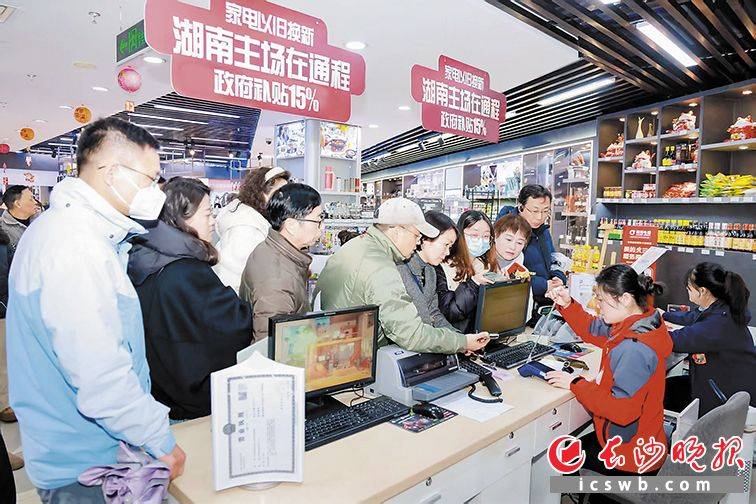
Core Insights - The "old-for-new" policy in Changsha has significantly boosted the home appliance market, attracting over 7.02 million participants and generating sales exceeding 42.3 billion yuan in 2025, making it a key driver for economic growth and consumer spending [2][3] Group 1: Policy Implementation - In 2025, Changsha expanded the "old-for-new" policy to include digital products like smartphones and tablets, achieving comprehensive coverage across four core categories: home appliances, automobiles, home renovation, and digital products [3] - The subsidy structure is differentiated, with energy-efficient appliances receiving up to 20% of the final sales price as a subsidy, capped at 2,000 yuan, while digital products receive a 15% subsidy, with a maximum of 500 yuan per item [3] - The policy has been optimized for efficiency, with changes in subsidy distribution and a simplified application process to enhance consumer experience [3] Group 2: Market Performance - The "old-for-new" initiative led to significant sales in various sectors, with home appliances generating approximately 10.598 billion yuan, and digital products and home renovation markets contributing over 5.4 billion yuan and 3.7 billion yuan, respectively [4] - The automotive sector saw over 139,000 participants claiming subsidies, resulting in vehicle purchases exceeding 22.2 billion yuan, with 55% of these being new energy vehicles [3][4] Group 3: Future Outlook - The home appliance market in Changsha continues to thrive into 2026, with a reported sales increase of over 30% in early January compared to the previous year, driven by the new policy [5] - Changsha plans to further optimize policy services and enhance the recycling system for waste materials, aiming to unlock additional consumer potential and support high-quality economic development [5]
12场促销+18场配套活动!“硬核”广货何以能行天下?
Sou Hu Cai Jing· 2026-01-13 19:44
Group 1 - The core initiative "Guangdong Products Going Global" aims to boost market expansion and sales for local enterprises, with a series of promotional activities scheduled for the first quarter of 2026 [1] - A total of 12 promotional events will be held, including 10 offline and 2 online, with a focus on various product categories such as home appliances, mobile phones, and food [16][20] - The Guangdong home appliance industry has a significant impact, accounting for nearly 50% of the national export share, with the Guangdong-Hong Kong-Macao Greater Bay Area's smart home appliance industry representing about 30% of the global market [12][16] Group 2 - Guangdong's manufacturing sector is characterized by a diverse industrial ecosystem, encompassing all 31 manufacturing categories, with 15 of them leading nationally [27] - The region's manufacturing capabilities include a complete supply chain in sectors like textiles and home appliances, enhancing responsiveness and reducing costs [27] - The transition from traditional manufacturing to intelligent manufacturing is evident, with automation and AI technologies significantly improving production efficiency across various industries [28][29]



爆款“广东造”:“AI时代的新广货”全球进击
2 1 Shi Ji Jing Ji Bao Dao· 2026-01-13 13:22
Group 1 - Guangdong products, known as "广货," have been popular for over 40 years, with significant growth in cross-border e-commerce, expanding 66 times in 9 years and accounting for over one-third of the national total [1] - Guangdong produces 1 out of every 4 express deliveries in China and holds over 70% of the global consumer drone market share through companies like DJI [1][7] - The "广货行天下" spring campaign will kick off in Foshan on January 15, 2026, featuring nearly 30 key events and participation from around 6,000 enterprises [1] Group 2 - Guangdong established its manufacturing advantage through "三来一补" and has evolved to produce products that align with global trends, leading to the popular saying "远看是洋货,近看是广货" [2] - The region's rich labor resources and low operating costs were crucial for the success of local enterprises, such as the Taiping Handbag Factory [2] - Guangdong's local brands have gained national recognition, with products like "珠江水," "岭南衣," and "广东粮" becoming staples [2] Group 3 - Midea, a representative of Guangdong's industrial growth, has transformed from a small plastic production group to a Fortune Global 500 company, expanding its product range significantly [3] - Guangdong has become a global manufacturing hub, especially for consumer electronics, smart home appliances, and new energy vehicles, with companies like Huawei and OPPO contributing to significant global market shares [3][6] - The evolution of Guangdong's manufacturing is marked by a shift from "land and population dividends" to "engineer and innovation dividends," driving high-quality development [3] Group 4 - The rise of the AI era presents new opportunities for Guangdong's manufacturing sector, with a focus on technological innovation [4] - Guangdong leads the smart glasses manufacturing industry, accounting for 40% of the national market, with companies like 雷鸟创新技术 achieving significant sales growth [5][6] - The emergence of embodied intelligent robots, such as Atom, showcases Guangdong's advancements in automation and AI integration in various sectors [6] Group 5 - Guangdong produces 70% of the world's consumer drones, 40% of smartphones, and a significant share of industrial and service robots, highlighting its manufacturing dominance [7] - The region's industrial output includes 44 products with over 10% national market share and 23 products exceeding 20% [7]
“广货行天下”底气何来?全链布局与创新生态的广东家电样本
Nan Fang Du Shi Bao· 2026-01-13 11:44
Core Viewpoint - Guangdong is launching the "Guangdong Goods Go Global" spring action to boost market expansion and sales for its manufacturing sector, particularly in the home appliance industry, marking a strong start to the year 2026 [1][3]. Group 1: Event Overview - The "Guangdong Goods Go Global" spring action will commence on January 15, featuring 12 promotional events, including 10 offline and 2 online, along with 18 supporting activities [3][4]. - The event aims to showcase Guangdong's home appliance industry, emphasizing its innovation and quality, and is seen as a significant commercial event for the region [3][4]. Group 2: Industry Significance - Guangdong's home appliance sector has achieved over 10 national firsts in various categories, including production volume and patent numbers, highlighting its leading position in China's manufacturing landscape [4][6]. - The Guangdong-Hong Kong-Macao Greater Bay Area accounts for nearly 30% of the global smart home appliance market, underscoring Guangdong's critical role in the global home appliance industry [4][8]. Group 3: Marketing Strategy - The promotional activities will utilize a dual approach of online and offline engagement, creating an immersive experience for consumers while adapting to digital consumption trends [5][6]. - The event will not only focus on selling products but also on experiential consumption and showcasing the aesthetic of manufacturing, aiming to reshape consumer perceptions and stimulate new demand [5][10]. Group 4: Industrial Ecosystem - Guangdong's manufacturing sector is transitioning from "Made in Guangdong" to "Intelligent Manufacturing in Guangdong," reflecting advancements in technology, design, and quality [6][8]. - The home appliance industry has established a comprehensive ecosystem, integrating production, assembly, distribution, and recycling, which enhances resilience and efficiency [9][10]. Group 5: Innovation and Quality - Companies like Midea and Gree are leading innovations in product design and functionality, catering to specific market needs and enhancing their competitive edge [10]. - The shift towards high-quality living standards is driving the demand for innovative home appliances, with products designed to meet diverse consumer preferences [10].
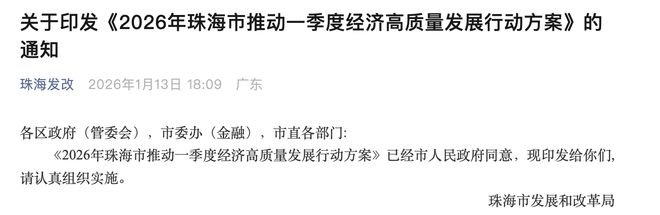
70 万奖励 + 消费补贴!力拼经济开门红,珠海重磅发文
Nan Fang Du Shi Bao· 2026-01-13 11:30
Core Viewpoint - Zhuhai City has introduced a comprehensive policy package aimed at promoting high-quality economic development in the first quarter of 2026, with various financial incentives for industries, services, and consumer spending [1][3]. Group 1: Industrial Incentives - Industrial enterprises can receive rewards for increased production, with a maximum reward of 700,000 yuan for those achieving over 20 billion yuan in output [9]. - For industrial investment, companies can earn up to 400,000 yuan based on their investment progress, with additional rewards for new projects [4]. - The policy encourages a rapid investment process and aims to create a positive cycle of project funding and construction efficiency [4][5]. Group 2: Consumer Subsidies - Consumers can benefit from various subsidies, including 5,000 yuan for car purchases and 30,000 yuan for housing "trade-ins" [6][8]. - Retail and wholesale businesses can receive financial support based on sales growth, with rewards reaching up to 40,000 yuan for significant sales increases [7]. - The "Yue Enjoy Warm Winter" campaign will provide additional consumer incentives across various sectors [7]. Group 3: Service Industry Support - The support for the service industry has been expanded to include finance, leasing, and scientific research, with potential rewards of up to 600,000 yuan for qualifying companies [11][12]. - Financial institutions can receive funding support based on their revenue growth, with specific percentages allocated for different sectors [11]. - The policy aims to enhance the quality and capacity of the service sector, promoting digital transformation and innovation [12]. Group 4: Employment and Community Support - Zhuhai will implement recruitment services and support for workers returning to jobs, enhancing employment opportunities [13]. - Community activities and welfare programs will be organized to support local residents during the New Year, fostering a positive environment [13]. - The government will encourage businesses to engage in community events and provide benefits to employees during the festive season [13]. Group 5: Implementation and Duration - The measures will be effective from the date of issuance until March 31, 2026, with specific guidelines to be established by the end of January [14]. - Local governments are encouraged to develop their own measures based on the city-level policies, ensuring that benefits are accessible and efficiently distributed [14].