
医药

Search documents
“红利三杰”齐头并进!港股红利低波ETF(520550)、中证红利ETF(515080)及中证红利质量ETF(159209)联袂上涨
Ge Long Hui· 2025-11-11 13:14
Core Viewpoint - The dividend assets continue to show strong performance, with three major ETFs experiencing consecutive gains, indicating a positive market sentiment towards dividend-focused investments [1] Group 1: ETF Performance - As of November 10, the Hong Kong Dividend Low Volatility ETF (520550), the CSI Dividend ETF (515080), and the CSI Dividend Quality ETF (159209) have increased by 1.19%, 0.61%, and 0.60% respectively, marking six consecutive days of gains for the first two and four days for the latter [1] - The current prices for the ETFs are as follows: 520550 at 1.275, 159209 at 1.176, and 515080 at 1.646, with respective changes of 0.016 (1.27%), 0.006 (0.51%), and 0.011 (0.67%) [2] Group 2: Market Analysis - The three ETFs have distinct characteristics: the CSI Dividend ETF focuses on undervalued high-dividend sectors like banking and coal, showcasing a nearly 5% dividend yield that highlights its defensive value; the CSI Dividend Quality ETF selects high-quality consumer and pharmaceutical companies based on ROE and other quality factors, balancing dividends with growth; the Hong Kong Dividend Low Volatility ETF attracts funds with a 6% high dividend yield, with over 60% weight in financial and real estate sectors, demonstrating significant low volatility [2] - Experts recommend a "core + satellite" investment strategy, using the CSI Dividend ETF as a base and combining it with the other two products to diversify risk and enhance returns [2] Group 3: Investment Considerations - All three products feature low fees and a regular dividend assessment mechanism, facilitating long-term holding [2] - Investors should be aware of the currency risk associated with Hong Kong products and the inherent limitations of dividend strategies regarding growth potential [2]


人民同泰:股票交易异常波动公告
Zheng Quan Ri Bao Zhi Sheng· 2025-11-11 13:10
(编辑 楚丽君) 证券日报网讯 11月11日晚间,人民同泰发布公告称,哈药集团人民同泰医药股份有限公司(以下简 称"公司")股票于2025年11月7日、2025年11月10日、2025年11月11日连续3个交易日内日收盘价格涨幅 偏离值累计超过20%,属于《上海证券交易所交易规则》规定的股票交易异常波动情形。经公司自查, 并向公司控股股东哈药集团股份有限公司、间接控股股东哈药集团有限公司询证,不存在应披露而未披 露的重大事项或重要信息。 ...

国泰海通晨报-20251111
GUOTAI HAITONG SECURITIES· 2025-11-11 11:06
Group 1: Oil and Gas Industry - The oil price is expected to remain volatile in the short term due to mixed factors, including OPEC+ production increases and geopolitical risks from the Russia-Ukraine conflict [3][4][6] - OPEC+ has completed its target of increasing production by 2.2 million barrels per day ahead of schedule, with further increases expected [3][4] - The long-term outlook suggests a downward shift in the oil price equilibrium, with potential for larger declines in extreme scenarios [3][4] Group 2: Shipping Industry - The oil shipping market is experiencing a "super bull market" driven by geopolitical conflicts and increased global oil production, leading to sustained demand for oil transportation [4][6] - Oil tanker profitability is projected to reach a 15-year high in Q4 2025, with expectations for continued strong performance into 2026 [4][6] Group 3: Automotive Industry - The automotive supply chain is increasingly involved in the energy storage sector, with companies like BYD leading in both electric vehicles and energy storage solutions [7][8] - BYD has achieved a cumulative shipment of 40 GWh in energy storage systems, surpassing competitors and establishing a strong market position [7][8] - The synergy between electric vehicle components and energy storage technologies is expected to enhance the competitive edge of companies in this sector [7][8] Group 4: Construction Industry - The Chinese government plans to implement significant infrastructure projects during the 14th Five-Year Plan, focusing on urban renewal and major engineering initiatives [10][12] - The Ministry of Finance emphasizes the need for proactive fiscal policies to support these projects and enhance investment efficiency [10][12] Group 5: Steel Industry - Steel production is declining, which is aiding inventory reduction, with a notable decrease in both consumption and production levels reported [33][35] - The steel industry is expected to stabilize as demand from construction and manufacturing sectors remains steady, despite challenges from the real estate sector [35][36] - The government is implementing policies to reduce production and promote the exit of inefficient capacities, which is anticipated to improve the industry's fundamentals over time [36][37]
ETF及指数产品网格策略周报-20251111
HWABAO SECURITIES· 2025-11-11 10:48
Group 1 - The core viewpoint of the report emphasizes the effectiveness of grid trading strategies in volatile markets, allowing investors to profit from price fluctuations without predicting market trends [4][12]. - The report identifies suitable characteristics for grid trading targets, including low trading costs, good liquidity, and significant volatility, suggesting that equity ETFs are appropriate for this strategy [4][12]. Group 2 - The report highlights the focus on specific ETFs for grid trading strategies, including the Military Industry ETF (512710.SH), which is expected to benefit from a new procurement cycle driven by the "14th Five-Year Plan" and increased defense budget [4][13]. - The Pharmaceutical ETF (512010.SH) is noted for its strong pipeline of innovative drugs, with China holding the second-largest number of drug development projects globally, and the potential for accelerated commercialization as domestic policies support innovation [5][16]. - The Hang Seng New Economy ETF (513320.SH) is positioned to capture the benefits of China's industrial upgrade and technological development, aligning with the "14th Five-Year Plan" goals [6][18].
【公募基金】“空窗期”将至,震荡行情中需攻守兼备——基金配置策略报告(2025年11月期)
华宝财富魔方· 2025-11-11 10:39
Key Points - The article discusses the recent performance of equity and bond markets, highlighting a rotation in market styles with a focus on value and dividend stocks over previously dominant technology growth stocks [3][6][11] - It emphasizes the potential for theme-based investments to gain traction, particularly in new technologies and industries undergoing restructuring or expansion [3][12][13] - The article outlines the performance of various fund indices, noting a significant divergence in returns across different styles and sectors [8][10][12] Equity Market Overview - In October 2025, the equity market experienced high volatility, with major indices showing declines compared to the previous months [6][11] - The technology growth sector, which had previously outperformed, saw a correction, while value and dividend sectors gained [6][11] - Specific sectors such as coal, oil, and non-ferrous metals showed strong gains, while media, automotive, and electronics faced significant declines [6][11] Bond Market Overview - The bond market showed signs of recovery in October, with yields declining as market sentiment improved following positive signals from US-China trade negotiations [7][20] - The central bank's actions, including the resumption of government bond trading, contributed to this recovery [7][20] - Various bond fund indices reported positive returns, indicating a shift in investor sentiment towards fixed income assets [7][20][23] Fund Performance Review - The article reviews the performance of public funds, noting that the overall performance in October was weaker than in previous months, with all major equity fund indices recording losses [6][11] - The article highlights the performance of thematic funds, which saw varying results based on market conditions and sector performance [9][10][12] Investment Strategy Insights - The article suggests that the current market environment may favor sectors with strong earnings growth and defensive characteristics, particularly in light of ongoing economic uncertainties [3][12][13] - It recommends a cautious approach to equity investments, focusing on sectors that are likely to benefit from government policies and global economic trends [3][12][13] - The article also discusses the importance of diversifying investment strategies across different fund types to manage risk and enhance returns [19][27][28]

ETF及指数产品网格策略周报(2025/11/11)
华宝财富魔方· 2025-11-11 10:39
Group 1 - The article discusses the potential investment opportunities in ETFs related to military, pharmaceutical, and new economy sectors, driven by China's strategic planning and budget allocations [3][4][10]. - The military sector ETF (512710.SH) is expected to benefit from China's defense budget increase to 1.81 trillion yuan in 2025, a 7.2% year-on-year growth, although still below the global average as a percentage of GDP [3][4]. - The pharmaceutical ETF (512010.SH) is positioned to capitalize on the unprecedented support for innovative drug development in China, with a significant increase in the number of drug pipelines and licensing agreements, reaching over 66 billion USD in total licensing amounts in the first half of 2025 [7][8]. Group 2 - The Hang Seng New Economy ETF (513320.SH) aims to leverage China's push for high-level technological self-reliance and the ongoing global economic easing, which creates a favorable environment for growth in sectors like internet, semiconductors, and renewable energy [10][11]. - The article highlights the strategic importance of the "14th Five-Year Plan" and the upcoming "15th Five-Year Plan" in shaping investment opportunities across these sectors, particularly in response to global geopolitical dynamics [3][10]. - The ETFs mentioned are expected to provide exposure to leading companies in their respective fields, benefiting from the anticipated improvements in industry fundamentals and government policies [4][7][10].

新疆上市公司协会组织“走进上海”活动,共绘高质量发展蓝图
Quan Jing Wang· 2025-11-11 10:36
Core Insights - The event organized by the Xinjiang Listed Companies Association aimed to enhance the vision of local companies and promote high-quality regional economic development through a three-day learning exchange in Shanghai [1][2] Group 1: Event Overview - The event took place from November 5 to 7, involving over 40 representatives from 27 listed companies and related institutions in Xinjiang [1] - The main theme was "Benchmarking Advanced Practices and Empowering Enhancement," focusing on policy interpretation, capital practices, and company visits [1] Group 2: Training and Workshops - On the first day, representatives received specialized training on capital market regulatory policies at the Shanghai Stock Exchange, covering compliance requirements in information disclosure, corporate governance, and capital operations [1] - The training included case studies to deepen understanding of standardized operations and risk prevention [1] - A session on capital operations featured analysis of merger and acquisition trends and innovative models by Shenwan Hongyuan Securities, emphasizing value management for high-quality corporate development [1] Group 3: Corporate Governance and ESG - The integration of party building and corporate governance was a significant topic, with Kaiying Network sharing its experience in using party building to foster team consensus and drive business innovation [2] - The company also highlighted its achievements in ESG construction and social responsibility [2] Group 4: Company Visits and Knowledge Exchange - Representatives visited benchmark companies in Shanghai, such as Aiwei Electronics, Ruizhi Medicine, and Bolai Technology, to exchange insights on technological innovation, corporate governance, and sustainable development [2] - The visit included discussions with Tianshan Co., a Xinjiang-listed company in Shanghai, focusing on green transformation and compliance management in the building materials industry [2] Group 5: Future Initiatives - The "Walk into Shanghai" event effectively broadened the development perspectives of Xinjiang listed companies and enhanced their ability to utilize capital market tools for industrial upgrading [2] - The Xinjiang Listed Companies Association plans to continue building high-quality exchange platforms to promote cross-regional cooperation and inject sustained momentum into the high-quality development of Xinjiang's capital market and real economy [2]
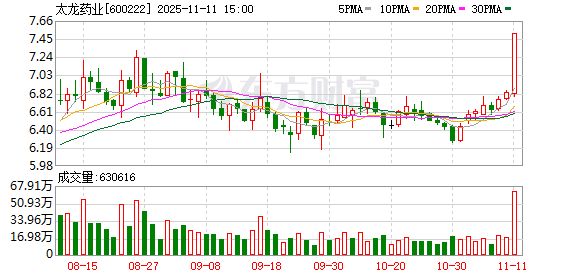
太龙药业:关于联合关联方共同受让产业基金份额、变更基金管理人的进展公告
Zheng Quan Ri Bao· 2025-11-11 10:11
Core Points - Tai Long Pharmaceutical announced a board meeting on December 26, 2023, to approve the transfer of fund shares and change of fund manager [2] - The company’s wholly-owned subsidiary, Hangzhou Tai Long Jin Tang Enterprise Management Co., Ltd., will acquire 0.67% of the ordinary partnership shares of the Beijing-Hong Kong Advanced Manufacturing Industry Equity Investment Fund for RMB 2.1979 million [2] - The subsidiary will also acquire 82.33% of the limited partnership shares of Zhengzhou Longhua Pharmaceutical Industry Fund for RMB 190.9653 million, increasing its total holding to 55% [2] - The fund manager will be changed to Tibet Jinyuan Investment Management Co., Ltd., with the change already filed with the Asset Management Association of China [2]

杨德龙:股神巴菲特正式退休 但价值投资理念历久弥新
Xin Lang Cai Jing· 2025-11-11 10:01
Group 1 - Warren Buffett, at 95 years old, is preparing to retire as CEO of Berkshire Hathaway, transferring his $149 billion fortune to family foundations while retaining enough shares to support successor Greg Abel [1][3] - Buffett will no longer write the annual shareholder letters, which are highly regarded by investors, and Abel will take over this responsibility along with hosting future annual meetings [3] - Berkshire Hathaway's third-quarter operating profit increased by 34% year-over-year, with a record cash holding of $381.7 billion, reflecting a cautious investment strategy amid high market valuations [3] Group 2 - The A-share and Hong Kong markets have experienced volatility, influenced by the performance of major U.S. tech stocks and profit-taking in previously high-flying sectors [4] - The market has seen a rotation from technology stocks, referred to as "small growth stocks," to traditional sectors like consumer goods, which are termed "old growth stocks," indicating a shift in investor sentiment [4] - Despite short-term challenges, the long-term investment potential of strong consumer brands remains, suggesting that new funds may seek opportunities in undervalued traditional stocks [4][6] Group 3 - The current bull market is characterized by a concentration of funds in technology stocks, with expectations that as the market stabilizes above 4000 points, other sectors will also see upward movement [5][6] - Investors are advised to balance their portfolios, taking profits from high-performing tech stocks to invest in traditional sectors like consumer goods and renewable energy, ensuring a defensive position during market rotations [6] - The overall market sentiment remains positive, with expectations for improved profitability and market performance in the latter half of the bull market cycle [6]
德展健康:公司海南德澄国际医康养综合体项目未被纳入“特许医疗” 政策覆盖范围
Cai Jing Wang· 2025-11-11 09:16
Core Insights - The company is developing the Hainan Decheng International Medical and Health Complex project, which is not currently covered by the "Special Medical" policy but benefits from the general policies of the Hainan Free Trade Port [1][2] - The project has been recognized as a major project in Hainan Province for 2025 and has signed a strategic cooperation framework agreement with China General Technology Group's subsidiary, aiming to enhance the company's health service capabilities [2][3] - The company reported a revenue of 278 million yuan for the first nine months of 2025, a year-on-year decrease of 21.71%, and a net loss of 64 million yuan, with losses expanding by 1493.85% compared to the previous year [1] Project Details - The Hainan Decheng International Medical and Health Complex project includes a secondary rehabilitation hospital with a construction area of approximately 15,500 square meters and a total of about 182 beds [2] - The project has a total investment of approximately 489 million yuan and a total construction area of about 71,828 square meters [2] - The project aims to create an international health complex that integrates medical, research, tourism, and wellness services, leveraging high-quality global medical resources [3]
